Haymarket Heavy Door Labor: Public Reaction, Injuries and Legacy

Labor history carries a human cost. The Haymarket bombing and the violence around it left people dead and dozens of policemen wounded, then intensified public debate over labor activism, justice, and the eight-hour workday. The phrase labor to carry heavy solid-core entry doors to a second floor in Haymarket points to a different kind of work; this article examines the historic Haymarket affair and its legacy.
It’s easy to remember the event only as a bombing. But public reaction also grew from the trial of eight labor activists and competing accounts of responsibility. The aftermath became part of a wider labor legacy, including the remembrance of May 1 as International Labor Day.
Here, you’ll learn how the events unfolded, how deaths and injuries shaped reactions, and why the affair still matters in discussions of workers’ rights and protest. Follow the timeline from the rally and bombing to the trial and its lasting place in labor history.
Key Takeaways
- Movers assess a door’s size, weight, and route before deciding how to carry it upstairs.
- Stair layout, carrying distance, and door dimensions can all affect the work involved and the quote.
- Share clear details about the door, stairs, and access route so the quote reflects the actual job.
- Labor-only moving help can be a practical fit when you need professional support with a heavy lift.
- Learn how the assessment and quote process work before arranging help for your door.
How movers assess and carry solid-core doors upstairs.
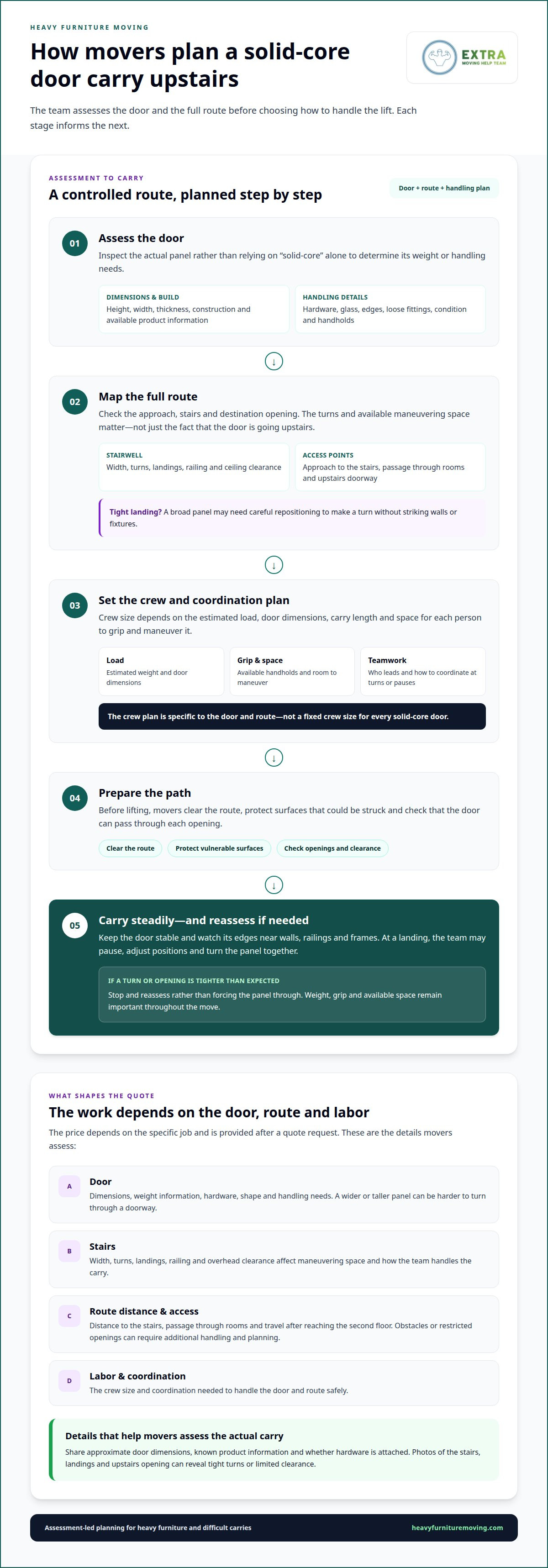
Professional movers assess the door, its hardware, and the full route before planning the carry. Solid-core construction alone doesn’t reveal a door’s exact weight. Dimensions, materials, and attached hardware all affect the load. A wide entry door with a heavy lockset can be harder to handle than a narrower, simpler door. Movers consider the available details and inspect the item rather than relying on its label alone.
The assessment starts with the door itself. Movers note its height, width, thickness, and condition. They look for glass panels, attached hardware, sharp edges, loose fittings, or damage that could affect the grip or handling. Product information can help estimate the weight, but the crew still considers the actual door and its available handholds before choosing how to move it.
Next, movers assess the route to the second floor, including stair width, turns, landings, ceiling clearance, and doorway openings. A straight staircase offers different maneuvering space from a narrow stairwell with a tight landing. The route also includes the approach to the stairs and the upstairs doorway. Each turn matters because a tall door may need to change angle without hitting walls or fixtures.
These details help determine the crew size. Movers consider the door’s estimated weight and dimensions, the length of the carry, and the space available for each person to grip and maneuver it. They also account for the stairs: turning a broad panel on a landing can require more control than carrying it along a clear, straight route. The goal is a controlled lift, not a fixed crew size for every solid-core door.
A professional crew also agrees on communication before lifting. Movers decide who will lead and how the team will coordinate at turns or pauses. A clear plan helps everyone move together and keep the door balanced. If the stairwell limits where people can place their hands, the team can account for that before lifting. This matters especially when the second-floor doorway has a close-fitting frame.
- Door details: dimensions, construction, hardware, and condition shape the handling assessment.
- Route details: stair width, landings, turns, clearance, and destination access affect maneuvering space.
- Carrying plan: load, grip, balance, and coordination inform the crew-size decision.
Before the carry, movers clear the route and protect surfaces that could be struck. They check that the door can pass through each opening. At a landing, carriers may need to pause, adjust their positions, and turn the door together. The crew’s assessment determines how to manage these transitions. This is not a do-it-yourself lifting sequence for the homeowner.
During the carry, the team keeps the door stable and watches its edges near walls, railings, and frames. If a turn or opening proves tighter than it first appeared, movers stop and reassess rather than forcing the panel through. Weight, grip, and available space all matter throughout the move. For labor to carry a heavy solid-core entry door to a second floor in Haymarket, this combined assessment helps determine the crew and a careful route.
Useful details to share at the outset include the door’s approximate dimensions, any known product information, and whether its hardware is attached. Photos of the stairs, landings, and upstairs opening can show tight turns or limited clearance. This helps movers assess the actual carry and plan for the door’s shape, not just its material. A solid-core door may seem straightforward, but its size and route shape how the team can handle it.
What factors affect the cost of carrying a heavy door upstairs, such as stairs, distance, and door size?
The quote for moving a heavy door upstairs reflects the work involved, not just the destination floor. Movers consider the door, the route, the distance from the pickup point, and the labor needed to manage the carry. A solid-core door going from a nearby entry to an open staircase presents a different job from a large door carried through several rooms and tight turns. The price depends on the case and is given after a quote request.
Door size and handling needs shape the assessment. A wider or taller panel can be harder to turn through a doorway, even when its weight is manageable. Hardware, glass, unusual edges, or an awkward grip can also affect how the crew handles it. Movers use these details to assess the space and labor required. A compact landing, for example, may require careful repositioning that a straight flight of stairs does not.
Stair design is another major factor. A direct staircase with clear access calls for a different route than stairs with a sharp turn, narrow landing, low ceiling, or close railing. Each feature can affect how the crew moves the door and how long the carry takes. The number of turns and available maneuvering space matter more than simply describing the destination as “upstairs.”
Distance adds to the work. Movers consider how far the door must travel to reach the stairs, whether the route passes through multiple rooms, and how far it must go after reaching the second floor. A long hallway or distant pickup point can extend the carry. Clear access may simplify the route, while obstacles or restricted openings can require additional handling and planning.
- Door: dimensions, weight information, hardware, and shape.
- Stairs: width, turns, landings, railing, and overhead clearance.
- Route: distance to the stairs, passage through rooms, and upstairs access.
- Labor: crew size and coordination suited to the door and route.
These factors shape the labor required. A door that needs more carriers or closer coordination can involve more work than a straightforward carry. Movers consider whether the team can maintain a secure grip along each part of the route and account for transitions, such as moving from a hallway onto a landing. A quote should reflect the actual handling needs, not an assumption based only on the floor level.
Access and preparation can affect the work, too. A blocked hallway may need to be cleared before the door can pass. A tight destination doorway may require careful alignment and controlled movement. Movers also plan to protect nearby surfaces and keep the route clear. Sharing these conditions early helps the quote reflect the job accurately and reduces surprises on moving day.
For a useful estimate, describe the door’s approximate dimensions and known weight, then explain the route from pickup to the second-floor destination. Note any turns, narrow landings, or limited clearance. Photos can show details that are hard to describe, such as a corner where the door must rotate. This gives movers a clearer picture of the time, labor, and handling involved.
For a heavy door that needs careful handling, heavy lifting moving help is a practical option to consider. The key is matching the planned labor to the door and the route. A clear description of both helps the quote account for the real work, whether the challenge is a long carry, a tight staircase, or a large panel that needs controlled turns.
At the destination, the crew may need to align the door carefully and confirm that it can pass through the opening. A clear route and room to reposition can simplify this step; a restricted opening or landing can add handling. Include these details alongside the stair layout, travel distance, door characteristics, and labor needs when requesting a quote. The estimate should reflect the specific carry, not just the floor level.
Separately, Workers in U.S. sweatshops, factories, packinghouses, and rail yards regularly worked more than 14 hours a day during the period described. Two days after the May 1, 1886 actions, Chicago police killed four people while firing on a workers’ protest at a South Side factory. These accounts describe workplace history, not a door’s dimensions, route, or access needs.
What information should I provide when requesting a quote to carry a heavy door upstairs
Start by identifying the door’s pickup point and destination. Say whether movers will collect it from a garage, entryway, or another room, then name the second-floor room or landing. This gives the team a picture of the full carry, not just the stairs. A door already inside the home, for example, may take a different route from one waiting outside.
Describe the door as accurately as you can. Share its approximate height, width, and thickness, along with any known weight or product details. If you don’t know its weight, say so rather than guessing. Mention glass, attached hardware, unusual edges, or visible damage. A broad door with a large lockset may need different handling from a plain panel of similar height.
Explain the route from the pickup point to the upstairs destination. Note whether it includes a hallway, several doorways, or a turn before the stairs. Describe the staircase as straight or turning, and mention landings, railings, or low overhead clearance. “The stairs turn at a small landing” gives more useful context than simply saying the door goes upstairs.
Include access details at both ends of the move. Tell the team how to reach the door and whether anything, such as furniture or a tight doorway, narrows the path. At the second-floor destination, describe the opening and surrounding space. If the door must pass around a corner before reaching its final room, mention that too. These details help the team plan how to approach and maneuver the load.
- Door: approximate dimensions, known weight, hardware, glass, and condition.
- Starting point: room or area where the door will be picked up.
- Route: hallway turns, stair shape, landings, and clearance concerns.
- Destination: upstairs room, doorway, and space to position the door.
- Visual details: photos that show the door and any tight route sections.
Photos can make your description clearer. Share images of the door, staircase, and any narrow turn or doorway. Take pictures that show the available space, not just a close-up of one step. If a photo cannot capture the full route, add a short note explaining what happens between the pickup point and the second floor.
Clearly explain how the door is prepared for the move. Mention whether it is detached or still in place, and whether its hardware remains attached. Don’t assume a detail is obvious in a photo. If the door is leaning against a wall, for example, say where it is and how movers can reach it. Clear information helps the team understand the job being quoted.
Organize your request in the order of the carry: pickup point, route, stairs, and final destination. Add the door’s dimensions and any known product details, then flag features such as glass or a tight turn. This focused outline helps keep important information from getting lost in a long message. It also gives the quote a useful basis for assessing the labor and handling.
For help arranging a heavy-door move, request a heavy-door moving quote with the door and route details ready. A description of the second-floor access, plus clear photos of tight spaces, gives the team practical information for planning the carry.
Clarify uncertainties instead of guessing, and explain what help you need from the movers. If the door is leaning against a wall or resting on the floor, describe its position and whether the route is clear for pickup. Mention timing or access constraints that could affect when the team can reach it. Before sending your request, check that the description, photos, and route details all refer to the same pickup point and upstairs destination. A concise, consistent account helps the team understand the work and ask focused follow-up questions if needed.
Keep unrelated background separate from the practical description of the carry. In 1877, 20 people were killed when the National Guard attacked workers in Pittsburgh during a rail strike. Four workers were killed when Chicago police attacked workers near the McCormick Reaper Works on May 3, 1886. One police officer was killed instantly when a bomb was thrown at the Haymarket meeting in Chicago. These historical details do not describe the door, its condition, or the route upstairs, so they should not take the place of measurements, photographs, or access information in a request for a moving quote.
Heavy Furniture Moving: labor only movers near me
Heavy Furniture Moving provides labor-only help for carrying a solid-core door upstairs. This is a practical option when you need movers for the lift and are coordinating the door and its destination yourself. Share the door’s dimensions, pickup point, stair layout, and second-floor access so the team can assess the full route.
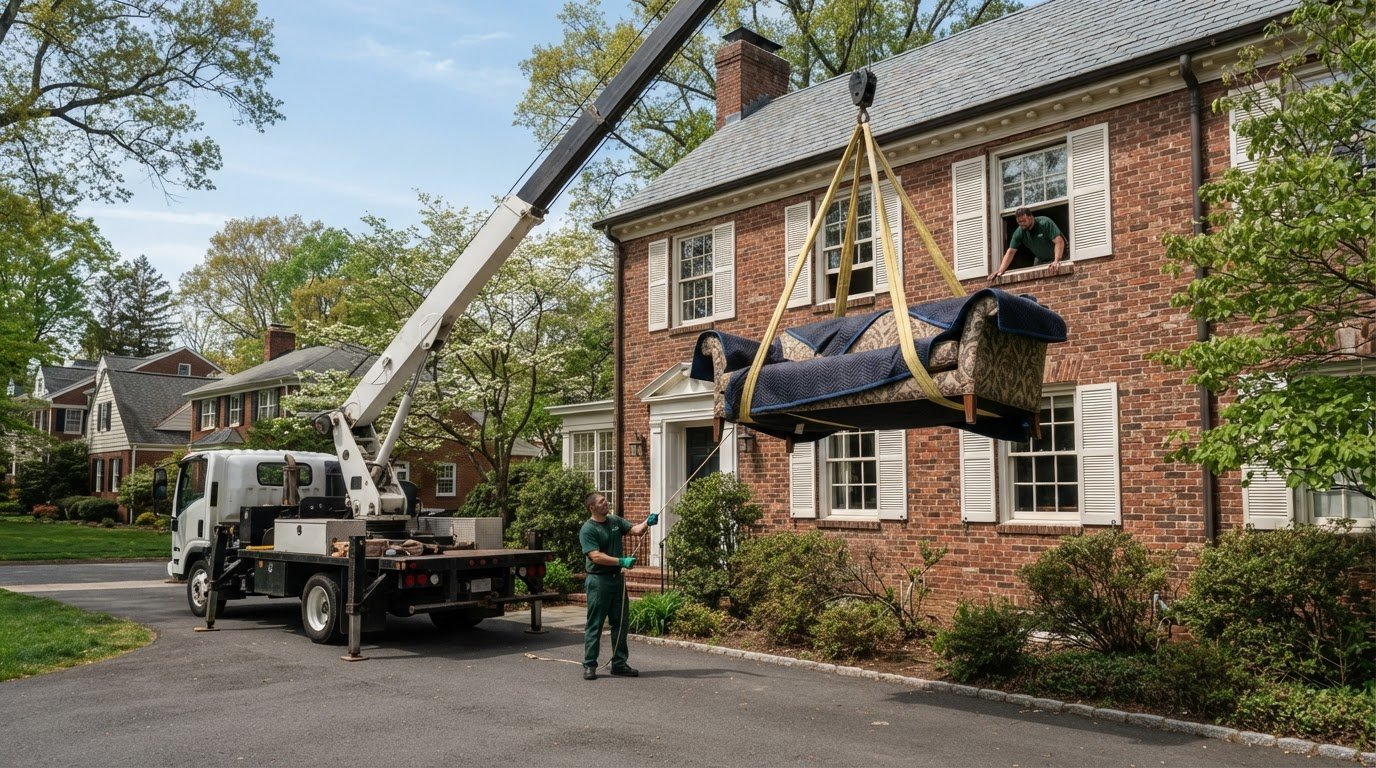
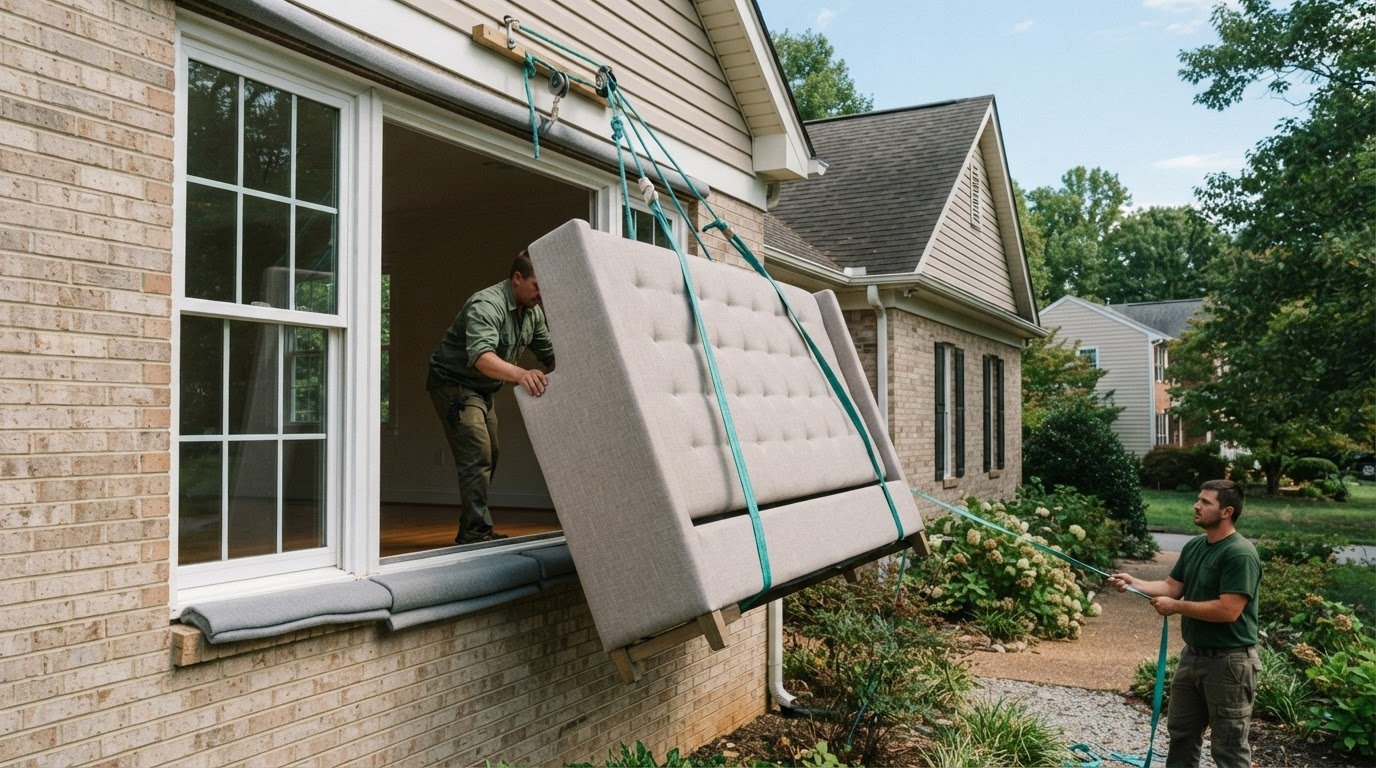
That same hands-on support can also suit other demanding household moves, including exercise equipment moving or sofa hoisting. For a heavy door, turn to professional help when its size, weight, or staircase makes the carry difficult to manage safely. Contact Heavy Furniture Moving to discuss your door move.
Make the Next Move with Confidence
A heavy door can be one part of a larger home project, and planning its carry can help keep things moving. For labor to carry a heavy solid-core entry door to a second floor in Haymarket, use the details you’ve gathered to describe the job clearly. A thoughtful plan starts with the route and ends with the door in place.
Heavy Furniture Moving provides moving labor for demanding household moves. Share what you need moved and where it needs to go, then take the next step when you’re ready. Clear communication helps set the work in motion without guesswork.
Contact Heavy Furniture Moving to discuss your move. You’ve got a practical path forward, and professional help can make the heavy lift easier to manage.
Frequently Asked Questions
What is the labor cost to carry a heavy solid-core entry door to a second floor in Haymarket, Virginia?
The cost depends on the job, and Heavy Furniture Moving provides an upfront quote before work begins. Labor is billed hourly with a 2-hour minimum, while most single heavy items receive flat-rate pricing. Stair and wrap costs are included in the quote; wrap and straps are included. For a Haymarket door, the handling requirements and access route help determine which pricing approach applies.
What safety risks do professional movers account for, and what precautions do they take when carrying a heavy door up stairs?
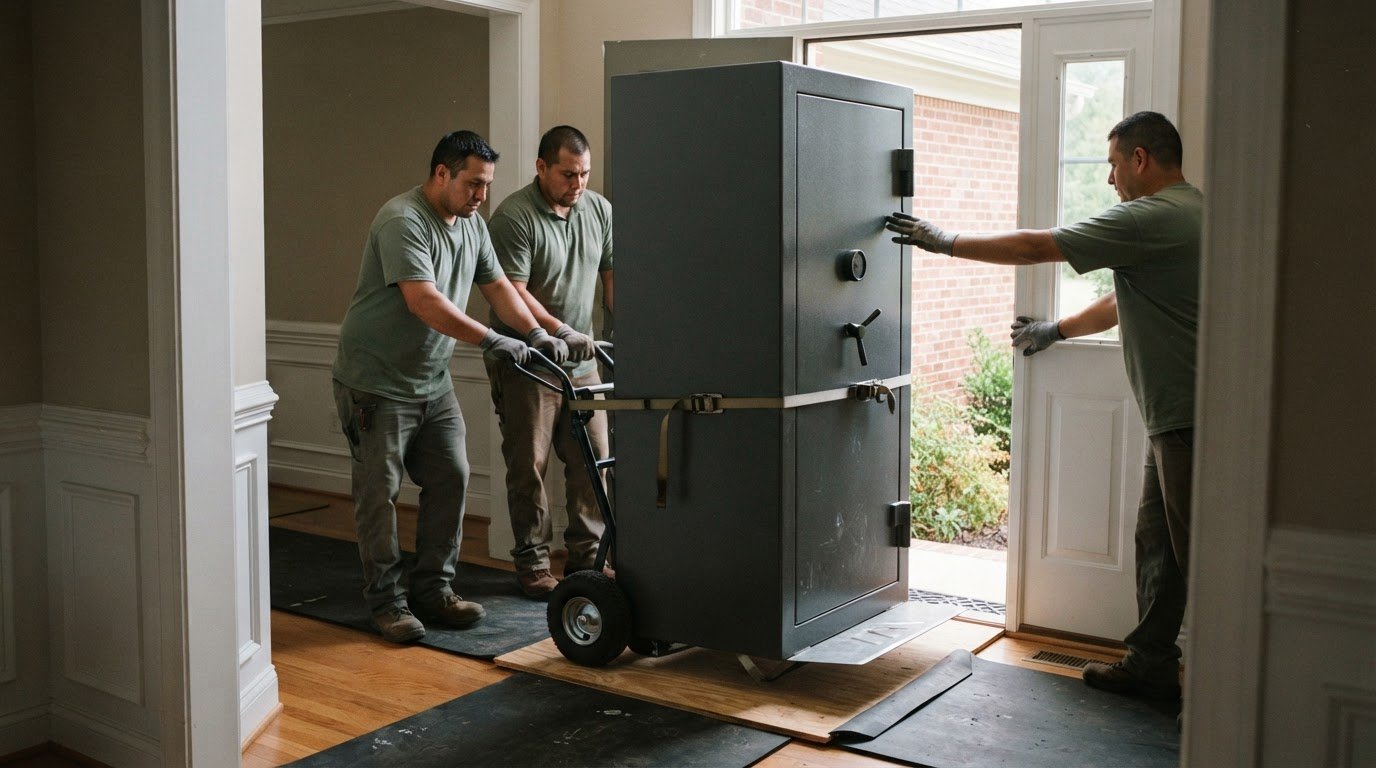
Movers account for risks such as pinched fingers, loss of balance, and impacts against walls, floors, or door frames. They assess the path and coordinate the carry to keep the door controlled through turns. Heavy Furniture Moving uses blankets and shrink-film to protect items, along with masonite floor protection and door-jamb covers for nearby surfaces. The crew also plans around access and grip to reduce unwanted shifting during the move.
Frequently Asked Questions
The cost depends on the job, and Heavy Furniture Moving provides an upfront quote before work begins. Labor is billed hourly with a 2-hour minimum, while most single heavy items receive flat-rate pricing. Stair and wrap costs are included in the quote; wrap and straps are included. For a Haymarket door, the handling requirements and access route help determine which pricing approach applies.
Movers account for risks such as pinched fingers, loss of balance, and impacts against walls, floors, or door frames. They assess the path and coordinate the carry to keep the door controlled through turns. Heavy Furniture Moving uses blankets and shrink-film to protect items, along with masonite floor protection and door-jamb covers for nearby surfaces. The crew also plans around access and grip to reduce unwanted shifting during the move.