Couch Hoisting Service Through a Window in Chantilly
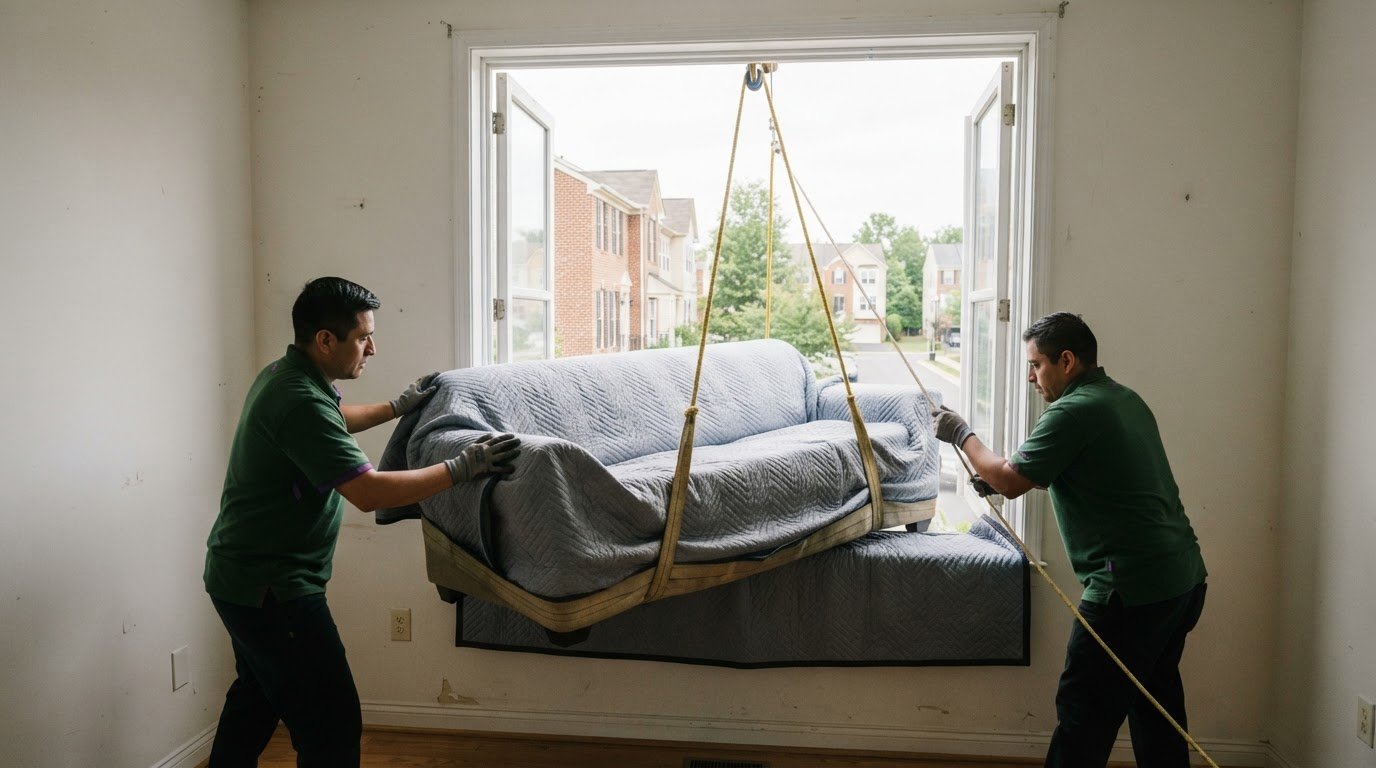
A couch that can’t clear the stairs or doorway may need a different route. A couch hoisting service through a window with straps in Chantilly can move bulky furniture through a window or balcony opening when the usual indoor route won’t work.
It’s understandable to worry about the couch, the walls, and whether the opening is large enough. A workable plan starts by assessing the couch’s size and shape, the access route, and the space around the window or balcony. These details help determine whether hoisting is suitable and how to prepare the lift.
This guide explains when hoisting makes sense, how crews assess access and prepare for the lift, and which job details affect the cost. You’ll also learn what information to share about an unusually large or heavy couch so the move can be planned around the actual item and the layout of your home. Get a clearer picture of the process before deciding on the next step.
Key Takeaways
- Consider hoisting when a couch or other large piece of furniture can’t pass through the usual indoor route.
- Access conditions and the furniture’s size and shape help crews plan the lift and equipment setup.
- Cost depends on the details of the job, including the item and the route it must travel.
- Share information about an unusually large or heavy couch so the move can be planned around it.
- Learn how window and balcony access can offer another route for sofas and sectionals.
Hoisting large furniture through windows, onto roofs, or over balconies
Furniture that cannot pass through the usual route may be hoisted through a window or balcony door. The route depends on the item, the opening, the floor level, and the available space outside.
Alternatives to Doors and Stairs
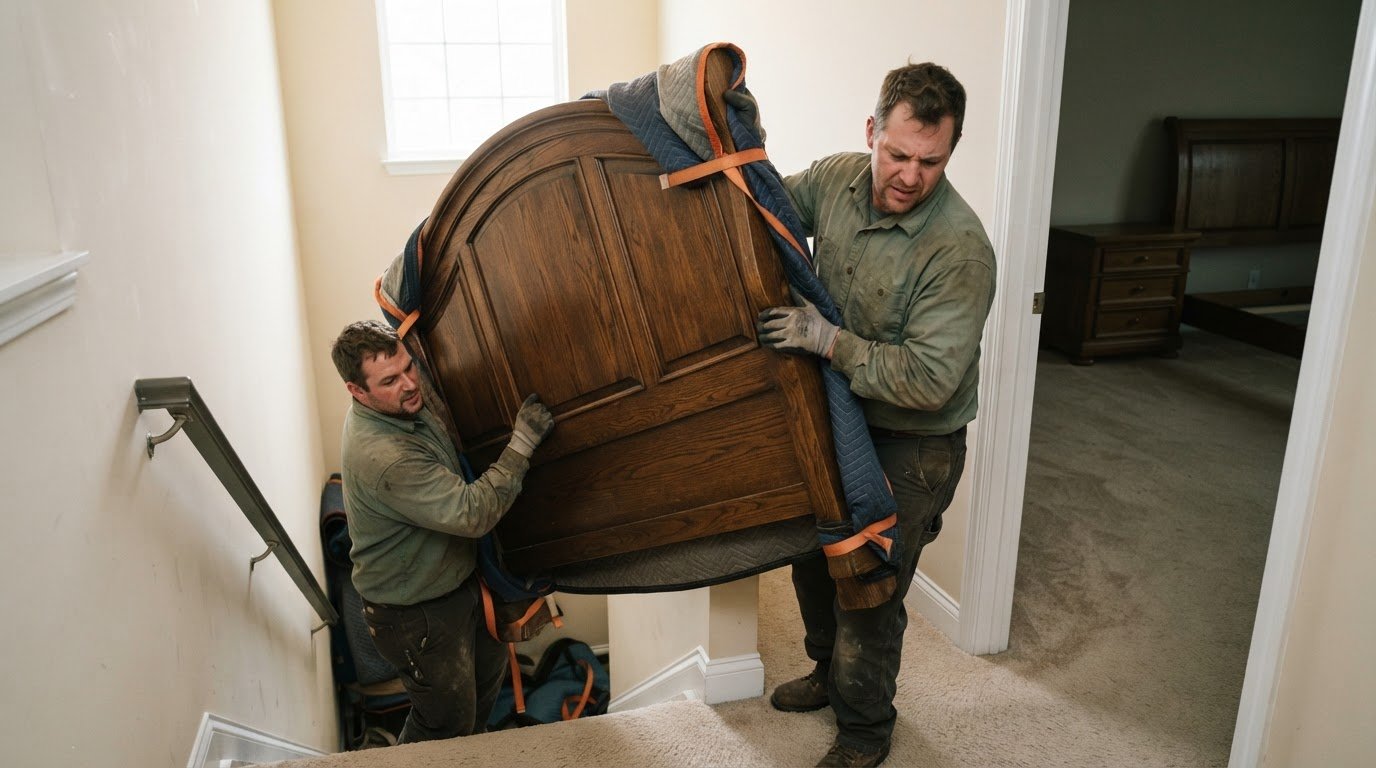
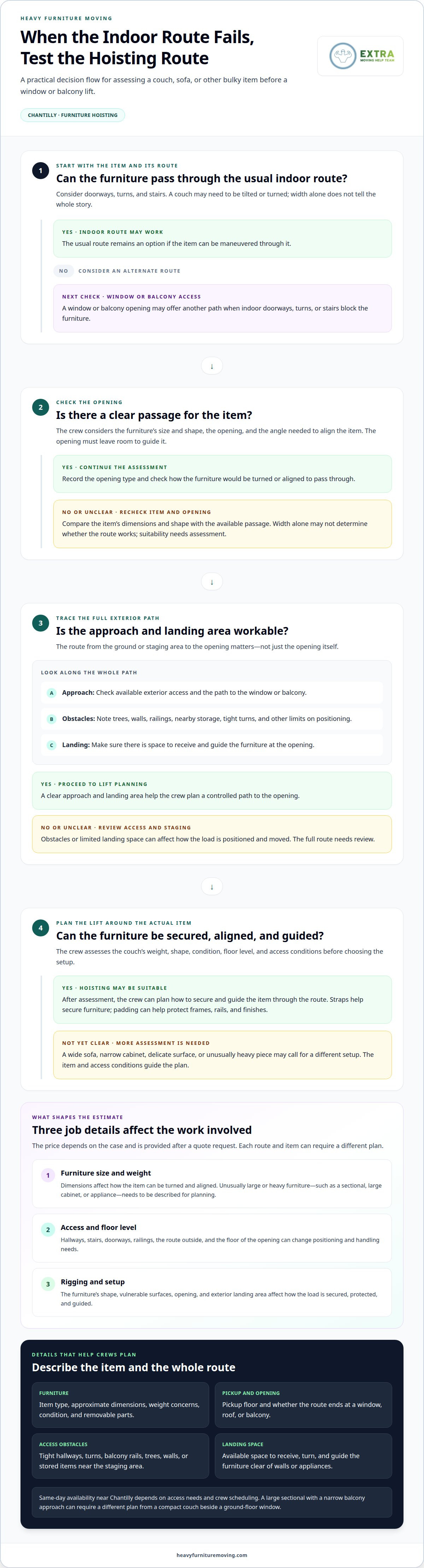
Furniture hoisting offers another route when a couch, cabinet, or appliance cannot clear doorways, turns, or stairs. The crew assesses the item’s shape and the available opening, rather than judging by width alone. A couch may need to be tilted or turned to pass through a doorway, while a window route can bypass a tight stairwell. The landing area outside also matters: it needs to allow a controlled path to the opening.
Moving Furniture Between Floors
A hoist can move furniture up to an upper-floor window or balcony, or lower it from that level. The crew plans the path from the ground to the opening, including how to align the item during the lift. Height and exterior access affect the setup, as do the furniture’s weight and shape, which determine how it should be held and guided.
Same-Day Hoisting Near Chantilly
A same-day furniture hoisting service near Chantilly, VA, depends on access needs and crew scheduling. Share the furniture type, approximate dimensions, pickup floor, and whether the route ends at a window, roof, or balcony. These details help shape the lift plan and equipment setup. A large sectional with a narrow balcony approach, for example, calls for a different plan than a compact couch beside a ground-floor window.
At the opening, the crew needs a clear passage for the item and room to guide it. A window or balcony door may work when indoor doorways and stairs block the furniture. The outside route matters too: trees, walls, railings, and nearby storage can affect how the load is positioned and moved. Crews assess the full path, not just the opening.
Protecting the furniture and building starts with preparing contact points. The crew can cover exposed edges and nearby surfaces, then guide the item carefully past the opening. Straps help secure the furniture during the hoist, while padding can help protect window frames, balcony rails, and the furniture’s finish. Clear floor space inside gives the crew room to receive and turn the item without pushing it against walls or appliances.
Before the lift, the crew aligns the furniture with the planned route and clears the landing area. A couch may need a different angle than a cabinet, and an upper-floor balcony may call for a different approach than a window. These checks help determine whether hoisting is suitable and how the item can pass through without being forced through a tight doorway.
Factors that affect hoisting cost
The price depends on the case and is given after a quote request. For a Chantilly move, the estimate reflects the furniture, the access route, and the work required to position and guide the load. A couch going through a clear first-floor window presents a different task from a heavy sectional moving through a tight balcony approach.
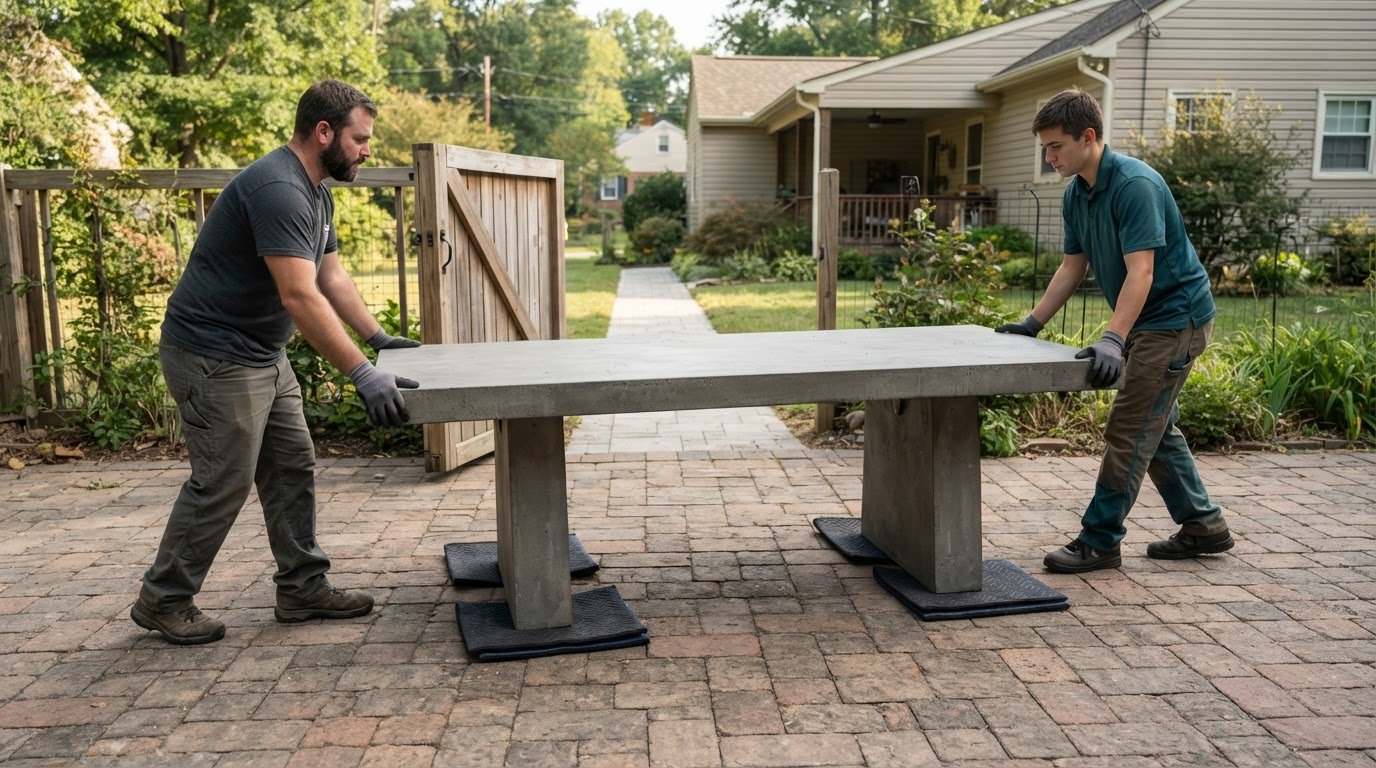
Furniture size and weight: A bulky or unusually heavy item takes more planning than a compact piece. Its dimensions affect how it can be turned and aligned with the opening. Share details about unusually large or heavy furniture, such as a sectional, large cabinet, or appliance, so the crew can plan the move and rigging.
Access and floor level: The route from the staging area to the window or balcony can change the work involved. Hallways, stairs, doorways, railings, and nearby frames may limit where the crew can position the item. An upper-floor move also requires a plan for raising or lowering the furniture and guiding it into the opening. A clear route can make setup more straightforward than one blocked by stored items or tight turns.
Rigging and setup: The crew assesses how to secure and control each piece before moving it. A wide sofa may need a different position from a narrow cabinet, while delicate surfaces may need extra protection. The opening, exterior landing area, and furniture shape all affect the lift setup. The load must be guided through the route, not simply raised to the right floor.
- Share the item type, approximate dimensions, and whether it is unusually heavy.
- Describe the planned route, including the floor, opening, and access obstacles.
- Mention tight hallways, balcony rails, or stored items near the staging area.
These details help explain the work behind an estimate. A couch that fits through a wide balcony door may need less maneuvering than one that must be carefully turned at a narrow window. The crew also considers where the furniture will be received and whether the landing space is clear. Every part of the route can affect preparation.
For a more tailored quote, share your furniture and access details, including the item’s size, weight, floor, and intended opening. A clear description helps connect the estimate to the actual moving conditions, rather than treating every hoist as the same job.
Hoisting assessment and equipment setup
Before lifting a couch, movers assess its size, condition, route, and destination opening. They choose straps and safety precautions to suit the item and actual access conditions.
Hoisting Assessment
The assessment starts with the couch itself. Movers consider its length, depth, weight, shape, and any removable parts. A sectional with detachable pieces may need a different plan from a one-piece sofa. They also inspect the frame and upholstery for weak points, so the lift avoids pressure on vulnerable areas.
Next, the crew traces the full route, from the staging area and exterior approach to the window or balcony opening and receiving space. A narrow window with a nearby railing creates different handling needs from a wide balcony door. The team also identifies obstacles that could affect how the couch turns or is guided.
Straps and Safety Precautions
Straps hold the couch in position during the lift and help movers guide it. Placement depends on the couch’s frame, shape, and balance. The crew checks that the setup supports and controls the item without pulling on loose cushions or delicate upholstery. For an oversized sectional, the plan accounts for its separate sections and connection points.
Safety preparation also covers the opening and ground area. Movers clear the route, protect exposed edges, and keep people away from the lift path. Before moving, they review how the couch will pass through the opening and where it will be received. These steps help limit contact with walls, frames, railings, and the couch’s finish.
Equipment setup follows the assessment rather than a one-size-fits-all formula. The crew matches the setup to the item and route, then checks that the straps are secure before lifting. If the couch must tilt to pass through a narrow opening, movers plan that movement before the load reaches the window. A clear sequence helps the team stay in control at each transition.
- Prepare: Clear the path and protect nearby surfaces around the opening.
- Secure: Position straps to support the couch without stressing its frame.
- Guide: Move the load in a controlled way through the planned route.
- Receive: Bring the couch into the landing area and set it down carefully.
During the lift, the crew coordinates the people guiding the couch with those receiving it. They keep the item aligned with the opening and pause when its position needs adjusting. For example, if a couch corner approaches a window frame, movers reposition it carefully before continuing. Once inside, they set the couch down and check its placement before clearing the work area.
Hoisting sofas and sectionals through windows or balconies
A sofa may fit inside a room yet fail at its doorway, stair turn, or hallway. Hoisting can offer another route through a suitable window or balcony, planned around the furniture and building access.
Start with the sofa’s dimensions, including its depth, height, and full length. These measurements help the crew assess how it must be positioned at the opening. The opening’s clear space matters too, along with nearby frames, balcony rails, and walls. A sofa that must turn while passing through needs a different approach from one that can move straight through.
Sectionals require another planning step. The crew considers whether the sections separate and how their shape and weight affect handling. A detachable piece may be positioned individually, while a connected sectional needs support across its full form. Cushions and loose parts must also be secured so they don’t shift during the move. The plan should reflect the furniture’s actual configuration.
For a couch hoisting service through a window with straps in Chantilly, the crew also maps the route from the staging area to the opening and into the receiving room. A balcony may have railings or limited turning space. A window may have nearby trim or a narrow approach. Identifying these features ahead of time helps the team plan the couch’s angle and movement.
Protection is part of the setup. Padding can cover contact areas on the sofa and help protect nearby frames or surfaces as the item moves. The crew considers where the couch could touch the building, especially at the opening and balcony edge. Protection should suit the upholstery and finish while leaving the straps positioned to support and guide the load.
- Measure: Record the sofa’s full dimensions and note removable sections.
- Map: Identify the opening, approach, obstacles, and receiving space.
- Prepare: Clear the route and place padding where contact may occur.
During the hoist, movers guide the sofa toward the opening and control its angle as it passes. They coordinate the exterior movement with the person receiving it indoors. A sectional may need its pieces handled in sequence, while a single sofa follows one planned path. Once inside, the crew brings it into the room and sets it down carefully, keeping the route clear until the move is complete.
A couch hoisting service through a window with straps in Chantilly gives the crew a planned way to move a sofa when indoor access is blocked. The furniture’s shape, the opening, and the landing space all guide the approach.
Couch hoisting service through window Chantilly VA
In Chantilly, a window lift starts by matching the couch to the opening and route. The crew plans around the item, the building layout, and the space available for the move.
Give the crew useful details before the move. Describe the couch as a loveseat, sleeper sofa, or sectional, and share its dimensions if available. Note whether the legs, cushions, or sections detach. A clear photo can show its shape and condition, while photos of the window, balcony, and approach can reveal obstacles measurements alone may miss.
The assessment follows the couch from its current room to the landing space. Inside, the crew considers tight hallways, sharp turns, and floor surfaces. At the opening, they check the frame, sill, and usable clearance. Outside, they assess the ground area and route from the lift position. A tree, railing, or limited staging space can affect how the couch is aligned and guided.
Preparation focuses on a controlled transfer. The crew clears the immediate route, protects surfaces where contact may occur, and positions the couch for lifting. Straps support the item during movement, with placement guided by its frame and balance. At the window, movers coordinate the couch’s angle and pace as it passes through. The receiving space should be clear enough to accept and turn the furniture.
- Item details: Couch type, dimensions, weight, and removable parts.
- Building details: Floor, window or balcony access, and indoor turns.
- Route details: Outdoor obstacles and the intended landing area.
These details help the crew plan for the specific Chantilly property instead of assuming every opening is the same. A sleeper sofa, for example, may have a different shape and balance from a compact loveseat. A sectional may need to be handled in separate pieces. The couch’s condition matters too: loose parts or delicate upholstery affect how movers position and protect it.
During the move, the team guides the couch through the opening and into the receiving area, then checks its placement. If the route calls for a change in angle, movers adjust the position before proceeding. This deliberate transfer helps prevent scraping against frames or nearby surfaces. Clear information about the item and route gives the crew a practical starting point for planning.
To arrange a couch move around your home’s access conditions, request help planning your couch hoist.
Heavy Furniture Moving: Sofa Hoisting
Heavy Furniture Moving provides Sofa Hoisting for couches that can’t pass through the usual indoor route. It’s a practical option when tight doorways, stairs, or turns block a sofa’s path and a window or balcony offers another access point.
The crew’s plan accounts for the couch, opening, and route into your home. Share the item’s dimensions, floor level, and any access challenges to help prepare for the move. If you also need help moving furniture inside your home, Heavy Furniture Moving offers in-home furniture moving.
For a carefully planned couch lift in Chantilly, contact Heavy Furniture Moving to discuss your move.
Make a Clear Plan for Your Couch Move
Choose the route that gets your couch into the room where you’ll use it, without struggling through tight indoor spaces. If the regular path looks impractical, a couch hoisting service through a window with straps in Chantilly may be worth considering. Describe the move in practical terms: what needs moving, where it needs to go, and which access point you have in mind.
That conversation helps match your moving goal with the right kind of help. Heavy Furniture Moving offers Sofa Hoisting, along with Movers Near Me and Exercise Equipment Moving. Tell the team what you need, whether that’s getting one couch into your home or moving another heavy item.
Take the next step when you’re ready. Contact Heavy Furniture Moving to discuss your couch move and find a clear way forward.
Frequently Asked Questions
What Is Hoisting and When Is It Necessary in Moving?
Hoisting moves a large item through an opening using lifting equipment instead of carrying it along the usual indoor route. It’s useful when a couch cannot clear a doorway, stair landing, or elevator entrance. For example, a sofa might fit in the living room but be too long to turn in the apartment hallway. The opening and exterior access still need to suit the item and planned lift.
Can You Get a Sofa or Mattress in Through a Window?
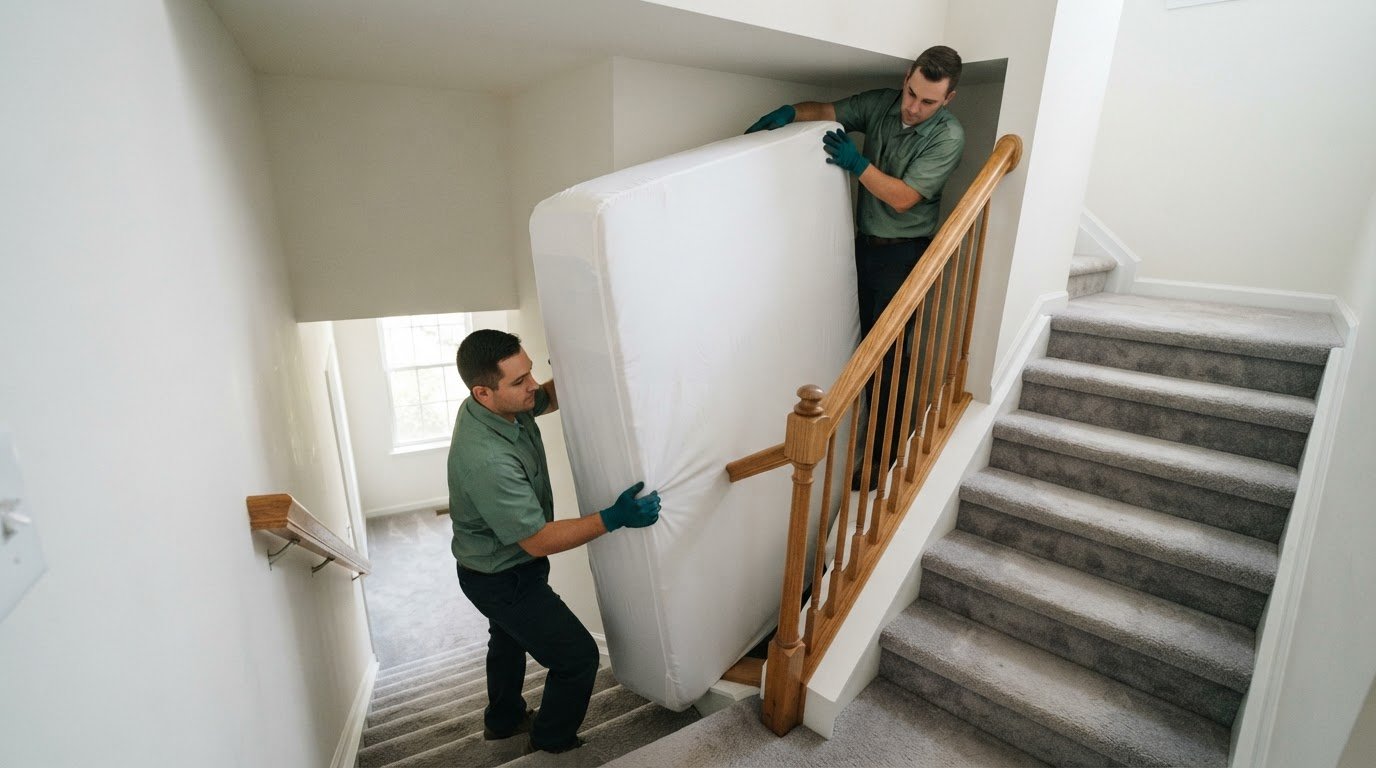
Yes, a sofa or mattress can go through a window if the item, opening, and route allow it. A mattress may bend differently from a rigid sofa, but its size and construction still matter. For a couch, the crew considers its full shape, not just its narrowest side. The window needs enough usable clearance and a suitable place to guide and receive the item.
Can You Hoist a Couch Over a Balcony?
Yes, a couch can be hoisted over a balcony when the balcony and exterior approach suit the lift. The crew considers the railing, positioning space, and how the couch will reach the opening. A balcony with limited room to receive furniture needs a different plan from one with an open landing area. Building access rules can also affect how the move is arranged.
Can You Hoist a Sleeper Sofa or a One-Piece Sectional That Doesn’t Come Apart?
A sleeper sofa or one-piece sectional can be assessed for hoisting as a complete item. Its closed dimensions, weight, frame, and balance all help shape the plan. A sleeper mechanism can make the sofa heavier or change its shape, so the crew accounts for it while closed. Measurements of the item and opening help determine whether the route can accommodate it.
Does My Building Need a Certificate of Insurance for a Hoist?
Your building’s policy determines whether it requests a certificate of insurance for a hoist. Check the written move-in or property-management instructions for document requirements, access rules, or designated staging areas. Share those instructions when arranging the move so they can be considered alongside the physical route. A certificate does not determine whether a couch fits through an opening; the item and access still need assessment.
How Does Furniture Hoisting Work?
Furniture hoisting begins with measuring the item and access points before the lift. The crew then plans how to position and secure the furniture, clear the route, and coordinate the exterior lift with the person receiving it. Heavy Furniture Moving includes wrap, blankets, and straps on every job. For a couch, the team also considers how its frame and upholstery should be supported during the move.
What Size and Weight Can You Hoist?
There isn’t one size limit that applies to every couch and route. Dimensions, shape, weight, opening clearance, and the path to the landing area all affect the assessment. Heavy Furniture Moving lists sectional sofas at 200 to 500 lb for all pieces; that range applies to sectional sofas, not every couch. The crew measures the item and access before lifting, then plans around the specific furniture.
When Do You Need Hoisting Services?
Consider hoisting when a large piece cannot make a turn, fit through a doorway, or pass along the stairs using the usual route. A couch that clears the apartment entrance may still be blocked by a tight landing or interior corner. Hoisting is also worth considering when carrying the item through the home could risk its finish or nearby surfaces. The opening and route determine whether it’s suitable.
Frequently Asked Questions
Hoisting moves a large item through an opening using lifting equipment instead of carrying it along the usual indoor route. It’s useful when a couch cannot clear a doorway, stair landing, or elevator entrance. For example, a sofa might fit in the living room but be too long to turn in the apartment hallway. The opening and exterior access still need to suit the item and planned lift.
Yes, a sofa or mattress can go through a window if the item, opening, and route allow it. A mattress may bend differently from a rigid sofa, but its size and construction still matter. For a couch, the crew considers its full shape, not just its narrowest side. The window needs enough usable clearance and a suitable place to guide and receive the item.
Yes, a couch can be hoisted over a balcony when the balcony and exterior approach suit the lift. The crew considers the railing, positioning space, and how the couch will reach the opening. A balcony with limited room to receive furniture needs a different plan from one with an open landing area. Building access rules can also affect how the move is arranged.
A sleeper sofa or one-piece sectional can be assessed for hoisting as a complete item. Its closed dimensions, weight, frame, and balance all help shape the plan. A sleeper mechanism can make the sofa heavier or change its shape, so the crew accounts for it while closed. Measurements of the item and opening help determine whether the route can accommodate it.
Your building’s policy determines whether it requests a certificate of insurance for a hoist. Check the written move-in or property-management instructions for document requirements, access rules, or designated staging areas. Share those instructions when arranging the move so they can be considered alongside the physical route. A certificate does not determine whether a couch fits through an opening; the item and access still need assessment.
Furniture hoisting begins with measuring the item and access points before the lift. The crew then plans how to position and secure the furniture, clear the route, and coordinate the exterior lift with the person receiving it. Heavy Furniture Moving includes wrap, blankets, and straps on every job. For a couch, the team also considers how its frame and upholstery should be supported during the move.
There isn’t one size limit that applies to every couch and route. Dimensions, shape, weight, opening clearance, and the path to the landing area all affect the assessment. Heavy Furniture Moving lists sectional sofas at 200 to 500 lb for all pieces; that range applies to sectional sofas, not every couch. The crew measures the item and access before lifting, then plans around the specific furniture.
Consider hoisting when a large piece cannot make a turn, fit through a doorway, or pass along the stairs using the usual route. A couch that clears the apartment entrance may still be blocked by a tight landing or interior corner. Hoisting is also worth considering when carrying the item through the home could risk its finish or nearby surfaces. The opening and route determine whether it’s suitable.