Couch Hoisting in Centreville for Oversized Sofas and Sectionals
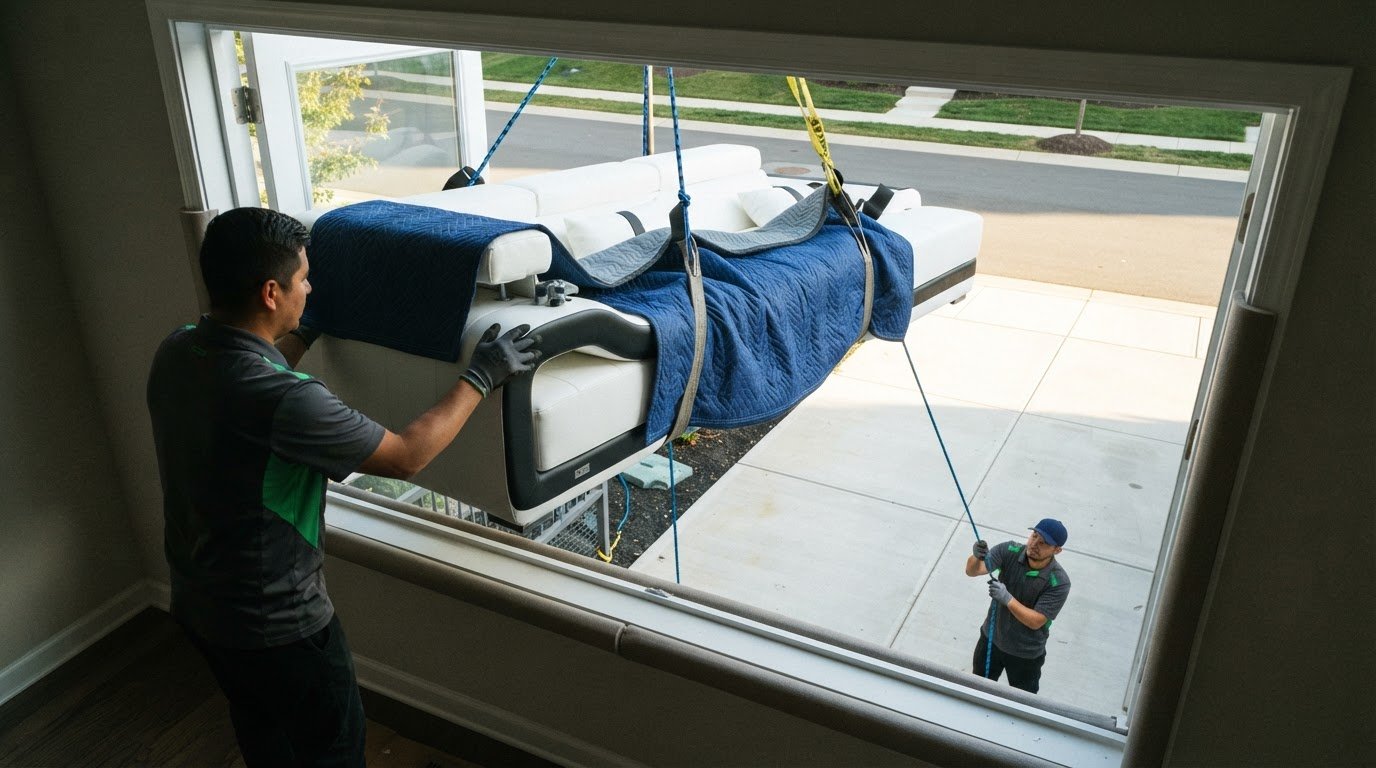
A sectional that clears the room may still face a building-access hurdle. Whether you need advance approval depends on the property’s rules and the hoisting setup. Confirm the requirements before scheduling a couch hoisting service for oversized modular furniture in Centreville. Clear access and approval help keep the plan on track.
It’s understandable to worry about a bulky sofa getting stuck, damaging a doorway, or facing building-access restrictions. A sound plan starts with the furniture’s dimensions and weight, then maps the route from its current position to its destination.
This guide explains what to share about your sofa or sectional, how elevators, stairs, and tight turns affect the hoist, and why building approval matters. You’ll learn what a moving team needs to plan the job and when Heavy Furniture Moving’s sofa hoisting service can help if an oversized piece can’t use the usual route.
Key Takeaways
- Share the sofa’s approximate dimensions and known weight so the hoisting plan reflects the actual piece.
- Map the full route, including elevator access, stair turns, landings, and the path to the truck.
- Find out how your building handles advance approval and access for hoisting work.
- Photos of the furniture and tight access points can help the moving team plan protection and any partial disassembly.
- Learn when a sectional may need a hoist rather than a move through standard doors or stairs.
Assessing item dimensions, weight, and route access
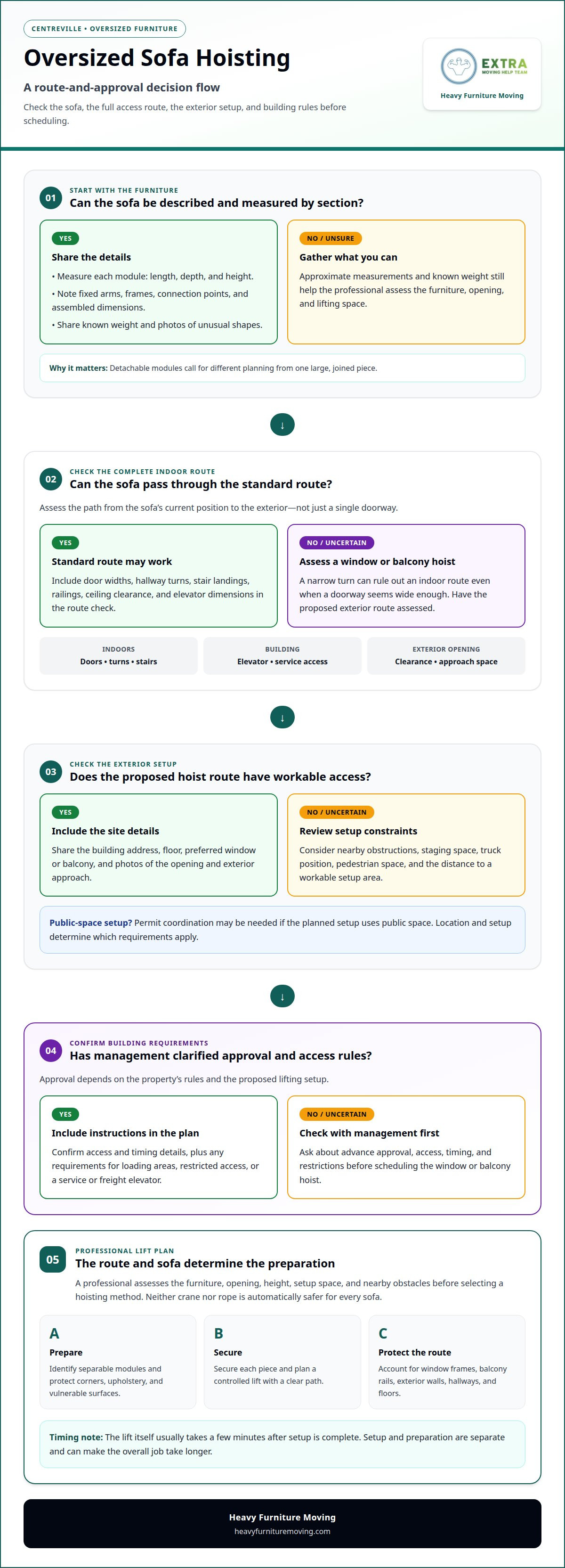
Before scheduling a hoist, a professional measures the modular sofa and assesses access through a window or balcony. The assessment connects the furniture’s size and weight with the full route and the building’s access conditions.
Item Dimensions and Weight
For a modular sofa, measure each section, not just the assembled footprint. Note the length, depth, and height of individual pieces, along with any fixed arms or frames that affect handling. Record the assembled dimensions too, so the team can understand how the sofa fits in the room. Known weight helps shape the lift plan and equipment needs. Photos can clarify unusual shapes and connection points.
Share approximate measurements and known weight before the move. A sectional with detachable modules requires different planning from one large, joined piece. The professional uses those details to compare the furniture with the proposed opening, balcony approach, and available lifting space. Careful measurements can reduce uncertainty on moving day, especially for a sofa with a deep frame or oversized chaise.
Building Access and Lift Planning
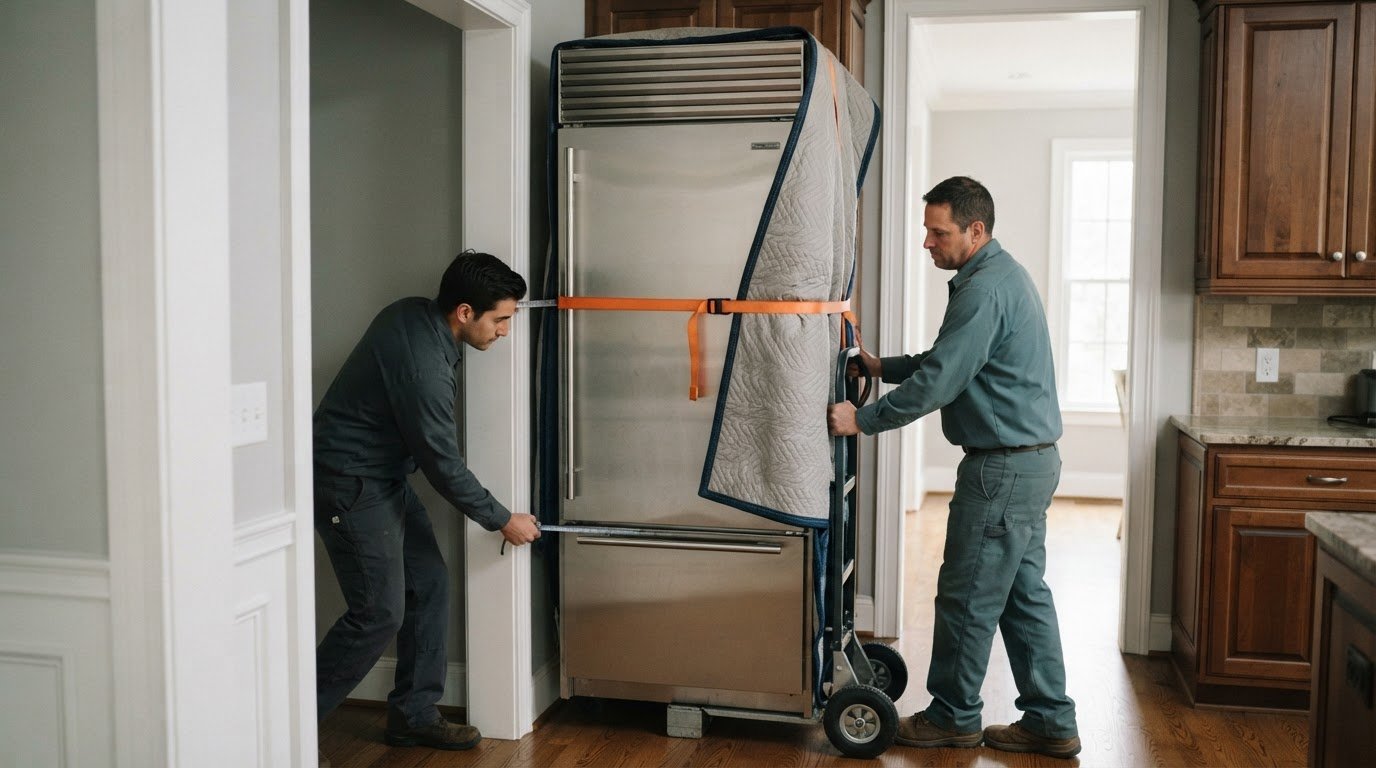
The route assessment follows the sofa from its current position to the exterior, then from the hoisting point to its destination. Indoors, the professional considers door widths, hallway turns, stair landings, railings, and ceiling clearance. Elevator dimensions matter too, including whether management requires a service or freight elevator. A narrow turn may rule out an indoor route even when a doorway seems wide enough.
Measure window and balcony access separately. The team considers the clear opening, sill or railing, approach space, and obstacles near the lift path. An exterior photo can reveal trees, building features, or limited staging space that measurements alone may miss. These details help assess whether the proposed hoist route will work.
Street Access and Permit Coordination
Street access affects where the moving truck and equipment can be positioned. The assessment considers the distance between the building and a workable setup area, along with nearby obstructions and pedestrian space. If the planned setup may use public space, permit coordination may be needed. The location and setup determine which requirements apply, so consider them before scheduling.
Share the building address, floor, preferred window or balcony, and photos of the exterior approach. The professional can use these details to discuss access constraints and whether permit coordination is relevant. Include any building instructions about loading areas or restricted access. A clear picture of the street, opening, and sofa helps the team plan for actual site conditions.
How do hoisting services work?
A professional plans the lift around the sofa, its protection, and the building’s access. The method and preparation depend on the furniture’s weight, construction, and route.
Before moving a modular sofa, the crew identifies parts that can be separated without harming the frame or connections. Partial disassembly can make a section easier to protect and guide through a window or balcony opening. The team also plans how to protect exposed corners, upholstery, and surfaces that could rub during the lift. Each piece is secured before the move.
Crane and Rope Hoisting
Neither a crane nor a rope setup is automatically safer for every oversized sofa. The right approach depends on the piece’s weight and shape, the opening and height, available setup space, and nearby obstacles. A professional assesses these conditions and selects a method suited to the route. The priorities are a controlled lift, secure handling, and a clear path that protects the furniture and building.
During the lift, padding and protective packing help shield sofa fabric and vulnerable edges. The crew also watches for contact with window frames, balcony rails, and exterior walls. Hallways and floors may need protection along the indoor transfer route. Modular sections are handled in a planned order to keep each piece stable and the movement controlled. Clear coordination matters, especially when the opening is narrow or the sofa has projecting arms.
Booking and Service Availability
For a Centreville or Fairfax County move, start planning with the pickup and delivery locations, sofa dimensions, known weight, and access photos. Share the floor, proposed window or balcony, and any building instructions. These details help the crew assess the job before scheduling. Reviews can provide context about customer experiences, while availability depends on the requested date and work involved.
When choosing furniture hoisting services in Centreville and Fairfax County, look for a team that can discuss the sofa and its access route clearly. To plan the job, provide the address, floor, furniture measurements, known weight, and photos of difficult access points. These practical details are more useful than describing the item only as a “large sectional.”
Before booking, review the written service terms for how furniture damage and responsibility are handled. Coverage and liability depend on the agreement, so understand those terms alongside the planned work. For a sofa that cannot pass through the usual route, explore a couch hoisting service for oversized modular furniture Centreville as the next step.
Heavy furniture may need additional protection or partial disassembly before it is transported through a property. For a standard sofa hoist, the lift itself usually takes a few minutes after setup is complete. Setup and preparation are separate from the lift, so the overall job can take longer while the crew secures the route and furniture.
Does my building need to approve the hoist in advance?
Building approval depends on the property’s rules and the proposed lifting setup. Before scheduling a window or balcony hoist, coordinate with management about access, timing, and any restrictions that affect the work.
Ask management about the process for moving large furniture through an exterior opening. They may need the planned date, the entrance or unit involved, and a description of the work. For example, a sofa lifted from a balcony may affect a different area from one handled through a ground-floor window. Get the applicable instructions early and share them with the moving team.
Approval is separate from determining whether the lift is practical. The team needs to assess the opening, sofa size and weight, exterior path, and available setup area. A balcony railing, overhang, tree, or limited space near the building can affect how the furniture is positioned. Clear details help management and the moving crew discuss the same plan.
Hand-hoisting through a window or balcony
Hand-hoisting may suit a sofa when the opening and exterior access allow the crew to control its movement. The team considers how the furniture will pass the frame, sill, or balcony rail without catching. A modular sofa section may be easier to position than a connected sectional, but the actual dimensions and weight guide that decision. Building rules still apply to the opening and work area.
Preparation includes protecting exposed edges and deciding how to orient the sofa during the lift. The crew also needs a clear indoor route from the opening to the destination. If management limits which entrance or area may be used, those instructions shape the sequence. The plan should account for both the exterior lift and the transfer indoors.
External lifting through windows and balconies
External lifting uses an outdoor setup to move furniture toward an opening. The appropriate arrangement depends on the sofa, the opening, and the surrounding space. A narrow balcony approach or an obstruction near the wall can change the plan. The moving team reviews these conditions alongside the building’s access instructions before deciding how the lift will proceed.
For a smooth handoff, coordinate three details: management approval, access to the chosen opening, and any restrictions on the exterior work area. Share relevant building instructions and photos of the window or balcony with the movers. If the building requires advance notice, allow time for that process before setting the moving date. These steps help align the lift plan with the property’s requirements, rather than leaving access questions until moving day.
Couches and sofas that cannot fit through stairs or doorways
A sofa that won’t clear a doorway or stair turn needs a route assessment before the move. Compare the furniture’s shape with the tightest point, such as an apartment entry, hallway corner, landing, or stair railing. If the indoor route cannot accommodate the piece, a professional can assess whether an exterior hoist is suitable.
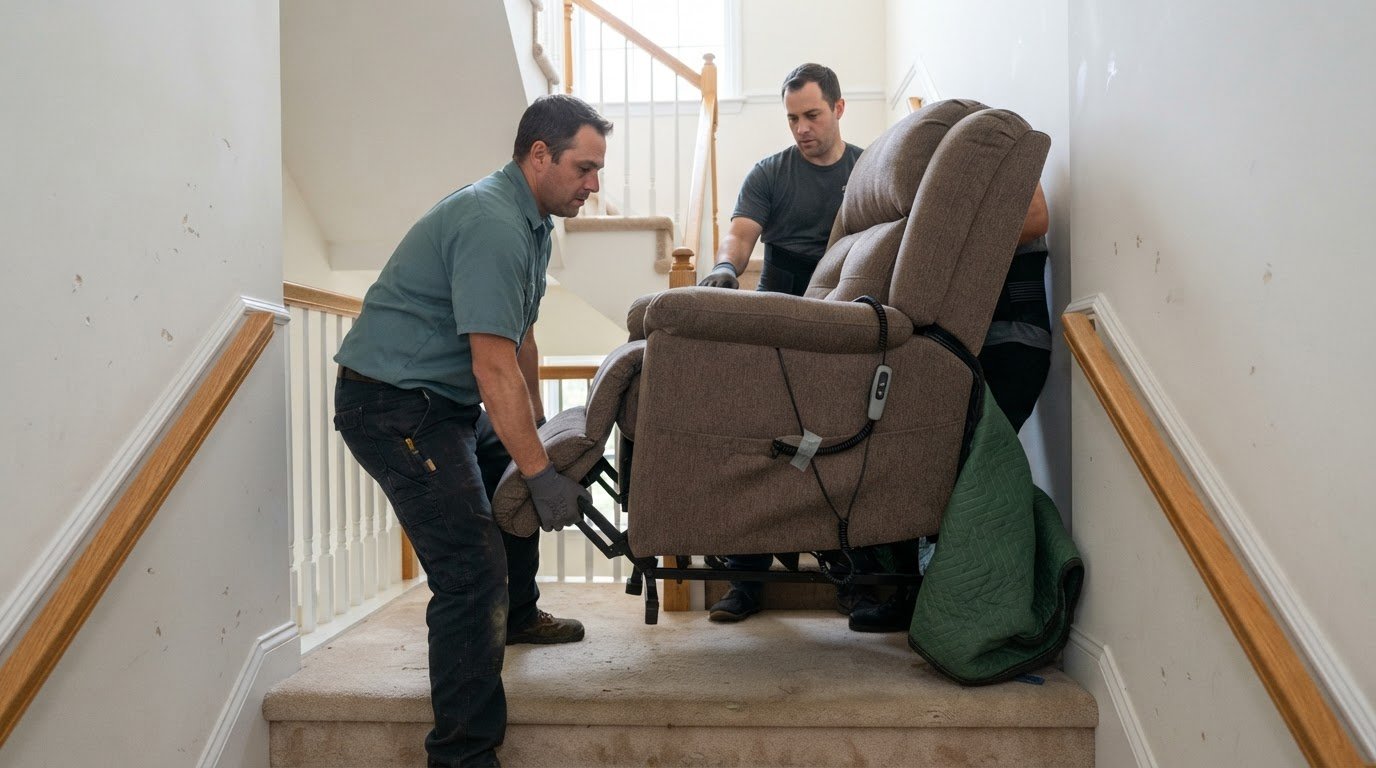
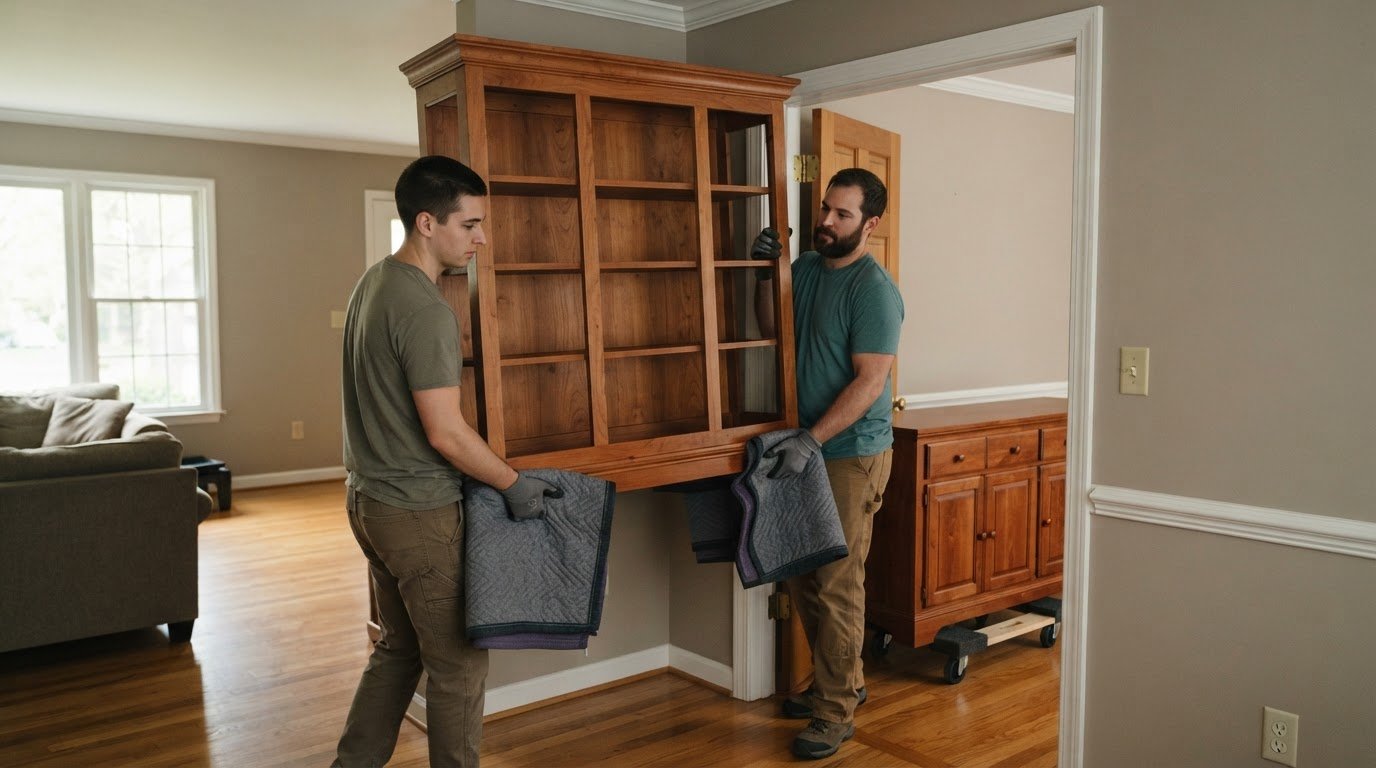
Doorway width alone doesn’t settle the question. A deep sectional may fit through the first doorway but fail at a narrowing hallway turn. Stair clearance also depends on the landing, ceiling, railing, and room available to rotate the sofa. The moving team considers the entire route instead of assuming the piece will fit because it passes one opening.
Modular construction can change the options. If sections detach, assess each piece separately for passage through doors and stairs. Fixed frames, arms, or attached chaises can limit how a sofa turns, even after cushions are removed. The professional weighs the benefit of separating components against the handling needed to protect their joints and finished surfaces.
Photos of difficult access points show the real conditions. Capture the narrow doorway, stair turn, landing, and any railing or obstruction that could affect movement. Include the sofa in its current position when practical. These views give the moving team more context than “tight stairs” and can help reveal where the indoor route becomes restricted.
An exterior route may be an option when indoor transport is blocked. The team evaluates the relevant window or balcony opening, the space outside it, and the route to the sofa’s final room. For example, a sectional that cannot turn around an apartment stair landing may have a suitable exterior opening nearby. The lift still needs a clear path at both ends.
Describe the obstacle precisely when discussing the move. Say whether the issue is a doorway, sharp stair turn, low ceiling, or landing with limited maneuvering room. Share photos and the sofa’s approximate dimensions. Those details help the professional determine whether a different carrying position or an alternate route is needed.
Once the route is assessed, the plan should account for how the sofa will enter, move through the home, and reach its final position. That includes protecting exposed surfaces and keeping the transport path clear. A hoist is a route solution, not a shortcut around planning: the opening, outdoor access, and indoor destination all need to work together.
Moving oversized sofas and sectionals
An oversized sectional may be several connected pieces with different shapes and weights, rather than one moving challenge. The plan should account for each section, its connection points, and the order in which it needs to travel. A long sofa with a fixed chaise, for example, may need a different approach from a modular set that separates cleanly.
Start with the furniture’s construction. The team identifies detachable modules, removable legs, loose cushions, and parts that must stay together. This helps determine whether the sofa can move as individual pieces or needs to remain assembled. For an antique sofa, tell the crew about fragile trim, delicate upholstery, or repairs that affect how it should be handled.
Next, prepare the sofa for the move. Movers protect vulnerable corners and upholstery, then keep hardware and detached components together for reassembly. Labeling modular pieces by position can help preserve their original arrangement. Packing should suit the material: exposed wood, fabric, and finished surfaces need different care. The goal is to keep every part secure from pickup through placement.
The route affects the sequence. If a sectional has several modules, the team plans which piece moves first and where each one will go. This matters when a hallway or landing offers limited turning space, or when the destination room has a narrow entry. The crew should also consider the route beyond the home, including transfer to the customer’s truck or the planned hoisting point. A couch hoisting service for oversized modular furniture in Centreville can help when the indoor route won’t work.
Before moving day, share the sofa’s make or style if known, approximate dimensions, detachable sections, and any delicate features. Photos can show how pieces connect and reveal damage or unusual construction. Mention any modifications to the sectional. Describing a fixed frame or fragile antique detail can help the crew prepare an appropriate handling plan.
At the destination, placement deserves the same care as removal. The team brings sections in the planned order, protects surfaces during movement, and positions each piece for reassembly. For example, placing the largest sofa section first may leave room to connect a chaise without shifting other furniture. The best sequence depends on the room layout and the sectional’s design.
If the sofa can’t pass through the usual entry, a couch hoisting service for oversized modular furniture in Centreville offers an exterior-route option to consider as part of the moving plan.
For an oversized sofa that needs careful handling from pickup to placement, arrange professional moving help for the job.
Heavy Furniture Moving: Sofa Hoisting
Heavy Furniture Moving provides sofa hoisting for oversized sofas and modular furniture that cannot pass through the usual indoor route. Consider the service when a doorway, stair landing, or hallway prevents a practical move and an exterior opening may provide another way in.
To start planning, share the sofa’s approximate dimensions, known weight, photos, and details about access at pickup and delivery. Include any building instructions for the proposed window or balcony. These details help shape a plan around the furniture and property, rather than treating every sectional the same.
If the sofa’s route is difficult, contact Heavy Furniture Moving to discuss sofa hoisting.
Plan the next move with confidence
Make the hoist part of your moving plan, not a last-minute fix. Once you understand the sofa’s route and building requirements, you can decide whether professional lifting belongs in the schedule. For a couch hoisting service for oversized modular furniture in Centreville, share the details that help the team plan the job and clarify the next step.
Heavy Furniture Moving offers Sofa Hoisting for bulky furniture, along with Movers Near Me and Exercise Equipment Moving. Choose the service that fits the work ahead, whether you’re relocating a sectional or arranging help with another heavy item.
Ready to talk through your sofa move? Contact Heavy Furniture Moving and take the next step with a clear plan.
Frequently Asked Questions
What Types of Large Items Can Movers Handle?
Movers can handle bulky household pieces such as sofas, pianos, safes, and exercise equipment. Heavy Furniture Moving also handles beds, dressers, dining tables, desks, and appliances. The item’s size, shape, and access route help determine the handling plan for a specific move.
What if my building doesn't allow street parking for a crane?
If street parking isn’t allowed, account for that restriction before scheduling the lift. Don’t assume a street crane is the only approach. The team can assess the building’s available access and proposed opening to plan the hoist for the site. Share the parking restriction and building instructions early so the moving plan reflects the conditions outside your home.
How much does furniture hoisting cost per floor or by crane in Northern Virginia?
There isn’t one per-floor or crane price for every Northern Virginia move. The price depends on the job and is provided after a quote request. The quote considers the item, building access, and setup required for the lift. A floor count alone doesn’t describe the full job, so include the furniture type and relevant access details when requesting a quote.
Does a couch hoisting service include disassembly, reassembly, and moving?
Disassembly and reassembly are included for sofa jobs. Whether the work also includes transport depends on the moving scope you arrange. For example, a hoist may bring a sofa through an exterior opening, while a separate move may transport it between addresses. Clearly describe your pickup and delivery needs so the planned work matches what you need.
Furniture hoisting companies serving Centreville and Fairfax County
When choosing furniture hoisting services in Centreville and Fairfax County, look for a team that can discuss the sofa, its dimensions and weight, and the access route. Share the address, floor, building instructions, and photos of difficult access points so the team can assess the job.
Frequently Asked Questions
Movers can handle bulky household pieces such as sofas, pianos, safes, and exercise equipment. Heavy Furniture Moving also handles beds, dressers, dining tables, desks, and appliances. The item’s size, shape, and access route help determine the handling plan for a specific move.
If street parking isn’t allowed, account for that restriction before scheduling the lift. Don’t assume a street crane is the only approach. The team can assess the building’s available access and proposed opening to plan the hoist for the site. Share the parking restriction and building instructions early so the moving plan reflects the conditions outside your home.
There isn’t one per-floor or crane price for every Northern Virginia move. The price depends on the job and is provided after a quote request. The quote considers the item, building access, and setup required for the lift. A floor count alone doesn’t describe the full job, so include the furniture type and relevant access details when requesting a quote.
Disassembly and reassembly are included for sofa jobs. Whether the work also includes transport depends on the moving scope you arrange. For example, a hoist may bring a sofa through an exterior opening, while a separate move may transport it between addresses. Clearly describe your pickup and delivery needs so the planned work matches what you need.