Couch Hoisting in Centreville: Costs and Estimate Terms
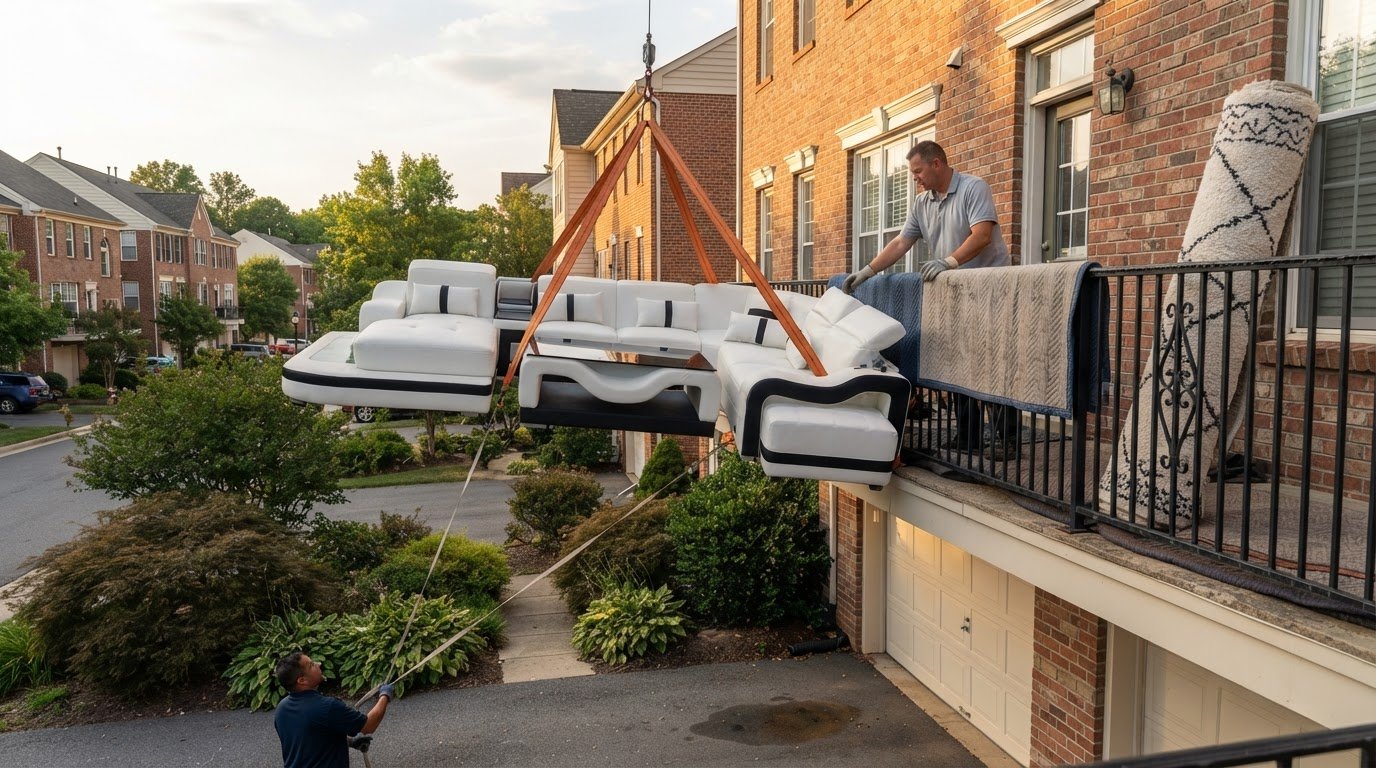
Hoisting isn't always the best way to get a couch inside. The cost and feasibility of couch hoisting over a balcony railing in Centreville in 2026 depend on the couch, access, rigging needs, crew and equipment. The price depends on the specific job and is provided after a quote request; a different route may make more sense if the couch can fit through a doorway or stairwell.
Estimate terms matter, too. A binding estimate and a non-binding estimate don’t offer the same price certainty. For non-binding moving estimates, the Federal Motor Carrier Safety Administration says customers should be prepared to pay up to 110% of the quoted amount at delivery. That figure applies to non-binding moving estimates, not as a set hoisting price.
This guide explains what affects the feasibility and cost of couch hoisting over a balcony railing in Centreville, how estimates differ, and what scheduling may involve. You’ll also learn when taking the couch apart, changing its route, or choosing another practical alternative could avoid a hoist. Use these factors to compare your options before arranging the move.
Key Takeaways
- Look beyond the couch itself: access, rigging, crew needs and equipment all shape the work involved.
- Read estimate terms closely so you understand what the quoted amount covers and how the final bill may be handled.
- Separate scheduling lead time from the time crews need on site; permits and job complexity can affect each differently.
- Compare quotes by their included work, equipment and possible added charges, not by the headline figure alone.
- Consider whether another route or approach can get the couch inside safely without a hoist.
Factors affecting hoisting cost
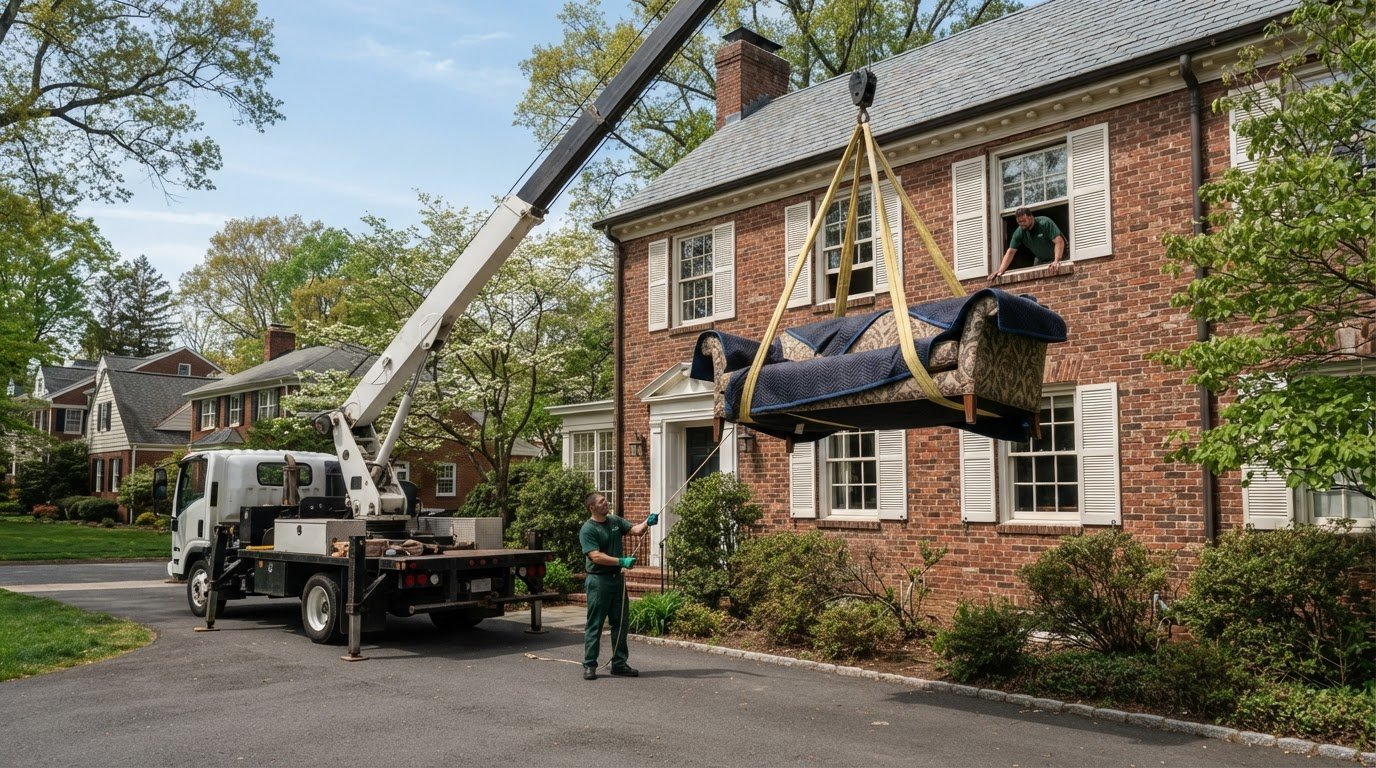
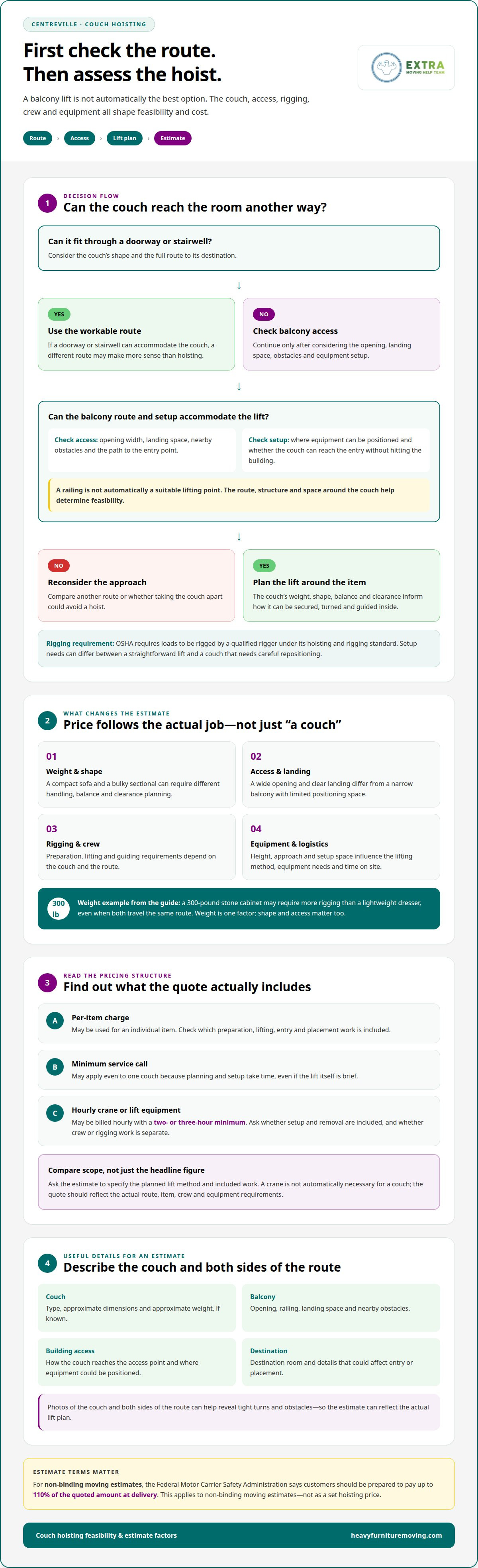
In 2026, Centreville homeowners assessing the cost and feasibility of couch hoisting over a balcony railing need to account for the full route. The couch must travel from its current room, across the exterior, and through the destination opening. Its weight and shape matter, but so do building access, landing space, and equipment needs. A clear setup can require different planning from a narrow balcony with limited room to position the load. An estimate should reflect the actual route and handling requirements, not just the word “couch.”
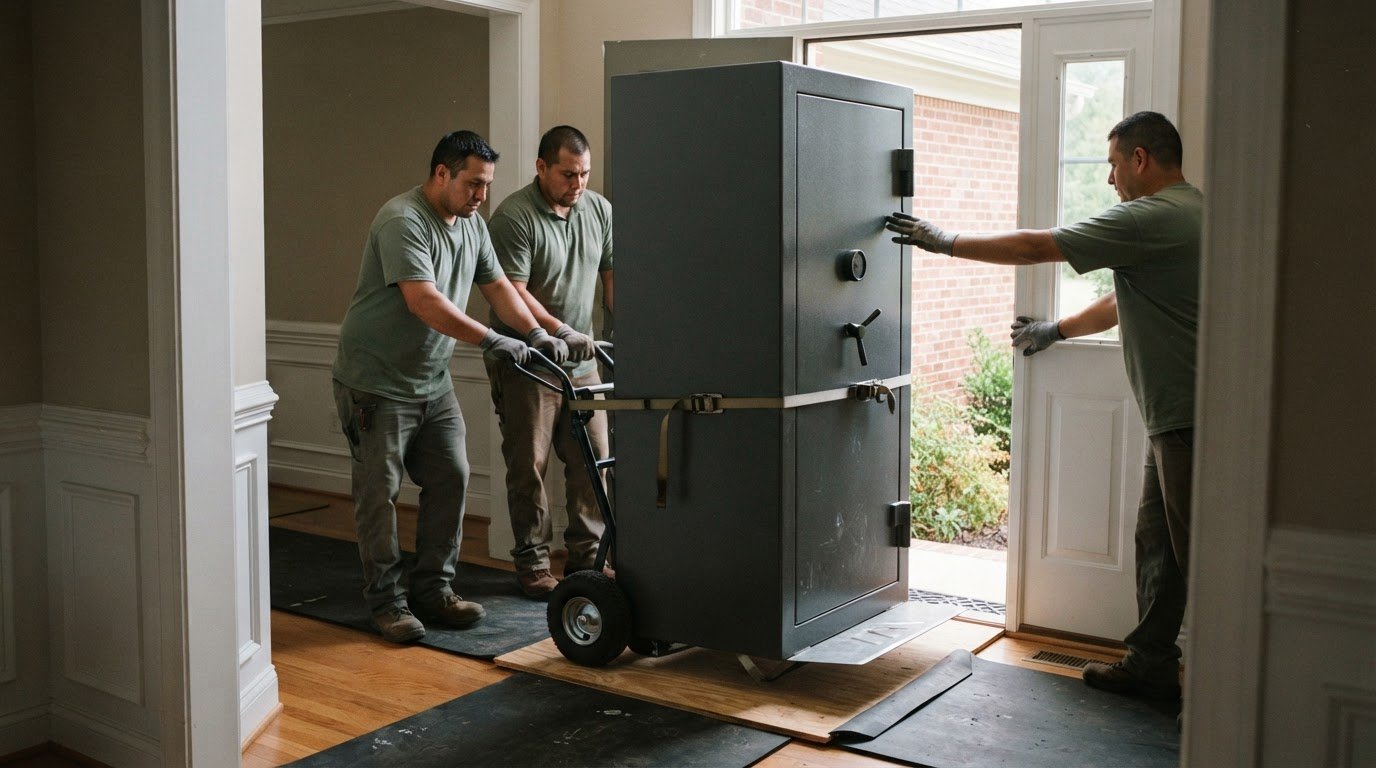
Weight is one practical starting point. A 300-pound stone cabinet may require more rigging than a lightweight dresser, even if both items travel the same route. Couches also vary: a compact model and a bulky sectional can demand different handling because their shape affects balance and clearance. The crew needs to account for how the item can be secured and turned during the lift. A heavier or awkwardly shaped piece can therefore add work beyond the vertical movement itself.
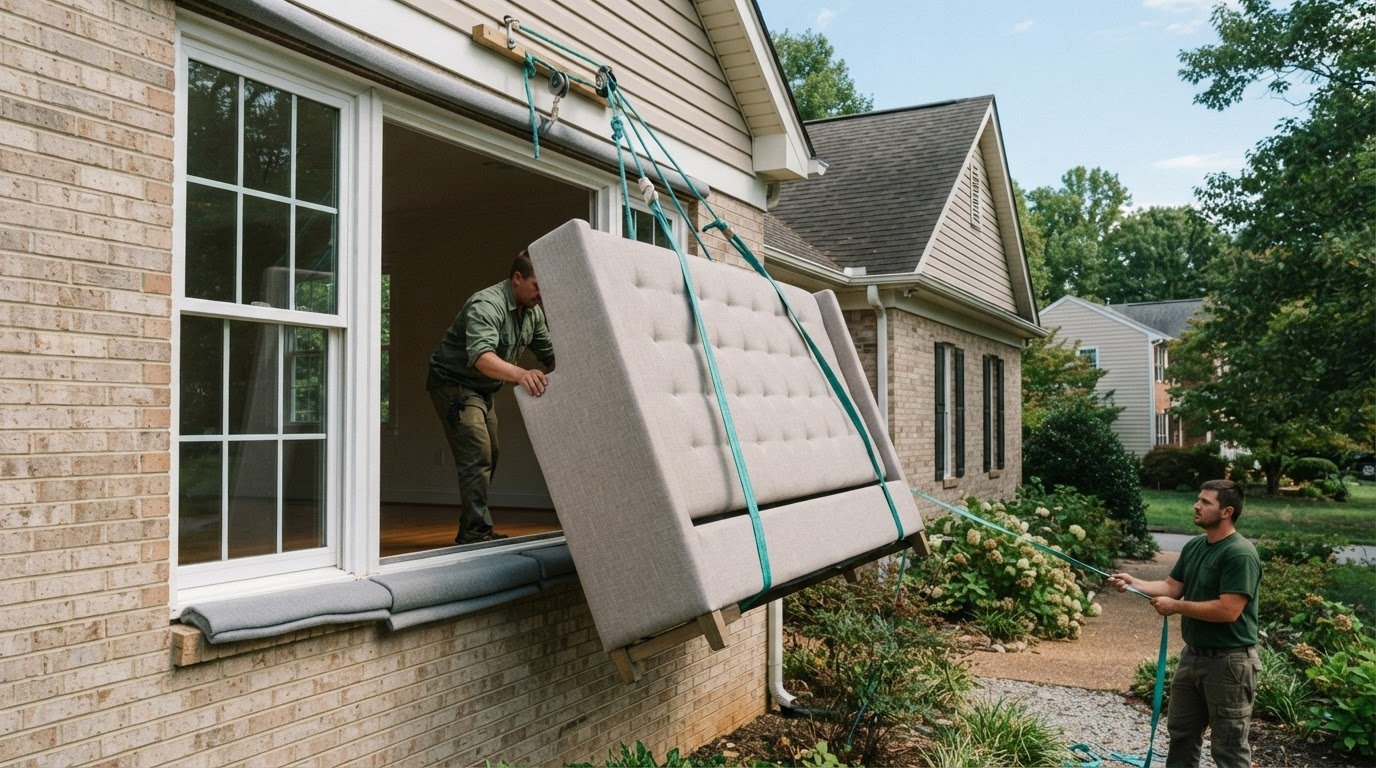
Balcony access can change the plan. A wide opening and clear landing create a different setup from a narrow railing with nearby obstacles. The crew must also consider where equipment can be positioned and whether the couch can reach the entry point without hitting the building. A railing is not automatically a suitable lifting point. The route, structure, and space around the couch all help determine whether a balcony hoist is feasible.
Rigging and crew requirements also affect the estimate. The Occupational Safety and Health Administration requires loads to be rigged by a qualified rigger under its hoisting and rigging standard. The couch’s shape, balance, and secure attachment inform the rigging plan. A straightforward lift may require less setup than a couch that needs careful repositioning around a tight balcony. The estimate should account for preparation, lifting, and guiding the item safely into the building.
Equipment and site logistics can add to the planning. The crew needs a lifting method suited to the height, approach, and couch dimensions. The access point and available setup space help determine which equipment can be used. A more involved setup can change the labor, equipment requirements, and time on site. That’s why two Centreville hoists for similar couches can involve different work.
For couch hoisting over a balcony railing in Centreville, cost and feasibility depend on both the couch and the site. Share the couch type and approximate weight, if known, along with details about the balcony, railing, building access, and destination room. Photos of the couch and both sides of the route can reveal tight turns and obstacles. These details help shape an estimate around the actual lift plan instead of treating every couch and balcony alike.
Furniture hoist prices and minimum service fees
Hoist estimates may use a per-item charge, a minimum service call, or hourly equipment billing. The estimate depends on the job, including the item’s size and weight, access, crew, and equipment needs. Even a single couch may involve a minimum charge because planning and setup take time, even when the lift itself is brief. Review the charging method, not just the final figure.
Crane or lift equipment may be billed hourly with a two- or three-hour minimum. That minimum can matter when a job requires a crane but takes less time on site. Ask what the quoted equipment time includes, such as setup and removal, and whether crew or rigging work is listed separately. Those details help explain why quotes for similar furniture may use different pricing structures.
Which furniture hoisting and crane companies serve Centreville, Virginia? Look for residential furniture movers that handle hoisting, and crane or lift companies when the job requires that equipment. For a couch, the estimate should specify the planned lift method and included work rather than assume a crane is necessary.
Furniture type affects the estimate because weight, size, and balance shape how an item can be handled. A standard sofa presents a different lift from a large sectional, whose length can complicate clearance and positioning. An armoire’s height may require careful control, while a piano is a heavy, delicate example that can call for specialized planning. A compact dresser may be easier to handle if its drawers are secured.
Use the estimate to understand exactly what service is being priced. A per-item amount may be easier to interpret for one couch, while hourly equipment billing may be more relevant when the plan involves a crane. A minimum service call can apply even to a small job. Check whether the scope covers preparation, lifting, entry, and placement, and note any separate equipment or crew charges.
For a Centreville couch, provide the furniture type, approximate dimensions, and the destination so the estimate can match the job. Photos of the couch and access route can clarify whether a sectional needs a different approach from a compact sofa. If the plan involves a crane, the quote should make its minimum billing period clear. Review couch hoisting options as you weigh the estimate against the work involved.
Hoist scheduling and job duration
For a Centreville couch hoist, book as early as the access plan allows. In dense urban areas where street permits are required, arranging a furniture hoist from the first call through completion can take one to three weeks. Timing depends on the lift method, access details, crew scheduling, and any permit process. This is not a fixed Centreville lead time; permit needs and scheduling availability shape the plan.
Scheduling starts with the job details. The couch’s dimensions, pickup location, balcony access, and destination help determine the crew and equipment needed. Share clear photos of the couch and route, along with details about the building entrance and landing. These specifics help establish whether the job needs a straightforward furniture lift or more involved equipment planning.
Street access can affect the schedule as much as the couch itself. A crane setup requiring a street permit needs time for the application process; in some cities, crane permit applications take several business days to process. Dense urban jobs can therefore take one to three weeks from the first call to completion when street permits are involved. Centreville scheduling depends on the site and any applicable access requirements.
Job duration and booking lead time are different. A single-item furniture hoist with good access can take under two hours, including setup and teardown. That estimate describes a straightforward job, not every balcony lift. A narrow approach, difficult landing, or extra coordination can extend the work because the crew must position equipment and guide the couch through the entry point.
More involved lifts take longer. Multiple items, tight clearances, or a full crane can make a furniture hoist last half a day. For example, angling a sectional around a balcony corner involves more handling than lifting a compact sofa along a clear path. The crew’s schedule should account for setup, the lift, indoor placement, and teardown.
To help scheduling go smoothly, provide these details together:
- The couch type and dimensions, including whether it is a sectional.
- Photos of the balcony, railing, landing area, and indoor route.
- The building address and any known limits on street or equipment access.
- Your preferred dates and any timing constraints for the move.
These details help identify a workable time window and flag possible delays early. A permit process, crane requirement, or tight access point can affect scheduling differently from a single-item lift with open access. Separate the time needed to arrange the hoist from the crew’s time on site, and plan for both.
A street permit may be needed if the crane setup requires street access. The requirement depends on the site and applicable access conditions. If a permit is required, factor the application process into the schedule.
Quote inspection and comparison checklist
Compare written quotes by access plan, included work, equipment, and listed charges. In Centreville, building approval and road-use requirements depend on the site and equipment placement.
Site Checks and Access Measurements
A useful site review traces the couch’s route from the pickup room to the balcony, then from the railing into the destination. Measure the couch’s width, height, and depth, along with the balcony opening and indoor entry. Note the railing shape, overhead obstructions, landing space, and tight turns. A sectional that must be angled through a narrow opening needs a different plan from a compact sofa.
In a condo or apartment, building management or association rules may require approval before balcony furniture hoisting. Confirm the building’s process and timing before setting the date, especially if the crew needs access to shared areas.
Hoisting Equipment and Crew
The lifting method depends on the couch, building height, balcony access, and setup space. A quote should describe the planned equipment, crew requirements, and how the couch will move over the railing and into the room. For example, a crane may be considered when the site layout calls for lifting equipment beyond a basic setup.
For a crane or hoist in Centreville, road-use permission depends on equipment placement and whether public space is involved. The quote should identify any required application and who handles it.
Compare estimates for the same job scope. One quote may include moving the couch to the balcony; another may start with the couch already there. Check whether the listed work covers preparation, lifting, indoor placement, and equipment removal. Differences in scope can explain why totals vary and make estimates harder to compare directly.
Check how the estimate addresses changes. A sectional with different dimensions from those provided could change the lift plan. A blocked landing or a crane setup requiring public-space use could also affect the work. Clear terms should explain how additional labor, equipment, or site changes are handled.
- Confirm the couch model or dimensions match the estimate.
- Check that the balcony, entry, and destination are included in the route description.
- Look for separate equipment, crew, setup, and removal charges.
- Compare stated exclusions and change terms across quotes.
Photos can support your measurements: include the couch, balcony opening, railing, landing, and indoor doorway. A floor plan or marked measurements can clarify a tight turn. These details help match the written quote to the Centreville site and reduce surprises if the route differs from the original description.
Alternatives to hoisting a couch
A balcony hoist isn’t the only way into a Centreville home. A professional can compare the couch’s size with the doorway, stairwell, service entrance, or another accessible opening. If one of these routes offers enough clearance, moving the couch through the building may avoid a balcony lift. The best alternative depends on the furniture and route, not simply the floor level.
Start by assessing the indoor route. A sofa that won’t clear the front doorway straight on may fit after a careful turn in a wider entry or hallway. A stairwell may work if its landings, corners, and overhead clearance accommodate the couch. Assess every turn, not just the couch’s width against the doorway. One tight landing can rule out an otherwise open-looking route.
The couch’s configuration may offer another option. Some couches have removable legs or sections that change their dimensions for transport. A mover can assess whether removing a component suits that couch, then compare its new shape with the route. A sectional, for example, may be easier to maneuver in separate pieces if its construction allows. This approach does not suit every model, and the couch should remain protected during handling.
Consider another building entrance, too. A service entrance or wider ground-floor access point may offer a clearer path than the main lobby. If the destination is upstairs, the stairwell or elevator still needs to accommodate the couch. An exterior entrance that works won’t solve the problem if the interior landing is too tight.
- Doorway: Compare couch dimensions with the opening and turning space.
- Stairwell: Account for landings, corners, and overhead clearance.
- Alternate entrance: Consider a service door or another route into the building.
- Furniture configuration: Have a professional assess whether removable parts change the fit.
- Balcony hoist: Keep it in consideration if indoor routes remain too tight.
The clearest decision comes from comparing the complete routes. A professional assessment can identify where each route becomes difficult, whether the couch’s shape can be changed safely, and which option involves less handling. For example, a sofa might clear the entry but not a stairwell turn, making a balcony lift more practical. Another couch may pass through an alternate entrance without a hoist.
Share the couch’s dimensions and photos of the possible routes to help assess those alternatives. Discuss couch access and hoisting options when you’re ready to plan the move.
Heavy Furniture Moving: Sofa Hoisting
Heavy Furniture Moving provides Sofa Hoisting for couches that cannot pass through an indoor route. Share the couch’s dimensions and details about the balcony, railing, and destination so the job can be assessed against the actual access challenges. If a doorway or stairwell provides a workable route, that may make more sense; if not, hoisting can provide another way into the home.
Use the earlier checks to prepare: note tight clearances, building access requirements, and any possible equipment setup needs. These details help frame the work and the estimate without assuming every Centreville balcony requires the same approach. For a couch that needs a professional lift, contact Heavy Furniture Moving to discuss Sofa Hoisting.
Make the next move with a clear plan
Before setting a date, decide what matters most: keeping the couch, using an alternate entrance, or choosing a professional lift. For the cost and feasibility of couch hoisting over a balcony railing in Centreville in 2026, a useful next step is to bring your preferred route and access details into one conversation. That gives the moving team a practical starting point for discussing the job.
Heavy Furniture Moving offers Sofa Hoisting, along with Movers Near Me and Exercise Equipment Moving. If your couch needs a professional lift, contact Heavy Furniture Moving to discuss the move. A clear plan can turn a difficult access problem into a manageable next step.
Frequently Asked Questions
What’s the difference between a binding and non-binding hoisting estimate?
A binding estimate sets an agreed charge for the work and conditions it describes; a non-binding estimate is an initial projection that can change. Read the scope and terms carefully, especially if access or equipment needs change. For non-binding moving estimates, the Federal Motor Carrier Safety Administration says customers should be prepared to pay up to 110% of the quoted amount at delivery. That guidance concerns moving estimates, not a fixed hoisting price.
What is the average cost to hoist a couch over a balcony in 2026?
There is no dependable average price for a Centreville couch hoist because the cost depends on the specific job. The couch, balcony access, route, crew, and equipment needs all affect the quote, which is provided after a request. Share the couch’s dimensions and clear access details so the estimate reflects your job rather than relying on a broad figure that may not suit your building.
What factors affect the cost of hoisting a couch over a balcony?
The couch’s size, weight, and shape affect how it must be handled. A sectional may need more careful positioning than a compact sofa. Balcony clearance, landing space, building access, and equipment setup also shape the work. For example, a lift with room to position the couch differs from one involving a narrow opening and limited approach space. Additional crew or specialized equipment can change the estimate, so review the stated scope.
Can a couch fit through the balcony opening and be safely hoisted over the railing?
Feasibility depends on the couch’s dimensions, shape, and balance, as well as the opening and available space beyond the railing. A professional assessment considers whether the couch can pass through without catching and how it can be secured and guided. The Occupational Safety and Health Administration requires loads to be rigged by a qualified rigger under its hoisting and rigging standard. A balcony is not automatically a workable route just because it looks wide enough.
What measurements and photos do movers need to assess a couch hoist?
Provide the couch’s width, height, and depth, along with the balcony opening and entry dimensions. Photos should show the couch, railing, balcony, exterior approach, and indoor doorway or landing. Include views from both sides of any tight turns. For a sectional, say whether it separates into pieces and share the dimensions of each piece if available. These details can reveal clearance issues a single balcony photo might miss.
How does balcony hoisting compare with disassembly, stair carry, or window removal in cost and feasibility?
Disassembly may help if removable components let the couch fit through an indoor route; carrying it up stairs depends on clearances at doors, corners, and landings. Removing a window changes the access opening and may involve building approval and additional work. Balcony hoisting avoids some indoor turns but requires a workable exterior setup and rigging plan. Compare the scope and access needs of each feasible option, since the easiest route depends on the couch and building.
What are the safety, property-damage, and liability risks of balcony couch hoisting?
A poorly planned lift can expose the couch, railing, walls, windows, or nearby property to impact or scraping. An unsecured or unbalanced load also creates a serious handling hazard. Building rules, site conditions, and written estimate terms matter, too. Before scheduling, clarify responsibility for the work area and how damage concerns are handled.
Frequently Asked Questions
A binding estimate sets an agreed charge for the work and conditions it describes; a non-binding estimate is an initial projection that can change. Read the scope and terms carefully, especially if access or equipment needs change. For non-binding moving estimates, the Federal Motor Carrier Safety Administration says customers should be prepared to pay up to 110% of the quoted amount at delivery. That guidance concerns moving estimates, not a fixed hoisting price.
There is no dependable average price for a Centreville couch hoist because the cost depends on the specific job. The couch, balcony access, route, crew, and equipment needs all affect the quote, which is provided after a request. Share the couch’s dimensions and clear access details so the estimate reflects your job rather than relying on a broad figure that may not suit your building.
The couch’s size, weight, and shape affect how it must be handled. A sectional may need more careful positioning than a compact sofa. Balcony clearance, landing space, building access, and equipment setup also shape the work. For example, a lift with room to position the couch differs from one involving a narrow opening and limited approach space. Additional crew or specialized equipment can change the estimate, so review the stated scope.
Feasibility depends on the couch’s dimensions, shape, and balance, as well as the opening and available space beyond the railing. A professional assessment considers whether the couch can pass through without catching and how it can be secured and guided. The Occupational Safety and Health Administration requires loads to be rigged by a qualified rigger under its hoisting and rigging standard. A balcony is not automatically a workable route just because it looks wide enough.
Provide the couch’s width, height, and depth, along with the balcony opening and entry dimensions. Photos should show the couch, railing, balcony, exterior approach, and indoor doorway or landing. Include views from both sides of any tight turns. For a sectional, say whether it separates into pieces and share the dimensions of each piece if available. These details can reveal clearance issues a single balcony photo might miss.
Disassembly may help if removable components let the couch fit through an indoor route; carrying it up stairs depends on clearances at doors, corners, and landings. Removing a window changes the access opening and may involve building approval and additional work. Balcony hoisting avoids some indoor turns but requires a workable exterior setup and rigging plan. Compare the scope and access needs of each feasible option, since the easiest route depends on the couch and building.
A poorly planned lift can expose the couch, railing, walls, windows, or nearby property to impact or scraping. An unsecured or unbalanced load also creates a serious handling hazard. The Occupational Safety and Health Administration requires loads to be rigged by a qualified rigger under its hoisting and rigging standard. Building rules, site conditions, and written estimate terms matter, too. Before scheduling, clarify responsibility for the work area and how damage concerns are handled.