Couch Hoisting for Ashburn Townhomes with Narrow Entryways

A narrow entryway doesn’t always mean your oversized sofa has to stay outside. A couch hoisting service for narrow corner townhomes in Ashburn can bring a couch in through an upper-floor window or over a balcony when the opening and lift path allow it.
It’s understandable to worry about tight turns, walls, and furniture getting scraped or bumped. Hoisting provides another route when stairs and hallways are too restrictive, while suitable equipment and protective materials help manage the move.
Here, you’ll learn what determines whether a sofa or sectional can be hoisted, how the team plans the route, and what affects the process. Furniture size, window or balcony access, exterior clearance, and the townhome’s layout all shape the plan, helping you understand the next steps.
Key Takeaways
- Learn what determines whether a sofa can pass through an upper-floor window or balcony opening.
- See how the building’s access, the furniture’s size, and the outside lifting path shape the plan.
- Understand how lifting equipment and protective materials help manage a hoist.
- Find out when hoisting may be a better route than moving a sofa through narrow stairs or entryways.
- Learn how Heavy Furniture Moving’s sofa hoisting service can help with an oversized couch or sectional.
Can you hoist furniture through a window on an upper floor?
Yes, an upper-floor window can provide a route when the couch and opening allow safe passage. The plan depends on the furniture’s dimensions, the window, exterior clearance, and access for equipment.
For Ashburn townhomes, exterior access rules depend on the property and proposed setup. The plan accounts for shared areas, lift placement, and access limits before hoisting begins.
HOA approval requirements vary by community and setup. Crane placement or use of public space may require permission or permits, so planning should identify the responsible property manager or authority before equipment arrives.
Building Access and Site Checks
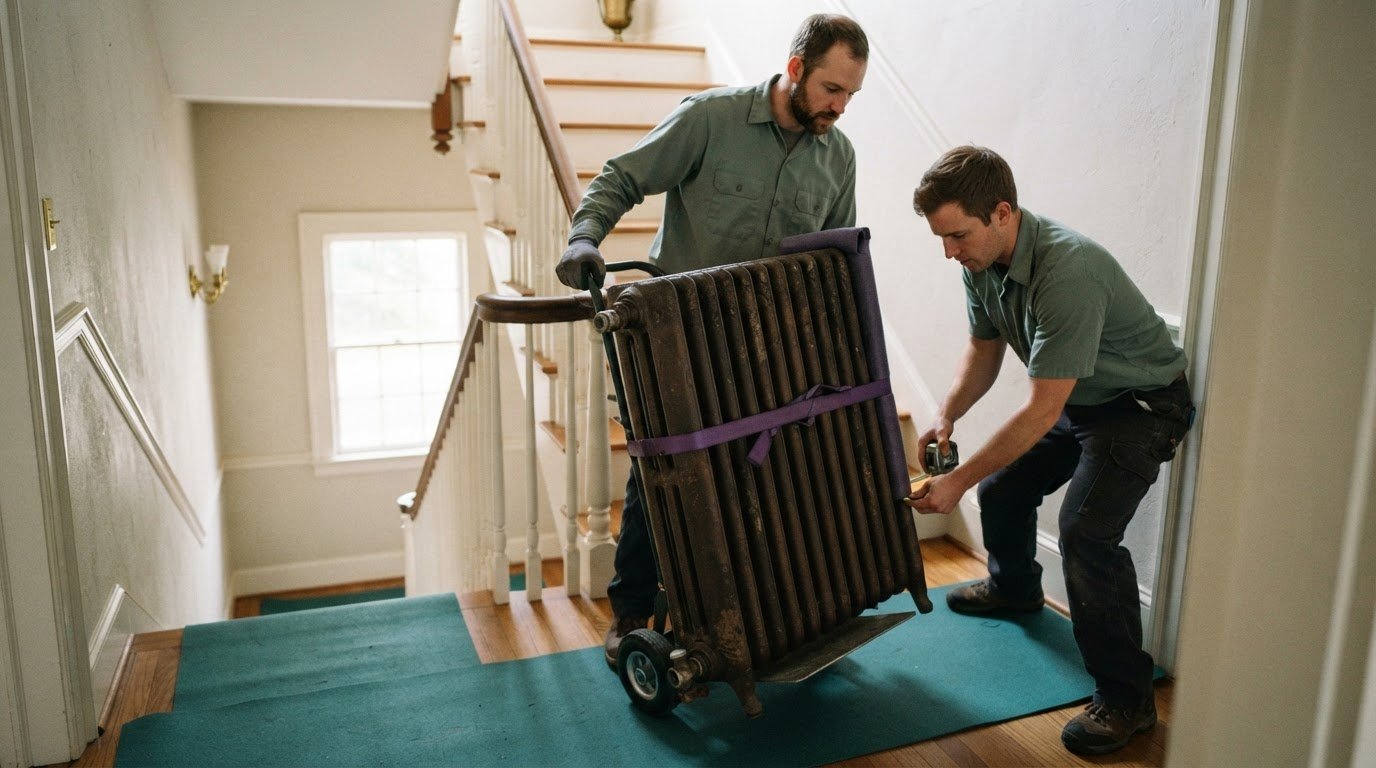
A site check maps the couch’s route from the staging area to the target window. The team assesses the building approach, gates, shared walkways, landscaping, overhead obstructions, and space for lifting equipment. For apartments, condominiums, or high-rises, elevators, loading areas, and building access procedures also affect the plan. Together, these details help establish a workable route.
At CityHouse Ashburn Station, townhomes have 9-foot ceilings, but ceiling height alone doesn’t determine whether a couch can pass. The window opening, stair turns, and exterior setup matter too. A route near 267 or the W&OD Trailhead, 1 mile away, still requires a property-specific access assessment; nearby roads and landmarks don’t establish where a lift can be positioned.
Measurements and Photos for Couch Quotes
For a quote, share the couch’s length, depth, and height, along with the dimensions of its largest fixed parts. The team also needs the window’s clear opening, accounting for the sash and other obstructions. Photos should show the couch, the approach to the window, the full exterior wall, and the ground area where lifting equipment may need to stand.
Include clear views of gates, balconies, nearby buildings, overhead lines, and shared access areas. These images can reveal tight turns and obstacles that measurements alone won’t show. For a sectional, identify its separate pieces and connection points. Together, photos and measurements help assess the route, access, and equipment needs before planning the lift.
Hoisting oversized furniture that will not fit through standard entryways
A tight doorway, stair turn, or hallway can block a large sofa, even when the room has enough space. Exterior lifting provides another route if the furniture, opening, and outdoor setup work together.
External Lifting for Oversized Furniture
If a sectional cannot turn at an Ashburn townhome landing, the team can assess an exterior route through a suitable window or balcony. The plan considers the piece’s dimensions, balance points, opening, and lift path. Exterior clearance matters too: nearby walls, trees, balconies, and overhead obstacles can affect the route.
The crew also considers where the furniture can be staged and how to approach the building. A narrow shared walkway or limited outdoor access may change the setup. Exterior lifting works only when the route allows controlled movement from the staging point to the destination, without forcing the furniture through a tight interior turn.
Appliance and Large Furniture Hoisting
Large items need different handling based on their shape, weight distribution, and surfaces. A refrigerator, for example, has a rigid body and doors that can shift or open; a sofa has flexible upholstery and projecting arms. Before choosing a route, a hoisting assessment identifies the item’s dimensions, removable parts, and suitable grip points.
For oversized furniture, the team plans how to keep the item stable as it passes the exterior wall and opening. Appliances also need attention to exposed surfaces and parts that can move. A clear description of the item helps determine whether a window or balcony route suits both the building and the object.
Furniture Hoisting Service Areas
This article focuses on Ashburn, including corner townhomes where entryways, landings, and stair turns can restrict bulky furniture. The specific property still shapes the plan. Its exterior, access points, and staging area determine whether an outside lift can reach the right opening.
For a move within Ashburn, share the property type and the furniture’s destination floor. That context helps the team distinguish a townhome’s exterior approach from an apartment or condominium setup, where shared access may affect equipment placement and timing.
Protection belongs in the route plan, not as an afterthought. The team uses protective materials on vulnerable furniture surfaces and nearby contact areas. A sofa’s corners, upholstery, and legs need different attention than a hard appliance casing. A clear staging area and planned path also reduce unnecessary handling near walls, railings, and window frames.
Before the lift, the crew aligns the item with the opening and maintains a controlled path outside the building. If a sectional separates, each piece can be assessed and handled as its own load. If it stays assembled, its full dimensions and shape guide the plan. For help with an oversized couch, explore furniture hoisting support as a practical option.
Specialty lifting equipment and protective materials
Equipment choices depend on the furniture, building, and planned route. The crew matches the lifting setup and surface protection to those conditions.
Specialty Hoisting Equipment
A hoist needs equipment suited to the load and space around the building. Depending on the setup, this can include lifting straps, lines, and a controlled lifting system. The crew considers the couch’s shape, weight distribution, and attachment points before selecting equipment. A sectional with separate pieces may need a different setup than an assembled sofa.
Equipment must also suit the approach. Limited space beside an Ashburn townhome may affect where a lifting system can be positioned. The team considers the building’s exterior, the window or balcony, and the route between them. The opening and exterior surface must allow the load to move without snagging or rubbing.
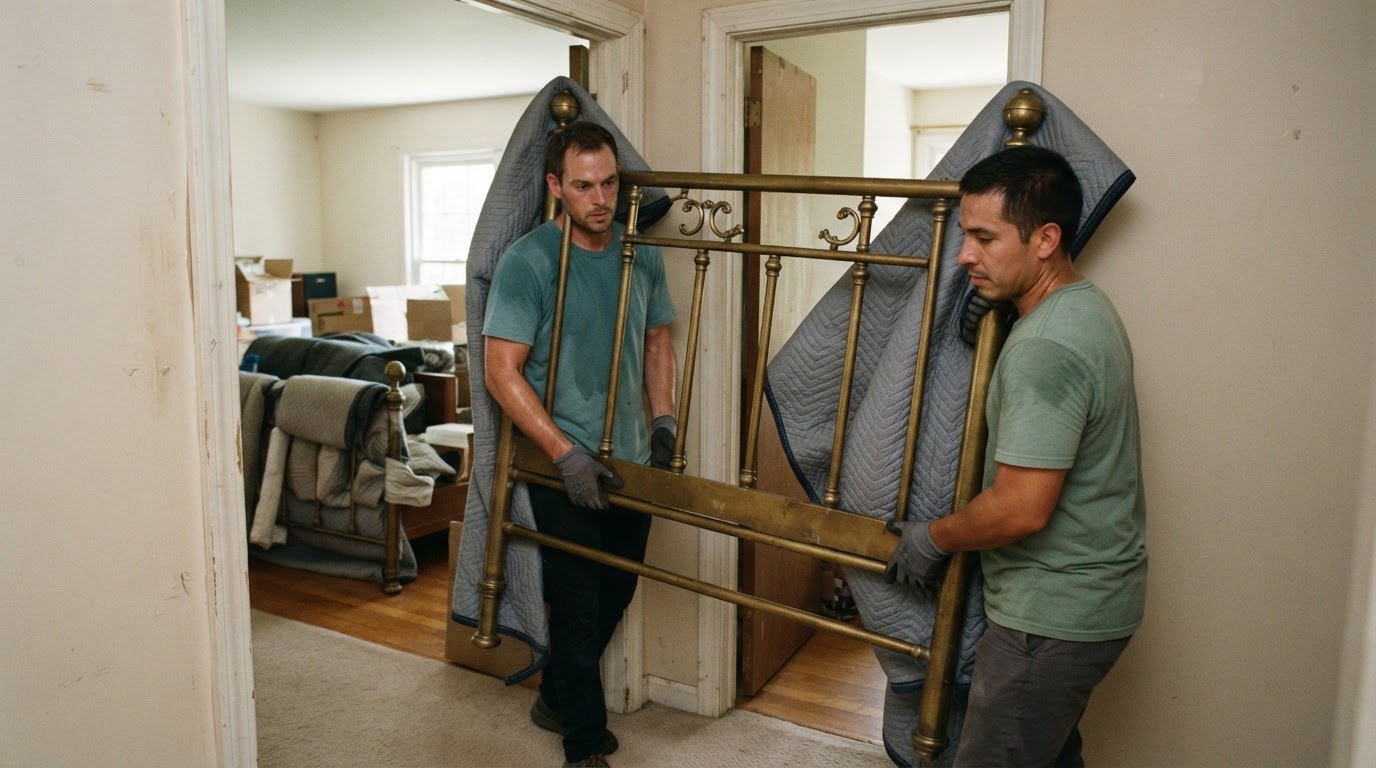
Protective materials serve a different purpose from lifting gear. Moving blankets or padding can cover upholstery, wood trim, and nearby surfaces during handling. Wrapping vulnerable areas before rigging helps limit direct contact with straps and lines. The team can also protect the couch’s corners, legs, and arms, which are exposed during a lift.
Rigging Equipment and Lift Procedures
Rigging connects the furniture to the lifting system and helps keep the load controlled. The crew positions straps around stable parts of the couch, then checks that it sits evenly. A sofa with a deep chaise, for example, may need its balance assessed before it leaves the ground. Poorly positioned straps can allow furniture to tilt or shift during movement.
Before lifting, the team checks the attachment points, line path, and clearance near the opening. The crew raises the furniture gradually, watching for movement against the building or window frame. A spotter can guide the load from the opening while the lifting team manages the lines. Clear communication helps the team respond to a shift or obstruction.
At the opening, the team guides the furniture through the narrowest point with controlled movements. A sofa arm or sectional corner can catch even when the main body fits. Padding at contact points helps protect the item and surrounding surfaces. Once inside, the crew carefully removes the rigging and checks that the couch is stable before moving it onward.
For an Ashburn townhome, the equipment plan matches the item’s shape to the building’s route. Protective materials address contact points, while rigging supports controlled movement. Both are essential parts of the lift, and each must suit the specific couch and opening.

When to hoist furniture through a window or over a balcony
Hoisting can make sense when a sofa cannot pass through interior doors, halls, or stairs. The outside route must also fit the furniture and allow a controlled approach to the opening.
Window and Balcony Furniture Entry
A window or balcony can provide a practical entry point when interior turns block the route. The crew compares the furniture’s shape with the opening and checks the exterior path. A sofa may fit through a wide opening lengthwise, while a sectional corner may need a different angle or separate handling.
Balconies bring their own constraints. The team considers railings, nearby walls, and the space needed to guide the furniture inside. A balcony door may offer a simpler final entry than a window, but its frame and surrounding layout still matter. The crew plans the transition to keep the sofa from catching on the railing or building.
Protection should cover both the item and likely contact points. Moving blankets can shield upholstery and finished wood, while padding can protect window frames and balcony railings. The crew also keeps the passage clear of loose items. A side table beside the balcony door, for example, can obstruct the landing and complicate the sofa’s final turn.
An exterior route isn’t automatically the better choice. If a sofa can pass through a doorway without forcing tight turns, an interior route may avoid the extra exterior setup. The team weighs the full path, including the final room entrance, rather than judging only the window or balcony opening.
Ceilings and Window Access
Ceiling height affects how furniture moves once it reaches the room. A tall sofa or upright piece may need careful angling beneath the ceiling and through the interior passage. The crew considers the room’s height and route to its final position, including ceiling fixtures that could limit movement.
Window access depends on the clear opening, not just the visible glass. The frame, sash, and nearby trim can reduce usable space. The crew assesses these alongside the sofa’s arms, legs, and overall shape. A piece that appears narrow from the front may need extra clearance when turned sideways.
Before lifting, the team plans how the item will approach, pass through, and move away from the opening. Protective coverings can help shield floors beneath the landing area and nearby walls. The crew also considers railings and window frames during the transition. These details matter in an Ashburn townhome, where a tight interior route may lead directly into a compact room.
Choose the route that gives the furniture a controlled path, with room to turn at the opening and inside the home. That decision depends on the couch’s dimensions, entry point, and surrounding surfaces, not just the floor level.
Sofa and sectional hoisting
A sofa can be hoisted through a window or balcony when its dimensions fit the clear opening and route. There’s no single maximum size: length, depth, height, shape, and turning room all matter.
For a useful assessment, the team considers the sofa as it will be lifted. Measure its full length, depth, and height, including fixed arms or a chaise. Then compare those dimensions with the opening’s usable width and height. A wide couch may pass on its side, while a tall back or deep arm can limit the angle.
Sectionals need a closer look. Some separate into individual pieces, while others remain joined. The team considers each piece’s size, connection points, and shape. A chaise section, for example, may need a different approach than a straight middle seat. If the pieces separate, assess the route and opening for each one.
Details beyond the overall measurements can change the plan. Removable legs may reduce a sofa’s height, while fixed feet or a reclining mechanism may add bulk. The team also accounts for shifting cushions and upholstery that could rub against a frame. Clear details about these features help determine how the couch should be oriented.
Before lifting, the crew matches the furniture’s balance to its rigging points. A sectional with an uneven chaise side may sit differently from a symmetrical sofa. The team plans how to keep the piece steady as it approaches the opening, then guides its arms and back through the tightest area. Smooth, controlled movement helps avoid abrupt contact.
Room layout matters after the sofa enters. A couch that clears a window may still need to turn around a nearby wall or pass through an interior doorway. Before deciding how to orient the furniture outside, the team considers its final position, such as a living-room corner beside a wall.
Photos can clarify the sofa’s shape and entry route. Include the full piece, its chaise or reclining sections, and the window or balcony from inside and outside. A photo of the intended room can also show whether the entry path leads to a tight turn. Pair these views with measurements of the couch and opening.
For a narrow Ashburn townhome, sofa hoisting is especially relevant when interior stairs or turns restrict a bulky couch. Share the sofa’s dimensions and configuration to start planning the route. Arrange a sofa hoisting plan for an oversized couch or sectional.
There is no fixed maximum size for a sofa to be hoisted through a window or balcony. It depends on the sofa’s length, depth, height, shape, and turning room compared with the opening and route. It may also fit when turned on its side or separated into pieces.
Heavy Furniture Moving: Sofa Hoisting
Heavy Furniture Moving provides Sofa Hoisting for oversized couches that can’t clear narrow townhome stairs, halls, or entryways. The service offers a professional option when an exterior route through a suitable window or balcony fits the sofa and building access.
To plan the move, share the couch’s dimensions and configuration, along with details about the intended opening and property access. These details help shape the route and lifting approach. If a tight turn or bulky sectional is holding up your move, Sofa Hoisting is the next step.
Contact Heavy Furniture Moving to discuss your sofa hoisting needs.
Plan a Move That Fits Your Home
Before arranging a move, decide what successful delivery looks like in your home. Consider which room the sofa belongs in, how it should face, and whether other furniture needs to move first. You may want it ready for guests, positioned for daily use, or placed before unpacking begins. Sharing that priority helps the moving team understand what matters most.
For a couch hoisting service for narrow corner townhomes in Ashburn, share your moving priorities and discuss an approach for your home. Mention whether the sofa is part of a larger move or needs to stay assembled. That context helps shape a plan around the work you want done, not just the furniture itself.
Heavy Furniture Moving offers Movers Near Me, Exercise Equipment Moving, and Sofa Hoisting. Choose the support that fits your move, then talk through your furniture move with Heavy Furniture Moving. A clear plan can help you move forward with confidence and make your new space feel ready for everyday life.
Frequently Asked Questions
Can you hoist to the second floor without closing the street?
Sometimes, a second-floor hoist can be set up without closing a street. The deciding factors include the building’s position, exterior access, lifting equipment, and space to stage the furniture. A townhome with a clear approach may allow the crew to work within the property. If the setup needs a crane or public-space access, permissions and a different placement plan may be necessary.
How do you price a sofa hoist?
Sofa hoist pricing depends on the item and work involved. Heavy Furniture Moving uses hourly labor with a two-hour booking minimum and flat rates for most single heavy items. The upfront quote includes stairs and wrapping before work begins. Share the sofa type, access route, and destination so the quote reflects the actual job, rather than assuming every hoist follows the same plan.
Is hoisting safe for my balcony or railing?
A balcony or railing must be considered as part of the lifting route, not used as a lifting anchor. The crew assesses the balcony opening, railing position, and clearance for guiding the couch inside. A sectional corner, for example, may need to pass above or beside a railing without bearing against it. The planned route should protect the furniture without placing the load on building features.
What about permits?
Permit needs depend on the lifting setup and whether it uses public space. A lift contained within private property may require different coordination than a crane positioned near a street or sidewalk. Townhome associations or building managers may also set access procedures. Planning should account for equipment placement, the work area, and any permissions tied to the property or public-space use.
What items do you hoist most often?
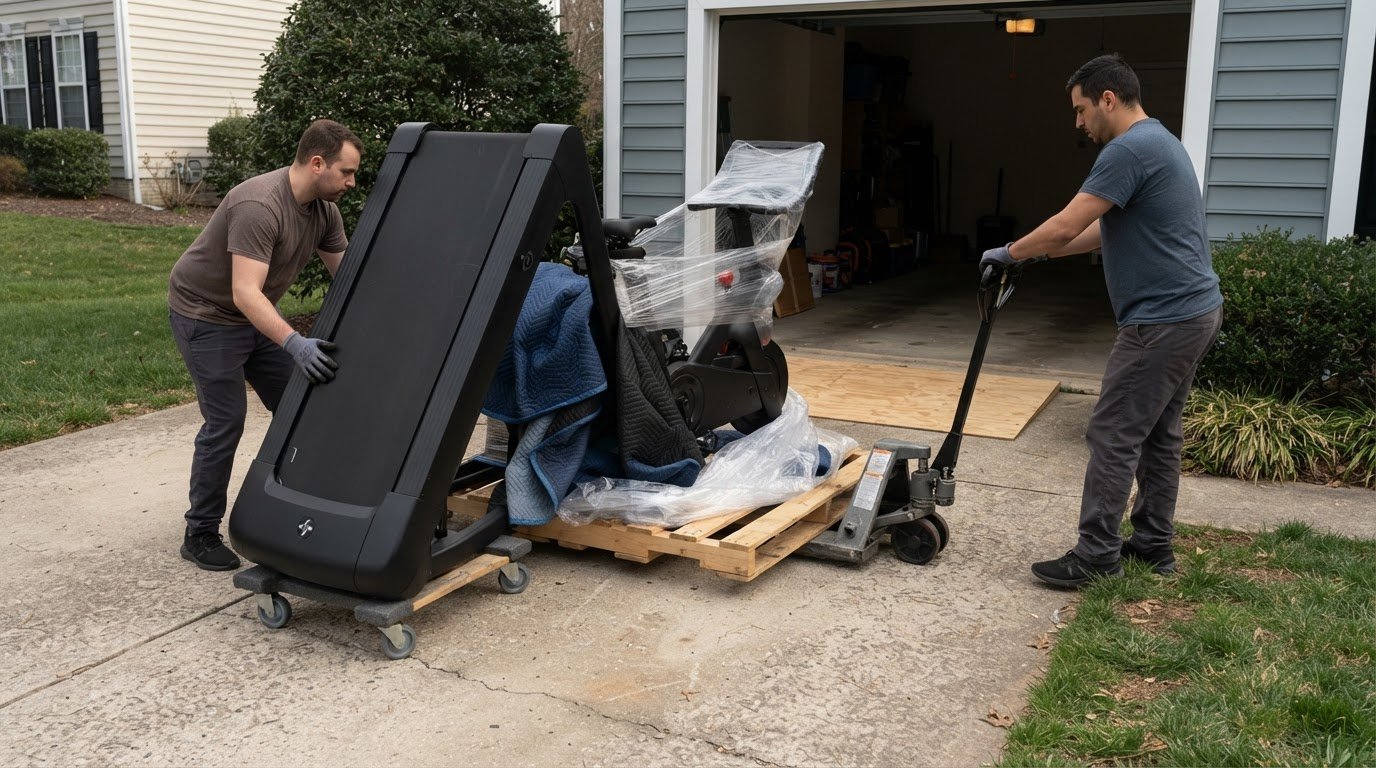
Sofas and sectionals are the clearest fit for sofa hoisting, especially when their size or shape blocks a stairwell or doorway. Heavy Furniture Moving also handles bulky items such as exercise equipment, pianos, and safes, but the route and handling plan depend on the item. A treadmill, for example, has different dimensions and handling needs than an upholstered sectional.
Are couch hoisting services available for narrow townhomes in Ashburn, Virginia?
Yes, Heavy Furniture Moving offers Sofa Hoisting in Ashburn. A couch hoisting service for narrow corner townhomes in Ashburn can help when a couch cannot make an interior turn and an exterior route is workable. Townhome access, furniture dimensions, and the intended opening shape the plan. Share whether the item is a sofa or sectional and which floor it needs to reach.
Which furniture hoisting companies serve near Ashburn, Virginia?
Heavy Furniture Moving serves Ashburn and nearby communities, including Aldie, McLean, Reston, South Riding, and Fairfax. Its Sofa Hoisting service is for couches that cannot pass through standard entryways. The company also offers Movers Near Me and Exercise Equipment Moving. For a specific townhome, the furniture’s size and building access route help determine the plan.
What does couch hoisting cost in Ashburn, and is there a minimum charge?
The cost depends on the job, and hourly labor has a two-hour booking minimum. Heavy Furniture Moving also offers flat-rate pricing for most single heavy items. The upfront quote includes stairs and wrapping. Share the couch details and access conditions to get a quote suited to the work, rather than relying on a generic estimate.
Frequently Asked Questions
Sometimes, a second-floor hoist can be set up without closing a street. The deciding factors include the building’s position, exterior access, lifting equipment, and space to stage the furniture. A townhome with a clear approach may allow the crew to work within the property. If the setup needs a crane or public-space access, permissions and a different placement plan may be necessary.
Sofa hoist pricing depends on the item and work involved. Heavy Furniture Moving uses hourly labor with a two-hour booking minimum and flat rates for most single heavy items. The upfront quote includes stairs and wrapping before work begins. Share the sofa type, access route, and destination so the quote reflects the actual job, rather than assuming every hoist follows the same plan.
A balcony or railing must be considered as part of the lifting route, not used as a lifting anchor. The crew assesses the balcony opening, railing position, and clearance for guiding the couch inside. A sectional corner, for example, may need to pass above or beside a railing without bearing against it. The planned route should protect the furniture without placing the load on building features.
Permit needs depend on the lifting setup and whether it uses public space. A lift contained within private property may require different coordination than a crane positioned near a street or sidewalk. Townhome associations or building managers may also set access procedures. Planning should account for equipment placement, the work area, and any permissions tied to the property or public-space use.
Sofas and sectionals are the clearest fit for sofa hoisting, especially when their size or shape blocks a stairwell or doorway. Heavy Furniture Moving also handles bulky items such as exercise equipment, pianos, and safes, but the route and handling plan depend on the item. A treadmill, for example, has different dimensions and handling needs than an upholstered sectional.
Yes, Heavy Furniture Moving offers Sofa Hoisting in Ashburn. A couch hoisting service for narrow corner townhomes in Ashburn can help when a couch cannot make an interior turn and an exterior route is workable. Townhome access, furniture dimensions, and the intended opening shape the plan. Share whether the item is a sofa or sectional and which floor it needs to reach.
Heavy Furniture Moving serves Ashburn and nearby communities, including Aldie, McLean, Reston, South Riding, and Fairfax. Its Sofa Hoisting service is for couches that cannot pass through standard entryways. The company also offers Movers Near Me and Exercise Equipment Moving. For a specific townhome, the furniture’s size and building access route help determine the plan.
The cost depends on the job, and hourly labor has a two-hour booking minimum. Heavy Furniture Moving also offers flat-rate pricing for most single heavy items. The upfront quote includes stairs and wrapping. Share the couch details and access conditions to get a quote suited to the work, rather than relying on a generic estimate.