Avoiding the Stress of Moving Heavy Items Alone: A Safer, Simpler Plan
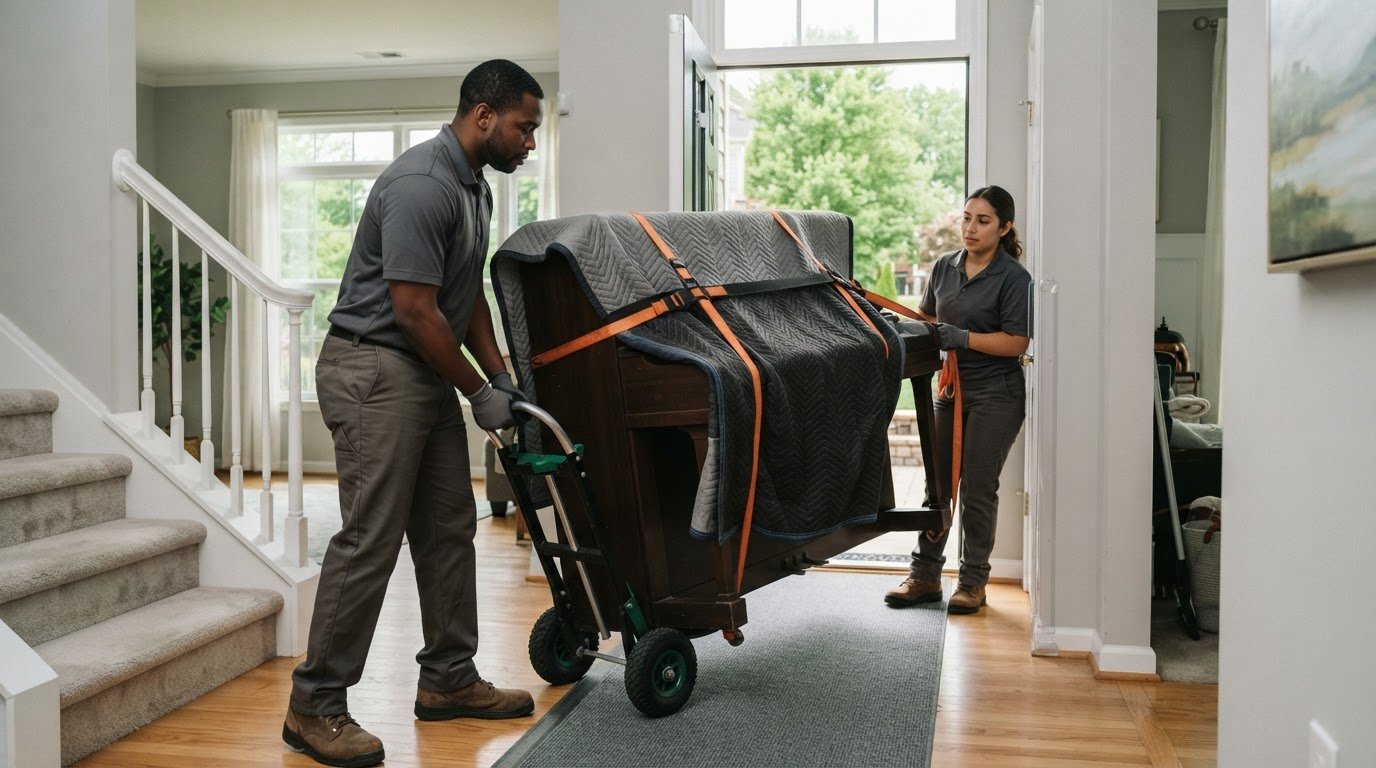
What if the smartest way to move a heavy item is to stop treating it like a test of strength? If you’re avoiding the stress of moving heavy items alone, you may already be weighing the risks: Can you control the item, will it clear the route, and can you protect your floors and walls along the way? Those are the right questions to ask before you lift.
A safer move starts with a plan, not a last-minute scramble for equipment or extra hands. This guide will help you assess the item and its route, reduce avoidable pressure, and decide when experienced moving help makes sense. You’ll also learn how to prepare the space and choose support that fits the job, whether you need help with one difficult piece or a larger move.
From checking tight doorways and stairs to recognizing when a piano, safe, or exercise machine needs experienced handling, we’ll walk through the key decisions. Make a clear plan first, and the next step becomes easier to manage.
Key Takeaways
- For avoiding the stress of moving heavy items alone, judge how well you can control the item, not just whether you can lift it briefly.
- Compare the item’s size and shape, the route’s obstacles, and the help available before deciding whether a DIY move is manageable.
- Use a step-by-step checklist to spot tight turns, blocked paths, and other complications before moving day.
- Choose support based on the challenge. Help with one difficult item may be enough without arranging a full-house move.
- When asking about moving help, share the item, pickup and destination locations, access limits, and preferred timing.
Avoiding the Stress of Moving Heavy Items Alone Starts with an Honest Assessment
One heavy item can turn an otherwise simple move into the part you keep worrying about. You may be unsure whether you can control it, if it will clear the doorway, or how to avoid scraping a wall. The goal isn’t to prove you can manage alone. It’s to make a realistic plan that protects you, the item, and your home.
What makes a heavy-item move feel stressful?
Uncertainty is often the biggest strain. A piece of furniture might seem liftable, but an awkward grip, shifting contents, or blocked sightlines can make it hard to control. Questions about route clearance, timing, and possible damage to floors or door frames can make the job feel bigger than it is.
Rushing or relying on help that hasn’t been confirmed can add pressure. Identify your main concern first: Is the item hard to grip, fragile, bulky, or difficult to get through the route? Learning about safe manual handling techniques can help you understand the risks, but it won’t make every move suitable for one person.
When should you stop before attempting a solo move?
Pause if the item blocks your view, shifts unexpectedly, or can’t be held comfortably and steadily. Stairs, tight turns, uneven surfaces, and long carries also call for a careful rethink, especially if there’s nowhere to set the item down safely. Don’t rely on a weight limit alone. The item’s shape, grip, and route all affect how manageable it is.
Before choosing a moving method, check:
- Size and shape: Can you keep a secure grip without awkward reaching?
- Weight and contents: Is the item’s load clear, or could anything inside shift?
- Fragility: Could a small bump damage the item or nearby surfaces?
- Route: Are there stairs, narrow turns, uneven areas, or a long distance to carry it?
If you’re uncertain about controlling the item through the full route, don’t force the attempt. Avoiding the stress of moving heavy items alone starts with knowing when to stop and consider qualified help. You may only need support with the difficult item, not the entire move.
Why Moving Heavy Items Alone Can Create More Problems Than It Solves
An item can feel manageable for a moment and still be hard to move safely from one room to another. Lifting it briefly doesn’t tell you whether you can keep it balanced, see where you’re going, or set it down without scraping a doorframe. The difference between lifting and controlling an item is where a simple plan can start to unravel.
Being able to lift an item doesn’t mean you can move it safely through the whole route. A poor grip can force you to adjust mid-carry. Shifting contents can change the balance. If the item blocks your view, you may not see a wall, floor edge, or doorway in time to avoid a bump. The item or your home could be damaged even if the lift itself seemed easy.
How the item and route change the level of difficulty
A compact, stable object is usually easier to guide than a long sofa, a top-heavy cabinet, or a fragile piece with few secure places to hold it. The route matters just as much. Stairs and landings limit movement, while narrow hallways and thresholds can leave little room to adjust your grip or angle.
Map the full path, not just the first doorway. For appliances or exercise equipment, check the manufacturer’s guidance before disconnecting or moving anything. If you’re reviewing lifting technique, Stanford’s proper lifting guidelines offer a practical reference, but they can’t replace a plan suited to the specific item and route.
Why improvised equipment and rushed plans add uncertainty
A strap, ramp, or online technique isn’t automatically right for the job. Equipment needs to suit the item, the path, and the person using it. A setup that seems helpful on a flat floor may not work on stairs or around a tight turn. Don’t improvise with gear you can’t use confidently, and don’t assume an untested method will protect the item or your home.
Pause if the plan depends on guesswork, a rushed lift, or someone whose help isn’t confirmed. Decide what’s needed before moving day, including whether the route calls for experienced support. If the difficult piece is a sofa, safe, piano, or exercise machine, you can explore heavy-item moving help as an option without arranging a full-house move.
DIY or Professional Help? Choose a Lower-Stress Way to Move Heavy Items
There’s no single right choice for every move. Match the level of help to the item and its route, then decide whether the plan feels controlled from start to finish. A manageable DIY move calls for more than confidence: you need a clear path, suitable assistance, and a way to handle the item without relying on strength alone.
| Factor | DIY may be manageable when… | Consider professional help when… |
|---|---|---|
| Item | It’s stable, easy to grip, and can be guided without blocking your view. | It’s fragile, awkwardly shaped, top-heavy, or needs specialized handling. |
| Route | The path is clear, level, and wide enough to move through comfortably. | Stairs, tight turns, narrow access, or other obstacles make control uncertain. |
| Assistance | Capable helpers are confirmed and understand the plan. | You’re unsure how many people or what experience the move calls for. |
| Preparation | You’ve checked the item’s instructions and prepared the route. | Handling steps or equipment needs remain unclear. |
When a carefully planned DIY move may be manageable
A DIY move may suit an item you can control comfortably along a clear, level route. Confirm capable assistance in advance if the plan requires more than one person. Don’t assume a helper can make up for an awkward grip or difficult path. For appliances and exercise equipment, follow the manufacturer’s instructions for preparing and moving the item.
When to consider specialized moving help
Pianos, safes, and exercise equipment may call for specialized handling. A sofa that won’t fit through a standard doorway or elevator may require hoisting rather than repeated attempts to angle it through. If you’re moving exercise equipment, the guide Treadmill Movers Washington DC: Professional Exercise Equipment Transport may offer useful context.
You don’t have to arrange help for every box or piece of furniture. If one item is the sticking point, ask about support focused on that task. For avoiding the stress of moving heavy items alone, choose the smallest level of help that makes the plan feel clear, controlled, and realistic.
A Simple Preparation Checklist for Moving Heavy Items with Less Stress
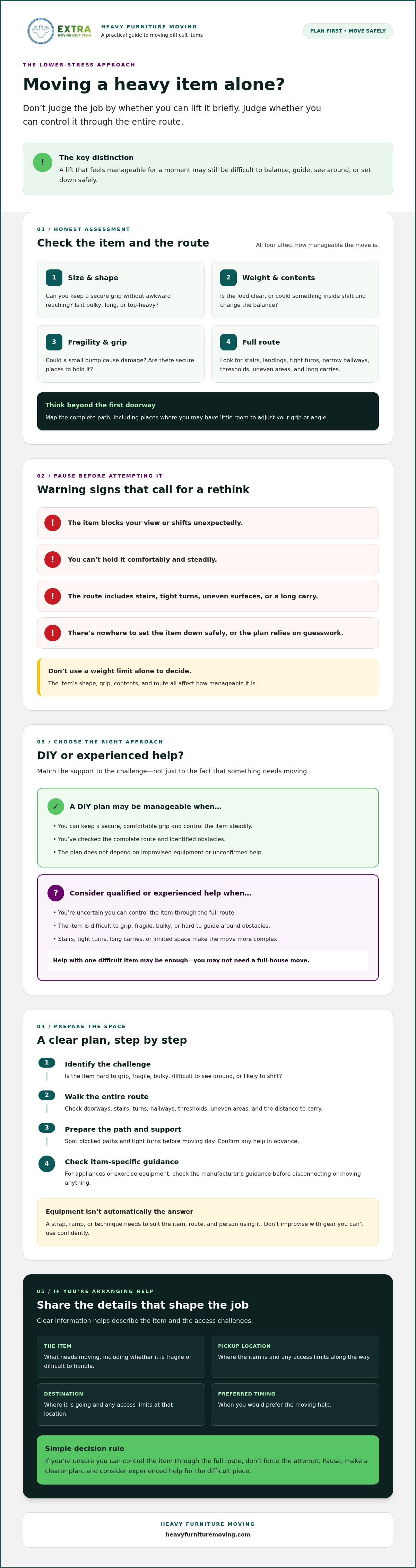
A short preparation routine can turn a vague worry into a clear decision. Work through the steps in order: assess the item, measure the route, clear obstacles, protect surfaces, then choose the right level of help. A useful pre-move check covers the item, the route, the destination, and the help available.
- Assess: Note the item’s shape, stability, grip points, and fragility. Check whether contents or detachable parts need attention.
- Measure: Measure the item and compare it with doorways, hallways, stair turns, and the destination space. Allow room to turn, not just enough clearance to move straight through.
- Clear: Move clutter and loose rugs out of the path. Keep children and pets away from the route, and check for thresholds or other obstacles.
- Protect: Cover nearby floors, walls, and doorframes with suitable materials. Secure the protection so it won’t slide or create a tripping hazard.
- Choose help: Decide who will assist and what each person will do. If the route or handling still feels uncertain, pause and consider qualified help.
Prepare the item, route, and destination
Before repositioning or lifting anything, make sure the destination is ready. Clear enough space to set the item down, and keep the walking path open all the way there. Remove loose contents or detachable parts only if the manufacturer’s guidance allows it. Don’t disconnect equipment or take it apart based on guesswork.
Protective coverings should reduce the chance of scuffs without making the floor slippery or narrowing the path. Check each doorway and turn again after clearing the area. A route that looks open from one end may still leave too little room to maneuver at a landing or around a corner.
Make a clear decision before the move begins
Agree on simple roles and communication with any helpers before starting. Decide who gives directions, where the item will pause, and what signal means stop. Set a clear stop point: if the item shifts, the route becomes blocked, or control feels uncertain, put the move on hold rather than trying to recover mid-carry.
If preparation reveals a tight turn, an unready destination, or handling needs you can’t confidently manage, postpone the task or arrange qualified help. Avoiding the stress of moving heavy items alone means giving yourself permission to change the plan. For a challenging piece, ask about heavy-item moving help focused on the task, not necessarily a full-house move.
Get Help with Heavy Items Without Turning It into a Full-House Move
One challenging item doesn’t have to mean arranging help for every room. You can ask about support for a specific moving task, then share enough detail for the mover to understand what it involves. A piano, safe, treadmill, or sofa may need a different plan depending on its size and access route.
What information helps a mover understand the job?
Start with the item and the locations. Include its type, approximate dimensions, and any concerns such as delicate parts, unclear handling instructions, or limited grip points. Share where it’s being moved from and to, and whether the job involves stairs, an elevator, narrow doorways, tight turns, or a long distance between locations.
Timing matters too. Explain when you hope to move the item, then ask which services fit the task and what details the mover needs to assess it. Don’t assume a particular crew size, piece of equipment, or appointment time is available until it’s confirmed. Clear information makes the conversation more useful and helps you identify details that still need to be worked out.
Find local moving help in Northern Virginia
Heavy Furniture Moving provides help with heavy-item moves, including pianos, safes, and exercise equipment, as well as sofa hoisting when an item can’t pass through a standard entryway or elevator. The company lists Northern Virginia communities including Fairfax, Woodbridge, Manassas, Ashburn, McLean, Vienna, and Reston.
If you’re looking for broader local support, see Reliable Movers Near Me in Fairfax and Northern VA. For a focused request, explain the item, pickup and destination, access conditions, and preferred timing. This gives the team a clearer starting point for discussing suitable support, without assuming you need a full relocation.
Avoiding the stress of moving heavy items alone can start with a simple conversation about the one part of your move that feels hardest. Discuss your heavy-item moving needs and ask what kind of help may fit the job.
Make Your Next Heavy-Item Move a Clearer, Calmer One
A lower-stress move starts with an honest assessment. Check the item, the route, and the destination before deciding whether to handle it yourself. If the plan depends on guesswork or the item feels hard to control, pause and consider help. Avoiding the stress of moving heavy items alone doesn’t mean moving everything with a crew; support can focus on the one difficult item or task.
Heavy Furniture Moving offers specialized handling for pianos, safes, and exercise equipment, along with sofa hoisting for items that can’t pass through standard entryways or elevators. The business is veteran-family owned and operated, with residential moving help for heavy and bulky items.
Share what needs to be moved, where it’s going, and any access challenges. Tell us what you need moved and discuss the right kind of help. With a practical plan and the right level of support, you can take the next step with more confidence.
Frequently Asked Questions
Can I move heavy furniture by myself?
You may be able to move an item yourself if it’s stable, easy to grip, and has a clear, level route. Consider the full path, not just lifting it off the ground. If the item blocks your view, shifts, or needs awkward turns, don’t try to make strength compensate for poor control. Follow manufacturer instructions for equipment, and arrange capable help if the move feels uncertain.
How do I know if a heavy item is too difficult to move alone?
Stop and reassess if you can’t hold the item comfortably, see where you’re going, or guide it steadily. Stairs, tight turns, narrow hallways, uneven surfaces, and long carries add challenges. There’s no single weight limit that determines whether an item is manageable. Its size, shape, balance, grip, and route all matter. Avoiding the stress of moving heavy items alone starts with choosing help when you’re unsure.
What is the safest way to prepare a heavy item for moving?
Check the manufacturer’s instructions first, especially for appliances and exercise equipment. Remove loose contents or detachable parts only when those instructions allow it. Measure the item and route, clear people, pets, rugs, and clutter, then prepare the destination before moving. Protect nearby surfaces without creating a slippery or obstructed path. If your plan depends on guesswork, pause and ask a qualified mover what preparation is appropriate.
Should I hire movers to move just one heavy item?
Yes, you can ask about help for one difficult item without assuming you need a full-house move. A focused request may make sense if the item is awkward, fragile, difficult to control, or challenging to get through the route. Describe the item and access conditions, then ask which services fit the job. Confirm the scope and availability directly rather than assuming a particular arrangement is offered.
How can I move heavy furniture without damaging floors or walls?
Measure doorways, hallways, turns, and the destination before starting. Clear clutter and loose rugs, and protect floors, walls, and doorframes with suitable materials that won’t shift or obstruct your footing. Keep the route open and make sure there’s room to set the furniture down. If moving it requires forceful adjustments or scraping it against a surface, stop and reconsider the method or get help.
Can movers help move a safe, piano, or exercise equipment?
Heavy Furniture Moving provides specialized handling for pianos, safes, and exercise equipment. The right support depends on the item and the move, so share its type, approximate dimensions, and any access challenges when you ask. The company also offers sofa hoisting for items that can’t pass through standard entryways or elevators. Confirm which service fits your specific item and circumstances before making plans.
What should I tell a moving company before asking for help with a heavy item?
Describe the item, approximate dimensions, pickup and destination locations, and preferred timing. Mention stairs, elevators, tight doorways, narrow turns, and the distance between locations. Share any special handling concerns, such as fragile parts or manufacturer instructions, then ask which services may fit. Heavy Furniture Moving lists communities including Fairfax, Woodbridge, Manassas, Manassas Park, Aldie, Ashburn, McLean, Vienna, Reston, Centreville, Chantilly, Clifton, Dumfries, South Riding, Fairfax Station, Haymarket, and Gainesville.
Frequently Asked Questions
Uncertainty is often the biggest strain. A piece of furniture might seem liftable, but an awkward grip, shifting contents, or blocked sightlines can make it hard to control. Questions about route clearance, timing, and possible damage to floors or door frames can make the job feel bigger than it is. Rushing or relying on help that hasn’t been confirmed can add pressure. Identify your main concern first: Is the item hard to grip, fragile, bulky, or difficult to get through the route? Learning about safe manual handling techniques can help you understand the risks, but it won’t make every move suitable for one person.
Pause if the item blocks your view, shifts unexpectedly, or can’t be held comfortably and steadily. Stairs, tight turns, uneven surfaces, and long carries also call for a careful rethink, especially if there’s nowhere to set the item down safely. Don’t rely on a weight limit alone. The item’s shape, grip, and route all affect how manageable it is. Before choosing a moving method, check: If you’re uncertain about controlling the item through the full route, don’t force the attempt. Avoiding the stress of moving heavy items alone starts with knowing when to stop and consider qualified help. You may only need support with the difficult item, not the entire move. An item can feel manageable for a moment and still be hard to move safely from one room to another. Lifting it briefly doesn’t tell you whether you can keep it balanced, see where you’re going, or set it down without scraping a doorframe. The difference between lifting and controlling an item is where a simple plan can start to unravel. Being able to lift an item doesn’t mean you can move it safely through the whole route. A poor grip can force you to adjust mid-carry. Shifting contents can change the balance. If the item blocks your view, you may not see a wall, floor edge, or doorway in time to avoid a bump. The item or your home could be damaged even if the lift itself seemed easy.
Start with the item and the locations. Include its type, approximate dimensions, and any concerns such as delicate parts, unclear handling instructions, or limited grip points. Share where it’s being moved from and to, and whether the job involves stairs, an elevator, narrow doorways, tight turns, or a long distance between locations. Timing matters too. Explain when you hope to move the item, then ask which services fit the task and what details the mover needs to assess it. Don’t assume a particular crew size, piece of equipment, or appointment time is available until it’s confirmed. Clear information makes the conversation more useful and helps you identify details that still need to be worked out.
You may be able to move an item yourself if it’s stable, easy to grip, and has a clear, level route. Consider the full path, not just lifting it off the ground. If the item blocks your view, shifts, or needs awkward turns, don’t try to make strength compensate for poor control. Follow manufacturer instructions for equipment, and arrange capable help if the move feels uncertain.
Stop and reassess if you can’t hold the item comfortably, see where you’re going, or guide it steadily. Stairs, tight turns, narrow hallways, uneven surfaces, and long carries add challenges. There’s no single weight limit that determines whether an item is manageable. Its size, shape, balance, grip, and route all matter. Avoiding the stress of moving heavy items alone starts with choosing help when you’re unsure.
Check the manufacturer’s instructions first, especially for appliances and exercise equipment. Remove loose contents or detachable parts only when those instructions allow it. Measure the item and route, clear people, pets, rugs, and clutter, then prepare the destination before moving. Protect nearby surfaces without creating a slippery or obstructed path. If your plan depends on guesswork, pause and ask a qualified mover what preparation is appropriate.
Yes, you can ask about help for one difficult item without assuming you need a full-house move. A focused request may make sense if the item is awkward, fragile, difficult to control, or challenging to get through the route. Describe the item and access conditions, then ask which services fit the job. Confirm the scope and availability directly rather than assuming a particular arrangement is offered.
Measure doorways, hallways, turns, and the destination before starting. Clear clutter and loose rugs, and protect floors, walls, and doorframes with suitable materials that won’t shift or obstruct your footing. Keep the route open and make sure there’s room to set the furniture down. If moving it requires forceful adjustments or scraping it against a surface, stop and reconsider the method or get help.
Heavy Furniture Moving provides specialized handling for pianos, safes, and exercise equipment. The right support depends on the item and the move, so share its type, approximate dimensions, and any access challenges when you ask. The company also offers sofa hoisting for items that can’t pass through standard entryways or elevators. Confirm which service fits your specific item and circumstances before making plans.
Describe the item, approximate dimensions, pickup and destination locations, and preferred timing. Mention stairs, elevators, tight doorways, narrow turns, and the distance between locations. Share any special handling concerns, such as fragile parts or manufacturer instructions, then ask which services may fit. Heavy Furniture Moving lists communities including Fairfax, Woodbridge, Manassas, Manassas Park, Aldie, Ashburn, McLean, Vienna, Reston, Centreville, Chantilly, Clifton, Dumfries, South Riding, Fairfax Station, Haymarket, and Gainesville.