Avoiding Moving Scams in Northern Virginia: The Aldie Resident’s Protection Checklist

A polished website and a low quote don’t prove a mover is trustworthy. The real test is whether the company can show valid credentials, explain every charge, and take responsibility for your belongings from pickup to delivery. If you’re researching avoiding moving scams in Northern Virginia Aldie, look beyond appearances and ask direct questions before anyone loads the truck.
It’s reasonable to worry about surprise fees, a “hostage load,” or whether a mover is properly licensed and insured. Careful checks can help you spot warning signs early and choose a team you feel comfortable trusting with your home and heavy furniture.
This guide explains how to verify a mover’s Virginia credentials, review estimates and contracts, and protect yourself from vague terms or pressure to pay. You’ll also find questions to ask about insurance and equipment for heavy items such as pianos, safes, and exercise equipment. Use these checks to compare movers, understand your paperwork, and plan your move in Aldie.
Key Takeaways
- Spot warning signs such as risky payment demands, vague estimates, and pressure to sign.
- Use this checklist for avoiding moving scams in Northern Virginia Aldie to compare movers and verify credentials before booking.
- Review the contract so the services, inventory, and charges are clear before moving day.
- Ask about experience and equipment when your move includes a piano, safe, or exercise equipment.
- Consider local accountability, but verify credentials and written terms before choosing a mover.
The Rise of Moving Scams in Northern Virginia and Aldie
A move doesn’t have to cross state lines to go wrong. Aldie residents can face risks from local operators, too, especially when a tight schedule makes a suspiciously low quote hard to resist. New construction and ongoing residential moves create demand for crews. That doesn’t make every unfamiliar company a scam, but it does make careful checks worthwhile.
A bad move and a deliberate scam aren’t the same. A late arrival, accidental damage, or poor communication may reflect bad service. A company that knowingly misleads you, demands unexpected payment to release your belongings, or disappears after taking a deposit raises more serious concerns. The general mechanics of a moving scam include deceptive estimates and holding goods for additional payment.
Understanding the Rogue Mover Business Model
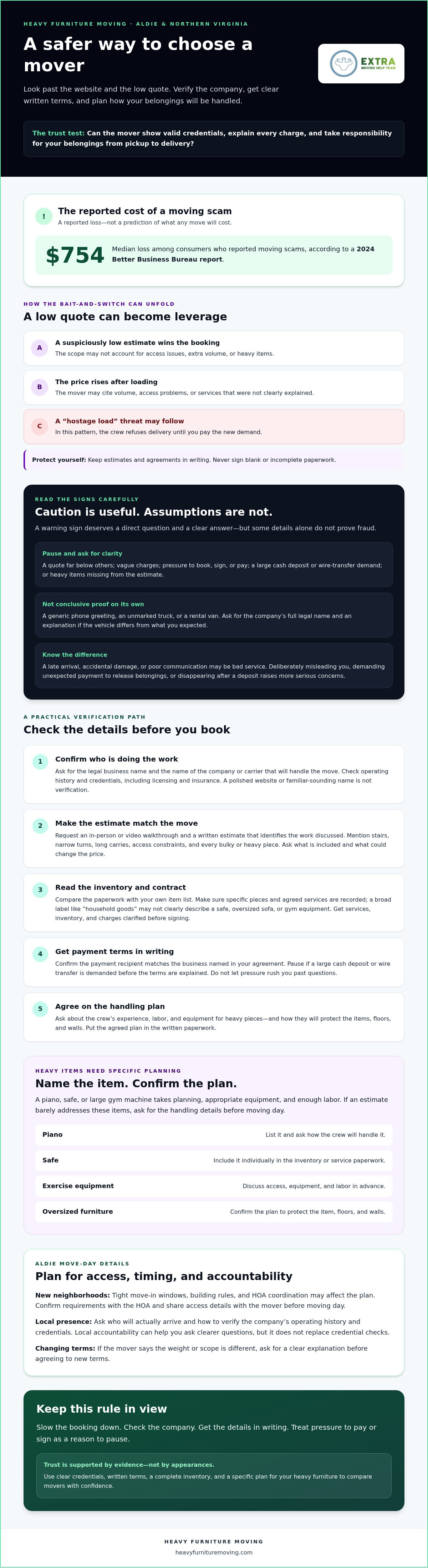
A common pattern starts with a low estimate that wins the booking. The mover may ask for a deposit, then raise the price after loading, citing extra volume, access problems, or services that weren’t clearly explained. In a “hostage load,” the crew refuses to deliver your belongings until you pay the new demand. Keep written estimates and agreements, and never sign blank or incomplete paperwork.
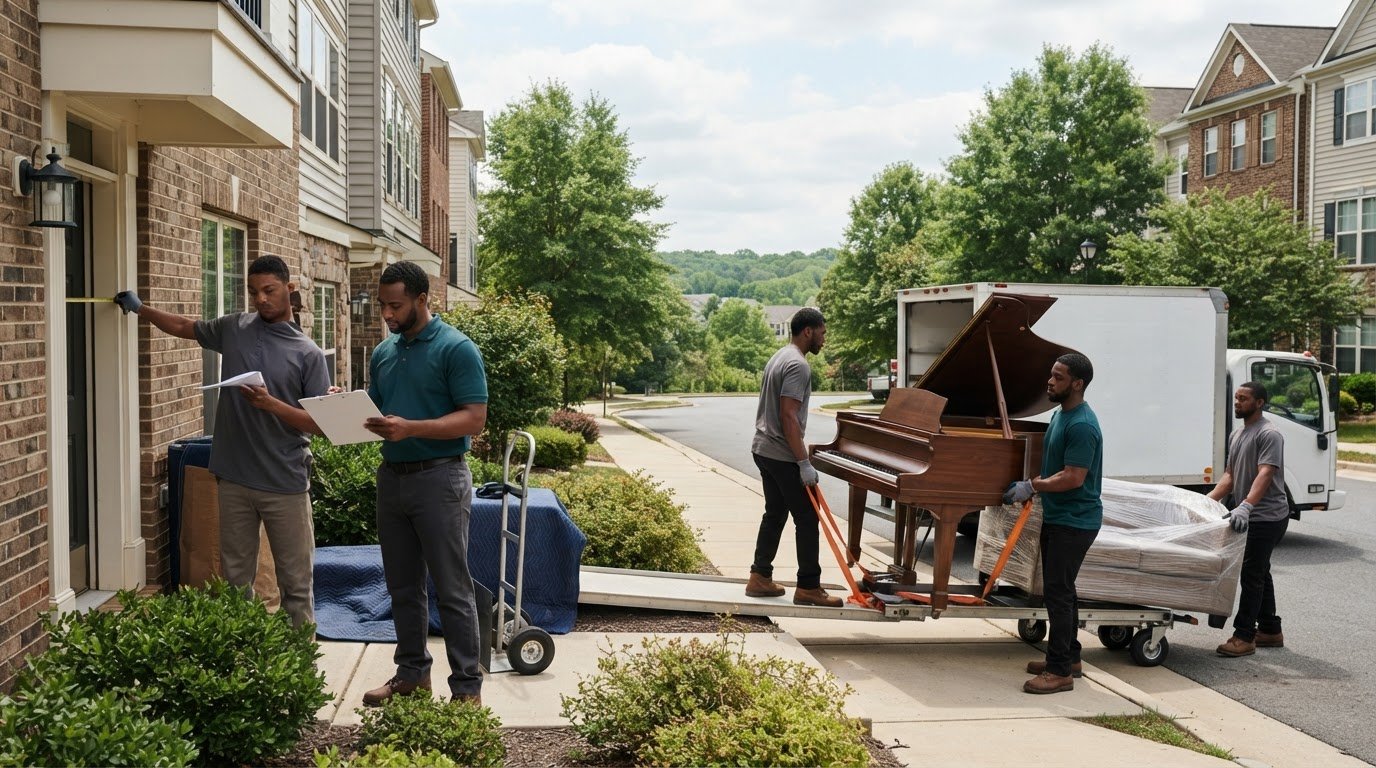
Heavy furniture can become leverage. A piano, safe, or large gym machine takes planning, appropriate equipment, and enough labor. If the estimate barely addresses these items, an operator may later claim they require costly extra work. List each heavy piece before moving day and ask how the crew plans to handle it.
Why Local Names and Roots Matter
A generic name or polished website doesn’t establish that a mover has a real local presence. Some companies use broad names that sound familiar across the region, while the actual crew or carrier may differ from the one you contacted. Ask for the legal business name, the name of the company doing the work, and a way to verify its operating history and credentials. Local accountability can help you ask clearer questions, but it doesn’t replace credential checks.
Aldie-Specific Risks: New Developments and High-Value Homes
New neighborhoods in Aldie and nearby South Riding can involve tight move-in windows, building rules, and HOA coordination. Pressure to book quickly or pay before reviewing the agreement is a reason to slow down. Confirm move-in requirements with the HOA and share access details with the mover before moving day.
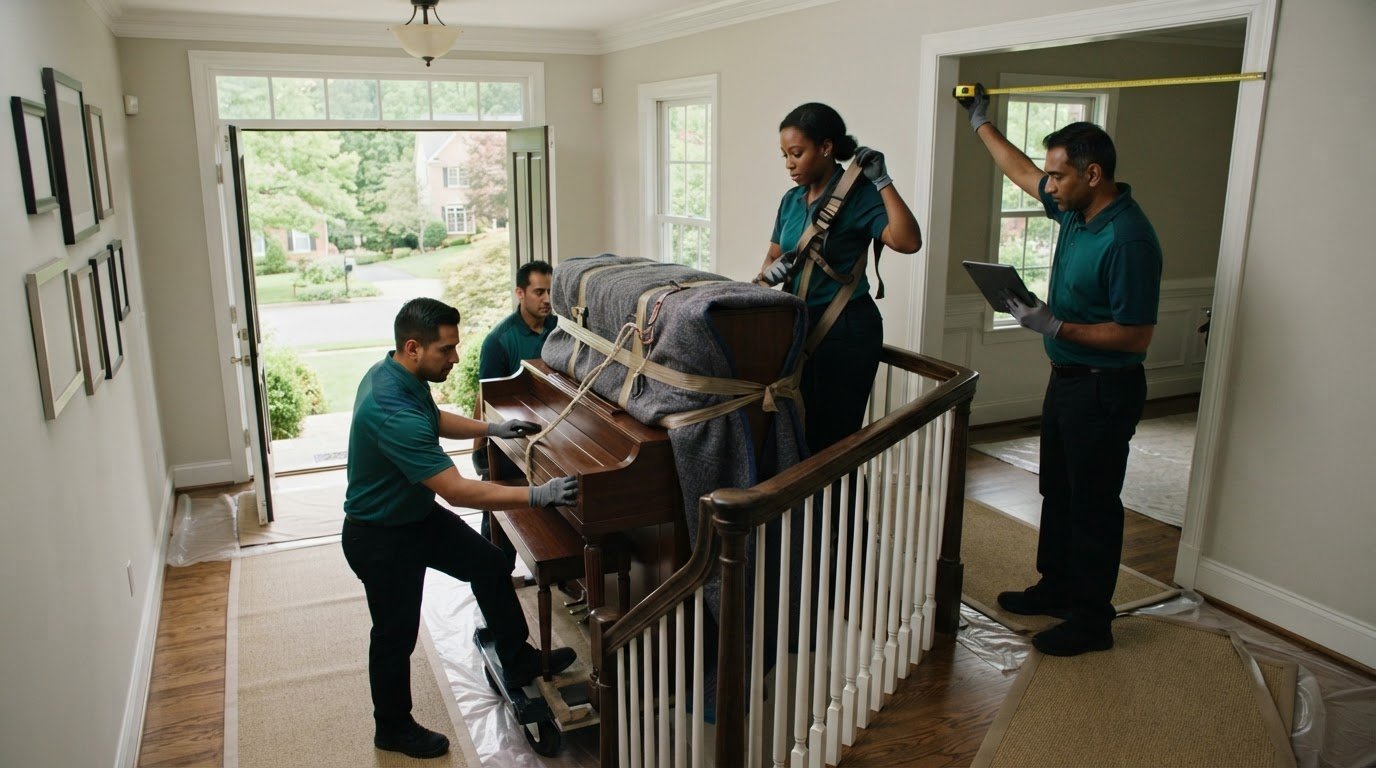
Luxury furniture and heavy household items need more than improvised lifting. Ask how the crew plans to handle and protect each item, as well as your floors and walls. Make sure the agreed plan is included in the written paperwork.
The cost can extend beyond a disrupted move. A 2024 Better Business Bureau report found that consumers who reported moving scams lost a median of $754. There’s also the stress of being separated from essential belongings and trying to resolve a dispute under pressure. For avoiding moving scams in Northern Virginia Aldie, slow the booking down: check the company, get the details in writing, and treat pressure to pay or sign as a warning.
Red Flags: How to Spot a Moving Scam Before the Truck Arrives
Look for gaps between what a mover promises and what it puts in writing. A phone-only quote may not account for stairs, narrow turns, long carries, or heavy pieces that need careful planning. Ask for an in-person or video walkthrough and a written estimate that identifies the work discussed. The FMCSA’s Red Flag Indicators of Moving Fraud can help you recognize pressure tactics and other warning signs before booking.
The Bait-and-Switch Estimate
A quote far below the others deserves a closer look. Ask each mover to explain what the estimate includes and what could change it. Be especially careful with a weight-based quote for a piano, safe, or exercise machine if the company hasn’t asked about the item or how it will be accessed. Get the item and agreed handling details in writing. If the mover later says the weight or scope is different, ask for a clear explanation before agreeing to new terms.
Make sure bulky pieces appear individually in the inventory or service paperwork. A broad entry such as “household goods” may not clearly capture the safe, oversized sofa, or gym equipment you discussed. Compare the documents with your own list and ask the mover to correct omissions before signing.
Payment, Trucks, and Phone Greetings
Pause if a company insists on a large cash deposit or wire transfer before explaining its payment terms. Get the terms in writing and confirm the payment recipient matches the business named in your agreement. A generic greeting such as “Movers,” an unmarked truck, or a rental van isn’t conclusive proof of fraud. Ask for the company’s full legal name and why the vehicle differs from what you expected. Don’t let anyone rush you past those questions.
Digital Deception: Reviews and Photos
Online profiles can look polished without proving who will handle your move. Read reviews on more than one platform. Repeated wording, bursts of similar posts, generic praise, or profiles with little history are reasons to investigate further, but they aren’t proof on their own.
Compare the business name, phone number, address, and crew information across the website and listings. Reverse-search prominent truck or staff photos to see whether they appear under unrelated company names. On the “About Us” page, look for specific information about the local team rather than relying on stock-looking portraits or broad claims. For avoiding moving scams in Northern Virginia Aldie, verify the people and terms behind the online image, especially before trusting a crew with heavy furniture.
Verifying Credentials: The Legal Requirements for NOVA Movers
A USDOT number is not a universal pass for every move. Use the Federal Motor Carrier Safety Administration’s SAFER system to check a mover handling an interstate move, including its registration and safety information. For a move within Virginia, check the company through the Virginia Department of Motor Vehicles (DMV), which regulates intrastate household goods carriers. Review Virginia's legal requirements for movers, then confirm the mover’s current authority in the DMV’s authorized motor carrier database.
Virginia’s requirements vary by distance. Intrastate moves over 30 miles require Household Goods Carrier authority and a Certificate of Fitness; moves of 30 miles or less require Property Carrier authority. Ask which category applies to your move and verify the company’s permit rather than relying on a number displayed on its website. If a mover operates across state lines, check its USDOT registration with FMCSA as well.
Insurance and Protection for Heavy Items
Ask for written proof of the mover’s insurance and a clear explanation of what protection applies to your belongings. Virginia intrastate requirements include public liability and cargo insurance, with minimums of $750,000 and $50,000, respectively. Standard liability is listed as $0.60 per pound per article, which can be limited protection for a heavy piano or safe. Don’t assume “full value protection” applies to a local Virginia move. Ask what coverage and claim terms are actually offered, and get the answer in writing. You can also request proof of workers’ compensation and ask how the crew’s work is covered. Treat verbal assurances as no substitute for documentation.
Check the Local Business, Not Just the Number
Look up the business name, address, and phone number, then make sure they match across its estimate, contract, website, and official records. A listed address in Aldie, Fairfax, or Manassas is a starting point, not proof of legitimacy. Confirm it belongs to the company and ask who will perform the move. A 703 or 571 number may feel local, but area codes can’t verify a mover. An 800 number alone doesn’t prove fraud either.
Check the Better Business Bureau for complaint patterns and whether the company has responded to unresolved issues. Loudoun County businesses must also meet applicable local business licensing requirements, including BPOL. Veteran-family ownership can signal a personal connection to the community, but it doesn’t replace credential checks. Heavy Furniture Moving is veteran-family owned and operated and serves Aldie. For avoiding moving scams in Northern Virginia Aldie, verify the authority, insurance, business identity, and written terms before trusting a crew with valuable furniture.
The Ultimate Moving Security Checklist: 10 Steps to a Safe Move
Use this checklist before booking and again on moving day. Keep estimates, names, photos, and signed paperwork together so you can compare what was promised with what happens at your home. For avoiding moving scams in Northern Virginia Aldie, clear records and simple checks help you stay in control.
- Step 1: Get three written estimates. Request an in-person visit or video walkthrough for each. Show the crew stairs, tight turns, access limits, and every heavy item.
- Step 2: Check registration details. For interstate moves, verify the USDOT number and, if provided, MC number using FMCSA resources. For a move within Virginia, check the mover’s state operating authority with the Virginia DMV.
- Step 3: Confirm the business address. Look up the listed Northern Virginia address independently. Check that the company name and contact details are consistent across its paperwork and online listings.
- Step 4: Read the federal moving booklet. Review Your Rights and Responsibilities When You Move so you understand the process, documents, and questions to raise.
- Step 5: Read every contract before signing. Virginia requires a bill of lading for household goods moves. Don’t sign a blank or incomplete bill of lading, estimate, or service order. Keep a copy.
- Step 6: Make a photo inventory. Photograph heavy or specialized furniture, including pianos, safes, and gym equipment. Record identifying marks and existing damage.
- Step 7: Record the home’s condition. Photograph floors, walls, doorways, and stair corners before the crew begins. This creates a dated reference if damage is disputed.
- Step 8: Compare the order for service with the estimate. Confirm the inventory, services, and stated terms match. Ask for corrections in writing before moving day.
- Step 9: Match the crew and truck to the agreement. Check the company name on the vehicle against your documents. If the truck or crew is different, pause and ask the company to explain before loading begins.
- Step 10: Keep essentials with you. Record the driver’s name and a reliable contact number. Carry valuables, medications, keys, and important documents in your personal vehicle.
Make the Checklist Work for Heavy Items
For a bulky piece, make sure the estimate identifies the item and describes the agreed handling. Don’t accept a last-minute change based only on a verbal explanation. Compare the written inventory and paperwork, ask what changed, and keep any revised terms before the crew proceeds. Clear documentation helps everyone understand the job.
For a move involving heavy furniture, review heavy furniture moving options and compare the written plan with your needs.
Choosing a Reliable Local Partner in Aldie and Northern Virginia
A local relationship can make a move feel less like handing your home over to a stranger. Heavy Furniture Moving is veteran-family owned and operated and serves Aldie. A conversation with the team can help you discuss access needs and challenging household pieces. Local roots are one factor to consider, not a substitute for checking credentials and written terms.
The Heavy Furniture Moving Difference
Moving a piano, safe, or exercise machine calls for planning that accounts for the item and the home. Describe what needs to be moved and ask how the team expects to handle it. Heavy Furniture Moving specializes in heavy items. Review its moving services in Northern Virginia and consider whether the described help fits your needs.
The company offers labor-only and full-service moving support. Be clear about the kind of help you need, then discuss the job details so the proposed work matches your expectations. A useful conversation should clarify what assistance is included and what information the team needs to prepare.
Ready for a Stress-Free Move?
Transparency starts with a complete description of your move. Share the items involved, any access challenges, and the type of help you need. Ask for the estimate and agreed services in writing, and raise questions before booking. That gives you a clearer basis for deciding whether the arrangement feels right for your home.
If you’re planning a move in Aldie or elsewhere in Northern Virginia, contact Heavy Furniture Moving to discuss your move. Ask about the work, estimate, and planned handling before you decide.
Move Forward With Confidence and a Verified Team
A safer move starts with a few deliberate choices: verify the mover’s credentials, get the scope and terms in writing, and make sure the crew understands the heavy items involved. These practical steps make avoiding moving scams in Northern Virginia Aldie less overwhelming and help you choose based on accountability, not a tempting low quote.
The team specializes in heavy-item moving, including pianos and safes. Share your moving needs and ask questions about the work, estimate, and planned handling before you decide.
Get a moving quote from Heavy Furniture Moving to discuss your needs and take the next step toward your move.
Frequently Asked Questions
Is a moving company required to give me a written estimate?
Ask for a written estimate, but don’t confuse it with the required moving contract. Virginia requires a bill of lading for household goods moves, while a written estimate is a key tool for comparing costs and services. Request an in-home or video walkthrough and make sure the estimate lists heavy items, access details, and possible extra charges. Before signing, ask whether the estimate is binding or nonbinding and what could change the final amount.
What should I do if a mover holds my belongings hostage?
Prioritize your safety and don’t try to recover the load by force. Save the estimate, contract, payment records, messages, and any details about the truck and crew. Ask the company in writing to explain the demand and arrange delivery. If you feel threatened or believe a crime is occurring, contact local law enforcement. For a Virginia move, report the matter to the DMV; for an interstate move, contact FMCSA and the FTC.
How can I verify if a Northern Virginia moving company is licensed?
For intrastate moves, check the mover’s operating authority in the Virginia DMV’s authorized motor carrier database; the Virginia DMV, not the SCC, regulates movers. For interstate moves, look up the USDOT number through FMCSA. For avoiding moving scams in Northern Virginia Aldie, compare the official business name with your estimate and contract. Heavy Furniture Moving serves Aldie, Fairfax, Woodbridge, Manassas, Manassas Park, Aldie, Ashburn, McLean, Vienna, Reston, Centreville, Chantilly, Clifton, Dumfries, South Riding, Fairfax Station, Haymarket, and Gainesville.
Do I have to pay a deposit for my move in Aldie?
Don’t assume a deposit is required for every move. Review the mover’s written payment terms and ask what the deposit covers, whether it’s refundable, and when the balance is due. Be cautious if a company demands a large upfront payment, especially in cash or by wire transfer, before clearly documenting the job. Keep receipts and make sure the company name on payment instructions matches the business you verified and the agreement you signed.
What is the “Bill of Lading” and why is it important?
A bill of lading is the written contract for a household goods move in Virginia. It records the agreement between you and the mover, so read it carefully before signing and keep a copy. Check that the company, services, inventory, and terms match what you agreed to. Never sign a blank or incomplete bill of lading. If a detail is wrong or unclear, ask for it to be corrected before the move proceeds.
Can a mover change the price after the truck is loaded?
A mover shouldn’t rely on a surprise verbal demand without explaining the reason and showing how it fits the written terms. The estimate type, documented inventory, and agreed services affect what can change. For Virginia intrastate moves over 30 miles, movers must follow their filed tariff. If the price changes, request the explanation and revised terms in writing before paying. Keep copies of the estimate, bill of lading, inventory, and all communications.
How do I report a moving scam in Virginia?
Gather your signed documents, estimates, payment records, messages, photos, and notes about the truck or crew. For a Virginia intrastate mover, contact the Virginia DMV, which regulates motor carriers. You can also report complaints to the Better Business Bureau. For an interstate move, submit a complaint to FMCSA; the FTC is another place to report suspected fraud. If you feel in immediate danger or believe a crime is underway, contact local law enforcement.
What insurance coverage do I need for heavy furniture?
Ask the mover to explain cargo coverage and any valuation options in writing, especially for a piano, safe, or exercise machine. Don’t assume “full value protection” applies to your move or guarantees a particular outcome. Standard liability for Virginia intrastate moves is listed as $0.60 per pound per article, which may not reflect an item’s value. Ask about limits, exclusions, and the claims process before signing.
Frequently Asked Questions
Transparency starts with a complete description of your move. Share the items involved, any access challenges, and the type of help you need. Ask for the estimate and agreed services in writing, and raise questions before booking. That gives you a clearer basis for deciding whether the arrangement feels right for your home. If you’re planning a move in Aldie or elsewhere in Northern Virginia, contact Heavy Furniture Moving to discuss your move. Ask about the work, estimate, and planned handling before you decide. A safer move starts with a few deliberate choices: verify the mover’s credentials, get the scope and terms in writing, and make sure the crew understands the heavy items involved. These practical steps make avoiding moving scams in Northern Virginia Aldie less overwhelming and help you choose based on accountability, not a tempting low quote. Heavy Furniture Moving is veteran-family owned and operated and serves Aldie. The team specializes in heavy-item moving, including pianos and safes. Share your moving needs and ask questions about the work, estimate, and planned handling before you decide. Get a moving quote from Heavy Furniture Moving to discuss your needs and take the next step toward your move.
Ask for a written estimate, but don’t confuse it with the required moving contract. Virginia requires a bill of lading for household goods moves, while a written estimate is a key tool for comparing costs and services. Request an in-home or video walkthrough and make sure the estimate lists heavy items, access details, and possible extra charges. Before signing, ask whether the estimate is binding or nonbinding and what could change the final amount.
Prioritize your safety and don’t try to recover the load by force. Save the estimate, contract, payment records, messages, and any details about the truck and crew. Ask the company in writing to explain the demand and arrange delivery. If you feel threatened or believe a crime is occurring, contact local law enforcement. For a Virginia move, report the matter to the DMV; for an interstate move, contact FMCSA and the FTC.
For intrastate moves, check the mover’s operating authority in the Virginia DMV’s authorized motor carrier database; the Virginia DMV, not the SCC, regulates movers. For interstate moves, look up the USDOT number through FMCSA. For avoiding moving scams in Northern Virginia Aldie, compare the official business name with your estimate and contract. Heavy Furniture Moving serves Aldie, Fairfax, Woodbridge, Manassas, Manassas Park, Aldie, Ashburn, McLean, Vienna, Reston, Centreville, Chantilly, Clifton, Dumfries, South Riding, Fairfax Station, Haymarket, and Gainesville.
Don’t assume a deposit is required for every move. Review the mover’s written payment terms and ask what the deposit covers, whether it’s refundable, and when the balance is due. Be cautious if a company demands a large upfront payment, especially in cash or by wire transfer, before clearly documenting the job. Keep receipts and make sure the company name on payment instructions matches the business you verified and the agreement you signed.
A bill of lading is the written contract for a household goods move in Virginia. It records the agreement between you and the mover, so read it carefully before signing and keep a copy. Check that the company, services, inventory, and terms match what you agreed to. Never sign a blank or incomplete bill of lading. If a detail is wrong or unclear, ask for it to be corrected before the move proceeds.
A mover shouldn’t rely on a surprise verbal demand without explaining the reason and showing how it fits the written terms. The estimate type, documented inventory, and agreed services affect what can change. For Virginia intrastate moves over 30 miles, movers must follow their filed tariff. If the price changes, request the explanation and revised terms in writing before paying. Keep copies of the estimate, bill of lading, inventory, and all communications.
Gather your signed documents, estimates, payment records, messages, photos, and notes about the truck or crew. For a Virginia intrastate mover, contact the Virginia DMV, which regulates motor carriers. You can also report complaints to the Better Business Bureau. For an interstate move, submit a complaint to FMCSA; the FTC is another place to report suspected fraud. If you feel in immediate danger or believe a crime is underway, contact local law enforcement.
Ask the mover to explain cargo coverage and any valuation options in writing, especially for a piano, safe, or exercise machine. Don’t assume “full value protection” applies to your move or guarantees a particular outcome. Standard liability for Virginia intrastate moves is listed as $0.60 per pound per article, which may not reflect an item’s value. Ask about limits, exclusions, and the claims process before signing.