
You’re standing at the top of a narrow Fairfax townhome staircase, looking at a solid oak armoire that feels like it’s bolted to the floor. Your mind is already racing with images of gouged hardwood and a painful lower back. It’s a stressful spot to be in, and you’re likely wondering how to prepare heavy furniture for a move without causing a disaster. We know that feeling of staring down a piece of furniture that seems impossible to budge. You want your home to stay pristine and your body to stay intact, but those bulky items aren’t going to move themselves.
The secret isn’t just raw strength. It’s a disciplined plan. In this 2026 pro guide, you’ll master the exact preparation steps to move your heaviest items without injury to yourself or damage to your home. We’ll walk through essential disassembly tactics, the latest floor protection gear like the Rhino Cart, and the structural stabilization techniques used by the pros. We’ll also cover how to handle items that simply won’t fit through the door. Get ready to turn that logistical nightmare into a controlled, damage-free process.
Key Takeaways
- Measure every doorway and staircase to identify potential bottlenecks before you start. Use heavy-duty floor protection to keep your hardwoods and carpets pristine.
- Learn how to prepare heavy furniture for a move by removing all drawers, shelves, and hardware. Reducing the weight of a bulky item is the first step toward a safe, injury-free transition.
- Wrap your furniture in professional-grade blankets secured with stretch wrap. This creates a protective shield that prevents damage to both your belongings and your walls.
- Follow specialized protocols for complex items like safes and gym equipment. Locking down internal parts prevents mechanical damage and keeps the center of gravity stable during transport.
- Use ergonomic tools like shoulder dollies to manage heavy loads without straining your back. Proper lifting techniques ensure you finish the job without a single injury.
Clearing the Way: Path Assessment and Floor Protection
Moving day success is won or lost before you ever lift a box. When you’re figuring out how to prepare heavy furniture for a move, your first priority isn’t the item itself; it’s the path it will travel. A single overlooked inch on a door frame or a loose rug can turn a smooth transition into a costly repair bill. You need a clear, protected runway to move safely. Start by walking the route from the furniture’s current spot all the way to the loading ramp. Look for obstacles that could trip you up or snag a moving blanket.
Homes with multi-level layouts or older construction often present unique challenges. Tight, winding staircases and narrow “split-foyer” entrances are notorious danger zones. If a turn looks tight, it probably is. This is where you decide if an item can realistically make the trip. In some cases, professional sofa hoisting is the only way to get a large piece out of a second story window when the stairs are too narrow. Don’t wait until the item is halfway down the hall to realize it won’t fit.
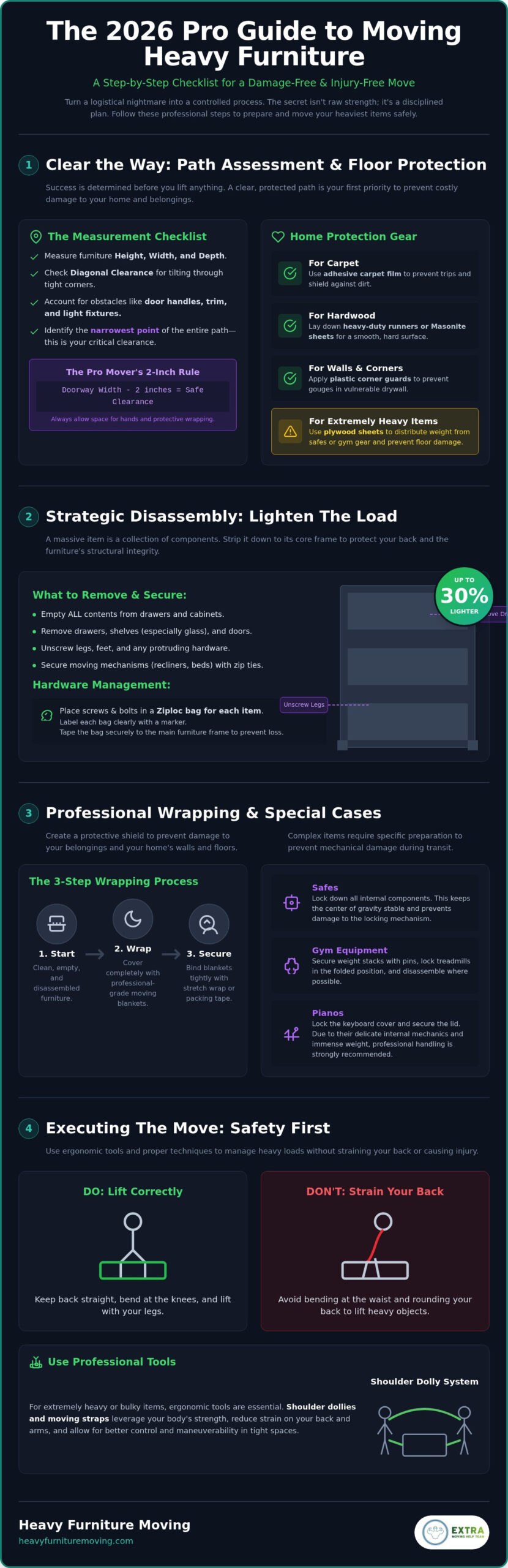
The 2026 Measurement Checklist
- Measure the height, width, and depth of the furniture accurately.
- Check the diagonal clearance for any piece that must be tilted to clear a corner.
- Account for door handles, decorative trim, and low-hanging light fixtures.
- Identify the narrowest point of the entire path; this measurement dictates whether your furniture stays or goes.
Measuring the smallest point of the path is critical because a 36 inch dresser simply won’t pass through a 35 inch doorway. Even if the door itself is wide enough, the swing of the door or the thickness of the molding can steal precious clearance. Always subtract two inches from your doorway measurements to allow for hand room and protective wrapping.
Protecting Hardwood and Carpet
Heavy furniture creates massive point loads. These can crush hardwood fibers or tear expensive carpet. For high-traffic carpeted zones, use adhesive carpet film. It stays flat, prevents tripping, and shields against tracked-in dirt. Hardwood requires more structural support. Lay down heavy-duty floor runners or Masonite sheets for a smooth, hard surface.
If you’re moving extremely heavy assets like gun safes or gym equipment, use plywood sheets or Masonite to distribute the weight across the floor joists. This prevents the wheels of a dolly from leaving permanent ruts in your flooring. Finally, apply corner guards to vulnerable drywall edges. A quick bump from a heavy desk can easily gouge a corner, but a plastic guard takes the hit instead. Secure all loose rugs with painter’s tape or remove them entirely to eliminate tripping hazards. Knowing how to prepare heavy furniture for a move means protecting your home as much as your belongings.
Strategic Disassembly: Reducing Weight and Managing Hardware
A massive dresser isn’t just one piece; it’s a collection of heavy components. Learning how to prepare heavy furniture for a move starts with aggressive weight reduction. Strip the item down to its core frame. This protects your back and the structural integrity of the piece itself. A solid wood frame can warp or crack if moved with heavy internal contents shifting around. You want the item as light and as slim as possible before it ever reaches the hallway.
Lightening the Load Safely
Empty every drawer. It sounds simple, but many people leave clothes or linens inside. This creates shifting weight that can throw a mover off balance. For pieces with removable drawers, take them out entirely and carry them separately. This can reduce the total weight of a large chest by 30 percent or more. If you have glass doors or shelves, remove them immediately. Wrap these separately in bubble wrap or cardboard to prevent shattering. For reclining sofas or adjustable beds, use heavy-duty zip ties to secure moving mechanisms. This prevents the frame from springing open mid-move, which is a major safety hazard.
Hardware and Tool Management
Removing legs, feet, and protruding handles makes the furniture slimmer for those tight Alexandria doorways. As you pull screws and bolts, don’t just toss them in a pile. Use a dedicated Ziploc bag for every single piece of furniture and label it with a permanent marker. Keep a small kit with a hex key set and a multi-bit screwdriver nearby for quick access. It’s vital to secure these hardware bags directly to the primary frame with strong packing tape to avoid loss during transport. If you lose the proprietary bolts for a modern bed frame, you’ll find yourself sleeping on the floor while waiting for replacements.
Document the process as you go. Take clear photos of the brackets and screw placements before you remove them. These photos are your best friend when you’re tired and trying to rebuild your home at the new location. If the project feels too complex or the items are simply too heavy to handle safely, consider booking professional packing and unpacking services to handle the technical details for you. A structured approach to disassembly ensures that every piece arrives ready for a quick and easy setup. By taking the time to strip things down now, you save yourself hours of frustration and potential injury later.
Professional Packing: Wrapping and Shielding Techniques
Once you’ve stripped the weight from your furniture, it’s time to shield the surfaces. Knowing how to prepare heavy furniture for a move requires more than a few old bed sheets. You need professional-grade moving blankets that offer thick, quilted padding. These blankets act as a shock absorber for accidental bumps against door frames or truck walls. Cover the item completely from top to bottom. If any part of the wood or upholstery is visible, it’s at risk of a permanent gouge or stain.
The “Burrito Wrap” Method
This is the industry standard for securing bulky items. Start by draping multiple blankets over the piece, overlapping the edges by at least six inches. This ensures no surface exposure even if a blanket shifts during transit. Next, use high-tensile stretch wrap to bind the blankets to the frame. Start at the bottom and work your way up, pulling the wrap tight to create a rigid, unified exterior. This tension doesn’t just hold the padding; it adds a layer of structural stability. Leave small gaps or “hand-holds” in the wrap at the base. This gives you a secure grip without your hands slipping on the smooth plastic.
Specialized Material Usage
Different surfaces require different layers. For antique finishes or sensitive leather, use non-acidic packing paper as your first layer. This prevents the fabric of the moving blanket from leaving “quilt patterns” on the finish during a long haul. If you need extra impact protection, apply bubble wrap only over the blankets. You should never apply plastic wrap or bubble wrap directly to wood surfaces because it can trap moisture and heat, which ruins the finish or causes the wood to sweat and warp.
Reinforce every corner with cardboard or foam guards before you start the final wrap. Corners are the first things to hit a wall in a tight hallway. Use heavy-duty packing tape to secure these guards, but keep the tape on the blankets or the stretch wrap. Never place tape directly on finished wood or leather. The adhesive can strip away the stain or leave a permanent residue that is nearly impossible to remove. A well-wrapped piece of furniture should look like a tidy, secure package where no part of the original surface is visible. This level of preparation turns a risky move into a professional operation.
Specialized Prep for Bulky Assets: Safes, Pianos, and Gym Gear
Standard dressers and tables are manageable with basic padding. However, bulky assets like upright pianos, massive gun safes, and high-end treadmills require a different level of technical preparation. These items aren’t just heavy; they have delicate internal mechanics and extreme weight concentrations. Understanding how to prepare heavy furniture for a move when dealing with these “extreme” items is vital for protecting your home’s structural integrity and your own safety. You can’t treat a 500 pound safe like a kitchen chair.
Preparing a Piano for Transport
Pianos are sensitive instruments that can be knocked out of tune or physically damaged by the slightest vibration. Close and lock the keyboard lid securely to prevent the keys from shifting. If your piano doesn’t have a built-in lock, use a small piece of painter’s tape to hold it closed without damaging the finish. Wrap the pedals individually in bubble wrap to shield them from impact. Finally, cover the entire unit in heavy-duty moving pads, securing them with stretch wrap to ensure the padding doesn’t slip during the lift. For those with complex instruments, booking professional piano moving ensures the internal hammers and strings stay protected.
Gun Safe and Gym Equipment Prep
Safety is the top priority for gun safes. Remove all firearms and ammunition before you even consider moving the unit. Never attempt to move a loaded safe. Take out the internal shelves or bolt them down so they don’t rattle and scratch the interior. For gym equipment, start by disconnecting all electronics. Treadmill consoles are fragile and expensive; remove them and pack them in a separate box. Fold the frame and lock it into the upright position using the manufacturer’s safety pin. If you use water-based weights or rowing machines, drain all liquids completely to prevent leaks and significantly reduce the weight.
Before you move a 500lb safe, check the weight capacity of your path, including floor joists and any exterior decking. Concentrated weight can easily crack tile or cause old floorboards to bow under the pressure. If you’re moving a home gym, you might need exercise equipment moving services to ensure the machines are recalibrated and safe to use in your new space. Proper prep ensures these high-value items survive the journey without a scratch. Don’t risk your floor or your back by skipping these critical steps.
Executing the Move: Safety Protocols and Professional Solutions
You have wrapped the items, cleared the path, and stripped the weight. Now comes the most physically demanding part of the process. Even if you know how to prepare heavy furniture for a move, the execution requires strict discipline to avoid a trip to the emergency room. Never rely on raw strength alone. Use ergonomic tools like the Shoulder Dolly 2-person lifting strap, which is rated for loads up to 370 kg. These straps allow you to use your strongest muscle groups while keeping your hands free to guide the item through tight corners in your Fairfax home.
Communication is your most important safety tool during the lift. You and your partner must be in constant sync. Before you lift, agree on the route and who will lead. Use clear, one-word commands like “stop,” “up,” or “pivot.” If one person feels their grip slipping, the move stops immediately. Moving heavy furniture isn’t a race. It’s a series of controlled, deliberate steps where every person knows exactly what the other is doing.
Lifting Mechanics for Heavy Loads
- Maintain a wide base with your feet shoulder-width apart to stay stable.
- Always lift with your legs and keep your back straight to prevent spinal strain.
- Keep the furniture piece as close to your center of gravity as possible.
- Never twist your torso while carrying weight; move your feet to change direction.
- Take frequent breaks to rest your muscles and reassess the path ahead.
When to Call Northern Virginia Pros
There are moments when DIY efforts reach a hard limit. If you encounter an “impossible” turn in a narrow Alexandria townhome, don’t force it. Forcing a heavy sofa through a tight stairwell often leads to torn upholstery and gouged drywall. This is where sofa hoisting becomes a necessity. Professional crews can safely lift oversized furniture through a second-story window or balcony, bypassing the stairs entirely. This method is faster, safer, and prevents the structural damage common in tight-squeeze moves.
Recognize the extreme risks of moving 500lb gun safes on stairs. One slip can cause catastrophic damage to your flooring or serious physical injury. If the item is too heavy for a standard two-person crew or requires specialized rigging, it’s time to step back. You can contact Heavy Furniture Moving for expert hoisting and bulky item transport in Fairfax Station and Reston. Our team has the specialized equipment and local expertise to handle the items that standard movers won’t touch. We take the physical burden off your shoulders so you can focus on settling into your new home.
Secure Your Heavy Assets with Confidence
Moving massive items doesn’t have to be a source of anxiety. Success comes down to a clear strategy. By focusing on aggressive weight reduction, structural wrapping, and precise path measurements, you have already won half the battle. You now know how to prepare heavy furniture for a move by stripping it down to the frame and shielding every vulnerable corner. These steps ensure your hardwood floors stay pristine and your body stays healthy during the transition.
Sometimes, the logistics of a tight Northern Virginia townhome require more than just a good plan. If you are facing a 600 pound safe or a sofa that won’t clear the stairs, lean on a team that specializes in high-stakes logistics. As a veteran-family owned business, we take pride in being the protector of your most challenging items. We are local experts in safe and piano moving, plus specialized sofa hoisting for those narrow Fairfax stairwells.
Get a Quote for Professional Heavy Item Moving and Hoisting and let us handle the heavy lifting for you. You have the knowledge to succeed. Your damage-free home is just a few disciplined steps away.
Frequently Asked Questions
How do I move a heavy safe upstairs without damaging the steps?
Use a motorized stair climber or a heavy-duty appliance dolly with stair-climbing tracks. Lay down 3/4-inch plywood to distribute the weight across the stair treads. This prevents the safe’s weight from cracking wood or marble surfaces. Never attempt this with a standard two-wheel dolly, as the concentrated pressure will gouge the steps instantly. Take it one step at a time with a spotter below the load.
Can I move a treadmill by myself if I disassemble it?
No, you should never move a treadmill alone even after disassembly. Treadmill frames are awkward and contain heavy motors that create an uneven center of gravity. Disassembling the console helps, but the base remains a significant lifting hazard. You need at least two people to maintain balance and prevent the frame from springing open during transport. This keeps both your back and the machine safe.
What is the best way to protect hardwood floors from heavy furniture?
Lay down Masonite sheets or 1/4-inch plywood along the entire moving path. These hard-surface protectors prevent the point load of heavy furniture from crushing wood fibers. While learning how to prepare heavy furniture for a move, remember that felt pads are only for sliding light items. For items over 200 pounds, you need rigid barriers to stop wheels and legs from leaving permanent ruts in your flooring.
What should I do if my sofa won’t fit through the front door?
Remove the door from its hinges to gain an extra inch of clearance. If the frame still won’t pass, check for alternative entrances like sliding glass doors or large windows. In tight Northern Virginia townhomes, sofa hoisting is often the only solution. This involves using professional rigging to lift the piece through an upper-level balcony or window, bypassing narrow doorways and staircases entirely. It’s the safest way to avoid damage.
Do I need special equipment to move a piano?
Yes, you must use a dedicated piano board, also called a skid board, and heavy-duty straps. Pianos require specialized equipment to protect their delicate internal tuning and external finish. A standard furniture dolly is too small and unstable for an upright or grand piano. You also need high-tensile moving blankets and a ramp with a gentle incline to ensure the instrument stays level during the loading process.
How far in advance should I start preparing heavy furniture for a move?
Start your preparation at least two weeks before your moving date. Use this time to measure every doorway and order specialized supplies like Masonite or heavy-duty stretch wrap. Early preparation allows you to identify items that require professional hoisting or technical disassembly. Knowing how to prepare heavy furniture for a move well in advance prevents last-minute panic and reduces the risk of rushing into a dangerous lifting situation.
What are the risks of moving heavy furniture without professional help?
The primary risks include permanent spinal injuries, crushed fingers, and significant property damage. Without the right leverage tools and training, you risk dropping a heavy load or losing control on a staircase. This can lead to gouged walls, broken furniture, or serious medical emergencies. Professional movers use mechanical advantages and team coordination to eliminate these physical hazards and protect your home’s structural integrity.
Is it cheaper to move heavy items myself or hire labor-only movers?
DIY is cheaper upfront, but hiring labor-only movers often saves money by preventing costly damage. When you factor in the cost of renting specialized dollies, buying floor protection, and the potential for a high insurance deductible after a floor repair, pros are a smart investment. Labor-only crews bring the expertise needed to handle bulky assets safely. This ensures you don’t pay for expensive home repairs or medical bills later.