Top Long Distance Moving Companies in Northern VA
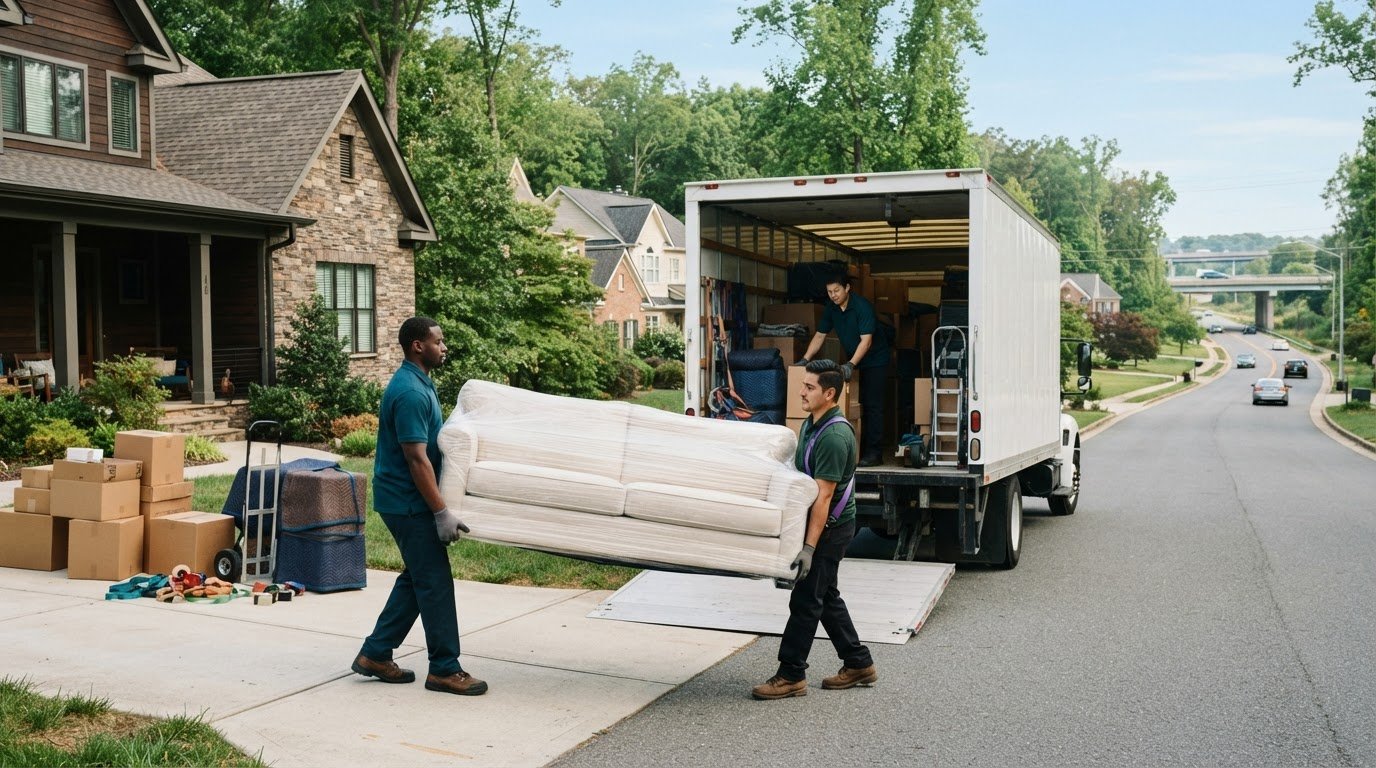
A cross-country move has one basic requirement: movers transporting household goods across state lines must hold a USDOT number issued by the Federal Motor Carrier Safety Administration. Use that as a first filter when comparing long distance moving companies in Northern Virginia.
Distance is only one part of a move. The plan also depends on your pickup and delivery locations, the belongings being transported, and access at both homes. A useful estimate reflects those details, not just the miles between addresses.
This guide explains Northern Virginia service areas, factors that shape a moving estimate, and interstate logistics to plan for. It also covers residential and commercial moves, how to compare options, and when help with heavy furniture or bulky items may be useful. Start with the details of your move, then choose support that matches the work.
Key Takeaways
- Map out pickup and delivery access early, especially for managed buildings and tight historic streets.
- Compare estimates by looking at the move’s size, distance, access conditions, and requested services.
- For an interstate household move, confirm the mover’s USDOT number, which the Federal Motor Carrier Safety Administration issues.
- Plan booking around the season: summer moves generally need more lead time than spring and fall moves.
- For heavy or bulky items, explore focused help with exercise equipment, in-home furniture moves, and sofa hoisting.
Service areas across Northern Virginia
Movers in Northern Virginia handle local relocations and interstate moves. Coverage often includes communities such as Fairfax, Loudoun County, and Prince William County. If your move starts in one of these areas and ends outside Virginia, confirm that both addresses and the route are included in the moving plan.
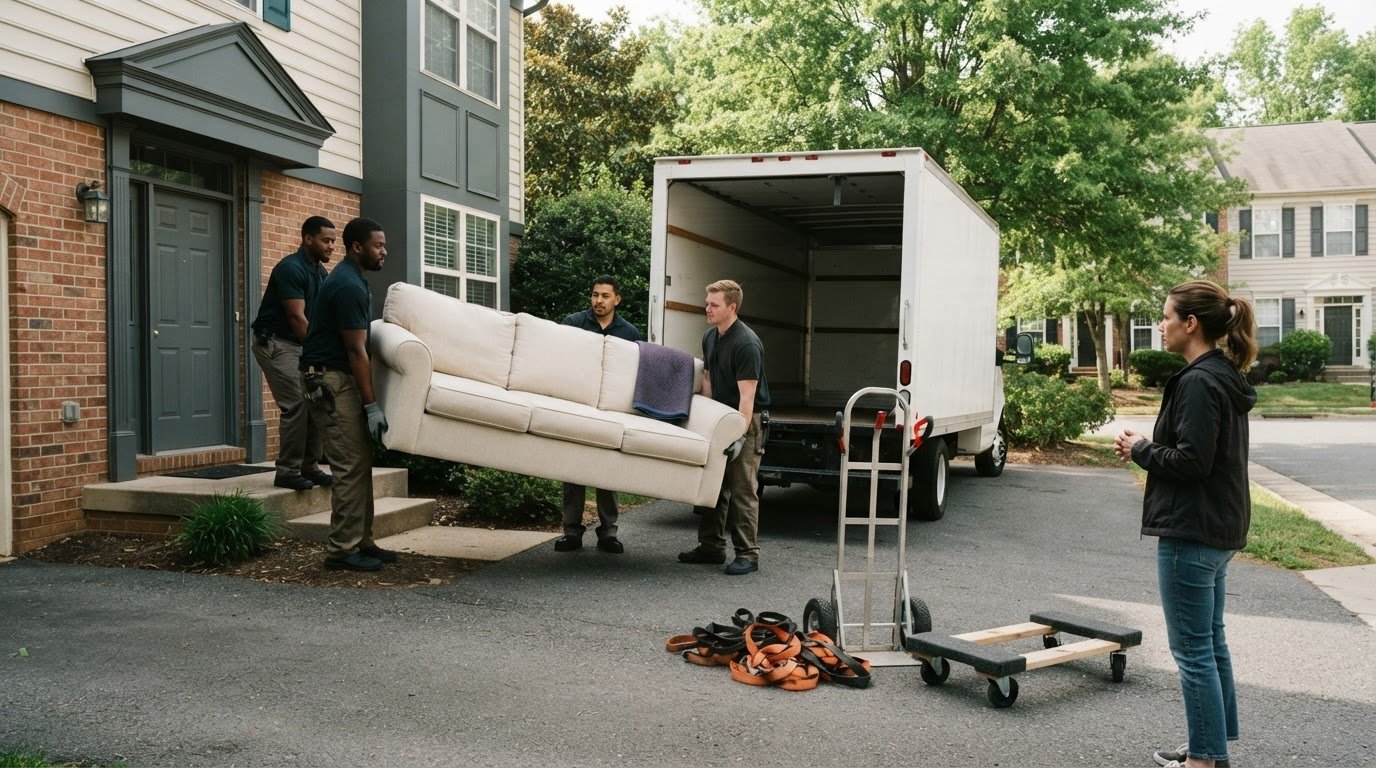
Moves across the DMV can involve different access conditions at each end. A suburban house may have ample driveway space, while a townhouse may require carrying belongings from a street-side truck. When arranging moving services with Heavy Furniture Moving, provide both addresses, building types, parking limits, stairs, and details about large items. This helps determine access needs, crew planning, and timing.
Local rules and building logistics matter, too. A mover handling a move entirely within Virginia must hold a state license through the Virginia Department of Motor Vehicles. Managed apartment and condo buildings in Northern Virginia may require an elevator reservation 48 to 72 hours before a move. In historic downtown districts, narrow streets may require smaller vehicles for loading, so vehicle access needs attention before moving day.
Plan address changes alongside packing. Update your address with USPS, your bank, the DMV, and subscription services at least two weeks before moving. Sort belongings by room and label boxes with the destination room and any handling needs. Set aside essentials, fragile items, and things you will need soon after arrival. A written inventory also makes it easier to track boxes from your Northern Virginia home to your new address.
International moves involve more than crossing state lines. They may require packing, shipment coordination, an itemized inventory, and handoffs between transportation stages. Organize belongings by destination room and keep personal documents separate from packed household goods. Build the plan around the destination address, shipment details, and timing for each transport leg.
Before moving day, make an access plan for both locations. Note where the truck can park, the building entrance, elevator schedule, and any narrow approach roads. In tighter residential streets, for example, a smaller vehicle may be needed by Heavy Furniture Moving to bridge the gap between the home and a larger truck. Share the plan with everyone involved to help avoid preventable delays.
For residential moves with heavy items, identify exercise equipment, large furniture, and other difficult loads during planning. Clear the walkways and group packed boxes near the rooms where they will be loaded. This helps crews work through the home in an orderly sequence, whether you are moving elsewhere in the DMV or across the country.
Do you provide moving cost estimates based on weight or volume?
Moving estimates may be based on shipment weight, volume, or another method stated in the quote. For an interstate move, compare what the estimate covers and how the mover accounts for your belongings, access, and requested services.
A binding estimate states a charge for the shipment and services described. A nonbinding estimate is a projection that may change under the written terms. Read the estimate alongside the service list to understand what could affect the final amount.
Moving Cost Factors
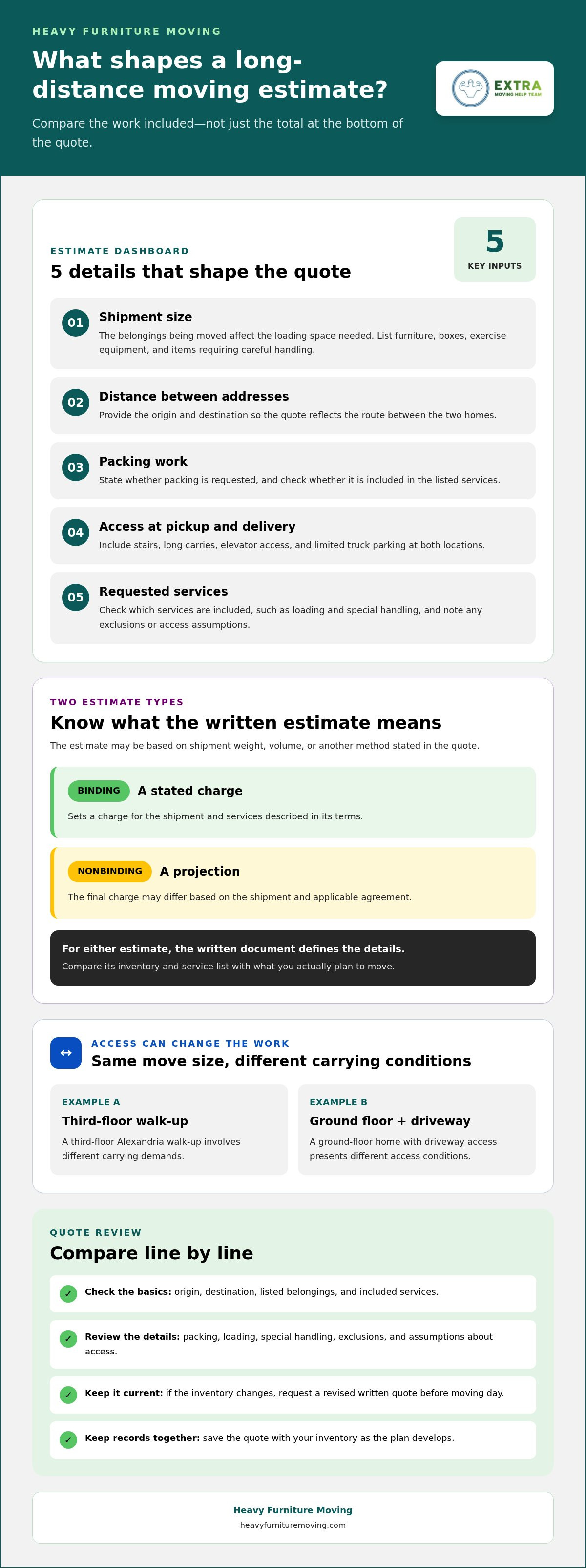
Shipment size is a key factor: a home with a sofa, dining set, and packed boxes needs different loading space than a lightly furnished apartment. An estimate may also reflect the distance between addresses, packing work, and access at pickup and delivery. A third-floor Alexandria walk-up, for example, involves different carrying demands from a ground-floor home with driveway access.
Make your inventory specific. List furniture, boxes, exercise equipment, and items that need careful handling. Include stairs, long carries, elevator access, and limited truck parking. These details help the mover understand the work instead of relying on an incomplete room count. A clear inventory can also reduce surprises between the estimate and moving day.
Price Quotes
A useful quote identifies the origin and destination, listed belongings, and included services. Compare quotes line by line, not just by the total. Check whether packing, loading, and special handling are included, and look for exclusions or assumptions about access. If your inventory changes, request a revised written quote before moving day.
The price depends on the move and is provided after a quote request. Key factors include shipment size, distance, packing, access, and requested services. For a move from Alexandria, a complete inventory and clear notes about stairs or parking help make the estimate more specific. Keep the quote and inventory together as your plan develops.
Binding and Nonbinding Estimates
A binding estimate sets a charge for the shipment and services described in its terms. A nonbinding estimate is a projection, so the final charge may differ based on the shipment and applicable agreement. In either case, the written document defines the details. Compare its inventory and service list with what you actually plan to move.
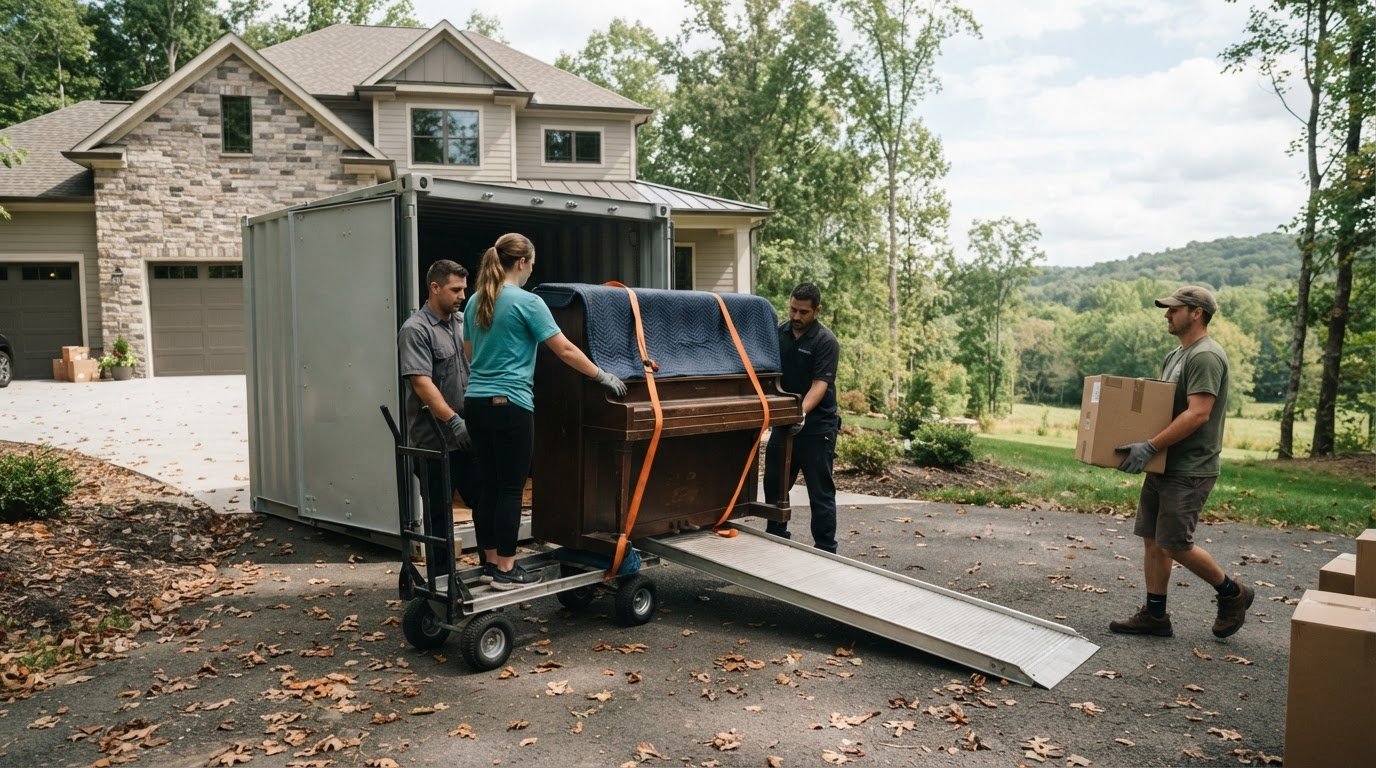
Before accepting either estimate, review which belongings and tasks it covers. If you add furniture, request packing, or change the pickup details, those changes can affect the estimate. Ask for updates in writing and keep copies with your move records. For loading help with a rented container, review pod loading service details as one possible way to handle that part of the move.
Northern Virginia interstate moving challenges
For an interstate move, choose movers prepared to handle the route, shipment details, and access at both homes. Watch for unclear paperwork, estimates that omit requested services, or pressure to pay before the written terms are clear.
Interstate Mover Credentials
Check the mover’s identity and interstate credentials before scheduling pickup. Movers transporting household goods across state lines must hold a USDOT number issued by the Federal Motor Carrier Safety Administration. Match the number and company name on the estimate and moving documents. This helps you understand which business is responsible for the shipment, especially if another crew or carrier appears on moving day.
Keep a copy of the estimate and service agreement. For a Reston apartment move, check that the paperwork lists the pickup and delivery addresses and the belongings being transported. Inconsistent names across documents can complicate communication. Clear records give you a reference if the schedule, inventory, or services change.
Licensing and Insurance
Licensing and insurance address different parts of an interstate move. Licensing identifies a mover’s authority to transport household goods across state lines. Insurance and valuation terms explain how coverage applies to belongings during the move. Read the written terms for limits, exclusions, claims steps, and the level of protection selected. Review the documents rather than relying on general assurances.
Make an inventory before loading begins. Note the condition of furniture, electronics, and fragile items, and keep photos with your move records. If something is damaged, the inventory and paperwork help identify what was transported and what the agreement says about claims. Review these details before signing, not after the truck leaves Northern Virginia.
Long-Distance Moving Risks
Warning signs include quotes that omit key services, blank contract sections, or pressure to accept terms immediately. Compare the written inventory with the belongings you expect movers to collect. If the crew arrives with paperwork that differs from the agreement, pause and review the changes before signing. Keep payment records and copies of signed documents.
Long-distance moves require coordination across pickup, transport, and delivery. A Reston apartment may have limited loading access, while the destination may have different parking or entry restrictions. Share both addresses and relevant access details in advance. Confirm the planned services and delivery arrangements in writing so each stage has a clear reference.
International relocation involves additional transportation handoffs and destination planning. Prepare a detailed inventory and keep personal documents separate from household goods. Confirm which parts of the move the written agreement covers, including packing and shipment coordination. Clear records help you track belongings through each stage, whether the destination is in another state or outside the United States.
Residential and commercial interstate moves
Moving a household from Manassas differs from relocating an office across state lines. The belongings, access needs, and delivery priorities shape each plan. Separate residential needs from business requirements, then document the details that affect loading, transport, and arrival.
Residential Moves
For a family moving from a Manassas home, build the inventory room by room. List furniture, boxes, appliances, and items that need careful handling. Mark what should arrive first, such as beds, kitchen essentials, or a child’s desk. This helps organize unloading at the destination.
Note conditions at both homes. Record stairs, narrow hallways, elevators, parking access, and any long path between the truck and entrance. A local move may involve familiar streets, while an interstate move adds coordination across a longer route. Keep essentials and important documents separate from packed household goods.
Storage needs can affect timing. If the new home is not ready when the shipment arrives, plan how belongings will be handled between move-out and move-in. Keep the inventory current and group items by destination room. A clear list helps identify what needs immediate access and what can wait.
Commercial and Office Moves
An office relocation focuses on reducing disruption and keeping equipment, records, and furniture accounted for. Create an inventory by department. Label desks, chairs, monitors, and boxes with their destination room or workstation. For example, a Manassas office moving to another state can assign each team’s belongings to a floor plan before loading begins.
Separate business-critical equipment from general office contents. Identify computers, files, and supplies employees will need soon after arrival. Protect confidential records according to your company’s handling procedures, and assign a staff contact to track labeled items. These steps give the team a shared plan for packing, loading, and setup.
Commercial moves also need a sequence. Decide which areas can be packed first, which equipment must remain available, and when staff will stop using each workstation. Share building access instructions and delivery contacts with the moving team. Clear responsibilities help prevent missed items and confusion during unloading.
Build a Practical Move Plan
For a home or workplace move, prepare one written plan with addresses, inventories, access notes, and delivery priorities. Review it before packing starts and update it if the shipment changes. For a residential move, include bulky furniture and exercise equipment. For an office move, include equipment labels and room assignments.
Keep the move scope clear. A residential shipment centers on household belongings; a commercial relocation centers on business property and continuity. In both cases, careful labeling and a realistic arrival sequence help the move run smoothly. Start with the actual contents and the needs of the people who will use them.
Residential long-distance moving in Northern Virginia
A residential interstate move from Arlington, Fairfax, Sterling, or Leesburg requires more than a pickup date. Plan around the shipment, home access, and season. For a move from Northern Virginia, adequate booking time and an accurate inventory help keep the estimate aligned with the work.
Timing affects your plan. For summer moves between Memorial Day and Labor Day, booking six to eight weeks ahead is a reasonable minimum. For spring and fall moves, four to six weeks ahead is generally enough. A mid-month weekday in March or October will almost always cost less than a move during peak-demand periods. Use these windows to compare dates before choosing a departure day.
Start with a room-by-room inventory. List furniture, boxes, exercise equipment, and items requiring careful handling. Note what you will move yourself and what needs packing or loading support. Include access details for both homes, such as stairs, elevators, narrow entrances, and truck parking. A Sterling townhouse and an Arlington apartment may need different loading plans, even with similar inventories.
Use the inventory to review the estimate. Make sure it reflects the belongings being moved, the requested services, and access at each address. If you remove furniture, add boxes, or change the pickup details, update the inventory and estimate. Clear records help you compare plans without focusing on a single headline figure.
Plan for your first days at the destination. Pack essentials separately, including medications, chargers, documents, and a change of clothes. Label boxes by room and mark items needed first. If your Fairfax home will not be ready when belongings arrive, consider how storage fits your timing and delivery plan. Keep key documents and valuables with you, not buried in the shipment.
Before moving day, confirm the route, addresses, building access, and delivery priorities in your written plan. In Leesburg, note tight approaches or limited parking; in Arlington, record building entry and elevator arrangements. Keep a copy of the inventory and estimate available during loading. This gives everyone a shared reference from pickup through arrival.
For heavy furniture or exercise equipment, make those items clear in your move plan so handling needs are accounted for. Organize your moving help around the items that need the most attention.
Heavy Furniture Moving: Movers Near Me
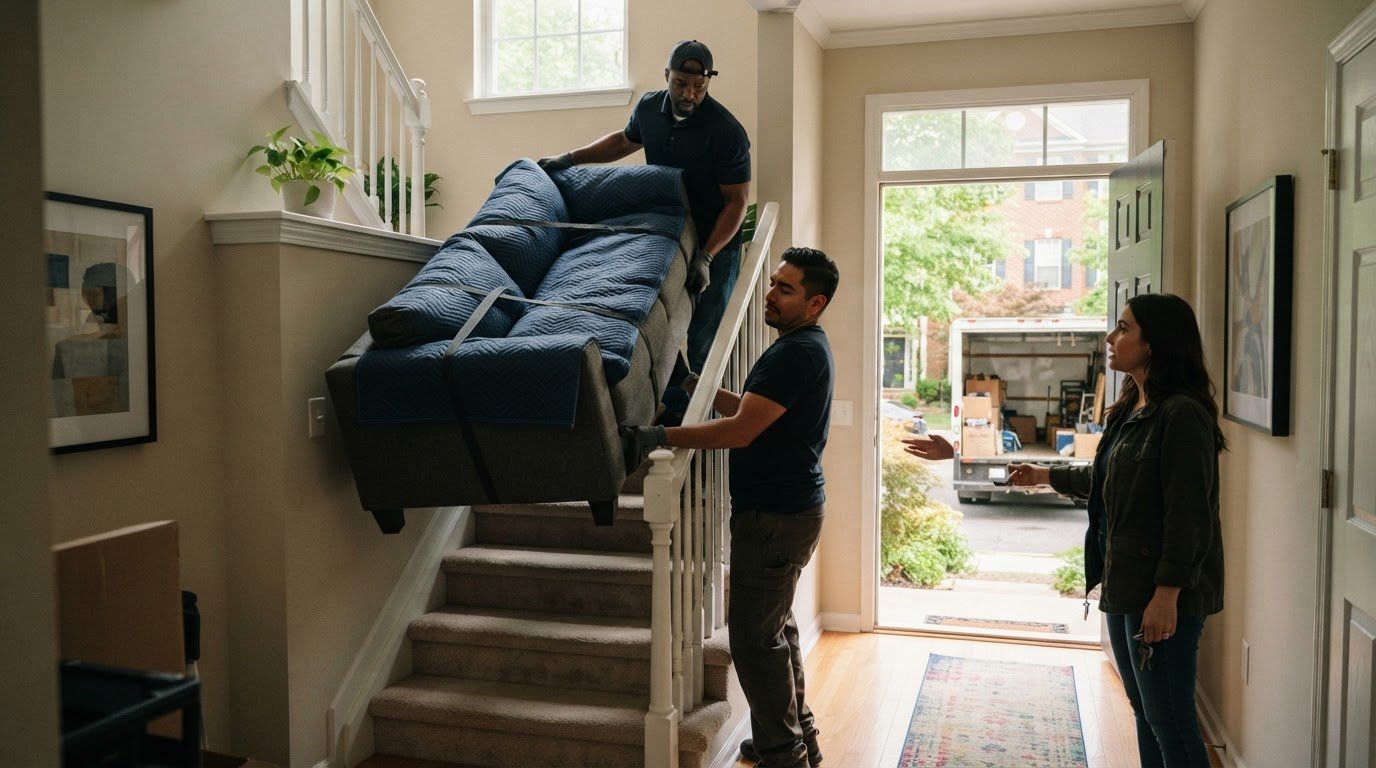
Heavy Furniture Moving can help with bulky items that make a residential move more demanding. The team provides in-home furniture moving, exercise equipment moving, and sofa hoisting for large pieces that will not fit through a doorway or stairwell. These focused services handle difficult lifting while you coordinate the rest of your move.
Before moving day, note each item’s location, dimensions, and access points. Point out tight turns, stairs, and narrow doorways so the crew can plan the handling. Describe any equipment or furniture that needs extra lifting help, along with the route through your home.
To discuss help with heavy furniture or exercise equipment, contact Heavy Furniture Moving.
Set Up Your Move With a Clear Plan
Your next step is to separate the interstate shipment from the hands-on work inside your home. As you compare long-distance moving companies in Northern Virginia, consider who will coordinate the full route and which tasks need focused help before pickup. A clear division of work makes responsibilities easier to track and helps you prepare each room appropriately.
Heavy Furniture Moving provides Movers Near Me, Exercise Equipment Moving, and Sofa Hoisting. These services help with bulky furniture or equipment that needs careful lifting. Identify the pieces that need this support and include them in your move plan. Keep the remaining interstate arrangements focused on transport, timing, and delivery.
Make the next step manageable. Write down the items needing specialized handling, note any access challenges at home, and set your priorities before moving day. If bulky items need separate attention, explore help with heavy furniture moving. A steady plan gives you a clearer path forward and lets you tackle the move with confidence.
Frequently Asked Questions
Can you move me across the country?
A cross-country move involves transporting household goods across state lines. Heavy Furniture Moving helps with residential moving tasks involving heavy furniture and exercise equipment, which may be part of your preparation. For the interstate shipment, confirm that the mover holds a USDOT number issued by the Federal Motor Carrier Safety Administration. Share the pickup and destination details, then identify which items need specialized lifting support before moving day.
How Far in Advance Should You Book?
For summer moves between Memorial Day and Labor Day, booking six to eight weeks ahead is a reasonable minimum. For spring and fall moves, four to six weeks is generally enough. A mid-month weekday in March or October will almost always cost less than a move during peak-demand periods. Once you choose a date, organize your inventory and building access details to shape the moving plan.
How do I get a quote for my move?
Prepare both addresses, your preferred move date, a room-by-room inventory, and notes about stairs, parking, and large items. For local moving help in Fairfax, Woodbridge, Manassas, Manassas Park, Aldie, Ashburn, McLean, Vienna, Reston, Centreville, Chantilly, Clifton, Dumfries, South Riding, Fairfax Station, Haymarket, or Gainesville, specify the lifting or furniture tasks you need handled. Clear details help shape a quote around the work.
Which Northern Virginia long-distance movers are licensed and insured?
Compare long-distance moving companies in Northern Virginia by checking interstate credentials and written coverage terms. Movers transporting household goods across state lines must hold a USDOT number issued by the Federal Motor Carrier Safety Administration. Read the agreement’s insurance or valuation language to understand coverage limits, exclusions, and how to report damage. Keep a copy of the estimate and inventory with your move records.
What are the best-reviewed interstate moving companies in Northern Virginia?
There isn’t one review score that proves a mover is the best fit for every interstate route. Compare recent customer feedback about communication, delivery coordination, and handling of belongings. Heavy Furniture Moving has 500+ verified five-star reviews and a 4.9 Google rating, which speaks to its customer feedback for its services. Treat that as one useful signal, not as a ranking of interstate carriers.
How much does a long-distance move from Northern Virginia cost by distance and home size?
The price depends on the move and is provided after a quote request. Distance and the amount of household goods are key factors, along with packing, access at each address, and requested services. A lightly furnished apartment and a larger home with bulky furniture involve different shipment needs. Share a complete inventory and both addresses to get an estimate based on your move, not a generic distance figure.
How do Northern Virginia moving companies calculate long-distance moving estimates?
Estimates may use shipment weight, volume, or another method stated in the written quote. The inventory, travel distance, packing needs, access conditions, and requested work help define the scope. Stairs at pickup or a long carry at delivery, for example, can affect the labor involved. Review the estimate alongside its inventory and service list, and update those details if your plans or belongings change.
What federal rules and protections apply to interstate movers in Virginia?
For household goods transported across state lines, movers must hold a USDOT number issued by the Federal Motor Carrier Safety Administration. Keep your estimate, inventory, and signed agreement together so you can refer to shipment details and stated terms. Read the coverage language before signing, including limits, exclusions, and claims instructions. These records provide a clear reference during pickup, transport, and delivery.
Frequently Asked Questions
A cross-country move involves transporting household goods across state lines. Heavy Furniture Moving helps with residential moving tasks involving heavy furniture and exercise equipment, which may be part of your preparation. For the interstate shipment, confirm that the mover holds a USDOT number issued by the Federal Motor Carrier Safety Administration. Share the pickup and destination details, then identify which items need specialized lifting support before moving day.
For summer moves between Memorial Day and Labor Day, booking six to eight weeks ahead is a reasonable minimum. For spring and fall moves, four to six weeks is generally enough. A mid-month weekday in March or October will almost always cost less than a move during peak-demand periods. Once you choose a date, organize your inventory and building access details to shape the moving plan.
Prepare both addresses, your preferred move date, a room-by-room inventory, and notes about stairs, parking, and large items. For local moving help in Fairfax, Woodbridge, Manassas, Manassas Park, Aldie, Ashburn, McLean, Vienna, Reston, Centreville, Chantilly, Clifton, Dumfries, South Riding, Fairfax Station, Haymarket, or Gainesville, specify the lifting or furniture tasks you need handled. Clear details help shape a quote around the work.
Compare long-distance moving companies in Northern Virginia by checking interstate credentials and written coverage terms. Movers transporting household goods across state lines must hold a USDOT number issued by the Federal Motor Carrier Safety Administration. Read the agreement’s insurance or valuation language to understand coverage limits, exclusions, and how to report damage. Keep a copy of the estimate and inventory with your move records.
There isn’t one review score that proves a mover is the best fit for every interstate route. Compare recent customer feedback about communication, delivery coordination, and handling of belongings. Heavy Furniture Moving has 500+ verified five-star reviews and a 4.9 Google rating, which speaks to its customer feedback for its services. Treat that as one useful signal, not as a ranking of interstate carriers.
The price depends on the move and is provided after a quote request. Distance and the amount of household goods are key factors, along with packing, access at each address, and requested services. A lightly furnished apartment and a larger home with bulky furniture involve different shipment needs. Share a complete inventory and both addresses to get an estimate based on your move, not a generic distance figure.
Estimates may use shipment weight, volume, or another method stated in the written quote. The inventory, travel distance, packing needs, access conditions, and requested work help define the scope. Stairs at pickup or a long carry at delivery, for example, can affect the labor involved. Review the estimate alongside its inventory and service list, and update those details if your plans or belongings change.
For household goods transported across state lines, movers must hold a USDOT number issued by the Federal Motor Carrier Safety Administration. Keep your estimate, inventory, and signed agreement together so you can refer to shipment details and stated terms. Read the coverage language before signing, including limits, exclusions, and claims instructions. These records provide a clear reference during pickup, transport, and delivery.