Hiring Heavy Movers or Renting Equipment: Which Costs Less
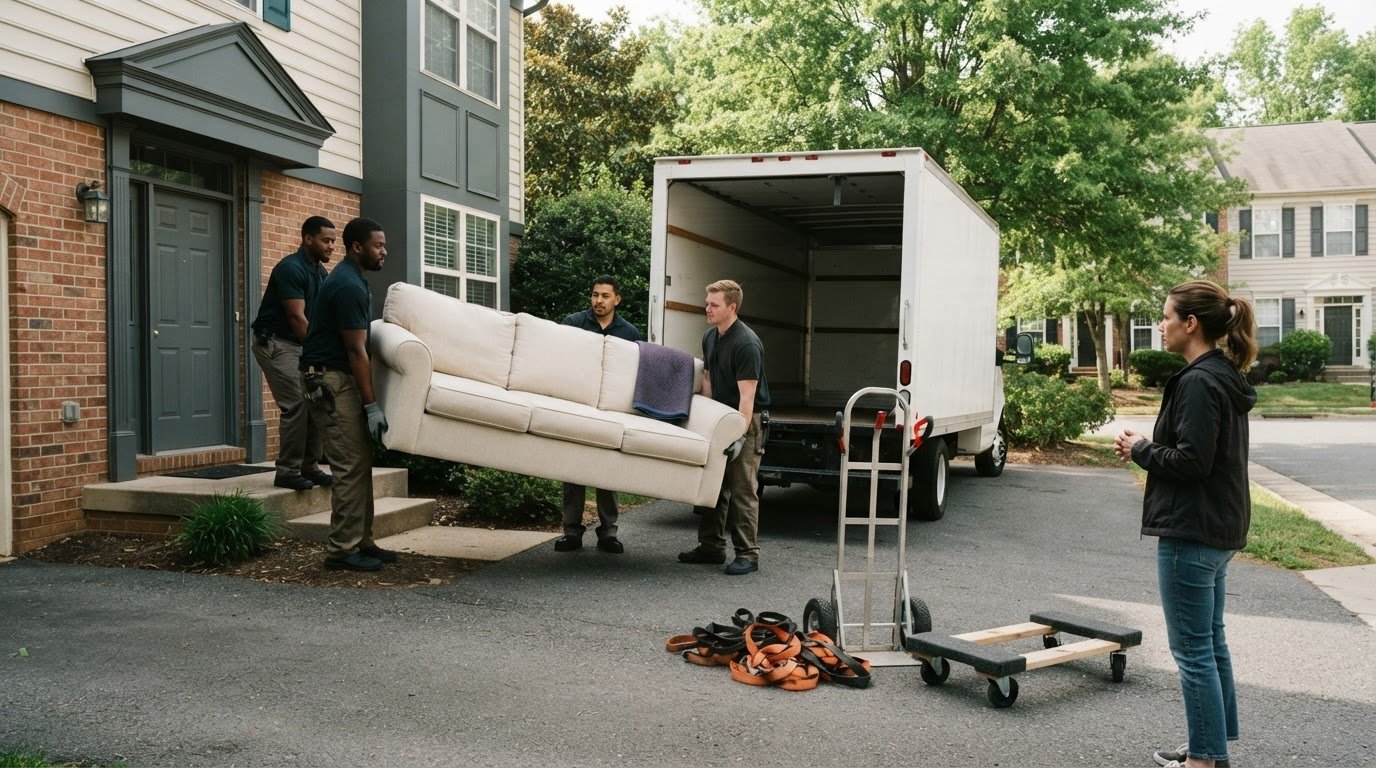
Renting equipment may cost less for a small local move you can manage yourself. Hiring specialized heavy movers may make more sense when bulky items, stairs, or difficult access add work. To compare hiring specialized heavy movers with renting equipment from Sunbelt Rentals in Dumfries, look at the full job cost, not just the rental charge.
It’s easy to focus on the rental price and overlook fuel, mileage, insurance, equipment, helpers, and your own time and effort. Add these costs before deciding which option better fits your budget.
This guide breaks down the expenses and trade-offs, from rental add-ons and mover fees to stairs, elevators, and DIY lifting. Use the decision guide to see which approach fits your move and when professional help can take the strain off your day.
Key Takeaways
- Choose based on the complete moving workload, not the equipment rental alone. Include the time, planning, lifting, and driving you’ll handle yourself.
- Renting can suit a small, local move when you can manage the loading and transport. Rental rates vary with truck size, location, and rental duration.
- Map stairs, elevators, doorways, and building rules before moving day. Three flights of stairs can make a DIY move slower and riskier.
- For heavy or awkward items, weigh the handling risks as well as the direct costs. A mixed approach, packing yourself and hiring help for loading and unloading, can reduce the strain.
- When bulky furniture or exercise equipment is the sticking point, explore professional moving help suited to those items.
When hiring professional movers may make sense
Professional movers can be a practical choice for a family-sized home, heavy furniture, stairs, elevators, or a tight timeline. Compare the full workload, including lifting, driving, planning, and unloading, rather than looking at rental costs alone.
Truck Rental Versus Professional Movers
A rental truck gives you control over the move, but you handle the driving, lifting, and schedule. Professional movers can take on agreed moving tasks, such as packing, loading, transport, and unloading, reducing what you need to manage yourself. For a small local move with manageable items, renting may suit your needs. Heavy furniture, multiple rooms, or a tight moving day can shift the balance toward professional help.
Equipment, Crew, and Transport Needs
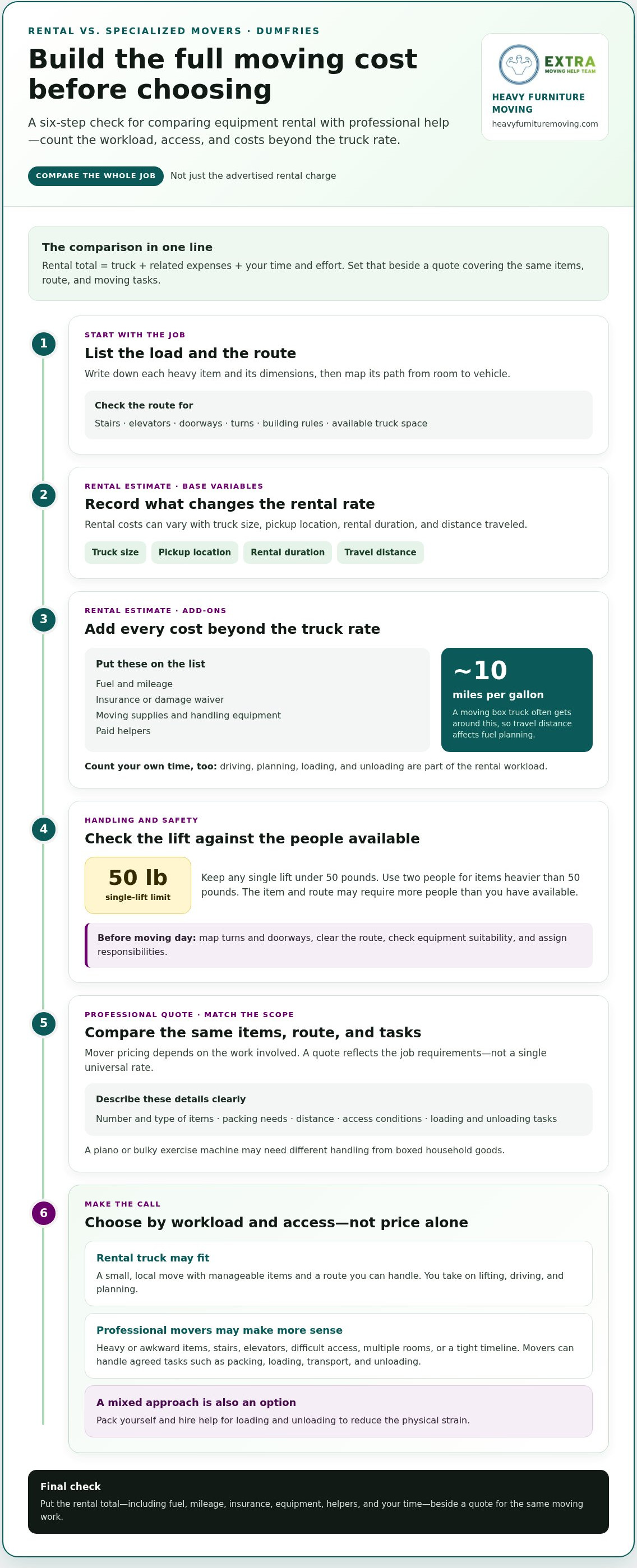
Start by listing each heavy item, its dimensions, and the route from room to vehicle. Then account for stairs, elevators, doorways, and the truck’s available space. A moving truck needs room to carry the load securely, while handling equipment must suit the item and the path. Keep any single lift under 50 pounds; use two people for items heavier than 50 pounds. Professional movers can coordinate the crew and transport for the job.
Professional Mover Pricing
Professional mover pricing depends on the work involved and is provided after a quote request. The main cost factors include the number and type of items, packing needs, distance, access conditions, and loading or unloading tasks. A piano or bulky exercise machine may require different handling from boxed household goods. Describe the inventory and access clearly when requesting a quote, so the estimate reflects the actual moving work.
Risks of a DIY Machinery Move
Renting equipment doesn’t take the physical work or planning out of a heavy-item move. You still need to coordinate loading, transport, and unloading, while a poor route or unsuitable equipment can complicate handling. A heavy item may also need more people than you have available. If you move it yourself, map each turn and doorway, clear the route, and assign responsibilities before moving day.
A moving box truck often gets around 10 miles per gallon, so travel distance affects the rental plan. A longer route adds driving and fuel considerations to the lifting and loading you already manage. Professional movers may make more sense when your home includes heavy items and access challenges, or when you need packing, transport, and unloading handled together.
| Option | Best fit | Your workload | Key comparison |
|---|---|---|---|
| Rental truck | Small, local move | You handle lifting, driving, and planning | Rental plus your time and effort |
| Professional movers | Heavy items or a tight timeline | Movers handle agreed moving tasks | Quote reflects the job requirements |
Choose a rental truck when the load and route are manageable. Choose movers when heavy items, difficult access, or limited time make the work harder to coordinate.
Costs beyond the truck rental
A truck’s advertised rate is only one part of a moving budget. Add fuel, mileage, insurance, equipment, helper costs, and your own time before comparing a rental with professional moving. For a fair comparison of hiring specialized heavy movers with renting equipment from Sunbelt Rentals in Dumfries, count the full workload and its related expenses.
Rental costs can also vary with truck size, pickup location, rental duration, and distance traveled. A low starting rate may not reflect what you’ll spend by moving day.
Build a complete rental estimate
List every rental expense before deciding. Fuel depends on the route and vehicle use, while mileage fees can increase as distance grows. Account for insurance, equipment, paid helpers, and the hours you’ll spend loading and unloading.
- Fuel and mileage: Estimate the route, including trips between pickup, home, and drop-off.
- Insurance: Include the selected rental coverage and any damage waiver.
- Equipment: Account for moving supplies or handling equipment rented separately.
- Helpers and time: Include paid help and your own hours driving, loading, and planning.
Compare the full job, not just the quote
Put the rental total beside a moving quote. Include mileage, fuel, equipment, helpers, and your time on the rental side. Compare that with the work covered by the quote. To compare hiring specialized heavy movers with renting equipment from Sunbelt Rentals in Dumfries, make sure both options cover the same items, route, and tasks.
For example, moving a heavy exercise machine yourself may mean arranging a truck, suitable equipment, helpers, and transport. Heavy Furniture Moving offers specialized exercise equipment moving, so compare the service and responsibilities with the tasks you’d handle yourself. The right choice depends on the item, access, and work you want to take on.
Protect your budget by writing down the route and task list first. Include pickup and return logistics, loading time, and equipment needed for each bulky item. Then compare totals side by side. If you’re weighing the labor portion of your plan, review moving labor options alongside your rental estimate.
Make the comparison useful by listing the rental cost and each related expense separately. Include mileage, fuel, equipment, helpers, and the time you expect to spend. This shows which costs drive the rental total, instead of treating the advertised rate as the whole budget. Use the same task list for a moving quote so both estimates reflect the work you’re comparing.
Keep the comparison focused on the full job, not just the truck charge. If an expense or responsibility appears in one estimate, check whether it is covered in the other before deciding. A clear side-by-side review lets you compare options on similar terms while keeping your own time and planned work in view.
Stairs, elevators, and building requirements
Building access can change the pace and difficulty of a move. Map the route from each item’s room to the truck before choosing a DIY plan or professional help.
Measure the full route
Start at the item, not the front door. Trace every doorway, hallway, turn, stair landing, and exit to the loading area. A tall cabinet may clear a room doorway but not a narrow hallway turn. Measure the item and compare its dimensions with each tight point along the route. Note handrails, door swings, and low ceilings. This route map shows where you need more planning or a different approach.
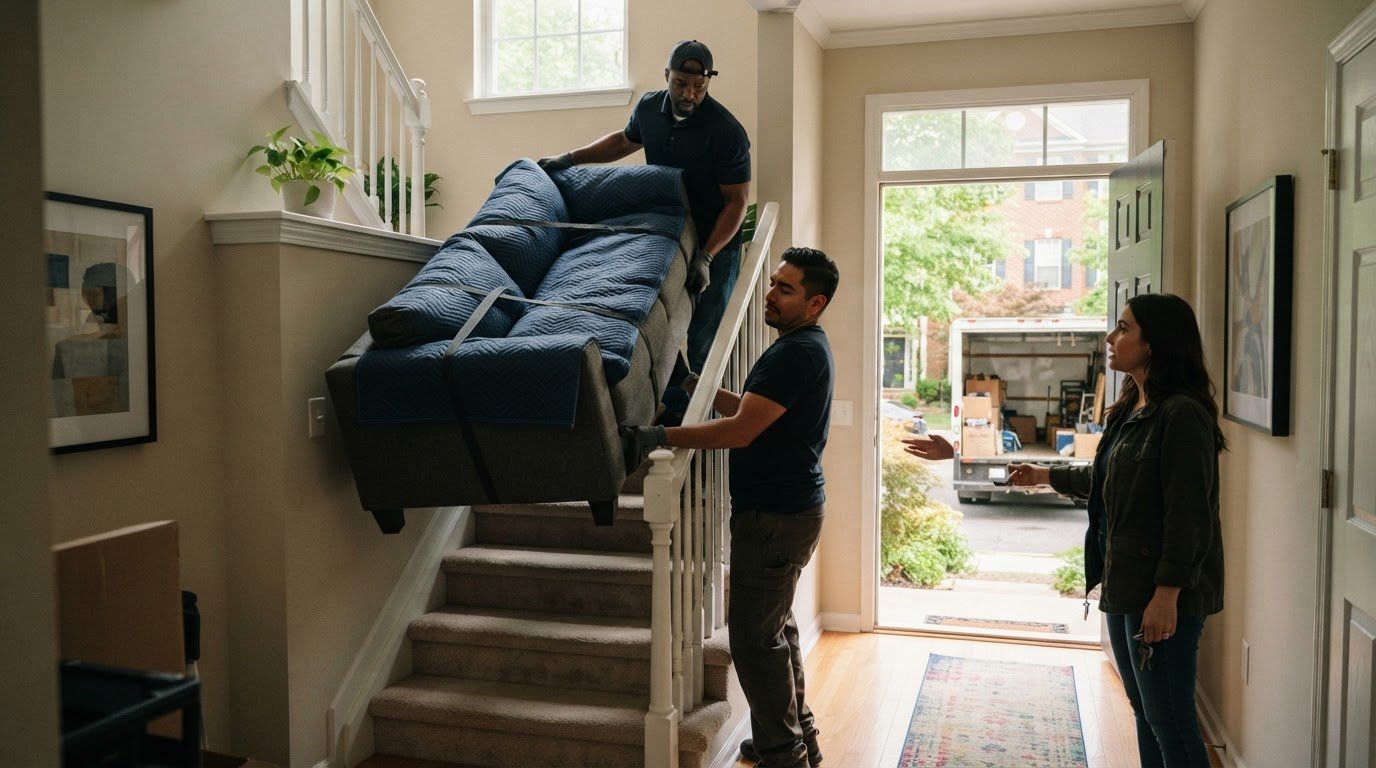
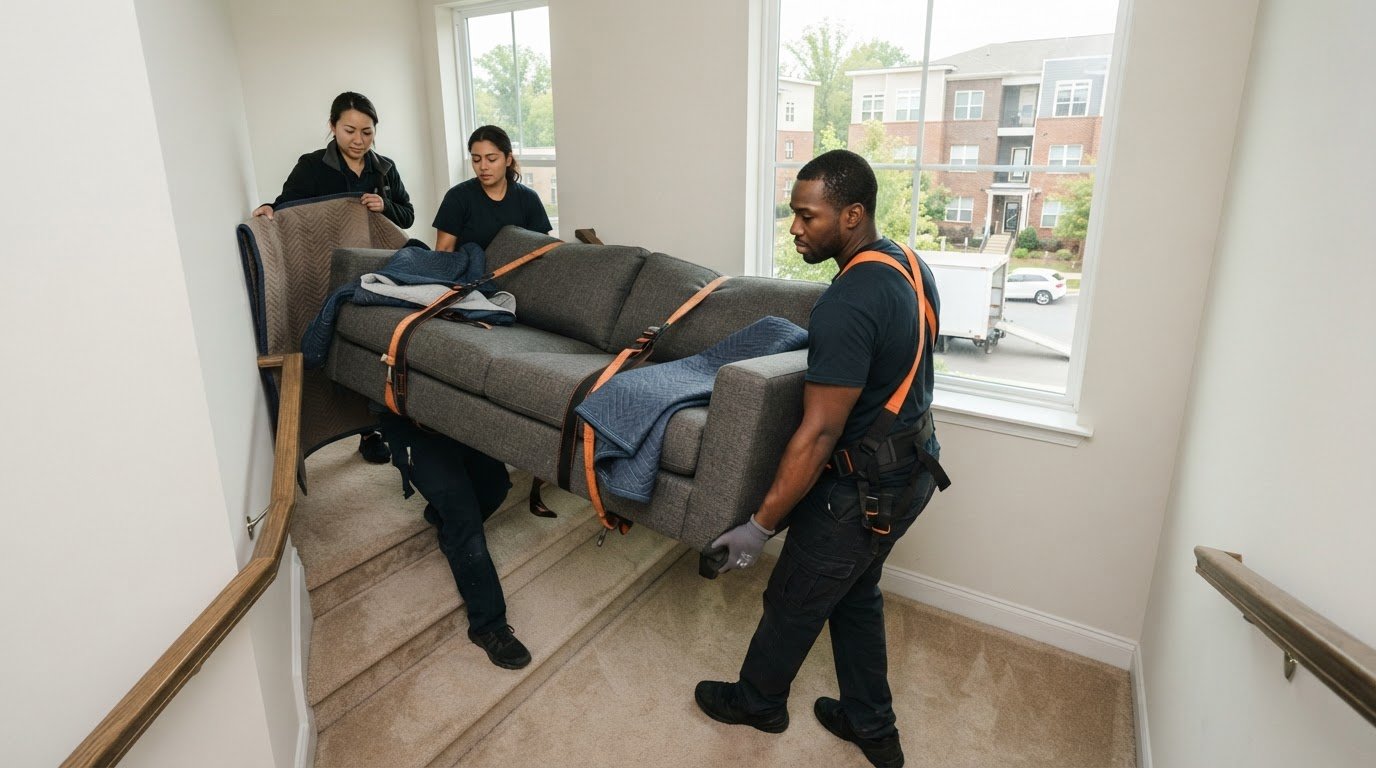
Stairs add repeated handling. An apartment with three flights of stairs can make a DIY move slower and more demanding. Each landing creates another turn, and a bulky sofa leaves less room to adjust your grip. Check whether the item can turn on every landing without hitting walls or rails. If the route is too tight, plan another way to move the item rather than forcing it through.
Plan elevator use
An elevator can simplify a move, but its size and access matter. Measure the doorway and interior, then compare those dimensions with the item’s height, width, and depth. A treadmill might fit upright but need a different position to enter the cab. Ask building management about elevator access, protective coverings, and move-day procedures. Arrange these details before loading begins.
Access planning also includes the path outside. Identify the closest usable entrance, distance to the truck, gates, and uneven surfaces. A heavy dresser, for example, may pass easily through a lobby but be difficult to carry across a long courtyard. Check where the truck can stop and whether the route will stay clear. A clear path helps prevent last-minute changes while carrying the item.
Check building procedures before moving
Use a short checklist for each building:
- Ask management how to reserve or access the elevator.
- Measure doorways, turns, stair landings, and elevator space.
- Record entry points, truck access, and the route between them.
- Ask about floor or wall protection and any move-day procedures.
These details help you compare DIY effort with professional moving support. When stairs, tight turns, and a heavy item share the same route, the challenge goes beyond truck rental. If the route is clear and items fit through each opening, a DIY move may be easier to organize. Use your measurements and building instructions to choose a plan that suits the actual access conditions.
What are the risks of renting heavy equipment and doing a machinery move without professional movers?
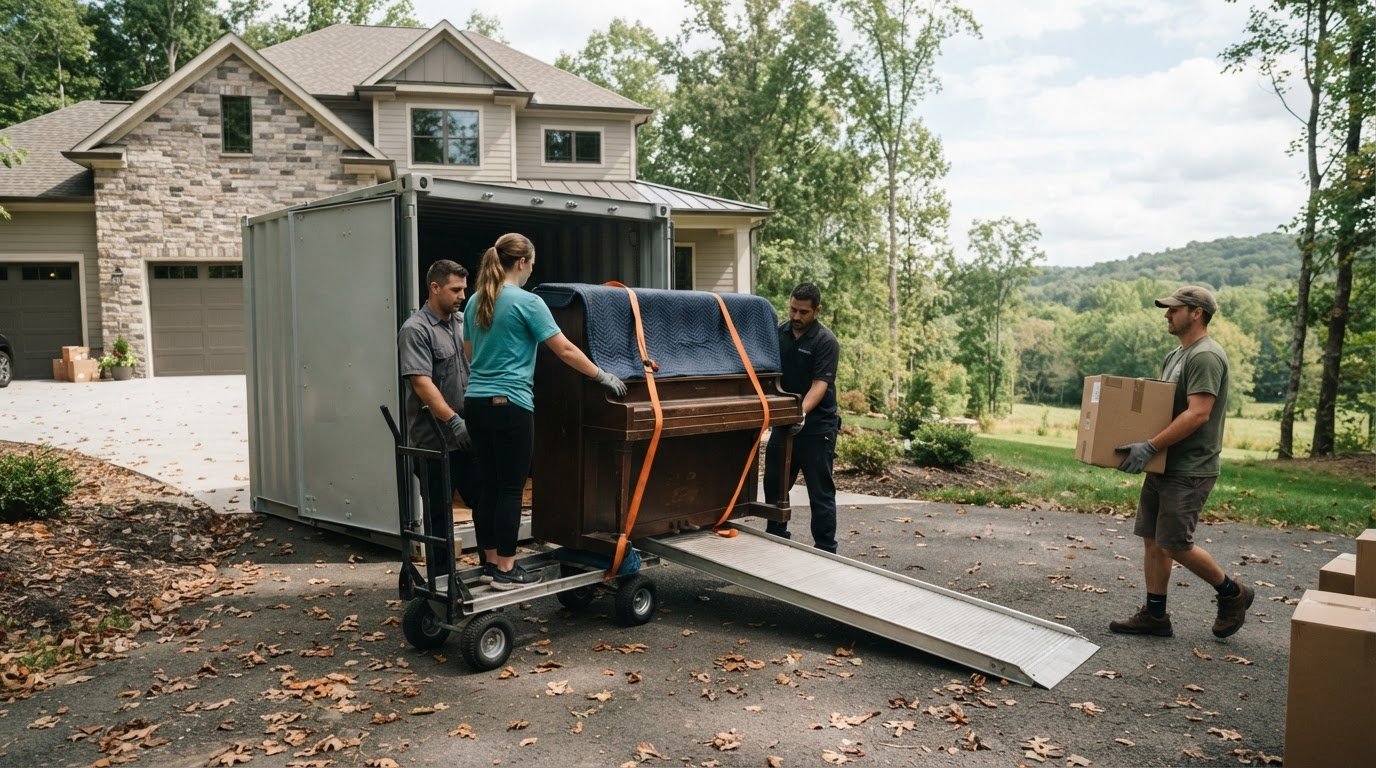
Renting equipment provides tools, but you still plan and perform the move. A heavy machine can shift during loading, block a doorway, or prove difficult to guide around a tight turn. Each problem can interrupt the move and require extra handling. Before renting, identify the machine, map its route, and assign each task. If any part of the plan is unclear, don’t start moving the load.
Equipment must match the load and route
A dolly or lifting device needs to suit the machine’s shape and route. A compact treadmill, for example, may fit through a doorway but still be awkward around a narrow hallway corner. Check the equipment instructions and plan how the machine will be loaded, secured, and unloaded. A tool suited to a flat floor may not solve a stair or threshold problem.
Safe handling also depends on coordination. One person needs to guide the route while others control the load, and everyone should understand the plan before lifting begins. If a helper changes position without warning, the machine can tilt or strike a wall. Assign roles, clear the route, and agree on simple directions in advance. Pause if the team loses control.
Transport adds another set of decisions
Getting machinery into a truck is only one step. The load must be positioned and secured for the trip, then removed at the destination. A rushed setup can leave the machine unstable or difficult to unload. Plan the truck space and loading order before the equipment arrives. Clear the destination route too, so the machine isn’t left in the way while people move furniture or open doors.
- Route: Walk the full path and remove obstacles before moving.
- People: Assign clear roles and directions before handling the machine.
- Equipment: Match the tool to the item and the route conditions.
- Truck: Plan where the machine will sit and how it will be secured.
- Destination: Clear the final room before unloading begins.
DIY effort also includes coordinating helpers, equipment pickup, loading, and return. If a machine won’t pass through a doorway, the team may need to stop and rethink the route. That can disrupt the rest of the move, especially when other household items share the truck. For complex or bulky household items, professional Exercise Equipment Moving from Heavy Furniture Moving replaces a self-managed equipment plan with specialized moving help. Compare that convenience with the tasks you’re prepared to handle yourself.
Renting moving
A rental truck can work for a small local move with a manageable load. It gives you control over pickup, loading, the route, and return. You’re also responsible for driving and coordinating moving day. For a longer trip, compare the rental plan with the distance and workload.
Match the rental to the move
Truck rental rates vary by truck size, rental location, and rental duration. Begin with an inventory of large furniture, boxes, and bulky household equipment. Use it to estimate the space you need, then consider how the items will fit together. An oversized truck may add cost and be harder to manage, while a tight fit can leave little room for secure loading. Your route and rental period also affect which option suits the move.
Before reserving, write down the pickup and return locations, moving date, and expected route. A local Dumfries move has a different travel plan from a long-haul relocation. Allow time for loading and unloading, not just driving. If the move includes a heavy machine, plan how it will enter the truck and where it will sit. The truck must fit the inventory, and the loading plan must work too.
Prepare for pickup and driving
Moving truck rental companies commonly require a valid driver’s license and a credit card hold. Have these ready for the rental process. Before leaving the pickup location, review the rental agreement and note the return instructions. Keep the route and destination address accessible while driving. Plan where to park at each stop, especially if the destination has a narrow entrance or limited loading space.
- Inventory: List bulky items and estimate the cargo space they need.
- Route: Map pickup, destination, and return locations.
- Schedule: Allow time for loading, driving, unloading, and return.
- Pickup: Bring a valid driver’s license and credit card.
- Load plan: Decide where heavy items will sit before moving day.
Renting is most practical when you can manage the truck and labor without disrupting the move. A packed schedule, difficult access, or a heavy item can make the plan harder to coordinate. Consider a split approach: pack boxes yourself, then arrange help with loading, moving, and unloading. This keeps some tasks in your hands while reducing the physical work you need to manage.
Compare the rental cost with a moving quote after accounting for mileage, fuel, equipment, helpers, and your time. You can pack boxes yourself and hire movers for loading, moving, and unloading.
Heavy Furniture Moving: Movers Near Me
Heavy Furniture Moving helps with bulky household items through its Movers Near Me service. Get professional help when an exercise machine is difficult to move, a sofa needs hoisting, or heavy furniture must be repositioned inside your home. The right choice depends on the item, the route, and how much lifting and coordination you want to handle yourself.
For a small move with a clear route and manageable items, renting equipment may be a practical DIY option. For awkward furniture or exercise equipment, professional handling can take the strain off your moving plan. Choose the approach that fits your load and access, then contact Heavy Furniture Moving to discuss your move.
Set Up Your Move With Confidence
Base your choice on the work you want to take on, not just the equipment you might use. Comparing specialized heavy movers with renting equipment from Sunbelt Rentals in Dumfries is more useful when you make a clear task list: what needs moving, what you’ll handle, and where you want support. That’s a practical starting point for organizing your move.
If you’d rather have help with demanding items than manage every part yourself, Heavy Furniture Moving can help you explore a moving option that fits your needs. Share what you’re moving and the kind of support you’re looking for, then make a plan that feels right for your home.
Contact Heavy Furniture Moving to discuss your move. Take the next step with a clear plan and less to carry alone.
Frequently Asked Questions
How Does Hiring Movers Compare on Price?
Renting may cost less when you can handle the move’s labor and driving yourself; movers provide a quote for the agreed work. Compare matching responsibilities, not just headline rates. For example, if movers handle loading but you provide transport, compare that labor-only service with a full truck rental. In Dumfries, list what each option covers, then weigh the cost against the time and physical work you’ll take on.
What is the total cost to hire specialized heavy movers in Dumfries, including labor, transport, and insurance?
The total depends on the job and is provided after a quote request. Cost factors include the item, access, distance, and whether you need labor, transport, or both. Heavy Furniture Moving uses hourly labor with a 2-hour minimum, and flat-rate pricing for most single heavy items. Share the item and moving details to get a quote reflecting the work involved.
What insurance and liability coverage do heavy movers and equipment rental companies provide?
Coverage depends on the agreement, and rental equipment coverage and mover liability are separate matters. Read the terms to understand what they address: damage to rented equipment, the moving vehicle, your belongings, or property at either address. Coverage for a rental machine, for example, doesn’t automatically explain protection for a sofa being moved. Keep the agreements and any item condition records with your moving paperwork.
Frequently Asked Questions
Renting may cost less when you can handle the move’s labor and driving yourself; movers provide a quote for the agreed work. Compare matching responsibilities, not just headline rates. For example, if movers handle loading but you provide transport, compare that labor-only service with a full truck rental. In Dumfries, list what each option covers, then weigh the cost against the time and physical work you’ll take on.
The total depends on the job and is provided after a quote request. Cost factors include the item, access, distance, and whether you need labor, transport, or both. Heavy Furniture Moving uses hourly labor with a 2-hour minimum, and flat-rate pricing for most single heavy items. Share the item and moving details to get a quote reflecting the work involved.
Coverage depends on the agreement, and rental equipment coverage and mover liability are separate matters. Read the terms to understand what they address: damage to rented equipment, the moving vehicle, your belongings, or property at either address. Coverage for a rental machine, for example, doesn’t automatically explain protection for a sofa being moved. Keep the agreements and any item condition records with your moving paperwork.