Sofa Hoisting in Reston for Oversized Furniture
The cheapest-looking sofa move can be the wrong fit when the piece won’t clear a doorway. To compare a professional sofa hoisting service with College Hunks’ lifting limitations in Reston, start with the sofa’s dimensions, building access, and the equipment and protection the job requires. Those details shape the plan and the price.
It’s reasonable to want a clear answer before arranging a move. Hoisting costs depend on the sofa’s dimensions and weight, the access point and lifting height, the space available for setup, and the protection needed for furniture and property. The price depends on the specific job and is provided after a quote request.
This guide explains how access and item size affect a lifting plan, what to consider when protecting walls, floors, and upholstery, and how to compare hoisting options without relying on assumptions. You’ll see which details matter most when a sofa won’t fit through a standard entryway.
Key Takeaways
- Measure the sofa and map its route before moving day; tight turns, stairwells, and window access can change the hoisting plan.
- Expect the job plan and cost to depend on the item’s size and weight, the lifting route, setup space, and protection required.
- Look for a clear handling plan that accounts for securing the sofa and protecting nearby furniture and property.
- Specialty lifting equipment and protective materials can help address access challenges while reducing the risk of bumps and scrapes.
- For a sofa that can’t pass through standard entryways, Sofa Hoisting from Heavy Furniture Moving is a direct option to consider in Reston.
Hoisting oversized furniture that cannot fit through standard entryways
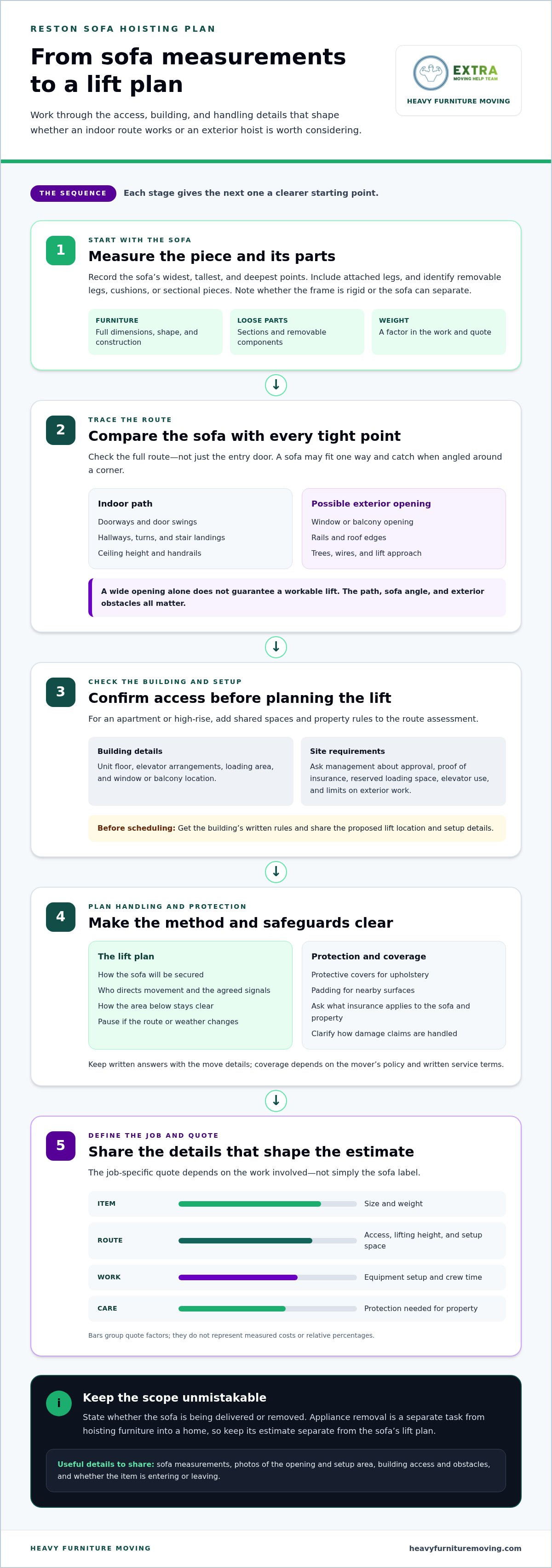
A sofa that cannot clear a doorway may still reach its destination through an exterior opening. In Reston, the route depends on the sofa’s shape, the building layout, and whether a suitable window or balcony is accessible. Measure the furniture and access points first, including the frame, legs, and any removable parts.
Compare the sofa’s full dimensions with each doorway, hallway, stair landing, and turn. A sectional may fit one way but catch when angled around a narrow corner. Note ceiling height and handrails, too. These details help determine whether the indoor route is workable or an exterior lift is worth considering.
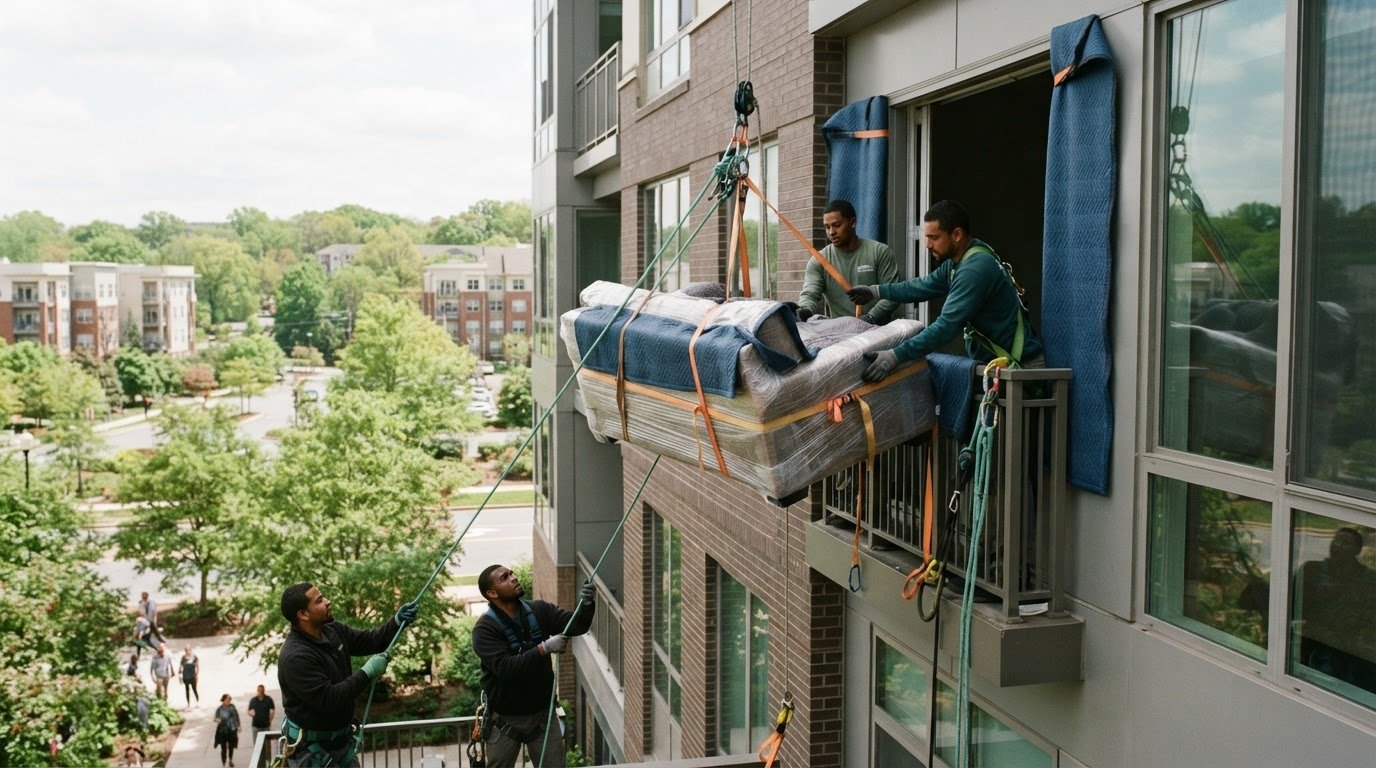
Window and balcony hoisting requires a clear path from the ground to the opening. The crew needs to assess where lifting equipment can be positioned and how the sofa will be secured. A balcony railing, roof overhang, tree, or overhead wire can change the approach. A wide opening alone does not guarantee a workable lift.
Apartment and high-rise moves add shared spaces to the plan. Identify the unit’s floor, elevator access, loading area, and window or balcony location. Building rules may affect elevator use, exterior access, or move timing. Coordinate those details with building management before moving day, and clear the route inside the unit.
Cost depends on the work involved, not simply the sofa label. The sofa’s size and weight, access route and height, equipment setup, crew time, and property protection all affect the quote. A straightforward ground-floor window lift differs from a tight balcony lift above a busy courtyard. Heavy Furniture Moving provides a job-specific quote for most single heavy items.
Furniture or appliance removal is a separate task from hoisting an item into a home. Removing a refrigerator means planning its exit route; hoisting a sofa means moving it through an exterior opening. The item’s weight, dimensions, and route shape removal work. Clarify whether the job involves delivery, removal, or both.
- Measure the item, openings, and tight turns.
- Photograph the window or balcony and the ground-level setup area.
- Note building access, elevator arrangements, and obstacles along the route.
- Describe whether the furniture is being delivered or removed.
These details give the hoisting crew a practical starting point. Share them when requesting a quote so the plan accounts for the sofa, access, and property around the lift.
If the move also involves an appliance, keep its removal estimate separate from the sofa’s lift plan. A refrigerator removal estimate is not a price for hoisting a sofa through a window or balcony, and should not be treated as the expected cost of an exterior lift.
When describing the job, identify which item needs to leave and which needs to enter, then give the crew the route and access details for each. Ask what the estimate covers so appliance removal and furniture hoisting are not confused. This keeps the requested scope clear when discussing the moving plan and cost.
Planning hoisting jobs around access, item size, and safety
A workable lift starts with accurate measurements and a clear route. In Reston, building access rules and the sofa’s shape also affect the plan.
Access and Item-Size Planning
Measure the sofa at its widest, tallest, and deepest points, including attached legs. Compare those dimensions with the window or balcony opening, and note nearby rails, roof edges, and exterior obstacles. A sofa that fits through an opening may still be difficult to angle through, especially if its frame cannot flex.
Map the route from the lift area to the room. Record the floor, window location, ground-level setup space, and any trees or wires near the building. Indoors, note stair turns, door swings, and tight landings. Photos of the sofa, opening, and approach help explain the job clearly.
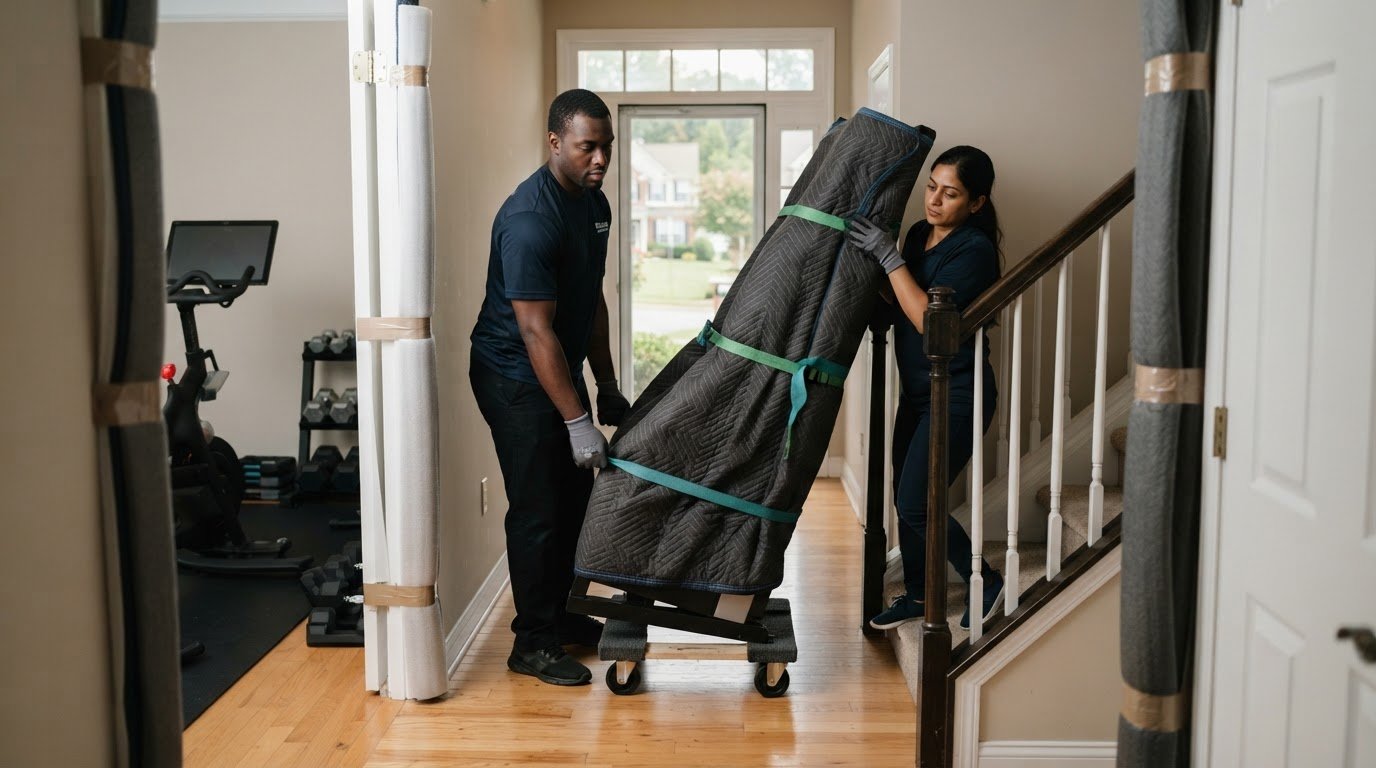
The item’s construction matters, too. A sectional may separate into pieces, while a rigid sofa may need to travel as one unit. Identify removable cushions, legs, and sections before planning. Keep pets and bystanders away from the work area, and clear the indoor route so the crew can guide the furniture without navigating loose items.
Building Requirements for Hoisting
Do Reston buildings, HOAs, or property managers require permits or insurance? Requirements vary by site, so get the building’s written rules before setting a lift date. Ask whether the property requires advance approval, proof of insurance, a reserved loading area, elevator arrangements, or limits on exterior work.
Insurance and damage liability depend on the mover’s policy and written service terms. Ask what coverage applies to the sofa, building, and nearby property, and how damage claims are handled. Don’t assume one policy covers every item or surface. Keep the written answers with the move details.
Safety planning should cover how the sofa will be secured, who directs movement, and how the area below will stay clear. Protective covers can help shield upholstery, while padding can protect nearby surfaces. The crew should agree on clear signals before lifting and pause if the route or weather changes.
Before scheduling, give the property manager the proposed lift location and setup details. For a complex sofa route, review sofa-hoisting planning alongside the building’s access requirements.
Crew experience and careful handling
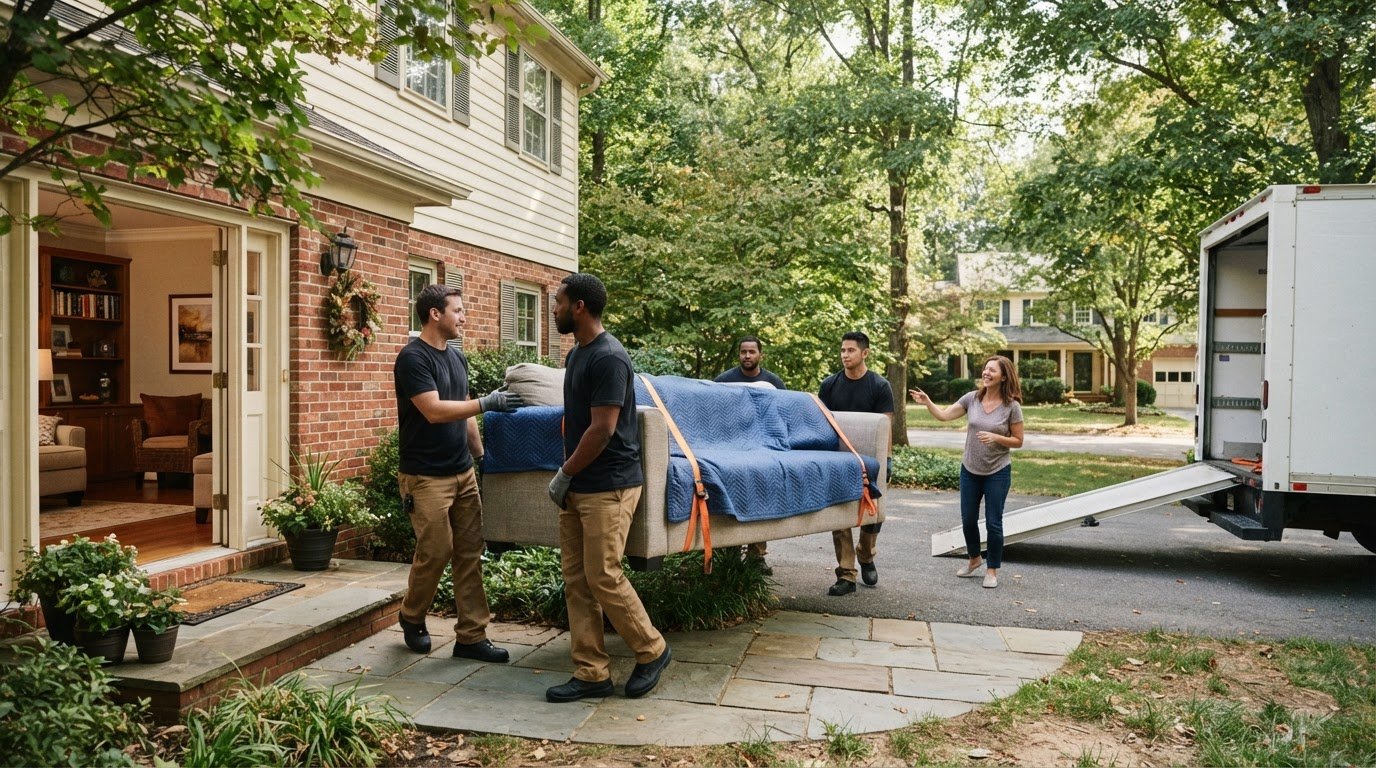
Careful sofa handling starts before anyone lifts. A capable crew studies the piece, its frame, and the planned route. A leather sofa, for example, needs protection from buckles, rough edges, and direct contact with equipment. A large sectional may need each removable section handled separately.
Watch how the crew prepares the furniture. They should identify delicate upholstery, loose legs, reclining parts, and other vulnerable areas. Cushions can be removed and carried separately when that makes the sofa easier to control. Moving blankets and protective wrap help shield the fabric from scuffs during handling.
Communication matters at every stage. Before lifting, the team should agree on who gives directions and how they’ll pause or adjust. During a turn through a narrow opening, one person can guide the sofa while another watches its edge and nearby surfaces. Clear signals help prevent sudden movements and conflicting instructions.
For an exterior lift, the crew should explain how the sofa will be secured and guided. The area below the lift must stay clear. A balcony rail, window frame, or building wall can be vulnerable to contact, so monitor the route and the sofa’s position throughout the move.
Experience shows in the details, not just strength. A crew that spots a loose sofa leg can protect or remove it before it catches on a doorway. If a sofa starts to tilt or rub against a surface, the team should stop and reset its position rather than force it through.
- Point out existing marks, loose parts, or delicate upholstery before work begins.
- Keep pets, children, and unrelated items away from the moving route.
- Ask the crew to explain how furniture and nearby surfaces will be protected.
- Agree on a clear pause signal before the sofa is lifted.
These steps help ensure the sofa is handled carefully from preparation through placement. Stay available to answer questions about its construction, but keep the lifting path clear. Tell the crew if a sectional connector is loose or a recliner mechanism needs special attention.
Compare providers by the plan they describe, not by claims of strength alone. A useful explanation covers how the crew will protect the upholstery, control movement, and respond if the route changes. For a Reston move, these details show whether the proposed handling method fits the sofa and property.
Service-area coverage
For a sofa lift in Reston, location affects more than the drive. The address determines the crew’s route, arrival access, and where equipment can be positioned. Share the full pickup and delivery addresses, especially when the sofa is moving between buildings. A move within Reston differs from one that starts or ends elsewhere.
Use the exact property address, not just a neighborhood name. Reston homes, apartment buildings, and townhomes can have different entry points and loading areas. A street-facing entrance may not be the approved loading spot. Include the building name, unit, and directions that help locate the right entrance.
The job’s scope also matters. Moving a sofa from a truck into a Reston home differs from lifting it out of one apartment and placing it in another. State whether the request covers one address or multiple stops. If a sofa is being removed, identify its starting point and destination.
Before setting a date, organize the location details that shape the visit:
- Write down every pickup and delivery address.
- Identify the building entrance and loading area.
- Note the unit or floor and any directions for reaching it.
- Describe whether the sofa is arriving, leaving, or moving between Reston addresses.
These details distinguish a local furniture move from a longer route with additional stops. A sofa moving from a Reston storage pod to a residence, for example, has different arrival points than one moving between two homes. List each address and stop in order so the route is clear.
Reston properties may sit on busy roads, private drives, or shared residential grounds. Explain where a moving vehicle can approach and whether the entrance faces a courtyard or service lane. Don’t assume the street address identifies the loading area. A simple direction, such as “use the rear service entrance,” can prevent confusion.
For a move across Reston’s boundary, provide both locations from the start. Distance and extra stops can affect scheduling and the overall work plan, while the sofa and access details still guide the lift itself. Clear routing information gives the crew a fuller picture of the job.
Keep the coverage question practical: name the addresses, describe the move between them, and identify the correct building access point. This helps match a Reston sofa-hoisting job to its actual route rather than guessing from a general location label.
Specialty lifting equipment and protective materials
The right equipment depends on the sofa, opening, and lift path. For a balcony move, lifting straps or a mechanical hoist can help control the sofa’s position. A narrow window, projecting ledge, or nearby tree changes the setup. Match the method to the actual route, not just the furniture label.
Straps and slings support the sofa at planned contact points. Placement matters: pressure on a fragile frame or reclining mechanism can cause damage. Before lifting, identify sturdy sections and remove loose cushions. Keep straps clear of detachable legs and exposed hardware that could snag the fabric.
A hoist, pulley, or other lifting device handles the upward movement. The crew needs a stable setup and enough clearance to guide the sofa without scraping the wall or opening. Control lines can help guide its direction from a safe position. Avoid pulling against balconies, window frames, or other building features.
Protective materials serve different purposes. Moving blankets or padded wrap shield upholstery from rubbing. Corner guards help cover sharp furniture edges, while floor runners protect the indoor route from dirt and scuffs. Even a wrapped sofa can mark a painted window jamb if that contact point remains exposed.
Before the lift, check that protection stays in place without covering a strap’s secure contact point. Clear the landing area of tables, lamps, and rugs. Assign someone to guide the sofa’s arrival indoors and keep communication consistent with the lifting crew. Pausing gives the team time to correct alignment before the sofa meets a wall or sill.
Equipment choice also depends on the sofa’s construction. A rigid frame needs different support from a sectional that separates into manageable pieces. A recliner’s moving parts require attention, and delicate upholstery needs a clean, padded contact surface. Tell the crew about loose parts, glass accents, or existing damage before work starts.
- Ask which equipment supports the sofa and controls its direction.
- Identify where straps contact the frame and whether parts need removal.
- Confirm which materials protect upholstery, floors, and opening edges.
- Keep the landing area clear and agree on a pause signal.
These details make equipment and protection part of one coordinated plan. If your Reston move needs specialized lifting, plan your heavy furniture lift around the item and its access route.
Heavy Furniture Moving: Movers Near Me
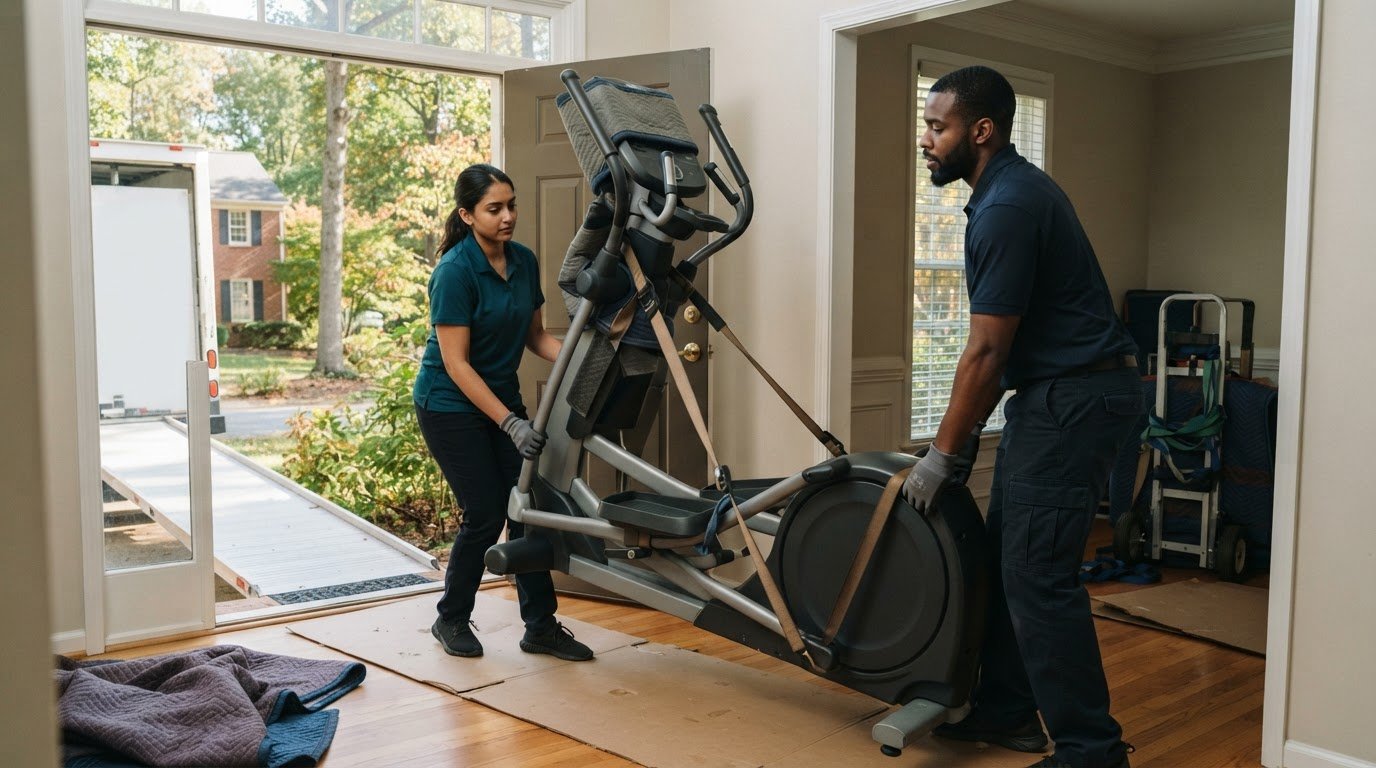
Heavy Furniture Moving helps Reston residents plan difficult furniture moves, including sofa hoisting when a piece won’t fit through standard access points. Its Movers Near Me service suits local moves, while in-home furniture movers can help reposition bulky pieces within a residence. Exercise Equipment Moving is available for heavy fitness equipment.
Share the sofa’s dimensions, building access details, and destination so the job can be planned around the actual route. This is a practical next step when stairs, narrow turns, or an exterior opening make an ordinary carry unsuitable.
For help with a Reston furniture move, contact Heavy Furniture Moving.
Make the Next Move With a Clear Plan
Your next step is to turn the sofa’s measurements and move details into a workable plan. A practical comparison of a professional sofa hoisting service versus College Hunks’ lifting limitations in Reston should focus on the actual item, access route, and handling approach, not assumptions about what a crew can do.
Heavy Furniture Moving offers Sofa Hoisting for oversized pieces, along with Movers Near Me for local moves and Exercise Equipment Moving for bulky fitness gear. Choose the help that matches the item and task. Sharing clear details about your move gives the conversation a useful starting point.
Ready to discuss your sofa move? Contact Heavy Furniture Moving and take the next step toward getting your furniture where it belongs.
Frequently Asked Questions
How Much Does it Cost?
The cost depends on the item, access, and work required. For a Reston sofa move, the quote can reflect the sofa’s size, route, exterior lifting needs, and setup. Share the pickup and delivery details, along with photos of the sofa and access points. When comparing a professional sofa hoisting service with College Hunks’ lifting limitations in Reston, focus on the specific job rather than assuming a standard rate.
Which professional furniture hoisting services serve Reston, VA?
Heavy Furniture Moving offers Sofa Hoisting in Reston, along with Movers Near Me and Exercise Equipment Moving. Its sofa-hoisting service helps when a bulky piece cannot use the regular route into a residence. Send photos of the sofa and access points to describe the move. Wrap, blankets, and straps are included on every job to help protect the furniture during handling.
How much does professional sofa hoisting cost in Reston, VA?
Heavy Furniture Moving provides a job-specific quote for sofa hoisting rather than a universal rate. The sofa and access details define the work involved. When comparing a professional sofa hoisting service with College Hunks’ lifting limitations in Reston, consider how each proposed plan addresses your item and route. Stairs and landings are priced before the crew arrives, so the quote reflects those conditions.
What sofa sizes, weights, and building conditions require hoisting rather than stairs or elevators?
Hoisting is an option when a sofa cannot pass through the available doors, turns, stairs, or elevator. A large sectional may fit if its pieces separate, while a rigid sofa may not turn on a tight landing. Compare the sofa’s full dimensions with the narrowest point on its route. Elevator cab size, door clearance, and building access matter more than a single sofa-size cutoff.
What access, window, balcony, and clearance measurements are needed for a sofa hoist?
Measure the sofa’s height, width, and depth, then record the clear opening at the window or balcony. Include the sill depth, railing position, and room to turn the sofa inside. Note ground-level obstacles such as trees or overhangs. For an elevator route, measure the cab interior, doorway, and hallway turns. Photos can reveal the shape and position of obstacles that measurements alone may not capture.
Frequently Asked Questions
The cost depends on the item, access, and work required. For a Reston sofa move, the quote can reflect the sofa’s size, route, exterior lifting needs, and setup. Share the pickup and delivery details, along with photos of the sofa and access points. When comparing a professional sofa hoisting service with College Hunks’ lifting limitations in Reston, focus on the specific job rather than assuming a standard rate.
Heavy Furniture Moving offers Sofa Hoisting in Reston, along with Movers Near Me and Exercise Equipment Moving. Its sofa-hoisting service helps when a bulky piece cannot use the regular route into a residence. Send photos of the sofa and access points to describe the move. Wrap, blankets, and straps are included on every job to help protect the furniture during handling.
Heavy Furniture Moving provides a job-specific quote for sofa hoisting rather than a universal rate. The sofa and access details define the work involved. When comparing a professional sofa hoisting service with College Hunks’ lifting limitations in Reston, consider how each proposed plan addresses your item and route. Stairs and landings are priced before the crew arrives, so the quote reflects those conditions.
Hoisting is an option when a sofa cannot pass through the available doors, turns, stairs, or elevator. A large sectional may fit if its pieces separate, while a rigid sofa may not turn on a tight landing. Compare the sofa’s full dimensions with the narrowest point on its route. Elevator cab size, door clearance, and building access matter more than a single sofa-size cutoff.
Measure the sofa’s height, width, and depth, then record the clear opening at the window or balcony. Include the sill depth, railing position, and room to turn the sofa inside. Note ground-level obstacles such as trees or overhangs. For an elevator route, measure the cab interior, doorway, and hallway turns. Photos can reveal the shape and position of obstacles that measurements alone may not capture.