How to Prepare and Load an Elliptical in Fairfax Station
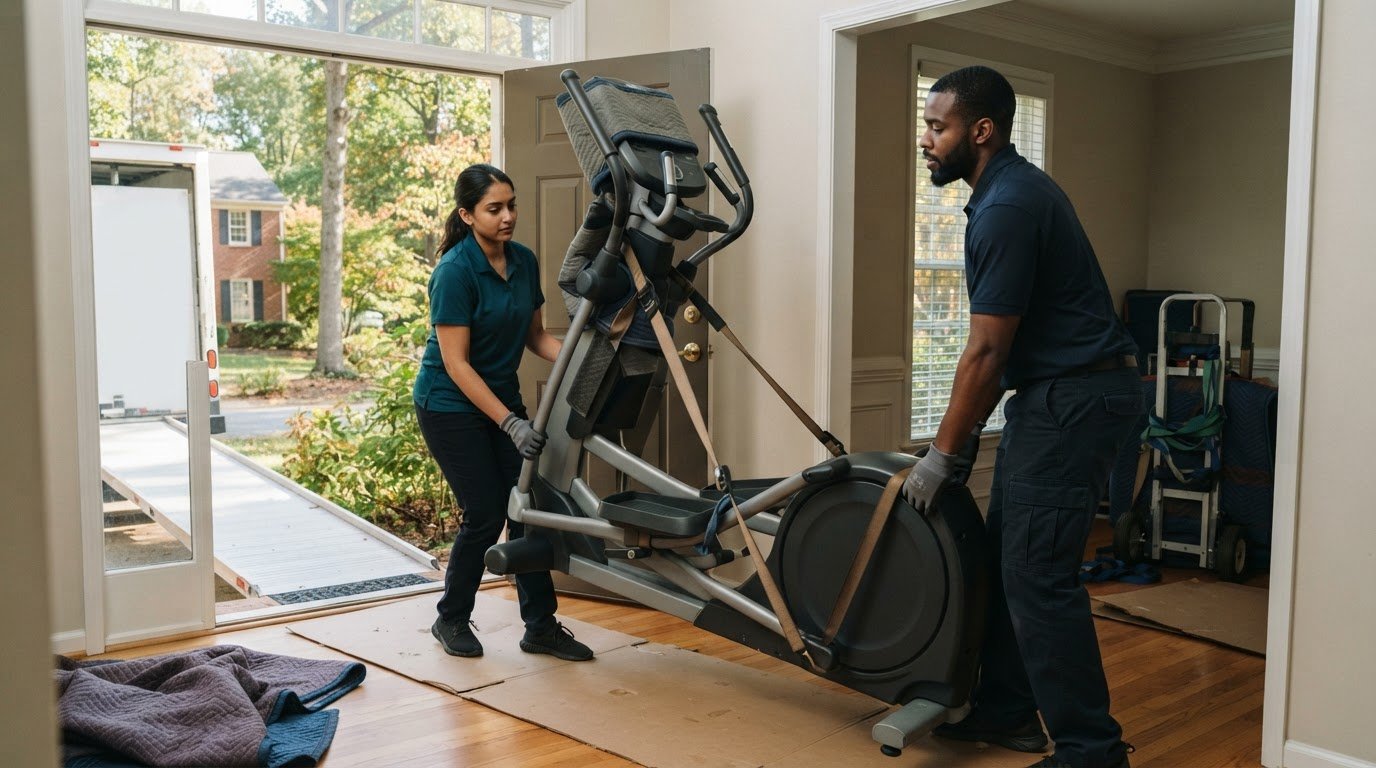
A successful elliptical move starts before moving day. If you’re looking for elliptical machine movers in Fairfax Station, careful handling begins with a plan for the machine and its route.
It’s normal to worry about awkward parts, electronics, and tight turns. A few practical steps can make the move more controlled and help protect the equipment from bumps and shifting during transport.
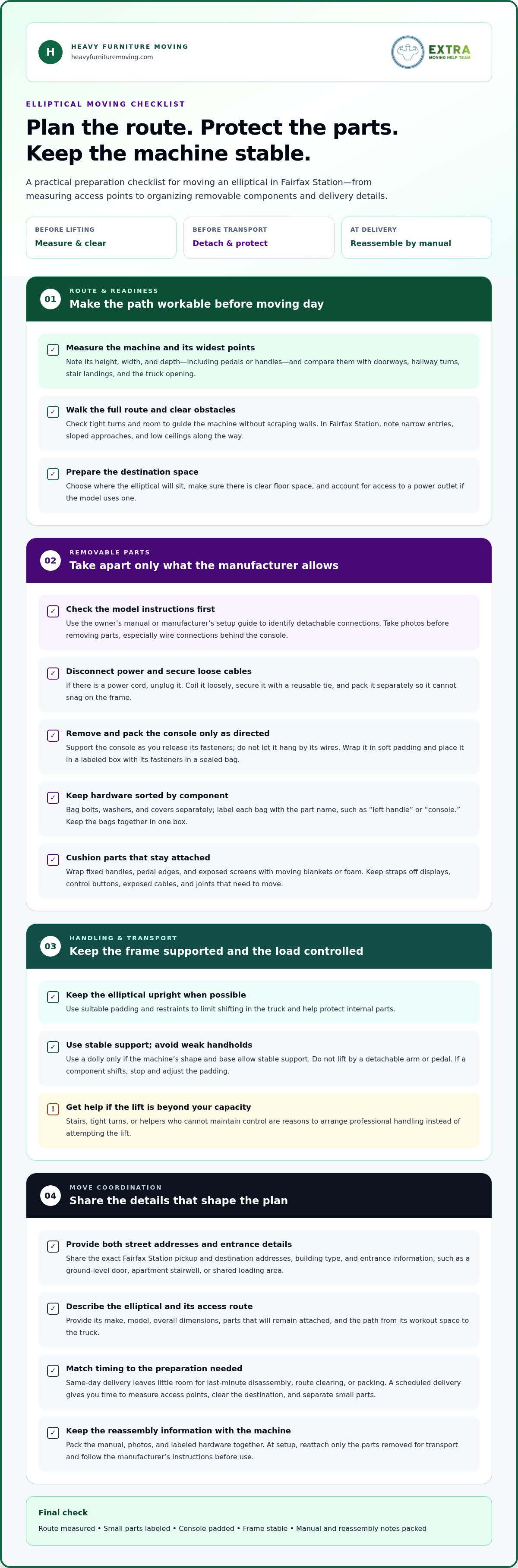
This guide explains how to prepare an elliptical, which parts to detach and wrap, and how to load and secure it alongside other items. It also covers what to consider when arranging moving help in Fairfax Station, so you can understand the service area and choose the next step with confidence.
Key Takeaways
- Plan the route from the machine to the truck before moving day, and clear tight turns and obstacles.
- Identify detachable parts and protect the console and display separately to help shield them during transport.
- Keep the elliptical upright when possible, then use suitable padding and restraints to limit shifting in the truck.
- Consider how the pickup location, access, and other items being moved affect the loading plan in Fairfax Station.
- Learn when exercise equipment moving help can ease the heavy lifting and make the move more manageable.
Moving and setting up electronic fitness equipment
You can move an elliptical without professional movers if the route is clear, the machine is prepared, and capable helpers can control its weight.
- Map the move before lifting. Measure the elliptical’s height, width, and depth, then compare those dimensions with doorways, hallway turns, stair landings, and the truck opening. Include the machine’s widest points, such as pedals or handles, and allow room to guide it without scraping walls. For Fairfax Station homes, note any narrow entry, sloped approach, or low ceiling along the route.
- Prepare the equipment for its destination. Keep the owner’s manual and any removed hardware together. Plan where the machine will sit before delivery, including clear floor space and access to its power outlet if the model uses one. At setup, reattach only the parts removed for transport and follow the manufacturer’s instructions before using the exercise equipment.
- Match the move plan to the distance. A local fitness equipment move may involve a short route but still require careful handling through the home and into the truck. A long-distance trip adds more time in transit, so protect loose parts and plan how the machine will stay secure throughout the journey. In either case, share the elliptical’s dimensions, model, and pickup and delivery access details when arranging the move.
- Choose a delivery schedule that fits the preparation. Same-day gym equipment delivery leaves little room for last-minute disassembly, route clearing, or packing. A scheduled delivery gives you time to measure access points, clear the destination area, and separate small parts. Decide which timing fits your readiness, and have the route and equipment details available when booking.
- Plan for business equipment as a group. For a gym, studio, or workplace, list each machine and identify the pickup sequence, destination room, and access route. Keep equipment that needs to be installed first easy to unload. Coordinate building access and clear the delivery area so the crew can move each item into position without navigating around stored boxes or other gym equipment.
- Use help when the lift exceeds your capacity. Secure loose cords and detachable accessories, and use suitable straps and padding to limit shifting during transport. Keep the elliptical upright when possible to protect its internal parts. If the route includes stairs or tight turns, or your helpers can’t maintain control, arrange professional handling instead of attempting the lift.
Disassembling removable components
Remove only parts the manufacturer designed to detach. An elliptical’s console, display, pedals, arms, and stabilizer covers vary by model, so follow the manual rather than forcing a connection. Pack small parts carefully to protect them and reduce stress on the frame during transport.
- Read the model instructions first. Find the manual or the manufacturer’s setup guide for your specific elliptical. Identify which connections can be loosened and which must remain fixed. Take photos before removing a part, especially where wires connect behind the console. Those images give you a clear reference during reassembly and help prevent confusion between similar plugs.
- Disconnect power and loose cables. If the machine has a power cord, unplug it before handling the console. Coil the cord loosely, secure it with a reusable tie, and pack it separately so it cannot snag on the frame. Keep cables away from moving joints and avoid pulling a wire to separate a connector.
- Remove the console only as directed. Some models allow the display and console to come off for transit. Use the correct hand tool, support the unit as you release its fasteners, and avoid letting it hang by its wires. Wrap the console in soft padding, then place it in a labeled box with its fasteners in a small sealed bag.
- Bag and label hardware by component. Put bolts, washers, and covers from each removed part into separate bags. Label each bag with the part name, such as “left handle” or “console.” Keep the bags together in one box instead of leaving them loose on the truck floor. Clear labeling makes reassembly more direct at the destination.
- Protect parts that stay attached. Wrap fixed handles, pedal edges, and exposed screens with moving blankets or foam padding. Secure the wrap without covering a joint that needs to move during handling. Check that straps sit on padded sections, not on a display, control button, or exposed cable.
- Keep the frame stable during handling. Use dollies only where the machine’s shape and base allow stable support. Don’t use a detachable arm or pedal as a handhold. If a component shifts while the frame moves, stop and adjust the padding before continuing.
- Keep the reassembly plan with the parts. Place the photos, labeled hardware, and manual together so they arrive with the elliptical. For a complex model or a difficult carry, exercise equipment moving help can handle the heavy lifting while you keep track of model-specific parts.
Fairfax Station service coverage
Before moving day, review the mover’s written terms, including protection limits, exclusions, and the claims process. Make sure you understand how the terms apply to damage during transport.
- Start with both street addresses. Give the exact Fairfax Station pickup address and destination address, not just a nearby landmark. The route and distance between those locations help determine whether the move is local or extends beyond the immediate area. Include the building type and entrance details, such as a ground-level door, apartment stairwell, or shared loading area.
- Describe the machine and access route. Share the elliptical’s make and model, overall dimensions, and any parts that will remain attached. Then describe the path from its workout space to the truck. A basement machine carried past a narrow landing needs a different plan from equipment beside a wide garage entrance.
- Ask how the written protection applies. Read the coverage language for the specific move, including the stated valuation, exclusions, and steps for reporting damage. Save the document with your move details. A general reference to “insurance” doesn’t explain which protection applies to your elliptical or what the claim process requires.
- Record the machine’s condition before transport. Photograph the console, frame, pedals, and visible wear before packing begins. Capture close views of existing scratches or loose trim, then keep the images with your move paperwork. These records give you a dated reference if you need to describe the machine’s condition after delivery.
- Prepare the pickup and delivery spaces. Clear the route at both addresses, including rugs, boxes, and furniture that restrict the turn. Protect corners and floor edges where the machine passes. At the destination, identify the intended workout area and leave enough access for the crew to position the elliptical without moving it repeatedly.
- Plan for changes in distance or access. Tell the moving team if the destination differs from the original address or if a lift, stairway, or entrance changes. A Fairfax Station move with a direct garage route is not the same as a carry through multiple interior turns. Clear details help shape the equipment handling plan and truck arrangement.
- Keep padding and paperwork together. Label wrapped console parts and retain the written coverage terms, condition photos, and delivery details in one place. At arrival, compare the elliptical with your pre-move photos before reconnecting it or returning it to exercise. Note visible damage promptly using the process described in the written terms.
Loading and securing the machine in a truck
Keep the elliptical upright during loading whenever possible, and decide where it will go before other items enter the truck. Planning the loading order helps protect the frame and leaves room for nearby furniture.
Load the Machine into the Truck
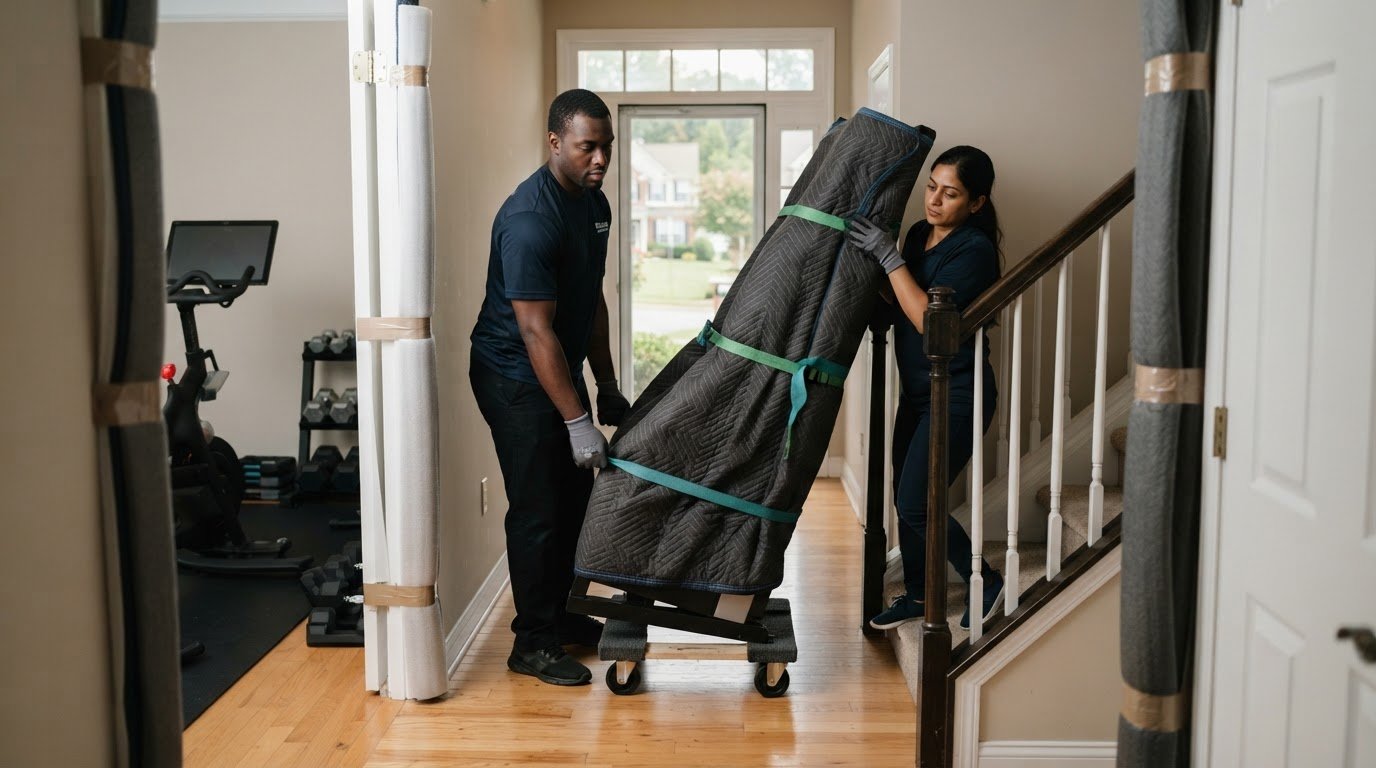
Guide the elliptical into the truck with steady, coordinated movement, keeping it upright when possible to protect its internal parts. Clear the path and check that the truck entrance has enough width and headroom. Avoid pulling on the console, pedals, or arms. Once inside, position the machine where it can be braced without pressing on delicate controls.
Secure the Machine for Transport
Place moving blankets or foam padding between the frame and nearby surfaces before securing the machine. Use ratchet straps and braces to limit shifting, fastening straps over sturdy frame sections rather than the console or cables. Tighten them enough to hold the elliptical in place, and check that padding remains between the machine and truck walls.
- Choose a stable spot. Set the elliptical against a truck wall or another firm support, leaving access to its base and frame. Keep the console facing away from hard edges, and avoid placing heavy objects where they could press against controls. The machine should sit upright rather than balanced on pedals, handles, or removable parts.
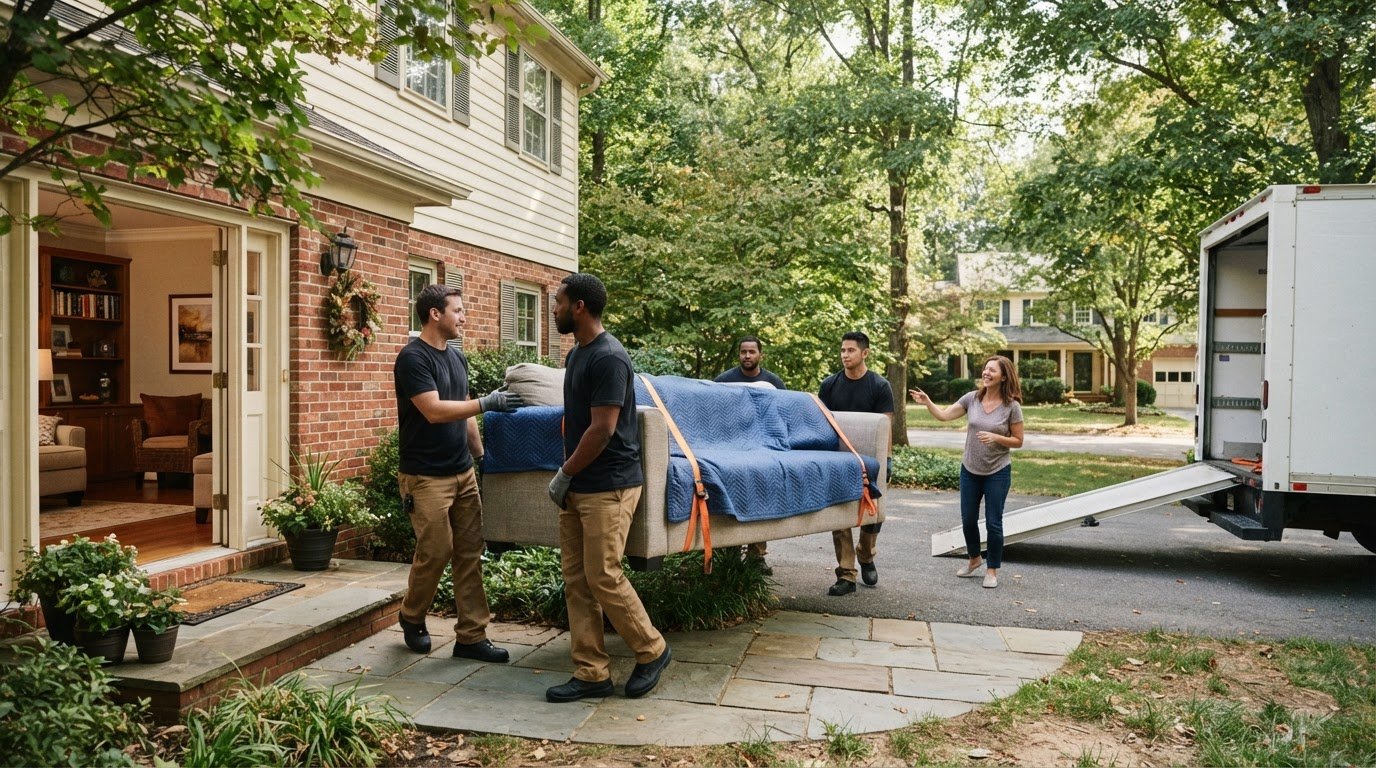
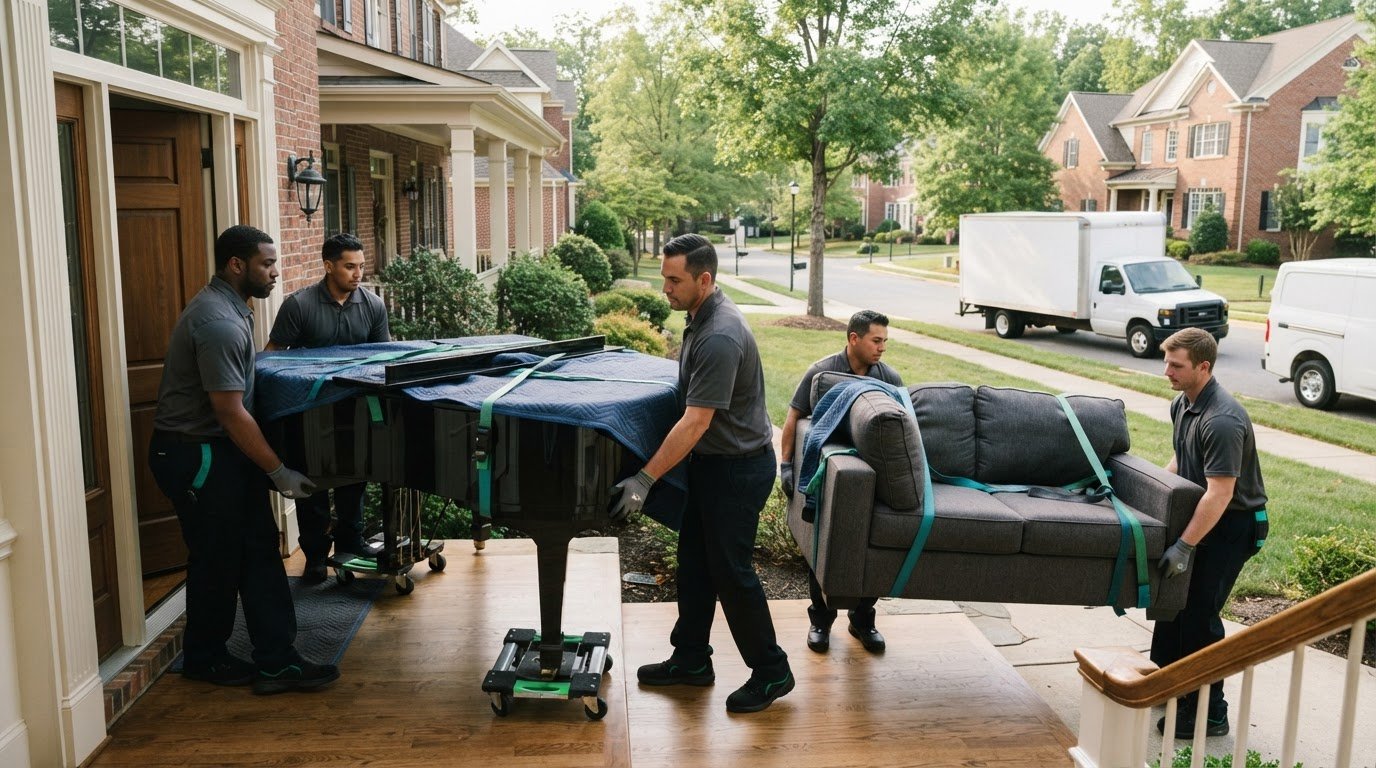
- Plan around furniture. Movers can arrange a truck layout that secures an elliptical alongside furniture and appliances. Place bulky items so they support the overall load without leaning into the machine. Add padding wherever furniture could rub against the elliptical during turns or stops. Keep loose accessories in a separate, secured box.
- Check each restraint before departure. Inspect every strap, brace, and padded contact point after the other cargo is loaded. Make sure straps remain on sturdy sections and haven’t shifted onto the display or a cable. Press gently against the frame to check for movement. If the elliptical rocks or slides, reposition the support and tighten the restraints.
- Recheck after unloading. Remove nearby furniture carefully so it doesn’t strike the machine as the truck is cleared. Keep the elliptical upright while guiding it out, and remove straps only when the route is ready. At its destination, inspect the frame and console before reconnecting parts or returning the machine to the home gym.
Treat upright positioning as the guiding principle throughout the loading sequence, not just as a final placement choice. Movers generally keep elliptical machines upright during a move when possible to protect their internal parts. If the planned route or truck layout makes it difficult to maintain that orientation, pause and reconsider the handling plan rather than letting the machine rest on a vulnerable part. Coordinate the lift so its orientation remains controlled from the approach to its final position, and make any adjustment deliberately. The aim is to preserve the upright position whenever circumstances permit, without rushing a maneuver that could compromise the machine’s internal parts. Keep that same priority in mind when arranging the surrounding load and preparing to unload.
How should an elliptical machine be prepared for moving?
- Clear the space around the machine. Remove workout gear, rugs, and loose items from the path between the elliptical and the exit. Check doorways and turns, then move anything that could catch a pedal or block a helper’s footing. A clear route gives the team room to guide the frame without scraping walls.
- Unplug and inspect the equipment. Disconnect the power cord before handling electronic parts. Look over the frame, pedals, handles, and cables for loose or damaged pieces. Photograph existing marks and take pictures of wire connections before detaching anything. These images provide a useful reference during reassembly.
- Use the manufacturer’s instructions. Find the manual for your elliptical’s model and identify which parts are meant to come off. Follow the listed sequence for loosening fasteners, and don’t force a stuck bolt or connector. Keep the frame stable while working, especially when a removed component changes the machine’s balance.
- Protect the console and display. Movers may remove and individually wrap an elliptical’s console and electronic display for transit. If your model’s instructions allow removal, support the console as you disconnect it, rather than letting it hang by its wires. Wrap it separately and keep it away from loose tools or hardware.
- Group small parts by location. Place fasteners from each removed component in a labeled bag. Write a clear label, such as “console screws” or “right handle,” and keep the bags together. Store the manual and connection photos with them, so you can match each piece to its correct location at the destination.
- Cover exposed surfaces before handling. Moving blankets and foam padding can protect the frame and delicate surfaces. Wrap the console separately, then pad exposed corners, handles, and pedal edges. Keep padding smooth and secure, so it doesn’t bunch up or hide a loose part during the carry.
- Prepare restraints for the truck. Ratchet straps and braces can help protect an elliptical during a move. Place straps around sturdy frame sections, not across the display, cables, or control buttons. Add padding wherever a restraint touches the equipment, then check that removable parts cannot swing or rub against the frame.
- Finish with a packing check. Confirm the cord, labeled hardware, manual, and photos are together before the machine leaves the home. If you’d rather leave the heavy lifting to a crew, arrange help moving your exercise equipment and keep the model-specific parts organized for setup.
Heavy Furniture Moving: Movers Near Me
Heavy Furniture Moving provides Exercise Equipment Moving for ellipticals that are too heavy or awkward to handle alone. Its Movers Near Me service can help with the physical move, while in-home furniture movers near me can assist when the elliptical is part of a larger room rearrangement.
Share the pickup and delivery addresses, the machine’s model and dimensions, and any stairs or tight turns along the route. These details help shape a practical moving plan. Heavy Furniture Moving also offers Sofa Hoisting for items that need to pass through a window or another elevated opening.
You can prepare the elliptical yourself and bring in help for the demanding carry, or request support with the equipment move. Contact Heavy Furniture Moving to discuss moving your elliptical in Fairfax Station.
Make Your Next Move Easier
Before moving day, decide how much of the work you want to handle yourself. You can prepare the elliptical and organize its parts, then bring in help for the heavy carry. If the machine is part of a larger move, plan how it fits with your home’s other furniture and equipment.
For elliptical machine movers in Fairfax Station, Heavy Furniture Moving offers Exercise Equipment Moving and Movers Near Me. Sofa Hoisting can help when a sofa needs a different route into or out of the home. Choose the service that fits the task, and share the machine’s details and access challenges when you get in touch.
Contact Heavy Furniture Moving to discuss your move. Take the next step with a clear plan and practical help for the lifting ahead.
Frequently Asked Questions
What movers in Fairfax Station, Virginia, move elliptical machines?
Heavy Furniture Moving handles exercise equipment moves in Fairfax Station, including ellipticals. When arranging a move, share the pickup and destination addresses, the machine’s make and model, and details about stairs or narrow entrances. The company also serves nearby communities such as Woodbridge, Manassas, and Centreville, so the plan can account for the route.
Which local movers specialize in gym equipment or elliptical machine moves?
Heavy Furniture Moving offers Exercise Equipment Moving for bulky home fitness machines. This service can help when relocating an elliptical from a basement workout room or moving it between rooms. Share the model and access details so the moving plan accounts for both the machine and its route. If the home gym move includes other heavy household items, describe them together when discussing the job.
Do movers disassemble and reassemble elliptical machines?
Heavy Furniture Moving includes disassembly and reassembly as part of its moving work. For an elliptical, the parts involved depend on its design and the manufacturer’s instructions. Keep the owner’s manual with the machine and collect removed fasteners in labeled bags. At delivery, these steps help match each piece to its original location and support an orderly setup before you use the equipment again.
How far in advance should I book movers in Fairfax Station?
Book once you know your move date and have the pickup details ready. Heavy Furniture Moving offers same-day slots when open, and next-day heavy-item jobs are often available. For same-day, same-afternoon service, call before 2 PM. Share the machine details, addresses, and access conditions when arranging the move. That gives the team useful information for planning the elliptical’s pickup and delivery in Fairfax Station.
What insurance or liability coverage do movers offer for elliptical machines?
Review the mover’s written terms for valuation, exclusions, protection limits, and the steps for reporting damage. Keep the terms with your move details.
Do Fairfax Station movers charge extra for exercise equipment or heavy items?
Frequently Asked Questions
Heavy Furniture Moving handles exercise equipment moves in Fairfax Station, including ellipticals. When arranging a move, share the pickup and destination addresses, the machine’s make and model, and details about stairs or narrow entrances. The company also serves nearby communities such as Woodbridge, Manassas, and Centreville, so the plan can account for the route.
Heavy Furniture Moving offers Exercise Equipment Moving for bulky home fitness machines. This service can help when relocating an elliptical from a basement workout room or moving it between rooms. Share the model and access details so the moving plan accounts for both the machine and its route. If the home gym move includes other heavy household items, describe them together when discussing the job.
Heavy Furniture Moving includes disassembly and reassembly as part of its moving work. For an elliptical, the parts involved depend on its design and the manufacturer’s instructions. Keep the owner’s manual with the machine and collect removed fasteners in labeled bags. At delivery, these steps help match each piece to its original location and support an orderly setup before you use the equipment again.
Book once you know your move date and have the pickup details ready. Heavy Furniture Moving offers same-day slots when open, and next-day heavy-item jobs are often available. For same-day, same-afternoon service, call before 2 PM. Share the machine details, addresses, and access conditions when arranging the move. That gives the team useful information for planning the elliptical’s pickup and delivery in Fairfax Station.
Review the mover’s written terms for valuation, exclusions, protection limits, and the steps for reporting damage. Keep the terms with your move details.