Residential Safe Movers for Tight Stairways in Woodbridge
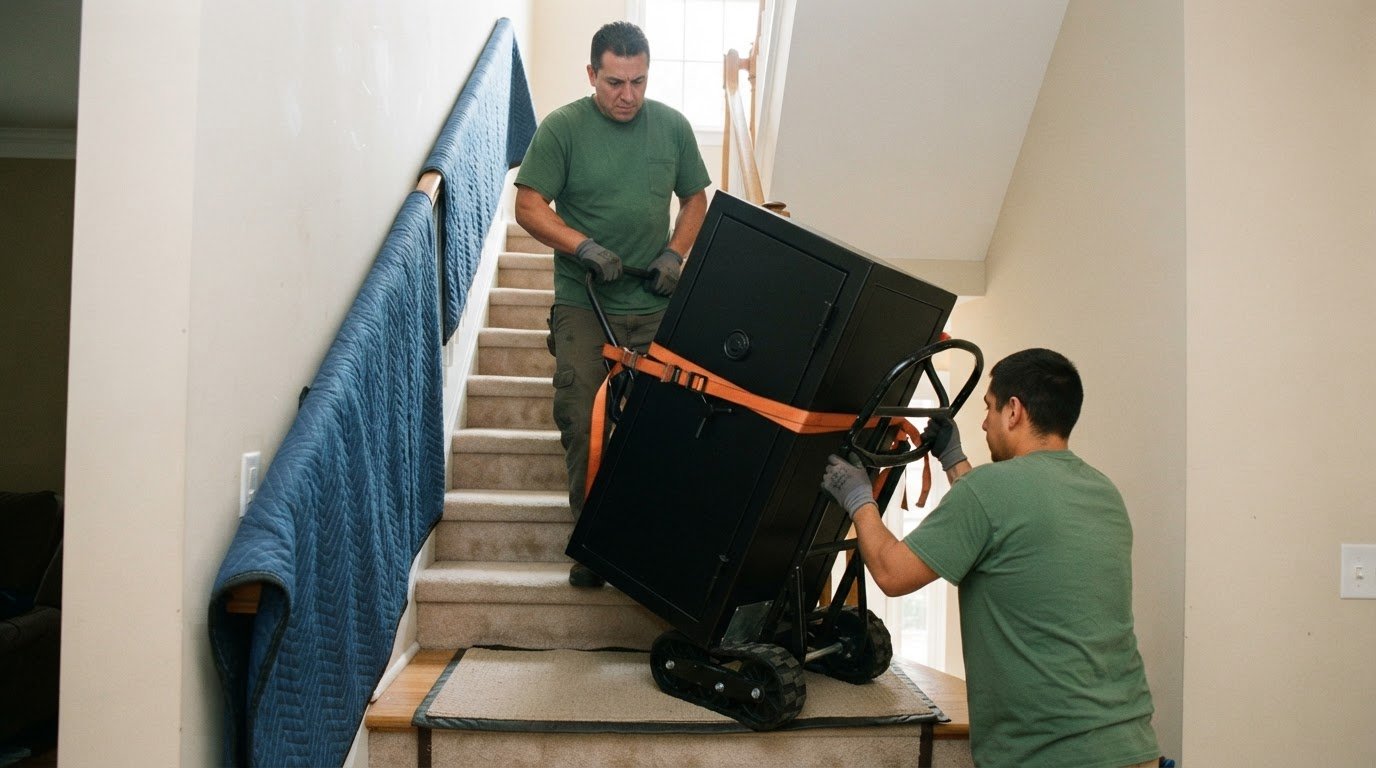
A heavy safe doesn’t have to make a narrow staircase a dead end. Residential safe movers for tight turning stairways in Woodbridge can assess the route and plan the carry. The plan should account for the safe, stair turns, elevator limits, and building access.
It’s reasonable to worry about a safe getting stuck or damaging walls and floors. Experienced residential safe movers for tight turning stairways in Woodbridge consider the home’s layout, bulky furniture, and where a truck can reach. Share details about the building and items being moved so the crew can plan around the actual route.
This guide explains what to consider when moving a safe or bulky furniture, how stairs and small elevators affect the job, and which Woodbridge access details to share. You’ll learn what information helps the crew plan the work and organize moving day.
Key Takeaways
- Share the safe’s size and the stairway layout so the moving plan accounts for tight turns and landings.
- Tell movers about elevator limits and building rules before moving day.
- Plan furniture moves around the full route through the home, not just the doorway or staircase.
- Arrange and reserve a legal parking spot in advance to make truck access smoother.
- Booking a Woodbridge move four to six weeks ahead gives you the widest choice of dates.
Moving and delivery of large items, including gun safes
Moving a gun safe through a Woodbridge home starts with its dimensions, weight, and delivery route. For an on-demand move, share the pickup and destination details so the crew can plan for stairs, elevators, and building access.
Safe Size and Stairway Assessment
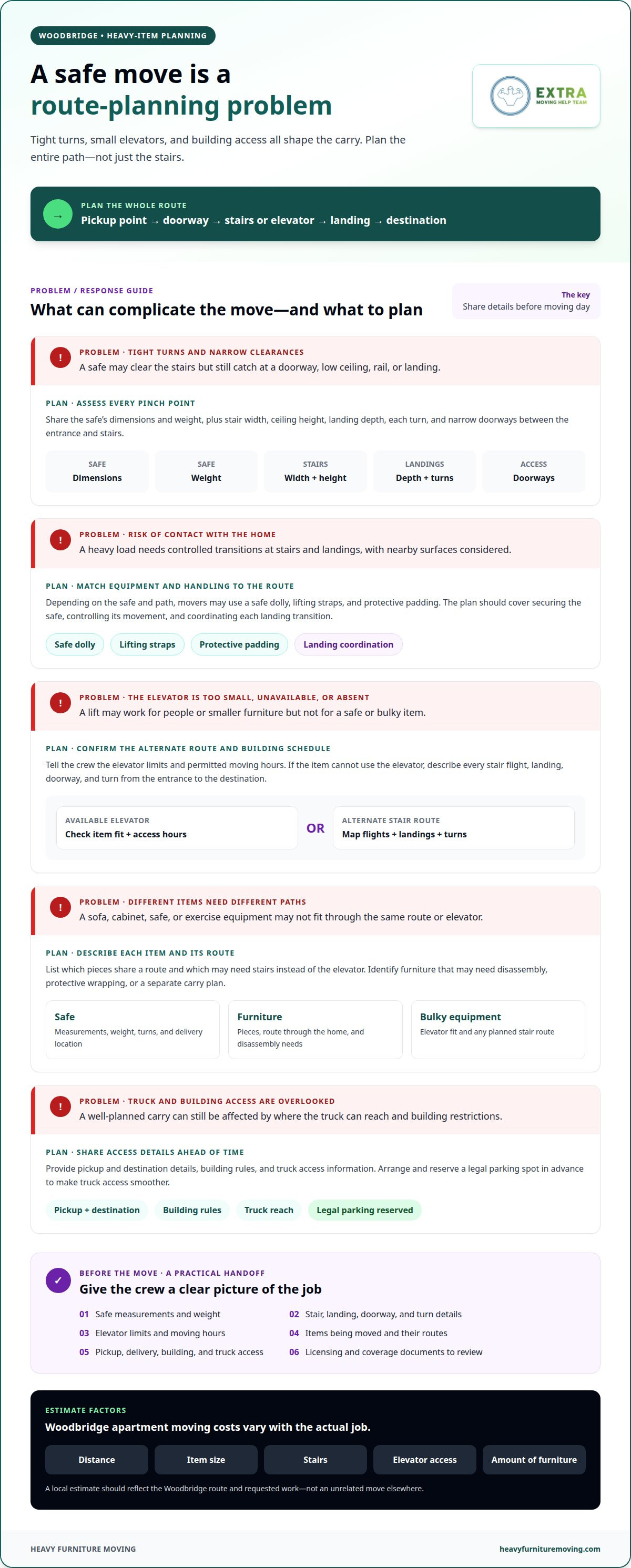
There isn’t one safe size or weight that every stairway can accommodate. Consider the safe’s dimensions and weight alongside stair width, ceiling height, landing depth, and each turn. The crew needs to assess whether the safe can clear the route without striking walls, rails, or doorframes. Provide the safe’s measurements and identify narrow points, including doorways between the entrance and stairs.
Woodbridge residents can choose residential movers experienced with heavy items and challenging home access. A useful assessment covers the entire route, not just the front steps. For a safe beside a tight landing, turning clearance may matter as much as stair width. Reviewing the route also helps plan delivery into an apartment or multilevel home.
Equipment for Tight Stair Moves
For a safe moving up or down stairs, the crew may use a safe dolly, lifting straps, and protective padding suited to the load and route. Movers secure the safe, control its movement, and coordinate transitions at landings. Ask for a plan that accounts for the safe’s dimensions, stair turns, and surfaces needing protection, rather than assuming one tool suits every home.
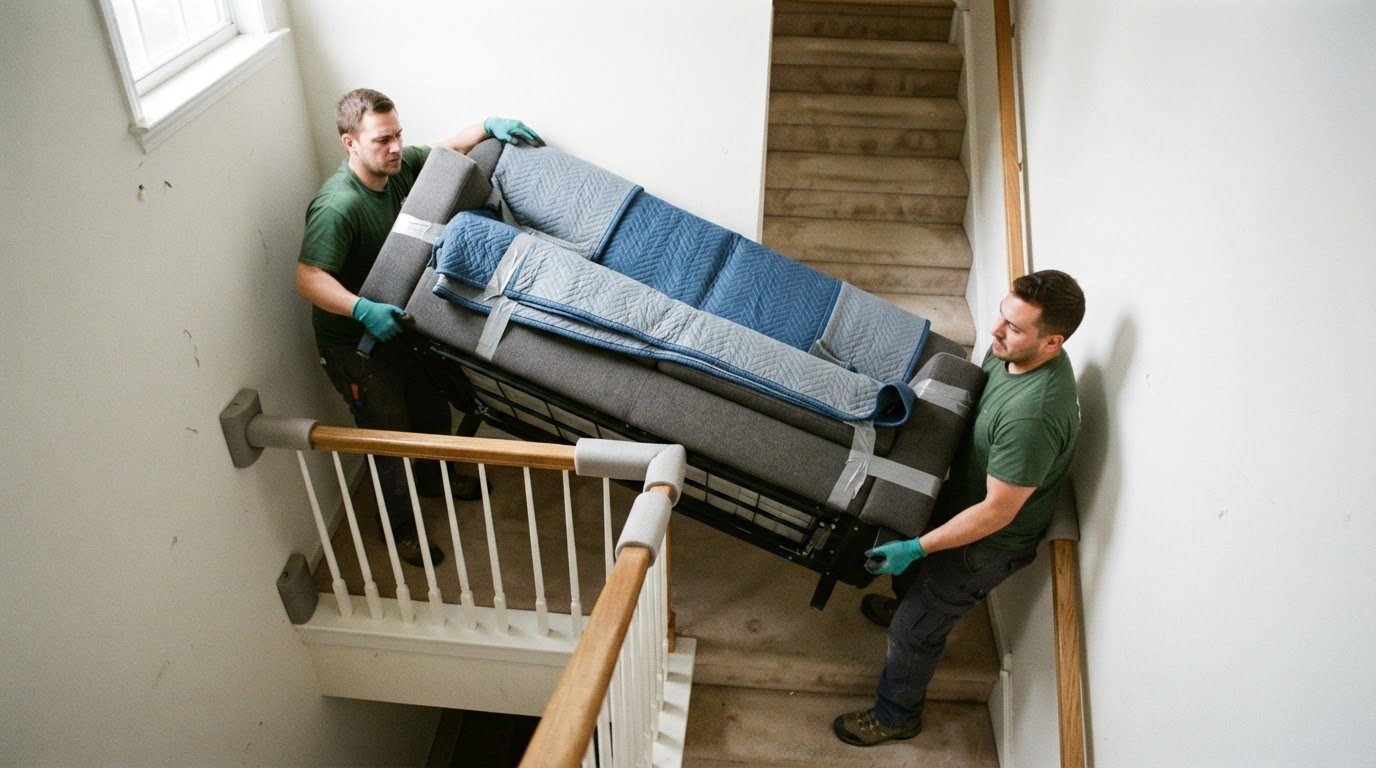
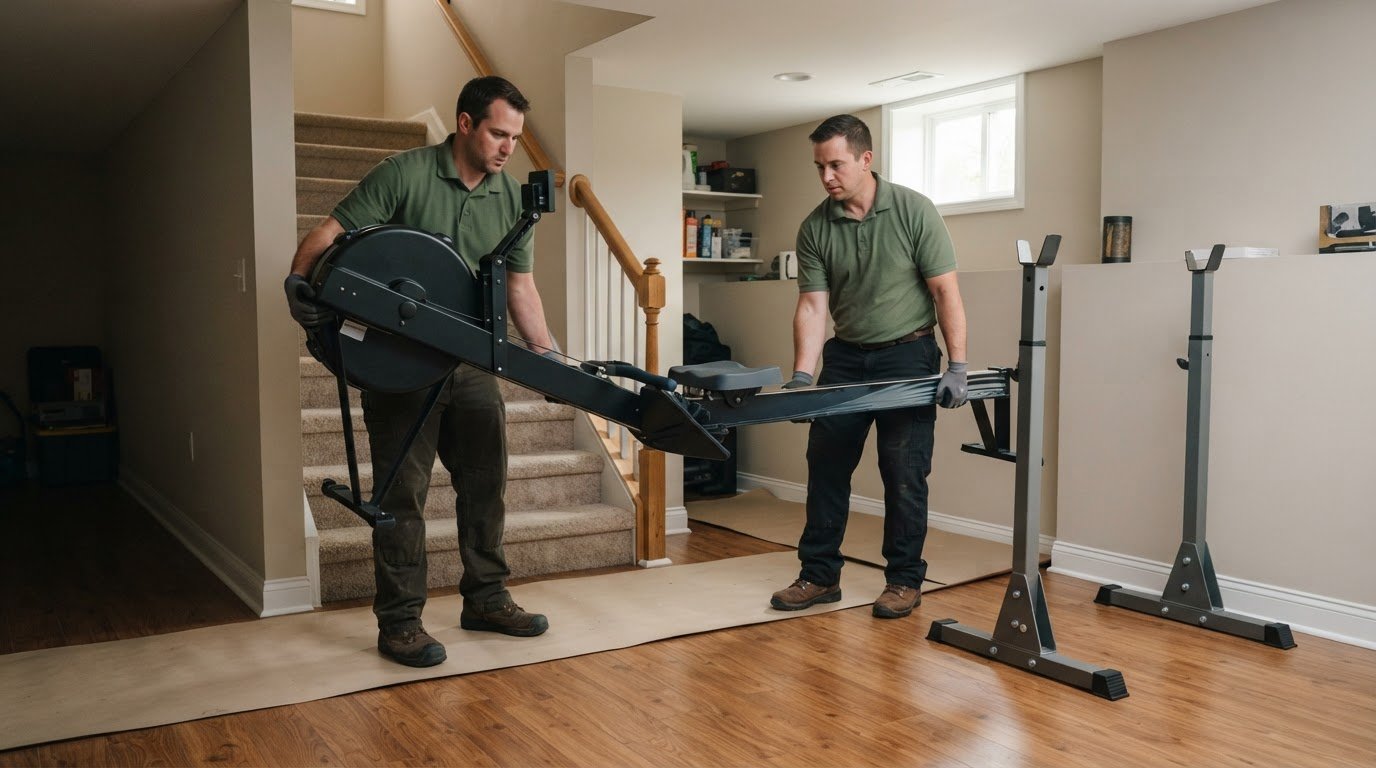
Stairs can complicate moving large furniture and exercise equipment, too. A sofa may need a different route than a cabinet, while bulky equipment may not fit in an apartment elevator. The crew can coordinate elevator access with building moving hours and plan a stair route for items that cannot travel in the lift. Share elevator limits and permitted moving hours when arranging service.
When choosing safe movers in Virginia, ask them to explain applicable licensing and coverage for residential moves. Review the relevant documents and understand how the stated coverage applies to belongings and property during transport.
Which safe movers serve Woodbridge, Virginia? Choose residential movers who handle safes and heavy household items and plan around the property’s access. The route, stair turns, elevator limits, and delivery location all shape the job.
Woodbridge apartment moving costs vary with the distance, item size, stairs, elevator access, and amount of furniture. A local estimate should reflect the actual Woodbridge route and requested work, not an unrelated apartment move elsewhere. Share the safe’s measurements, pickup and delivery details, and any building restrictions to help define the job clearly.
A well-planned move starts with clear information about the item and its route. For a gun safe, include the stairs, landings, and elevator access in the moving plan. For furniture or exercise equipment, describe which pieces share the route. These details help the crew prepare for your home’s layout instead of treating every delivery as the same.
Choosing movers experienced with stairs and small elevators
For a Woodbridge safe move, choose residential movers prepared to manage tight stair turns and elevator limits. A suitable plan covers the full route, including building access and the item’s path between floors.
Which Woodbridge safe movers specialize in tight-turning stairways? Look for residential movers experienced with heavy-item stair carries and narrow turns. The plan should account for the safe, the stairway, and any elevator restrictions.
Before the move, share the building’s elevator details and permitted moving hours. A small elevator may carry people or smaller furniture but leave a safe to travel by stairs. The crew can plan around that difference and coordinate elevator use with the building’s schedule. If the safe cannot fit inside the elevator, the crew may need to plan an alternate route between floors.
Buildings without elevators require a different carry plan. Movers need to account for each flight, landing, doorway, and turn between the entrance and the apartment. A narrow landing can affect how the safe travels between floors, even when the stairs appear wide. Share the building layout and access details so the crew can assess the whole path, not just the first flight.
A through-the-floor home elevator offers another way to move between levels. It travels between two floor levels and is shaftless, so it does not require a space-consuming hoistway. This design may suit a home where a conventional elevator shaft would take too much room. It can also support movement between floors for people with reduced mobility.
Home elevators and stair lifts serve different transport needs. A through-the-floor elevator moves between two levels, while a stair carry requires movers to handle an item along the stairs. The right route depends on the home’s layout and the item. A home elevator can help move items between floors, but the safe’s route into or out of the building still needs planning.
For a smooth move, experienced crews consider:
- Whether the safe or furniture fits inside available elevators.
- Which stair flights and landings form the alternate route.
- What building moving hours affect elevator access and stair traffic.
- How the home’s floors connect to the entrance and delivery point.
These details distinguish a general apartment move from a heavy-item transport job. A clear route plan is especially useful when the elevator is too small, unavailable during moving hours, or absent. Sharing accurate access information helps the crew prepare for a safe carry rather than improvise at a landing.
Hiring help to move furniture up and down stairs
A coordinated move can include furniture disassembly, protective wrapping, and stair carries. On a narrow staircase, preparation helps limit contact with walls, floors, and doorframes.
How professional movers prepare a safe and home for a difficult stairway move
Movers identify which furniture needs disassembly and which parts must stay together. They can remove detachable legs or shelves when appropriate, wrap each piece, and keep its hardware organized. For a safe and home with a tight route, the crew can prepare the carrying path and protect nearby surfaces before moving begins. Share details about difficult turns and fragile finishes.
Before hiring safe movers, request written details about applicable coverage for belongings and property, including liability limits, exclusions, and deductibles. Ask how those terms apply to heavy items carried through a home, then review the details before moving day.
Preparation starts with information about the home and the items. Tell the moving team which pieces are unusually heavy, fragile, or difficult to take apart. Point out narrow stair turns, delicate railings, tight doorways, and finished floors. Those details help the crew plan protection and decide whether a piece should travel in separate parts.
Tight-Stair Damage and Injury Risks
A large item can strike a wall or railing if a stairway turn leaves too little clearance. A shifting load can also strain movers or cause someone to lose balance. The crew manages these risks by coordinating the carry, controlling the item’s position, and keeping the route clear during each stair transition.
Protecting furniture takes more than wrapping its visible front. Movers can cover corners and exposed surfaces, then protect nearby floors and walls along the carrying path. A dresser, for example, may need drawers secured or removed before it travels upstairs. Disassembly can also make furniture easier to guide around a landing without scraping the wall.
Professional movers can disassemble furniture for transport and reassemble it upon request. Identify the pieces that need this work, such as a bed frame or table, and flag fragile parts. The crew can wrap components separately and keep hardware with its matching item, making reassembly easier at the destination.
The quote for furniture rearrangement or stair moving depends on the work requested and the home’s access. Factors include the item’s size, carrying distance, need for disassembly, and route through stairs or doorways. Share those details so the quote reflects the actual job.
For useful assistance, provide an item list and describe the stairway, narrow landings, and surfaces that need protection. This gives the moving team a clear picture of the carry and furniture handling required inside your home. It also helps the crew plan for the specific layout instead of treating every staircase and household item alike.
Matching truck size and crew to neighborhood access
Truck and crew planning starts with the items, home access, and approach to the property. For a Woodbridge move, those details shape how loading, packing, and parking fit together on moving day.
Access Between Floor Levels
Movers map how each item reaches the truck, including the route between floors. A through-the-floor home elevator provides access between two floor levels, while a stair carry may be needed for items that cannot use the available lift. That floor connection can affect how the crew coordinates the move.
The crew also considers where items wait during loading. If furniture or packed belongings must pass through a shared hallway, sequencing can keep the route clear. For example, movers can stage smaller boxes before carrying a large item through the same entrance. A storage room or narrow interior passage may affect the sequence, so include it in your access description.
Truck Access and Parking
Truck planning depends on the destination’s approach, available parking, and the amount being moved. Arrange legal parking for moving day and reserve a space in advance when needed. A nearby space can shorten the carrying route; a more distant space may require a different loading sequence and additional coordination.
Share details such as a restricted driveway, limited curb space, or a building entrance set back from the street. These details help movers plan truck placement and the distance from the vehicle to the door. The vehicle supplied for a labor-only job must suit the load and the access available at the property, not just the number of rooms.
Crew size depends on the work involved. A move with a heavy safe, bulky furniture, and several flights of stairs needs different coordination from a box-only apartment move. Movers consider the weight and shape of large pieces, the route to the truck, and whether elevators can be used. A clear item list helps the team plan each part of the job.
Pack items in a way that keeps the loading path clear. Boxes staged beside a narrow hallway can block furniture transport, even when the truck is parked close. Movers can sequence packed items and larger pieces so the entrance remains accessible. If belongings are stored in a separate room, identify that location before the crew arrives.
On moving day, a reserved legal parking spot, a clear approach, and an accurate item list help the crew work from one plan. Definitely include building access details, elevator availability, and the location of bulky items when arranging the move. These specifics let movers match the truck and crew to the actual neighborhood conditions, rather than relying on a general estimate of the home’s contents.
Local household moves
A local move in Woodbridge, Virginia, still needs a clear plan for belongings, loading, and delivery. The quote should reflect the home, route, and items being moved.
Start with an accurate inventory. Include furniture, boxed belongings, and any unusually heavy or awkward items. Note which pieces need to travel upstairs or through a narrow turn. A safe in a ground-floor room creates different handling needs from one on an upper floor. These details help the moving team plan the work, rather than relying only on the number of rooms.
Access matters at both addresses. A local move may involve stairs at the pickup home and an elevator at the destination. Describe how movers reach the entrance, where large pieces sit, and whether the building has moving-hour rules. For example, a sofa that must leave through a side door changes the loading route. Share these details when requesting a quote.
A useful quote accounts for the work involved, not just the distance between addresses. Factors can include:
- The size and quantity of furniture and household belongings.
- Stairs, tight turns, elevator access, and distance to the truck.
- Whether furniture needs disassembly or reassembly.
- How much packing, loading, and unloading the move requires.
These factors also help establish a practical moving-day sequence. Movers can decide which items to carry first and keep the entrance clear. If a heavy safe shares the route with packed boxes, staging and loading order matter. Clear item details help the crew coordinate without treating every room or piece as identical.
Prepare a practical handoff for the moving team. Identify fragile furniture, items needing special handling, and belongings going to a different destination. Marking boxes by room can help direct unloading, while a list of large pieces makes them easier to account for at delivery. Keep the addresses, access notes, and inventory together for the quote and move plan.
For a move that includes only loading or unloading, explain which part needs help. The scope should distinguish labor-only service from a full household move. That way, the quote reflects whether the crew is handling one stage or coordinating the move from pickup through delivery.
Planning a Woodbridge household move? Arrange help with your local move and share the item list, access details, and loading needs.
Customer reviews for local moves are labeled as covering moves under 50 miles. This defines the distance scope of that review category: the reviews concern moves below 50 miles. Consider that scope alongside your own inventory, access notes, and requested loading or unloading help. The label identifies the distance associated with the local-move reviews, while your item list and access details describe the work involved in your particular move. Keeping these points distinct helps you interpret the reviews without losing sight of the practical details needed for an estimate.
Heavy Furniture Moving
Heavy Furniture Moving is a practical option when a safe or bulky household item needs to pass through tight stairs. The team handles residential moves involving heavy furniture, home access challenges, and routes between rooms or floors.
Turn to the service when a safe, sofa, or exercise equipment needs careful handling alongside other household belongings. Share the item details and access conditions so the moving plan accounts for stairs, elevators, and neighborhood entry. The team can also help when you need furniture moved within the home rather than a full household relocation.
For help planning your move, contact Heavy Furniture Moving.
Make Your Next Move Easier to Plan
Choosing residential safe movers for tight-turning stairways in Woodbridge can help protect your home and keep a difficult move organized. Bring the key details together, including the safe’s location, destination, and access challenges. A clear starting point helps the moving team understand the work you need done.
Heavy Furniture Moving helps with demanding household moves, including safe and furniture handling. Services include Movers Near Me, Exercise Equipment Moving, and Sofa Hoisting. Whether you’re planning a single heavy-item move or coordinating several household belongings, describe what needs to move and where it needs to go.
Contact Heavy Furniture Moving to discuss your move. Take the next step with a clear plan and a capable team.
Frequently Asked Questions
Can I hire someone to help me move furniture?
Yes. Heavy Furniture Moving provides residential moving help for bulky furniture and heavy household items. Arrange assistance for a single piece, an in-home move, or sofa hoisting when an item cannot pass through a standard entryway. The company also handles exercise equipment moving. Describe whether you need labor for a specific task or support with a broader household move so the service fits your needs.
How do Woodbridge safe-moving companies compare by reviews, experience, and estimates?
Compare each company’s documented track record, relevant safe-moving experience, and how clearly its estimate describes the work. Heavy Furniture Moving has operated since 2010 and reports 500+ verified 5-star Google reviews, with an overall rating of 4.9/5. Its quotes are provided upfront before work begins. Look for a clear explanation of the planned service and charges, then weigh that information alongside feedback about similar residential moves.
Are safe movers in Virginia licensed and insured for residential moves?
Ask the movers to explain applicable licensing and coverage, review the relevant documents, and confirm how coverage applies to belongings and property during transport.
What safe sizes and weights can Woodbridge movers handle on stairs?
There is no single safe size or weight every stairway crew can handle. Movers assess the safe’s dimensions and weight alongside stair width, ceiling height, landing depth, and turns.
Frequently Asked Questions
Yes. Heavy Furniture Moving provides residential moving help for bulky furniture and heavy household items. Arrange assistance for a single piece, an in-home move, or sofa hoisting when an item cannot pass through a standard entryway. The company also handles exercise equipment moving. Describe whether you need labor for a specific task or support with a broader household move so the service fits your needs.
Compare each company’s documented track record, relevant safe-moving experience, and how clearly its estimate describes the work. Heavy Furniture Moving has operated since 2010 and reports 500+ verified 5-star Google reviews, with an overall rating of 4.9/5. Its quotes are provided upfront before work begins. Look for a clear explanation of the planned service and charges, then weigh that information alongside feedback about similar residential moves.
Ask the movers to explain applicable licensing and coverage, review the relevant documents, and confirm how coverage applies to belongings and property during transport.
There is no single safe size or weight every stairway crew can handle. Movers assess the safe’s dimensions and weight alongside stair width, ceiling height, landing depth, and turns.