Professional Packing or DIY: How to Prepare and Label Boxes
Packing help doesn’t mean movers will pack everything. For interstate full-service moves in the United States, movers must offer Full Value Protection and Released Value Protection. A Heavy Furniture Moving packing service review is most useful when it considers packing support alongside what movers won’t transport and what you’ll still need to do yourself.
It’s easy to focus on who will wrap and pack your belongings. But restricted items, box preparation, and clear labels can shape moving day just as much. Whether you pack every box yourself or compare professional packing with a DIY approach, understanding the limits early helps you plan with less stress.
This guide explains what movers may refuse to transport, how to prepare and label boxes, and what to consider when choosing between professional packing and doing it yourself. Use these practical steps to keep your move organized, protect your belongings, and decide which tasks you’re comfortable handling.
Key Takeaways
- Separate items movers won’t transport before packing so you can plan how to handle them safely.
- Compare full packing, partial packing, and DIY by weighing your time, the items involved, and how much work you want to take on.
- Prepare sturdy boxes and label each one clearly to make loading and unpacking more organized.
- Understand which packing materials are part of a service and which may affect the final quote.
- Use moving help for bulky furniture or exercise equipment when those items are the hardest part of your move.
Does TWO MEN AND A TRUCK offer full packing and partial packing?
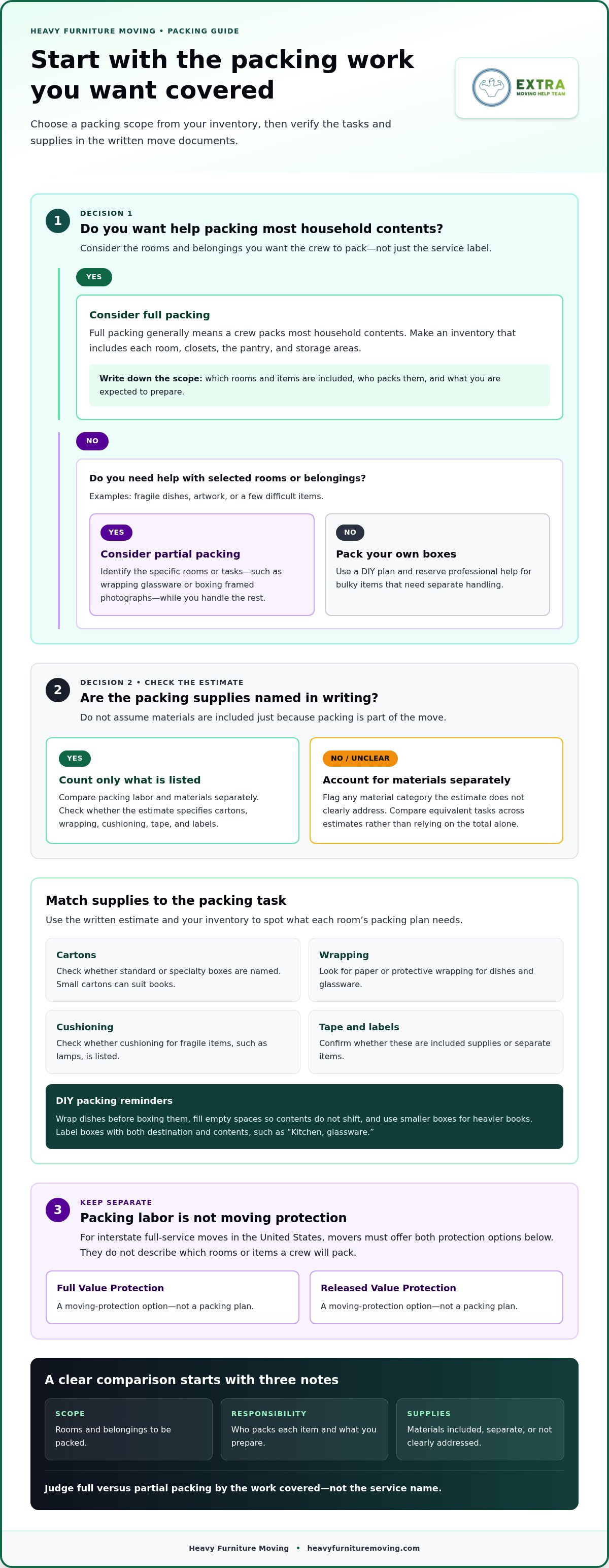
A TWO MEN AND A TRUCK packing service review should distinguish between two scopes: packing most of a household and packing selected belongings. The label “packing service” alone doesn’t explain which tasks are included. Full packing generally means a crew packs most household contents, while partial packing focuses on specific rooms or items. These descriptions help frame a comparison, but the written scope is what matters for your move.
Start with the work you need done. If packing kitchen cabinets, bedrooms, and bookcases is your main challenge, compare services that cover those rooms. If you’ll pack most belongings yourself, partial packing may better describe help with fragile dishes, artwork, or a few difficult items. List the rooms and belongings you want packed before comparing moving services.
Use a simple inventory to make the distinction practical:
- Full-home example: list each room, including closets, the pantry, and storage areas, if you want help with the household’s overall packing.
- Partial example: identify selected tasks, such as wrapping glassware or boxing a collection of framed photographs, while you handle other rooms.
- DIY example: pack your own boxes and reserve professional help for bulky items that need separate handling.
Keep packing labor separate from moving protection. For interstate full-service moves in the United States, movers must offer Full Value Protection and Released Value Protection. These are protection options, not packing plans. They don’t tell you whether a crew will pack every room, only fragile items, or no cartons. Compare the packing scope and protection terms separately in your move paperwork.
Before packing, sort belongings into three groups: items you’ll pack, items needing special attention, and items you’ll keep out of moving boxes. For example, mark dishes as fragile and set aside the plates you use daily. This plan helps you decide whether you need help with selected belongings or broader household packing. It also avoids assuming that “full” automatically includes every personal item.
For a clear comparison, record the packing tasks listed in the written move documents. Note which rooms or items are included, who packs them, and what you’re expected to prepare. For a bedroom, the description might specify clothing in drawers, books on shelves, and framed art on walls. Specific details make the scope easier to understand than a broad label.
The practical takeaway is to judge full versus partial packing by the work covered, not the service name. Match that scope to your inventory, available time, and comfort handling fragile belongings. Keep packing details separate from moving protection to compare the service fairly with a DIY plan.
What packing materials does TWO MEN AND A TRUCK provide, and are they included in the price?
For a useful TWO MEN AND A TRUCK packing service review, separate packing labor from packing supplies. Don’t assume cartons, tape, wrapping paper, or specialty boxes are included just because packing is part of the move. Count materials as included only when the written estimate identifies them. If it lists packing labor but not supplies, account for materials separately in your comparison.
Look for specific supplies, not a broad phrase such as “packing materials.” A kitchen pack may need cartons, paper, and cushioning for dishes. A framed mirror may need a protective carton, while books need sturdy boxes sized for manageable lifting. These examples help you identify supplies to consider, rather than establish what a particular mover provides.
Review the estimate line by line. Separate labor, materials, and optional packing tasks to compare equivalent services. For example, one quote may cover packing selected rooms while another lists supplies separately. Record what each document says and flag any material category that isn’t clearly addressed.
- Cartons: note whether the estimate names standard or specialty boxes.
- Wrapping: look for paper or protective wrapping for dishes and glassware.
- Cushioning: identify any listed material for fragile items such as lamps.
- Tape and labels: check whether these appear as included supplies or separate items.
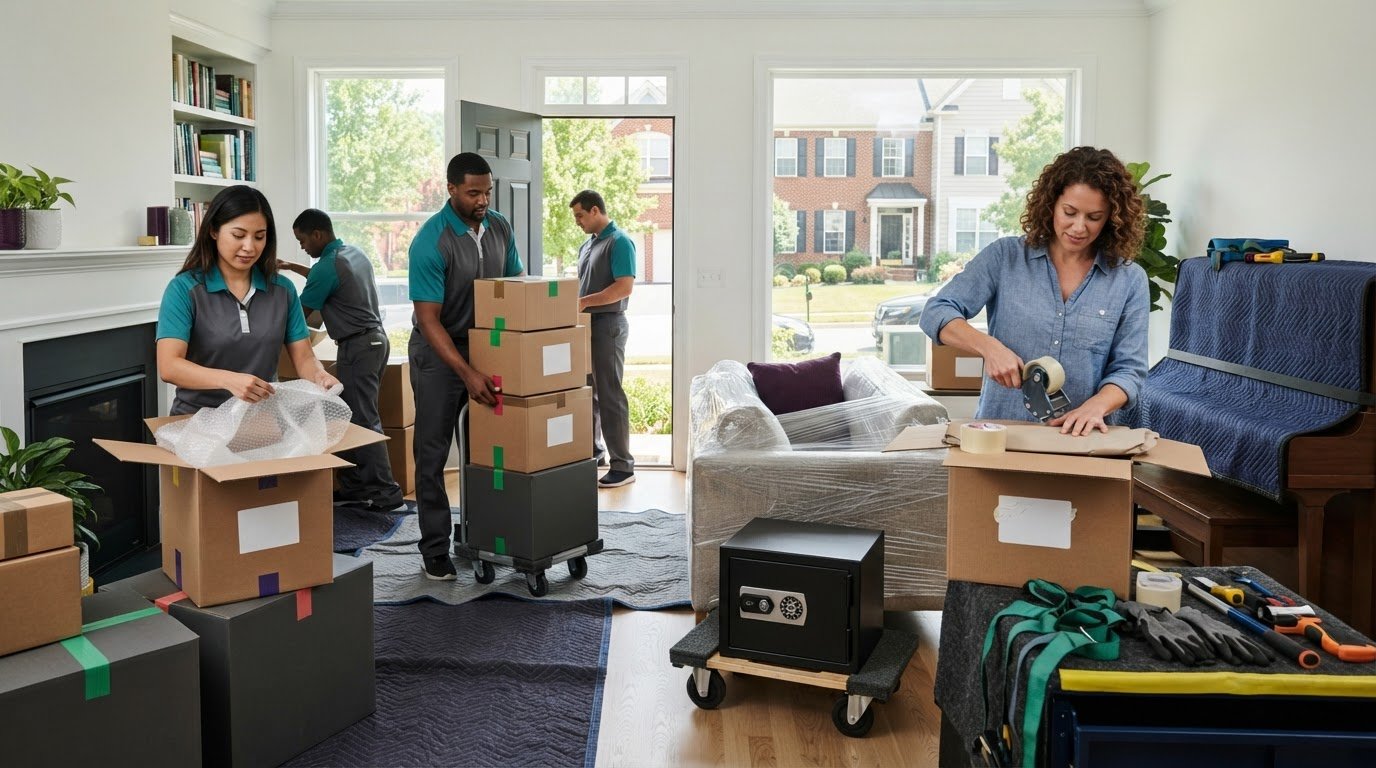
For a DIY plan, gather supplies according to what you’ll pack. Use small cartons for books, paper for dishes, and cushioning around breakable items. Keep tape, a marker, and labels together at your packing station. A clear materials list helps prevent duplicate purchases when some packing is handled professionally.
Match each material to a specific task. Wrap dishes before placing them in a carton, then fill empty spaces so the contents don’t shift. Put heavier books in smaller boxes instead of overloading a large carton. Mark a box “Kitchen, glassware” to show both its destination and contents. These steps make the supply plan concrete, whether you pack yourself or use packing help.
Packing costs depend on the move and the work involved, including the rooms packed, packing labor, and materials identified in the quote. Compare the same tasks across estimates rather than treating a total as a complete description. If one quote includes packing labor and another lists supplies separately, account for both before deciding which fits your plan.
Before packing day, make a supply inventory and compare it with the written estimate. List cartons, wrapping, cushioning, tape, and labels beside the rooms they’ll serve. This helps you spot gaps early and prepare fragile belongings without guessing what “materials included” means.
How does TWO MEN AND A TRUCK packing compare with other moving companies?
Compare TWO MEN AND A TRUCK with other moving companies by matching packing tasks, not brand names. One estimate might cover several rooms, while another focuses on fragile belongings. Those scopes aren’t equivalent. Start with a room-by-room inventory, then compare each written description against it.
Use four practical criteria: packing scope, who supplies materials, what you’ll pack yourself, and how each estimate describes the work. For example, a kitchen pack might include dishes, pantry goods, and small appliances. A quote that covers dishes only isn’t a complete kitchen pack. Clear task descriptions show where the options differ.
| Option | Scope | Labor | Customer role |
|---|---|---|---|
| Full packing | Household or multiple listed rooms | Packing work is part of the described service | Separate personal items and excluded belongings |
| Partial packing | Selected rooms or belongings | Work centers on specified items | Pack anything outside the listed scope |
| DIY packing | Belongings packed by the household | You handle the packing tasks | Organize supplies, boxes, and labels |
The table compares packing approaches, not guaranteed offerings from any named company. Use it to assess the actual written scope for TWO MEN AND A TRUCK and each alternative. For instance, check whether both estimates cover bookshelves, kitchen cupboards, and framed pictures. “Packing service” alone doesn’t say which belongings are included.
Compare materials separately. Look for named supplies rather than assuming packing labor includes every carton or wrapping material. If an estimate lists cartons and protective wrapping separately, record them beside the packing tasks. This makes a kitchen-to-kitchen comparison fairer and shows where you’ll need to provide supplies yourself.
Also compare the work left for you. A partial plan may leave clothing, bathroom products, or a home office for you to pack. A DIY plan puts the full packing process in your hands. For a glass-front cabinet, check whether it’s included in the written scope, who prepares its contents, and how it will be protected.
Use this decision process to compare estimates:
- List rooms and special belongings, such as lamps, dishes, and framed art.
- Mark each task as professional packing, household packing, or outside the packing scope.
- Record the materials named for each task and any supplies you’ll handle.
- Compare the estimates only after their listed tasks align.
For a TWO MEN AND A TRUCK packing service review, the strongest comparison is task by task. A household seeking less hands-on packing may value broader documented coverage. If you’re ready to pack most belongings, a narrower scope may suit you better. Use your inventory to find the plan that fits, rather than assuming every company uses packing labels the same way.
Customer service
Customer service matters when a packing detail affects the plan. A clear response about a fragile lamp, a missing carton, or a revised room list can prevent confusion. Evaluate specific interactions, not broad claims about helpfulness. Keep a written record of the packing scope, agreed tasks, and updates to your move details.
Start with the estimate or planning conversation. A useful answer addresses your specific question. If you ask whether packing includes a home office, for example, the response should distinguish desk contents, files, and computer equipment. A general reply about “packing support” leaves the task unclear. Note whether the answer names the item, who handles it, and the next step.
Use these signs to assess communication during planning:
- Specific answers: the response explains how a named item, such as a floor lamp, fits the packing plan.
- Consistent details: the estimate and later messages describe the same rooms and tasks.
- Clear follow-up: a change, such as adding a bookcase, is documented with its effect on the plan.
- Useful explanations: staff explain what you need to prepare, rather than relying on broad labels.
Organization matters too. Keep one shared list of room names, special belongings, and packing decisions. If a dining room contains a china cabinet and framed artwork, list them separately. This gives you a reference if a later conversation describes the room differently. Save estimates and written updates together so details stay organized.
Pay attention to how a concern is handled. If a box of marked fragile items is missing from the packing notes, the correction should be identified and recorded. Use the same approach for a changed pickup plan or an item needing separate handling. Look for a clear explanation and follow-through.
Keep your own communication direct. Send one concise note naming the item, room, and requested change. For example: “Please add the framed mirror in the hallway to the packing notes.” Save the reply with the estimate. This creates a clear record without relying on memory during a busy move week.
Customer service also means setting realistic expectations. Packing fragile glassware, bulky furniture, and everyday clothes involves different tasks. A useful conversation distinguishes those needs instead of treating every belonging alike. List personal items you’ll pack yourself, such as medication or daily-use chargers, and keep them separate from household cartons.
If your move involves difficult lifting alongside packing logistics, plan help for heavy lifting as a separate part of your move. For every service conversation, use the same test: are the task, responsibility, and next step clear? That simple standard keeps communication focused and helps you stay organized from planning through loading.
Heavy Furniture Moving: Movers Near Me
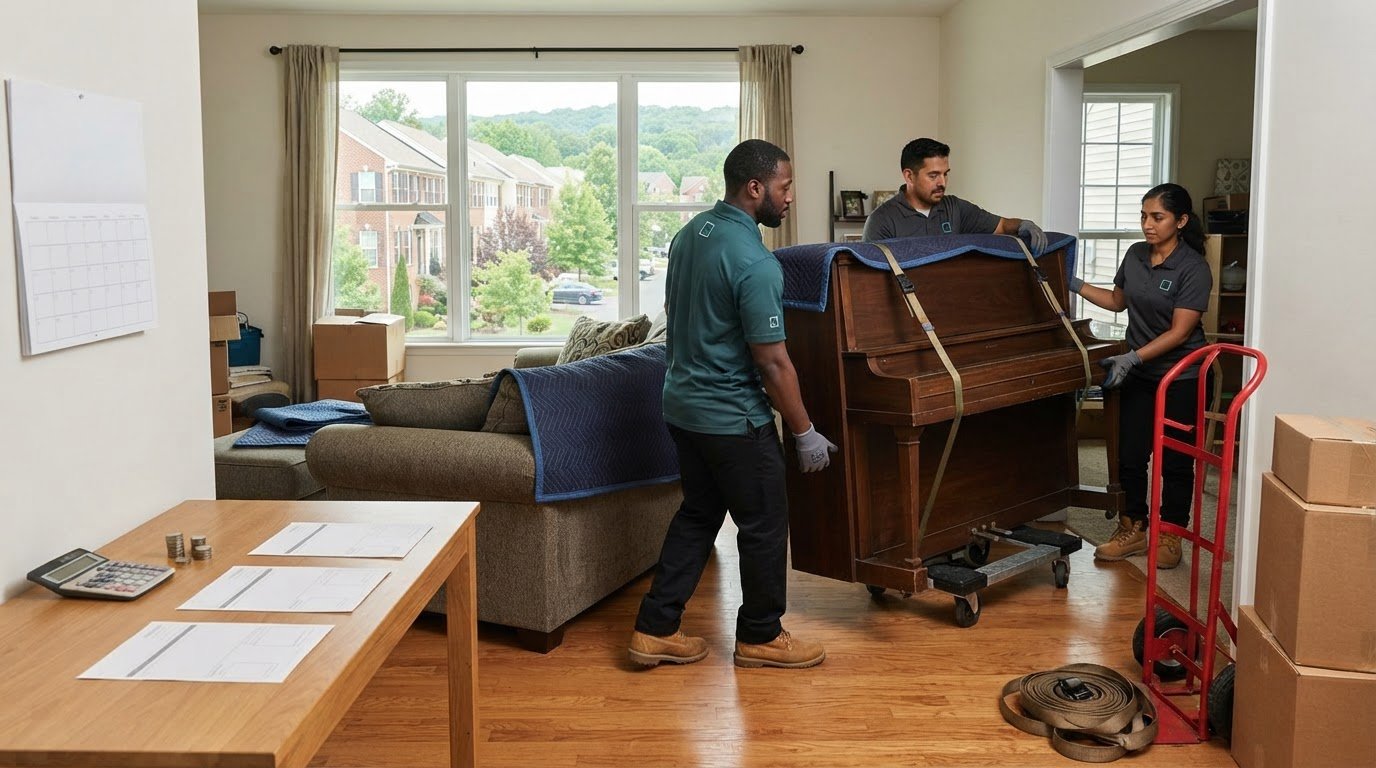
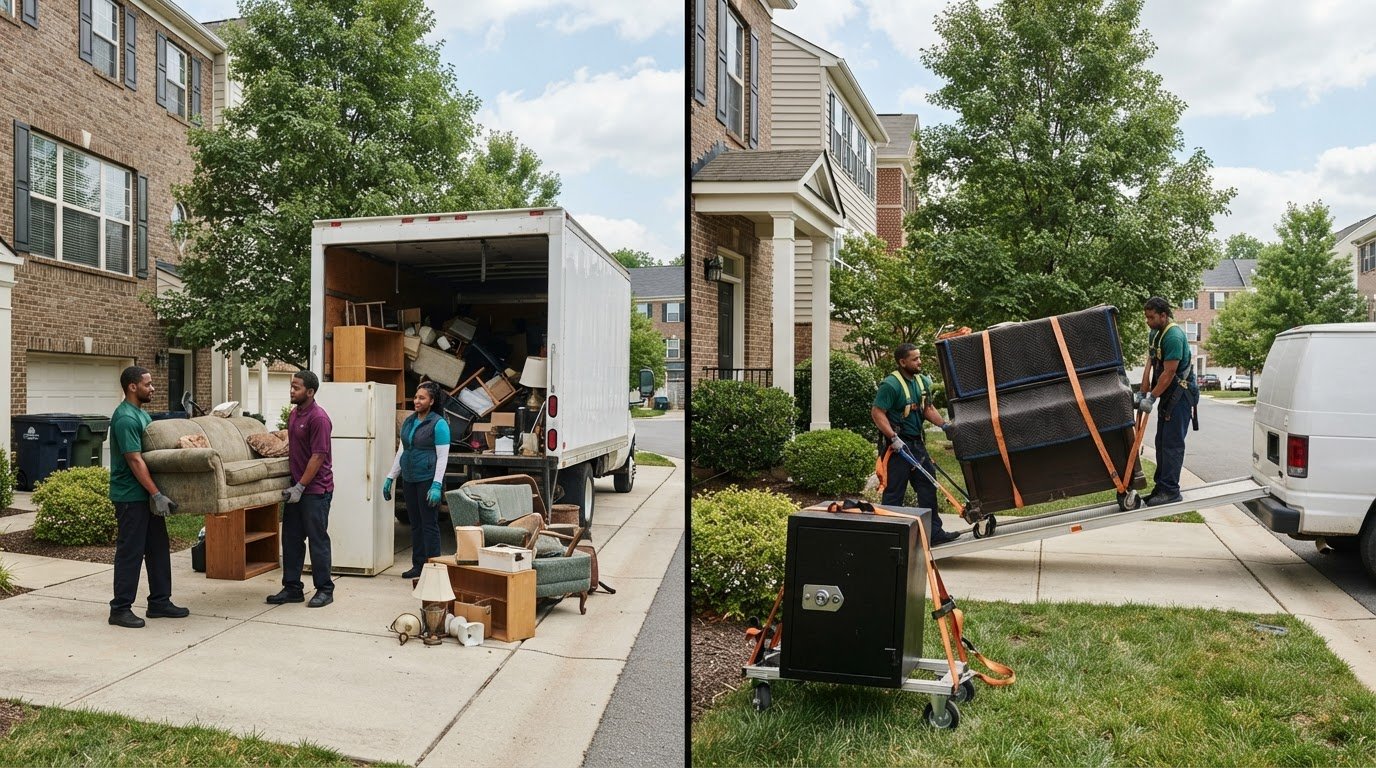
Heavy Furniture Moving can help with the heavy or bulky items that make a move more challenging. Its Exercise Equipment Moving, Sofa Hoisting, and in-home furniture moving services can address items such as treadmills and sectional sofas. Wrap, blankets, and straps are included on every job.
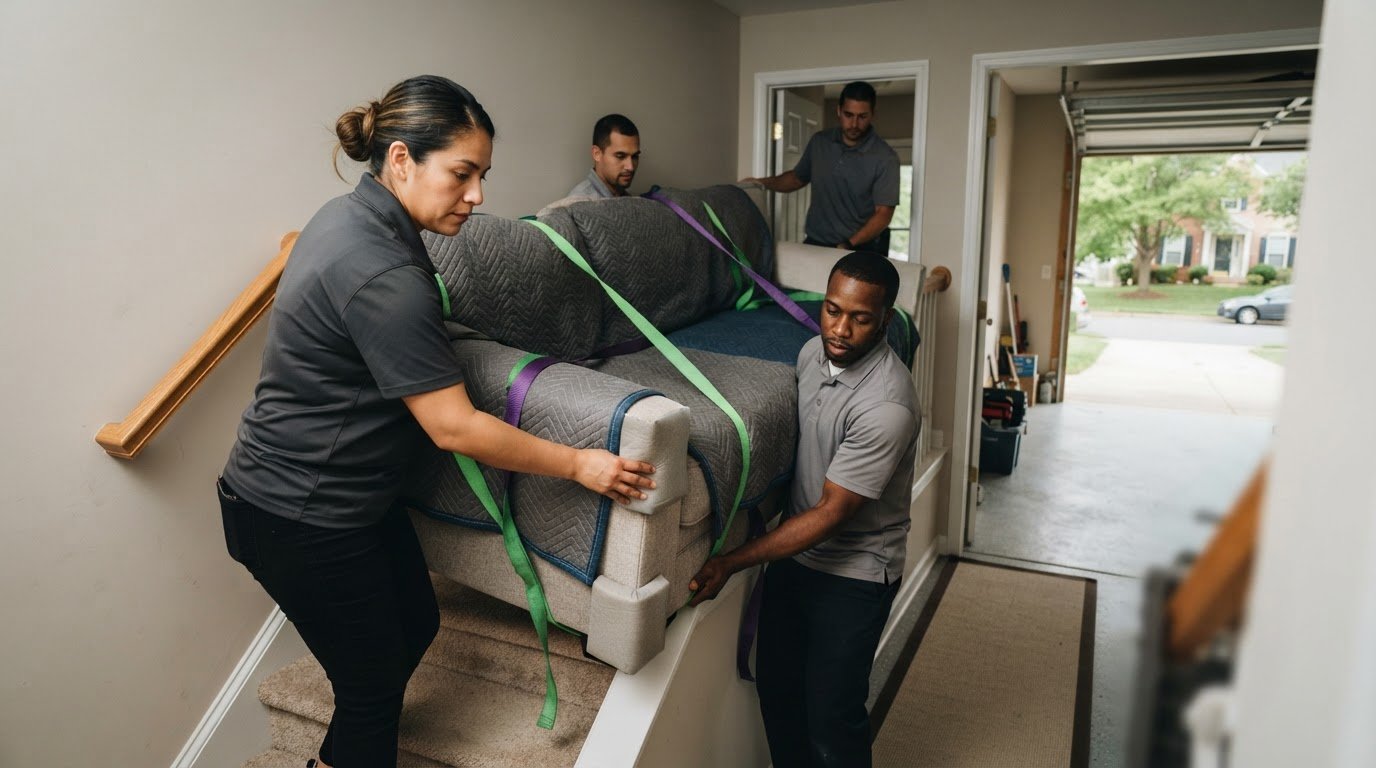
Use packing help for boxes and moving support for heavy pieces. For example, arrange separate help if a sofa won’t fit through a stairwell or exercise equipment needs to be moved. Keeping these tasks distinct makes your moving plan easier to organize.
Contact Heavy Furniture Moving to discuss help with bulky furniture or exercise equipment.
Make Your Moving Plan Fit the Work Ahead
Your next step is to decide which jobs you’ll handle yourself and which need hands-on help. A Two Men and a Truck packing service review can inform your packing decision, while your plan can separate box preparation from moving bulky belongings. That leaves you free to choose practical support for the tasks that are hardest to manage alone.
Heavy Furniture Moving offers Movers Near Me, Exercise Equipment Moving, and Sofa Hoisting. These services can help with heavy or awkward items while you organize boxes and move-day essentials. Wrap, blankets, and straps are included on every job. Choose support that fits the work in front of you, then keep your plan clear and manageable.
Contact Heavy Furniture Moving to discuss help with your move. Take the next step with a plan that feels right for your home and the belongings you need to move.
Frequently Asked Questions
Are TWO MEN AND A TRUCK packing services insured, and what happens if items are damaged?
These are protection options, separate from packing plans; this comparison does not describe what happens if an item is damaged.
What packing services does TWO MEN AND A TRUCK offer?
Full packing generally covers most household contents, while partial packing focuses on selected rooms or items, such as fragile dishes or artwork. The actual scope depends on what is specified in the move documents.
What items will TWO MEN AND A TRUCK pack, and what items are excluded?
Packing may cover household contents or selected belongings such as dishes, artwork, or framed photographs, depending on the agreed scope. Keep items you don’t want packed out of moving boxes; bulky furniture or exercise equipment may need separate handling.
Frequently Asked Questions
For interstate full-service moves in the United States, movers must offer Full Value Protection and Released Value Protection. These are protection options, separate from packing plans; this comparison does not describe what happens if an item is damaged.
Full packing generally covers most household contents, while partial packing focuses on selected rooms or items, such as fragile dishes or artwork. The actual scope depends on what is specified in the move documents.
Packing may cover household contents or selected belongings such as dishes, artwork, or framed photographs, depending on the agreed scope. Keep items you don’t want packed out of moving boxes; bulky furniture or exercise equipment may need separate handling.