PODS or Other Loading Help for Heavy Items in Northern Virginia
You load a PODS container yourself or arrange loading help; PODS-referred labor providers are independently owned and operated, with no affiliation to PODS. For PODS loading labor alternatives for heavy items in Northern Virginia, the main choices are handling the work yourself, hiring help for selected tasks, or arranging support for a full-home load.
It’s easy to focus on getting the container delivered and leave the hardest part until moving day. Heavy furniture, packed boxes, and tight spaces can make loading or unloading demanding, especially when you’re managing the whole move at once.
This guide explains how container loading help works and compares options for bulky items and full-home loads. You’ll learn what to consider when choosing labor-only help, furniture movers, or a do-it-yourself approach, and how careful placement can help limit shifting in transit. Use these details to match the work to the right kind of help and make a practical moving-day plan.
Key Takeaways
- Choose who loads and unloads based on the size of the job, the weight of the items, and how much lifting you can handle yourself.
- Plan the container load carefully: place heavy items low, protect furniture, and stack boxes in stable tiers to help limit shifting.
- Compare self-loading, task-based labor, and full-home moving help to find an approach that fits your move.
- Understand that labor costs depend on the work involved, including the number and type of items and whether you need loading, unloading, or both.
- For bulky furniture or exercise equipment, use dedicated furniture-moving help to take the strain out of the hardest lifts.
Loading rental trucks, trailers, and storage units
Choose a vehicle or container based on your route and timing. A rental truck travels with you, while portable storage can stay near your home as you pack. A trailer also moves with a vehicle, but parking and loading access depend on the site. If you need storage between homes, a container lets belongings stay packed until your move-in date.
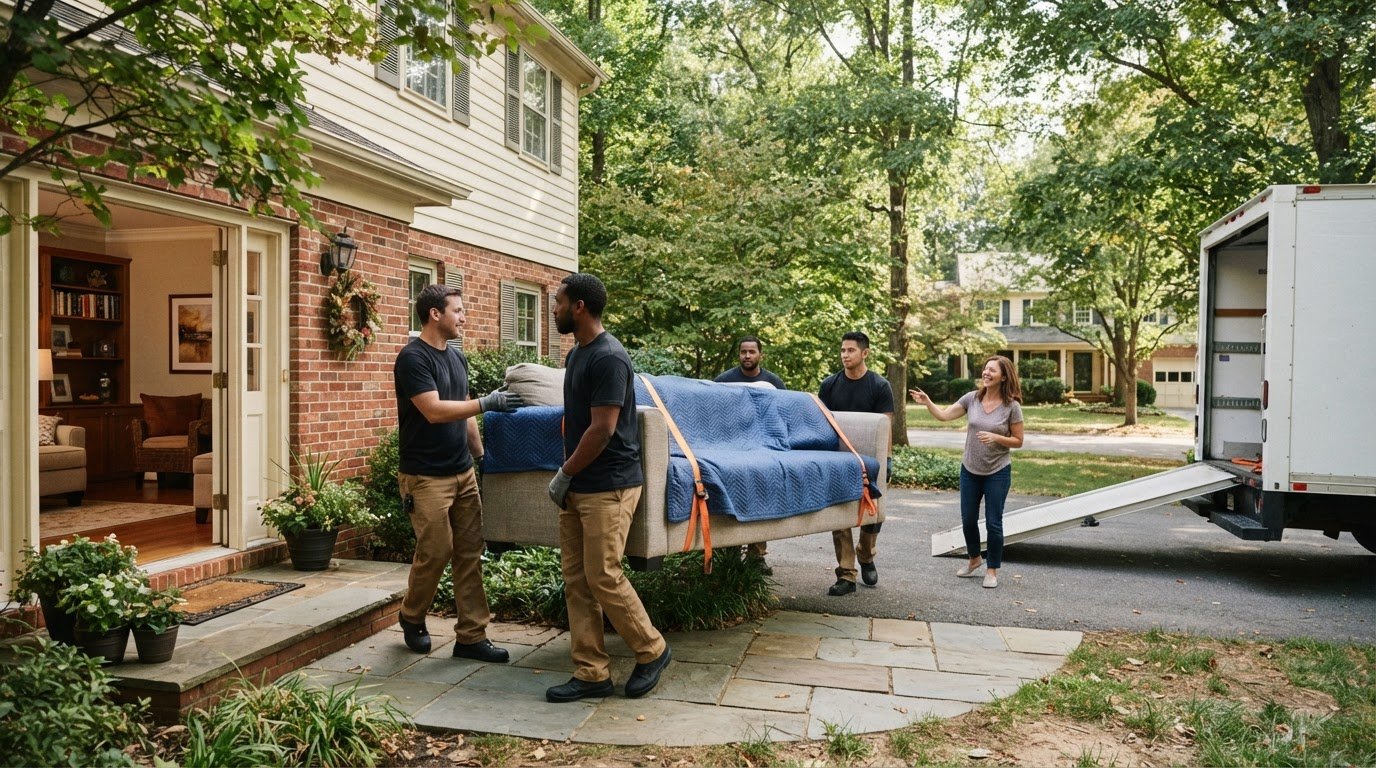
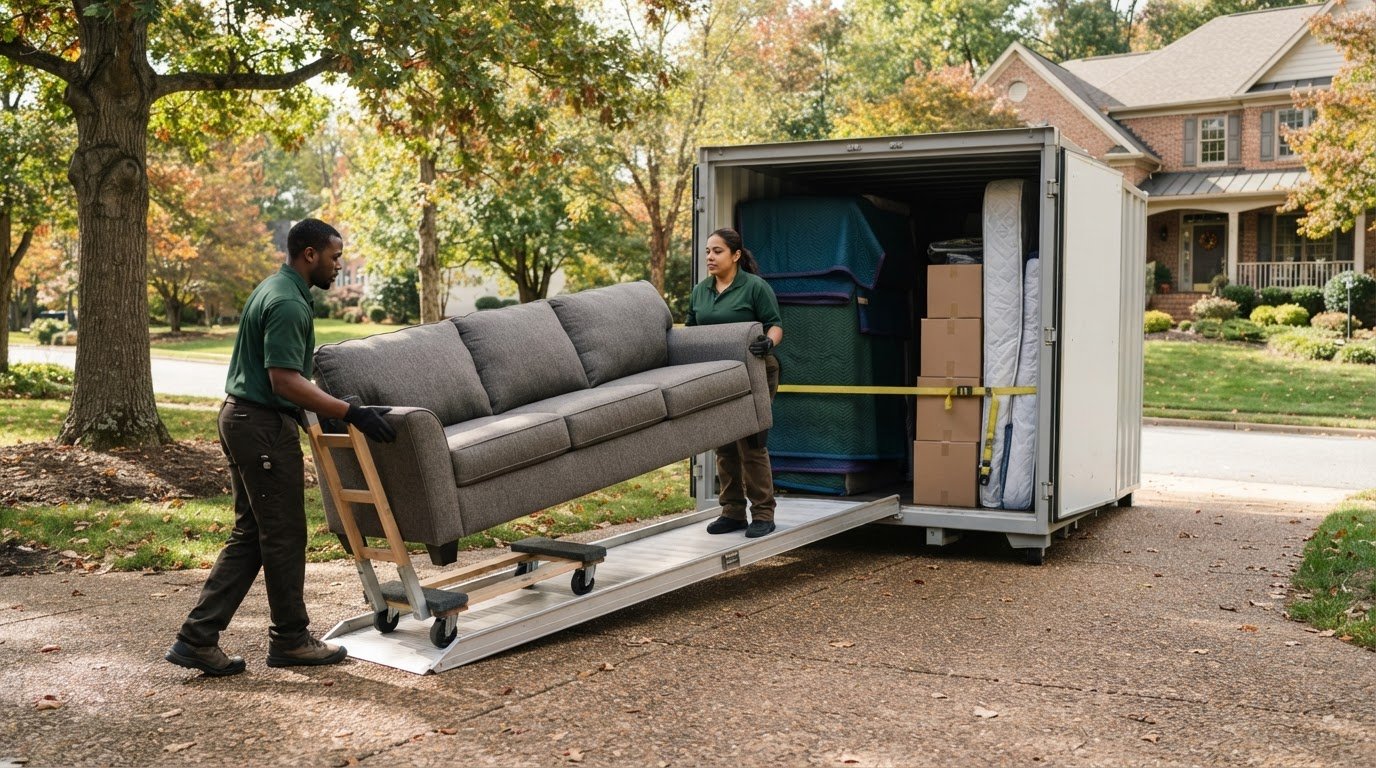
Plan the load before moving day. List large pieces by room, such as a bed, dresser, and mattress, then group nearby boxes. For a container traveling to another location, place heavy items low and distribute them rather than clustering them at one end. Pad furniture, arrange boxes in stable tiers, and keep the load organized for unloading.
That range helps estimate how much the container can hold, but the weight and size of your belongings matter too. A dense load of books or exercise equipment weighs more than the same volume of bedding. Distribute heavy pieces instead of clustering them at one end.
Storage periods affect the plan. PODS container rentals are offered monthly, which can suit a transition when the new home isn’t ready on moving day. A longer gap may mean additional rental periods and fees, so include the expected storage duration when comparing options. For booking, the general recommendation is 2-4 weeks ahead, earlier during busy season. For local or short-distance moves, aim for 2-3 weeks ahead if possible; long-distance moves call for 3-6 weeks, especially with fixed dates. Peak-season moves call for 6-8 weeks to improve the chance of preferred dates and container size.
| Option | Best fit | Storage flexibility | Loading consideration |
|---|---|---|---|
| Portable container | Staged packing or temporary storage | Stays at the home or moves to storage | Balance heavy items and protect furniture |
| Rental truck | Moves with a planned travel day | Limited to the rental period | Load belongings for the trip and unloading order |
| Rental trailer | A smaller load with a suitable tow vehicle | Moves with the vehicle | Plan access and balanced placement |
| Storage unit | Items kept separately between homes | Stored at one facility | Leave a path to items needed later |
Choose a portable container for staged packing, a truck or trailer for a direct move, or a storage unit when belongings need a separate holding place.
During loading, make the box arrangement a deliberate part of the plan rather than filling open spaces at random. Stack boxes in clean tiers, keeping the arrangement orderly as the load grows. Before adding another layer, check the boxes below and continue the same approach across the available floor space. Keep this box arrangement distinct from the placement of furniture and heavier pieces, so each part of the load follows its own plan.
As you finish loading, keep the box tiers stable rather than letting loose boxes disrupt the arrangement. Check the stacks before closing the container and keep the layout consistent throughout. This makes boxes easier to manage alongside room-based grouping, careful furniture placement, and balanced distribution of heavier items.
PODS loading and unloading process
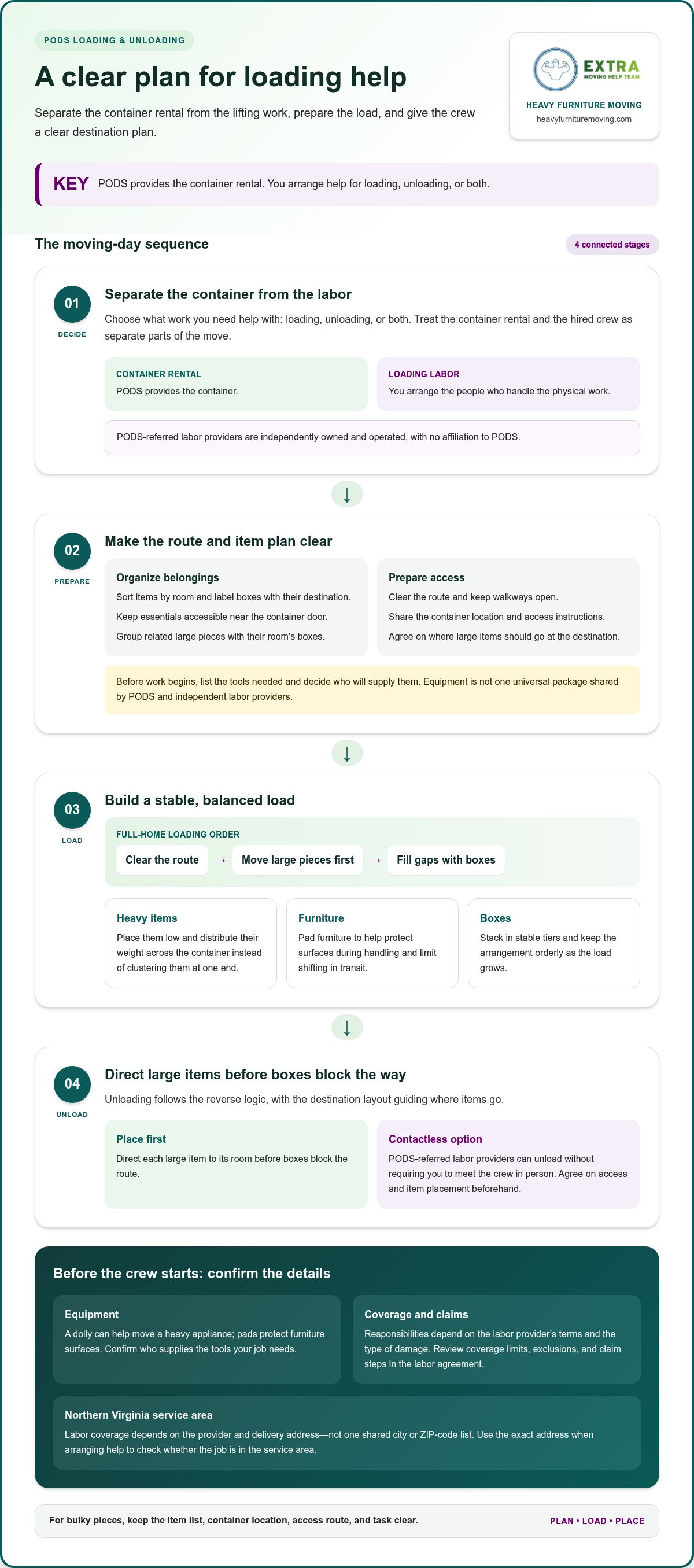
Separate container delivery from the physical work. PODS provides the container rental; you arrange labor for loading, unloading, or both. PODS-referred labor providers are independently owned and operated, with no affiliation to PODS. Treat the container rental and the labor crew as separate parts of your moving plan.
Before loading, sort belongings by room and label boxes with their destination. Keep essentials accessible near the door rather than burying them behind furniture. Place heavy items low and distribute their weight across the container. Pad furniture and stack boxes in stable tiers to help limit shifting in transit.
For a full-home load, set a clear order: clear the route, move large pieces first, then fill gaps with boxes. Group a bed frame, dresser, and mattress near the bedroom boxes. Keep walkways clear during loading and unloading so you can reach items without moving several pieces again.
Unloading follows the reverse logic, but the destination layout matters. Direct each large item to its room before boxes block the route. For a contactless unloading solution, PODS-referred labor providers can unload without requiring the customer to meet the crew in person. Agree on access instructions and item placement beforehand, so the crew can follow a clear plan.
Dollies, furniture pads, straps, and other equipment are not one universal package shared by PODS and independent labor providers. List the tools needed and decide who will supply them before moving day. A dolly can help move a heavy appliance, while pads protect furniture surfaces during handling.
Coverage and liability depend on the labor provider’s terms and the type of damage. Treat the container company’s responsibilities and the hired crew’s responsibilities separately. Before work begins, review the labor agreement for coverage limits, exclusions, and claim steps.
In Northern Virginia, labor coverage depends on the provider and the delivery address, not on one shared city or ZIP-code list. Use the exact address when arranging help to determine whether the job is within the service area.
For heavy pieces that need hands-on lifting at either end, heavy-item loading help can be a practical part of the plan. Keep the container location, access route, item list, and loading or unloading task clear when organizing the job.
Alternatives to PODS
For heavy items, decide who will handle the lifting and who will move your belongings. Full-service movers take on more of the move, while self-loading leaves the work to you and your helpers. Each option affects how much you need to coordinate and how much physical work you’ll do.
Labor for a container can focus on loading, unloading, or selected heavy pieces. That works well when you’ve arranged portable storage but need help with a sofa, dresser, or exercise machine. Full-service movers may suit a household that needs help beyond container loading. Self-loading can work when the items are manageable and you have capable helpers.
Compare options against your driveway, route, and container plan. A narrow driveway may limit where a truck or container can sit, while a storage unit adds a separate trip. Check that the container can accommodate bulky furniture, then decide whether you need help loading, unloading, or both. Choose based on the tasks involved, not just the container.
| Option | Who handles heavy lifting | Best fit | Main trade-off |
|---|---|---|---|
| Container labor | Hired loading or unloading crew | Container moves with targeted lifting help | You coordinate the container and labor separately |
| Full-service movers | Moving crew handles the broader move | Households needing more hands-on moving services | Less control over which tasks you handle yourself |
| Self-loading | You and your helpers | Smaller loads and manageable furniture | You handle lifting, protection, and placement |
| Rental truck with labor | Hired crew loads or unloads the truck | Moves planned around a rental truck | Truck timing and labor timing must align |
| Storage unit | You or hired movers | Belongings need a separate holding place | Items may need another move later |
Before the crew arrives, decide who will supply furniture pads and give placement directions. Make a short priority list: heavy items first, fragile pieces protected, and essential boxes accessible. For a full home, map the rooms and loading order. For a few bulky pieces, define the job around those lifts.
Choose container labor if you want help loading or unloading but will coordinate the rest. Choose full-service movers for a broader move, or self-loading when the items and available helpers make the work manageable. That’s the practical way to compare PODS loading labor alternatives for heavy items in Northern Virginia.
Booking help for loading heavy furniture or an entire home
Start with the container date, then define what the crew will handle. Moving a sofa and treadmill calls for a different plan than packing and loading a three-bedroom home. List each heavy piece, the boxes needing help, and whether the job includes loading, unloading, or both. A clear task list makes it easier to arrange the right moving help.
Arrange labor once your container delivery date is set. Availability depends on the requested day, seasonal demand, job size, travel distance, and access at both addresses. A full-home load with heavy items may take more planning than help with one dresser. For a long-distance move, coordinate labor with the container’s arrival and pickup schedule.
Container booking recommendations provide a useful planning reference, but they are not labor-booking deadlines. For a local or short-distance move, book the container 2-3 weeks ahead if possible. For a long-distance move, the recommendation is 3-6 weeks, especially when dates are fixed. Peak-season container bookings are recommended 6-8 weeks ahead to improve the chance of preferred dates and container size. Schedule loading labor promptly around those dates.
Before requesting help from Heavy Furniture Moving, prepare a short job brief with these details:
- Write down the pickup and delivery addresses, including the registered delivery address.
- Name heavy items, such as a sectional sofa, safe, or exercise machine.
- Separate packing tasks from lifting and loading tasks.
- Describe stairs, narrow halls, driveway access, and the route to the container.
- State whether the crew is loading, unloading, or handling both ends.
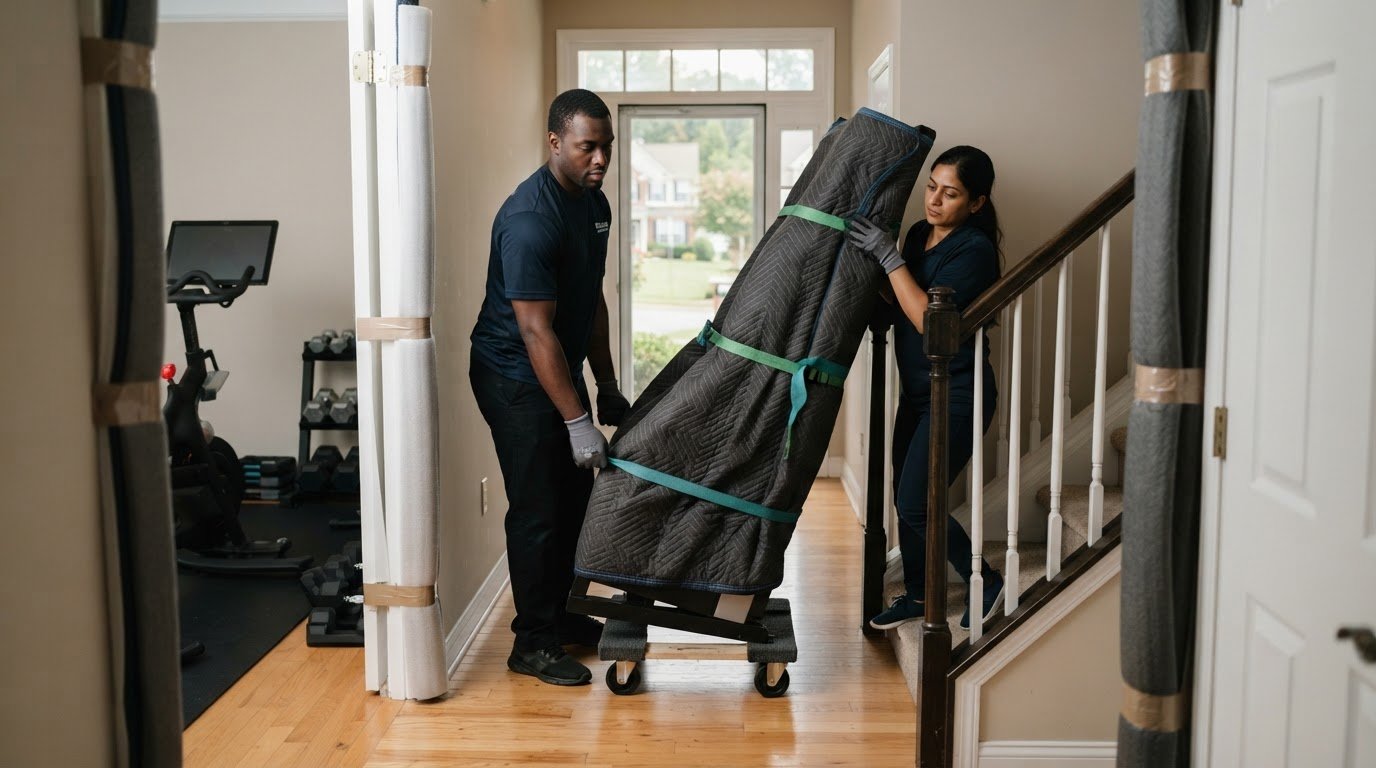
Access details matter. Moving a sofa from a second-floor room through a tight stairwell takes a different route plan from moving a dresser beside the front door. Include building entry instructions and the path from the home to the container. For an apartment move, note elevator access and any scheduled building move window.
For a whole-home move, sort belongings by room before the crew arrives. Label bedroom, kitchen, and living-room boxes, then identify fragile or awkward pieces. Keep packing and loading tasks distinct in your plan, since combining them changes the work involved. If you want the crew focused on lifting, pack and label boxes beforehand.
Make your request specific: share the item list, weight concerns, distance between addresses, and container timing. Clear details help shape the job around the move, whether it involves one heavy piece or a full household.
Whether you are moving a single item or an entire home, you can hire help for selected packing or loading tasks, or for packing and loading throughout the residence. Choose the scope that fits your needs: selected packing, selected loading, or both across the home. Describe the requested tasks in advance so the plan reflects whether you need help with particular parts of the move or the entire household.
How much do PODS loading labor alternatives cost in Northern Virginia?
Loading-help costs in Northern Virginia depend on the job. The items, amount of lifting, requested work, access, and travel between addresses all affect the quote. Loading a few heavy pieces differs from loading and unloading an entire home, so describe the tasks to get a useful estimate.
Separate container rental costs from labor costs. PODS offers container rentals by the month, so storage duration affects that part of your moving budget. Labor is a separate expense. A quote for loading a sofa and dresser covers different work from packing, loading, and unloading a full household.
A task list is the clearest way to compare estimates. Specify whether you need loading, unloading, or both. Name bulky items such as a sectional, safe, or exercise machine, and include stairs, narrow hallways, long carries, and driveway access. These details describe the work and can affect the estimate. If furniture must pass through a tight stairwell, include that route instead of describing the job simply as a container load.
Compare alternatives by scope, not just by headline. Self-loading avoids hiring a labor crew but leaves you responsible for lifting, furniture protection, and loading order. Container labor covers selected loading or unloading tasks. Full-service moving help covers a broader range of work. Before comparing estimates, make sure they include the same items and tasks.
To prepare a useful request, gather these details:
- List the large furniture pieces and heavy belongings.
- State whether packing is included or already complete.
- Describe access at pickup and delivery, including stairs and parking.
- Give the container’s arrival timing and the move’s destination.
- Separate loading needs from unloading needs.
A clear scope helps prevent gaps between the estimate and moving-day work. Naming a treadmill, basement stairs, and container loading is more useful than asking for “help with heavy items.” Also specify whether furniture needs padding or careful placement. Clear instructions help match the work to the job.
Base your estimate request on the actual move. A local load, a long-distance move, and a staged move involving storage may require different labor and timing. Share the route, job scope, access details, and list of heavy items. Then compare estimates covering the same work, not different sets of tasks.
Heavy Furniture Moving: Movers Near Me
Heavy Furniture Moving can handle the toughest lifts on your moving-day list. The team moves bulky furniture and exercise equipment and provides sofa hoisting. If you’re managing the container but need help with specific items, focused furniture-moving help may suit the job better than handing over the entire move.
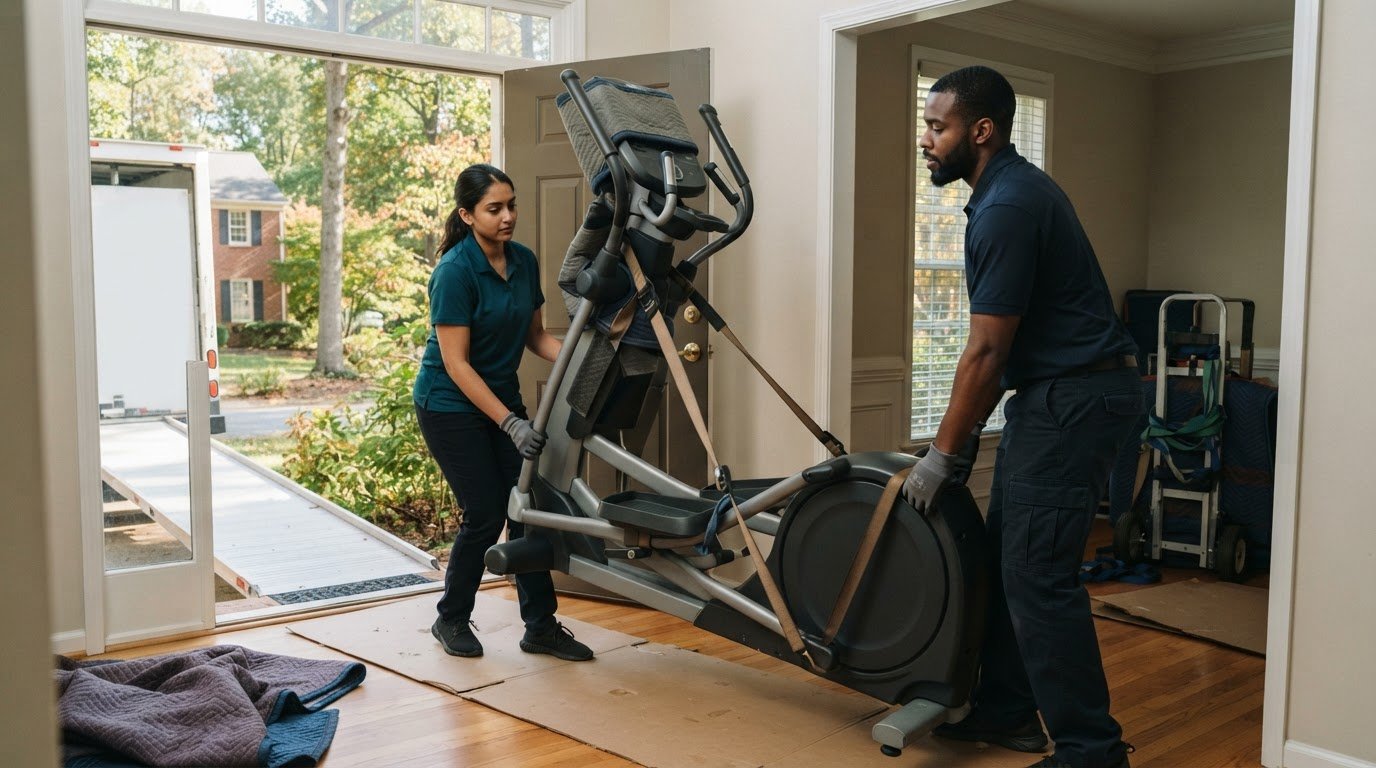
For example, arrange help with a treadmill or elliptical when it’s too heavy to move safely through a hallway alone. Sofa hoisting can help when a sofa won’t pass through the usual entry route. For several large pieces inside your home, in-home furniture movers can handle the lifting and placement.
Share the items and the work you need done, then contact Heavy Furniture Moving to discuss your move.
Make the Hardest Lift Your Next Step
Choosing among PODS loading labor alternatives for heavy items in Northern Virginia means matching the help to the work ahead. Before moving day, decide which pieces you don’t want to lift yourself and what needs careful handling inside the home. That turns a broad moving plan into a clear, manageable task list.
Heavy Furniture Moving helps with residential furniture moves, exercise equipment, and sofa hoisting. If one bulky item is holding up the move, identify it and describe its route through the home. For a larger job, list the furniture and lifting tasks you want handled. A specific plan makes it easier to take the next step.
Contact Heavy Furniture Moving to discuss loading help for the heavy pieces on your list. You’re closer to a move that feels organized and manageable.
Frequently Asked Questions
Who loads a PODS container?
You can load the container yourself or hire independent labor for the work. Arrange help with a few heavy pieces or a larger household load. Coordinate the container delivery with the labor plan, and give the crew clear directions about belongings that need careful placement or should remain accessible.
What loading and unloading labor services work with PODS containers in Northern Virginia?
Heavy Furniture Moving offers PODS loading and labor-only help for container jobs, including loading, unloading, and heavy-item handling. Service areas include Fairfax, Woodbridge, Manassas, Manassas Park, Aldie, Ashburn, McLean, Vienna, Reston, Centreville, Chantilly, Clifton, Dumfries, South Riding, Fairfax Station, Haymarket, and Gainesville. Wrap, blankets, and straps are included on every job, helping protect furniture during handling.
How should heavy items be prepared and packed for PODS loading?
Clear the route, protect furniture, and identify items needing special handling before work begins. Empty dressers and safes; most other items usually don’t need to be emptied. Share photos of the item and stairs to help assess the move, and measure doorways and tight turns. Secure small parts with their furniture and label boxes by destination room for easier unloading.
What insurance and liability coverage applies when hired labor loads a PODS container?
Coverage depends on the labor provider’s terms and the type of damage. Treat the provider’s responsibilities separately from the container company’s, and review the labor agreement for coverage limits, exclusions, and claim steps before work begins.
Frequently Asked Questions
You can load the container yourself or hire independent labor for the work. Arrange help with a few heavy pieces or a larger household load. Coordinate the container delivery with the labor plan, and give the crew clear directions about belongings that need careful placement or should remain accessible.
Heavy Furniture Moving offers PODS loading and labor-only help for container jobs, including loading, unloading, and heavy-item handling. Service areas include Fairfax, Woodbridge, Manassas, Manassas Park, Aldie, Ashburn, McLean, Vienna, Reston, Centreville, Chantilly, Clifton, Dumfries, South Riding, Fairfax Station, Haymarket, and Gainesville. Wrap, blankets, and straps are included on every job, helping protect furniture during handling.
Clear the route, protect furniture, and identify items needing special handling before work begins. Empty dressers and safes; most other items usually don’t need to be emptied. Share photos of the item and stairs to help assess the move, and measure doorways and tight turns. Secure small parts with their furniture and label boxes by destination room for easier unloading.
Coverage depends on the labor provider’s terms and the type of damage. Treat the provider’s responsibilities separately from the container company’s, and review the labor agreement for coverage limits, exclusions, and claim steps before work begins.