MyProMovers Safe Moving Service Cost and Pricing Factors
The safe moving service cost depends on the safe’s weight, route, access, and handling needs. Stairs, tight turns, and long carries can affect the work involved. Heavy Furniture Moving quotes heavy-item moves based on the job, with flat-rate pricing for most single heavy items and the price provided up front by phone.
It’s reasonable to want a clear estimate before planning the move. The price depends on the case and is provided after a quote request, based on factors such as safe weight, distance, access at pickup and delivery, and any extra labor or equipment required.
This guide explains how moving estimates are built, why weight and access can change the work involved, and which additional charges may apply to a broader move. You’ll also see how to compare the quote details, so you can plan with fewer surprises and keep the move on solid ground.
Key Takeaways
- Understand why a safe’s weight and travel distance can shape an estimate, and how weight-based pricing differs from mileage-based pricing.
- See when hourly billing may apply and what details help clarify a fixed-price quote.
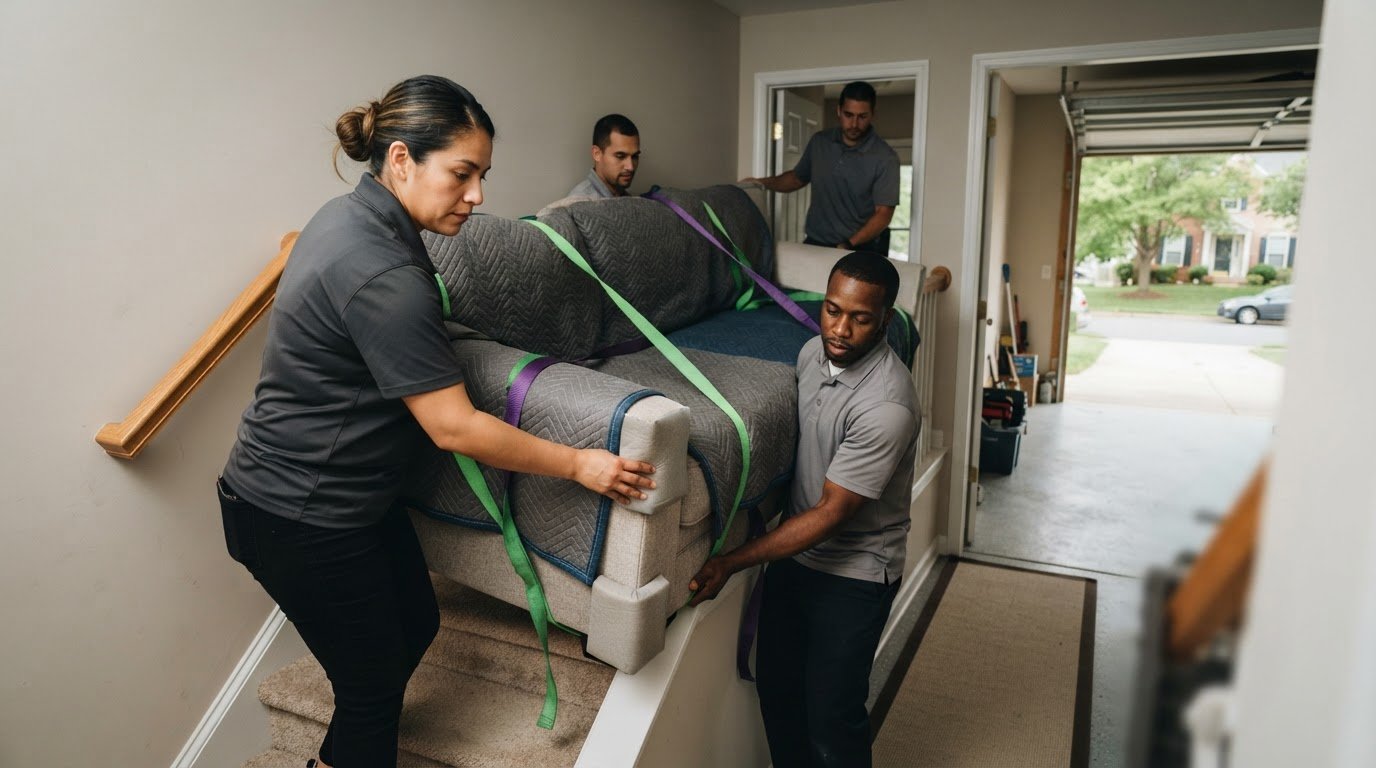
- Learn how stairs, tight turns, long carries, and equipment needs can affect the work involved in moving a safe.
- Spot possible extra charges for packing, travel, oversized items, storage, or coverage before you plan your moving budget.
- Find out when specialized local moving help can make handling heavy or bulky belongings easier.
Per-mile and weight-based estimates
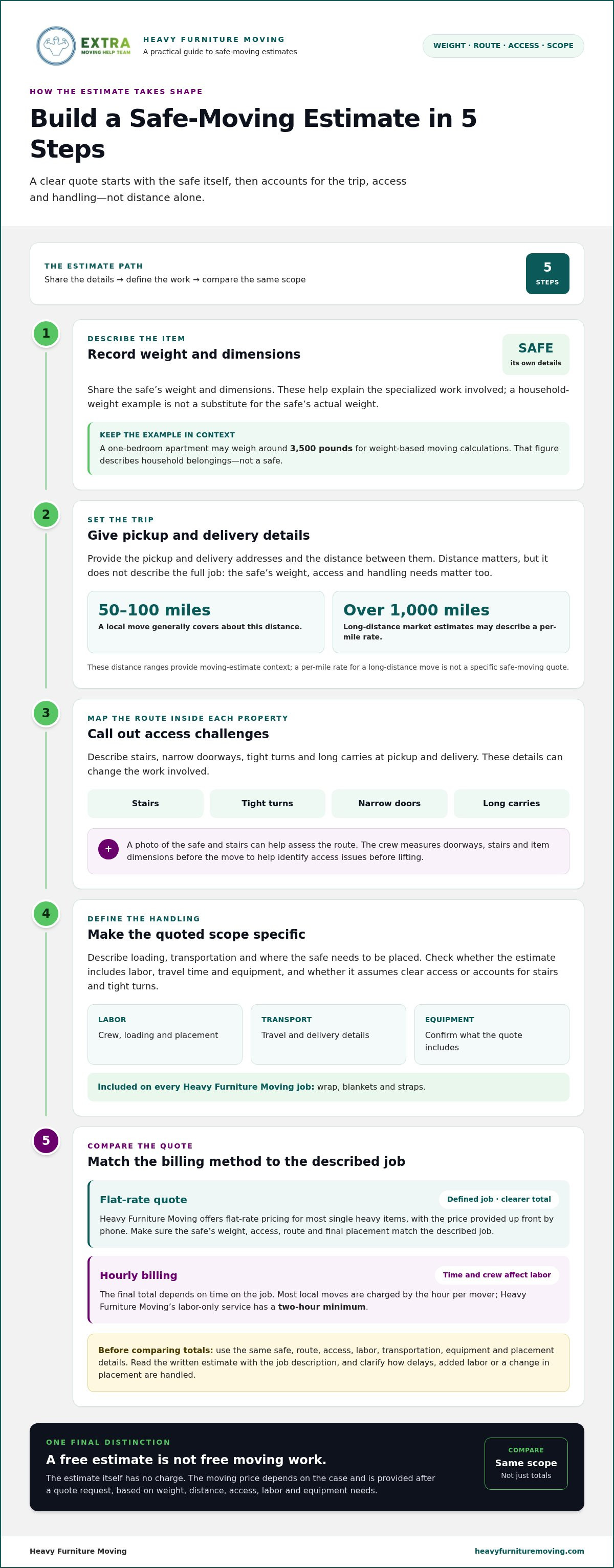
A safe-moving estimate reflects the item’s weight, travel distance, access, and handling needs. For instance, a safe’s route through stairs or narrow doorways can change the work involved. Distance alone does not describe the full job, so share the pickup and delivery details as well as the safe’s weight.
For example, a one-bedroom apartment may weigh around 3,500 pounds for weight-based moving calculations. That figure describes household belongings, not a safe’s weight. A safe’s own weight, dimensions, and route through the building help explain the specialized work involved. Share those details in the estimate process so the scope reflects the actual item.
Distance ranges help explain how movers classify a trip. A local move generally covers about 50 to 100 miles, while long-distance pricing may use mileage or shipment weight. For moves over 1,000 miles, market estimates describe a per-mile rate. That rate applies to long-distance moving estimates, not a specific safe-moving quote.
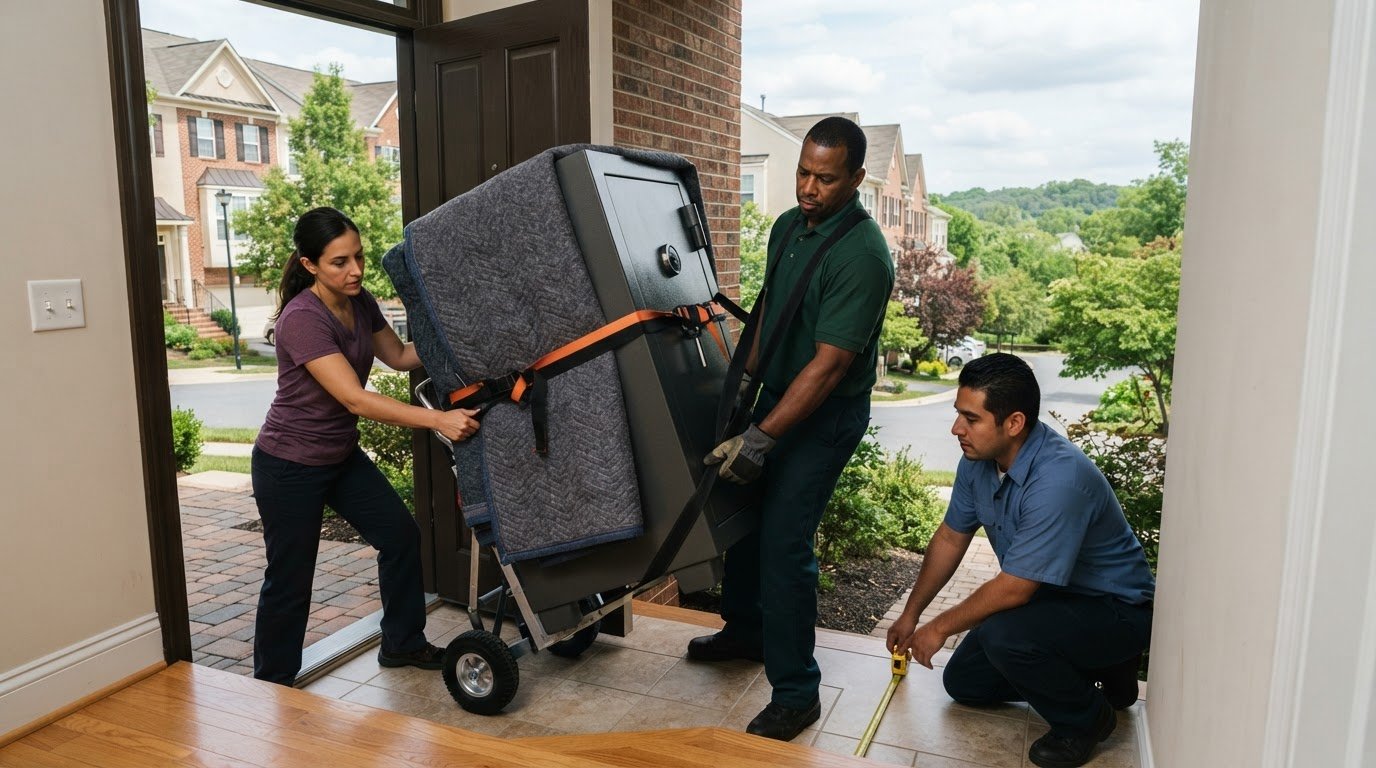
An accurate estimate starts with the safe’s weight and dimensions, the pickup and delivery addresses, and details about access. Send a photo of the safe and stairs so Heavy Furniture Moving can assess the route. The crew measures doorways, stairs, and item dimensions before the move, helping identify access issues before lifting.
A free estimate means there’s no charge for the estimate itself, not that the moving work is free. Heavy Furniture Moving provides flat-rate pricing for most single heavy items, with the price given up front on the phone. Compare what each quote includes, such as labor, transportation, and equipment, and confirm that the safe’s route and placement are described.
To compare MyProMovers' pricing with another mover’s, match the safe’s weight, route, access, and included work. Without the same scope, a lower figure may simply cover less work. Heavy Furniture Moving offers flat-rate pricing for most single heavy items, with the price provided up front by phone.
When reading customer reviews about MyProMovers' costs and safety, look for details about the quoted scope, final charge, and how the crew handled the safe. Compare reviews with the details of your own move rather than treating one customer’s experience as a universal price or outcome.
- Record the safe’s weight, dimensions, and pickup-to-delivery distance.
- Describe stairs, narrow doorways, and other access points for an accurate assessment.
- Compare estimates with the same scope, including labor and transportation.
Hourly rates and fixed-price quotes
Hourly billing ties the final total to the crew’s time on the job. Most local moves are charged by the hour per mover, so the number of workers affects the labor calculation. A two-mover crew and a longer work period mean more billed labor than a smaller crew completing the same task faster. For a safe, the estimate should account for careful handling, loading, travel, and placement.
A flat-rate quote sets a total for a defined job, making it easier to plan than a charge based only on time. Heavy Furniture Moving offers flat-rate pricing for most single heavy items and provides the price up front by phone. Give accurate details about the safe’s location, destination, access, and placement so the quote reflects the work.
Compare the billing method and the work included, not just the headline total. For example, check whether the estimate includes the crew’s travel time, loading, delivery, and moving the safe to its final position. Also note whether the quote assumes clear access or includes stairs and tight turns. These details help explain why two estimates for the same relocation can differ.
Before accepting either format, read the written estimate alongside the job description. Confirm that the safe’s weight and dimensions are accurate, and describe the route through both properties. Ask how the estimate treats delays, added labor, or a change in placement. Those details show what the quoted amount covers and which changes could affect the bill.
Hourly pricing can suit work with an uncertain duration, such as a complicated route through a home. A flat rate can make budgeting clearer for a defined job. Heavy Furniture Moving offers flat-rate pricing for most single heavy items and labor-only service with a two-hour minimum. Compare the full scope, billing basis, access, and final placement.
- Match the estimate to the safe’s weight, route, and final placement.
- Compare crew size and included work across hourly and fixed-price quotes.
- Keep the written scope nearby if access or job details change.
For a bulky-item relocation that needs careful handling, explore local moving help as a practical next step. The price depends on the case and is provided after a quote request, based on the safe’s weight, access, distance, labor, and equipment needs.
A forum member reported being quoted 600-650 by a mover to move a safe, illustrating how a single quoted total can differ from an hourly estimate. With hourly billing, that rate makes the time needed for handling, loading, travel, and placement central to the final amount; a fixed-price quote instead gives an agreed total for its defined scope.
Compare written estimates for the same safe, route, and placement. For hourly labor, check the two-hour minimum and what work the estimate covers. For a flat rate, confirm that the safe’s weight, dimensions, access, and destination match the described job. Heavy Furniture Moving provides the price up front for most single heavy items, with wrap, blankets, and straps included on every job.
Licensing and insurance information
Licensing and coverage paperwork address different things. A license identifies the business responsible for the moving work, while coverage terms describe how loss or damage may be handled under the agreement. Review those documents and the estimate together. For a move in Fairfax or nearby Northern Virginia communities, make sure the business name and job description are clear.
A license record alone doesn’t show how a particular safe will be handled. The estimate should describe the job, including the safe’s weight, pickup location, destination, and placement. For example, moving a safe from a ground-floor garage differs from carrying it down basement stairs. Ask for those details in writing, so the described work and paperwork refer to the same move.
Insurance and valuation coverage can add to moving costs. For long-distance moves, full value protection usually costs 1%-2% of the shipment’s declared value. That percentage applies to the shipment’s declared value, not automatically to one safe. Read the coverage terms to understand what they address, how claims are handled, and whether the safe’s value must be documented separately.
Before moving day, photograph the safe from several angles and note any existing marks. Keep purchase or appraisal documents together, and record the safe’s location and destination in your move paperwork. These records provide a reference for the item’s condition and the agreed scope of work.
- Business identity: Compare the company name across the estimate, agreement, and licensing documents.
- Job scope: Record the safe’s weight, access route, and delivery placement in the estimate.
- Coverage terms: Read the written explanation of protection, limits, and claim steps.
- Condition record: Save dated photos and documents describing the safe’s value and condition.
Don’t assume a general furniture inventory captures every detail of a heavy safe. Include its weight, dimensions, condition, and placement requirements in the move details. Keep a copy of the written estimate and agreement so the item, quoted work, and coverage terms are easy to compare.
Before accepting an estimate, compare its written scope with the licensing and coverage documents. Check that the business name is consistent and the safe is clearly included in the job description. If the paperwork describes furniture but omits the safe, ask for the documents to reflect the actual move before moving day.
Quotes based on weight, access, and distance
A safe-moving quote reflects the load, route, and work needed at both locations. For Fairfax moves, clear details help show how those factors shape the job.
Weight, Access, and Distance Factors
Weight, access, and distance describe the physical load, the path movers must use, and the travel between addresses. Each affects the crew, equipment, and handling involved. A 1,000-pound safe traveling about 20 miles is a different job from a 1,300-pound safe traveling 50 miles, especially if either location has stairs or a narrow entrance.
- Weight: Give the safe’s weight and dimensions, since heavier items affect handling and equipment needs.
- Access: Describe stairs, tight turns, thresholds, and the distance from the safe to the truck.
- Distance: Share pickup and delivery addresses so the route and travel can be assessed.
Access can add complexity even when the destination is nearby. One reported move crossed 150 feet of lawn and used two sheets of 3/4-inch plywood. That example shows why the route across a property matters, not just the street address. A safe moved through a garage, hallway, and basement needs a different assessment than one beside a driveway.
For an accurate estimate, describe the safe’s current position and final placement. Mention grass crossings, narrow doorways, steps, and long carries, and send photos of the route when possible. Heavy Furniture Moving measures the item and access before lifting and provides the price up front for most single heavy items.
Service Cities and Location-Based Pricing
For this guide, the relevant city is Fairfax, Virginia. Location can affect a quote through travel distance, route conditions, and access at pickup and delivery. A local move generally covers a radius of about 50-100 miles, but the addresses and actual route still matter more than a city label alone.
The work can vary from one property to another. A Fairfax pickup with direct driveway access differs from a home that requires a long carry across a yard. Share both addresses and explain the safe’s route through each property so the estimate accounts for the actual access and handling.
To compare estimates, give each mover the same safe weight, pickup and delivery points, access details, and placement instructions. A quote for curbside loading is not comparable to one that includes carrying the safe inside. Compare the written scope alongside the route and service location.
Additional moving fees
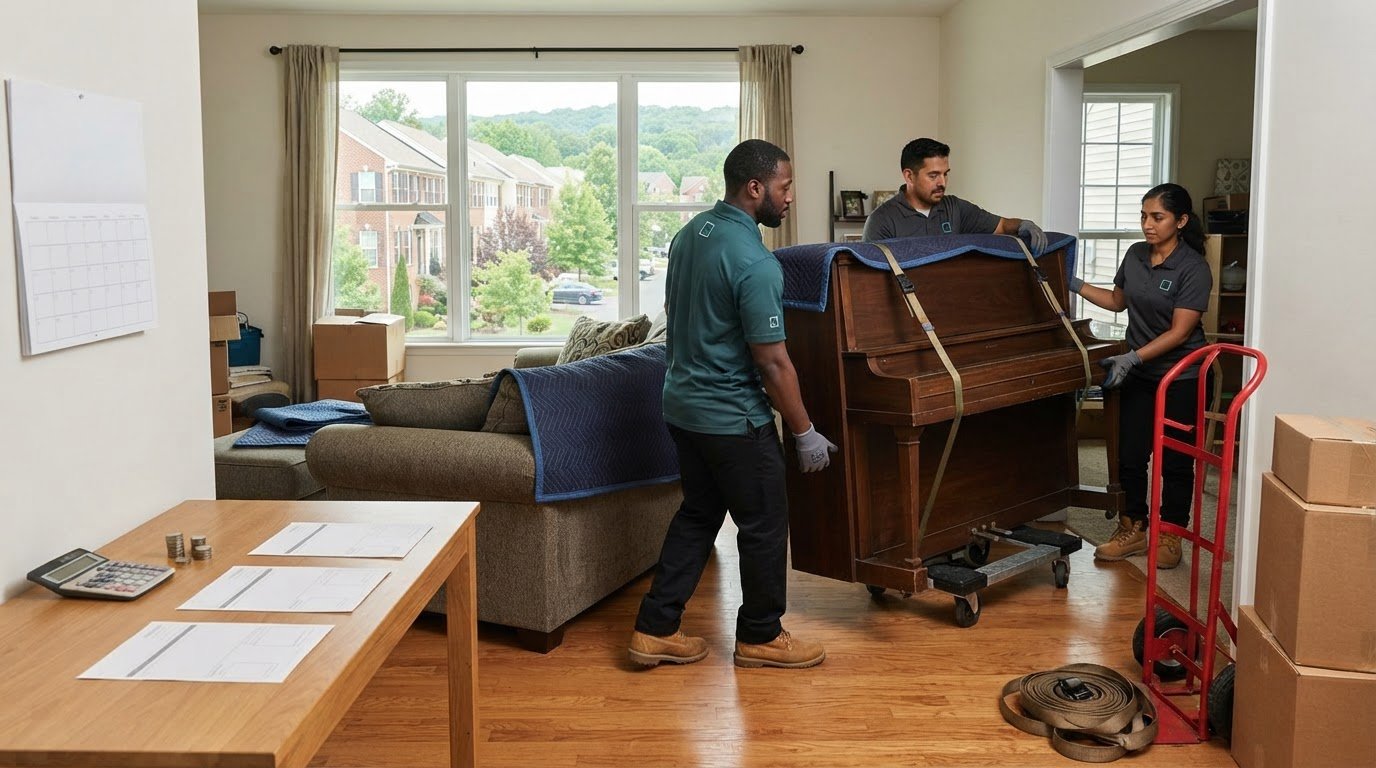
A moving estimate may include more than labor and transportation. For a safe move, the total can depend on the handling and equipment required. Read the itemized estimate and compare what each quote covers. Heavy Furniture Moving includes wrap, moving blankets, and straps on every job, with no extra line item for those materials.
Travel fees may cover getting the moving crew to your location. Ask whether the estimate includes travel to the pickup address and between locations. Packing services and materials can add charges too. If the safe needs protective wrapping or other packing work, check whether those tasks appear in the written scope.
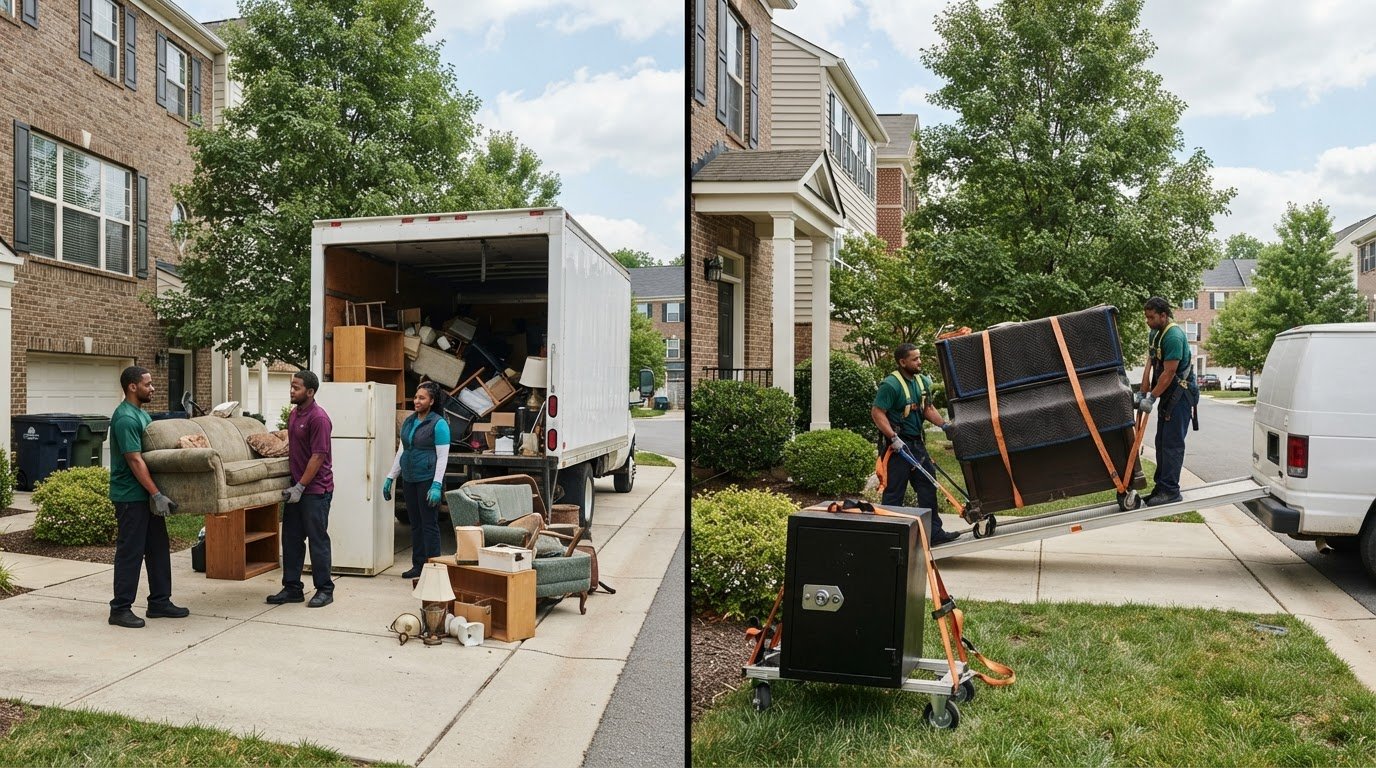
Oversized items may require additional labor or special equipment. A safe that needs a different handling setup can involve work beyond ordinary loading. Describe its weight, dimensions, and access route before the estimate is prepared. That gives the mover a clearer picture of the equipment and labor involved.
Storage is a separate service from transportation, so review any storage terms separately if storage is part of your plans. Heavy Furniture Moving provides labor-only services for customers using their own truck, pod, or container, along with packing, unpacking, and junk removal.
For a long-distance move, full value protection usually costs 1%-2% of the shipment’s declared value. That figure is tied to the declared shipment value, not automatically to a safe alone. Review the terms and identify what value the paperwork applies to. Tipping is customary after a job well done, but it isn’t required.
- Travel: Look for charges covering crew travel and transport between locations.
- Packing: Check whether packing labor and materials appear in the estimate.
- Special handling: Confirm the quote reflects extra labor or equipment for oversized items.
- Storage and coverage: Review each as a separate service or protection line.
- Tip: Treat it as optional, not as a required fee.
Compare itemized estimates line by line, and make sure each describes the same work. Keep a copy of the estimate and note any requested changes to the route or placement. Heavy Furniture Moving provides the price up front for most single heavy items, and wrap, blankets, and straps are included on every job.
The price depends on the case and is provided after a quote request, based on the safe’s weight, access, distance, labor, and equipment needs. For help with a heavy item, request heavy lifting moving service and describe the item and its route.
If storage is part of your plans, review its terms separately from transportation. Packing and unpacking can also affect the work included in a move. Heavy Furniture Moving offers packing and unpacking as part of its relocation and logistics services.
Tipping is optional, and suggested amounts vary with the job. The page suggests tipping up to $40 per person for a half-day move, or 10% to 20% of the moving bill for a full-day move. For a demanding eight-hour moving day, it suggests a tip of $10 per person per hour. Decide what feels appropriate after considering the work and service you received.
Heavy Furniture Moving: Movers Near Me
Heavy Furniture Moving helps with demanding residential moves involving heavy and bulky belongings. Turn to the team when a safe, exercise equipment, or large furniture needs careful handling through a home. For a safe move, the crew measures doorways, stairs, and item dimensions before lifting.
Choose Movers Near Me for local moving help, or Exercise Equipment Moving for bulky fitness gear. Sofa Hoisting helps when a sofa needs a different route into or out of a home. Heavy Furniture Moving also moves heavy safes. Share the item, pickup and delivery details, and access challenges when describing the job.
For help planning a heavy-item move, contact Heavy Furniture Moving.
Plan a Safer Move for Your Heavy Items
Use your estimate as a planning tool, not just a number. Describe the safe’s route and final placement clearly, then keep the written scope handy as moving day approaches. Heavy Furniture Moving measures before lifting and includes wrap, blankets, and straps on every job.
The MyProMovers safe moving service cost depends on the safe, access, distance, and requested handling, with a price provided after a quote request. To understand the MyProMovers safe moving service cost for your move, share accurate details about the item and its route. Heavy Furniture Moving offers Movers Near Me, Exercise Equipment Moving, and Sofa Hoisting for bulky items that need careful handling.
Describe the moving challenge before the job begins. Whether you’re moving exercise equipment or getting a sofa through a difficult opening, clear details help explain the work involved. For a safe move, send the item’s weight and dimensions, its route, and photos of the stairs.
Contact Heavy Furniture Moving to talk about your moving needs. Take the next step with a clear plan and a capable team behind the heavy lifting.
Frequently Asked Questions
How does MyProMovers' pricing compare with other movers in its service areas?
Compare quotes using the same safe weight, route, access conditions, labor, transportation, and equipment needs. A lower figure may cover less work.
How do I get a MyProMovers quote and book a move?
Request a quote and provide the safe’s weight and dimensions, route, access details, and required placement. You can also request an in-home estimate so movers can assess the belongings and access and prepare a detailed breakdown.
Frequently Asked Questions
Compare quotes using the same safe weight, route, access conditions, labor, transportation, and equipment needs. A lower figure may cover less work.
Request a quote and provide the safe’s weight and dimensions, route, access details, and required placement. You can also request an in-home estimate so movers can assess the belongings and access and prepare a detailed breakdown.