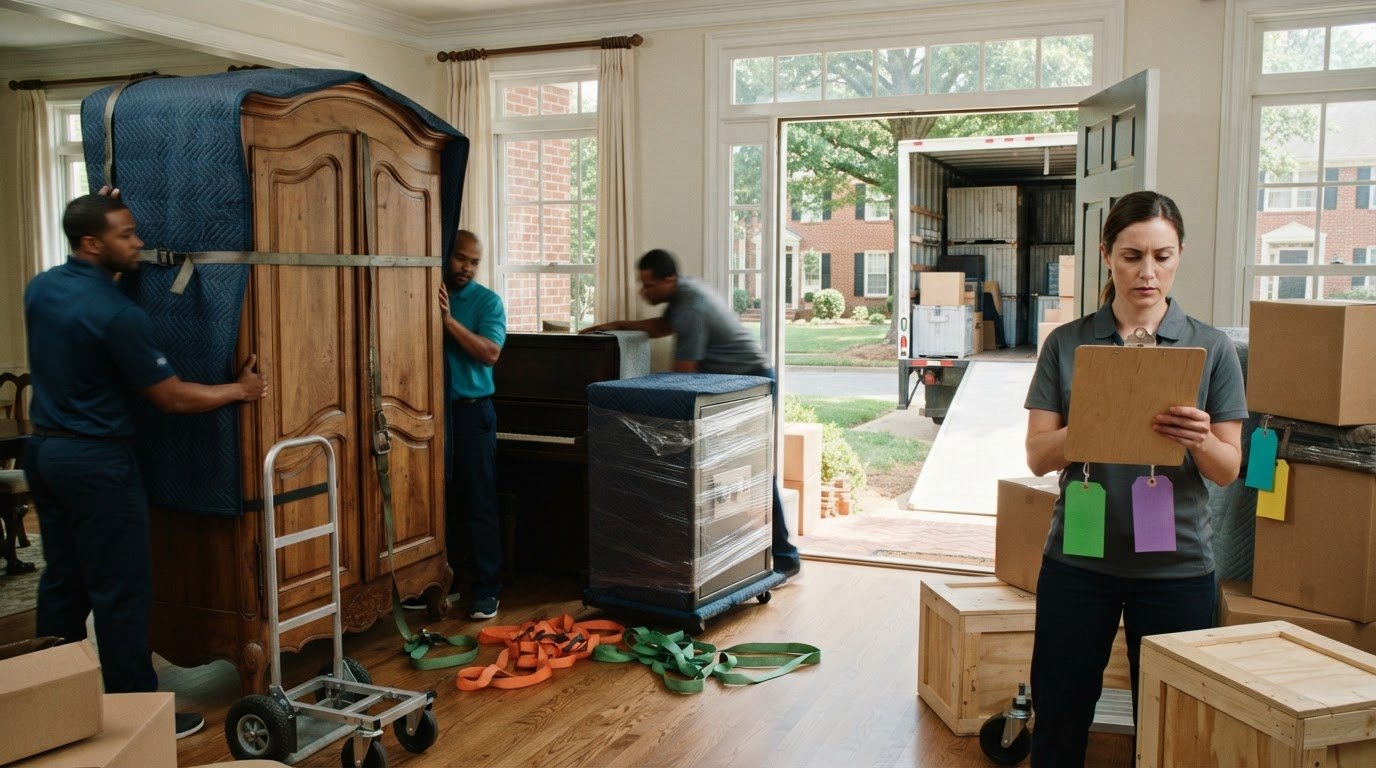
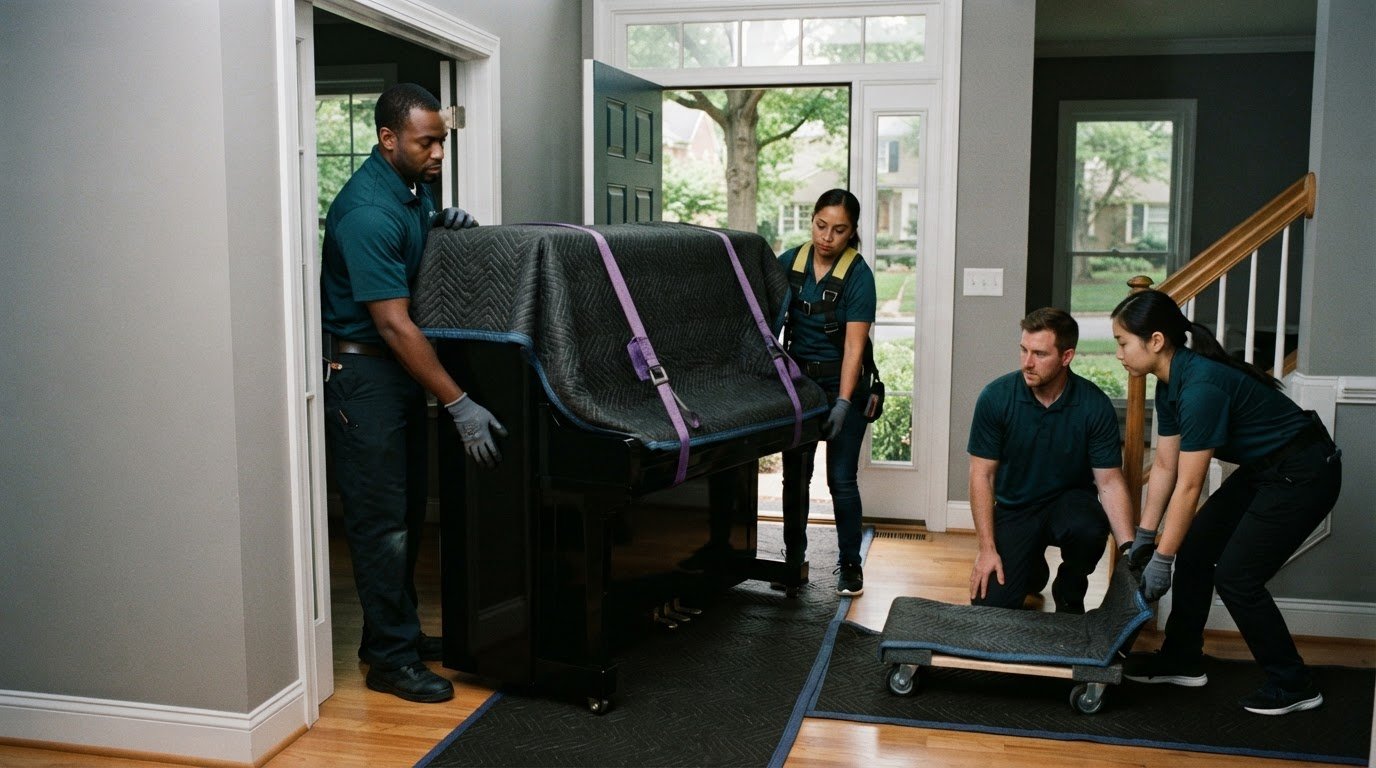
Moving Heavy Items Within the Same Building in South Riding, VA
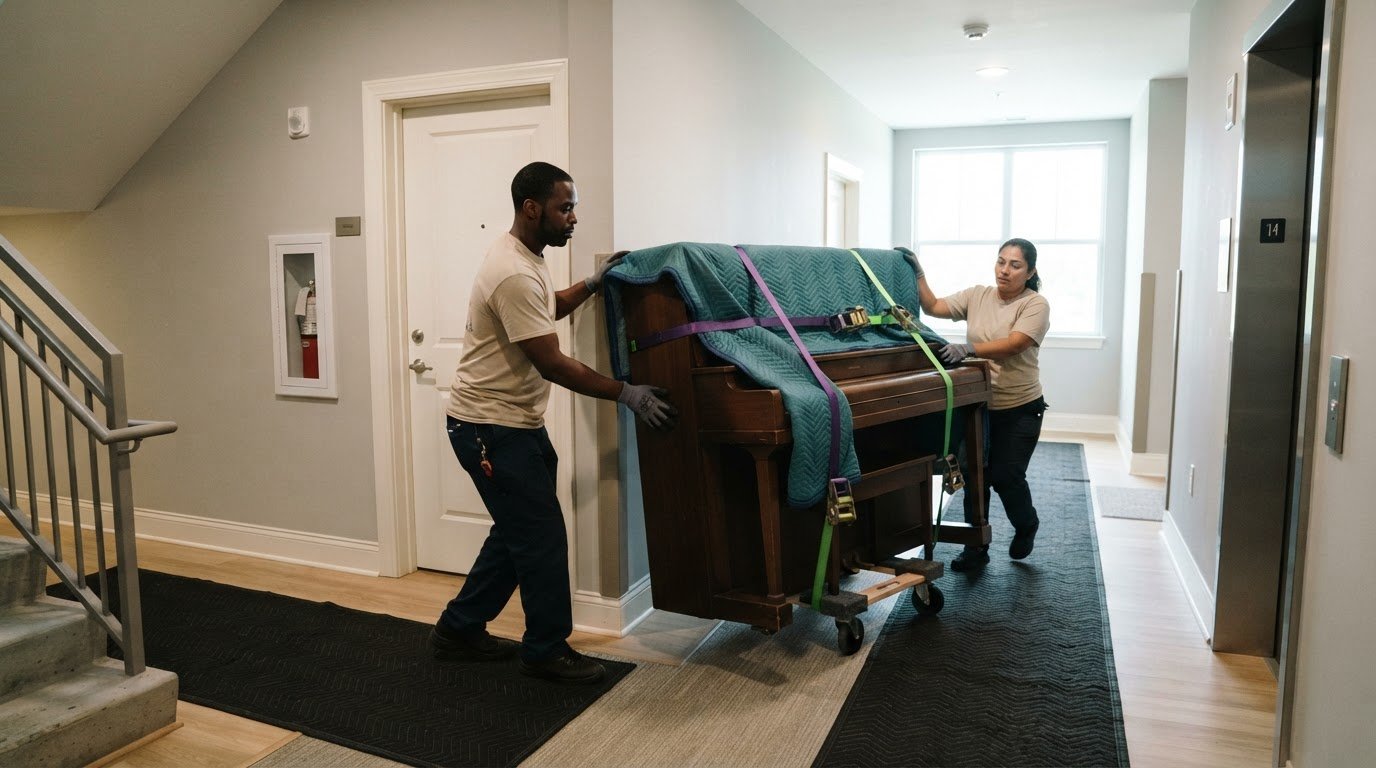
The heaviest part of an in-building move may be the tightest turn, not the lift itself. For moving heavy items within the same building South Riding, the route matters as much as the item. Narrow halls, stairs, elevator limits, and doorways can make a room-to-room or floor-to-floor move harder than expected.
It’s understandable to wonder whether one bulky item really calls for professional help. You don’t need to plan a full household move to get experienced support with a piano, safe, exercise equipment, or another heavy piece. Heavy Furniture Moving helps South Riding residents with focused heavy-item moves and offers sofa hoisting when a sofa won’t fit through a standard entryway or elevator.
This guide explains how to map the route before lifting begins, prepare halls and access points, and reduce the risk of injury or damage. You’ll also learn how to decide whether a DIY lift is manageable or professional help makes more sense. A little planning can help you move the item to its new spot without turning a simple change into a full-house relocation.
Key Takeaways
- Moving heavy items within the same building South Riding can still involve tricky turns, stairs, or elevator access, so assess the route before lifting.
- Measure doorways and note tight corners to spot potential obstacles before moving day.
- Use the item’s size, the route’s difficulty, and the help available to decide whether a DIY lift is sensible.
- Prepare the building by clearing the path and sharing access details with the moving team.
- Get focused help for a demanding lift without planning a full household move.
Moving Heavy Items Within the Same Building in South Riding: What Makes It Challenging?
The item may be staying inside your South Riding building, but it still needs a safe, workable route from its starting point to its new location. A piano moving from one floor to another, a safe shifting to a different room, or exercise equipment being repositioned can all involve tight turns, stairs, elevator access, and doorways. The short distance doesn’t remove the planning; it changes where the challenges are.
An in-building heavy-item move is the planned transfer of a bulky or weighty item from one location to another within the same building, without relocating the rest of the household. That focused scope can be a practical alternative to arranging a full household move. For moving heavy items within the same building South Riding, both the item and the route through the building shape the plan.
Which heavy items may need professional moving help?
Pianos, safes, exercise equipment, and bulky furniture can be difficult to maneuver, even when they only need to move a short distance. Their size, shape, weight distribution, or fragile parts can make them awkward to control through a doorway or around a corner. Heavy Furniture Moving provides residential help with heavy items, including specialized handling for pianos, safes, and exercise equipment.
Manual handling can carry injury risks, so don’t treat a heavy lift as a simple test of strength. The overview of manual handling of loads explains why handling demands and hazards matter. If the item feels unwieldy or the route adds complications, experienced help can take on the demanding lift.
Why the building route matters as much as the item
A clear path on a floor plan can look very different in person. A tight turn may limit how an item can be positioned. Stairs and floor transitions add changes in level, while an elevator’s dimensions and access can determine whether it’s a practical part of the route. The destination matters too: a room may have a narrow entrance or little space to maneuver once the item arrives.
Before planning the move, write down the start point, destination, and any access restrictions. Note the route’s key details:
- Stairs, landings, and changes in floor level
- Hall width, doorway openings, and tight turns
- Elevator access and any limits on using it
- Obstacles or restrictions along the route
These details give movers a clearer picture of the job than distance alone. Share what you know about access so the lift can be planned around the actual path, not assumptions. For a broader look at local moving help, explore this local movers in Fairfax and Northern Virginia guide. A focused in-building move still deserves careful route planning, even when the item never leaves the building.
How to Plan a Heavy-Item Move Between Rooms or Floors in South Riding
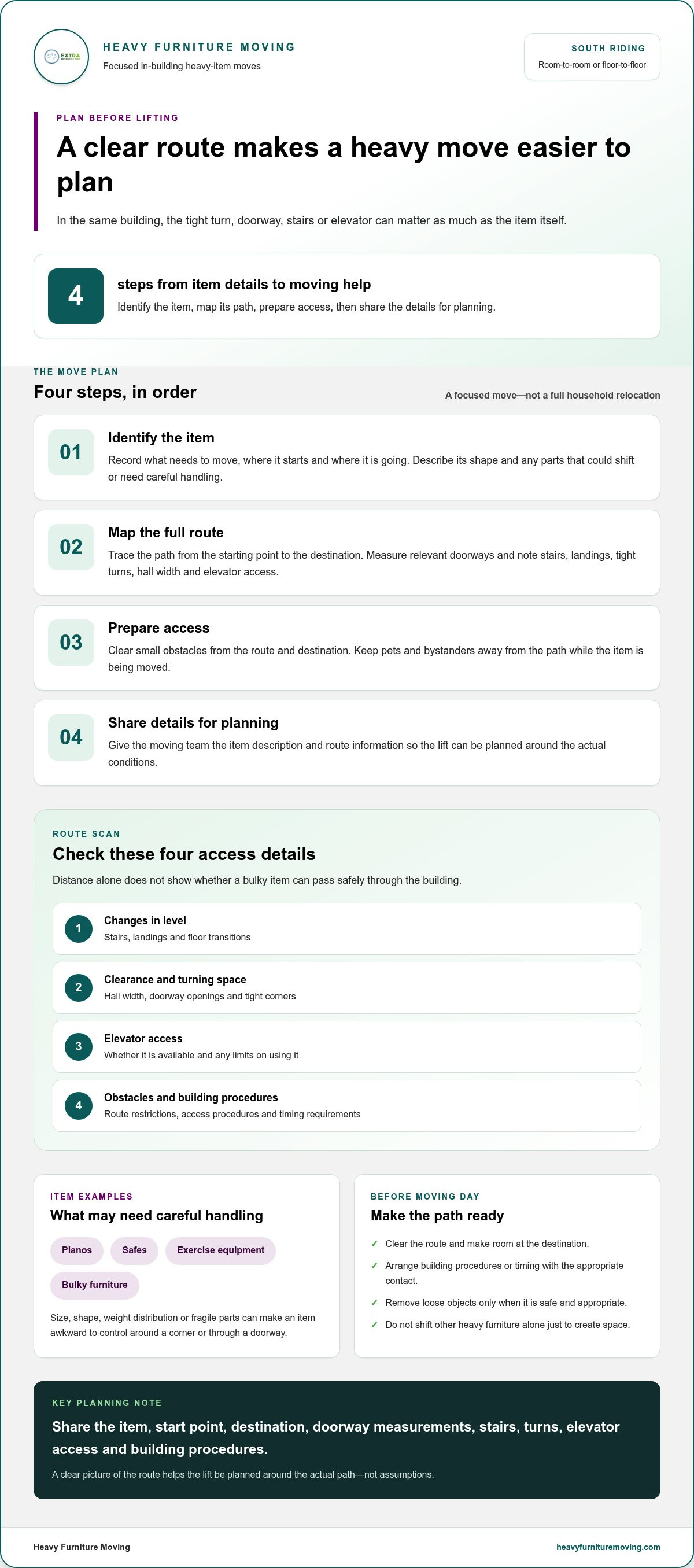
A good plan starts before anyone tries to lift. For moving heavy items within the same building South Riding, work through the job in order: identify the item, map its path, prepare the access points, then arrange the right moving help. This helps you capture important details and gives the team a clearer picture of the item and building.
- Identify the item. Note what needs to move, where it is now, and where it needs to go. Describe its shape and any parts that could shift or need careful handling.
- Map the route. Trace the path from start to destination. Measure relevant doorways and note stairs, landings, tight turns, hall width, and elevator access.
- Prepare access. Clear small obstacles from the route and destination. Keep pets and bystanders away from the path while the item is being moved.
- Arrange moving help. Share the item and route details so the lift can be planned around the actual conditions.
Make a simple route and access checklist
Write down the starting room, destination, and each access point between them. Include doorway measurements, stairs and landings, narrow halls, turns, and whether an elevator is available for the move. Note any building access procedures or timing requirements, then arrange those details with the appropriate building contact before moving day.
Share the item, start point, destination, doorway measurements, stairs, turns, elevator access, and building procedures when arranging the job. That concise checklist gives movers useful context before they arrive. If access details are uncertain, take a closer look at the route rather than assuming a familiar hallway will be easy to pass through with a bulky item.
Prepare the item and destination before moving day
Remove loose objects from the item only when it’s safe and appropriate. Clear the route and make room at the destination, but don’t try to shift other heavy furniture alone just to create space. Keep the planned path open to reduce the chance that someone needs to stop or change direction while carrying.
Exercise equipment is a good example of why preparation needs to fit the item. A treadmill may have components or attachments to account for, so avoid guessing about disassembly. Heavy Furniture Moving provides specialized exercise equipment moving help, and its treadmill moving guide offers more context for planning that kind of move.
Once you’ve recorded the route and prepared the space, share those details with the moving team. South Riding residents planning a focused heavy-item lift can explore heavy-item moving help from Heavy Furniture Moving.
DIY Lifting or Professional Help for Heavy Items in South Riding?
A short move can still demand careful handling. The item may only need to travel from one room to another, but its size, shape, and balance can make it difficult to control. Stairs, narrow turns, or limited help add complexity. For moving heavy items within the same building South Riding, weigh the item and the route together instead of judging the job by distance alone.
Use this comparison to make a practical first assessment. Not every heavy item requires movers. The key is whether the item and route are manageable with the people and support you have.
| Decision factor | DIY may be manageable when… | Professional help may suit the job when… |
|---|---|---|
| Item size and shape | The item is compact and easy for the available helpers to control. | It’s bulky, awkward to grip, or difficult to keep balanced. |
| Handling needs | The item has no delicate or shifting parts that complicate moving it. | Its shape, weight distribution, or fragility calls for experienced handling. |
| Route difficulty | The path is open and doesn’t involve challenging turns or stairs. | The route includes tight corners, floor changes, stairs, or elevator limits. |
| Available assistance | Enough capable helpers are available and comfortable with the task. | Help is limited, or the lift feels beyond the group’s ability. |
When a heavy item may be too difficult to move alone
Pause if the item offers no secure, comfortable grip, feels unstable when shifted, or can’t be guided through the route without awkward reaching or twisting. Stairs and tight turns raise the challenge, especially if you don’t have enough capable helpers. Don’t attempt a lift that feels beyond your ability. A short distance isn’t worth risking control of the item or your footing.
What focused professional moving help can handle
Experienced movers can help with bulky items and routes that require careful coordination, without turning the job into a full household relocation. Heavy Furniture Moving handles residential moves involving pianos, safes, and exercise equipment, and offers sofa hoisting for sofas that can’t fit through standard entryways or elevators. This focused help is for moving an item within the building, not transporting belongings between addresses.
Consider professional help when the item is difficult to grip, the route has obstacles, or available assistance isn’t enough for you to feel confident. A piano on a stair route, a safe with limited maneuvering space, or exercise equipment near a tight doorway can each call for a different plan. Share the item’s location, destination, and route details so the task can be considered as a whole. Choose the approach that fits the actual lift, not just the number of steps between rooms.
How South Riding Residents Can Get the Building Ready for Moving Day
Good preparation makes the route easier to use and helps the moving team understand the job before the lift begins. For moving heavy items within the same building South Riding, focus on three things: clear the path, arrange building access, and share practical details about the item and its destination. You don’t need to prepare for a full household relocation. Get the specific rooms and access points ready for this one move.
Use this checklist as moving day approaches:
- Clear small obstacles from the route and make space at the destination.
- Measure doorways or other narrow points that may affect access.
- Keep pets and bystanders away from the path during the move.
- Arrange any required building entry or elevator access.
- Share the item’s location, destination, and route concerns with the moving team.
- Communicate any access timing requirements that apply to your building.
Keep the route clear and make sure people know when the move is underway. Avoid shifting other heavy pieces on your own just to open a path. If the destination is crowded, move smaller belongings that you can handle comfortably and safely before the team arrives.
Coordinate the building access and move window
Some buildings have procedures for entry, elevator use, or scheduling a move. Arrange any required access in advance with the appropriate building contact, and share relevant timing details with the moving team. Don’t assume the elevator or preferred entrance will be available without coordination.
Think through the full path, not just the room where the item starts. Make sure the route to its new location can be reached without avoidable blockages. A clear move window and access plan help everyone work from the same expectations.
Share the right details when arranging the move
Describe the item in plain terms. Include its general shape and approximate size, along with any concerns such as fragile areas or parts that may shift. Share the floor, exact starting point, destination, and what the route involves, including stairs, turns, narrow doorways, or elevator access.
These details help the team understand the scope of the in-building job and prepare for the conditions on site. Mention access procedures and timing requirements too. Clear information is especially useful when the item is bulky or the route has a difficult transition between rooms or floors. It keeps planning focused on the actual lift, not assumptions.
Ready to arrange focused help for a demanding item move? Explore heavy-item moving help from Heavy Furniture Moving for South Riding residents.
Get Heavy Items Moved Inside Your South Riding Building
You’ve already done the useful first work: identify the item, consider the route, and prepare the access points. Now decide whether the lift feels manageable with the help you have. A focused move inside one building can still call for experienced hands, especially if the item is bulky or the route includes a tight turn, stairs, or limited elevator access. It doesn’t have to become a full household relocation.
For moving heavy items within the same building South Riding residents can arrange help focused on the item itself. Heavy Furniture Moving provides residential assistance with heavy and bulky items, including pianos, safes, and exercise equipment, as well as sofa hoisting for items that cannot fit through standard entryways or elevators. The right details help describe the task clearly.
What to expect when arranging heavy-item help
Be ready to describe what needs to move, where it starts, and where it needs to go. Include the floor, route, and access challenges, such as a narrow doorway, stair landing, or elevator. A plain description of the item’s shape, approximate size, and any handling concerns gives the team a practical picture of the in-building job.
Heavy-item moves can differ from one another. A safe, exercise equipment, piano, or bulky sofa each presents its own handling considerations, and sofa hoisting may help when an item cannot pass through a standard entryway or elevator. Share what you know so the job can be understood in context. You can keep the request focused on one item staying within the building.
Arrange help for your South Riding in-building move
If the item feels unstable to handle, the route seems difficult, or you don’t have enough capable help, take the next step rather than forcing the lift. You don’t need to organize a move between addresses to get assistance with one demanding item. Explain the starting point, destination, and access conditions, and keep the request focused on the lift you need.
Heavy Furniture Moving serves South Riding residents with specialized heavy-item moving help. Share the item and building route when you reach out, including any access details that could shape the job. A clear description is a practical place to start.
Make Space for the Next Chapter in Your Home
A heavy item’s new location can change how a room works day to day. Before moving day, picture how you want to use the space once the item is in place. That decision can help you choose a destination that feels useful, not just convenient, and give the move a clear purpose.
If moving heavy items within the same building South Riding feels like more than you want to manage alone, Heavy Furniture Moving can help with a focused in-building job. The veteran-family owned and operated team brings a hardworking, personal approach to residential moving help. Heavy Furniture Moving serves South Riding and nearby communities including Fairfax, Woodbridge, Manassas, Manassas Park, Aldie, Ashburn, McLean, Vienna, Reston, Centreville, Chantilly, Clifton, Dumfries, Fairfax Station, Haymarket, and Gainesville.
Give yourself room to make the change without turning it into a full household move. Get help moving a heavy item and move forward with a clear plan.
Frequently Asked Questions
Can movers move one heavy item between floors without moving the whole home?
Yes. You can arrange focused help for a single item without booking a full household relocation. For moving heavy items within the same building South Riding residents can describe a room-to-room or floor-to-floor job and explain what makes the item difficult to handle. A piano, safe, or large piece of furniture may need its own plan, even when nothing else in the home is moving.
Do movers need to use an elevator to move heavy furniture in an apartment building?
No, an elevator isn’t automatically required. The practical route depends on the building’s access, the item, and whether stairs or an elevator can be used. Tell the moving team about elevator availability and restrictions, and share relevant access details with building staff. If the elevator isn’t part of the route, explain what stairs or landings the item would need to pass.
Can a sofa be moved if it does not fit through the doorway?
Yes, sofa hoisting is an option for sofas that cannot fit through standard entryways or elevators. Describe the doorway or access point that’s causing the problem, along with the sofa’s approximate size and destination. Don’t force the sofa through a tight opening or take it apart without knowing whether that’s appropriate. Clear information helps the team understand the challenge.
Should I empty furniture before moving it to another room?
Often, removing loose contents can make furniture easier to prepare, but use judgment based on the item. Take out belongings that could shift or fall, and leave built-in or attached parts alone unless you know they’re meant to be removed. For delicate, unusual, or valuable furniture, describe its condition and contents when arranging help. Avoid lifting drawers or components separately if they feel awkward or unstable.
What information should I provide for a heavy-item move within my building?
Describe the item, including its general dimensions, shape, and any fragile or loose parts. Explain where it is now and where it needs to go, and mention anything unusual, such as a narrow approach or restricted access. If you have a clear photo, it may help illustrate the item or a tricky spot. For a South Riding move, include building-specific instructions you’ve received.
Can movers help relocate exercise equipment between floors?
Yes, Heavy Furniture Moving provides exercise equipment moving help, including for a move within a building. Share what type of equipment it is and whether it’s assembled, along with the floor-to-floor route. Equipment can have different shapes and parts, so describe anything that may affect how it can be handled. You can arrange help for the equipment itself without moving the rest of your home.
Do I need to reserve an elevator for an in-building furniture move?
Reserve one if your building requires it or uses scheduled elevator access for moves. Building procedures vary, so check the applicable instructions and arrange any required reservation or entry access in advance. If you won’t use an elevator, communicate that too. Knowing the access plan helps prevent an avoidable delay and lets the move be planned around the route you’ll actually use.
Frequently Asked Questions
Pianos, safes, exercise equipment, and bulky furniture can be difficult to maneuver, even when they only need to move a short distance. Their size, shape, weight distribution, or fragile parts can make them awkward to control through a doorway or around a corner. Heavy Furniture Moving provides residential help with heavy items, including specialized handling for pianos, safes, and exercise equipment. Manual handling can carry injury risks, so don’t treat a heavy lift as a simple test of strength. The overview of manual handling of loads explains why handling demands and hazards matter. If the item feels unwieldy or the route adds complications, experienced help can take on the demanding lift.
Yes. You can arrange focused help for a single item without booking a full household relocation. For moving heavy items within the same building South Riding residents can describe a room-to-room or floor-to-floor job and explain what makes the item difficult to handle. A piano, safe, or large piece of furniture may need its own plan, even when nothing else in the home is moving.
No, an elevator isn’t automatically required. The practical route depends on the building’s access, the item, and whether stairs or an elevator can be used. Tell the moving team about elevator availability and restrictions, and share relevant access details with building staff. If the elevator isn’t part of the route, explain what stairs or landings the item would need to pass.
Yes, sofa hoisting is an option for sofas that cannot fit through standard entryways or elevators. Describe the doorway or access point that’s causing the problem, along with the sofa’s approximate size and destination. Don’t force the sofa through a tight opening or take it apart without knowing whether that’s appropriate. Clear information helps the team understand the challenge.
Often, removing loose contents can make furniture easier to prepare, but use judgment based on the item. Take out belongings that could shift or fall, and leave built-in or attached parts alone unless you know they’re meant to be removed. For delicate, unusual, or valuable furniture, describe its condition and contents when arranging help. Avoid lifting drawers or components separately if they feel awkward or unstable.
Describe the item, including its general dimensions, shape, and any fragile or loose parts. Explain where it is now and where it needs to go, and mention anything unusual, such as a narrow approach or restricted access. If you have a clear photo, it may help illustrate the item or a tricky spot. For a South Riding move, include building-specific instructions you’ve received.
Yes, Heavy Furniture Moving provides exercise equipment moving help, including for a move within a building. Share what type of equipment it is and whether it’s assembled, along with the floor-to-floor route. Equipment can have different shapes and parts, so describe anything that may affect how it can be handled. You can arrange help for the equipment itself without moving the rest of your home.
Reserve one if your building requires it or uses scheduled elevator access for moves. Building procedures vary, so check the applicable instructions and arrange any required reservation or entry access in advance. If you won’t use an elevator, communicate that too. Knowing the access plan helps prevent an avoidable delay and lets the move be planned around the route you’ll actually use.