Fairfax Piano Removal Service: Careful, Local Help for Your Move
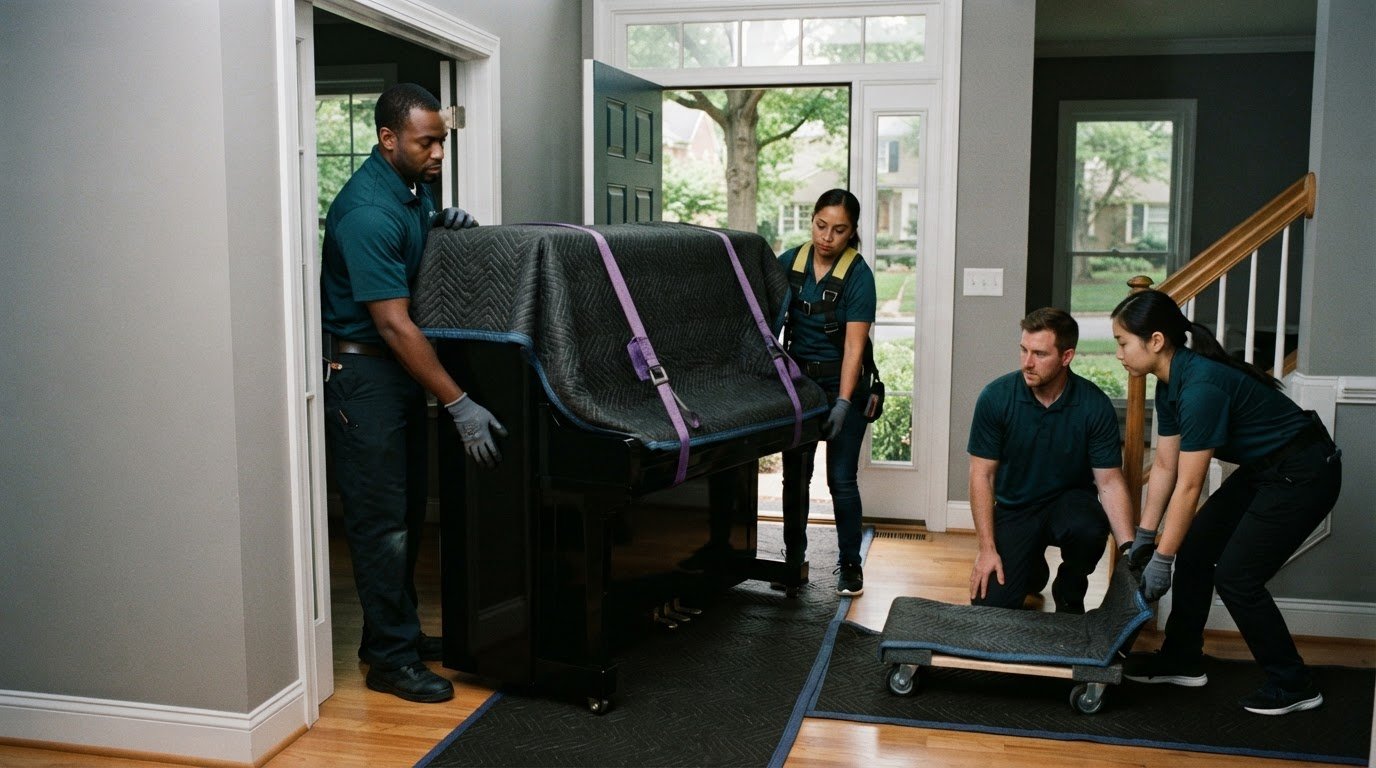
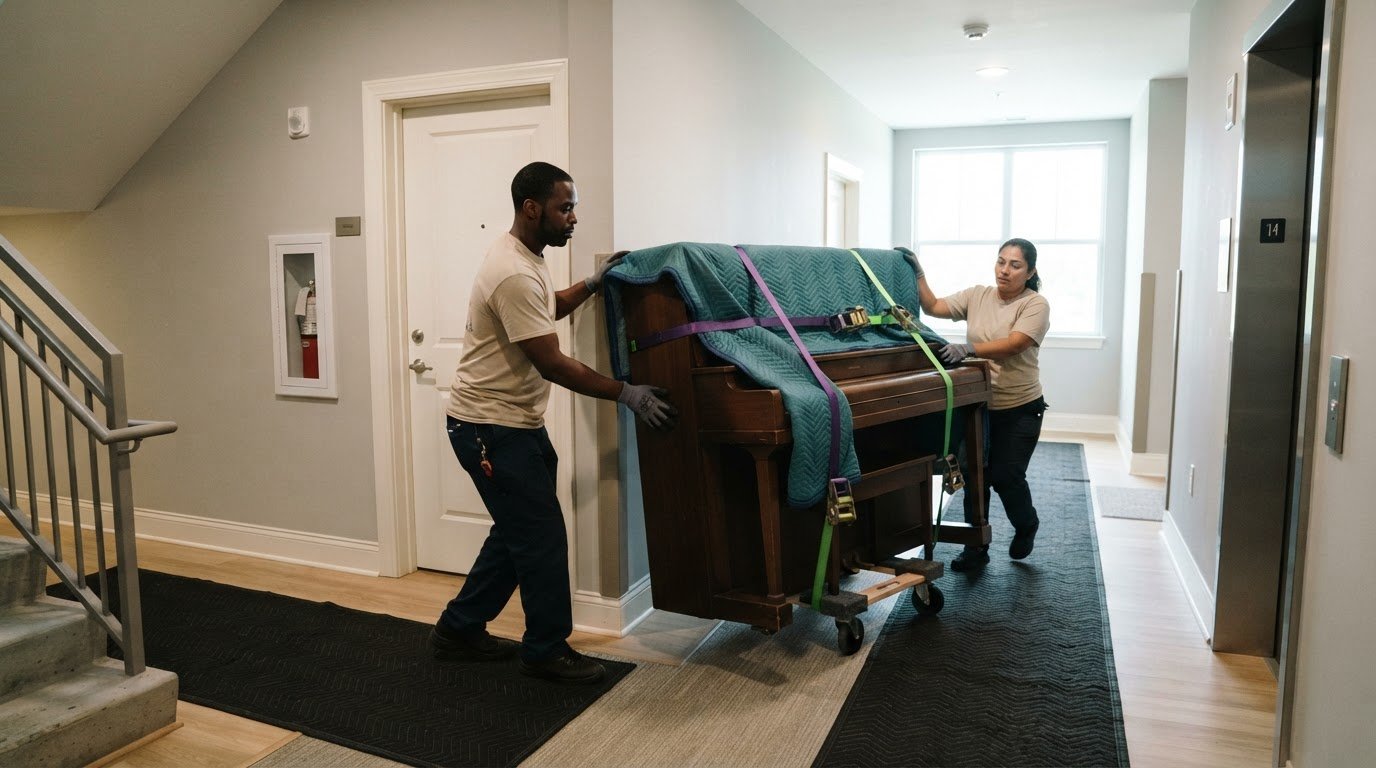
What makes a piano move go smoothly: brute strength, or a plan for every doorway, stairwell, and landing? A piano is heavy, awkward to handle, and too valuable to treat like ordinary furniture. A Fairfax piano removal service can take on the demanding lift while planning around your home’s layout.
It’s natural to wonder whether the piano will fit through a narrow hall, clear the stairs, or reach its new room. The piano type, route through each property, and final placement all help shape the plan. Heavy Furniture Moving handles piano moves as specialized heavy-item work, serving Fairfax and nearby communities including Vienna, Reston, Centreville, Chantilly, Clifton, and Fairfax Station.
In this guide, you’ll learn what details to share when arranging a move, which access conditions can affect the plan, and how to prepare the route and destination. Use these practical steps to reduce guesswork and help the moving team understand the demands of your piano move.
Key Takeaways
- A Fairfax piano removal service can handle the heavy lifting involved in relocating your instrument.
- Share the piano type and approximate dimensions, then describe the full route, including turns, thresholds, and stairs.
- Compare moving plans based on the instrument, access challenges, and destination, not just a general claim about crew size or speed.
- Before moving day, confirm both addresses and clear loose items from the planned path.
- Give Heavy Furniture Moving the key details about your piano, property access, and preferred timing so the move can be planned around your home.
Fairfax Piano Removal Service: Relocation, Removal, and the Right Kind of Help
A piano move can feel daunting before anyone lifts a finger. The instrument is heavy, bulky, and awkward to guide through a home, especially when the route includes tight corners or stairs. It’s not like shifting a chair across the room. A professional piano removal service plans the move around the instrument and the path between its current location and destination.
The word “removal” can mean different things. Some people want a piano moved to another room or home. Others want to clear out a piano they no longer plan to keep. Those are different goals, so state the outcome you need when arranging help. This guide focuses on moving a piano in Fairfax and nearby Northern Virginia communities, including Vienna, Reston, Centreville, Chantilly, Clifton, and Fairfax Station.
Fairfax County includes a range of communities and residential settings. The overview of Fairfax County, Virginia offers geographic context, but the practical details of your move depend on the pickup, destination, and access at each property.
Are you relocating a piano or clearing one out?
Start by naming the destination. Is the piano moving to another room in the same home, a different home, or another location? Or do you want it cleared from the property? Relocation means the piano has a destination. Clearing it out is a different goal, so don’t assume the moving plan is the same.
For a move, describe where the piano is now and where it needs to go. Include whether the route passes through a doorway, hallway, stairwell, or shared building area. A specific destination helps the moving team plan for the job instead of making assumptions about what “removal” means.
Why piano moves need more planning than ordinary furniture moves
A piano’s weight, size, and shape affect how it can be handled and turned. A clear hallway may lead to a tight corner, while a wide entrance may open onto stairs or an elevator. Parking and loading access can also affect the route between the home and the moving vehicle. Each of these details can change the practical steps involved.
Piano moving requires planning for both the instrument and its route. Look beyond the room where the piano sits. Think through the full path to its destination, including turns, thresholds, stairs, elevators, and access outside. You don’t need to solve every challenge yourself. Share what you know so the move can be planned as specialized heavy-item handling, not an ordinary furniture pickup.
Planning a Fairfax Piano Move: Piano Type, Route, and Access
A useful moving plan starts with a clear picture of the piano and the path it must travel. Identify the instrument as an upright, grand, digital piano, or another type. If you know its approximate dimensions, share them too. You don’t need to measure every detail to get started, but the piano’s size and shape help describe the job.
What piano and property details should you gather?
Write down the piano type, pickup address, destination address, and the rooms or floors involved at both locations. Trace the route from the piano’s current spot to the exit, then from the destination entrance to its new place. Note narrow doorways, sharp turns, thresholds, stairs, and landings. If an elevator is part of the route, describe its location and which floors it serves.
Think about the whole route, not just the nearest doorway. The piano may need to pass through a living room, hallway, shared entrance, or vestibule before reaching an exit. At the destination, mention any tight approach or turn that could affect placement. If a section is hard to explain, a brief written description can help make the challenge clear.
Piano type and property access shape the moving plan from the first step to the final placement.
How Fairfax home access can affect the moving plan
Every property has its own layout. A detached home may have a direct entrance, while a townhouse could have several levels or a narrow stairwell. An apartment or condominium may involve shared entrances, elevators, designated loading areas, or building move procedures. Describe the pickup and destination separately rather than assuming they have the same access.
- Entry points: Identify the door the piano will travel through, including side or rear entrances if they’re part of the route.
- Stairs and elevators: Note the number and layout of stairs, elevator availability, and the floors involved.
- Parking and loading: Explain where a moving vehicle can access the property and whether parking or loading arrangements affect the route.
- Shared areas: Flag building procedures or access rules that could shape the timing or path through common spaces.
These details turn a general request into a practical description of the property. Heavy Furniture Moving serves Fairfax and nearby communities including Vienna, Reston, Centreville, Chantilly, Clifton, and Fairfax Station. When arranging a Fairfax piano removal service, describe the piano and access clearly to give the team a useful starting point. You can also explore local piano moving help as you organize the details.
Choosing Piano Moving Help in Fairfax: Compare the Job, Not Just the Promise
A confident-sounding promise doesn’t tell you whether a moving plan fits your home. Compare the specifics: does the plan account for the piano, the route at both locations, and the room where it needs to go? A general claim about speed or crew size can’t answer those questions on its own. The layout of the property matters.
Use this framework to describe the job and see whether the plan addresses its practical details:
Piano type: Note whether it’s an upright, grand, digital, or another style. The plan should reflect the instrument you’re moving, rather than treating every piano as the same item.
Floors: Describe the floors at pickup and delivery. Include stairs or elevator access at each address, since the two locations may have different layouts.
Route constraints: Identify narrow turns, doorways, thresholds, shared entrances, and loading access. Consider the full path, not just the room where the piano sits.
Destination: Name the room or area where the piano will go. Explain any tight approach or final turn so placement is part of the plan from the start.
Questions that clarify whether the moving plan fits your job
Ask direct questions that bring the details into focus. Does the plan account for the piano style and route between pickup and destination? Does it include stairs, tight turns, elevators, and entry access at both properties? Is the destination and intended placement clear before moving day? Specific answers make it easier to see whether the plan reflects your job.
For example, “there are stairs” is less useful than explaining where they are, which floors they connect, and whether a landing or turn affects the route. Give the same level of detail about elevator access and building entrances. That keeps the conversation focused on the work instead of a general estimate of effort.
When an ordinary household move may not fit the piano job
A household move involves many items, each with its own packing, loading, and placement needs. A piano is one item, but its weight, shape, and route call for focused planning. Even if it’s moving as part of a larger household relocation, make sure the piano-specific details aren’t lost in the broader job description.
General moving logistics cover the home, load, and destination. Piano planning also needs to account for how this particular instrument will pass through each part of the property and where it will be placed. That distinction matters when choosing a Fairfax piano removal service.
Getting Your Fairfax Home Ready for Piano Removal
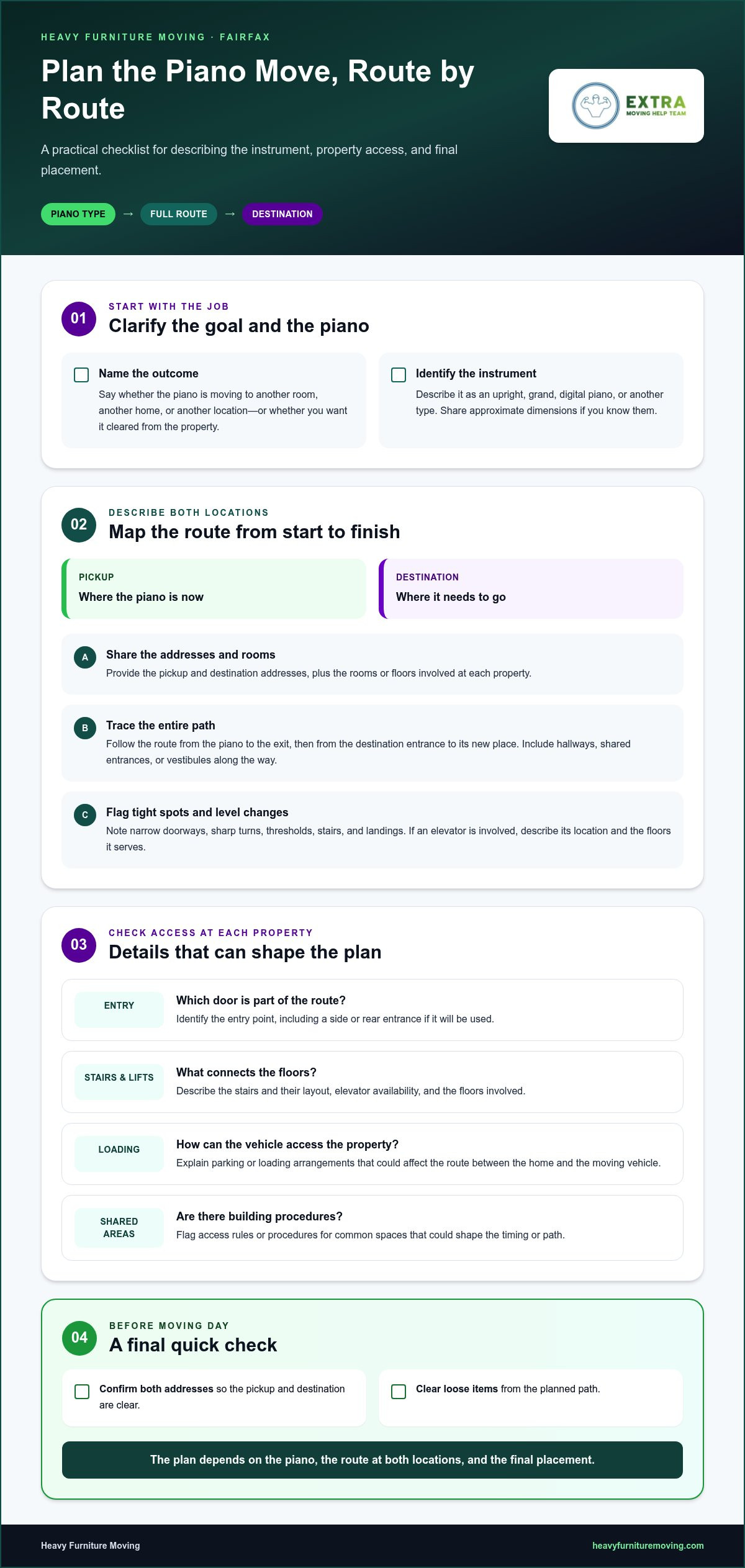
A little preparation helps keep moving day focused on the instrument and its route. You don’t need to handle the piano yourself. Confirm the locations, describe access challenges, and clear loose items from the path where practical.
- Confirm both addresses. Write down the pickup and destination addresses, including the specific building or entrance if it could be unclear.
- Describe the piano and its location. Note its style and where it sits now, such as an upstairs room, a finished basement, or a space near the front entrance.
- Trace the full route. Record stairs, landings, tight turns, narrow doorways, thresholds, and elevator access from the piano to the exit, then from the destination entrance to its new spot.
- Check building arrangements. If you live in an apartment or condominium, review move procedures and share relevant access details, such as entrance instructions or elevator arrangements.
- Note parking and loading access. Explain where a moving vehicle can reach the property and mention any practical limits that could affect loading or the route to the entrance.
Prepare the route without attempting a risky lift
Once you’ve mapped the path, clear small obstacles from hallways and doorway approaches where possible. Move shoes, toys, small tables, and other loose items out of the way. Keep children, pets, and bystanders clear of the planned route so the team has room to work.
Leave the piano in place. Don’t try to drag it, improvise a lift, or take it apart. A heavy, awkward instrument calls for focused handling, and a do-it-yourself adjustment can create extra risk for you, the piano, or the property. Your part is to prepare the space and share what you know.
Share the details that help the team plan
Clear information turns a general request into a workable moving plan. Describe the piano, its starting point, intended destination and placement, and any stairs, tight turns, elevator access, or limited parking along the way. For shared buildings, include relevant entry instructions and move procedures so the route is understood at both ends.
Clear route information helps movers plan a piano move more effectively. If a passage is hard to explain, say what makes it challenging, such as a sharp turn after a narrow doorway. That detail helps the team plan around the specific property rather than rely on assumptions.
Preparing for a Fairfax piano removal service can be straightforward: confirm the addresses, clear the path, and share the access details. Arrange your Fairfax piano move with Heavy Furniture Moving, a local residential mover that provides specialized heavy-item handling, including piano moving.
Arrange Your Fairfax Piano Removal Service with Heavy Furniture Moving
Heavy Furniture Moving provides residential moving services with specialized heavy-item handling, including piano moving. A piano isn’t an ordinary household item: its size, weight, and route through the property all matter. Share a clear picture of the move so the team can consider the instrument and access details together.
Heavy Furniture Moving serves Fairfax and nearby Northern Virginia communities, including Vienna, Reston, Centreville, Chantilly, Clifton, and Fairfax Station. Whether your piano is changing rooms within one home or traveling between addresses, start by explaining what’s being moved, where it is now, and where it needs to go.
What to include when requesting piano moving help
Gather the details below before requesting information. Approximate dimensions can help describe the piano if you know them, but you can still explain the job without measurements.
- Piano style: Identify whether it’s an upright, grand, digital, or another type.
- Pickup and destination: Provide both locations and clarify whether the move is within one home, between homes, or across a local route.
- Access at each address: Describe the floors involved, stairs, elevators, narrow doorways, turns, and entrances.
- Parking and loading: Note where a moving vehicle can access the property and any practical limits near the loading area.
- Timing needs: Share your preferred timing so the request reflects your schedule.
Be specific about how the piano will leave its current room and reach its new place. For example, mention if it must pass through a shared entrance, move between floors, or follow a narrow hallway. Include relevant building procedures for an apartment or condominium. These details describe the actual job more clearly than a general label like “piano move.”
Choose a local team for a demanding household move
Heavy Furniture Moving is veteran-family owned and operated, with residential moving services focused on specialized heavy-item handling. Piano planning involves more than loading the instrument into a moving vehicle. The route through the home and the intended placement at the destination are part of the job, too.
You don’t need every detail perfectly measured before you reach out. Start with the piano type, addresses, access challenges, and preferred timing. A clear description gives the conversation a practical foundation for arranging your Fairfax piano removal service.
Request information about your piano move and share the pickup, destination, and property access details with Heavy Furniture Moving.
Take the Next Step Toward a Well-Planned Piano Move
A piano move doesn’t need to feel like one more task to solve alone. Start by deciding what you need the move to accomplish and what information will help you prepare. Share the details you have, such as the piano type, its route through the property, and its destination.
Choosing a Fairfax piano removal service is about more than arranging a lift. It means planning for a demanding household move and the route that fits your property. A clear description helps turn a complicated job into a manageable next step.
Arrange your piano move with Heavy Furniture Moving and share your pickup, destination, and access details.
Frequently Asked Questions
Can a piano be moved within the same house?
Yes, a piano can be moved from one room to another, but an in-home move still needs a clear plan. Its weight and shape can make a short trip difficult if the route includes a sharp turn, delicate flooring, or a stairway. Tell the moving team where it sits now and the exact room or spot where you want it placed. Don’t lift or drag it yourself.
How do I prepare my home for piano removal?
Clear small items from the path, then walk the route from the piano to the exit and onward to its new position. Note obstacles such as a narrow hall, a landing, an elevator, or limited parking near the entrance. Keep children, pets, and other people away from the route during the move. Share those details with the moving team instead of trying to shift the piano yourself.
Can piano movers handle stairs in Fairfax homes?
Stairs are an important part of the route to describe before the move. Whether a particular staircase can be managed depends on the job details. Note how many flights there are, where landings and turns occur, and how the stairs connect to the rooms and entrances. Share access information for both addresses so the route can be considered without assumptions.
What information should I provide when booking piano moving help?
Share the piano type, pickup and destination addresses, floors, stairs, elevator access, tight turns, and your timing needs. Add parking or building access details if they affect entry or loading. A Fairfax piano removal service can use this information to understand the specific job and property layout. Heavy Furniture Moving serves Fairfax and communities including Woodbridge, Manassas, Manassas Park, Aldie, Ashburn, McLean, Vienna, Reston, Centreville, Chantilly, Clifton, Dumfries, South Riding, Fairfax Station, Haymarket, and Gainesville.
Does a piano need tuning after it is moved?
Moving can affect a piano’s tuning, but whether it needs attention depends on the instrument and the conditions during and after the move. Give it time to settle into its new environment before arranging an assessment with a piano technician. A common recommendation is to allow 24 to 72 hours before tuning, so the instrument can adjust to its surroundings.
Does piano removal mean moving the piano or disposing of it?
People use “piano removal” to mean either relocating an instrument or clearing it from a property. This article focuses on moving a piano to another room, home, or destination. For example, if the piano is going to a family member, share that destination as part of the moving plan. State your intended outcome clearly when describing the job; don’t assume “removal” alone explains what you need.
Frequently Asked Questions
Start by naming the destination. Is the piano moving to another room in the same home, a different home, or another location? Or do you want it cleared from the property? Relocation means the piano has a destination. Clearing it out is a different goal, so don’t assume the moving plan is the same. For a move, describe where the piano is now and where it needs to go. Include whether the route passes through a doorway, hallway, stairwell, or shared building area. A specific destination helps the moving team plan for the job instead of making assumptions about what “removal” means.
Write down the piano type, pickup address, destination address, and the rooms or floors involved at both locations. Trace the route from the piano’s current spot to the exit, then from the destination entrance to its new place. Note narrow doorways, sharp turns, thresholds, stairs, and landings. If an elevator is part of the route, describe its location and which floors it serves. Think about the whole route, not just the nearest doorway. The piano may need to pass through a living room, hallway, shared entrance, or vestibule before reaching an exit. At the destination, mention any tight approach or turn that could affect placement. If a section is hard to explain, a brief written description can help make the challenge clear. Piano type and property access shape the moving plan from the first step to the final placement.
Yes, a piano can be moved from one room to another, but an in-home move still needs a clear plan. Its weight and shape can make a short trip difficult if the route includes a sharp turn, delicate flooring, or a stairway. Tell the moving team where it sits now and the exact room or spot where you want it placed. Don’t lift or drag it yourself.
Clear small items from the path, then walk the route from the piano to the exit and onward to its new position. Note obstacles such as a narrow hall, a landing, an elevator, or limited parking near the entrance. Keep children, pets, and other people away from the route during the move. Share those details with the moving team instead of trying to shift the piano yourself.
Stairs are an important part of the route to describe before the move. Whether a particular staircase can be managed depends on the job details. Note how many flights there are, where landings and turns occur, and how the stairs connect to the rooms and entrances. Share access information for both addresses so the route can be considered without assumptions.
Share the piano type, pickup and destination addresses, floors, stairs, elevator access, tight turns, and your timing needs. Add parking or building access details if they affect entry or loading. A Fairfax piano removal service can use this information to understand the specific job and property layout. Heavy Furniture Moving serves Fairfax and communities including Woodbridge, Manassas, Manassas Park, Aldie, Ashburn, McLean, Vienna, Reston, Centreville, Chantilly, Clifton, Dumfries, South Riding, Fairfax Station, Haymarket, and Gainesville.
Moving can affect a piano’s tuning, but whether it needs attention depends on the instrument and the conditions during and after the move. Give it time to settle into its new environment before arranging an assessment with a piano technician. A common recommendation is to allow 24 to 72 hours before tuning, so the instrument can adjust to its surroundings.
People use “piano removal” to mean either relocating an instrument or clearing it from a property. This article focuses on moving a piano to another room, home, or destination. For example, if the piano is going to a family member, share that destination as part of the moving plan. State your intended outcome clearly when describing the job; don’t assume “removal” alone explains what you need.