Haymarket Professional Packing Help: Choose the Right Moving Support

What if you could hand off the most time-consuming parts of packing without giving up control of what matters most? Haymarket professional packing help can take pressure off a move that’s already competing with work, family, and a long list of decisions. The key is choosing the right scope: you don’t have to pack every box yourself or delegate the whole home by default.
It’s reasonable to want fragile belongings handled with care and personal or essential items packed according to clear instructions. At the same time, packing every room alone can take time away from other moving tasks. This guide compares self-packing, help with selected tasks, and broader packing support so you can choose a plan that fits your household and schedule.
You’ll learn what to sort and set aside before packing begins, how to communicate priorities, and how packing support can fit alongside residential moving help. Heavy Furniture Moving provides residential packing and unpacking support in Haymarket and nearby communities, including Fairfax, Woodbridge, Manassas, Manassas Park, Aldie, Ashburn, McLean, Vienna, Reston, Centreville, Chantilly, Clifton, Dumfries, South Riding, Fairfax Station, and Gainesville. A clear plan lets you stay involved in important decisions while delegating the work that’s weighing on you.
Key Takeaways
- Haymarket professional packing help can cover a defined part of your move, so you don’t have to choose between packing everything yourself and handing over the whole home.
- Compare self-packing, selected-task support, and broader packing help by weighing your available time, desired control, and need for unpacking.
- Set aside essentials, identify fragile belongings, and share clear priorities before packing begins.
- Include room priorities and relevant access details in your move plan to help organize the packing work.
- Heavy Furniture Moving provides residential packing and unpacking support that can fit your Haymarket move alongside other moving help.
When Does Haymarket Professional Packing Help Make a Move Easier?
Packing a household takes more than filling boxes. You need time to sort, wrap, label, and keep track of belongings while managing work, family responsibilities, and move logistics. If packing is pushing other important tasks aside, Haymarket professional packing help can take on a defined share of the work. You can delegate selected rooms or tasks without handing over the entire home.
Professional packing help is hands-on support for preparing household belongings to move, with the scope shaped around the tasks you want to delegate. You might want help across the home or only with a few areas that take extra time and attention. Start by identifying the work creating the biggest bottleneck, then focus support there.
Moving companies can handle different parts of a move, and this general overview of moving company services provides useful context. For your household, the practical question is which packing jobs are taking time or energy away from the rest of your moving plan.
- Your available packing time is limited.
- You have many belongings to sort and prepare.
- Your schedule is already crowded with move-related tasks.
Signs it may be time to get packing help
When packing competes with move preparations, important details can get squeezed between workdays and family commitments. A large volume of belongings can turn a simple plan into a demanding room-by-room project. Bulky household items can add physical effort, too. Support with selected packing work can reduce the labor and organizational load while leaving household decisions in your hands.
Look at the work still ahead, not just the number of rooms. A packed schedule may make help worthwhile even if you plan to handle most belongings yourself. A home with more belongings may need support because sorting and preparation require sustained effort. In either case, define the tasks you want to delegate instead of treating packing as an all-or-nothing choice.
What packing help can, and cannot, solve
Packing support addresses the labor of preparing belongings for a move. It doesn’t decide what to keep, donate, or take to your next home. Those choices stay with you. Before work begins, identify belongings that need special attention and explain your priorities. Clear instructions help keep the packing work aligned with your plans, especially for fragile, personal, or essential items.
Think of packing as one part of the move, not a substitute for planning the household transition. Decide what is going, what should stay accessible, and which items need specific instructions. Set aside anything you don’t want packed, then describe where hands-on help would make the biggest difference. That gives you room to delegate the physical work without handing over your decisions.
What Can Professional Packing and Unpacking in Haymarket Cover?
Professional packing support means hands-on help preparing household belongings for a move. It can focus on the rooms or tasks that need the most attention rather than automatically covering every item in the home. Unpacking is a separate part of the plan: it helps manage belongings after they arrive. Haymarket professional packing help can be shaped around the work you want to delegate while you stay in control of what matters and where support is needed.
Packing assistance covers the work of preparing belongings for a move; deciding what the household owns and what should go is still your call. Make those decisions before packing begins. Keep belongings you plan to donate, leave behind, or access during the move separate from the items included in the packing work.
Packing support: set a clear scope
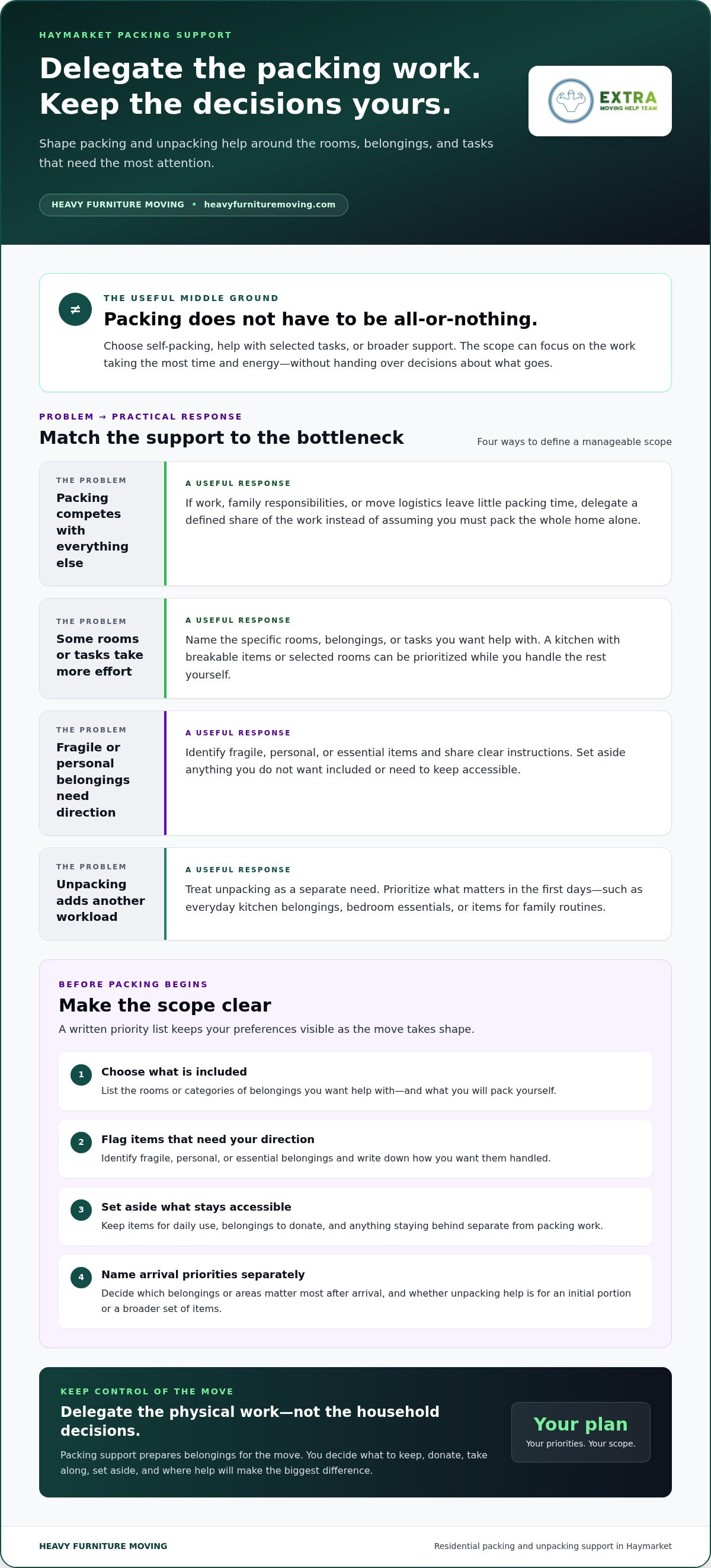
Start by identifying the rooms, belongings, or tasks that create the biggest workload. You might prioritize a kitchen with many breakable items, a room filled with personal belongings, or selected rooms while handling the rest yourself. A written priority list gives everyone a shared reference and keeps your preferences visible as the move takes shape.
Make the scope specific. Instead of saying “help with the house,” note which rooms or belongings you want included and which should remain under your care. Flag fragile or personally important items and write down instructions for how you want them prepared. For example, identify belongings that should stay accessible for daily use or remain separate from general household packing.
- List the rooms or categories of belongings you want help with.
- Identify fragile, personal, or essential items that need your direction.
- Mark what you’re packing yourself or setting aside from the move.
Unpacking support: make arrival more manageable
Unpacking is its own workload, so include it as a separate need in your move plan. Think about what will matter most in the first days: everyday kitchen belongings, bedroom essentials, or items needed for family routines. Prioritize those areas, then decide whether you want help with a broader set of belongings or only an initial portion. This gives unpacking support a clear purpose without assuming every room will be arranged or completed in a particular way.
Keep arrival priorities practical. If you’d rather unpack personal belongings yourself, say so. If getting key household areas underway is your main concern, describe those priorities and the support you want. Heavy Furniture Moving provides residential packing and unpacking support in Haymarket, tailored to the project. Outline the tasks that would make your move easier, then explore residential packing and unpacking support as part of your moving plan.
Self-Packing, Partial Help, or Full-Service Packing: Which Fits Your Haymarket Move?
The right packing plan depends on how much time you have, which tasks you want to keep in your hands, and how much work your household can take on. Haymarket professional packing help doesn’t have to mean giving up control or delegating every room. Compare options by looking at your available time and workload, what you want to manage yourself, and whether you’ll need unpacking help after arrival.
| Approach | Available time | Control and workload | Unpacking need |
|---|---|---|---|
| Self-packing | Best suited to a schedule with room for packing work. | You manage the packing and make each decision directly. | Plan to handle unpacking yourself unless you arrange separate support. |
| Help with selected tasks | Useful when time is tight for particular rooms or belongings. | You keep chosen tasks and delegate specific parts of the workload. | Decide whether you want separate help with priority areas after the move. |
| Broader professional packing support | Worth considering when the overall packing workload is hard to fit in. | You set priorities while delegating a wider share of the physical work. | Include unpacking as a separate planning need, based on your arrival priorities. |
When self-packing or shared packing may fit
If you have time and prefer to prepare most belongings yourself, self-packing may suit your move. Shared packing offers another option: keep personal or straightforward tasks in your own hands and delegate the work that takes more effort. For example, you might pack items you use every day while getting help with selected rooms. Room priorities and clear instructions keep decisions yours.
When professional packing support may fit better
A larger volume of belongings or a tighter schedule can make hands-on support worth considering. You don’t have to jump from packing everything yourself to delegating the whole home. Selected-task support bridges that gap: name the work that’s hardest to manage, then retain the rest. If arrival tasks also feel demanding, include unpacking as a separate need and identify which belongings or rooms matter first.
Base the decision on the actual workload. Which tasks fit your schedule? Which are you comfortable handling? Where would help free up time and attention for other move preparations? Write down what you plan to manage yourself and which priorities you want included in delegated work. A specific scope is easier to plan around than a general request for packing help.
Delegating physical packing work doesn’t mean handing over household decisions. You decide what’s moving, what stays under your care, and which belongings need particular attention. Choose the support level that fits those choices and your schedule, then keep unpacking in view as a separate part of the plan.
How to Prepare for Professional Packing Help in Haymarket
A few clear decisions before packing begins can keep the work aligned with your household’s plan. Separate what you want help with from what you’ll handle yourself. Then set aside essentials, flag belongings that need your direction, and share relevant access details. This preparation gives Haymarket professional packing help a defined scope without leaving personal choices to guesswork.
Create a practical packing brief
Keep your instructions in one concise note, organized by room or task. A clear list helps everyone see what belongs in the plan and what should stay separate.
- Define the scope. Name the rooms, belongings, or tasks you want help with. Note what you plan to pack yourself, and distinguish belongings that are moving from anything you’ve decided to leave behind.
- Set aside essentials. Keep documents, medication, chargers, and daily necessities out of general packing tasks. Gather the things you’ll need during the move and shortly after arrival somewhere accessible to your household.
- Identify fragile and personal belongings. Point out items that need your attention and describe any item-specific priorities. If a belonging is not meant to be packed, say so plainly. Packing work should follow your decisions, not substitute for them.
- Communicate room priorities. Make the most important areas easy to identify in your notes. Explain which room needs attention first or which belongings should remain accessible until later. Keep the instructions direct and consistent.
Use simple, unmistakable distinctions: “pack,” “leave accessible,” and “not moving.” This helps prevent a keep-or-donate decision from being confused with a packing task. If more than one person in the household is setting priorities, bring the instructions together before work starts. One shared plan is easier to follow than separate, conflicting directions.
Plan for access and move-day essentials
Before packing begins, share details that may affect access to the home. These could include the entry point, stairs or elevator access, parking or loading arrangements, and any access limits relevant to your property. Include room priorities so the work reflects how you plan to use the home during the move.
Keep essential documents, medication, chargers, and everyday necessities apart from belongings being prepared for the move. Think about what you’ll need to reach without sorting through packed belongings during the first stretch in your new home. Set those items aside and tell everyone involved they’re not part of the general packing work.
Clear preparation helps align packing support with your household’s choices and the practical details of your Haymarket home. Heavy Furniture Moving also provides local moving support across Fairfax and Northern Virginia. You can outline your packing priorities with Heavy Furniture Moving as part of planning residential packing and moving support.
Arrange Haymarket Professional Packing Help Around Your Move
Once you know which packing jobs you want to hand off, put that scope into a clear moving plan. Heavy Furniture Moving provides residential packing and unpacking support for Haymarket moves. Support can be tailored to your household’s workload, whether you need help with selected packing tasks, unpacking priorities, or both as part of a broader residential move.
Start with the real shape of your move rather than a vague estimate of how much help you might need. Describe the home and move, the work you want handled, and the details that could affect access. Then name your priorities. This gives the plan a practical starting point and keeps your preferences at the center.
Share the details that shape your packing plan
Before arranging support, gather a few straightforward details. A short, organized outline helps distinguish physical tasks from household decisions and makes it easier to describe what you need.
- Move context: Describe your Haymarket home and the move you’re planning, including relevant entry or access details.
- Packing scope: Name the rooms, belongings, or tasks you’d like help with, and note what you’ll handle yourself.
- Household priorities: Identify fragile or personal belongings that need specific instructions, along with anything you want to keep accessible or separate.
- Unpacking needs: If you’d like support after arrival, describe the rooms or belongings that matter most during the first days.
Be direct about distinctions that matter to you. Explain which belongings are moving, which should stay accessible, and which are outside the packing scope. You decide what the household keeps and what goes to the new home; support is there to help with the work you’ve identified. A clear outline gives everyone a shared reference and helps align packing and unpacking tasks with your preferences.
If you’re still shaping the broader move plan, plan residential packing and moving support around the tasks you want to delegate. Packing can sit alongside residential moving support when you need help with both, so you can describe the full set of tasks rather than treating packing as an isolated decision.
Choose a clear next step for your Haymarket move
Let your schedule, priorities, and remaining workload guide the level of support you need. You may want help with defined packing tasks, a broader share of the work, unpacking, or a combination as part of your residential move. Keep the request focused on what would make the process more manageable for your household.
Start with your outline and use it to organize the next step. Get moving support for your Haymarket move.
Take the Next Step Toward a Lighter Move
Choose one part of the move you’d like to make easier, then turn that into a clear first step. You might decide which tasks to keep, set household priorities, or organize support around your schedule. A practical plan doesn’t need to solve every detail at once. It needs to give you a manageable place to begin.
Haymarket professional packing help lets you shape support around your household’s needs while staying involved in the decisions that matter. Bring your priorities and move details together to define the work ahead.
Heavy Furniture Moving is veteran-family owned and operated and provides residential packing and moving support. Get moving support for your Haymarket move.
Frequently Asked Questions
Can I hire professional packers for only part of my Haymarket move?
Yes. You can request help for a focused task, such as packing a kitchen while handling bedrooms yourself. Heavy Furniture Moving provides residential packing support in Haymarket, and you can define which work you want to delegate. Haymarket professional packing help can cover a clearly defined part of a move without automatically including every room or belonging. Decide which tasks matter most before outlining your project.
What should I set aside before professional packers arrive?
Keep anything you’ll need during the transition out of the general packing work. Along with documents, medication, keys, chargers, and daily necessities, consider items tied to a specific routine, such as a child’s school materials or a pet’s supplies. Gather these together and keep them in your care so they’re easy to find while you settle into the new home.
Is professional packing help useful for a small household move?
It can be useful if one part of a smaller move creates a real bottleneck. A compact home may still have a time-sensitive task, delicate belongings, or items that are physically difficult for the household to prepare. For example, you might handle most rooms but want help with a crowded kitchen before a lease handover. Consider the specific work, not just the home’s size, when deciding what to delegate.
How do I protect privacy when using professional packing help?
Keep sensitive papers, personal valuables, and private belongings in your own care if you’d rather not include them in the packing work. Gather those items in a clearly separate place that stays with you during the move. For anything you do want packed, give direct instructions about what it is and how it fits into your plan. This lets you delegate physical tasks while keeping personal boundaries clear.
Can professional packing help include unpacking after a move?
Yes. Packing and unpacking can be planned as separate parts of residential moving support. For unpacking, consider what would help your household use the new space first, such as setting up a work area or making everyday cooking items easier to reach. You can also identify belongings you’d rather unpack yourself. Describing your arrival priorities helps shape unpacking support around how your household expects to use the home.
What information should I provide when arranging packing help in Haymarket?
Share the basic move details, the rooms or tasks you want handled, and any priorities that affect the work. Include practical information about reaching the home, such as the entrance to use or a stairway that affects access. Note any changes to your plans if the packing scope shifts. A concise, current outline helps keep the project focused and your household’s instructions clear.
Frequently Asked Questions
Yes. You can request help for a focused task, such as packing a kitchen while handling bedrooms yourself. Heavy Furniture Moving provides residential packing support in Haymarket, and you can define which work you want to delegate. Haymarket professional packing help can cover a clearly defined part of a move without automatically including every room or belonging. Decide which tasks matter most before outlining your project.
Keep anything you’ll need during the transition out of the general packing work. Along with documents, medication, keys, chargers, and daily necessities, consider items tied to a specific routine, such as a child’s school materials or a pet’s supplies. Gather these together and keep them in your care so they’re easy to find while you settle into the new home.
It can be useful if one part of a smaller move creates a real bottleneck. A compact home may still have a time-sensitive task, delicate belongings, or items that are physically difficult for the household to prepare. For example, you might handle most rooms but want help with a crowded kitchen before a lease handover. Consider the specific work, not just the home’s size, when deciding what to delegate.
Keep sensitive papers, personal valuables, and private belongings in your own care if you’d rather not include them in the packing work. Gather those items in a clearly separate place that stays with you during the move. For anything you do want packed, give direct instructions about what it is and how it fits into your plan. This lets you delegate physical tasks while keeping personal boundaries clear.
Yes. Packing and unpacking can be planned as separate parts of residential moving support. For unpacking, consider what would help your household use the new space first, such as setting up a work area or making everyday cooking items easier to reach. You can also identify belongings you’d rather unpack yourself. Describing your arrival priorities helps shape unpacking support around how your household expects to use the home.
Share the basic move details, the rooms or tasks you want handled, and any priorities that affect the work. Include practical information about reaching the home, such as the entrance to use or a stairway that affects access. Note any changes to your plans if the packing scope shifts. A concise, current outline helps keep the project focused and your household’s instructions clear.