Moving a Heavy TV Cabinet Up Spiral Stairs in Haymarket
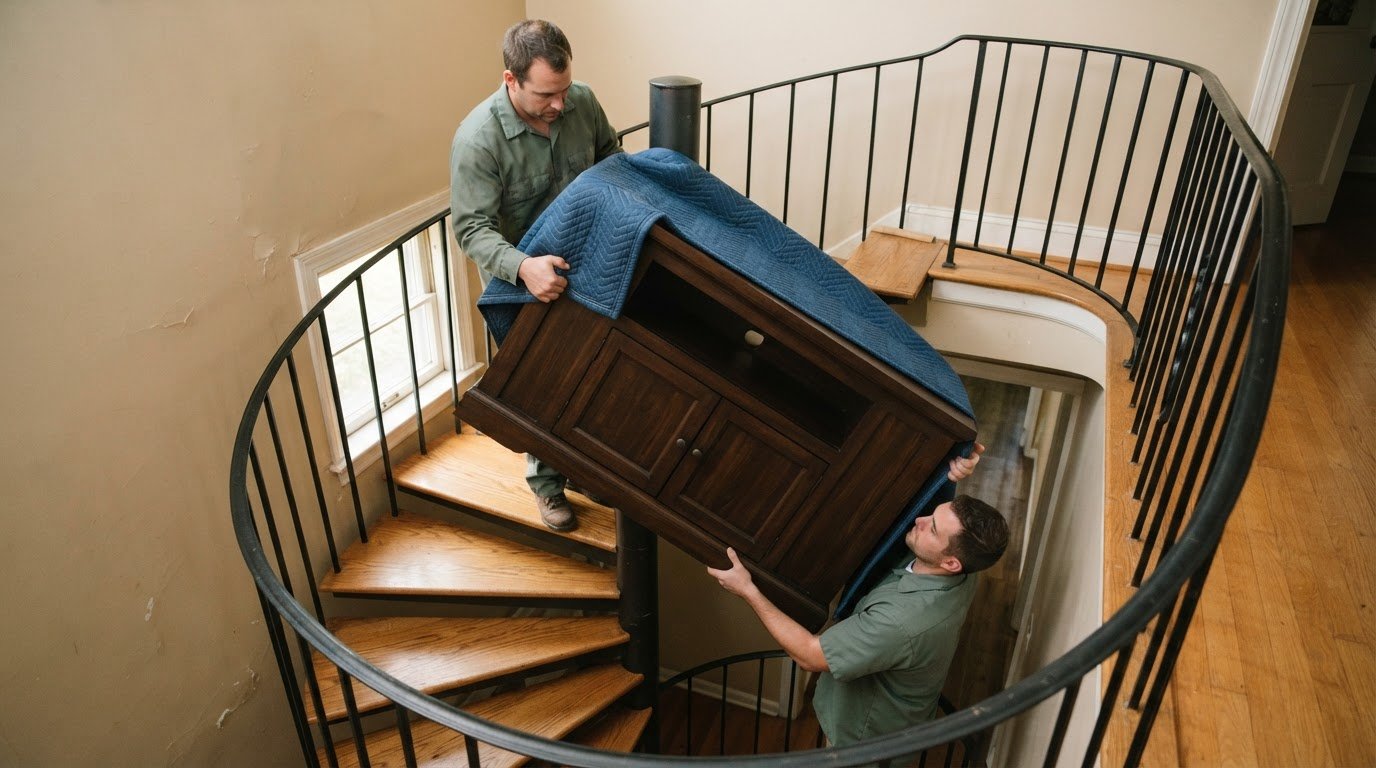
A cabinet that clears the doorway can still get stuck at a spiral stair’s tightest turn. For labor to carry a heavy flat-screen TV cabinet up spiral stairs in Haymarket, assess the entire route, not just the cabinet’s width. Movers need to consider the stair opening, landing, headroom, and cabinet shape before lifting.
It’s understandable to worry about a heavy cabinet scraping a wall, getting wedged on a turn, or becoming difficult to control on narrow steps. A careful plan helps identify risks and determine whether the stairs are workable or another access route makes more sense.
This guide explains what experienced movers assess, which measurements help them plan the carry, and how they approach tight turns and alternate access. You’ll also learn what details to share about the cabinet and property so the moving team can prepare for the job and handle the carry with care.
Key Takeaways
- Look for movers who plan the full spiral-stair route, including turns and landing space, before the carry begins.
- See which cabinet and stair measurements help reveal tight clearances and possible pinch points.
- Learn how a moving team can plan a controlled pivot without rushing the cabinet around a corner.
- Explore how movers assess alternate access when the stair route presents a challenge.
- Understand how clear cues and coordinated roles help keep a heavy stair carry organized.
Hiring movers experienced with spiral stairs
For labor to carry a heavy flat-screen TV cabinet up spiral stairs in Haymarket, choose movers who plan around the item and the full route. A box measuring 18 × 18 × 24 inches is very different from a rigid cabinet on a tight turn.
-
Deciding When to Hire Professionals
Hire professional movers when the cabinet is heavy, awkward to grip, or difficult to rotate without touching the stair rail or walls. Spiral stairs add turns and limit standing room, making the carry harder to control than moving furniture across an open room.
Share the cabinet’s dimensions, shape, and approximate weight, along with details about the staircase and landings. This gives the moving team a practical starting point for planning the lift. Extra helpers alone may not solve the problem if the cabinet blocks the carrier’s view or leaves little room to change grip.
When arranging labor to carry a heavy flat-screen TV cabinet up spiral stairs in Haymarket, describe the item and access clearly. These details help movers understand what makes the carry challenging before work begins.
-
Reviewing Movers’ Experience and Credentials
Look for reviews describing heavy furniture carried on spiral stairs, through narrow turns, or across restricted landings. Prioritize comments about route planning, clear communication, and protecting walls or furniture. A review that only says a move was quick offers less insight into handling a broad, rigid cabinet.
For a Virginia move, review the mover’s applicable registration details and verify the business name and status with the issuing authority. Match the name on company documents to its public record. Ask about comparable stair-carry experience and look for a clear explanation of the team’s approach.
-
Asking About Difficult-Access Charges
Request a job-specific estimate that accounts for the spiral staircase and tight access points. There is no universal stair surcharge. A mover’s pricing structure may list difficult access separately or include it in the overall estimate. Cabinet dimensions, weight, turns, and landing space all affect the work involved.
Give the moving team accurate details before it prepares an estimate. Mention narrow doors, low ceilings, sharp turns, and route restrictions. Confirm what the estimate covers, including carrying the cabinet to its destination room. A clear scope helps prevent confusion about the agreed work.
Ask how the team will manage the cabinet’s orientation through each turn. Don’t assume it will stay upright in the same position throughout the carry. Carrying furniture vertically can make its shorter dimension the deciding factor for navigating the turn, but suitability depends on the cabinet’s shape and route. Discuss the option in advance and clarify how the team will control the item as it turns.
Also ask how the crew plans to distribute the load across the stairs. The guide gives a 150-lb dresser as an example of a load that can concentrate weight on spiral stair treads when carried by two movers. This is a reason to discuss the cabinet’s weight and carrying plan in advance, not to assume that a particular crew size or method will work for every staircase.
How professional movers measure furniture, doorways, stairs, and landings
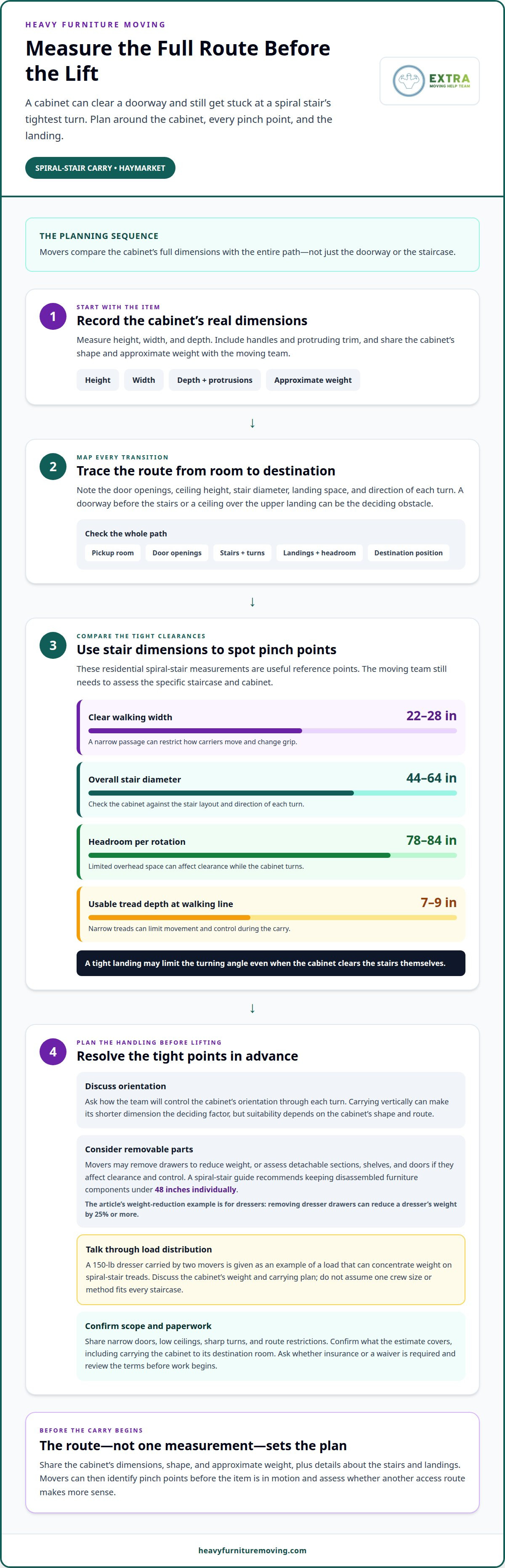
Movers compare the cabinet’s full dimensions with each pinch point along the route. Spiral stairs can have a 22-28-inch clear walking width, so measuring only the doorway misses critical limits.
-
Measuring the Furniture and Route
Measure the cabinet’s height, width, and depth, including handles and protruding trim. Then map the route from the pickup room to its final position. Note door openings, ceiling height, stair diameter, landing space, and the direction of each turn.
Residential spiral staircases typically have a 44 to 64-inch overall diameter and 78-84 inches of headroom per rotation. Usable tread depth at the walking line can be 7-9 inches. These dimensions help movers judge where the cabinet might meet a railing, wall, or ceiling. A tight landing can limit the angle available for turning even if the cabinet clears the stairs themselves.
Have the moving team assess the whole path, not just the staircase. A doorway before the stairs or a ceiling over the upper landing can become the deciding obstacle. If the cabinet has removable drawers, movers may take them out to reduce weight and make the frame easier to handle. Removing dresser drawers can reduce a dresser’s weight by 25% or more.
-
Considering Stair Risks and Coverage
Ask the moving team how it assesses stair-carry risks and what paperwork applies. The mover sets its paperwork requirements, so ask whether insurance or a waiver is required and review any terms before work begins. Make sure the documents describe the planned carry and the furniture involved.
A heavy cabinet can shift as carriers adjust their grip around a turn. Narrow treads and limited headroom can restrict movement, raising the risk of contact with a wall, railing, or the cabinet’s finish. Movers use route measurements to identify these tight points before lifting, rather than discovering them while the item is in motion.
Discuss disassembly when a cabinet has detachable sections, shelves, or doors that affect its shape. The moving team can decide whether separating components improves clearance and control. For reference, a spiral-stair guide recommends keeping disassembled furniture components under 48 inches individually. Keep fasteners and detached pieces together so the cabinet can be reassembled in order.
For an in-home carry with a heavy piece, in-home furniture moving help can support the measured route and planned handling.
How professional movers pivot furniture around tight staircase corners
Movers plan each turn before lifting, using the cabinet’s shape and the staircase layout. A pivot depends on clearance around the center column, railing, and landing.
- Read the turn before moving. Movers identify where the staircase curves and where the cabinet’s corners could meet an obstacle. Spiral stair center columns are typically 3-6 inches in diameter, which takes space from the turning path. The team considers that column alongside the railing and wall, rather than treating the open stairwell as a clear circle.
At each turn, carriers pause in a stable position and assess the next angle. They coordinate the cabinet’s movement so one end does not swing into the railing while the other passes the column. A tight landing may require a different sequence from an uninterrupted spiral.
- Choose the orientation that fits. Movers consider whether carrying the item vertically makes its shorter dimension the deciding factor for the turning radius. This can help with some furniture, but the cabinet’s height, width, depth, and construction determine whether that position will work.
For example, a dresser measuring 36 inches wide and 60 inches tall can sometimes be stood on its short end and guided around a spiral. That example shows how changing orientation affects clearance; it does not establish that a TV cabinet can use the same position. Movers assess the actual item and route before choosing.
- Control the pivot in small movements. The team adjusts the cabinet’s angle in stages instead of forcing a single sharp turn. One carrier guides the upper end while another controls the lower end, keeping the item aligned with the curve. At each adjustment, they watch the closest corner and check that the cabinet remains balanced.
A flat-screen TV cabinet may have a broad face and deep frame. Those features can make a turn harder, even when one dimension seems to fit. Movers use the available landing space to reposition the item only as far as the route allows, avoiding a sudden rotation around the center column.
- Reassess when clearance changes. Each stair segment can present a different angle, so movers check the cabinet’s position again after a turn. The top landing may have less headroom or floor space than the lower approach. Pausing lets the team reset its grip and plan the next movement without rushing the cabinet through a narrow gap.
If the planned orientation no longer clears the railing, wall, or landing, movers stop and reassess. They may adjust the angle or determine that the staircase cannot accommodate the planned carry. That decision depends on the cabinet’s dimensions and the actual turning space.
How movers check alternative access routes
Movers compare the spiral staircase with other possible routes before choosing a carry plan. Each option must fit the cabinet and provide a workable path to its destination.
- Trace every interior route. Movers inspect other stairways, hallways, and elevators between the entrance and destination. A second staircase may have a wider turn, while an elevator may have a narrow doorway or limited interior depth. The team compares those tight points with the cabinet’s actual dimensions and checks whether the route reaches the right floor without another difficult turn.
For example, a back stair might avoid the spiral but lead through a tighter doorway. The entire path matters, not just the section that looks easiest.
- Assess exterior access. If interior routes seem blocked, movers examine accessible exterior doors, balconies, or windows. They consider whether the cabinet can reach the opening and whether the approach allows controlled handling. A ground-level door may offer a direct route, while an upper-floor opening creates different access and handling challenges.
The team also considers the landing area outside the opening. A narrow balcony or obstructed walkway can make an apparent shortcut impractical. Movers compare the opening’s clearance with the cabinet’s dimensions before selecting that route.
- Review access conditions at the property. Movers identify gates, shared hallways, locked doors, and other obstacles that could affect the route. A clear path on a floor plan may not match conditions on moving day. The team accounts for the actual approach from the vehicle to the entrance and through the building.
In an apartment, that may mean coordinating building access and elevator use. In a home, it may mean checking which exterior door leads closest to the destination room. The entire route needs enough space for the cabinet and moving team.
- Choose the route based on the full carry. Movers weigh clearance, turning space, access, and the number of transitions required. A route with a wider entrance may still include a sharp hallway turn. A window route may avoid stairs but require a suitable exterior approach and clear space to receive the cabinet.
The moving team compares these conditions before committing to a plan. If an alternate route creates a new tight point, they reassess instead of forcing the cabinet through. The best route accommodates the cabinet from the starting room to its final position.
How movers coordinate communication during a stair carry
Clear cues help carriers stay coordinated as the cabinet moves between stair levels. Before lifting, the team agrees on commands, roles, and when to pause.
- Set the lead caller and shared commands. The team chooses one person to call each movement, preventing conflicting directions. Simple cues such as “lift,” “hold,” and “lower” give everyone the same instruction. The caller also names the next action, such as turning toward the landing or stopping before a tight corner.
Agree on a stop command before the cabinet leaves the floor. Any carrier who loses a secure grip or spots an obstacle can call it. The team then pauses together, rather than one person shifting the cabinet while another expects it to stay still.
- Assign positions before the first step. Movers decide who controls the upper end, who manages the lower end, and who watches the stair path. A carrier on the lower steps may see something differently from someone above. Clear roles help the team respond to the cabinet’s movement and nearby rails or walls.
For example, the upper carrier can call out a low ceiling or tight landing ahead. The lower carrier can report whether the cabinet’s base remains aligned. These observations help the team prepare for a turn before the cabinet reaches it.
- Use short updates at each landing. At a landing, the team can stop, reset hand positions, and confirm the next direction. The lead caller says whether the cabinet will continue upward, rotate, or shift its angle. This brief pause ensures everyone shares the plan before movement resumes.
On a spiral staircase, the view changes as the cabinet moves around the center column. One carrier may spot a railing-clearance problem before another does. Specific calls such as “right corner close” or “hold at the landing” identify the issue and the response needed.
- Stop and reset when communication breaks down. If a carrier cannot hear a cue, the cabinet shifts unexpectedly, or the route changes, the team pauses in a controlled position. The lead caller confirms everyone’s grip and explains the next movement. No one should guess which direction someone else intends to move.
Agree on the next step before lifting again. If the landing is too tight for the planned turn, movers can reassess the cabinet’s angle and position. Arrange labor-only moving help for a coordinated carry that needs clear communication on the stairs.
Heavy Furniture Moving: labor only movers near me
Heavy Furniture Moving is a natural next step when a heavy TV cabinet needs a planned carry up spiral stairs. Its labor-only movers handle the lifting, while the cabinet and route details guide the job plan. Share the cabinet’s dimensions, shape, and destination, along with any tight turns or alternate access you’ve identified.
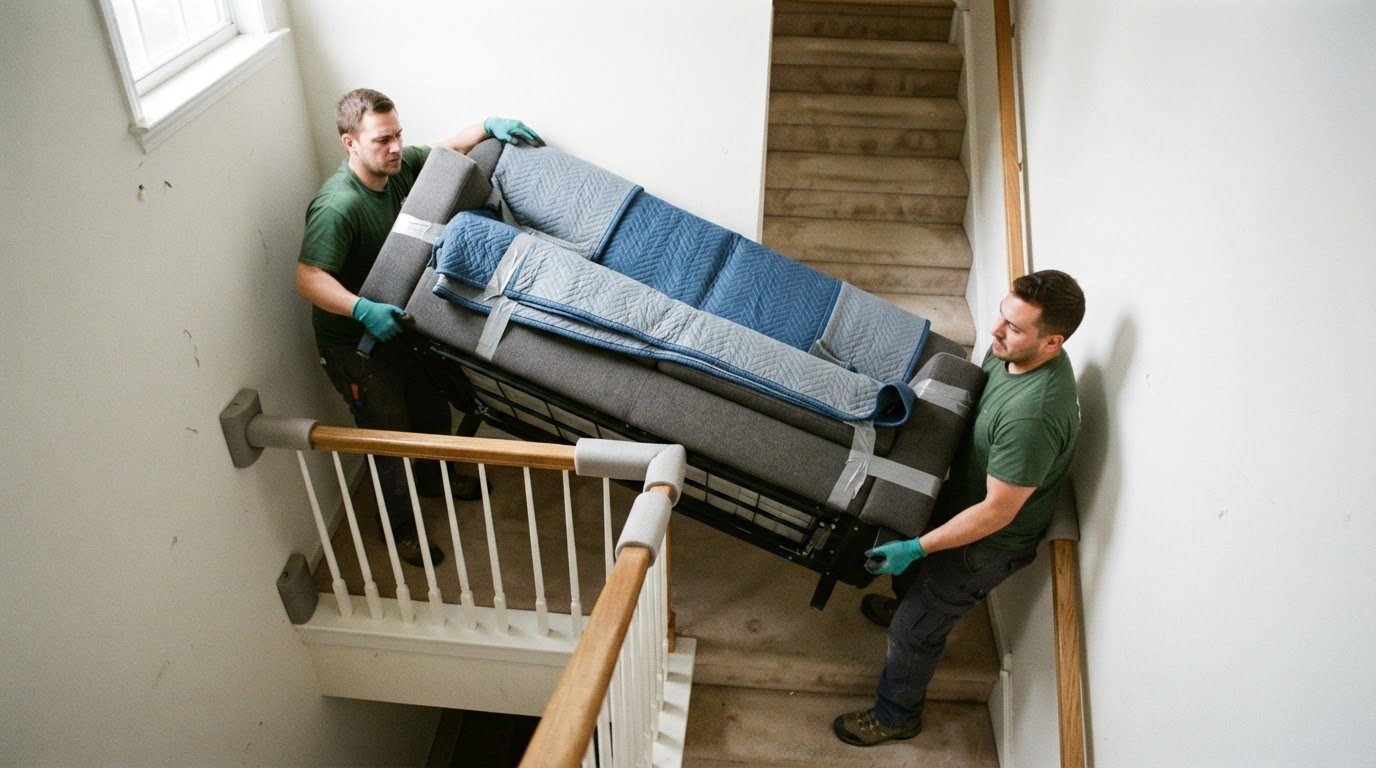
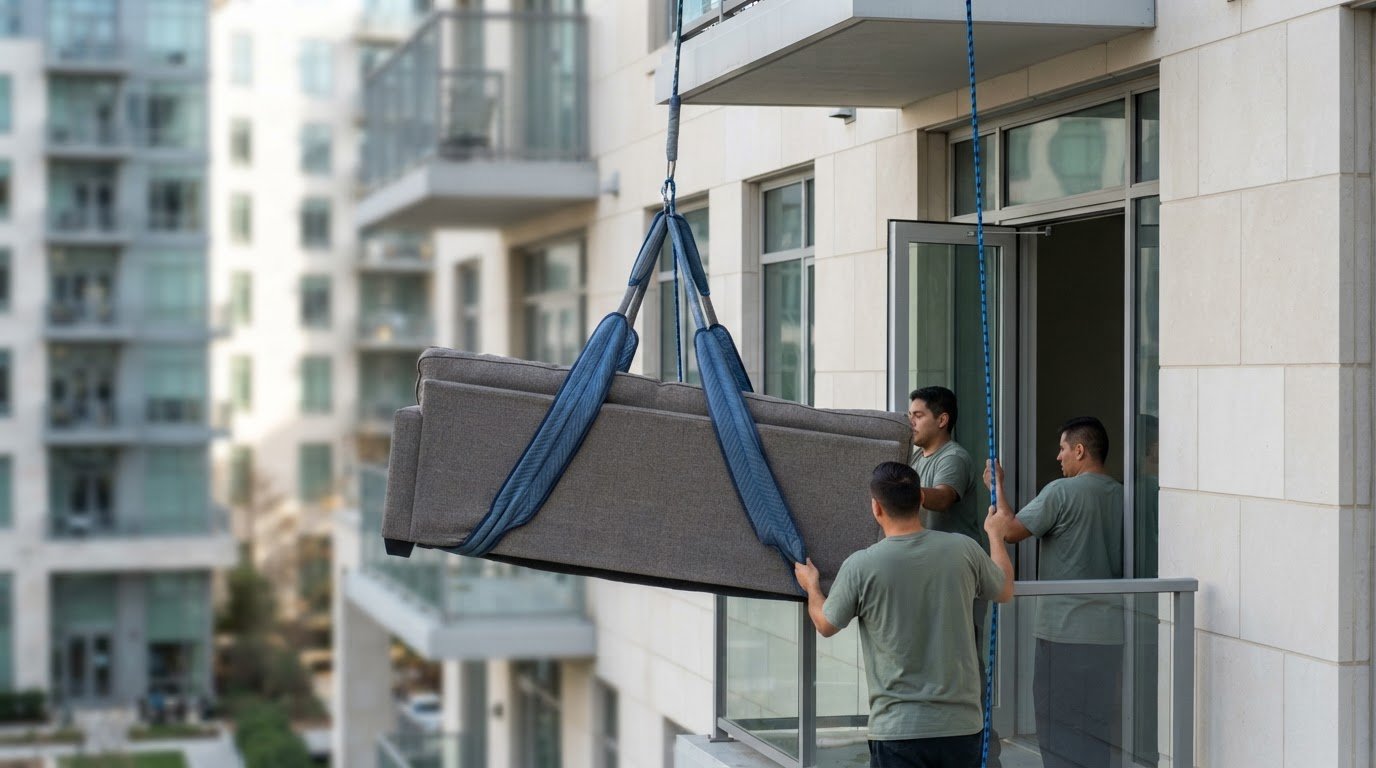
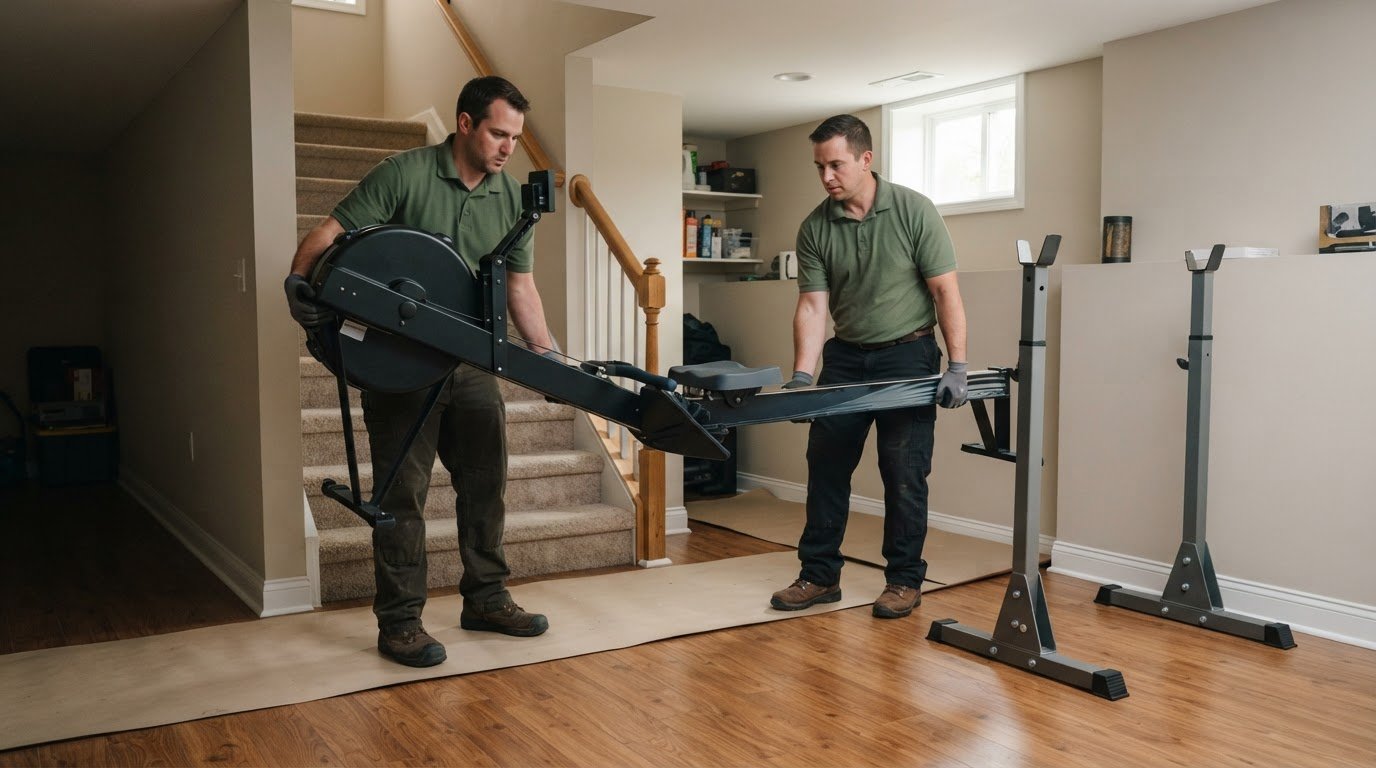
Get professional moving help when the cabinet feels difficult to control or the staircase leaves little room to adjust your grip. Heavy Furniture Moving also offers Movers Near Me, Exercise Equipment Moving, and Sofa Hoisting for other heavy-item needs.
Contact Heavy Furniture Moving to discuss help with your cabinet carry.
Make a Clear Plan for Your Cabinet Carry
Before arranging the move, note the cabinet’s dimensions and any features that could affect its path, such as a fixed shelf or overhanging trim. This gives the moving team a clearer starting point for planning. For labor to carry a heavy flat-screen TV cabinet up spiral stairs in Haymarket, a well-defined plan helps everyone prepare for the route and handling needs.
Share what you know about the destination room and access points. If the cabinet’s route changes, tell the team before the carry begins. Clear information helps movers plan for the actual task instead of relying on assumptions about the staircase or furniture.
Heavy Furniture Moving can help with labor for a demanding furniture carry. Take the next step and contact Heavy Furniture Moving to discuss your cabinet move. With the route and item details ready, you can start the conversation with a practical plan and move forward with confidence.
Frequently Asked Questions
What information should I provide to get an accurate moving quote for a TV cabinet?
Provide the cabinet’s outside dimensions, estimated weight if known, and clear photos from the front and side. Include attached handles, feet, or trim in your measurements. Note whether it has glass doors, shelves, or removable parts, and describe the starting room and destination. Photos of the stair entrance and nearby doorways can reveal details measurements alone may miss.
What are the risks of carrying a heavy TV cabinet up spiral stairs?
A cabinet can shift, tip, or catch on a railing when carriers have limited room to adjust their grip. Its weight and shape may also block a carrier’s view of the next step. Contact with a wall or stair edge can damage the cabinet or surrounding surfaces. Loose doors or shelves may move during the lift, so the team should account for them before carrying.
Can a TV cabinet be disassembled or protected to make it easier to carry upstairs?
Yes, removable parts can be taken off if that makes the cabinet easier to handle or fit through the route. The moving crew can assess the cabinet’s construction and protect its surfaces with moving blankets and shrink film. Keep small hardware together if you remove parts. Don’t force fixed sections apart, as this can damage the cabinet or make it harder to carry securely.
How much does it cost to move a heavy TV cabinet up stairs in Haymarket, VA?
There is no universal stair surcharge. Request a job-specific estimate that accounts for the cabinet’s size and weight, spiral turns, landing space, and full carrying route.
What moving companies in Haymarket, Virginia carry heavy TV cabinets up spiral stairs?
Choose movers experienced in carrying heavy furniture on spiral stairs, through narrow turns, and across restricted landings. Look for clear route planning, steady communication, and care in protecting walls and furniture.
Frequently Asked Questions
Provide the cabinet’s outside dimensions, estimated weight if known, and clear photos from the front and side. Include attached handles, feet, or trim in your measurements. Note whether it has glass doors, shelves, or removable parts, and describe the starting room and destination. Photos of the stair entrance and nearby doorways can reveal details measurements alone may miss.
A cabinet can shift, tip, or catch on a railing when carriers have limited room to adjust their grip. Its weight and shape may also block a carrier’s view of the next step. Contact with a wall or stair edge can damage the cabinet or surrounding surfaces. Loose doors or shelves may move during the lift, so the team should account for them before carrying.
Yes, removable parts can be taken off if that makes the cabinet easier to handle or fit through the route. The moving crew can assess the cabinet’s construction and protect its surfaces with moving blankets and shrink film. Keep small hardware together if you remove parts. Don’t force fixed sections apart, as this can damage the cabinet or make it harder to carry securely.
There is no universal stair surcharge. Request a job-specific estimate that accounts for the cabinet’s size and weight, spiral turns, landing space, and full carrying route.
Choose movers experienced in carrying heavy furniture on spiral stairs, through narrow turns, and across restricted landings. Look for clear route planning, steady communication, and care in protecting walls and furniture.