Labor to Move Server Racks in a Reston Home Office: A Safe Hiring Guide
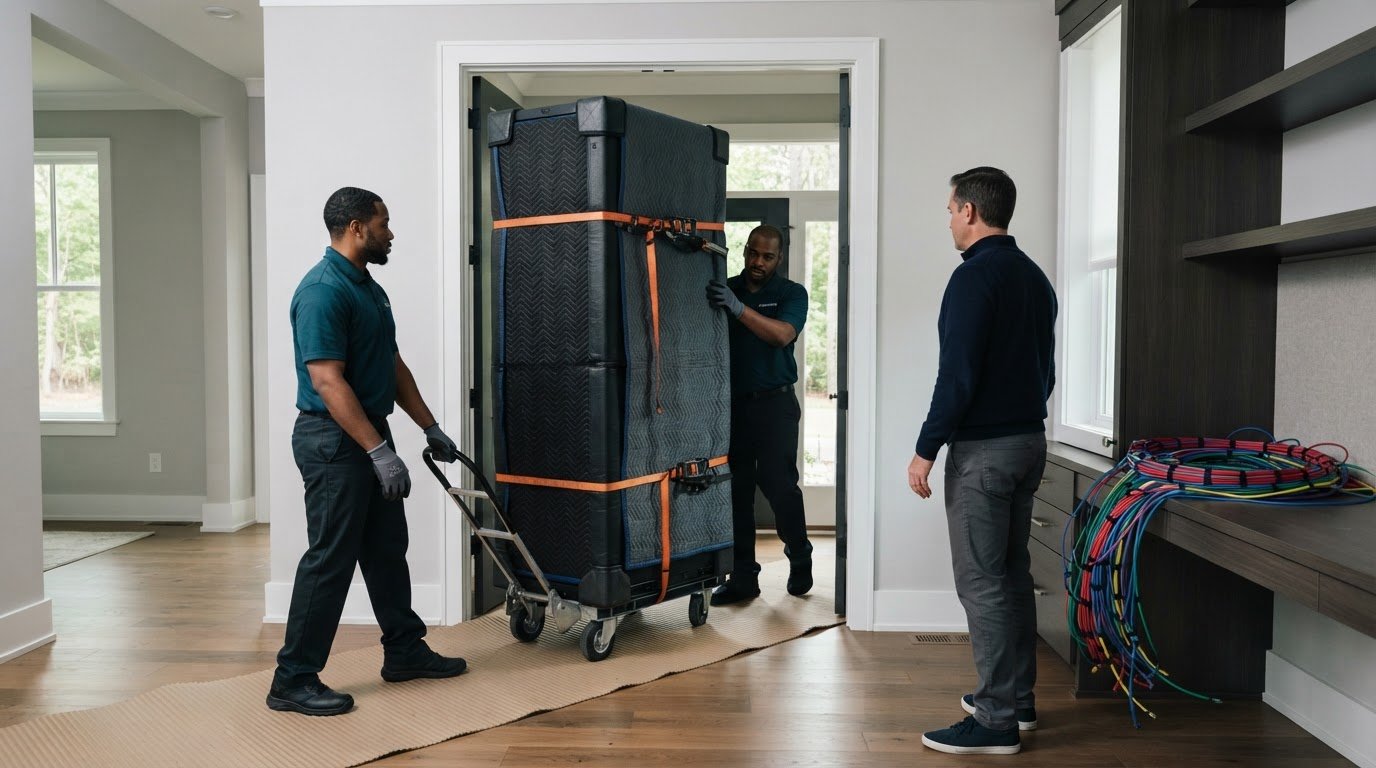
Who can handle the heavy lifting when a server rack needs to move through a Reston home? Finding labor to move server racks in home office Reston starts with separating technical preparation from the physical move. A loaded rack can be difficult to steer through a doorway, around a tight turn, or down stairs, and connected equipment adds another layer of planning.
Heavy Furniture Moving provides residential moving and labor support for heavy, bulky household items, including the physical movement of a home-office rack. Keep IT shutdown, disconnection, and reconnection separate from the lifting plan so the moving crew and the person responsible for the equipment understand their roles.
This guide covers how to map the route, prepare the rack and destination, and explain the job when arranging help. It also compares labor-only support with a broader residential move and identifies the details that shape the plan, from rack contents and stairs to flooring and final placement. Heavy Furniture Moving serves homeowners in Reston and nearby communities, including Fairfax, Woodbridge, Manassas, Manassas Park, Aldie, Ashburn, Mclean, Vienna, Centreville, Chantilly, Clifton, Dumfries, South Riding, Fairfax Station, Haymarket, and Gainesville.
Key Takeaways
- Arrange IT shutdown and disconnection separately from the physical lifting task.
- Use labor-only help for a prepared rack and a clearly defined move. Include broader residential support when the job also involves other household items or transport.
- Map the route and identify stairs, narrow turns, flooring, and the rack’s exact destination before moving day.
- When arranging labor to move server racks in home office Reston, describe the rack, its contents, access points, and destination.
- A practical checklist helps you communicate the job and avoid rushed handling decisions.
Moving a Server Rack in a Reston Home Office: What the Job Involves
A server rack can be heavy and awkward to maneuver, particularly when equipment or cables are attached. In a home, narrow doorways, tight turns, and finished floors add practical concerns. Define the job clearly: moving a home-office rack is a planned physical move, not IT installation.
For homeowners looking for labor to move server racks in home office Reston, the physical task is lifting, maneuvering, and placing the cabinet at its destination. That could mean moving it to another room, repositioning it elsewhere in the home, or loading it as part of a residential move. Heavy Furniture Moving provides residential moving and labor support for heavy, bulky household items. The crew handles the physical move, not the technology inside the rack.
What counts as moving a home-office server rack?
A rack may contain servers, network equipment, or other installed components. Common rack formats include the 19-inch rack, but the cabinet and its setup can vary. Moving a rack inside a home is different from a commercial office or data-center relocation. A moving crew’s physical role is separate from powering down equipment, disconnecting cables, configuring systems, and reconnecting them at the destination.
That distinction affects preparation. Equipment left installed or cables left attached can change how the cabinet needs to be readied for handling. Have the owner or an IT professional safely shut down and disconnect the technology before the move. Don’t assume a physical moving crew will perform technical work.
Why a loaded rack needs a different plan than ordinary furniture
Weight inside a rack may be concentrated in one area, which can affect how the cabinet handles as it moves. Protruding components can catch on a doorway or nearby furniture, while loose or attached cables can snag or pull. Even a short move across a home needs a clear route and a confirmed destination. Tell the moving crew what the rack contains and what remains attached, rather than describing it only as a cabinet.
Base preparation on the actual rack and its setup. Follow the manufacturer’s instructions for moving, securing, or disassembling the cabinet and its components. Don’t remove equipment or panels based on guesswork, and don’t assume the rack should be moved loaded or empty. Complete any preparation required by the manufacturer before the physical move begins.
Before arranging help, trace the full route from the rack’s current position to its final placement. Note doorway clearance, stairs, tight turns, nearby furnishings, and flooring that may need protection. These details define the physical task and help the moving crew plan the handling. A clear description also helps prevent confusion about what needs to move and where it belongs.
Before Moving a Server Rack, Separate IT Preparation from Moving Labor
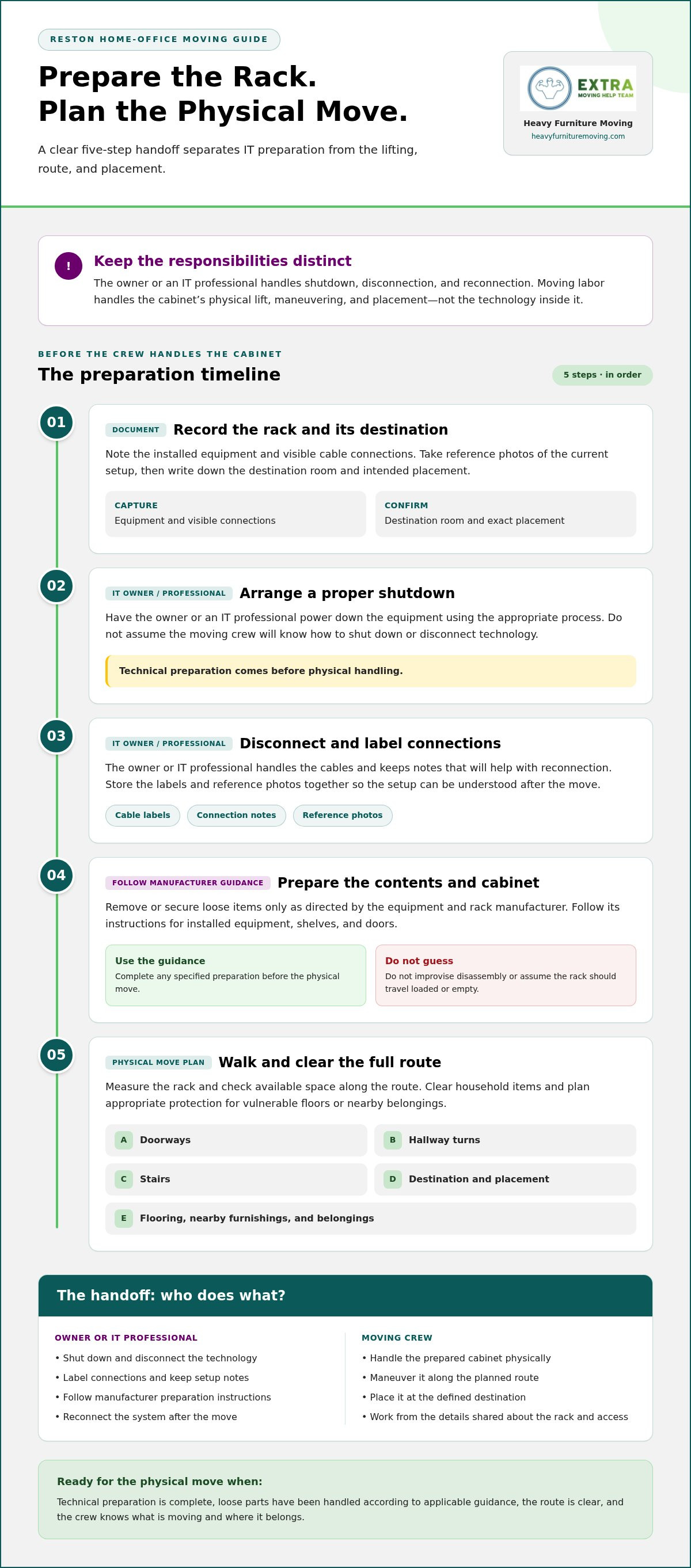
A planned move begins before anyone reaches for the cabinet. The owner or an IT professional should prepare the technology. Residential moving labor focuses on the physical lift, route, and placement. Use this sequence to make the handoff clear and reduce last-minute decisions.
- Document the rack and destination. Note the installed equipment and visible cable connections, and take reference photos of the current setup. Write down the destination room and the intended placement within it.
- Arrange a safe shutdown. Have the owner or an IT professional power down the equipment using the appropriate process. Don’t assume a moving crew will know how to shut down or disconnect technology.
- Disconnect and label connections. The owner or IT professional should handle the cables and keep notes that will help with reconnection. Store labels and photos together so the setup can be understood after the move.
- Prepare contents and cabinet parts. Remove or secure loose items only as directed by the equipment and rack manufacturer. Follow its instructions for installed equipment, shelves, and doors. Don’t improvise disassembly or assume the rack should travel loaded or empty.
- Walk the route and clear it. Measure the rack and check available space at doorways, hallway turns, stairs, and the destination. Move household items out of the way and prepare appropriate protection for vulnerable floors or nearby belongings.
Have the crew handle the cabinet after its contents are prepared. That means the technical work is complete, loose parts have been handled according to applicable guidance, and the crew knows what will be physically moved. The NIOSH Ergonomics and MSDs resource explains how ergonomic factors relate to physical work. For a homeowner, the practical takeaway is to plan the lift and route instead of treating a rack like an ordinary piece of furniture.
Prepare the rack and its contents before moving day
Keep notes, photos, and cable labels together. Share them with the person responsible for reconnecting the system, not as instructions for movers to perform IT work. If the manufacturer’s guidance specifies how to secure doors or shelves, complete that preparation before the lifting crew arrives. Separating responsibilities helps prevent rushed decisions and keeps the handoff straightforward.
Check the route through the Reston home
Measure the cabinet and compare its dimensions with the narrowest points along the route. Check hallway turns, stairways, door openings, and the space needed to position it at the destination. Clear rugs, boxes, and nearby furniture where practical. When describing the job, point out tight turns, changes in flooring, and any access limits. For the physical move, residential moving help for heavy items can help with lifting and placement.
These steps create a clear handoff: the owner or an IT professional prepares the technology, and the moving crew handles a defined physical task. Keep that distinction in place when arranging labor to move server racks in home office Reston.
Labor-Only Help or a Broader Move: Choose the Right Scope in Reston
The right moving plan depends on the full job. Is the prepared rack moving a short distance inside your home, or is it one part of a move involving other household items and transport? Define the scope before arranging help. The starting point, route, access conditions, and destination all shape the physical work.
Labor-only help
A focused request for physical lifting and movement of a prepared rack along a defined route. It fits a task limited to repositioning the cabinet or loading it.
Broader residential moving support
A wider plan for a rack plus other household goods or furniture, or transport to another residence. It fits when the rack is one part of a larger household move.
These options differ by scope, not by the technology inside the cabinet. Neither includes IT disconnection, installation, configuration, or network troubleshooting. Keep that technical work with the owner or IT professional responsible for the equipment.
When labor-only moving help may fit the rack move
Choose a focused labor request when the rack is prepared and the job is a clearly described lift, maneuver, and placement. Share its dimensions, approximate weight if known, contents, and route from its current location to the destination. Include stairs, narrow turns, and other access limits. These details define the physical task. Labor support does not include technical setup or troubleshooting.
For example, moving a prepared cabinet from a home office to another room is different from relocating the contents of the whole office. Say whether the rack stays inside the home or needs to be moved to a vehicle. When arranging labor to move server racks in home office Reston, make the scope explicit so the plan reflects the route and work involved.
When to plan for broader residential moving support
Include broader support when the rack is moving with desks, chairs, storage furniture, or other household belongings. Transport also changes the scope: carrying a cabinet across a room is not the same task as moving it out of the home and taking it to another residence. Heavy Furniture Moving provides residential moving and labor support for heavy, bulky household items, with the plan shaped around the move’s physical needs.
Describe what is moving, where it starts, where it ends, and whether transport is part of the plan. A wider residential move needs a different scope from one defined lift, so avoid describing the job simply as “moving a server.” For related guidance on residential moving, see reliable local movers in Fairfax and Northern Virginia.
Match labor-only help to a prepared rack and a contained physical task. Choose broader residential support when other belongings or transport are part of the move. In either case, a clear scope and accurate access details help define the work.
A Practical Reston Server-Rack Moving Checklist for Homeowners
A checklist turns a complicated move into clear handoffs. Before handling the rack, work through equipment readiness, route readiness, and move-day communication. Keep the plan handy so the owner, IT professional, and moving crew share the same expectations.
Home-office equipment and destination checklist
- Assign the technical work. Identify who will safely shut down and disconnect the equipment before physical moving begins. The owner or IT professional should handle configuration and later reconnection.
- Save useful setup references. Photograph connections and label cables if those records will help the person responsible for the system. Keep notes and labels together for reconnection.
- Confirm rack preparation. Follow the equipment and rack manufacturer’s guidance for loose items, installed components, shelves, and doors. Don’t remove or secure parts by guesswork.
- Prepare the destination. Clear the placement area and confirm the cabinet fits in the intended position with room for access. Move nearby belongings out of the way.
Be precise about the final location. “The other room” can leave room for confusion. Identify the room and the exact area where the rack should be placed, then make sure that space is ready before moving day.
Access and move-day communication checklist
- Describe the cabinet. Share its dimensions, known weight if available, and contents when arranging labor to move server racks in home office Reston. If you don’t know the weight, say so rather than guessing.
- Explain the route. Identify the starting point, destination, stairs, narrow doorways, hallway turns, and tight clearances. Mention whether the move stays inside the home or takes the rack out of the residence.
- Clear household hazards. Move boxes, loose rugs, cords, and other tripping hazards from the planned path. Protect nearby furniture or flooring that could be affected by the move.
- Agree on the boundaries. Before lifting starts, review the route, final placement, and what the crew will physically move. Make clear that IT disconnection, setup, and troubleshooting are separate from moving labor.
Finish with a walk-through. Trace the route from the rack to the destination, checking the landing area, doorways, turns, and stairs. Look for small obstacles that can be easy to miss, such as a low table, a door that won’t stay open, or items stored along a hallway wall. Resolve them before the move begins.
A clear checklist helps everyone share expectations and keeps the physical task separate from technology work. For local residential help with a heavy home-office item, arrange moving help for your Reston home.
Arrange Residential Server-Rack Moving Labor in Reston
A useful moving request covers three things: prepare the technology separately, describe the physical task, and explain the route. Heavy Furniture Moving provides residential moving and labor support for heavy, bulky household items in Reston. The work focuses on physically moving the rack cabinet, not handling IT tasks.
What details help define the moving request?
Share enough information to picture the move from start to finish. Describe the cabinet, its approximate dimensions, and its known weight. If you don’t know the weight, don’t guess. Explain what it contains, whether equipment remains installed, and whether the rack is ready for physical handling. These details clarify the task without requiring assumptions about the equipment.
- Location: Give the Reston pickup address and identify where the rack starts inside the home.
- Rack details: Describe its dimensions, known weight, contents, and preparation status.
- Access: Note entry points, stairs, narrow doorways, hallway turns, and other route limits.
- Destination: State whether it’s moving to another room, out of the home, or to another residence, and identify its planned placement.
- Scope: Mention whether the rack is the only item or part of a larger residential move, and whether transport is part of the task.
Be specific about final placement. Name the destination room and the area where the cabinet should go, rather than leaving the crew to interpret “near the desk.” Describe any changes in access along the route too. Stairs at the entrance and a tight turn inside the home both matter to the route plan.
What to expect from a residential moving plan
The plan should center on the agreed physical work: handling the prepared cabinet along the described route and placing it at the stated destination. If other household items or transport are included, describe those parts of the move in the same request. A defined scope gives the crew a clear picture of the job and helps prevent confusion about what is being moved.
Keep IT setup separate. The owner or an IT professional should handle shutdown, disconnection, configuration, and reconnection. Moving labor covers the physical task, not network troubleshooting or installation. Once responsibilities are clear, focus on access, placement, and protecting nearby household items.
Planning labor to move server racks in home office Reston doesn’t require technical jargon. Describe what’s ready, what remains installed, and the route. Clear preparation makes the request easier to plan and the next steps easier to understand.
For residential help with a heavy home-office item, request moving help for your Reston home.
Make Your Moving Plan Easy to Put Into Action
Turn your route notes into a practical moving request. Decide what must be ready before lifting begins, identify who is handling the technology, and describe the physical work in plain terms. Start with the details you know: the cabinet, its route, and where it needs to go. That gives you a clear basis for arranging labor to move server racks in home office Reston.
Before you reach out, gather measurements or photos that clarify the cabinet and its path. Be accurate about what you know and flag details that still need attention. This keeps the conversation focused on the physical move instead of guesswork about equipment or access.
Heavy Furniture Moving helps Reston homeowners with the physical movement of heavy household items. Request residential moving help for your Reston home and share the rack’s details, route, and destination.
Frequently Asked Questions
Is it safe to move a server rack while equipment is still installed?
It depends on the rack, its load, equipment instructions, and the route through the home, so don’t assume a loaded rack can be moved intact. Before physical moving begins, have the owner or an IT professional prepare connected equipment and follow the manufacturer’s guidance. A cabinet with installed components may need different preparation from an empty one. If the setup instructions are unclear, pause and get technical guidance before handling it.
Can movers disconnect and reconnect the servers in my home office?
Moving labor covers physical handling of the cabinet, not IT work. The owner or an IT professional should shut down the system, disconnect cables, record configuration details, and reconnect and configure the equipment at its destination. Keep that responsibility clear even if the physical move is short. Label connections or take reference photos if they will help the person restoring the setup. Don’t rely on movers to troubleshoot network or server problems.
How do I prepare a server rack before movers arrive?
Document the setup, arrange shutdown and disconnection, and follow the manufacturer’s instructions for securing or removing equipment. Then clear the route, including the space around the cabinet and at its destination. Preparation depends on the rack and its contents, so there’s no universal rule to dismantle or pack every system the same way. Don’t remove installed hardware or shelves unless the relevant instructions or a qualified IT professional call for it.
What information should I provide when requesting server-rack moving labor in Reston?
Describe the cabinet’s approximate dimensions and known weight, and say whether equipment remains inside. Give the pickup location and destination, explain whether the rack is moving within the home, and identify stairs, tight turns, narrow entries, or other route constraints. Mention any additional household items or transport involved. These details define the physical work and access needs without requiring you to guess at measurements or make assumptions about the plan.
Can a server rack be moved up or down stairs in a Reston home?
Whether a stair route works depends on the rack’s dimensions and load, the stair layout, turns, and landing space. Describe those conditions in your moving request, including whether a landing is narrow or a turn is close to a doorway. Prepare the equipment separately before physical handling. The word “stairs” alone doesn’t explain the route, so share clear details about the space rather than assuming the cabinet will fit.
Is labor-only help enough to move a home-office server rack?
Labor-only help fits a clearly defined physical move when the rack is prepared and the route is understood. Broader residential moving support suits a job that also involves household items or transport to another residence. Neither scope includes IT disconnection or network setup. Heavy Furniture Moving provides residential help with heavy household goods in Reston and nearby communities, including Fairfax, Woodbridge, Manassas, Manassas Park, Aldie, Ashburn, Mclean, Vienna, Centreville, Chantilly, Clifton, Dumfries, South Riding, Fairfax Station, Haymarket, and Gainesville. Describe the full task to define the physical moving scope.
Frequently Asked Questions
A rack may contain servers, network equipment, or other installed components. Common rack formats include the 19-inch rack, but the cabinet and its setup can vary. Moving a rack inside a home is different from a commercial office or data-center relocation. A moving crew’s physical role is separate from powering down equipment, disconnecting cables, configuring systems, and reconnecting them at the destination. That distinction affects preparation. Equipment left installed or cables left attached can change how the cabinet needs to be readied for handling. Have the owner or an IT professional safely shut down and disconnect the technology before the move. Don’t assume a physical moving crew will perform technical work.
Share enough information to picture the move from start to finish. Describe the cabinet, its approximate dimensions, and its known weight. If you don’t know the weight, don’t guess. Explain what it contains, whether equipment remains installed, and whether the rack is ready for physical handling. These details clarify the task without requiring assumptions about the equipment. Be specific about final placement. Name the destination room and the area where the cabinet should go, rather than leaving the crew to interpret “near the desk.” Describe any changes in access along the route too. Stairs at the entrance and a tight turn inside the home both matter to the route plan.
It depends on the rack, its load, equipment instructions, and the route through the home, so don’t assume a loaded rack can be moved intact. Before physical moving begins, have the owner or an IT professional prepare connected equipment and follow the manufacturer’s guidance. A cabinet with installed components may need different preparation from an empty one. If the setup instructions are unclear, pause and get technical guidance before handling it.
Moving labor covers physical handling of the cabinet, not IT work. The owner or an IT professional should shut down the system, disconnect cables, record configuration details, and reconnect and configure the equipment at its destination. Keep that responsibility clear even if the physical move is short. Label connections or take reference photos if they will help the person restoring the setup. Don’t rely on movers to troubleshoot network or server problems.
Document the setup, arrange shutdown and disconnection, and follow the manufacturer’s instructions for securing or removing equipment. Then clear the route, including the space around the cabinet and at its destination. Preparation depends on the rack and its contents, so there’s no universal rule to dismantle or pack every system the same way. Don’t remove installed hardware or shelves unless the relevant instructions or a qualified IT professional call for it.
Describe the cabinet’s approximate dimensions and known weight, and say whether equipment remains inside. Give the pickup location and destination, explain whether the rack is moving within the home, and identify stairs, tight turns, narrow entries, or other route constraints. Mention any additional household items or transport involved. These details define the physical work and access needs without requiring you to guess at measurements or make assumptions about the plan.
Whether a stair route works depends on the rack’s dimensions and load, the stair layout, turns, and landing space. Describe those conditions in your moving request, including whether a landing is narrow or a turn is close to a doorway. Prepare the equipment separately before physical handling. The word “stairs” alone doesn’t explain the route, so share clear details about the space rather than assuming the cabinet will fit.
Labor-only help fits a clearly defined physical move when the rack is prepared and the route is understood. Broader residential moving support suits a job that also involves household items or transport to another residence. Neither scope includes IT disconnection or network setup. Heavy Furniture Moving provides residential help with heavy household goods in Reston and nearby communities, including Fairfax, Woodbridge, Manassas, Manassas Park, Aldie, Ashburn, Mclean, Vienna, Centreville, Chantilly, Clifton, Dumfries, South Riding, Fairfax Station, Haymarket, and Gainesville. Describe the full task to define the physical moving scope.