Setting Up a New Home in Clifton: A Furniture Arrangement Guide
What if the best place for your sofa isn’t the first open wall you see? When you’re setting up a new home, unfamiliar room dimensions and move-in-day pressure can make furniture placement feel like guesswork. If “setting up new home furniture arrangement Clifton” is on your checklist, start by planning around how you live, not just the space that looks open.
You want rooms that feel comfortable, clear everyday paths, and a layout that works after the boxes are gone. This guide explains how to measure rooms, compare furniture placements, and prepare before moving heavy pieces. You’ll also learn when in-home furniture moving help can make room-by-room setup easier, particularly when a bulky item is difficult to maneuver. If a sofa can’t fit through a standard entryway, sofa hoisting may be an option. A clear plan can take pressure off move-in day and help you put each piece where it supports your routine.
Key Takeaways
- Start your setting up new home furniture arrangement Clifton plan by deciding how each room needs to work before choosing furniture positions.
- Measure rooms and sketch a floor plan to compare layouts before moving heavy pieces.
- Choose living, dining, and bedroom arrangements based on daily routines and clear walking paths, not a one-size-fits-all layout.
- Clear moving routes and protect vulnerable surfaces before repositioning furniture to reduce strain and prevent damage.
- Handle lighter setup tasks yourself and consider in-home furniture moving help for bulky items that are difficult to lift or maneuver.
Start Your New Clifton Home Furniture Arrangement With a Room Plan
An empty room can make familiar furniture feel unfamiliar. Without your usual cues, it’s harder to tell whether a sofa belongs by the window or a dining table will leave enough room to move around. A room plan gives you a starting point before move-in pressure takes over. A functional layout supports the activities you do in the room and keeps the paths through it clear.
For setting up new home furniture arrangement Clifton, plan around your new home’s actual measurements instead of relying on assumptions from your previous place. A room that looks spacious may have a doorway that limits where a large piece can go. Windows, fixed features, and everyday routes matter too. Consider how you’ll enter the room, reach a seat, open a door, or carry items through the space. Ergonomics in furniture arrangement is about fitting a space to the people using it, a useful idea to keep in mind as you plan for comfort and ease.
Measure Clifton rooms, entrances, and furniture before moving day
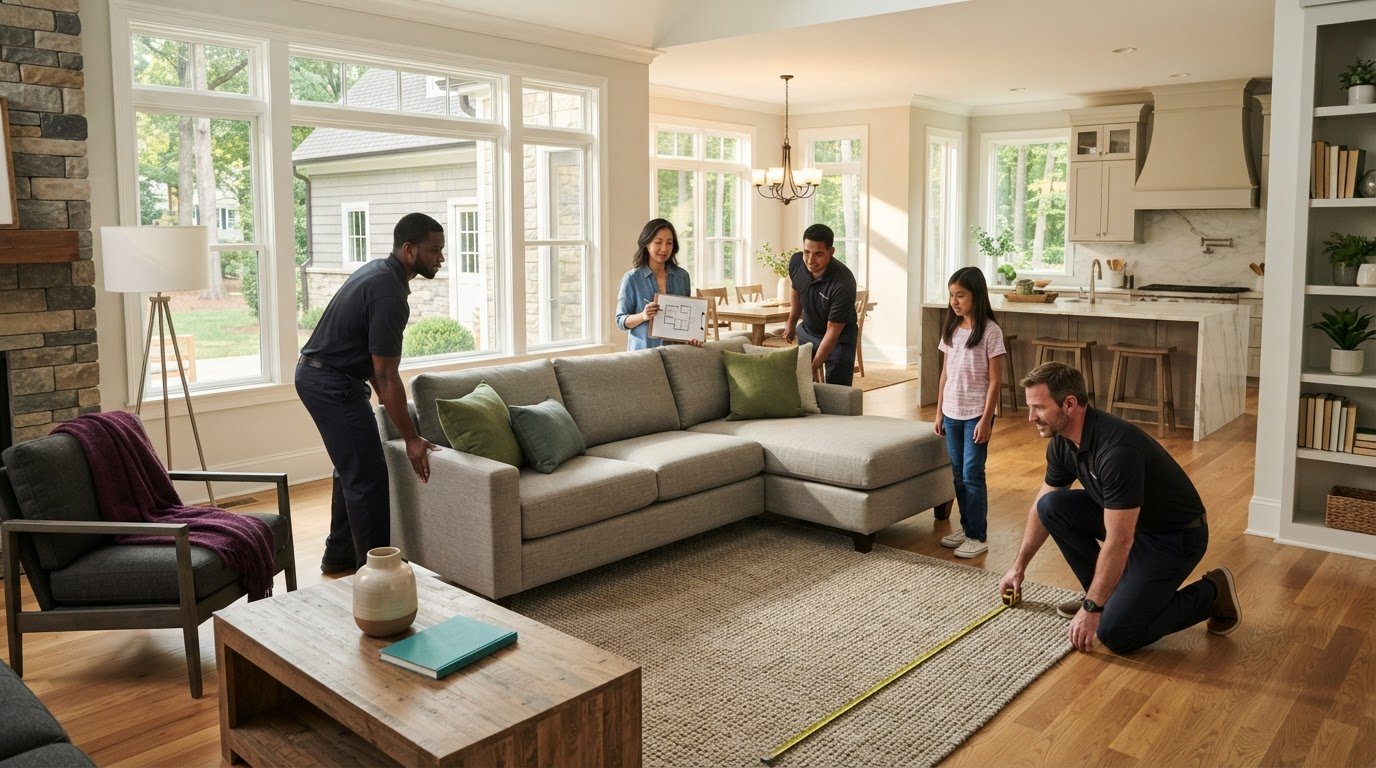
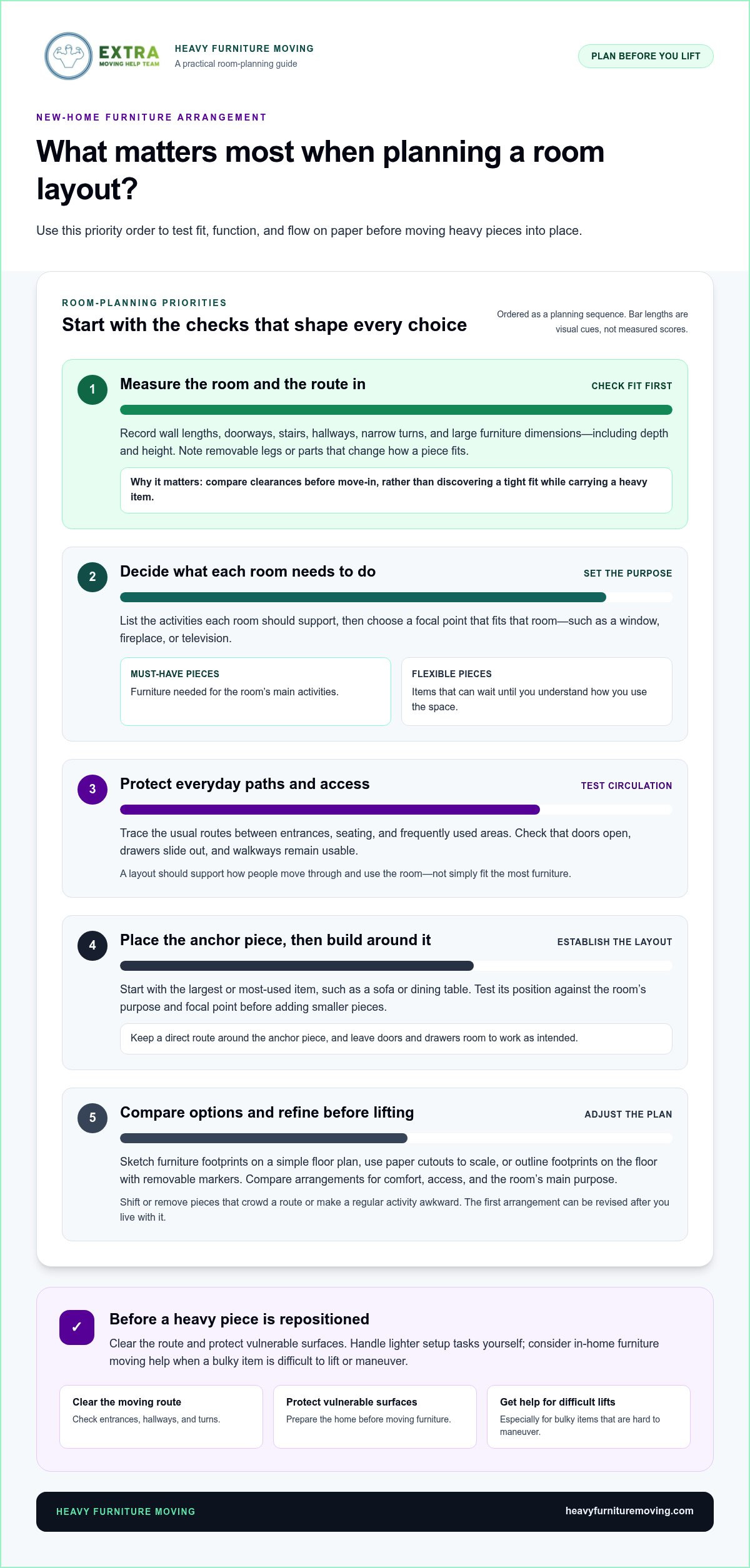
Write down each room’s wall lengths, then measure the parts that could affect a furniture move: doorways, stairs, hallways, and narrow turns. Measure large furniture too, including its depth and height. Note removable legs or other parts that may change how a piece fits through an entrance. Compare the measurements before move-in so you can spot tight clearances early, rather than discovering them while carrying a heavy item.
Make a simple floor plan on paper. Mark doors, windows, and fixed features such as built-ins. Add dimensions beside each item, and sketch furniture shapes to scale if you can. The map doesn’t need to look polished. It just needs to show where a piece might fit and whether it could interrupt a route.
Choose a room purpose before arranging individual pieces
Decide what each room needs to support before assigning every item a spot. A living room might be for relaxing and conversation; a spare room could serve as a guest space, a quiet work area, or both. Your routine sets the priorities. Make a short list of the activities each room needs to accommodate, then identify one focal point, such as a window, fireplace, or television. The right focal point depends on the room, not a universal rule.
- Must-have pieces: Identify the furniture needed for the room’s main activities.
- Flexible pieces: Set aside items that can wait until you’ve lived in the space and understand how you use it.
Place the essentials on your sketch first. Check that the arrangement leaves room for daily movement and access to doors and windows. Keep optional pieces out of the initial plan until you’ve confirmed they fit without crowding the room. Separating essentials from flexible items helps you make clear choices without trying to solve the whole home at once.
How to Arrange Furniture in a New Home: A Step-by-Step Method
A room plan turns a vague idea into a layout you can check before moving day. Use it to compare options, spot awkward clearances, and decide where large pieces should go before anyone has to lift them. For setting up new home furniture arrangement Clifton, follow these steps, then adjust the plan to match how the room works in daily use.
Measuring first helps you catch fit and flow problems on paper, before they lead to repeated furniture moves.
- Measure the space. Record wall lengths and note doors, windows, and fixed features. Include the route into the room, since furniture must pass through entrances and hallways before it reaches its planned spot.
- Map the room. Draw a simple floor plan, marking openings and the areas people need to reach. Add furniture footprints using the dimensions you recorded. Keep the drawing clear enough to compare different arrangements at a glance.
- Place anchor furniture. Start with the largest or most-used piece, such as a sofa in a living room or a dining table in an eating area. Its position shapes the rest of the layout, so test it against the room’s purpose before adding smaller items.
- Test circulation. Trace the usual routes between entrances, seating, and frequently used areas. Check that doors can open, drawers can slide out, and walkways stay usable with furniture in place.
- Refine the plan. Compare the layout with your everyday needs. Shift or remove pieces that crowd a route or make a regular activity awkward. Keep the version that feels practical, not simply the one that fits the most furniture.
Build around anchor furniture and everyday routes
An anchor piece gives your plan a clear starting point, but it shouldn’t block the room’s natural paths. For example, a sofa may face a focal point while leaving a direct route from the entrance to the seating area. Consider how people will move around the piece, not only how it looks against a wall. Leave room for doors and drawers to work as intended.
Test a furniture arrangement before committing
Make paper cutouts to scale, label each one, and move them around your floor-plan sketch. A simple digital drawing works too. Compare a few options against comfort, access, and the room’s main purpose. You can also use removable markers to outline furniture footprints on the floor. These quick tests make alternatives easier to judge before moving anything heavy.
Your first arrangement doesn’t have to be final. Live with the setup and notice where movement feels cramped or a seat is hard to reach, then revise the plan. If a bulky anchor piece is difficult to reposition, in-home furniture moving help can take care of the lifting while you decide where it works best.
Compare Furniture Layout Options for Living, Dining, and Bedroom Spaces
No single furniture arrangement works for every home. A layout that suits relaxed conversation may use more floor space, while one that leaves a wide path might fit fewer seats. Compare each option against the room’s purpose, its dimensions, and the size of your furniture. As you work through setting up new home furniture arrangement Clifton decisions, judge layouts by how they function, not just how they look in a picture.
| Room goal | Layout choice | Trade-off to consider |
|---|---|---|
| Living room conversation | Group sofa and chairs around a focal point | Creates a defined seating area but may use more open floor space |
| Living room circulation | Keep seating to one side and preserve a clear route | Opens a path but may make conversation feel less close |
| Dining | Center the table where chairs can be pulled out | Comfortable access can limit nearby furniture placement |
| Bedroom | Place the bed for easy entry and bedside access | The best position may leave less wall space for storage |
Choose a living-room layout that supports conversation and movement
For a conversation-focused setup, angle chairs toward the sofa and a shared focal point, such as a television or window. This can make the seating feel connected, but check that people can still pass between the entrance and the rest of the room. If an open route matters more, group the sofa and chairs along one side instead. You may gain clearer circulation but create more distance between seats.
Before settling on either option, check the sightlines from each seat and the space left for side tables or other essentials. A large sofa can dominate a compact room, even if it technically fits. Use the furniture’s actual footprint in your floor plan, not just a rough rectangle.
Set up dining and bedroom furniture for practical use
In the dining area, test the table with chairs pulled out, not tucked in. Consider whether someone can sit down while another person passes, and whether the route to the kitchen or doorway stays clear. If space is tight, a smaller or differently shaped table may work better. Let your measurements and furniture dimensions guide that choice.
For a bedroom, compare placing the bed along different walls. One position may provide easier access from the door; another may leave more room to reach windows or use bedside furniture. Keep drawers, closets, and other storage easy to open. Prioritize repeated daily tasks, such as getting into bed and choosing clothes, over filling every open corner.
Planning shows where each piece should go, but it doesn’t make every heavy item easy to move. Finalize the preferred layout before lifting, then get help with bulky furniture if positioning it safely is difficult. That keeps your design choices yours while reducing the physical work of putting them in place.
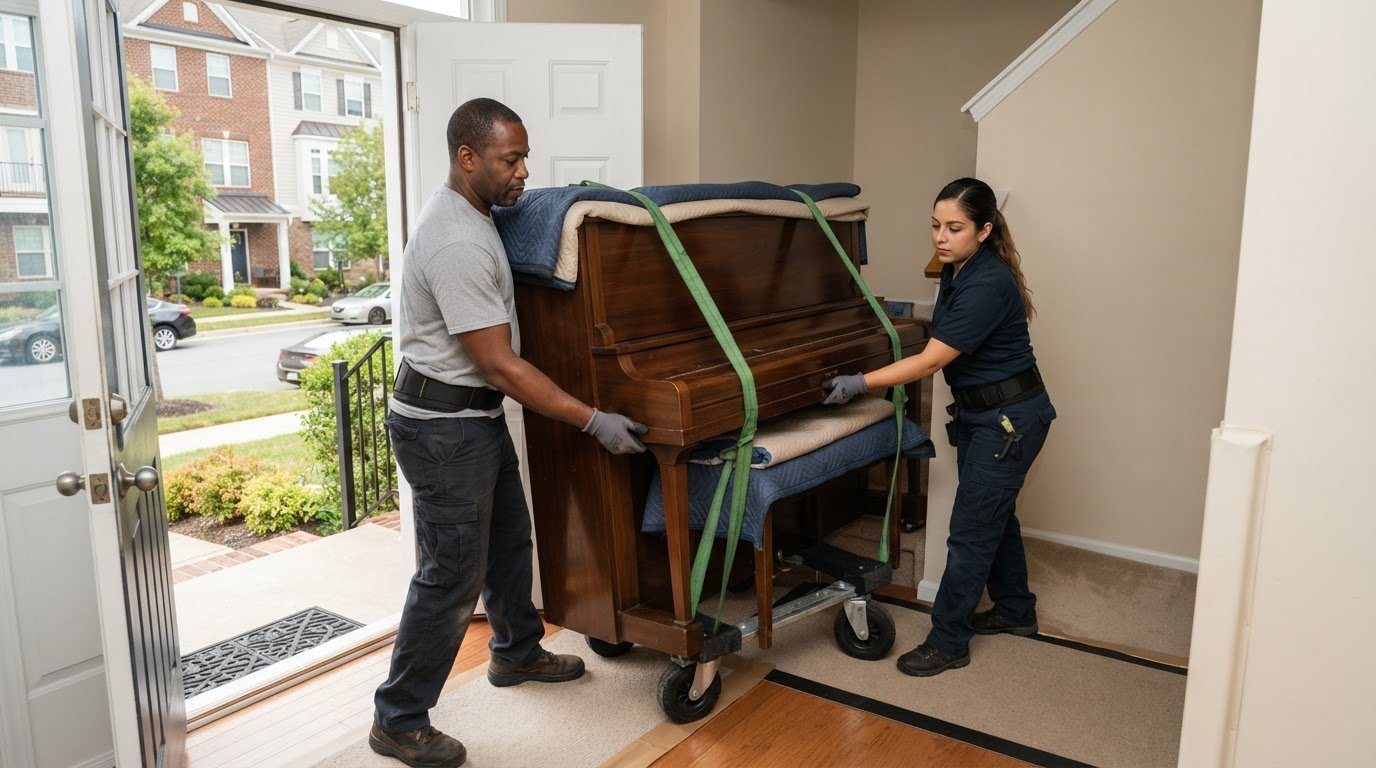
Move Furniture Into Place Without Straining Yourself or Damaging the Home
A layout that works on paper doesn’t automatically make a heavy piece safe to move. A sofa may fit the room but still be difficult to turn through a doorway. The plan helps you choose a destination; the weight, shape, and route determine whether you can move the item under control. If it shifts, tips, or feels too heavy to manage, stop. Don’t risk an injury or damage just to keep move-in day on schedule.
Before repositioning anything, walk the full route from its current location to the intended spot. Check the floor, corners, and clearances, then protect vulnerable surfaces. A few minutes of preparation can help prevent a rushed lift or an avoidable scrape.
Prepare the route and room before moving heavy pieces
Clear boxes, rugs, cords, and small objects from the path. Check doorways and tight corners for enough clearance, and look for floor changes that could affect how the item moves. At the destination, make sure there’s room to set the piece down without blocking an entrance or trapping other furniture. Keep children and pets away from the route until the move is complete.
- Protect surfaces: Use suitable floor coverings where furniture may touch or pass close to vulnerable flooring, walls, or door frames.
- Keep the path open: Move loose items out of the way and make sure the destination is ready before lifting.
- Stop if control is uncertain: An unstable, awkward, or overly heavy item is a reason to pause and get help.
Don’t assume a short distance is an easy move. A tight turn, stairs, or a change in floor level can make controlling a bulky item much harder. Planning the route is useful, but it can’t remove the physical demands of the lift.
Recognize when a bulky item needs professional handling
Pianos, safes, exercise equipment, and oversized furniture can be difficult to guide, especially through narrow entrances or around stairs and tight turns. Access constraints may change the handling plan entirely. For example, a sofa that cannot pass through a standard entryway may need sofa hoisting rather than another attempt through the same opening.
Clifton residents can use Heavy Furniture Moving for in-home heavy-item assistance when a piece is difficult to reposition. The team handles the demanding lift while you decide where the furniture works best. Professional help can be useful for one challenging item or for placing heavy furniture room by room.
If a bulky piece feels unsafe to lift or maneuver, get help moving heavy furniture in your Clifton home. Plan the room with care and leave a difficult lift to a moving team.
Finish Setting Up Your Clifton Home With the Right Moving Help
You’ve made the layout decisions. Now decide which pieces you can position comfortably and which need careful handling. Arranging lighter items and choosing where they belong are your calls. Moving a heavy dresser across a room, shifting exercise equipment, or guiding an oversized sofa through a tight space is a different task. You don’t need to arrange help for an entire home move to get assistance with a few demanding pieces.
Use this quick check before moving an item:
- Manage it yourself if the piece is light enough to control, the route is clear, and you can place it without straining.
- Pause and get lifting help if the item is bulky, unstable, difficult to grip, or hard to maneuver around stairs and tight turns.
- Reconsider the access plan if a large piece can’t pass through a standard entryway. For sofas, hoisting may provide a way to get the item into the home.
Trust what the move feels like. If you can’t keep control of a piece, don’t force it. Protecting your home and avoiding injury matter more than sticking to a rushed setup schedule.
Match the support to the furniture and access challenge
Furniture placement is a design decision; physically moving heavy pieces is a lifting task. Heavy Furniture Moving provides residential furniture and heavy-item moving help in Clifton, including in-home assistance to move pieces from room to room. That’s useful when you’ve settled on a layout but need help getting a bulky item into position. Sofa hoisting can help when a sofa cannot fit through a standard entryway.
Plan the final setup and take your next step
Make a short placement list for each room. Put large anchor pieces first, then note the smaller furniture that can follow once those items are in place. Include any access issue beside the item, such as a narrow turn or stairs, so the lifting task is clear. This keeps your setting up new home furniture arrangement Clifton plan focused and separates the decisions you’ll make from moves that call for extra help.
For broader planning, keep a local moving reference such as reliable movers in Fairfax and Northern Virginia handy as you organize your move. For heavy lifting in your Clifton home, reach out to Heavy Furniture Moving. Get support for the pieces that are tough to handle while keeping control of the layout choices that make the home yours.
Make Your New Clifton Home Feel Like Yours
Your first furniture plan is a starting point, not a permanent rule. As you settle in, notice which spaces support your routines and where a small adjustment could make daily life easier. Keep a short list of changes, then tackle them one piece at a time instead of trying to perfect every room on move-in day. A thoughtful setting up new home furniture arrangement Clifton plan should make the home work for you, not the other way around.
Heavy Furniture Moving is a veteran-family owned and operated local team offering residential furniture and heavy-item moving help. If a sofa can’t fit through a standard entryway, sofa hoisting may help get it inside. Keep your layout choices in your hands and let movers handle the demanding placement.
Get help with heavy furniture in your Clifton home, and take the next step toward a comfortable home that feels ready for everyday life.
Frequently Asked Questions
Should I arrange furniture before or after moving into a new home?
Plan likely placements before move-in, then make final decisions once you can see the rooms in person. For setting up new home furniture arrangement Clifton, measurements can help identify practical spots for large pieces, but the plan may change when you notice door swings, outlets, or how you use the space. Try marking a possible furniture footprint with painter’s tape before unpacking smaller items, then adjust as needed.
How do I know if my sofa will fit through a doorway?
Compare the sofa’s dimensions with the narrowest part of the route, not just the doorway opening. Measure the sofa’s height, width, and depth, then account for legs or other removable parts. Check the doorway, hall, stair landing, and any turn where the sofa may need to angle. If it won’t pass through a standard entryway, sofa hoisting may be a solution.
Can I arrange furniture without a floor plan?
Yes. A floor plan is helpful, but you can also use a room photo, a quick hand sketch, or removable tape to test possible locations. Start by marking where the largest item might sit, then add the smaller pieces around it. Take a picture of each option so you can compare them without relying on memory. Keep doorways and frequently used areas accessible as you experiment.
How much space should I leave between furniture?
Leave enough room to use each piece without squeezing past it. For example, pull a dining chair out as someone would during a meal, then check whether others can still move around it. Open drawers and cabinet doors fully, and walk your usual route through the room. The right clearance depends on your furniture sizes and room dimensions, so test the space in use instead of relying on a single measurement.
What should I move into a room first when setting up a new home?
Start with the largest essential piece that shapes the room’s use, such as a bed in a bedroom or a sofa in a living room. Place it before bringing in small tables, lamps, or decorative items that could crowd the work area. If the room’s purpose isn’t settled yet, move in only what you need to make it usable, then add other pieces after trying the space.
Is it worth hiring movers just to rearrange furniture inside a home?
It can be, especially if a heavy or awkward piece needs to move between rooms and you can’t control it safely yourself. Heavy Furniture Moving provides residential furniture and heavy-item help in Clifton and nearby communities, including Fairfax, Woodbridge, Manassas, Manassas Park, Aldie, Ashburn, Mclean, Vienna, Reston, Centreville, Chantilly, Dumfries, South Riding, Fairfax Station, Haymarket, and Gainesville.
How can I protect floors while arranging furniture?
Clear grit and small debris from the floor first, since particles beneath furniture can scratch delicate surfaces. Use suitable floor protection along the route and at the destination, and avoid dragging heavy pieces across the room. If a piece shifts unexpectedly or feels difficult to control, stop rather than trying to slide it into place. Careful handling helps protect both the flooring and the furniture.
For help moving heavy furniture or setting up your Clifton home, contact Heavy Furniture Moving.
Frequently Asked Questions
Plan likely placements before move-in, then make final decisions once you can see the rooms in person. For setting up new home furniture arrangement Clifton, measurements can help identify practical spots for large pieces, but the plan may change when you notice door swings, outlets, or how you use the space. Try marking a possible furniture footprint with painter’s tape before unpacking smaller items, then adjust as needed.
Compare the sofa’s dimensions with the narrowest part of the route, not just the doorway opening. Measure the sofa’s height, width, and depth, then account for legs or other removable parts. Check the doorway, hall, stair landing, and any turn where the sofa may need to angle. If it won’t pass through a standard entryway, sofa hoisting may be a solution.
Yes. A floor plan is helpful, but you can also use a room photo, a quick hand sketch, or removable tape to test possible locations. Start by marking where the largest item might sit, then add the smaller pieces around it. Take a picture of each option so you can compare them without relying on memory. Keep doorways and frequently used areas accessible as you experiment.
Leave enough room to use each piece without squeezing past it. For example, pull a dining chair out as someone would during a meal, then check whether others can still move around it. Open drawers and cabinet doors fully, and walk your usual route through the room. The right clearance depends on your furniture sizes and room dimensions, so test the space in use instead of relying on a single measurement.
Start with the largest essential piece that shapes the room’s use, such as a bed in a bedroom or a sofa in a living room. Place it before bringing in small tables, lamps, or decorative items that could crowd the work area. If the room’s purpose isn’t settled yet, move in only what you need to make it usable, then add other pieces after trying the space.
It can be, especially if a heavy or awkward piece needs to move between rooms and you can’t control it safely yourself. Heavy Furniture Moving provides residential furniture and heavy-item help in Clifton and nearby communities, including Fairfax, Woodbridge, Manassas, Manassas Park, Aldie, Ashburn, Mclean, Vienna, Reston, Centreville, Chantilly, Dumfries, South Riding, Fairfax Station, Haymarket, and Gainesville.
Clear grit and small debris from the floor first, since particles beneath furniture can scratch delicate surfaces. Use suitable floor protection along the route and at the destination, and avoid dragging heavy pieces across the room. If a piece shifts unexpectedly or feels difficult to control, stop rather than trying to slide it into place. Careful handling helps protect both the flooring and the furniture. For help moving heavy furniture or setting up your Clifton home, contact Heavy Furniture Moving.