How to Protect Crown Molding While Moving Bookcases in Dumfries
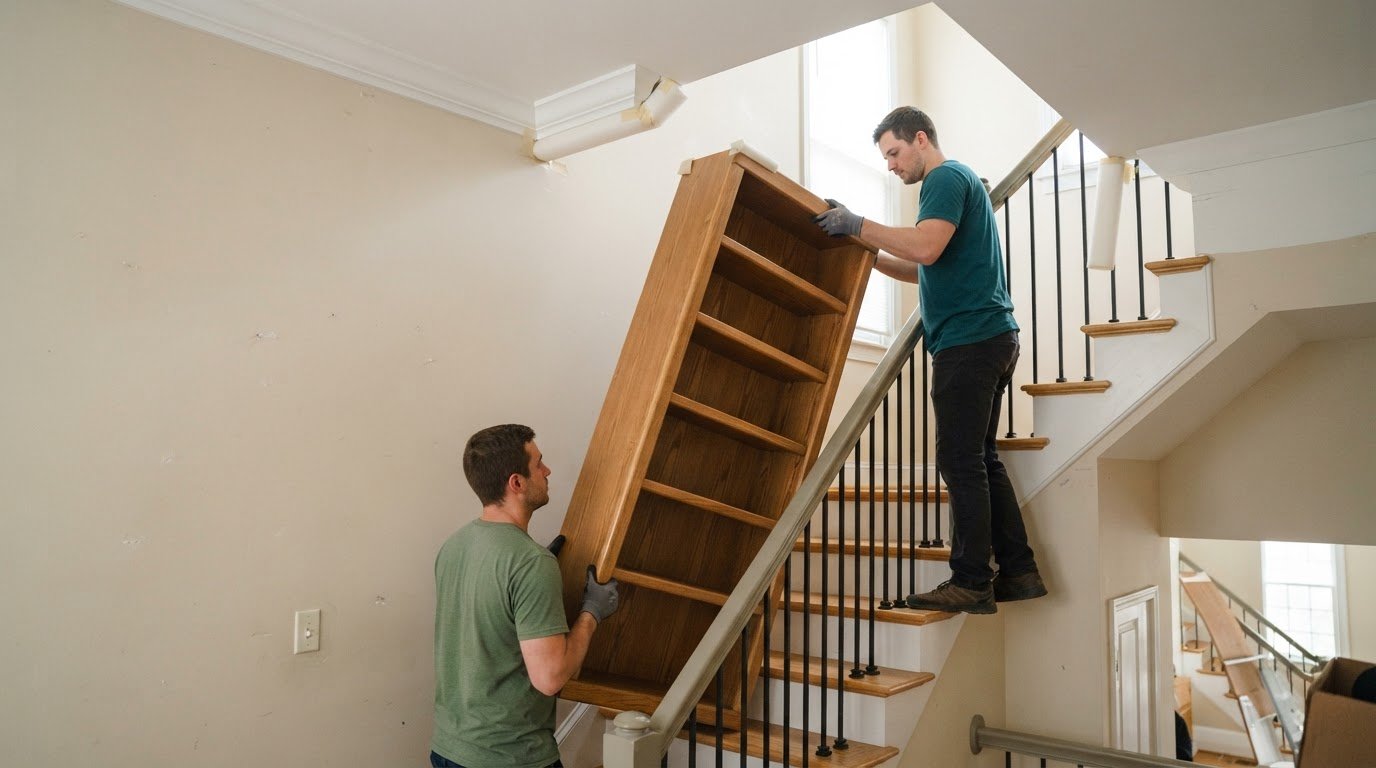
To protect crown molding when maneuvering tall bookcases up stairs in Dumfries, measure the bookcase and every tight spot on the route, then pad the trim and plan the turn before lifting. At a corner, pivot in small, controlled movements, adjusting the bookcase’s angle instead of forcing it against the wall or ceiling. Keep one person guiding the top while another supports the base.
It’s easy to focus on a tall bookcase’s weight and overlook the crown molding above the stairs. A sudden tilt or awkward turn can leave a scuff, dent, or crack, so move slowly and coordinate each step.
This guide explains how to measure doorways, stairs, and landings; pad vulnerable molding; and pivot carefully through a tight corner. You’ll also learn how to organize a stair carry and recognize when the angle, load, or limited space makes professional moving help the safer choice.
Key Takeaways
- Measure the bookcase and the full route, including doorways, stair turns, landings, and the space near the crown molding.
- Approach tight corners with a planned, controlled pivot; adjust the bookcase’s angle gradually instead of forcing it through.
- Assign clear roles and simple commands before a stair carry so both movers can coordinate each shift and pause.
- Use temporary padding to shield vulnerable trim, and keep the route clear to reduce accidental bumps and scrapes.
- Consider professional moving help when the bookcase is difficult to control, the route is cramped, or the carry feels unsafe.
Measuring furniture, stairways, doorways, and landings
- Measure the bookcase before moving it. Record its height, width, and depth, then measure the narrowest doorway, stair width, landing depth, ceiling height, and crown molding projection along the route. A 72-inch-tall armoire under a 75-inch landing ceiling has only 3 inches of overhead clearance, so the same comparison can flag a risky bookcase turn. Measure with doors open and note handrails, light fixtures, and trim that reduce usable space.
In Dumfries and Prince William County, separate damaged molding from packing debris and follow the collection service’s disposal instructions for each material. Keep broken trim contained until it can be disposed of safely.
- Map the turn before lifting. Mark the bookcase’s footprint with painter’s tape, then use its measured height and depth to estimate how far it must tilt to clear the ceiling and crown. Check the stair approach and landing from both directions. A route that fits the bookcase upright may not leave enough room to rotate it. Checking the route is central to protecting crown molding when maneuvering tall bookcases up stairs in Dumfries.
Gather a tape measure, level, moving blankets, corner padding, and gloves for a secure grip. Clear the stairs first, and place padding between the bookcase and walls or trim.
- Measure the molding run and locate wall studs before installing or replacing trim. Mark each wall’s length, corners, and stud positions; a stud finder helps identify secure nailing points. Nail crown molding into a wall stud for a secure installation. Prime and paint its sides and back before installation to help prevent warping, then measure each cut against the actual wall instead of assuming the corners are square.
For a mitered joint, make opposing cuts so the pieces meet at a 90-degree corner. Coped joints can work better when the corner isn’t square. Wear eye and hearing protection when cutting molding.
- Wait until the bookcase is clear of the stairs before touching up the molding. For a small surface mark, clean the area and apply matching paint with a small brush. For a dent or nail hole, apply wood filler, let it dry, then smooth and repaint the repair. If the molding is cracked, loose, or separated at a joint, secure or replace the affected section before painting. Match the existing profile and finish so the repair blends with the surrounding trim.
Pivoting furniture through tight corners
- Empty the bookcase and remove any shelves that lift out easily. Loose books and shelves can shift the balance during a turn, making the top harder to control. Secure doors so they can’t swing open, then wrap the corners and edges with moving blankets. Keep the padding smooth and snug; bulky folds can snag on crown molding or catch on a stair rail.
- Choose the pivot point before lifting. At a landing, bring the bookcase to the corner with its broad face aligned with the open space. One person controls the upper end while the other guides the base. Pause before turning, check for molding above and behind the bookcase, and agree on the direction. Don’t rotate until both people have a secure grip.
- Turn in small, controlled movements rather than swinging the bookcase around at once. Move the base a short distance while guiding the top in the opposite direction, then pause and reassess. This gradually changes the bookcase’s angle and helps keep its upper corners clear of the ceiling trim. If the padding touches the molding, stop and reset instead of pushing through.
- Use the open part of the landing to change the bookcase’s angle. Tilt the top only as much as needed for clearance, and watch how the angle changes the upper corner’s path. The base may clear the wall while the top still strikes crown molding. Move slowly enough to see both ends, especially where a stair rail or doorway restricts the turning space.
- Call out each movement clearly. One person can say “lift,” “turn,” “hold,” or “lower,” and the other should repeat the instruction before moving. Pausing lets both people reset their grip and check the trim. Keep hands clear of the bookcase’s underside and wall-side edge, where fingers can get trapped as the piece rotates through a tight gap.
- Stop if the bookcase binds, tips, or presses against the wall. Back it out along the same path, adjust the angle, and try again only when both people have space to move. Don’t use crown molding, door trim, or a handrail as a brace. If the corner leaves no controlled route, in-home furniture moving help can take the difficult turn off your hands.
Glue can be applied to the mitered corners before nailing the side molding pieces to the wood blocks and at the corner. The page states that well over 100,000 stair-related injuries occur each year while people carry items such as furniture up or down stairs. It estimates that stair-related DIY furniture-moving damage costs American households hundreds of millions of dollars annually. Those figures underscore why a controlled route matters: if the turn feels unstable or clearance is insufficient, stop and get help rather than forcing the bookcase through.
Assessing stair-carry risks and when to hire professionals
- Choose the bookcase’s position based on clearance and control. Keep it upright if it fits through the stairway and past the ceiling without scraping. Tilt it only if the route requires it and both people can control the top and base. Tilting changes the bookcase’s height and balance, so check the top corners against the ceiling and crown molding before moving.
- Assess the stairs as a full route, not just a set of steps. A standard staircase is described as having a 37° angle, but the landing, handrail, and turn shape affect the carry too. Look for places where a carrier must step backward or twist. If one person can’t see the next step or maintain a firm grip, pause and revise the plan.
- Consider the load’s balance as well as its weight. A bookcase that is top-heavy, awkward to grip, or filled with shifting contents is harder to steady on stairs. Remove loose books and unsecured shelves before lifting. A 200-pound sofa can feel like a 240-to-260-pound load to the person at the bottom of a standard staircase, illustrating how the lower carrier may bear added strain.
- Don’t remove or loosen crown molding as a shortcut. Pulling it away can chip paint, split the molding, loosen nearby sections, or leave nail holes to repair. It can also expose a sharp edge beside the moving path. Keep the trim in place and adjust the route or bookcase angle instead. If the trim is already loose, don’t use it as a handhold or support.
- Hire professional movers if the bookcase is too heavy to control, the landing has no room to turn, or the stairs force carriers into unstable positions. The same applies if the bookcase blocks a clear view of the steps or its contents can’t be secured. A professional heavy-lifting team can assess the item, route, and turning space before starting the carry.
- Set clear stop points before lifting. Agree that either person can call “stop” if the bookcase shifts, a foot slips, or padding catches on the molding. Lower the piece to a stable position before changing grips. Don’t continue through pain, loss of balance, or contact with the wall. These are signs to make a new plan, not apply more force.
Coordinating a partner lift on stairs
- Assign roles before touching the bookcase. The person at the lower end supports the base and watches each step. The person at the upper end steadies the top and watches the ceiling, wall, and crown molding. Agree who will call each movement, then keep those roles throughout the stair section. If either person needs to change position, lower the bookcase to a stable spot first.
Check that both people can grip the frame securely. Don’t lift by a loose shelf, decorative trim, or door. Remove unsecured shelves and contents so they can’t slide during the climb.
- Agree on short, clear commands before lifting. Use “ready,” “lift,” “step,” “hold,” and “lower,” and agree that “stop” means freeze. The person calling the move should speak loudly enough to be heard over footsteps. Wait for the other person to acknowledge each command before moving. This rhythm helps prevent one person from lifting while the other is repositioning.
Keep instructions specific. “Raise the top slightly” is clearer than “move it,” especially near a low ceiling or crown molding.
- Move only when both people have stable footing and a clear next step. The person at the lower end should call out obstacles, loose mats, or changes in stair direction before advancing. The person at the upper end should watch the bookcase’s top edge and call out clearance near the wall. Make one controlled movement at a time, then pause to confirm the frame is balanced and both people still have a secure grip.
Keep pets, boxes, and tools out of the path. Don’t carry anything else while guiding the bookcase.
- Plan pauses at safe, level spots, such as a clear landing. Don’t rest the bookcase against crown molding, a handrail, or a doorframe. If either person feels the load shifting or can’t hold position, call “stop” and lower the piece together. Regrip only once it’s stable. Never let one person release their end while the other supports the entire bookcase.
Keep fingers away from pinch points between the frame and wall. Moving blankets can cushion contact, but they don’t replace a controlled hold.
- Finish the carry at the same coordinated pace. At the top landing, wait until both people have secure footing before turning or setting the bookcase down. Agree on the placement direction, then lower it together onto a stable floor. Check the stair walls and molding for marks before removing the padding. If the route requires awkward handling or either person can’t maintain control, stop and use professional moving help.
What temporary padding or guards work best for crown molding during a move?
- Start with a clean, dry strip of molding and padding that won’t shed grit. A moving blanket works as a soft buffer along a stair wall, while foam corner guards cushion exposed edges. Cover the full area that could be contacted, including outside corners and joints. Wipe the surface first so dust trapped under a pad won’t rub against the finish.
Don’t rely on a loose blanket alone. Secure it so it can’t slip into the bookcase’s path, and keep fasteners off delicate painted surfaces.
- Place a temporary barrier where the bookcase may pass closest to the trim. Clean, stiff cardboard or a thin protective board can spread light contact over a wider area. Put it between the molding and the moving path, then hold or secure it without pressing adhesive onto the finish. Make sure the barrier can’t slide or fall as the bookcase moves.
A barrier can help with accidental brushing, but it won’t protect molding from a hard impact or a bookcase pushed forcefully into the wall.
- Pad the bookcase as well as the room. Wrap its upper corners, side edges, and top with moving blankets, then secure the blanket around the furniture. Smooth folds that could catch on a molding profile or stair rail. Keep padding away from handholds so carriers can grip the frame rather than pull on loose fabric.
At a tight turn, check the blanket after each pause. A shifted cover can expose a sharp bookcase corner just as it approaches the trim.
- Protect built-in bookcases differently from freestanding furniture. If crown molding is attached to a bookcase, don’t wrap or pull against the molding itself. Wood blocks supporting molding on a bookcase can be installed around the top or only at the corners, middle, and ends. These supports belong to a construction setup, not a temporary moving guard, so don’t add or remove them during a carry.
For a freestanding bookcase, pad the upper edge and keep a visible gap from the molding as it turns.
- Inspect the trim before removing each guard. Look along the molding for a fresh scuff, dent, or loosened joint, then compare the same area after the bookcase clears. If you’re moving a heavy bookcase through a narrow stair turn, get help with heavy furniture moving instead of relying on padding to solve a clearance problem.
Heavy Furniture Moving: Movers Near Me
Heavy Furniture Moving provides Movers Near Me for bulky furniture moves that require careful handling. Turn to the team when a tall bookcase is difficult to guide around a landing, stair rail, or crown molding, or when coordinating the carry safely is a challenge. Experienced help can ease the strain of maneuvering a heavy piece and help protect your trim during the move.
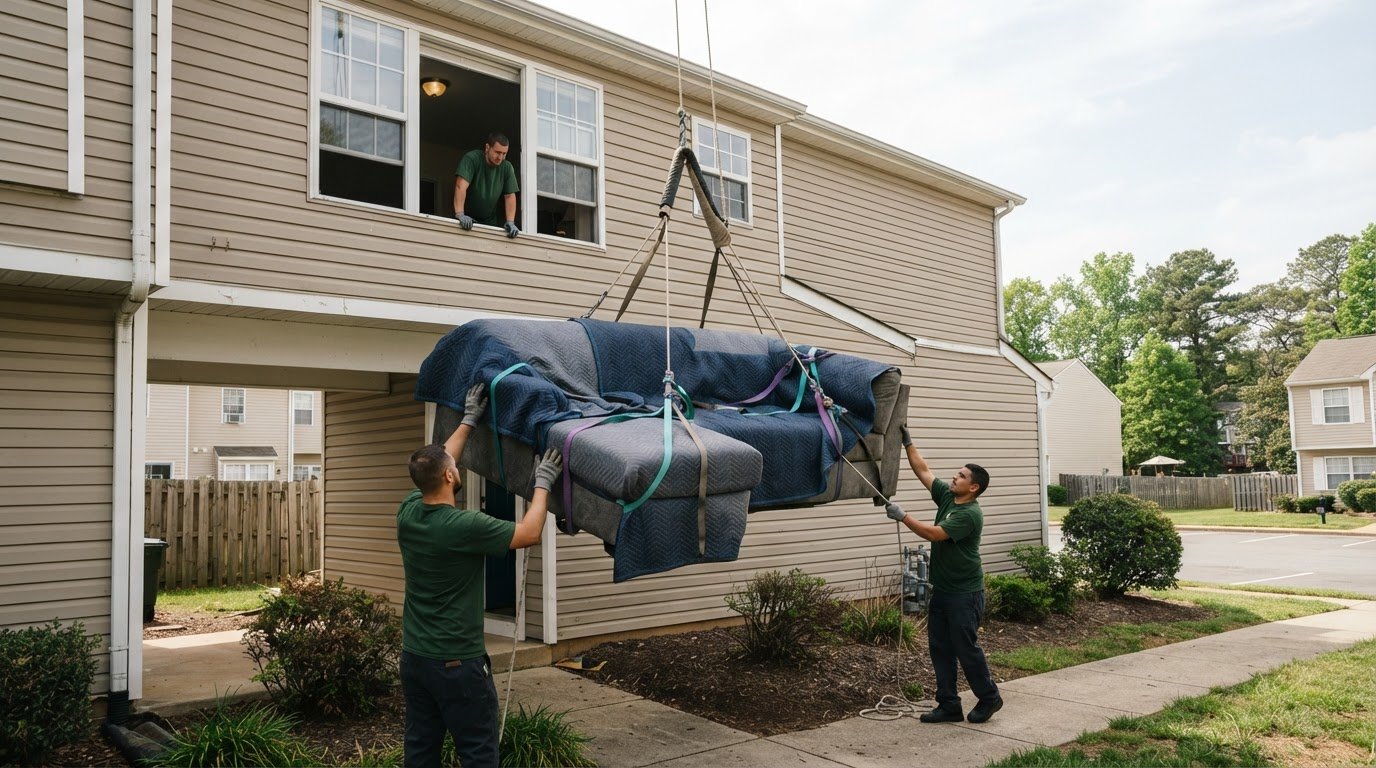
Heavy Furniture Moving also offers in-home furniture movers near me, Exercise Equipment Moving, and Sofa Hoisting. These services meet different heavy-item needs, from moving furniture inside the home to handling exercise equipment or hoisting a sofa.
Contact Heavy Furniture Moving to discuss help with your bookcase move.
Make the move with a clear plan
Before moving day, decide what matters most: keeping the bookcase intact, preserving the room’s finish, and making the carry manageable. Set a clear stop point with your helpers. If the furniture shifts, the route feels too tight, or anyone loses a secure grip, pause and change the plan instead of forcing the move. That judgment is key to protecting crown molding when maneuvering tall bookcases up stairs in Dumfries.
Professional help is a practical next step when the carry requires more strength or control than your household can safely provide. Heavy Furniture Moving can help plan support for a heavy furniture move, leaving you to focus on preparing your home and choosing where the bookcase belongs.
Contact Heavy Furniture Moving for help, and take the next step toward a smoother move.
Frequently Asked Questions
What Is the Pivot Technique for Tight Corners on a Staircase?
The pivot technique turns a bookcase around a corner by moving its base and top along different paths. First, position the lower end where the landing gives it room to move. Then guide the upper end around the corner without letting it swing toward the molding. Picture the bookcase’s long edge tracing a controlled arc, not scraping along the wall. Pause if either end loses clearance.
How to measure a stairwell, landing, and tall bookcase before moving it?
Measure the bookcase’s height, width, and depth, then note the narrowest clear width along the route. Account for obstacles such as a handrail, light fixture, or partly open door. On the landing, measure the open turning space, not just the distance between walls. Compare those measurements with the bookcase held at the angle you expect to carry it. Record the tightest spot so everyone can plan for it.
How to protect crown molding from scratches and dents while moving furniture upstairs?
Prevent the bookcase from touching the molding rather than relying on padding alone. Cover vulnerable furniture edges with clean moving blankets, and place a protective barrier near trim where accidental brushing could occur. Avoid sticking adhesive directly to painted molding, since removing it can lift or mark the finish. If tape is needed to hold a guard, test it on a hidden painted surface first and remove it gently after the move.
How to maneuver a tall bookcase safely around a stair landing and tight corners?
Clear the landing completely, then choose a starting position that leaves room for the bookcase’s upper end to arc away from the wall. Make sure the next step or exit is visible before turning. If the furniture reaches a dead end, back it out along its entry path rather than twisting under strain. A quick dry run using the bookcase’s outline marked on the floor can show whether the turn needs a different approach.
How many people are needed to carry a tall bookcase up stairs safely?
For a straightforward carry, plan for two capable adults, one controlling each end. This works only if both can grip the bookcase securely, move in step, and see the stairs or communicate clearly. A heavier, wider, or unstable bookcase may need more help or professional movers. Don’t add helpers on a cramped staircase if they block footing or communication; change the moving plan instead.
Frequently Asked Questions
The pivot technique turns a bookcase around a corner by moving its base and top along different paths. First, position the lower end where the landing gives it room to move. Then guide the upper end around the corner without letting it swing toward the molding. Picture the bookcase’s long edge tracing a controlled arc, not scraping along the wall. Pause if either end loses clearance.
Measure the bookcase’s height, width, and depth, then note the narrowest clear width along the route. Account for obstacles such as a handrail, light fixture, or partly open door. On the landing, measure the open turning space, not just the distance between walls. Compare those measurements with the bookcase held at the angle you expect to carry it. Record the tightest spot so everyone can plan for it.
Prevent the bookcase from touching the molding rather than relying on padding alone. Cover vulnerable furniture edges with clean moving blankets, and place a protective barrier near trim where accidental brushing could occur. Avoid sticking adhesive directly to painted molding, since removing it can lift or mark the finish. If tape is needed to hold a guard, test it on a hidden painted surface first and remove it gently after the move.
Clear the landing completely, then choose a starting position that leaves room for the bookcase’s upper end to arc away from the wall. Make sure the next step or exit is visible before turning. If the furniture reaches a dead end, back it out along its entry path rather than twisting under strain. A quick dry run using the bookcase’s outline marked on the floor can show whether the turn needs a different approach.
For a straightforward carry, plan for two capable adults, one controlling each end. This works only if both can grip the bookcase securely, move in step, and see the stairs or communicate clearly. A heavier, wider, or unstable bookcase may need more help or professional movers. Don’t add helpers on a cramped staircase if they block footing or communication; change the moving plan instead.