How to Move an Upright Piano Across Flagstone Without Cracking Tiles
A flagstone foyer is no place to test a piano’s casters. To move an upright piano across a flagstone foyer without cracking tiles in Manassas, protect the stone with a firm path that spreads the load, and keep the piano off its own wheels. If you’re moving it yourself, use enough capable helpers, move slowly, and keep the instrument upright and controlled.
It’s understandable to consider handling a short move yourself, especially when the piano only needs to cross the foyer. But its weight and the uneven joints between flagstone pieces can put both the floor and the instrument at risk. Prepare the route, protect the stone, and assess whether you have the people and equipment to control the piano safely. If not, professional help is a safer choice than risking a cracked tile, damaged piano, or back injury.
Key Takeaways
- Plan a clear, level route before moving the piano, and gather at least four people for a DIY move.
- Keep the piano off its own casters; a firm protective path can help spread the load across flagstone.
- Move slowly and keep the instrument level, especially across grout lines and floor transitions.
- Stairs, tight turns, narrow doorways, and difficult landings are strong reasons to leave the move to professionals.
- For help with a heavy household move, Heavy Furniture Moving’s Movers Near Me offering is a practical next step.
Preparing and moving a piano across flat surfaces
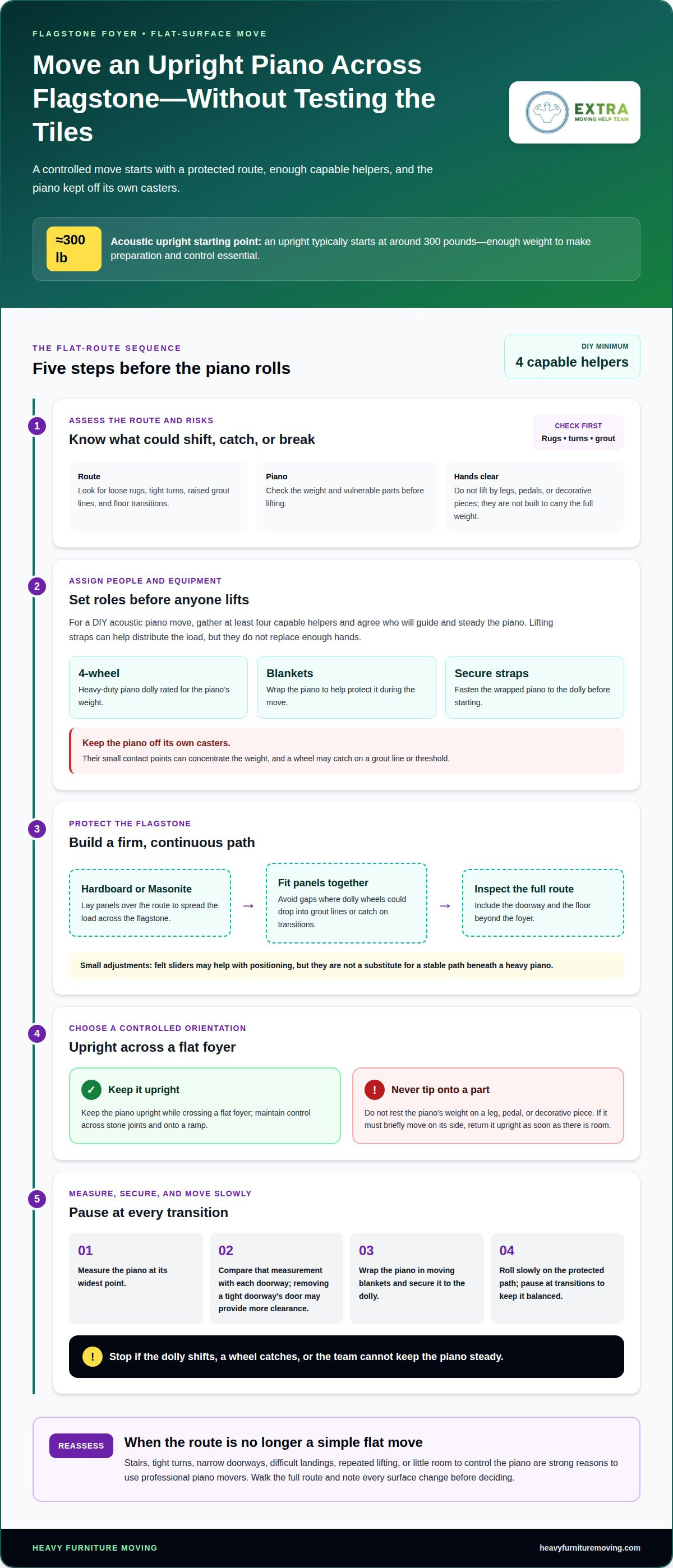
Plan the route, protect the flagstone, and gather capable helpers before moving. These steps help control the piano’s weight and reduce the risk of floor damage.
-
Assess Piano Moving Risks
Check the piano’s route, weight, and vulnerable parts before lifting. An acoustic upright typically starts at around 300 pounds, so a sudden shift can strain the movers or damage the instrument. Keep hands away from legs, pedals, and decorative pieces; they aren’t built to carry its full weight. Look for loose rugs, tight turns, and raised grout lines that could interrupt a controlled move.
-
Choose Moving Equipment
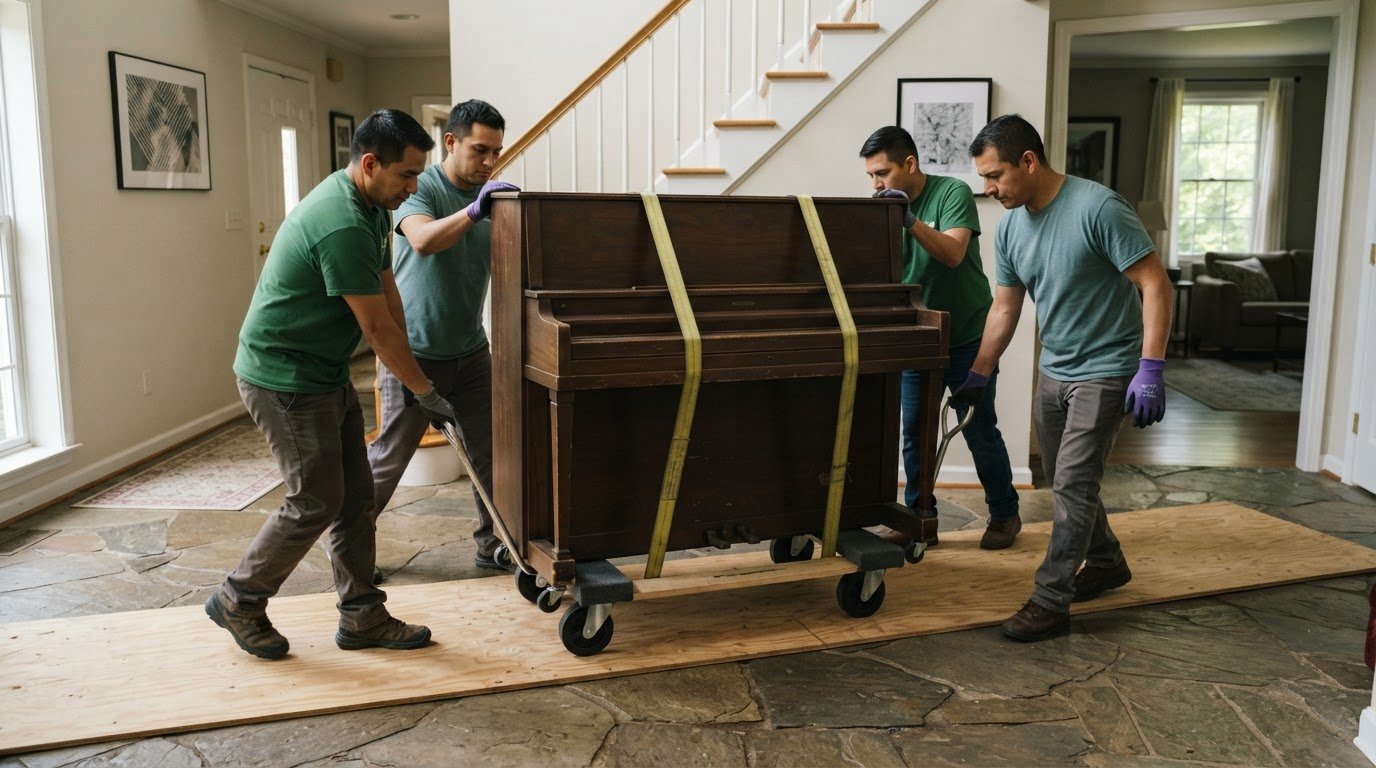
For a DIY acoustic piano move, gather enough capable helpers and assign clear roles before anyone lifts. Use a heavy-duty, four-wheel piano dolly rated for the piano’s weight, along with moving blankets and secure straps. On uneven flagstone, a firm protective surface beneath the dolly helps it cross grout joints without putting the piano’s weight directly on its casters. Don’t roll the instrument on its own casters.
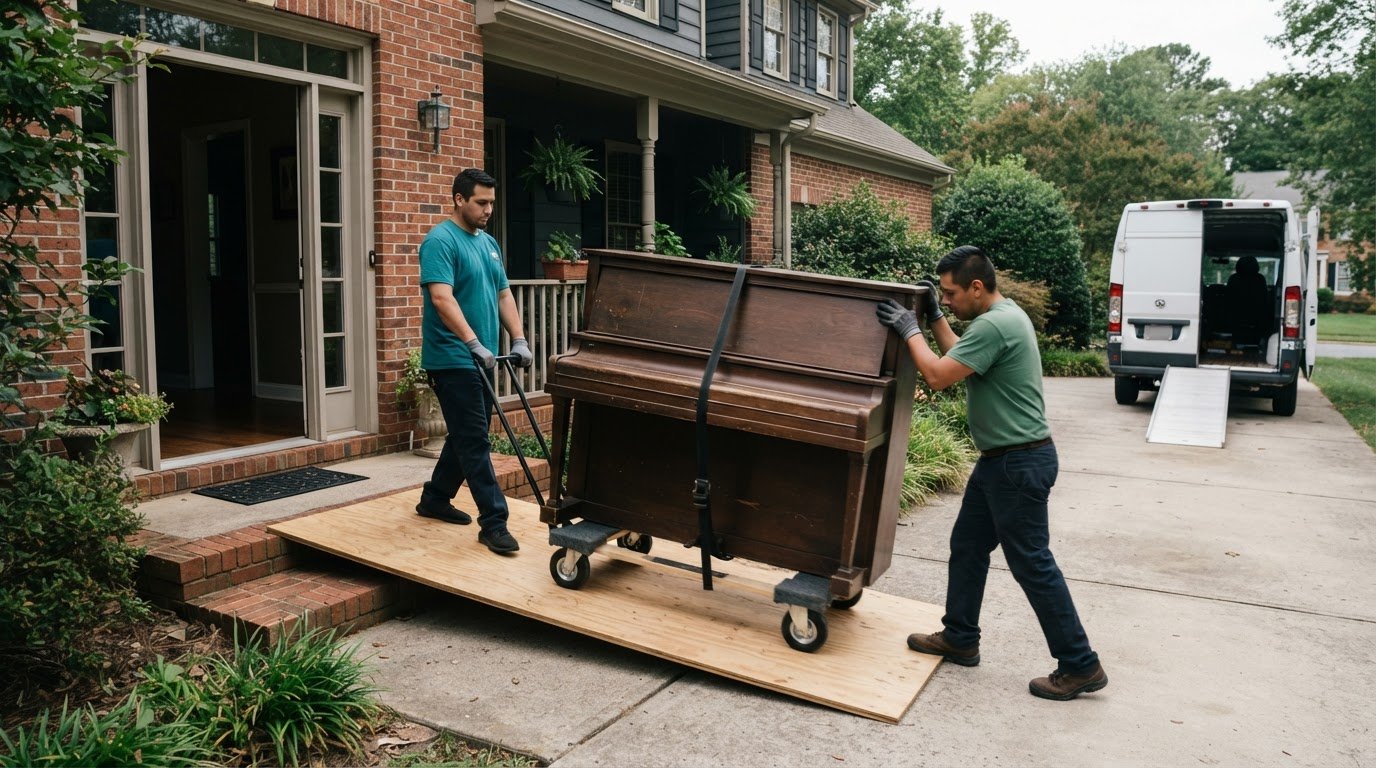
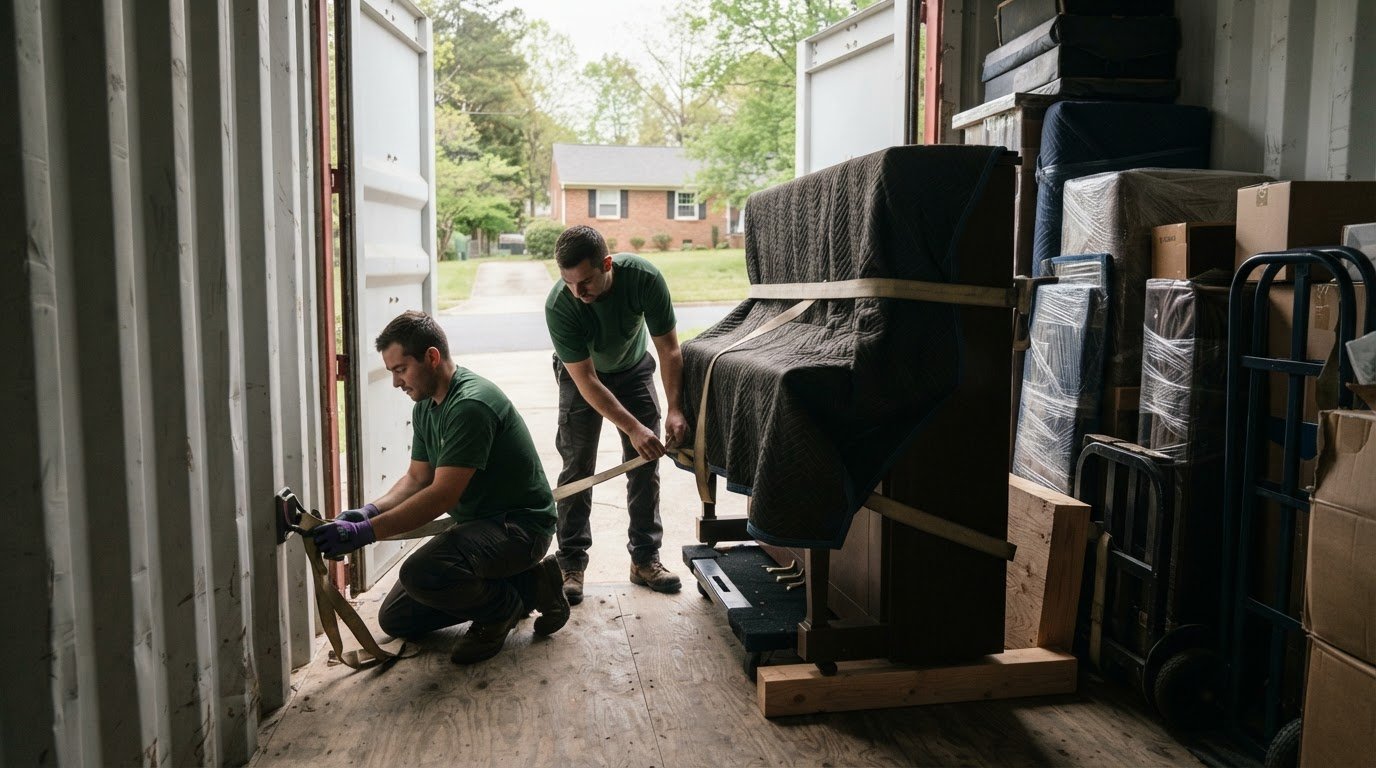
Lifting straps can help distribute the load, but they don’t replace enough hands to guide and steady the piano. If using a ramp into a van, cover it with plywood and secure the piano with straps. Make sure the ramp is stable and the path is clear before moving onto it.
-
Protect the Floor
Lay hardboard or Masonite over the route to spread the load across the flagstone. Fit the panels together so the dolly wheels don’t drop into grout lines or catch on transitions. Felt sliders may help with small positioning adjustments, but they’re no substitute for a stable path beneath a heavy piano. Check the entire route before lifting, including the doorway and the floor beyond the foyer.
-
Decide Piano Orientation
Keep the piano upright while crossing a flat foyer. If the space requires briefly moving it on its side, return it upright as soon as there’s room. Don’t tip it onto a leg, pedal, or decorative part. Keep the tilt controlled and the piano steady, especially when crossing stone joints or moving onto a ramp.
-
Prepare the Route and Move Slowly
Measure the piano at its widest point and compare that measurement with each doorway. If a doorway is tight, removing the door may provide more clearance. Wrap the piano in moving blankets and secure it to the dolly before starting. Roll slowly along the protected path, pausing at transitions to keep the instrument balanced. Stop if the dolly shifts, a wheel catches, or the team can’t keep the piano steady.
When to hire professional piano movers
In Manassas, permit requirements depend on the route and parking arrangements, so assess those details before moving day. Insurance is a separate consideration: review the mover’s coverage and the terms for your specific move before work begins.
- Bring in experienced movers for a high-risk piano. A baby grand or grand move calls for 4-6 experienced movers, especially when the legs and board must be managed alongside the dolly. A grand piano can weigh more than 500 pounds. That load needs coordinated handling, not extra hands arriving without assigned roles. Choose professional piano movers when the instrument’s size, balance, or disassembly makes a controlled move difficult.
- Get professional help for stairs and tight routes. Contact piano movers when the route includes more than a couple of steps, a turn, or a tight landing. Also consider the full path from the foyer to the vehicle. A narrow corridor, sharp turn, or raised threshold can make it hard to keep the piano steady. Share these obstacles before the move so the crew can plan its approach and equipment.
- Assess the distance and every transition. A short roll across a level room is different from a longer route with thresholds, uneven stone, and an outdoor ramp. Walk the full distance first and note every change in surface. Flagstone joints can interrupt the dolly’s wheels, and a doorway turn may require repositioning the instrument. Get professional help if the route requires repeated lifting or leaves little room to control the piano.
- Discuss coverage and access before scheduling. Describe the piano, flagstone foyer, doorway widths, stairs, and vehicle access when arranging the move. Review the mover’s insurance terms and what they cover during handling and transport. Permit requirements depend on the route and parking setup, so consider where the vehicle will stop and whether it could block access. Clear details help you plan for the specific location.
- Choose the right level of moving help. If the piano is already positioned and the main challenge is heavy lifting, local moving help can be a practical option. For a grand piano, stairs, or a route requiring specialized piano handling, use movers equipped for that full task rather than treating it as a basic furniture shift.
Permit requirements depend on the route and parking arrangements, so consider where the vehicle will stop and whether it may block access. Review the mover’s insurance coverage and terms for your specific move before work begins.
Protecting stone tile and other flooring
Yes, an upright piano’s concentrated weight can crack flagstone or stone tile, particularly when casters roll over joints. Protect the route before moving and inspect every floor transition.
-
Assess Floor Type and Piano Casters
Inspect the foyer, grout lines, and floor transitions before moving the piano. Its casters support the instrument and allow minor adjustments, but they aren’t designed for regular travel. Their small contact points can concentrate the piano’s weight on individual tiles. A caster catching on a grout line or threshold can jolt the piano and stress the floor. Don’t assume stone is damage-proof.
-
Consider Concentrated Piano Weight
The floor takes the most pressure where the piano meets it. An upright’s concentrated weight can crack flagstone or stone tile, and rolling casters across tile increases that risk. Damage can happen along the route, not just where the piano rests. Check for loose, chipped, or uneven stones before moving, and avoid placing a wheel or caster directly over a vulnerable joint.
- Measure and cover the complete route. Measure the foyer’s usable width and note every joint, threshold, and turn. Lay a firm protective surface across the route to distribute the piano’s weight beyond the small caster contact points. Plywood or Masonite can provide a hard covering; fit the pieces securely so their edges don’t shift under the load. Cover the floor beyond the foyer too, since exposed transitions can still catch wheels.
- Match protection to the flooring. Flagstone has uneven joints, while smoother tile can still crack under concentrated pressure. Piano casters can also scratch hardwood if they catch or roll over debris. Clear grit from the route before laying protection, since trapped particles can mark stone or wood. For a small adjustment after the main move, a blanket, towel, or carpet beneath caster cups may help the piano slide without rolling its wheels over the floor.
- Check stairs and surface changes before lifting. Identify where the foyer meets hardwood, carpet, an outdoor step, or a ramp. Secure floor coverings so they don’t bunch beneath the piano or create a trip edge. Don’t roll directly across a stone-to-wood transition; first align a continuous protective path. At stairs, stop and reassess rather than letting the piano’s weight shift onto an exposed edge or unsupported covering.
- Inspect the protection as the piano moves. Pause at each doorway and floor transition to check that panels remain aligned and wheels stay on the covered path. If a panel slides, a caster catches, or the surface flexes, stop and reset it before continuing. Small, deliberate movements help prevent jolts across flagstone joints and keep the floor covering from scraping the tiles underneath.
Deciding whether to move an upright piano yourself
A full-size upright can weigh 400-800 pounds. Dimensions vary by model, so measure its height, width, and depth, then compare the widest point with every doorway and turn. Deciding how to move an upright piano across a flagstone foyer without cracking tiles in Manassas starts with an honest check of the route, crew, and equipment.
- Match the move to the piano. Record the model, approximate weight, and measurements before planning the move. A compact spinet and a full-size upright present different lifting challenges. Check the route from the piano’s current position to its destination, including foyer openings and floor transitions. If it requires repeated lifting or a sharp turn, professional piano movers are the safer choice.
- Count capable helpers and assign roles. For a DIY acoustic piano move, make sure you have enough capable helpers. Decide who will guide the front, steady the rear, and manage doors or obstacles. Everyone should understand when to stop and reset. If a helper can’t maintain a secure grip or follow coordinated instructions, don’t begin the lift. An uneven lift can shift the piano suddenly.
- Check your route and equipment honestly. A flat, open room-to-room move is different from a flagstone foyer with tight turns, stairs, or narrow doorways. Confirm that the piano dolly can support the instrument and fit along the route. If it can’t cross a threshold smoothly, or the team would need to improvise support, stop and reassess. The piano’s casters aren’t intended for regular moving.
- Protect the instrument, not just the floor. Wrap the cabinet in moving blankets and secure them without pressing on delicate parts. Don’t lift by the legs, pedals, or decorative trim, which aren’t designed to carry the piano’s full weight. Secure the keyboard and lid, and avoid impacts that could disturb internal parts such as strings. If anything shifts or loosens, stop rather than pushing through.
- Weigh the injury risk against the move. Moving a piano without adequate help can cause injury. Don’t try to lift or reposition it alone, even over a short distance. If the route includes stairs, a tight landing, or a ramp, use professional movers rather than relying on an improvised lift. When planning how to move an upright piano across a flagstone foyer without cracking tiles in Manassas, remember that even a short route requires careful control.
- Choose help when any key condition fails. A DIY move is appropriate only if the piano fits the route, the crew can control it, and the equipment supports its weight. If any of those conditions is missing, use professional piano-moving help. Don’t let a short distance make a difficult lift seem easy. Careful measurements and an honest assessment can prevent a risky attempt.
Do Manassas piano movers handle flagstone floors?
Flagstone calls for a planned route, firm floor protection, and controlled movement. Prepare the foyer and identify its surface conditions before the piano move.
- Map the flagstone route. Walk from the piano’s current position to the vehicle, noting grout lines, uneven stones, thresholds, and tight turns. Flagstone joints can catch small wheels, while a floor transition can shift a piano unexpectedly. Mark each problem spot, including the foyer entrance and exit. A route map gives the moving team specific hazards to plan around, not just a general description of the floor.
- Describe the piano and access points. Share the piano type, approximate weight, and widest measurement, along with doorway widths and any stairs. An upright taking a straight path across a broad foyer presents different handling needs from one requiring a sharp turn. Mention delicate edges and narrow landings as well. These details help movers plan the crew, equipment, and sequence before the instrument reaches the flagstone.
- Prepare a stable floor-protection path. Hardboard or Masonite can cover the stone and spread the load beyond the piano’s small caster contact points. The panels should meet securely, without loose edges that wheels could catch. Because flagstone is irregular, check that the protective surface stays level across joints and thresholds. Keep grit off the panels, since trapped debris can scratch the stone as the piano passes.
- Keep the piano off its own casters. Piano casters support the instrument and allow minor positioning, but they aren’t designed for regular travel. On flagstone, a wheel can catch at a joint or concentrate pressure on one tile. Use a suitable piano dolly on the protected path, keep the instrument controlled, and pause at each change in surface. Don’t force a wheel across an uneven stone edge.
- Coordinate the move from the doorway onward. Keep the route clear, secure doors open, and agree on stop signals before lifting or rolling. The person guiding the front should call out grout lines and turns; the rest of the crew should move at that pace. For help with a heavy household move, arrange moving assistance and share the flagstone route details before the move.
- Watch for movement in the protection. Stop if a panel shifts, a dolly wheel catches, or the piano begins to tilt. Reset the path before continuing instead of pulling the instrument over a raised edge. Treat an exterior step or ramp as a separate maneuver. A controlled pause protects the stone surface and helps keep the piano balanced.
Heavy Furniture Moving: Movers Near Me
Heavy Furniture Moving’s Movers Near Me service can help when an upright piano or another heavy household item needs moving. Turn to the team when the route, lifting, or coordination feels difficult to manage alone.
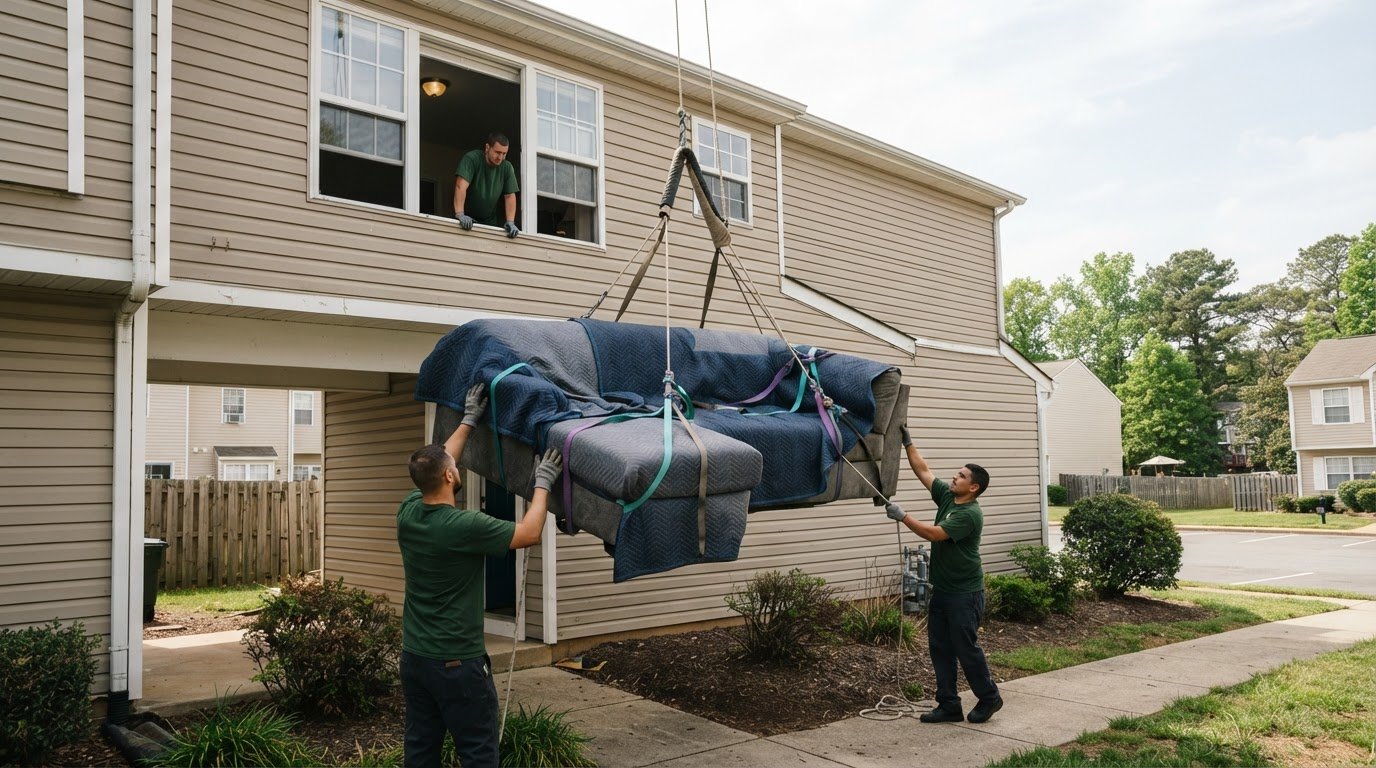
Describe the piano’s location, the flagstone foyer, and any tight turns or stairs when arranging the move. These details give the crew a clear picture of the access challenges. Heavy Furniture Moving also offers in-home furniture moving, Exercise Equipment Moving, and Sofa Hoisting for other bulky household moves in Manassas and nearby communities.
Contact Heavy Furniture Moving to discuss your move.
Plan the Move Before the First Lift
If you’re deciding how to move an upright piano across a flagstone foyer without cracking tiles in Manassas, start by planning the route. Note the piano’s location, the foyer layout, and any tight turns or stairs. This gives the moving team a clear picture of the job and helps you avoid rushed decisions on moving day.
Moving a piano safely takes coordination. If the route feels difficult to manage or the lifting exceeds what your household can handle safely, arrange help before moving the instrument. Heavy Furniture Moving provides Movers Near Me, Exercise Equipment Moving, and Sofa Hoisting for heavy household moving needs.
Share the details that make your route unique, including the flagstone surface and access points. Then take the next step with a team prepared to discuss your moving needs: contact Heavy Furniture Moving for piano moving help.
A careful plan gives you a steadier start and helps protect the foyer you want to keep intact.
Frequently Asked Questions
Should You Move It Yourself or Call a Pro?
Call professional movers if you can’t control the piano through every turn without rushing or losing balance. A DIY move is more suitable when the route is level and open, the crew can coordinate, and the equipment fits the piano and path. Before deciding, walk the full route and consider how you would stop or back up at its tightest point. If that seems unsafe, don’t start the lift.
How can I protect flagstone tiles when moving a heavy piano?
Cover the full route with clean, firm floor protection before moving the piano. Check the foyer entrance, grout joints, doorway, and flooring beyond the flagstone, since damage can happen at transitions too. Sweep away grit first so it doesn’t get trapped beneath the covering. During the move, pause if the protection shifts or buckles, then reset it before continuing.
How do you move an upright piano safely across a foyer step or threshold?
Don’t roll the piano directly over a step or raised threshold. Clear the approach and plan a controlled transition with suitable equipment and coordinated guidance. A stable, properly covered ramp may help, but a step, turn, or tight landing can make the maneuver unsuitable for a DIY crew. Stop if the piano tilts or the equipment shifts.
What are the risks of moving an upright piano without professional movers?
An uncontrolled move can injure helpers and damage the piano, doorway, or floor. A sudden shift may trap fingers, pull a helper off balance, or cause the instrument to strike a wall. An improvised lift can also put force on parts not designed to support the piano’s weight. Don’t proceed if helpers can’t communicate clearly, hold their positions, or pause together when the route changes.
Frequently Asked Questions
Call professional movers if you can’t control the piano through every turn without rushing or losing balance. A DIY move is more suitable when the route is level and open, the crew can coordinate, and the equipment fits the piano and path. Before deciding, walk the full route and consider how you would stop or back up at its tightest point. If that seems unsafe, don’t start the lift.
Cover the full route with clean, firm floor protection before moving the piano. Check the foyer entrance, grout joints, doorway, and flooring beyond the flagstone, since damage can happen at transitions too. Sweep away grit first so it doesn’t get trapped beneath the covering. During the move, pause if the protection shifts or buckles, then reset it before continuing.
Don’t roll the piano directly over a step or raised threshold. Clear the approach and plan a controlled transition with suitable equipment and coordinated guidance. A stable, properly covered ramp may help, but a step, turn, or tight landing can make the maneuver unsuitable for a DIY crew. Stop if the piano tilts or the equipment shifts.
An uncontrolled move can injure helpers and damage the piano, doorway, or floor. A sudden shift may trap fingers, pull a helper off balance, or cause the instrument to strike a wall. An improvised lift can also put force on parts not designed to support the piano’s weight. Don’t proceed if helpers can’t communicate clearly, hold their positions, or pause together when the route changes.