How to Move an Antique Armoire Out Through Bilco Doors
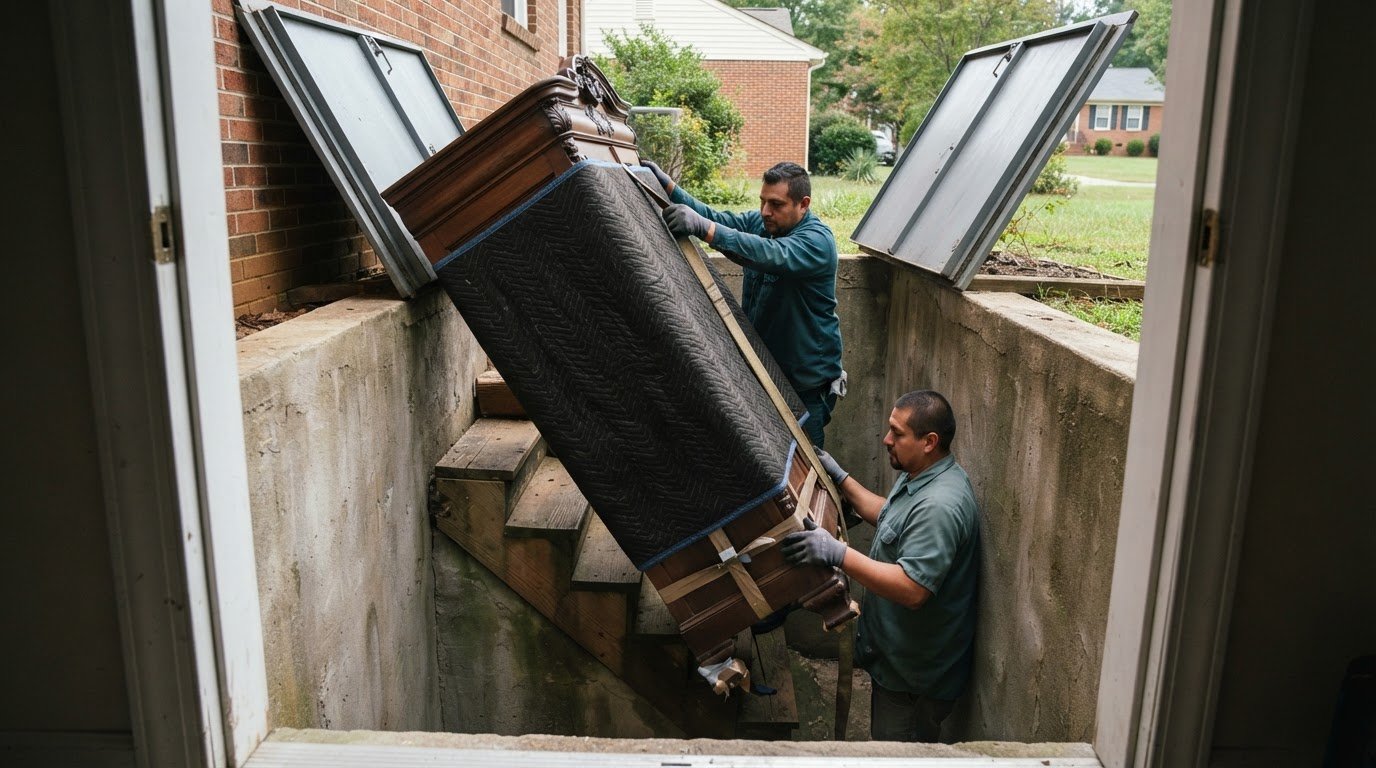
An armoire that fits upright through the basement doorway may still need to be repositioned to clear the stairs, but moving it on its back is not automatically safe. For moving a heavy antique armoire out of a basement through Bilco doors in Manassas Park, the key factors are the piece’s construction and the dimensions and turns along the entire route.
Tight clearances, scraped walls, and damage to an antique finish are reasonable concerns. This guide explains how movers assess whether an armoire can travel on its back, which measurements matter, and how to protect the home and prepare the piece for removal. Doors, drawers, shelves, and removable trim can all affect the move, and the route may call for a different approach. A careful plan helps make a difficult basement exit controlled, without guessing about fit or forcing the furniture through.
Key Takeaways
- Measure the armoire and every part of the route, including the Bilco opening, stairwell, turns, and final doorway.
- Whether the armoire can travel on its back depends on its construction, stability, and available clearance, not just the doorway width.
- Empty and secure drawers and shelves, and assess removable doors or trim to reduce bulk and shifting.
- Use protective coverings along the route and plan how the antique finish and home surfaces will be shielded.
- Heavy, awkward furniture and tight basement stairs call for careful handling by a moving crew equipped for the route.
Protecting floors, walls, and doorframes
For a local furniture move, permit requirements depend on the access plan, including whether the move uses public space. Coverage and damage claims are separate considerations, so review the applicable terms in the moving agreement.
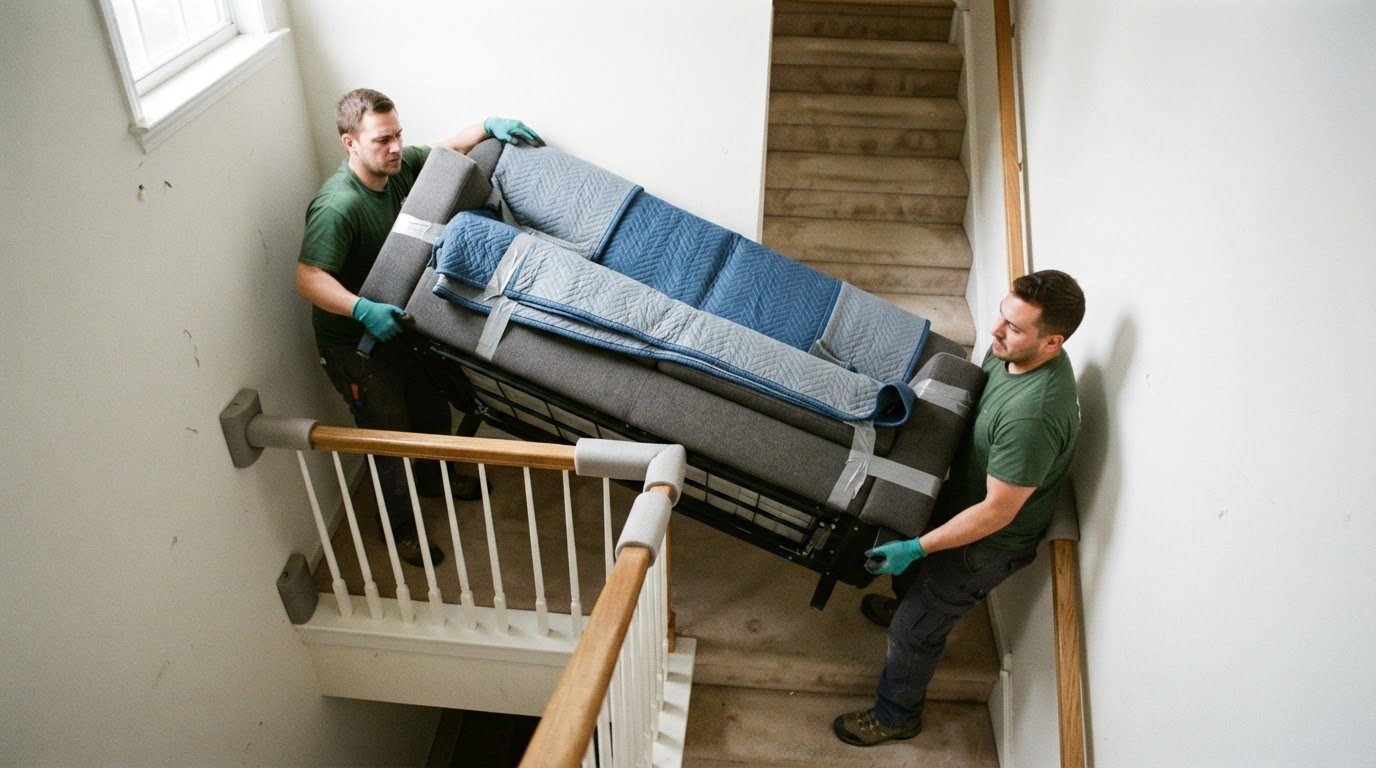
Bilco doors, basement stairs, and tight turns can expose an antique armoire to scratches, dents, and impact damage. Professional movers reduce those risks with protective blankets, floor coverings, corner padding, and controlled handling with suitable dollies or lifting straps.
- Cover the travel path. Lay floor runners or cardboard from the basement to the exit and across the areas the armoire will pass. Pad sharp corners and exposed doorframes. Don’t push the piece directly across hardwood: screws or bolts underneath can gouge the floor. Choose sliders suited to the surface, such as hard plastic for carpet and felt or rubber for hard floors.
- Wrap the armoire and protect delicate details. Use blankets to shield the wood from bumps and scrapes, and secure them so they stay in place during handling. Pad mirrors and glass separately, keeping them from pressing against hard edges or loose hardware. Take care with antique finishes: prolonged contact with shrink wrap can cause damage, so don’t leave the piece wrapped for weeks.
- Choose moving equipment for the route. Dollies can support furniture across a clear, level floor, while lifting straps can help control a load during transitions. Equipment should suit the armoire’s size, weight, and surroundings. At Bilco doors or on stairs, a dolly alone may not provide enough control. Movers coordinate each change in position to avoid hitting the doorframe or scraping the stairwell.
- Keep storage conditions in mind. Before moving an armoire from storage, inspect the wood, finish, and any fabric or paper inside for signs of dampness or pests. Moisture can threaten wood and finishes, and pests can damage stored belongings. Keep the armoire covered during the move, but don’t leave it sealed in plastic for an extended period. Separate fragile contents and loose components before transport.
- Clarify handling and access before the move. Discuss how the crew will protect antique finishes, mirrors, and glass, and review the applicable coverage and damage-claim terms in the moving agreement. Explain whether the Bilco entrance, stairs, or limited access affect the work. Clear details help shape a protection plan around the actual route, rather than treating an oversized armoire like ordinary furniture.
Permit requirements depend on the planned access, particularly if the move uses public space. Review the applicable coverage and damage-claim process in the moving agreement.
Measuring doorways, hallways, and stair routes
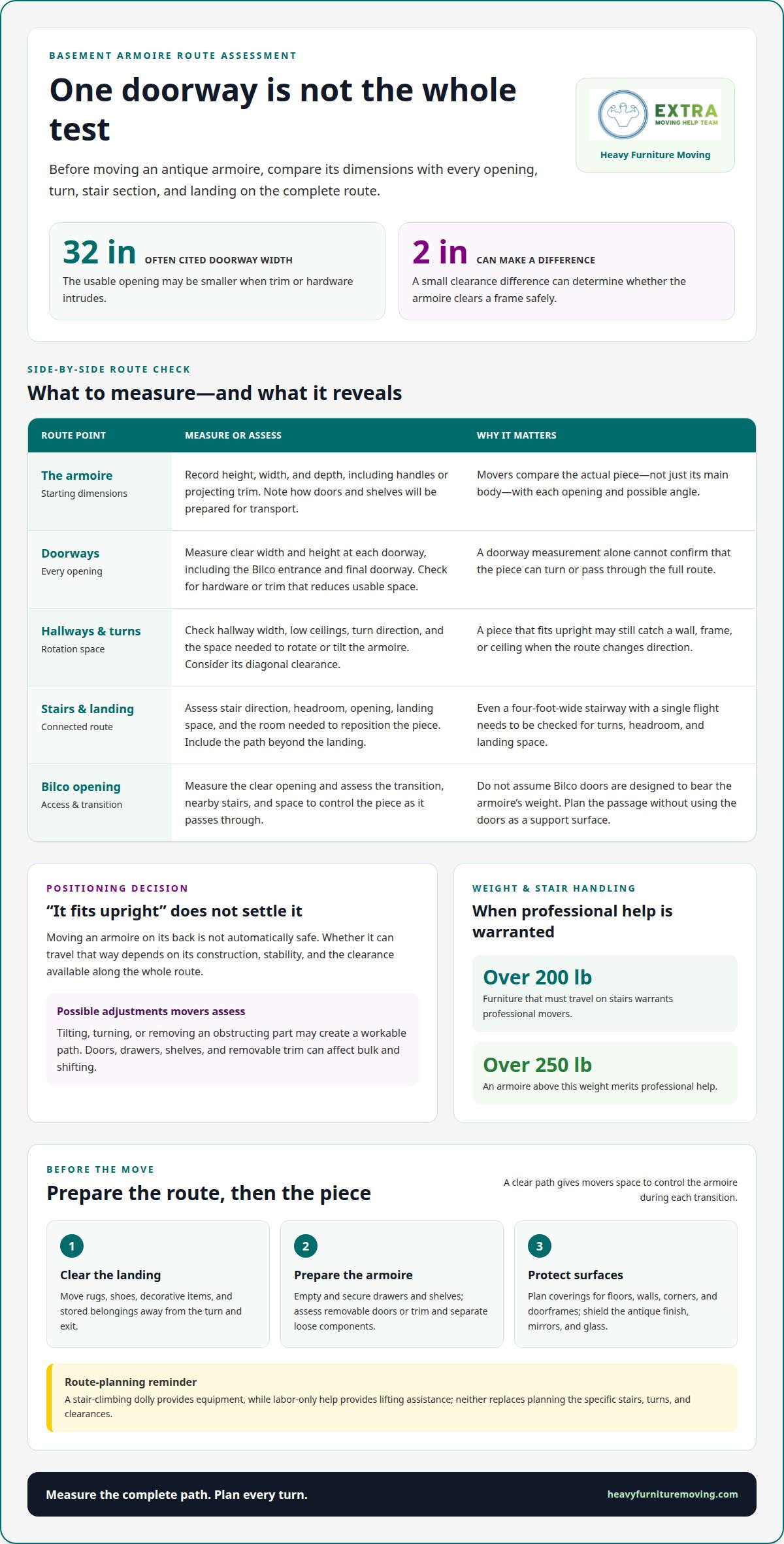
Have professional movers measure the armoire and the complete exit route before choosing how to position it. A single doorway measurement won’t reveal whether it can clear a turn, stair landing, or Bilco entrance.
-
How Movers Measure the Armoire and Exit Route
Have the movers record the armoire’s height, width, and depth, including any handles or projecting trim. Then they measure the clear width and height of each doorway, hallway, stair opening, and Bilco door along the route. A standard doorway is often described as 32 inches wide, but the usable opening can be smaller when trim or hardware intrudes. Movers compare the measurements with the armoire’s possible angles, not just its upright dimensions.
Consider the armoire’s diagonal clearance if turning or tilting may help it pass. Even a two-inch difference can determine whether it clears the frame safely. Measurements should reflect the doors and shelves as they’ll be prepared for transport.
-
How Movers Plan the Route Through Tight Spaces
Ask movers to map each turn from the basement to the exit before moving the furniture. They assess narrow hallways, low ceilings, stair direction, and the space needed to rotate an oversized armoire. If the piece cannot pass in its current position, tilting, turning, or removing an obstructing part may create a workable path.
Identify pinch points where the armoire could scrape a wall or catch a doorframe. For example, a basement entrance with a four-inch-high jamb requires a plan to clear the raised edge. A stair-climbing dolly provides equipment, while labor-only help provides lifting assistance; neither replaces route planning. Coordinate the handling and equipment with the specific stairs and turns.
-
How Movers Clear the Landing Area
Clear the basement landing and the area outside the Bilco doors before moving the armoire. Rugs, shoes, decorative items, and stored belongings can obstruct a turn or create a trip hazard. Leave enough room for movers to reposition the piece without striking shelves, walls, or doorframes.
They also check the path beyond the landing, including the next doorway and any hallway turn. Keep the route free of people and loose objects during each transition. A clear landing gives the crew space to control the armoire rather than making a last-minute adjustment near the stairs.
-
How Movers Check Bilco Door and Stairway Capacity
Assess the opening, stairs, and landing as one connected route. Staircases, narrow hallways, and oversized furniture create added safety concerns. Even a four-foot-wide stairway with a single flight needs to be assessed for turns, headroom, and landing space.
Furniture over 200 pounds that must travel on stairs warrants professional movers, and an armoire over 250 pounds merits professional help. Don’t assume Bilco doors are designed to bear the furniture’s weight; movers plan how the piece passes through the opening without relying on the doors as a support surface. For in-home furniture moving help, the route and access details guide the handling plan.
Removing or securing doors, drawers, and shelves
- Have professional movers assess removable parts first. They check whether doors, shelves, drawers, or trim can come off without stressing antique joints. Removable crown molding or cornice can add 2-6 inches to an armoire’s height. Removing it may help with a low opening, but only if the molding detaches cleanly and can be protected separately.
Check how each piece attaches. Older furniture may have delicate fasteners or joints that need careful handling, and parts that appear removable should never be forced. Plan the sequence around the armoire’s construction and the clearances measured along the route.
- Ask movers to remove doors when they obstruct clearance. Armoire doors can weigh 20-60 lbs each, so removal can reduce both bulk and shifting. Taking them off can reduce the armoire’s width by 3-6 inches per side. That added clearance may help the piece maneuver around a corner or through a tight doorway.
Support each door while detaching it, then wrap and label it for transport. Don’t place it where it could fall or press against hardwood, glass, or another furniture surface. If removing the doors won’t improve the route, keep them secured in place.
- Empty drawers and shelves before the move. Movers remove contents so items won’t shift, spill, or strike the armoire’s interior. Drawers can each add 15-40 lbs, increasing the load and making the furniture harder to control. The crew determines whether drawers should be removed or secured in place, based on their fit and the planned position.
Give loose shelves separate protection if they can slide out. Wrap removable components individually to reduce scratches and dents. Keep them with the armoire rather than stacking them where a door or drawer could fall onto them.
- Keep disassembly organized and limited. For complicated furniture, photograph the armoire before removing parts. Put screws, bolts, and other hardware in labeled bags, noting which component each bag belongs to. This helps prevent small fittings from getting lost and supports accurate reassembly.
Make a note of which parts were removed and where they were attached. This record helps distinguish original hardware from replacement pieces and provides a clear reference if the armoire needs reassembly after passing through the basement exit.
- Remove door-stop molding only when the route requires it. Professional movers compare the armoire’s prepared dimensions with the doorway’s usable opening. If a small obstruction prevents safe clearance, they can determine whether removing door-stop molding is appropriate. They avoid forcing the piece against the frame, which can damage both the antique and the doorway.
Once the tight point is clear, keep detached molding and hardware together for reinstallation. The goal is controlled passage, not unnecessary disassembly. Remove parts only to solve a specific clearance problem, such as a projecting door, shelf, or trim piece.
Wrapping and transporting antique armoires
Plan the wrapping, carrying position, and vehicle loading as one sequence. The antique’s finish, joints, mirrors, and weight all affect how it should be secured for transport.
- Protect the frame before it leaves the room. Cover the armoire carcass with at least two full moving blankets, padding exposed corners and projecting details. Secure the blankets so they stay in place during lifting, without letting straps press directly against fragile trim. Check the wrap before moving, since a loose edge can catch on a doorway or stair rail.
- Wrap detached pieces separately. Protect doors, shelves, and hardware individually rather than stacking them against the antique finish. Keep each wrapped part with the armoire and label small hardware bags for reassembly. Separate glass or mirrors from wood surfaces with enough padding to prevent contact during transport. This helps prevent scratches, dents, and missing components.
- Choose the carrying position for the armoire’s construction. Don’t assume an antique can safely travel on its back just because that position seems easier through the Bilco opening. Assess its joints, feet, decorative trim, doors, and any mirror before deciding how to tilt or carry it. A fragile top or projecting ornament may make another angle safer. The turns and headroom along the route matter, too.
- Control the load through each transition. Movers use lifting straps or a furniture dolly when the item and surroundings suit that equipment. At a stair edge or landing, they coordinate movement and keep the armoire balanced rather than letting it shift suddenly. At least two people are recommended to move an armoire carcass on a dolly. Clear communication matters at every change in direction.
- Secure the armoire for the final transport. Before the vehicle moves, stabilize the wrapped furniture so it cannot slide, tip, or strike another item. Protect contact points between the armoire and nearby cargo, and keep detached components secure alongside it. Pay close attention during loading and unloading, when the final ten feet of a move can be a vulnerable point for the furniture. A controlled pace protects the antique and surrounding surfaces.
What dimensions and weight can Bilco basement doors and stairways safely accommodate?
- Measure the armoire in its moving configuration. Armoires commonly weigh 150-400 lbs and stand six or seven feet tall. Those ranges describe the furniture, not a guaranteed limit for a basement entrance. Movers compare the armoire’s height, width, and depth with the clear opening, then assess whether removing doors or trim changes the fit. A piece that clears the door upright may still need room to turn at the stair landing.
- Treat opening size and load capacity as separate questions. The Bilco doorway’s width and height show whether the armoire can pass, but they don’t establish a safe weight capacity for the doors or stairs. Assess the complete route, including the stair structure, landing, turns, and how the load will be controlled. Don’t use a door panel as a platform or assume it can support the armoire.
- Factor weight and shape into the handling plan. Furniture weighing over 100 pounds or having an awkward shape calls for professional help. Professional help is also recommended for an armoire weighing more than 250 lbs. Weight alone doesn’t determine the best method: height, balance, projecting trim, and stair turns affect control. Movers consider these factors together before choosing equipment or positioning.
- Assess the stairs, not just the Bilco opening. A broad stairway can still be difficult if it has a low ceiling, a turn, or limited landing space. Check the full passage and identify where the armoire needs to change angle. Account for the people controlling the load and the room available to reposition it. A straight flight and a turning stairway present different handling demands.
- Use the measurements to decide whether the route is workable. If the armoire’s dimensions exceed the clear passage, movers consider whether removable parts or another angle can create clearance. If its weight or shape makes the stairs difficult to control, the plan must account for safer handling rather than forcing the piece through. Arrange professional heavy-item moving help for a route assessment and a controlled move through the basement exit.
Heavy Furniture Moving
Heavy Furniture Moving helps plan and carry antique armoires through basement exits when tight clearances, stairs, or awkward weight make the move difficult. The crew handles bulky furniture and coordinates its passage through the home. Share the armoire’s approximate dimensions, known weight, and details about the Bilco doors, stairway, and turns. This helps the team plan around the actual route and the antique’s handling needs.
If you’d rather leave the lifting and route handling to a moving crew, contact Heavy Furniture Moving to discuss your armoire move.
Plan Your Armoire’s Next Move
If you’re planning to move a heavy antique armoire out of your basement through Bilco doors in Manassas Park, start with a clear conversation about the piece and its route. Share what you know about its size, weight, construction, and access. This gives the moving team useful context to discuss the handling plan before moving day.
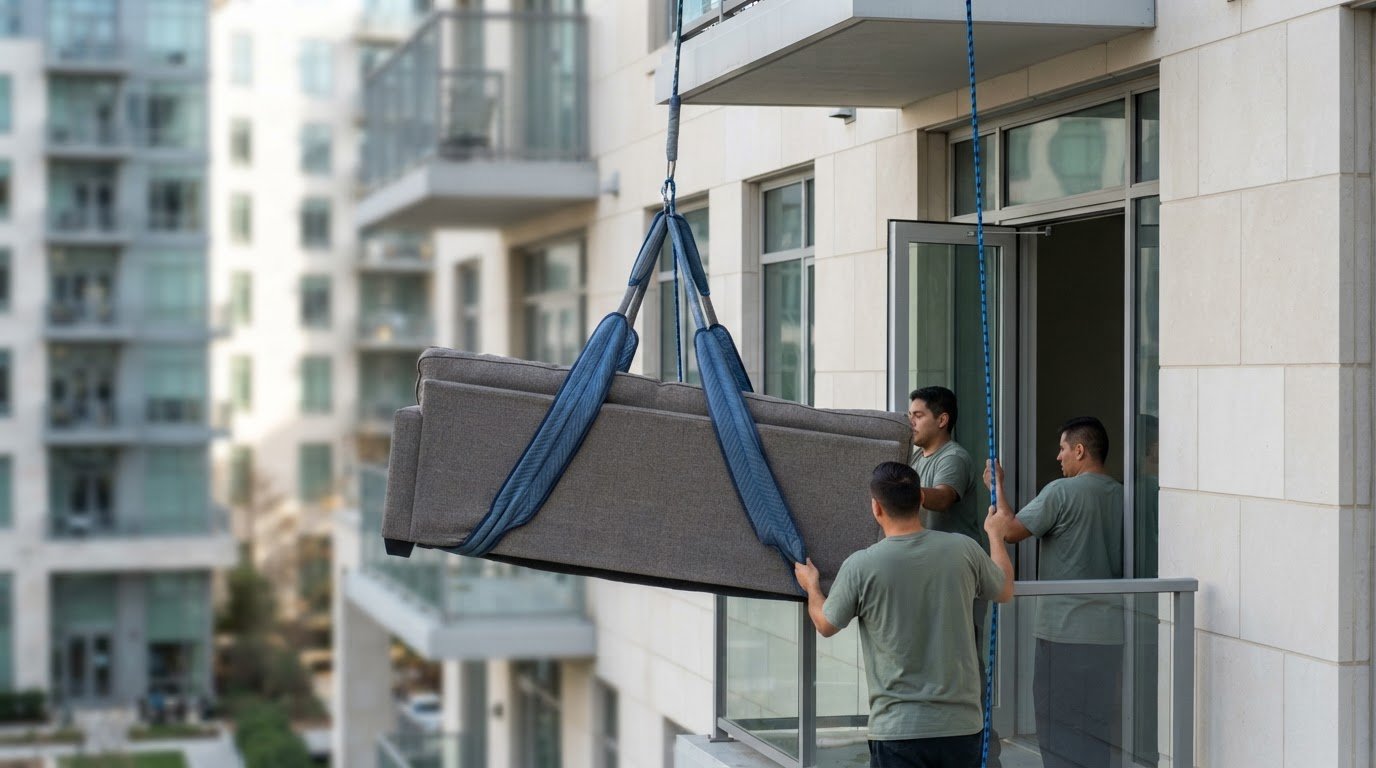
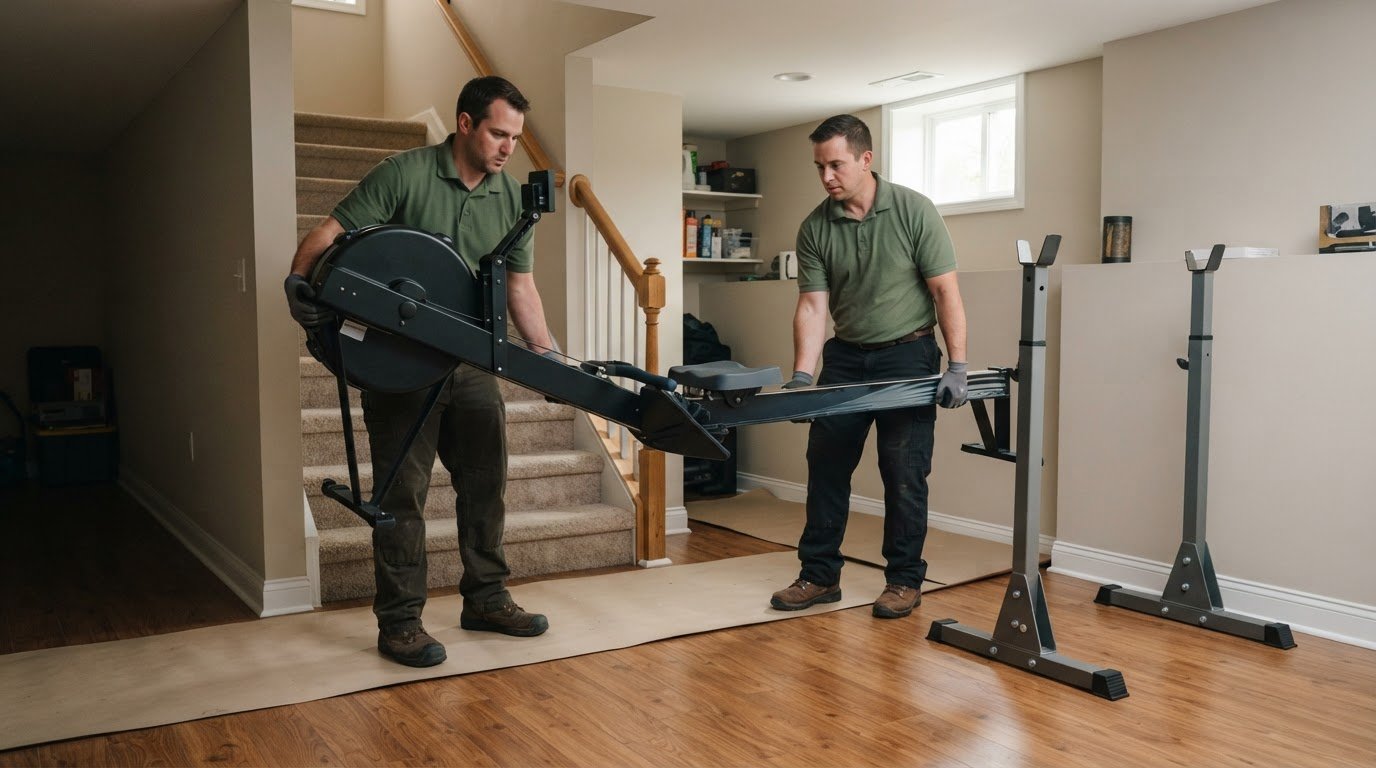
Heavy Furniture Moving helps with difficult furniture moves and demanding lifting work. Its services also include Movers Near Me, Exercise Equipment Moving, and Sofa Hoisting. For an antique armoire, focus the discussion on the basement exit, stairs, and any delicate features that need careful handling.
Contact Heavy Furniture Moving to talk through your armoire move. A thoughtful plan is a strong first step toward getting your treasured piece safely to its next place.
Frequently Asked Questions
Can an armoire be transported lying on its back?
Sometimes, but the armoire’s construction and condition determine whether that position is safe. Loose joints, delicate feet, attached mirrors, or projecting trim may be damaged by pressure on the back. Assess how the weight would rest and whether the route requires that position. A solid, stable frame, for example, presents different concerns from an armoire with a fragile decorative top.
Do I need to take the back off the armoire to move it?
Usually, removing the back isn’t the first option to consider. It can affect the frame’s stability, especially if the back helps hold the sides square. Assess how it is attached and whether removing it would meaningfully improve clearance. If a narrow basement turn is the obstacle, removing a door or removable trim may be better than dismantling the cabinet.
How do you handle large and heavy antique items, such as pianos or armoires?
Match the handling plan to the item, its construction, and the route. A piano and an armoire need different support because their weight distribution and vulnerable parts differ. For a basement armoire, consider the frame, feet, doors, and stair transitions. For a piano, account for its shape and delicate components. The goal is controlled movement, not applying one method to every heavy item.
How do you protect my antiques during the move?
Protect antiques by securing vulnerable parts and keeping hard surfaces from rubbing together. A detached mirror or door, for example, should travel separately with padding, not pressed against the wood finish. Protect exposed corners and watch for contact points during turns. Mention loose trim, existing cracks, or a delicate finish so the crew can account for them when handling the piece.
How much does it cost to have movers handle an armoire?
The price depends on the armoire and the work required, and is provided after a quote request. Factors include the item’s size and weight, stairs, tight turns, distance, and whether parts need removal or additional handling. A straightforward room-to-room move differs from carrying a bulky antique through a basement exit. Share the route details so the quote reflects the actual job.
How much does it cost to move a heavy antique armoire up basement Bilco doors in Manassas Park, VA?
The cost depends on the armoire, basement access, and handling involved, and is provided after a quote request. Bilco-door access, stairs, tight turns, item weight, and any required disassembly can affect the job. A clear photo of the armoire and basement stairs can help describe the situation. Include the destination and any narrow points so the quote accounts for the move’s specific demands.
Which Manassas Park movers specialize in antiques and difficult basement removals?
Heavy Furniture Moving handles heavy and bulky residential furniture, including armoires, in Manassas Park. For moving a heavy antique armoire out of a basement through Bilco doors in Manassas Park, describe the access and the piece’s condition when discussing the move. The company also handles pianos and exercise equipment. Share details such as attached mirrors or fragile trim, since those features affect how the item should be handled.
How do movers measure an armoire and Bilco opening before planning removal?
Compare the armoire’s height, width, and depth with the usable Bilco opening and every tight point along the route. Account for projecting handles or trim, as well as the space needed to turn at the stairs or landing. A useful preparation step is to take a photo of the armoire beside its doorway and a separate view of the stair route. These details help identify access challenges early.
Frequently Asked Questions
Sometimes, but the armoire’s construction and condition determine whether that position is safe. Loose joints, delicate feet, attached mirrors, or projecting trim may be damaged by pressure on the back. Assess how the weight would rest and whether the route requires that position. A solid, stable frame, for example, presents different concerns from an armoire with a fragile decorative top.
Usually, removing the back isn’t the first option to consider. It can affect the frame’s stability, especially if the back helps hold the sides square. Assess how it is attached and whether removing it would meaningfully improve clearance. If a narrow basement turn is the obstacle, removing a door or removable trim may be better than dismantling the cabinet.
Match the handling plan to the item, its construction, and the route. A piano and an armoire need different support because their weight distribution and vulnerable parts differ. For a basement armoire, consider the frame, feet, doors, and stair transitions. For a piano, account for its shape and delicate components. The goal is controlled movement, not applying one method to every heavy item.
Protect antiques by securing vulnerable parts and keeping hard surfaces from rubbing together. A detached mirror or door, for example, should travel separately with padding, not pressed against the wood finish. Protect exposed corners and watch for contact points during turns. Mention loose trim, existing cracks, or a delicate finish so the crew can account for them when handling the piece.
The price depends on the armoire and the work required, and is provided after a quote request. Factors include the item’s size and weight, stairs, tight turns, distance, and whether parts need removal or additional handling. A straightforward room-to-room move differs from carrying a bulky antique through a basement exit. Share the route details so the quote reflects the actual job.
The cost depends on the armoire, basement access, and handling involved, and is provided after a quote request. Bilco-door access, stairs, tight turns, item weight, and any required disassembly can affect the job. A clear photo of the armoire and basement stairs can help describe the situation. Include the destination and any narrow points so the quote accounts for the move’s specific demands.
Heavy Furniture Moving handles heavy and bulky residential furniture, including armoires, in Manassas Park. For moving a heavy antique armoire out of a basement through Bilco doors in Manassas Park, describe the access and the piece’s condition when discussing the move. The company also handles pianos and exercise equipment. Share details such as attached mirrors or fragile trim, since those features affect how the item should be handled.
Compare the armoire’s height, width, and depth with the usable Bilco opening and every tight point along the route. Account for projecting handles or trim, as well as the space needed to turn at the stairs or landing. A useful preparation step is to take a photo of the armoire beside its doorway and a separate view of the stair route. These details help identify access challenges early.