How to Move a Heavy Workbench in Gainesville Safely
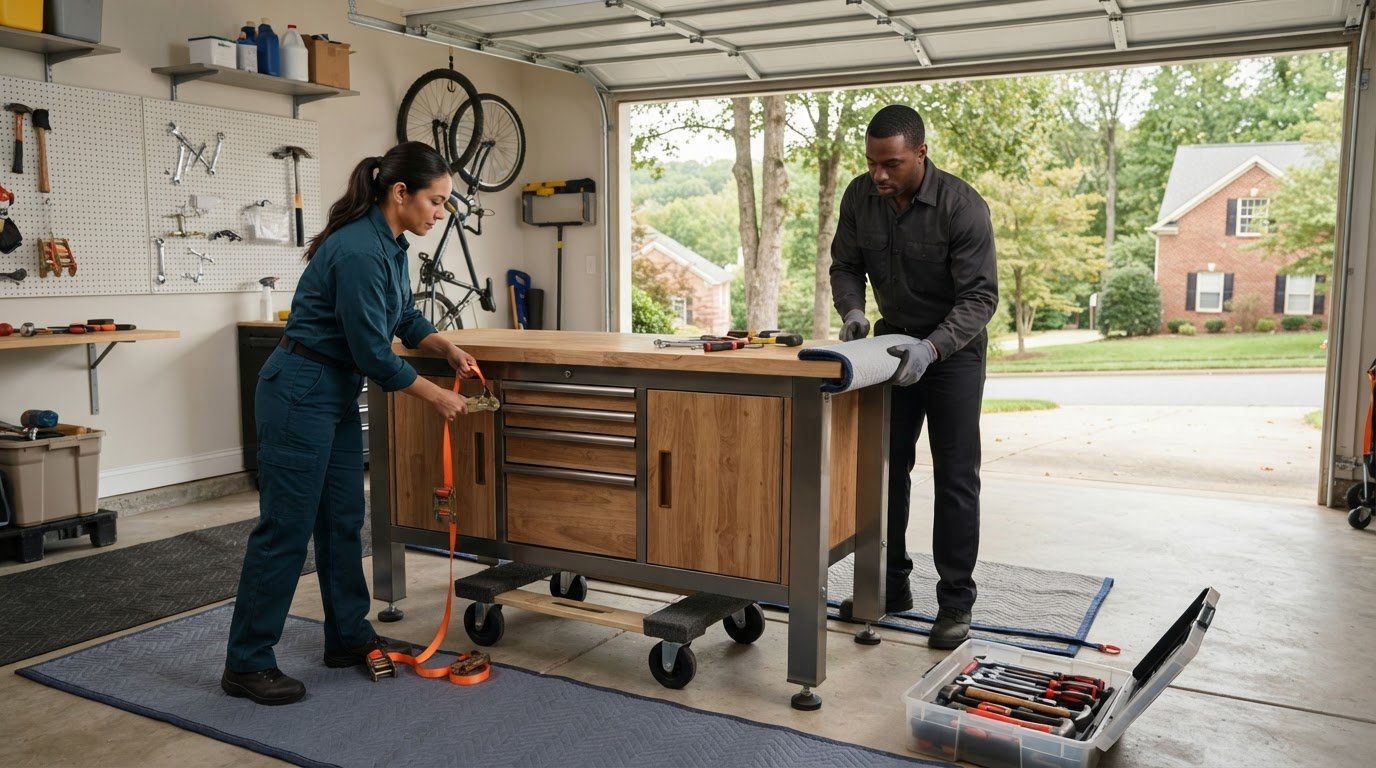
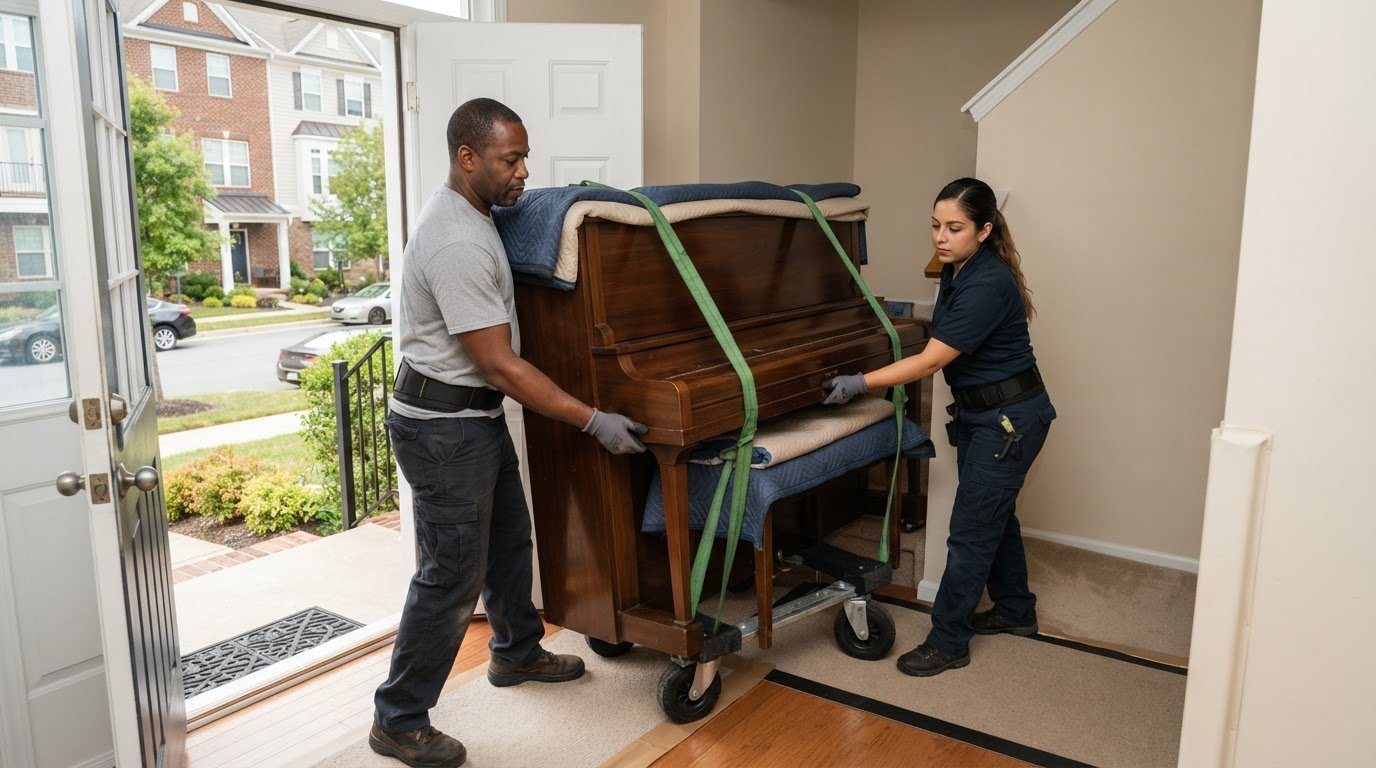
What if the bench’s weight isn’t the biggest danger? Knowing how to move a heavy workbench Gainesville safely means looking beyond muscle: an uneven load, narrow doorway, or stair turn can lead to a strain or scratched floor. A workbench may also shift if drawers, tools, or a heavy top throw off its balance.
Pause before lifting and assess the bench, the route, and the help and equipment available. This guide explains how to check the bench’s weight and stability, prepare the work area, protect floors and surfaces, and plan for tight access. You’ll also learn when a careful DIY move may be reasonable and when experienced lifting help is the safer choice.
Even a one-item move takes planning. In Gainesville, moving help can make sense when the workbench is too heavy, the route includes stairs, or you don’t have enough capable helpers. Start with a clear plan, not a risky lift, to keep the bench under control and protect everyone involved.
Key Takeaways
- Learn how to move a heavy workbench Gainesville safely by checking its load, balance, and path before the first lift.
- Prepare the bench and destination by removing loose tools and clearing obstacles from the route.
- Compare the route, bench condition, and helpers’ lifting experience to decide whether DIY is a safe choice.
- Use clear coordination and suitable equipment only when you know how to handle it safely.
- Recognize when a single-item move calls for experienced lifting help to protect people and property.
How to Move a Heavy Workbench in Gainesville: Start With a Safety Check
A workbench can be harder to move than it looks. A solid frame and heavy top may be awkward to grip, while drawers, stored materials, or attached tools can shift its balance. Add a narrow workshop doorway, a hallway turn, or stairs, and an unplanned lift can put people and property at risk. If you're planning how to move a heavy workbench Gainesville, begin by checking the load, the full route, and where the bench will land.
A safe move depends on a planned lift, a clear path, and controlled placement, not just enough strength to get the bench moving. The route and the bench’s stability matter as much as its estimated weight. Use this quick pre-move check:
- People: Decide who is helping and whether everyone can follow one person’s directions.
- Route: Check the full path for narrow spots, steps, obstacles, and changes in floor level.
- Bench: Look for loose parts, shifting contents, damaged legs, or an unstable top.
- Destination: Confirm the new spot is clear and has enough room to set the bench down securely.
Manual lifting can expose people to strain and pinch hazards. The overview of Manual handling of loads covers common risks and ways equipment can reduce them. If anything about the lift is uncertain, pause and reassess before moving the bench.
What makes a workbench difficult to move?
Weight is only part of the challenge. A thick top can make a workbench top-heavy, while a sturdy frame may leave few safe places to grip. Drawers and shelves add weight, and loose contents can slide as the bench tilts. Attached vises, clamps, or other tools may shift the balance or stick out where they can catch on a doorway.
Separate removable items from fixed components. Take off tools and materials, and empty removable drawers to reduce shifting. A bolted vise or built-in shelf may need to stay in place, so account for it when choosing a grip and route. Watch for pinch points around legs, handles, drawer edges, and projecting hardware. Keep fingers clear of the underside of the bench and the space between it and a wall.
Check the Gainesville home or workshop route first
Measure the workbench at its widest and tallest points, then compare those dimensions with doorways, garage openings, hallways, turns, and the final placement area. Include room for people to hold and guide it. A bench that fits through a doorway straight on may not clear a tight turn when tilted. Removing a door may help with clearance, but it does not solve every access problem.
Walk the entire route before anyone lifts. Inspect stairs, thresholds, floor transitions, and overhead obstructions such as low beams or shelves. Clear workshop clutter, loose cords, and anything that could trip a helper. Keep children and pets away from the path and destination. If a tight turn or stairway leaves no safe place to pause, stop and reconsider the plan before moving the bench.
A one-item move still deserves careful planning. If the bench, route, or available help makes a controlled lift doubtful, don’t force a DIY attempt. Heavy Furniture Moving provides local moving labor and specialized handling for heavy items, including challenging workbench moves in Gainesville.
Prepare the Workbench and Moving Route Before the First Lift
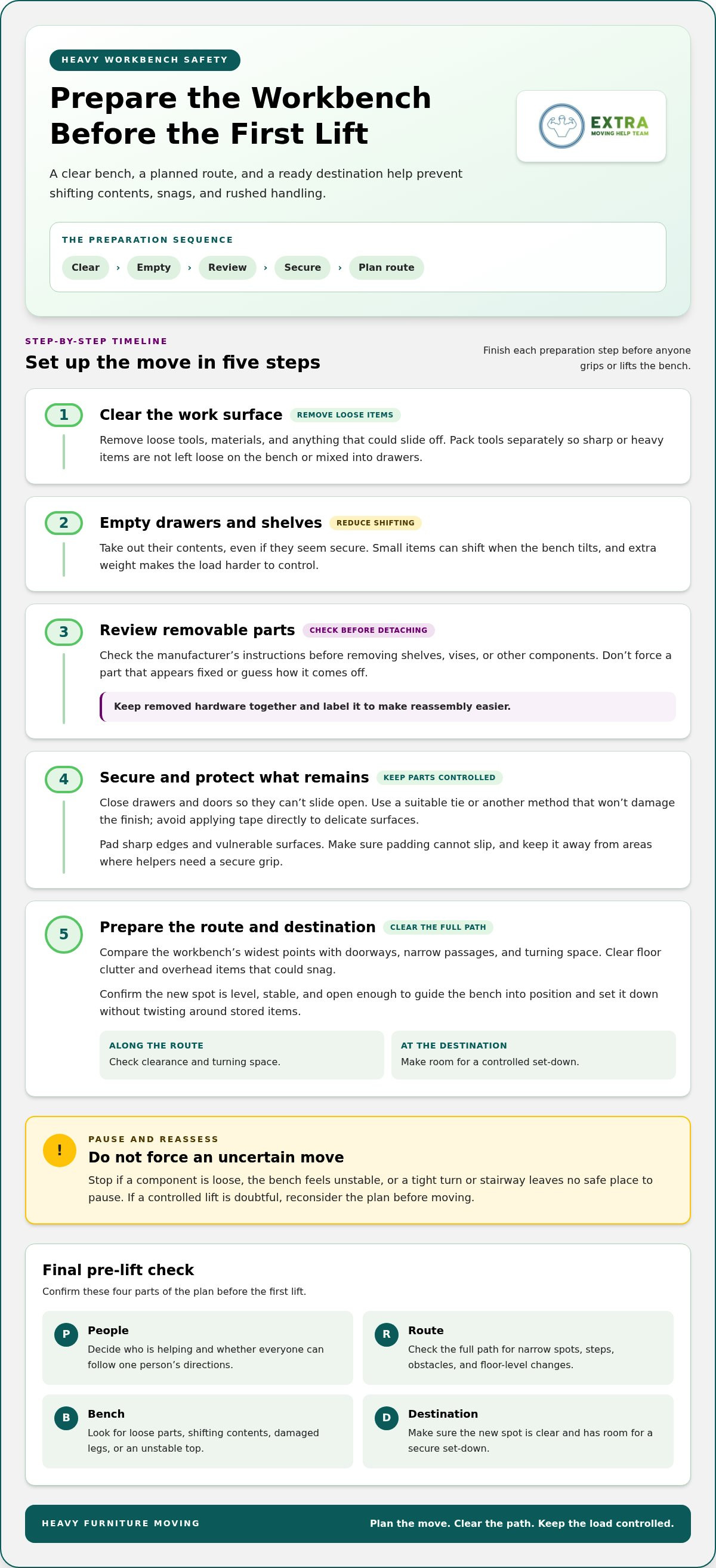
Once you’ve decided the move is manageable, prepare the bench and its surroundings before anyone grips it. These steps help prevent shifting contents, snags, and last-minute changes while the workbench is in motion. A clear route also reduces rushed handling and unexpected stops, making it easier for everyone to keep the bench steady from start to finish.
- Clear the work surface. Remove loose tools, materials, and anything that could slide off. Pack tools separately so sharp or heavy items aren’t left loose on the bench or mixed into drawers.
- Empty drawers and shelves. Take out their contents, even if they seem secure. Small items can shift when the bench tilts, and extra weight makes the load harder to control.
- Review removable parts. Check the manufacturer’s instructions before detaching shelves, vises, or other components. Don’t force a part that appears fixed or guess how it comes off. Keep removed hardware together and label it to make reassembly easier.
- Secure what remains. Close drawers and doors so they can’t slide open. Use a suitable tie or another method that won’t damage the finish. Avoid applying tape directly to delicate surfaces.
- Prepare the route and destination. Clear obstacles from the full path, then confirm the workbench’s new spot is open and stable before lifting.
Empty, secure, and protect the workbench
After emptying the bench, look for parts that might swing, open, or catch during movement. Secure drawers without pressing adhesive onto painted, varnished, or otherwise delicate finishes. Pad sharp edges and vulnerable surfaces, and make sure the padding is held firmly enough not to slip. Keep it away from areas where helpers need a secure grip. If a component is loose or the bench feels unstable, stop and address that before moving.
Plan the route and destination
Measure the workbench and compare its widest points with doorways, narrow passages, and the turning space along the route. Check garage, workshop, and entry access in Gainesville rather than assuming the bench will clear them. Remove floor clutter and anything overhead that could snag. Choose a level destination with enough room to guide the bench into position and set it down without twisting around stored items.
Walk the route again after clearing it. Make sure doors can stay open, floor coverings won’t bunch underfoot, and the destination remains available. If the path or bench condition makes the move difficult to prepare for, heavy-item moving help can be a practical option for a challenging one-item move.
DIY or Professional Help: Which Workbench Move Is Safer?
There’s no single rule for every workbench move. A stable bench on a short, level path may be manageable with capable, coordinated helpers. Stairs, narrow turns, uncertain weight, or a bench that shifts can change the decision. Use the comparison below to check whether your plan gives everyone enough control.
| Factor | DIY may be reasonable | Pause and consider experienced help |
|---|---|---|
| Route complexity | Short, level, and clear | Stairs, tight turns, thresholds, or narrow access |
| Bench condition | Stable, emptied, with secure parts | Unstable, damaged, awkwardly balanced, or difficult to assess |
| Helper capacity | Helpers can manage the load and follow one caller | Not enough capable helpers, or people can’t coordinate |
| Lifting experience | Everyone understands the planned lift and grip | The move requires equipment or techniques the helpers haven’t used |
More people don’t automatically make a lift safer. If helpers lift at different times or move in different directions, the bench can tilt or shift unexpectedly. Agree on one person to give directions, and make sure everyone knows when to lift, pause, and lower. If the group can’t coordinate clearly before the move, adding another person may not solve the problem.
When a careful DIY move may be reasonable
A DIY move may suit a stable, emptied workbench with a short, level path and capable helpers who can work together. Keep the plan simple and use only lifting equipment you already know how to operate safely. Stop if the bench shifts, someone loses a secure grip, or the route becomes blocked. Set it down safely and reassess instead of pushing through.
When to bring in experienced movers
Stairs, narrow turns, fragile flooring, uncertain weight, or awkward balance are good reasons to pause. These conditions leave less room to correct a shift or protect the home during the move. Heavy Furniture Moving provides professional residential moving services and specialized handling for heavy items, helping manage difficult access and keep the lift controlled.
A single workbench can still call for professional help if the route or load is hard to control. If your assessment points away from DIY, see local moving help for heavy items in Gainesville. When deciding how to move a heavy workbench Gainesville, choose the approach that keeps the lift controlled from start to finish.
How to Move a Heavy Workbench Step by Step
With the bench prepared, follow a deliberate sequence rather than improvising once it’s lifted. The goal is to keep the load controlled, communicate clearly, and stop if anything changes. If the workbench or route doesn’t feel manageable, pause and choose a safer plan.
- Make a final route check. Walk the entire path and confirm it’s clear, doors are open, and the destination is ready. Check that the floor is dry and that rugs or protective coverings won’t bunch or slide underfoot. Make sure everyone knows where the bench is going and where they can safely pause.
- Agree on the calls. Choose one person to lead. Before lifting, agree on simple commands for lifting, moving, pausing, and lowering. Helpers should be able to hear the caller and see enough of the route to respond together.
- Position yourselves and check your grip. Use stable handholds on the frame where possible. Keep fingers away from legs, drawer openings, and other pinch points. Stand so you can move without twisting your body under load. Don’t use a grip or lifting position that feels insecure.
- Use equipment only if you know it. Appropriate moving equipment may help with a difficult load, but it must suit the task and be used as intended. Don’t improvise with gear you haven’t handled safely before. If you’re uncertain how to use it, stop and get experienced help.
- Move steadily and pause at obstacles. Keep the workbench in view and move slowly. Before a turn or threshold, pause while it’s supported, check the next section of the route, and make sure everyone is ready. Don’t rush to clear an obstacle or keep moving if someone calls for a stop.
- Lower it with control. At the destination, make sure the landing area is clear. Follow the caller’s direction and lower the bench onto a stable surface without dropping or dragging it.
Coordinate the lift and movement
One voice helps everyone act at the same time. Keep communicating as you move, especially where a wall or doorway limits visibility. If the caller can’t see the path, pause and reposition rather than moving blind. Stop immediately if a helper loses grip, the bench shifts, or the group can’t keep the load controlled. Set it down safely before changing the plan.
Set the workbench down and check it
Once the bench is stable, inspect its legs, joints, drawers, and top for movement or damage. If you removed shelves, a vise, or other parts, reinstall them according to the manufacturer’s instructions before using the bench. A careful finish matters as much as the lift itself. For help with a challenging one-item move, get heavy-item moving help from a local team in Gainesville.
Get Heavy Workbench Moving Help in Gainesville When the Job Calls for It
A safe workbench move comes down to three decisions: assess the load, clear the route, and choose a handling plan that keeps the bench under control. If stairs, tight access, a shifting load, or limited help make the move uncertain, don’t force a DIY lift. Even a single heavy item can call for experienced support when the route or balance is challenging.
For Gainesville residents, Heavy Furniture Moving provides residential moving help and specialized handling for heavy and bulky items. A clear description of the job helps the team understand the item and access points. You don’t need to have every detail figured out, but share what you know about the bench and route.
What to prepare before arranging moving help
Before arranging help, gather a few practical details. Approximate measurements are useful even if you don’t know the exact weight. Note the bench’s condition, where it sits now, and where it needs to go. Describe the route from start to finish, including stairs, narrow turns, thresholds, doorways, and any tight space where the bench may need to change direction.
- Dimensions and condition: Share the approximate length, width, and height, plus any loose, damaged, or unstable parts.
- Current location and route: Explain whether the bench is in a garage, workshop, or another room, and mention stairways, tight turns, or other access limits.
- Destination: Identify the room or area where the bench will be placed and describe any access challenges there.
- Removable parts and surfaces: Note any shelves or other parts that can be detached, as well as delicate finishes that need protection.
Photos can also show the bench’s shape and the tightest parts of the route. Avoid guessing at details you can’t assess safely. If you’re unsure whether a component is fixed or removable, say so rather than taking it apart without the manufacturer’s instructions.
Make the next step simple in Gainesville
Having the bench and route details ready gives the moving team a useful starting point for planning its handling. Heavy Furniture Moving provides local residential moving and heavy-item help in Gainesville and across Fairfax, Woodbridge, Manassas, Manassas Park, Aldie, Ashburn, McLean, Vienna, Reston, Centreville, Chantilly, Clifton, Dumfries, South Riding, Fairfax Station, and Haymarket.
Whether you need help with the workbench alone or other heavy household items, get help moving a heavy item in Gainesville.
Make Room for Your Next Workshop Project
A workbench move can be a chance to set up your workspace for the way you want to use it next. Before the bench goes into place, consider how much room you’ll need to work, open drawers, and reach tools without crowding walkways. A little planning can make the new setup more comfortable and useful.
If you’re deciding how to move a heavy workbench Gainesville homeowners can manage safely, let the difficulty of the lift guide your next step. There’s no need to take a risk just to get the bench moved. Choose a plan that feels controlled, and bring in help if the job is beyond your crew’s experience.
Arrange help moving your heavy workbench with a team that handles demanding household moves. Take the next step with confidence and get back to work in a space that suits you.
Frequently Asked Questions
Can I move a heavy workbench by myself?
It depends on the bench, route, and whether you can control the load without straining. A large or unbalanced bench can shift even over a short distance. Don’t attempt a lift that blocks your view, forces you to twist, or feels beyond your strength. If you’re searching “how to move a heavy workbench Gainesville,” treat stairs, tight turns, or unknown weight as reasons to pause and arrange experienced help.
Should I take apart a workbench before moving it?
Remove loose tools and materials, and empty the drawers before moving the bench. Detach shelves or other components only if they’re designed to come off and you can follow the manufacturer’s instructions. Keep removed hardware together, and protect the parts from scratches or loss. Don’t dismantle structural sections just to make the bench lighter if doing so could weaken it or leave you with an unfamiliar load to handle.
How do I protect floors when moving a heavy workbench?
Clear grit and debris from the route before moving anything. Small particles trapped under a heavy bench can scratch finished flooring. Use floor protection that stays flat and doesn’t create a trip hazard, and avoid dragging the bench across the surface. If you can’t lift and guide it under control, stop rather than trying to slide it into place. Getting help can protect both the floor and the people handling the load.
Can a workbench fit through a standard doorway?
There’s no universal answer. Bench dimensions, the doorway’s clear opening, attached handles, and nearby turning space all affect clearance. Measure the bench at its widest points and compare those measurements with the opening, then consider whether there’s room to angle it through the hall. A straight-on fit doesn’t guarantee it can make the turn. If the path still looks tight, don’t force it through. Reassess the route or get moving help.
What should I do if the workbench has a vise or heavy equipment attached?
Check the equipment’s instructions before deciding whether it can be removed, and secure anything that will stay attached. A firmly mounted vise can still affect the bench’s balance, while its handle or edges may catch on a doorway. Don’t assume the workbench will remain level during the move. If removal or handling feels unfamiliar, avoid improvising and use experienced assistance rather than risking a shifting load.
Is it safer to move a heavy workbench on stairs with a dolly?
Not automatically. The right equipment depends on the bench, stairway, and the operator’s experience, and a top-heavy load can be hard to control on steps. Don’t attempt a stair move with improvised equipment or help that can’t manage the load safely. If the route includes stairs, pause and arrange experienced movers who handle heavy items. A dolly should only be used when the operator knows how to use it safely for that situation.
What information should I provide when arranging workbench moving help in Gainesville?
Share the bench’s approximate dimensions and weight if known, whether it has attached equipment, and where it’s located. Describe the full route, including stairs, narrow doorways, and the destination. Mention delicate flooring, tight turns, access restrictions, or parts already removed. These details help the moving team plan the handling approach. Heavy Furniture Moving provides residential moving help for heavy and bulky items in Gainesville, including specialized handling for difficult-to-move household goods.
Frequently Asked Questions
Weight is only part of the challenge. A thick top can make a workbench top-heavy, while a sturdy frame may leave few safe places to grip. Drawers and shelves add weight, and loose contents can slide as the bench tilts. Attached vises, clamps, or other tools may shift the balance or stick out where they can catch on a doorway. Separate removable items from fixed components. Take off tools and materials, and empty removable drawers to reduce shifting. A bolted vise or built-in shelf may need to stay in place, so account for it when choosing a grip and route. Watch for pinch points around legs, handles, drawer edges, and projecting hardware. Keep fingers clear of the underside of the bench and the space between it and a wall.
It depends on the bench, route, and whether you can control the load without straining. A large or unbalanced bench can shift even over a short distance. Don’t attempt a lift that blocks your view, forces you to twist, or feels beyond your strength. If you’re searching “how to move a heavy workbench Gainesville,” treat stairs, tight turns, or unknown weight as reasons to pause and arrange experienced help.
Remove loose tools and materials, and empty the drawers before moving the bench. Detach shelves or other components only if they’re designed to come off and you can follow the manufacturer’s instructions. Keep removed hardware together, and protect the parts from scratches or loss. Don’t dismantle structural sections just to make the bench lighter if doing so could weaken it or leave you with an unfamiliar load to handle.
Clear grit and debris from the route before moving anything. Small particles trapped under a heavy bench can scratch finished flooring. Use floor protection that stays flat and doesn’t create a trip hazard, and avoid dragging the bench across the surface. If you can’t lift and guide it under control, stop rather than trying to slide it into place. Getting help can protect both the floor and the people handling the load.
There’s no universal answer. Bench dimensions, the doorway’s clear opening, attached handles, and nearby turning space all affect clearance. Measure the bench at its widest points and compare those measurements with the opening, then consider whether there’s room to angle it through the hall. A straight-on fit doesn’t guarantee it can make the turn. If the path still looks tight, don’t force it through. Reassess the route or get moving help.
Check the equipment’s instructions before deciding whether it can be removed, and secure anything that will stay attached. A firmly mounted vise can still affect the bench’s balance, while its handle or edges may catch on a doorway. Don’t assume the workbench will remain level during the move. If removal or handling feels unfamiliar, avoid improvising and use experienced assistance rather than risking a shifting load.
Not automatically. The right equipment depends on the bench, stairway, and the operator’s experience, and a top-heavy load can be hard to control on steps. Don’t attempt a stair move with improvised equipment or help that can’t manage the load safely. If the route includes stairs, pause and arrange experienced movers who handle heavy items. A dolly should only be used when the operator knows how to use it safely for that situation.
Share the bench’s approximate dimensions and weight if known, whether it has attached equipment, and where it’s located. Describe the full route, including stairs, narrow doorways, and the destination. Mention delicate flooring, tight turns, access restrictions, or parts already removed. These details help the moving team plan the handling approach. Heavy Furniture Moving provides residential moving help for heavy and bulky items in Gainesville, including specialized handling for difficult-to-move household goods.