How to Move a Heavy Oak Hutch Intact Around Stair Corners
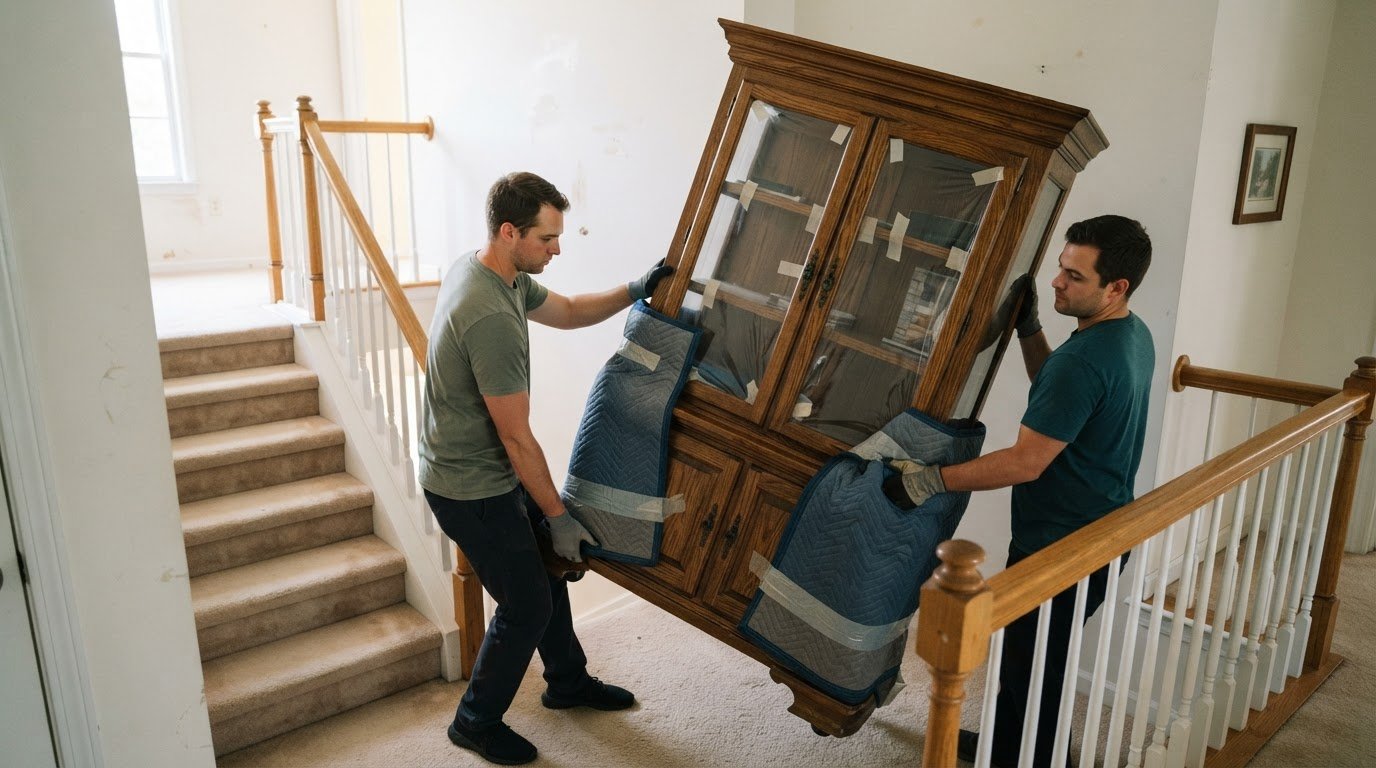
A heavy hutch doesn’t clear a stair corner by strength alone. The move depends on measuring the hutch, staircase, landing, and doorways, then planning a coordinated pivot that keeps the crown intact. To plan how to move a heavy solid oak hutch without disassembling its crown in Gainesville, movers need those measurements and a clear picture of the route. China cabinets typically weigh 150 to 350 pounds, and moving one safely requires at least two people to handle each section.
The tight turn is often the real challenge: a hutch may clear a hallway but still bind at a stair corner or doorway. This guide explains what movers need to know, how they assess the route, and how they coordinate a controlled lift while protecting the hutch and your home. You’ll also learn what affects whether it can make the route with its crown attached.
Key Takeaways
- Professional movers assess the hutch and staircase together to plan a controlled pivot around tight corners.
- Door and door-stop removal can help when the route is too narrow for the hutch to pass safely.
- A clear route and landing give the crew room to coordinate the lift and manage each turn.
- The hutch’s weight, shape, and glass components help determine the crew size and handling plan.
- Protective coverings and careful handling help guard the hutch and nearby floors, walls, and doorframes.
How professional movers pivot furniture around tight staircase corners
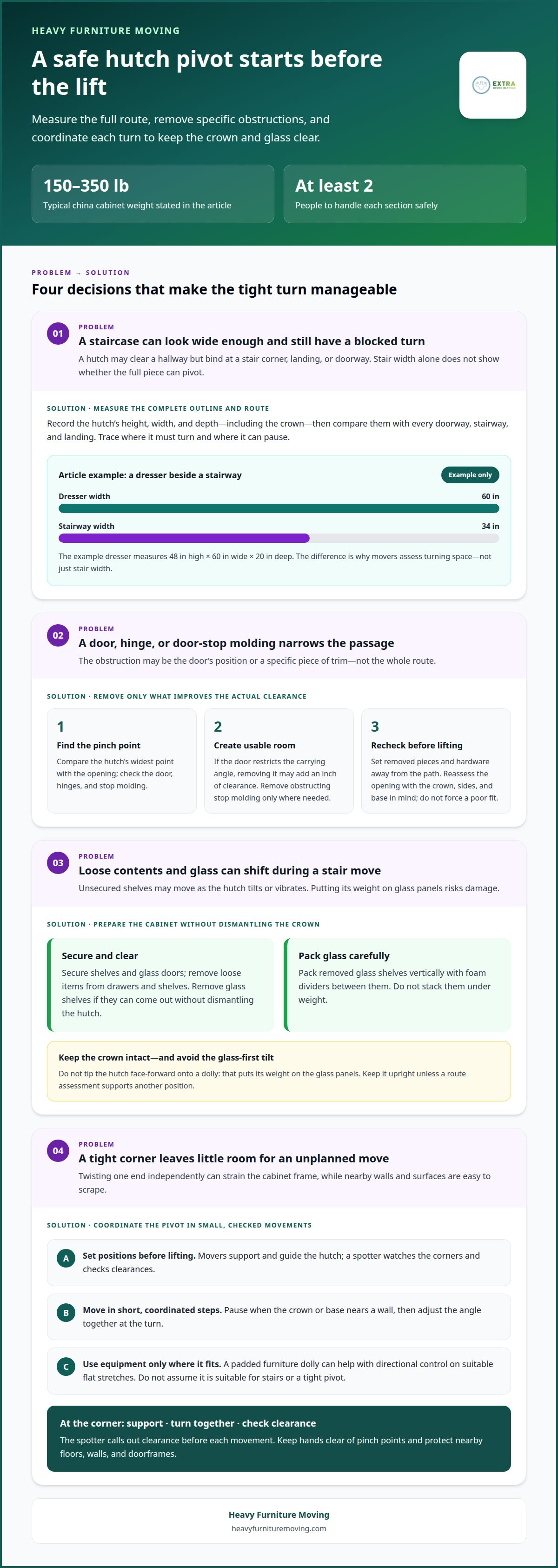
Before moving a hutch, crews secure its shelves and glass doors and remove loose items from drawers. They avoid tipping it face-forward onto a dolly, which would put the hutch’s weight on its glass panels.
-
How Professional Movers Measure the Hutch and Stairway Clearances
Measure the hutch’s height, width, and depth, then compare those dimensions with the stairway, landing, and doorway. A 48-inch-high, 60-inch-wide, 20-inch-deep dresser is much wider than a 34-inch stairway. That comparison shows why the crew must assess the turning space, not just the stair width. Include the crown in the hutch’s measurements so the planned angle accounts for its full outline.
-
How Professional Movers Plan the Route and Prepare the Hutch
Trace the route from the hutch’s starting point to its destination, noting each doorway, stair corner, and landing. Crews plan where the furniture can pause and where the pivot must happen, then clear loose items from shelves and drawers. They also identify obstacles that could interrupt the lift. A clear route helps the team move deliberately instead of discovering a tight turn while supporting the hutch.
- Remove loose contents and any glass shelves that can be taken out without dismantling the hutch. Pack removed glass shelves vertically, with foam dividers between them, rather than stacking them under weight. Unsecured shelves can shift as furniture tilts or vibrates on stairs. If the hutch has drawers, removing them can reduce a dresser’s weight by 25% or more. Keep the crown intact and avoid treating removable contents as structural parts.
-
How Professional Movers Coordinate and Pivot Around Corners
Set clear positions before lifting: movers support and guide the hutch while a spotter watches the corners and checks clearances. The crew moves in short, coordinated steps, pausing when the crown or base nears a wall. At each turn, they adjust the angle together instead of twisting one end independently. This coordination helps limit strain on the cabinet frame and keeps hands clear of pinch points.
- A padded furniture dolly can improve directional control and reduce lifting fatigue on suitable flat stretches. Keep the hutch balanced and securely supported; don’t assume a dolly is suitable for stairs or a tight pivot. At a corner, the crew controls the hutch directly, turning it in small movements while checking the crown, sides, and base against nearby surfaces. A spotter calls out clearance before each movement.
- Keep the hutch upright unless a route assessment supports another position. Tilting it face-forward can put the full load on the glass door panels, so it isn’t a safe default. Laying it on its side also changes how its weight rests on the frame and crown. Movers assess the construction, glass, support points, and available space before deciding whether any tilt is appropriate.
When professional movers may remove doors or door-stop molding
When the hutch has too little clearance, movers may remove a door or door-stop molding along the route. The goal is to create room at a specific pinch point without dismantling the crown or forcing the furniture against nearby surfaces.
- Identify the exact obstruction. Movers compare the hutch’s widest point with the doorway and check whether the door, hinges, or door-stop molding narrows the passage. A door that swings into the route may block the crew even when the opening appears wide enough. This helps distinguish a doorway obstruction from a tight stair turn that needs a different plan.
- Decide whether removing the door will help. If the door slab or its position restricts the carrying angle, movers may remove it before handling the hutch. Removing doors along a china cabinet’s route can provide an additional inch of clearance. That space can matter when the crown or projecting trim needs to pass through a narrow opening without scraping.
- Consider door-stop molding at a tight opening. If the frame’s stop molding catches the furniture, movers may remove the obstructing section to create more usable space. They identify the affected pieces first and focus on the section that blocks the route. Since removing molding won’t solve every clearance issue, the crew compares the opening with the hutch’s shape and planned angle before proceeding.
- Protect removed pieces and nearby surfaces. Movers set aside the door, molding, and hardware in a clear spot, away from the carrying path and hutch. This keeps loose pieces from becoming obstacles near the staircase. They also protect nearby surfaces and keep the crew’s route clear. The goal is to create working room without cluttering the landing.
- Reassess the passage before moving the hutch. After removing the obstruction, movers check the opening again, accounting for the hutch’s crown, sides, and base. They communicate the available clearance before lifting. If the doorway remains too narrow, they adjust the route or pivot plan rather than forcing the furniture through. Removing a door or molding helps only if it improves the actual path.
For a hutch move that needs careful indoor handling, in-home furniture moving help can support planning around doors, narrow openings, and staircases.
How professional movers plan a route and clear landing areas
Before carrying an oversized hutch, movers map each doorway, hallway, staircase, and landing. The route plan gives the crew a clear sequence and identifies where the furniture can pause.
- Trace the full path. Start at the hutch’s current position and follow the route to its destination. Mark each turn, doorway, stair flight, and landing where the piece must change direction. Include the approach to every opening, not just the opening itself. A clear path helps movers anticipate tight spots instead of correcting their movement while supporting heavy furniture.
- Measure the destination doorway and approach. Compare the hutch’s dimensions with the doorway and available turning space. A sofa measuring 35 inches high, 84 inches wide, and 38 inches deep illustrates why width alone doesn’t explain how furniture passes through an entrance. The crew considers the angle needed to enter, as well as the space to reposition beyond the threshold.
- Check ceiling height at landings. A landing can limit an upright carry even when the stairs have enough width. For example, an armoire measuring 72 inches high faces a different clearance problem under a 75-inch landing ceiling than it does on an open stair flight. Movers account for the furniture’s height and planned position before choosing where to pause or turn.
- Clear each landing as a work area. Remove loose objects, small furniture, and anything that could block the crew’s footing or turning space. Keep the path between stair sections open so movers can change hand positions without stepping around obstacles. A clear landing also gives the spotter room to see the hutch’s edges and call out nearby walls or railings.
- Protect the route before the lift. Place moving blankets where the plan identifies vulnerable surfaces, such as a wall beside a tight turn. Secure coverings so they don’t slip into the movers’ path. This preparation helps limit scuffs as the hutch passes close to walls, doorframes, or stair rails. Keep protective materials out of the landing’s turning area.
- Agree on pause points and signals. Before lifting, identify where the crew can stop and who will communicate instructions. At a landing, movers may need to steady the hutch before continuing up the next flight. Clear signals keep the movement coordinated, prevent conflicting directions, and help the crew respond if the crown or base approaches an obstacle.
How much does a solid oak hutch weigh, and how many movers are needed?
A solid oak hutch has no standard weight: its size, construction, shelves, and glass all affect the load. Plan the crew based on the piece’s weight and shape, as well as the demands of the route.
- Start with the hutch’s actual weight. Furniture weighing 250 pounds or more is typically considered heavy. China cabinets typically weigh between 150 and 350 pounds, but that range isn’t a precise estimate for every solid oak hutch. A large crown, deep shelves, or substantial base can change the load. Movers use the specific piece’s weight when planning how it will be handled.
- Account for everything that stays attached. An intact crown adds to the hutch’s overall size and weight. Glass doors, fixed shelves, and a solid base also affect weight distribution. The crew considers the complete piece, not just the cabinet body. That matters because an uneven load can be harder to control through a doorway or around a stair turn.
- Consider removable contents separately. Movers can reduce the carried load by removing loose items and shelves designed to come out, without dismantling the crown. Handle glass shelves separately and pack them vertically, not stacked under other items. Emptying the hutch also prevents contents from shifting in transit. The cabinet’s remaining weight still guides the lifting plan.
- Plan for at least two people to handle each section. Moving a china cabinet safely requires at least two people to handle each section. The crew needed depends on the hutch’s size, balance, grip points, and route. Tight stair turns may call for an additional spotter to communicate clearances, rather than another person carrying the same load. Movers assign positions before lifting.
- Match the crew to the heaviest demands. A hutch weighing 500 pounds is a point at which the guidance recommends hiring trusted movers. Weight is only one factor: a tall cabinet, fragile glass, limited handholds, or a narrow landing can make control more demanding. The crew considers those conditions together, not weight alone, when choosing how to manage the lift.
- Give movers useful details before the move. Share the hutch’s approximate dimensions and weight, if available, along with photos of its crown, doors, shelves, and base. Describe the stairs, landings, and tight turns, including where the cabinet must change direction. These details help the crew plan equipment, positions, and movement. If the weight is uncertain, photos and measurements still show the piece’s scale and shape.
How do professional movers protect a hutch, floors, walls, and doorframes during a move?
Protect the hutch before moving it. Preparing the cabinet and route helps reduce the risk of scratches or impacts to its glass, finish, and nearby surfaces.
- Cover exposed furniture surfaces. Movers use blankets and plastic to protect the hutch during handling. They pad vulnerable corners and edges, where contact with a doorway or wall can leave marks. Covering the cabinet helps shield its finish, but the padding must still let the crew grip and guide it securely.
- Protect glass without creating pressure points. Keep moving straps away from glass panels. Concentrated strap pressure can cause stress fractures, and over-tightened blankets can create stress points across flat glass. Movers secure protective coverings without pulling them tightly over the panels. Glass shelf corners also need padded edge protection, since a small chip can start at an exposed corner.
- Use a paper layer when wrapping needs it. Packing paper can form a base layer between the hutch’s surface and other protective materials. It helps prevent scratching from tape adhesive and bubble-wrap texture. Movers smooth the paper into place before adding another layer, keeping adhesive off the finish. This is especially useful on finished surfaces that might show marks after tape or textured wrap is removed.
- Shield floors along the planned path. Movers protect the route and avoid dragging the cabinet across the floor. Dragging a china cabinet can damage its feet, split base corners, and scratch flooring. Furniture sliders can help move heavy objects across suitable floor areas. The crew uses them where appropriate, not as a substitute for lifting or controlled handling on stairs.
- Guard doorframes and walls at tight points. Place protective blankets or plastic where the hutch passes close to a frame, wall, or landing edge. Keep the covering stable and clear of the crew’s footing and grip. Movers guide the cabinet through the opening instead of letting its base or crown scrape the frame. A spotter watches the nearest edge and signals when it has clearance.
- Check protection before each movement. Before a turn or doorway, movers make sure coverings remain in place and straps aren’t pressing on glass. They pause if padding shifts or an exposed edge approaches a hard surface. For careful hutch moving support, the crew can plan protection around the cabinet and its route.
Heavy Furniture Moving
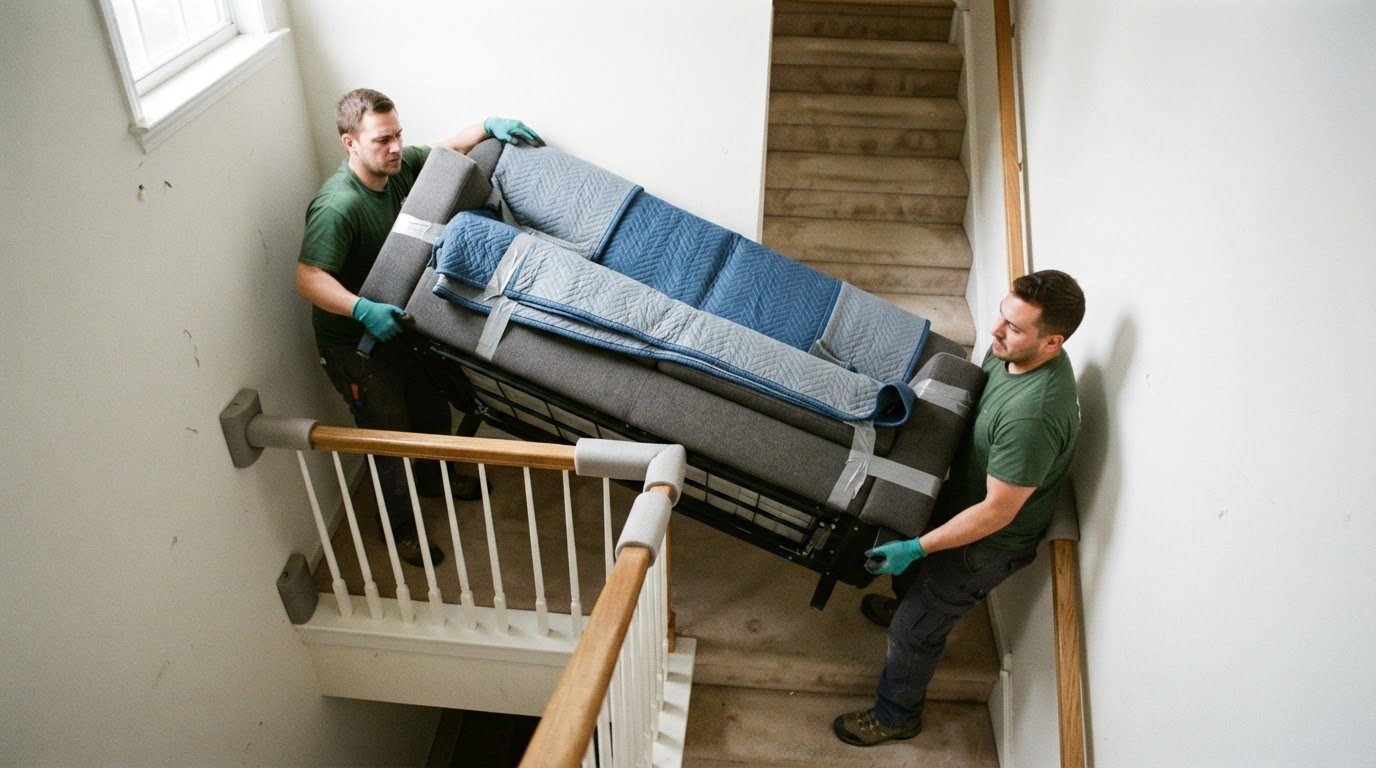
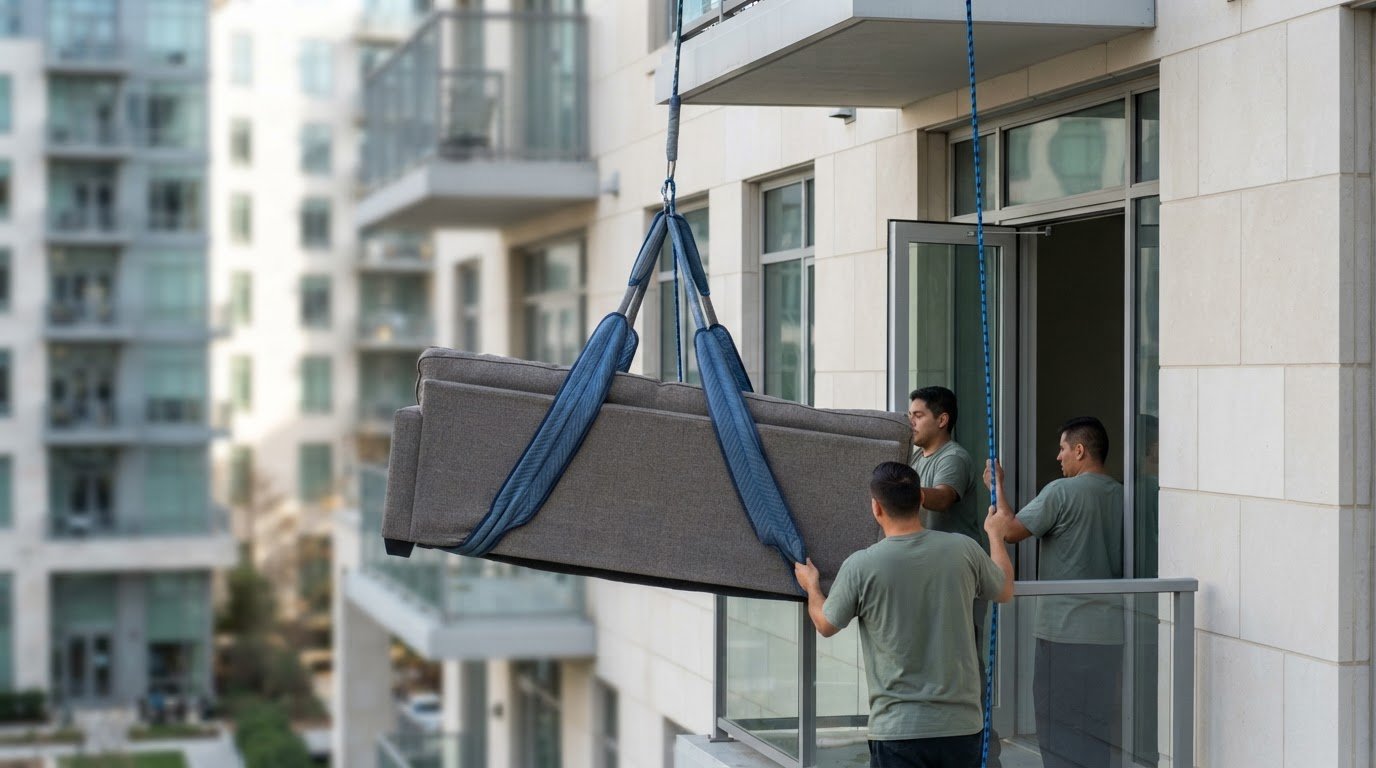
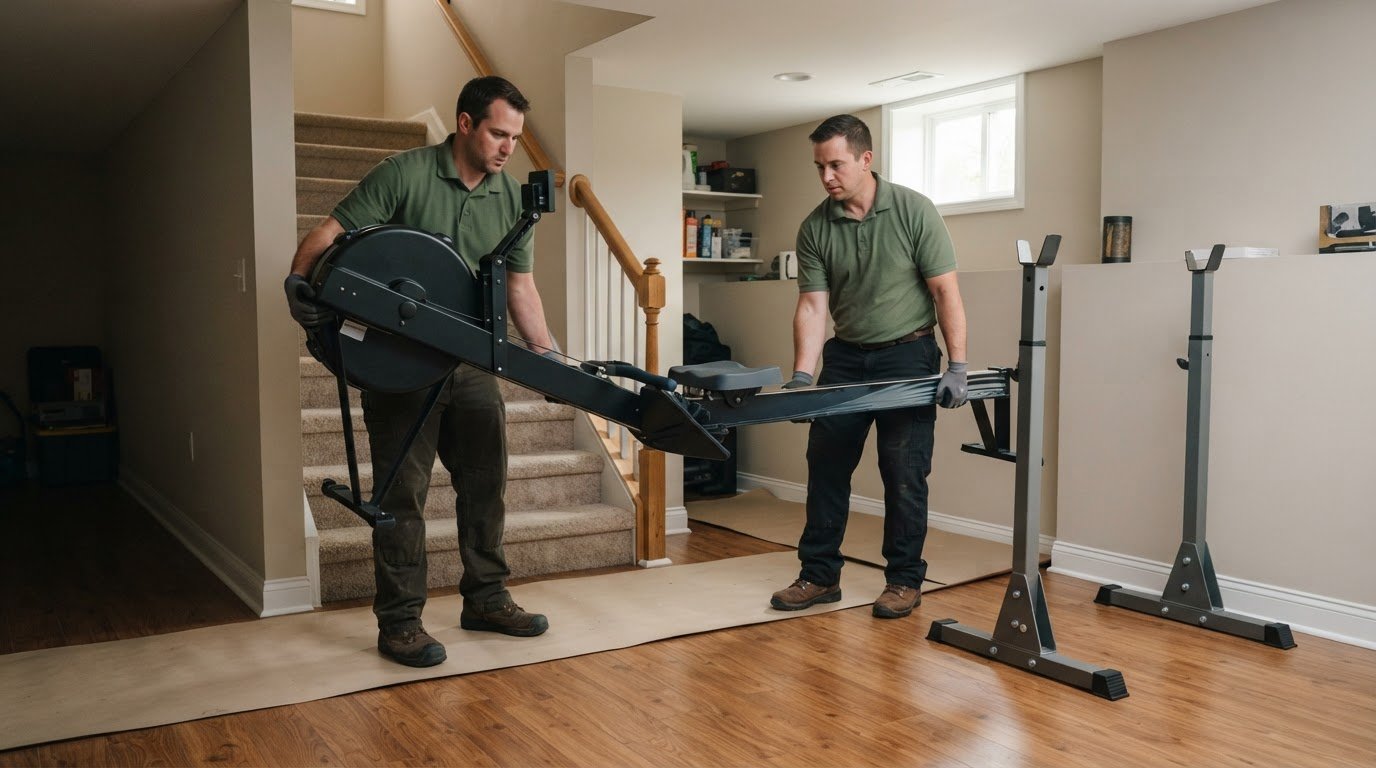
Heavy Furniture Moving helps plan challenging furniture moves, including how to move a heavy solid oak hutch without disassembling its crown in Gainesville. Share the hutch’s dimensions, photos, and details about stairs or tight turns to help the team understand the route. If you’re planning to keep the crown intact, these details give movers a useful starting point. Heavy Furniture Moving also offers Movers Near Me, Exercise Equipment Moving, and Sofa Hoisting. Contact Heavy Furniture Moving to discuss your hutch move and the help you need.
Set Up the Next Move with Confidence
Planning how to move a heavy solid oak hutch without disassembling its crown in Gainesville starts with sharing the details that shape the job. Note the hutch’s dimensions, tight spots along the route, and any glass or delicate surfaces. This gives the moving team a clearer starting point for planning around your home and furniture.
Heavy Furniture Moving handles furniture moves and also offers Movers Near Me, Exercise Equipment Moving, and Sofa Hoisting. If the hutch’s size or staircase makes the move difficult to manage alone, contact Heavy Furniture Moving to discuss the move. A clear plan is the first step toward getting your hutch where it needs to go. You can take that next step with confidence.
Frequently Asked Questions
What information do professional movers need to move solid wood furniture?
Movers need the furniture’s dimensions, approximate weight, photos, and details about both addresses. A clear photo of the hutch’s front and side shows its shape, crown, doors, and base. Include the room where it sits and tricky access points, such as a sharp turn from a hallway onto stairs. Mention fragile components or loose contents so the crew can account for them in the handling plan.
What should I look for when hiring someone to move a china cabinet?
Choose a moving service that handles heavy household furniture and plans for fragile parts and access conditions. Ask how the crew will account for the cabinet’s doors, shelves, and route, and share photos of the entire piece. Heavy Furniture Moving specializes in heavy and bulky residential items. For a china cabinet move, clear details about the item and home layout help the team plan before moving day.
How do professional movers move a heavy solid oak hutch without removing the crown or top?
Movers can keep the crown attached when the hutch and route allow a controlled carry. They assess how the complete piece moves as one unit, considering its balance and grip points, and use coordinated handling instead of pulling on the crown. The team avoids putting pressure on glass or forcing the cabinet through a tight opening. If the route cannot accommodate the intact hutch, the plan needs another safe approach.
How do professional movers measure a hutch against doorways, hallways, and staircases before moving it?
Movers compare the hutch’s full dimensions with the narrowest points along the route, including the doorway, hallway approach, stair turn, and landing ceiling. They also account for projecting trim and the angle needed to guide the cabinet through each transition. For example, the doorway may fit the hutch’s body but leave too little turning room for its crown. Photos help clarify unusual layouts.
What equipment do professional movers use to move a heavy hutch without disassembling it?
Equipment depends on the hutch’s construction and route. Movers may use a furniture dolly on suitable flat sections, moving blankets, and straps positioned away from glass panels. Protective equipment may also include door-jamb covers and masonite floor protection. A dolly isn’t a substitute for controlled handling on stairs, and straps should support the cabinet without pressing against fragile glass. The crew matches the setup to the hutch and access conditions.
Which Gainesville movers handle oversized solid wood furniture?
Heavy Furniture Moving serves Gainesville, Virginia, and handles heavy and bulky residential furniture. Share photos of the hutch and details about the staircase and any narrow passageways when discussing the move. This gives the team a clearer picture of the item and route. Specify Gainesville, Virginia, so the move is planned for the correct service area.
Frequently Asked Questions
Movers need the furniture’s dimensions, approximate weight, photos, and details about both addresses. A clear photo of the hutch’s front and side shows its shape, crown, doors, and base. Include the room where it sits and tricky access points, such as a sharp turn from a hallway onto stairs. Mention fragile components or loose contents so the crew can account for them in the handling plan.
Choose a moving service that handles heavy household furniture and plans for fragile parts and access conditions. Ask how the crew will account for the cabinet’s doors, shelves, and route, and share photos of the entire piece. Heavy Furniture Moving specializes in heavy and bulky residential items. For a china cabinet move, clear details about the item and home layout help the team plan before moving day.
Movers can keep the crown attached when the hutch and route allow a controlled carry. They assess how the complete piece moves as one unit, considering its balance and grip points, and use coordinated handling instead of pulling on the crown. The team avoids putting pressure on glass or forcing the cabinet through a tight opening. If the route cannot accommodate the intact hutch, the plan needs another safe approach.
Movers compare the hutch’s full dimensions with the narrowest points along the route, including the doorway, hallway approach, stair turn, and landing ceiling. They also account for projecting trim and the angle needed to guide the cabinet through each transition. For example, the doorway may fit the hutch’s body but leave too little turning room for its crown. Photos help clarify unusual layouts.
Equipment depends on the hutch’s construction and route. Movers may use a furniture dolly on suitable flat sections, moving blankets, and straps positioned away from glass panels. Protective equipment may also include door-jamb covers and masonite floor protection. A dolly isn’t a substitute for controlled handling on stairs, and straps should support the cabinet without pressing against fragile glass. The crew matches the setup to the hutch and access conditions.
Heavy Furniture Moving serves Gainesville, Virginia, and handles heavy and bulky residential furniture. Share photos of the hutch and details about the staircase and any narrow passageways when discussing the move. This gives the team a clearer picture of the item and route. Specify Gainesville, Virginia, so the move is planned for the correct service area.