How to Move a Heavy Cast Iron Stove in Ashburn Safely
A cast-iron wood stove is not a one-person lift. Planning the route and coordinating the team can help reduce the risk of injury or damage.
Tight doorways, floor protection, and getting a heavy stove into place without damaging your home all require careful planning. Treat the job as a controlled move, not a quick furniture shuffle.
Professional movers plan the route, secure and carry the stove, and prepare for challenging transitions such as stairs. Sharing key details in advance helps the crew plan for your home and the stove’s destination. With the heavy work handled, you can focus on the rustic living room you’re creating.
Key Takeaways
- Give movers clear details about the stove, its destination, and the route so they can plan the handling and transport.
- Stairs and moves to another home call for extra planning around safe access, balance, and protecting the property.
- Learn how movers choose between a dolly, floor protection, and a loading ramp based on the path and surfaces.
- Proper wrapping and secure positioning help protect the stove and keep it stable while it’s being moved.
- See why professional handling can be the safer choice when a heavy stove makes a DIY move difficult to control.
How can professional movers help you move a stove safely?
In Ashburn, permit or inspection requirements depend on whether the work changes the stove’s installation or venting. Moving the appliance alone is different from altering its installation, so plan those tasks separately.
A DIY move can lead to crushing injuries or damage to floors, walls, and doorframes. A heavy load can shift unexpectedly, especially on stairs, at thresholds, or around tight turns.
For a rustic living room, plan the stove’s position according to the manufacturer’s floor-protection and clearance instructions. Keep rugs and furniture out of the route and away from the intended spot.
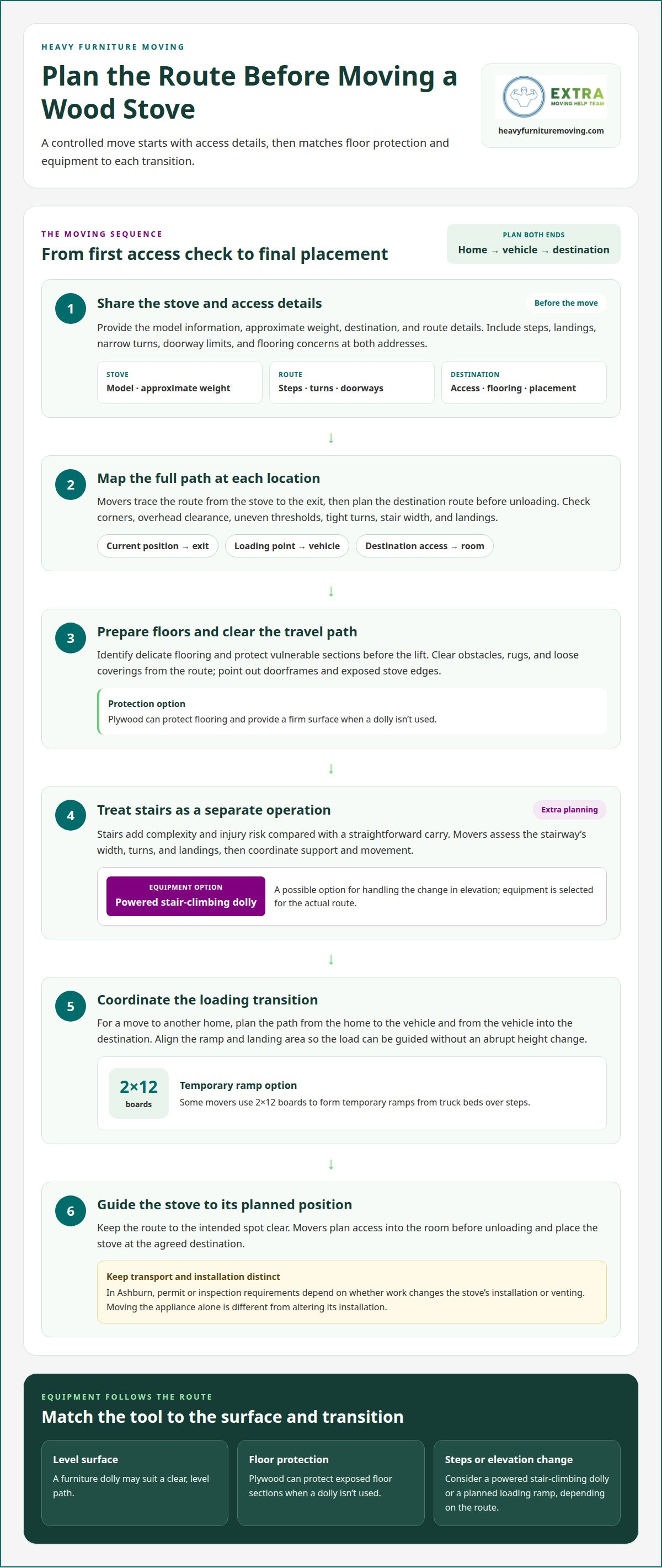
- Share the stove and route details. Provide the model information, approximate weight, and destination. Describe the steps, narrow turns, doorway limits, and path from the entrance to the room. These details help the crew plan the lift and route before moving a heavy cast-iron wood stove into your rustic living room in Ashburn.
- Ask for a route-specific plan. A ground-floor path differs from stairs or a move between homes. The crew considers corners, thresholds, and changes in level. For example, a straight hallway may allow a different approach than a narrow turn onto a staircase. Share access details for both the starting point and destination.
- Have movers assess handling needs. Stove weight, dimensions, access, and protection needs shape the plan. Medium and large stoves need coordinated help, with clear roles for lifting, guiding, and watching the route. For a move involving a heavy cast-iron wood stove into a rustic living room in Ashburn, identifying obstacles beforehand helps the crew choose a controlled approach.
- Protect the home before the lift. Movers prepare vulnerable floor areas and clear obstacles from the route. They also account for doorframes and exposed stove edges. A clear path gives the crew room to guide the load through turns without striking nearby surfaces.
- Discuss the quote using the actual job details. The price depends on the case and is given after a quote request. Weight, stairs, access, distance, and floor-protection needs affect the work involved. Sharing those details helps the estimate reflect the route instead of assuming a simple ground-floor carry.
- Confirm the planned destination. Identify where the stove should go and keep the route to that spot clear. Movers can place it as planned, while installation or venting changes remain separate considerations. This keeps the transport plan focused on reaching the intended location safely.
Moving a stove between floors or to another house
Stairs make a move more complex and increase the risk compared with a straightforward carry. For a move between homes, professional movers plan both routes, the loading point, and destination access before transport begins.
-
How Professional Movers Prepare the Moving Path
Tell the moving team about every floor, step, landing, and doorway along the route. Movers map the path from the stove’s current position to the exit, then assess turns and overhead clearance. At the destination, they plan the route into the room before unloading. Clear the agreed path and point out uneven thresholds or tight corners that could affect controlled movement.
-
How Professional Movers Protect Floors Along the Route
Identify delicate flooring and explain where the stove will travel. Movers select protection for the route and prepare each transition before moving the load. Plywood can protect flooring when a dolly isn’t used and provide a firm surface across vulnerable sections. Keep rugs and loose coverings out of the travel path, since shifting material can complicate movement.
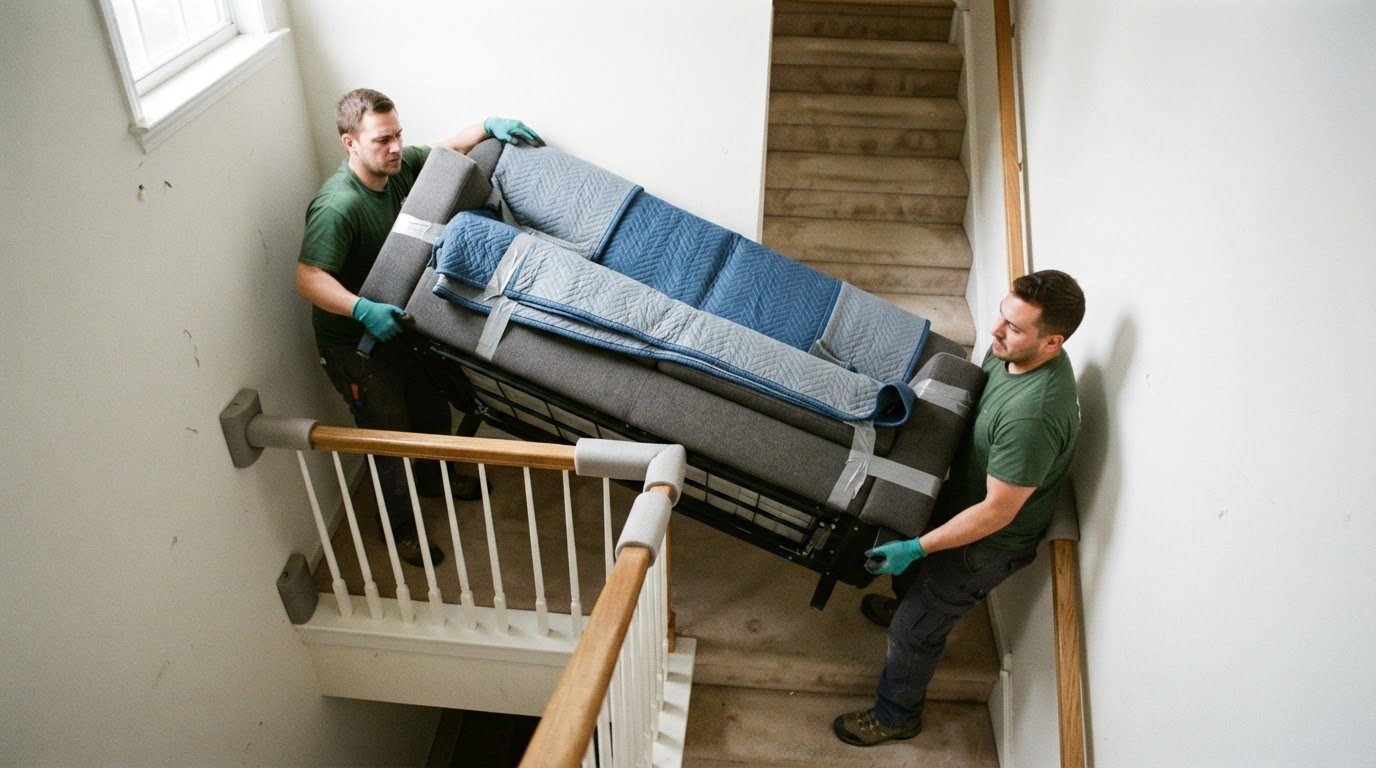
- Plan stair handling as a separate operation. Professional movers are recommended for moving a wood stove between floors because the stove and stairs create serious injury risks. The team assesses the stairway’s width, turns, and landings before choosing an approach. A powered stair-climbing dolly is one option to consider. Movers coordinate support and movement instead of treating the staircase like a level hallway.
- Coordinate the loading transition. For a move to another house, the crew plans the route from the home to the vehicle and then from the vehicle into the destination. Some movers use 2x12 boards to form temporary ramps from truck beds over steps. The ramp and landing area need to align with the route, so the stove can be guided without an abrupt change in height.
- Choose equipment for the route, not convenience. A level path, a raised threshold, and a staircase each present different handling challenges. Movers match the equipment and floor protection to the conditions. When a dolly isn’t part of the plan, plywood can shield exposed floor sections. For stairs, a powered stair-climbing dolly can help address the change in elevation.
- Share details for both addresses. Give the crew the access conditions at the starting home and destination, including stairs, steps, tight turns, and flooring concerns. A clear description helps movers plan handling at both ends instead of discovering a blocked landing during the move. For a complex route, professional moving support can help organize the heavy lift and transport.
How professional movers use a furniture dolly, plywood, and a loading ramp
Professional movers match equipment to the stove, flooring, and route. A dolly supports travel on level surfaces, while plywood or a loading ramp can help with difficult surfaces and transitions.
- Assess the stove and route before selecting equipment. Movers consider the stove’s weight, base, and shape, along with the path to the truck or destination. A clear, level route may suit a furniture dolly. Steps, uneven flooring, or a transition to a truck bed call for a different plan. The equipment must suit the actual route, not just the stove’s weight.
- Choose a dolly with suitable capacity and control. Movers assess the stove and how its weight will sit on the platform. The listed capacity alone does not determine whether a particular dolly suits the load or route.
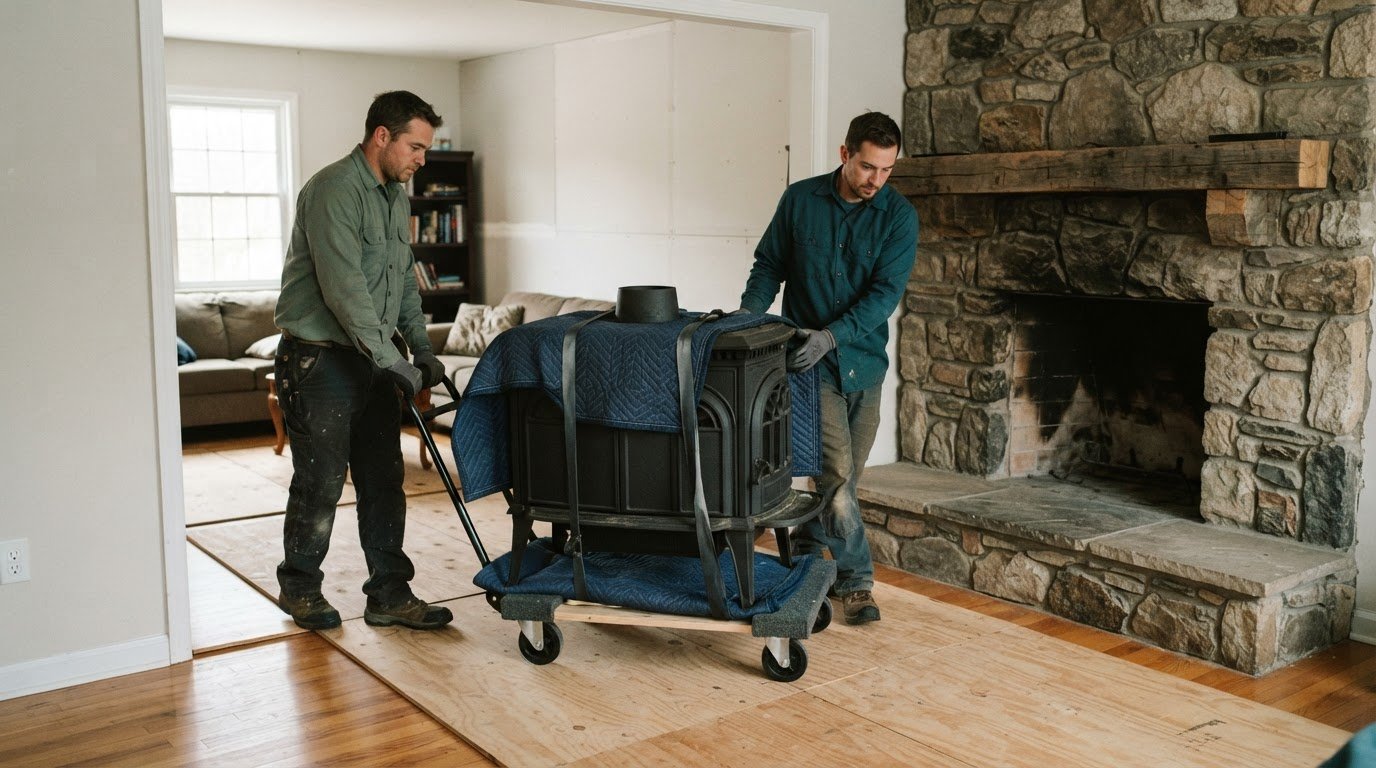
- Position the dolly as part of a coordinated lift. Movers control the stove as they guide it onto the platform, keeping the load balanced and movement deliberate. They check that it sits securely before rolling. During dolly travel, a person at each of the stove’s four corners can help guide and monitor its movement.
- Keep the stove stable during dolly travel. The crew moves at a controlled pace and watches the wheels, turns, and thresholds. A four-wheel wooden carpeted dolly has been used with 2-by-4s to keep a stove in place. Movers select their approach based on the appliance and conditions, then maintain control through each change in direction.
- Use plywood where wheels aren’t the right choice. When moving a stove without a dolly, movers can use plywood to protect flooring along the route. They place it where the floor needs shielding and maintain a stable path. This matters in a rustic living room with finished flooring, where a heavy cast-iron base could otherwise scrape or mark the surface.
- Manage the truck-bed transition with a ramp. Some movers use 2x12 boards to make temporary ramps from truck beds over steps. The ramp provides a planned transition between levels, rather than an uncontrolled lift over the truck edge. Movers align the route and guide the stove through loading, keeping the load steady as it travels onto or off the vehicle.
- Reassess when the route changes. A dolly that works in a hallway may not suit a step or steep transition. Movers adjust the equipment and floor protection for each section instead of forcing one method throughout. This helps keep the move into a rustic living room controlled from the entryway to the final position.
How professional movers wrap and secure the stove
Wrapping protects the stove’s finish, and secure positioning helps control it during transport. Movers plan both around the stove’s shape and the route into the Ashburn home.
- Inspect the stove before wrapping. Movers note exposed edges, handles, doors, and other parts that could catch during handling. They also identify loose components that could shift or be damaged in transit. This inspection guides where padding goes and how the stove is handled. A cast-iron body needs protection from bumps, not just a covering over its broad surfaces.
- Prepare the stove for transport. The crew checks that movable parts won’t swing or shift while the stove is being carried. Any component that can be safely separated is handled apart from the main body. Keeping pieces secure reduces movement during loading and unloading. The team also makes sure the stove is ready to wrap without leaving anything loose against its finish.
- Cover vulnerable surfaces with padding. Movers pad areas likely to scrape or strike a doorway, wall, or vehicle surface. They arrange the padding around the stove’s shape rather than leaving corners exposed. The aim is to cushion contact while keeping the load visible. Wrapping should protect the stove without interfering with the crew’s grip.
- Keep the covering in place. Movers secure the padding so it stays positioned as the stove changes direction or moves onto transport equipment. They check corners, edges, and protruding parts before lifting. A loose cover can bunch up or expose the surface it is meant to protect. The crew adjusts the wrap before moving, not while carrying the load.
- Secure the stove for the transport stage. Movers use suitable restraints to help limit shifting in transit, while keeping the padded surfaces protected. Ratchet straps and padding were used in a reported move involving a stove weighing about 600 pounds. The setup for each job depends on the load and transport conditions; restraints should hold the stove steady without pressing unprotected edges.
- Recheck the stove after loading. Before the vehicle moves, movers inspect the covering and restraints for movement or exposed areas. They check again after unloading, before guiding the stove through the home. At the destination, a narrow doorway or turn can bring the wrapped stove close to walls and trim, so a second inspection matters.
- Unwrap only after the stove reaches its planned position. Movers keep protection in place throughout the route and remove it once handling is complete. They can then check visible surfaces and collect separated components. In a rustic living room, this final step helps the crew finish the placement without dragging loose wrapping across the floor.
DIY moving versus professional movers
Professional movers handle a cast-iron wood stove by assessing its weight and route, then coordinating the lift, equipment, and transport.
- Compare the load with the available crew. Crew coordination affects how a load can be controlled through doorways and turns. A medium or large stove calls for coordinated help, not a solo lift or an improvised team without assigned roles.
- Account for the risk of a shifting load. A stove that tilts during a lift can injure someone or damage flooring, walls, and doorframes. Stairs add another challenge because the crew must control the load while changing elevation. DIY movers may not have enough coordinated support to manage those transitions safely.
- Choose professional handling for a heavy stove. The guidance recommends professional movers when a stove weighs over 500 pounds. This is especially relevant when the route includes stairs, narrow landings, or tight turns. Professionals can plan the movement around those obstacles instead of discovering them while carrying the stove.
- Use a planned crew and equipment approach. Most stove moves requiring professional movers take two to four hours. The team assesses access, selects suitable moving equipment, and coordinates each change in direction. The time depends on the route and handling needs, so a move between rooms differs from one involving stairs or transport to another home.
- Separate transport from installation work. Movers focus on handling the stove and taking it to its destination. If relocating it involves changes to venting or installation, those tasks require separate planning. Keeping the move distinct from installation avoids treating delivery into a room as proof that the stove is ready to use.
- Decide based on route complexity, not just distance. Even a short move across an open room involves a heavy, difficult-to-control object. A longer route may be manageable when access is clear, while a single flight of stairs can make the job more demanding. Consider the stove’s weight, obstacles, and transitions together.
- Arrange professional help for the heavy lift. If the stove is over 500 pounds or the route includes stairs, choose a team equipped to plan the move and coordinate the handling. Arrange professional heavy lifting support for the stove’s route into its new room.
Before deciding whether to hire help, compare the hourly rate and likely total. The hourly figure is per mover, so crew size and time affect the bill. Ask for a quote based on the access and handling needs of the move, then weigh it against the demands of managing the heavy lift yourself.
Heavy Furniture Moving
Heavy Furniture Moving helps Ashburn residents plan demanding household moves when a cast-iron stove needs careful handling. Its heavy lifting moving service and local moving support can help manage the stove’s route, protect the home during the move, and coordinate its placement with the rest of the room. Share the stove’s approximate weight, access points, stairs, and destination so the moving plan reflects the actual job. Turn to professional help when the appliance is too heavy to handle safely or the route includes tight turns, steps, or another home. For a stove move in Ashburn, contact Heavy Furniture Moving to discuss your moving needs.
Make room for your stove’s next chapter
Choose a clear destination before scheduling the heavy lift. Decide where the stove should sit in your rustic living room, then consider how the route through the home connects to that spot. Planning these details helps turn moving a heavy cast-iron wood stove into a rustic living room in Ashburn into a more organized job.
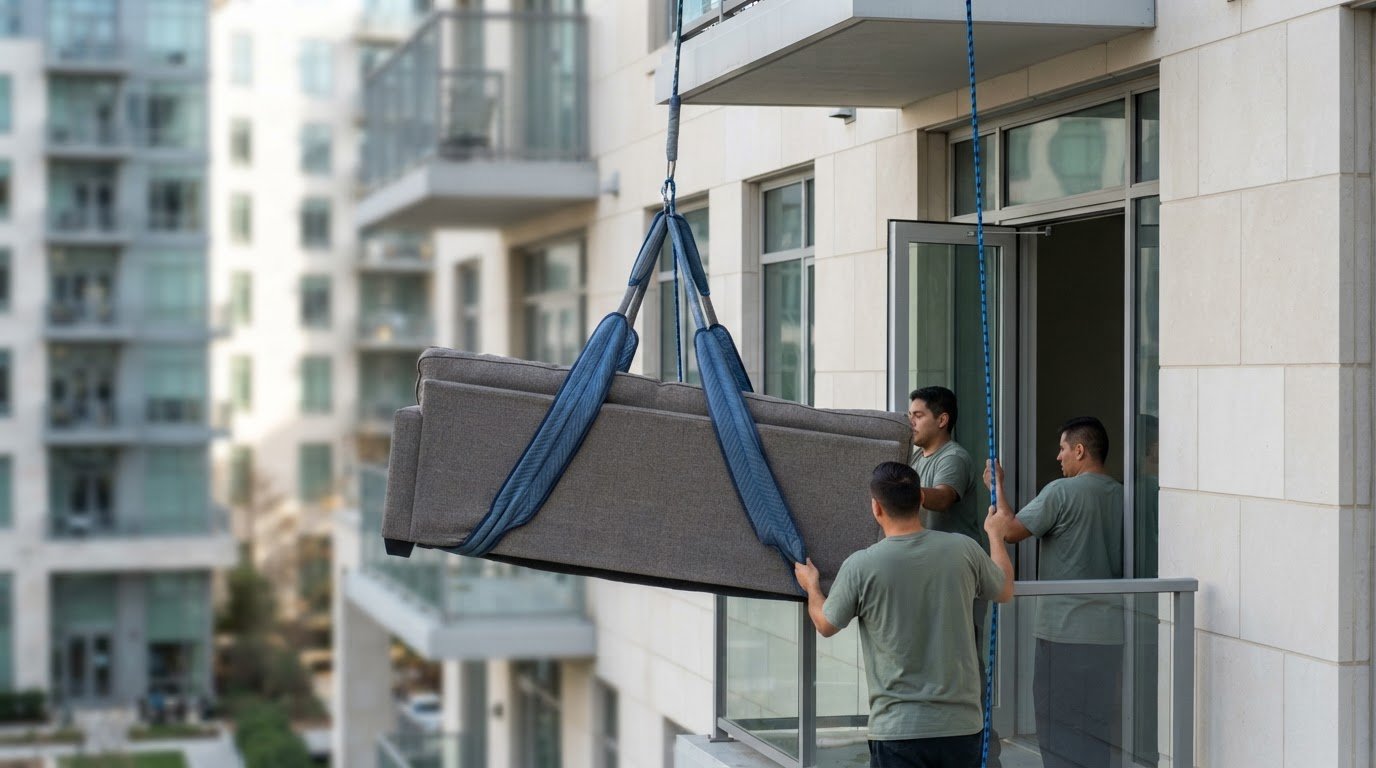
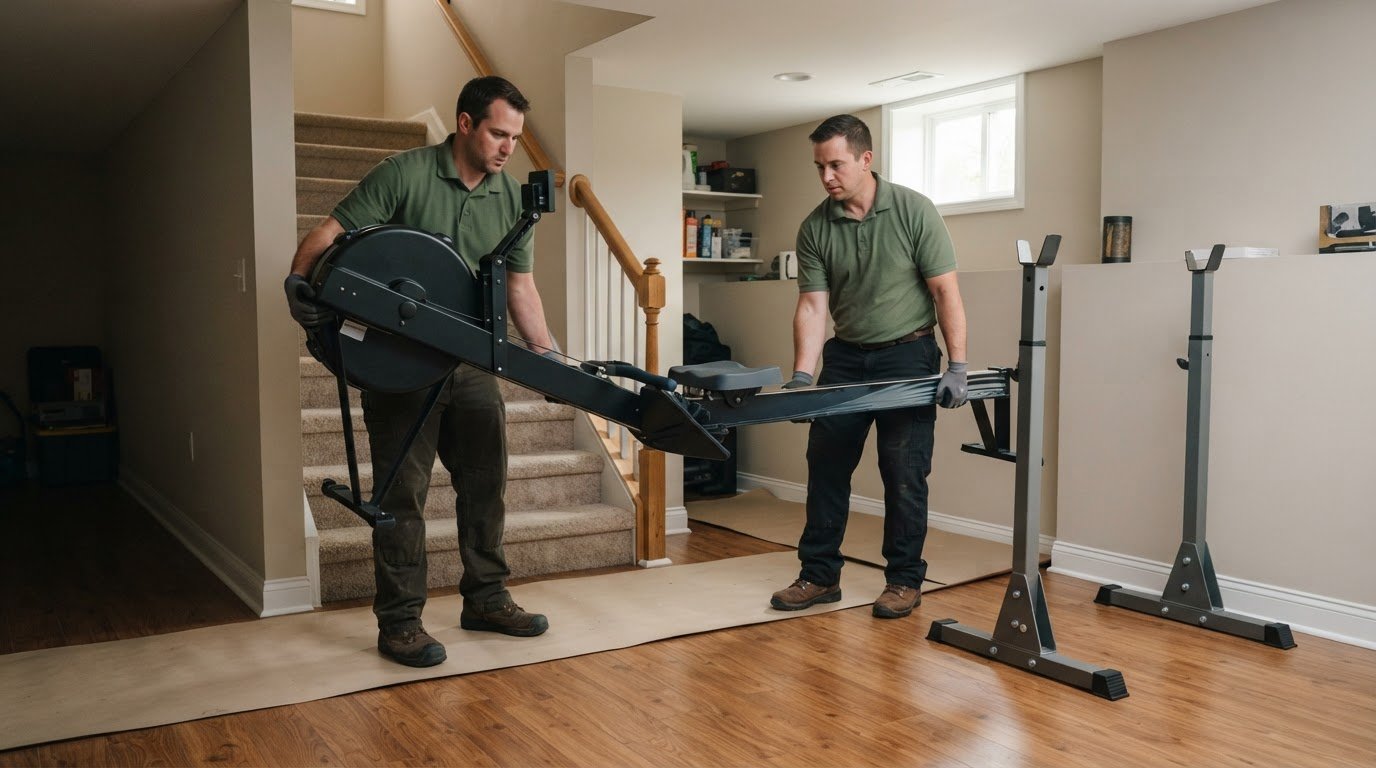
Heavy Furniture Moving helps with demanding household moves and heavy lifting. Its services include Movers Near Me, Exercise Equipment Moving, and Sofa Hoisting. Share the stove’s destination and any route details that could affect access, such as steps, narrow turns, or a tight entryway. Clear information helps the team plan the move.
Ready to discuss your stove move? Contact Heavy Furniture Moving and take the next step toward making room for it. Your living room plans can move forward with the right help.
Frequently Asked Questions
How much does it cost to move a heavy cast iron wood stove in Ashburn, Virginia?
The cost depends on the move details, and Heavy Furniture Moving provides an upfront quote before work begins. The company uses hourly labor with a 2-hour minimum, while flat-rate pricing applies to most single heavy items. Stairs and wrapping are priced into the quote. For an Ashburn move, share the stove’s details and route, including any stairs or access challenges, so the quote reflects the job.
What equipment do professional movers use to move a heavy wood stove without damaging floors?
Professional movers may use a dolly to move the stove and protective materials to shield the home. Heavy Furniture Moving uses blankets, straps, masonite floor protection, and door-jamb covers. For example, masonite can cover a vulnerable floor section, while a jamb cover helps protect a doorway during passage. The equipment used depends on the stove and the route through the home.
How should you prepare your wood stove and home for professional movers?
Clear the hallway and doorway, measure the tightest doorway, and send the moving team a photo of the stove and any stairs. These details help identify access challenges before moving day. If your home is in an Ashburn high-rise, reserve the elevator. Park as close as possible to the entrance to simplify the route. Empty drawers in any other furniture being moved.
Frequently Asked Questions
The cost depends on the move details, and Heavy Furniture Moving provides an upfront quote before work begins. The company uses hourly labor with a 2-hour minimum, while flat-rate pricing applies to most single heavy items. Stairs and wrapping are priced into the quote. For an Ashburn move, share the stove’s details and route, including any stairs or access challenges, so the quote reflects the job.
Professional movers may use a dolly to move the stove and protective materials to shield the home. Heavy Furniture Moving uses blankets, straps, masonite floor protection, and door-jamb covers. For example, masonite can cover a vulnerable floor section, while a jamb cover helps protect a doorway during passage. The equipment used depends on the stove and the route through the home.
Clear the hallway and doorway, measure the tightest doorway, and send the moving team a photo of the stove and any stairs. These details help identify access challenges before moving day. If your home is in an Ashburn high-rise, reserve the elevator. Park as close as possible to the entrance to simplify the route. Empty drawers in any other furniture being moved.