How to Move a Heavy Butcher Block Kitchen Island into an Aldie Ranch Home
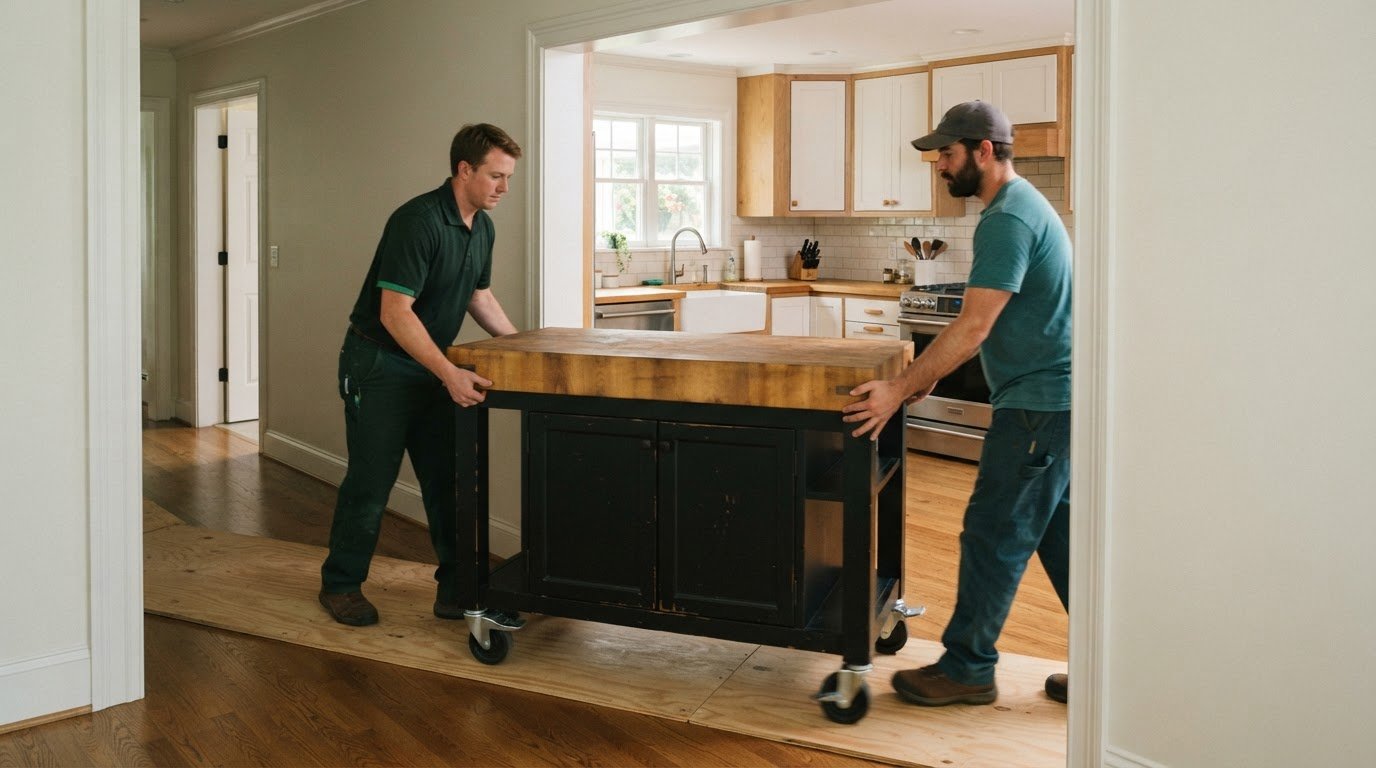
Moving a heavy butcher block kitchen island into an Aldie ranch home starts with measuring the island, its route, and the spot where it will sit. A model on wheels can still be difficult to control, so plan how to manage the casters before rolling it through the home. If the route is tight, removing detachable parts may make the move easier.
It’s easy to focus on the island’s weight and overlook corners, thresholds, flooring, and the final layout. Planning ahead helps prevent awkward turns and last-minute rearranging. This guide explains how to assess the island, map a clear path through a ranch home, protect the butcher block and surrounding surfaces, and move stationary and wheeled models with care. You’ll also learn when the job calls for extra hands and heavy-lifting help, so the island can reach its new place without unnecessary strain.
Key Takeaways
- Measure the island and its route through the ranch home so you can spot tight turns and obstacles before moving day.
- Check which parts can be removed safely, including shelves or casters, to make the island easier to handle.
- Choose moving equipment based on the island’s shape and route, and plan how to control wheeled models.
- Protect floors, walls, and the butcher block with a clear path and careful handling at thresholds and stairs.
- Know when the island’s top-heavy weight or difficult route makes professional heavy-lifting help the safer choice.
What is the typical weight and size of a butcher block kitchen island?
- Assess the island’s actual construction. Butcher block islands don’t have one standard weight or footprint. The countertop’s dimensions and thickness, base material, shelves, and attached accessories all affect the load. A solid top over a metal frame differs from a smaller cart with open shelving. Assess the specific island rather than relying on a broad category estimate.
- Measure the full footprint. Record the countertop’s length and width, including anything that sticks out, such as handles, towel bars, or side shelves. Measure the height from the floor to the highest point. For a wheeled model, include the casters and any overhang. These measurements show how much room the island needs through a doorway or around a corner.
- Use build dimensions as examples, not universal sizes. One butcher-block island plan uses two countertop pieces, each 42 inches long. Its shelf includes oak boards measuring 38 inches and 35½ inches. Those figures describe that particular design, not every kitchen island. Compare your island’s own measurements with the example to see how much its top and lower structure may extend.
- Note the frame and attachments. A design with iron pipe uses a 36-inch length for its stretcher, plus pipe pieces for legs, rungs, and a towel bar. Shelves, hooks, and extra storage add parts to inspect before moving. Write down which components are fixed and which can come off. A clear parts list helps explain the island’s shape and handling needs.
- Estimate the load from what is attached. Account for the butcher-block top, frame, shelves, drawers, and accessories. Remove stored items before assessing the island’s moving weight. A stocked lower shelf adds a separate load, while a cleared island gives a clearer picture of the furniture itself. Don’t judge the weight by the countertop’s appearance alone.
- Check how the weight is distributed. Butcher-block islands can be difficult to carry because much of their weight sits high in the structure. A broad top over a narrow base may feel less balanced than its footprint suggests. Identify the heaviest section and note whether the island has a stable base, shelves, or casters. This helps you plan the lift and keep the island controlled.
- Use measurements to plan the Aldie route. Compare the island’s widest point and height with the home’s entrance, interior doorways, and turns. Measure the intended parking spot, too, so the island won’t block a cabinet or walkway. For a wheeled model, include its full outline and handles. These details turn “will it fit?” into a practical route plan.
Can a butcher block island be disassembled for moving, and how?
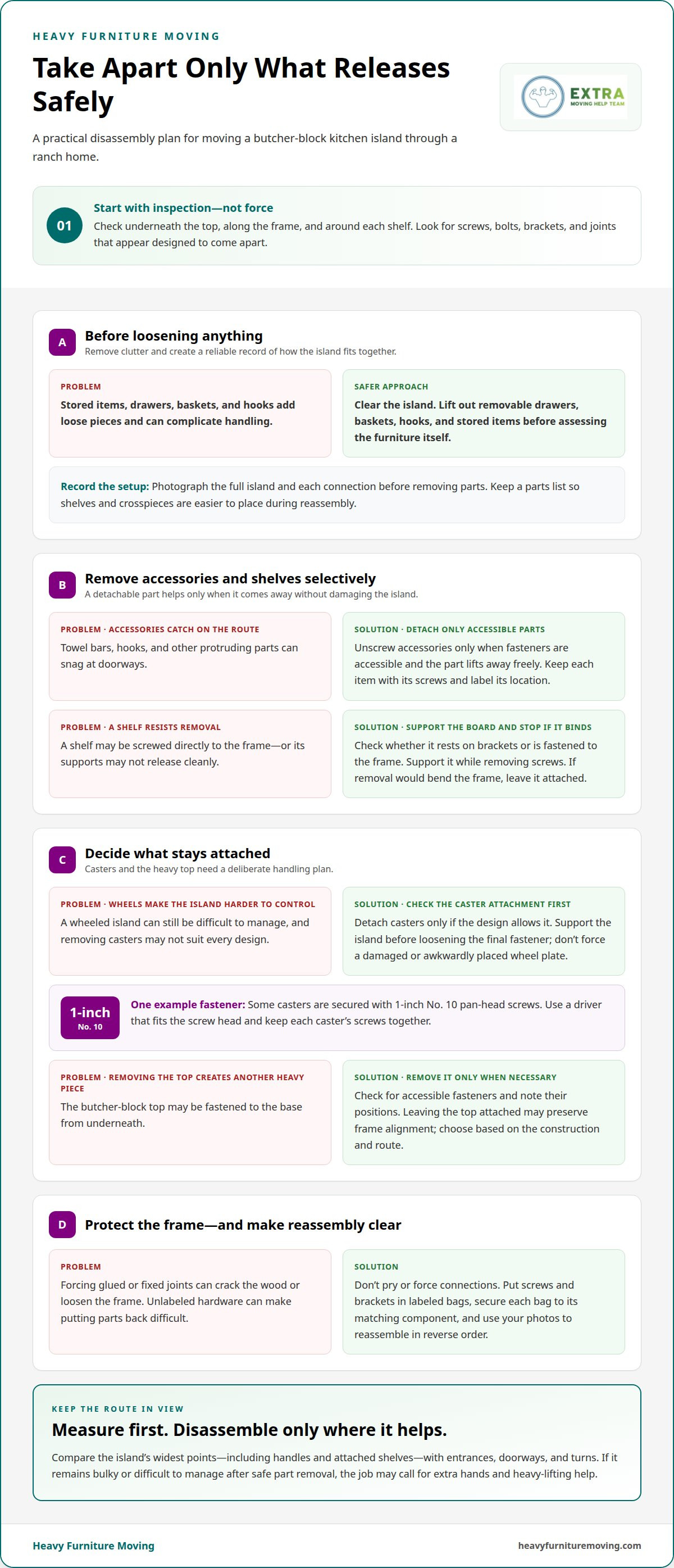
- Inspect the construction before loosening anything. Look underneath the top, along the frame, and around each shelf. Identify screws, bolts, brackets, and joints that appear designed to come apart. A screwed-on shelf may detach cleanly, while a glued or fixed joint may not. Don’t pry pieces apart or force a connection, which could crack the wood or loosen the frame.
- Clear the island and document its setup. Remove drawers, baskets, hooks, and stored items that lift out easily. Photograph the full island, then each connection before removing anything. The images can show where a shelf bracket sat or how a crosspiece lined up. Keep a parts list so reassembly doesn’t become guesswork.
- Remove detachable accessories first. Unscrew towel bars, hooks, and other accessories only when their fasteners are accessible and the parts lift away freely. Keep each item with its screws, and label the group by location, such as “left-side towel bar.” This reduces loose parts and stops accessories catching on a doorway during the move.
- Take off shelves only when their supports release cleanly. Check whether the shelf rests on brackets or is fastened directly to the frame. Support the board while removing screws so it doesn’t drop or twist. Store the shelf flat, with its brackets and hardware together. If removing it would require bending the frame, leave it attached.
- Detach casters only if the island’s design allows it. Some casters are secured with 1-inch No. 10 pan-head screws. Use a driver that fits the screw head, and support the island before loosening the final fastener. Keep each caster’s screws together. If the wheel plate is damaged or awkward to reach, don’t force removal.
- Keep the butcher-block top attached unless removal is necessary. The top may be fastened to the base from underneath. Check for accessible fasteners and note their positions before deciding. A detached top becomes a separate heavy piece to handle, while leaving it in place may preserve the frame’s alignment. Choose the setup that suits the route and the island’s construction.
- Pack hardware and reassemble in reverse order. Put screws and brackets in labeled bags, then secure the bags to the matching component. Use your photos to restore shelves, accessories, and casters in their original positions. For a bulky island that’s hard to manage even after removing parts, moving help for heavy furniture can take the lifting off your hands.
What tools and equipment are needed to move a heavy kitchen island?
- Measure the route with a tape measure. Check door openings, turns, thresholds, and the island’s destination. Compare those measurements with the island’s widest points, including handles and attached shelves. A tape measure helps identify where you may need to change direction or clear an obstruction. Mark the planned path so everyone handling the island knows where it goes.
- Choose a four-wheel dolly for a suitable flat route. A butcher block can travel on flat terrain, up a ramp, or over a curb upside down on a four-wheel dolly. The dolly supports the island across a wider base than a narrow hand truck. Check that the island sits securely before moving, and keep its weight centered over the wheels.
- Use wheel locks for a rolling butcher’s cart. If the island has casters, engage the brakes while preparing the load. Locked wheels help keep the cart from rolling as you position equipment or adjust your grip. Release the locks only when the route is clear and everyone guiding the island is ready to move together.
- Keep a locking belt ready for stair movement. On stairs, secure the butcher block tightly to its dolly with a locking belt. This helps hold the island in place against the dolly as the load changes angle. Don’t treat stairs like a flat hallway. The tilt makes a secure connection and controlled movement essential.
- Use a humpstrap only for a planned stair technique. On stairs, the person above can use a humpstrap slung beneath the dolly-supported block, while the person below lifts underneath. Keep the dolly and island secured with the locking belt. Coordinate each movement clearly. If the load shifts or the handlers can’t maintain control, stop rather than forcing another step.
- Bring protective padding and sturdy gloves. Use moving blankets to cover edges that could brush door frames, and secure them so they don’t slip into the wheels. Gloves help you hold the frame without gripping sharp edges or hardware. Keep the butcher-block surface accessible for a secure hold instead of covering it with bulky padding that blocks your grip.
- Set tools aside before the lift begins. Keep a flashlight handy to inspect the underside, plus a driver for accessible fasteners if a part needs removal. Place tools outside the walking path. For a heavy island that requires equipment and careful control, Heavy Furniture Moving provides heavy lifting moving service.
How can you protect floors, walls, and the butcher block during a move
- Clear and inspect the route first. Walk the island’s path from the entrance to its final position. Move chairs, rugs, bins, and loose items out of the way. Check corners, door frames, and thresholds for tight clearances. A clear route reduces sudden turns that could scrape a wall or push a caster into the flooring.
- Cover the floor along the travel path. Lay suitable floor protection over areas where the island or dolly will roll. Keep the covering flat and secure its edges so wheels don’t catch underneath. Pay extra attention to doorway transitions and turns. Remove grit before laying protection, since debris underneath can rub against the floor.
- Protect exposed edges and nearby walls. Wrap the island’s corners and frame with moving blankets, then secure them in place. Add padding to vulnerable wall corners along narrow passages. Keep handles and hooks from poking through the cover. Leave the butcher-block surface free of bulky padding where it needs firm contact with the dolly.
- Position the dolly without dragging the island. Set the dolly beside the island, then lift and guide the base onto it together. Padding the top before placing the island on a dolly isn’t necessary. Keep the top stable and avoid sliding it across the floor. A four-wheel dolly can carry the island over flat ground, a ramp, or a curb.
- Secure the load for stairs. If the route includes stairs, fasten the butcher block tightly to the dolly with a locking belt. Check that the belt holds the load in place before moving. A person above can use a humpstrap slung beneath the dolly-supported block while a person below lifts underneath. Move only with clear coordination between both people.
- Guide each turn slowly. Keep a spotter near the wall at tight corners and doorways. Call out when the island’s edge approaches a frame or cabinet. Pause before changing direction, then reposition hands and equipment together. If a wheel catches at a threshold, stop and reset the load instead of pulling harder against the floor.
- Clean and inspect the butcher block afterward. Once the island reaches its new spot, remove blankets and check the surface for dust or marks. Clean the butcher block before putting it back into service. Look over the floor, wall corners, and doorway frames along the route. Treat the wood with mineral oil every 2-4 weeks to maintain its surface.
What are the risks of moving a heavy island without professional movers
- Assess the top-heavy load before lifting. Butcher-block islands can be difficult to carry because much of their weight sits high. That weight can shift as people tilt or turn the island. A narrow base may also feel less stable under a broad top. Check the island’s balance and grip points before deciding how to move it.
- Don’t underestimate the strain on people handling it. A heavy island can be awkward to grip, especially when its base has shelves, legs, or casters. Uneven lifting may leave one person supporting more weight than expected. Stop if someone loses a secure hold or can’t follow the agreed movement. Never rely on a last-second catch to control a slipping load.
- Plan for the island to catch at a doorway. A countertop overhang can strike a door frame even when the base appears to fit. A sudden stop may twist the island or pull it from someone’s hands. Measure the entire outline, including handles and attached parts, and map each turn. Don’t force a tight angle by pushing harder against the frame.
- Take stairs seriously. A top-heavy island on a dolly can shift as its angle changes. If the load isn’t secured tightly with a locking belt, it may move against the dolly. Stairs also limit room to reposition hands or pause safely. Don’t attempt a stair carry without a coordinated plan, secure equipment, and people who can control the load together.
- Watch for damage to floors and walls. A wheel that catches on a threshold can jerk the island sideways. A misjudged turn can scrape a wall, cabinet, or door casing. Keep the route clear, protect vulnerable surfaces, and stop when movement becomes difficult. Pulling harder can make the island less controlled and increase the chance of a collision.
- Avoid damaging the island’s frame or top. Lifting by a shelf, towel bar, or loose attachment can strain that part instead of supporting the frame. A sudden tilt may also stress the connections between the top and base. Find solid lifting points and keep the island level where possible. If a component starts to loosen, set the load down before continuing.
- Choose help when control is the main concern. Stairs, tight ranch-home turns, and a rolling base can combine into a difficult route. If you can’t keep the island stable through each move, don’t proceed alone. Arrange heavy lifting help for an island that needs controlled handling through a challenging home layout.
Heavy Furniture Moving: Movers Near Me
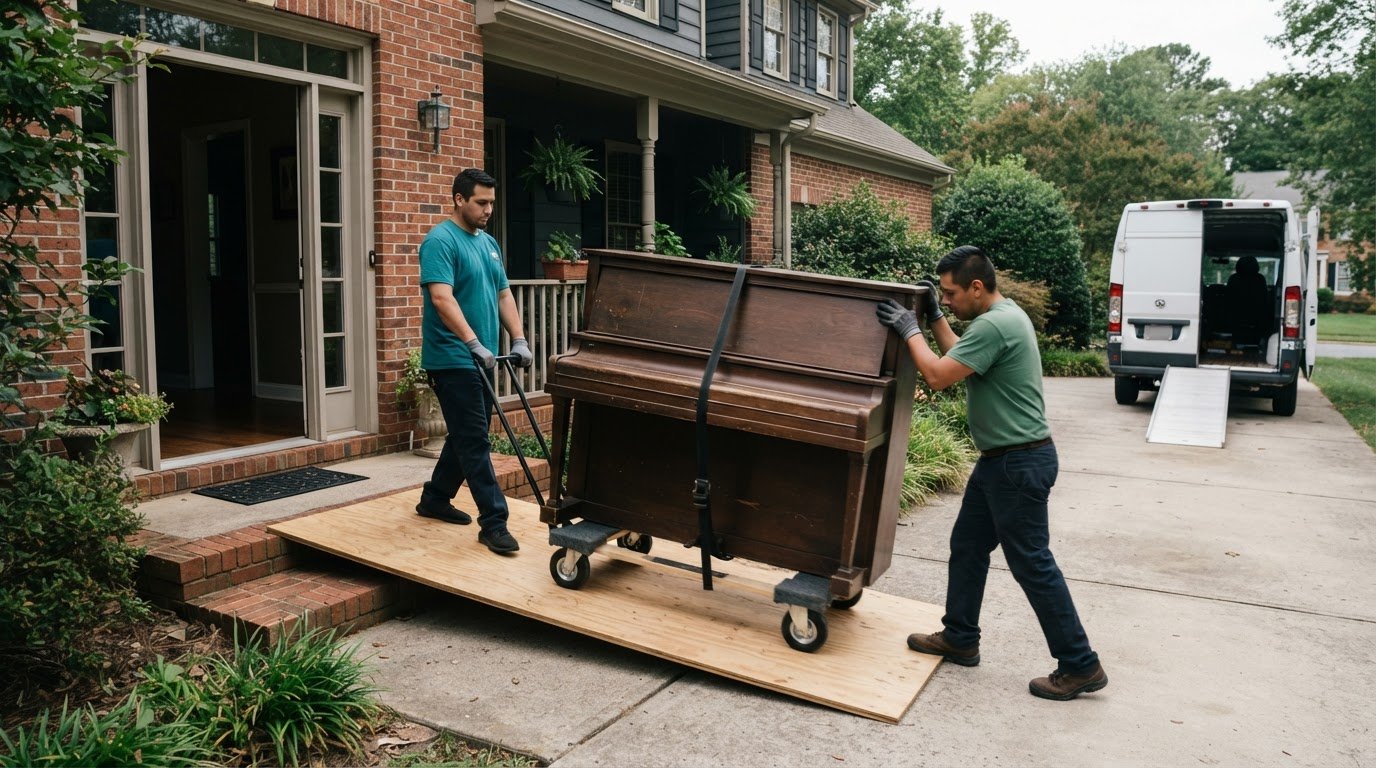
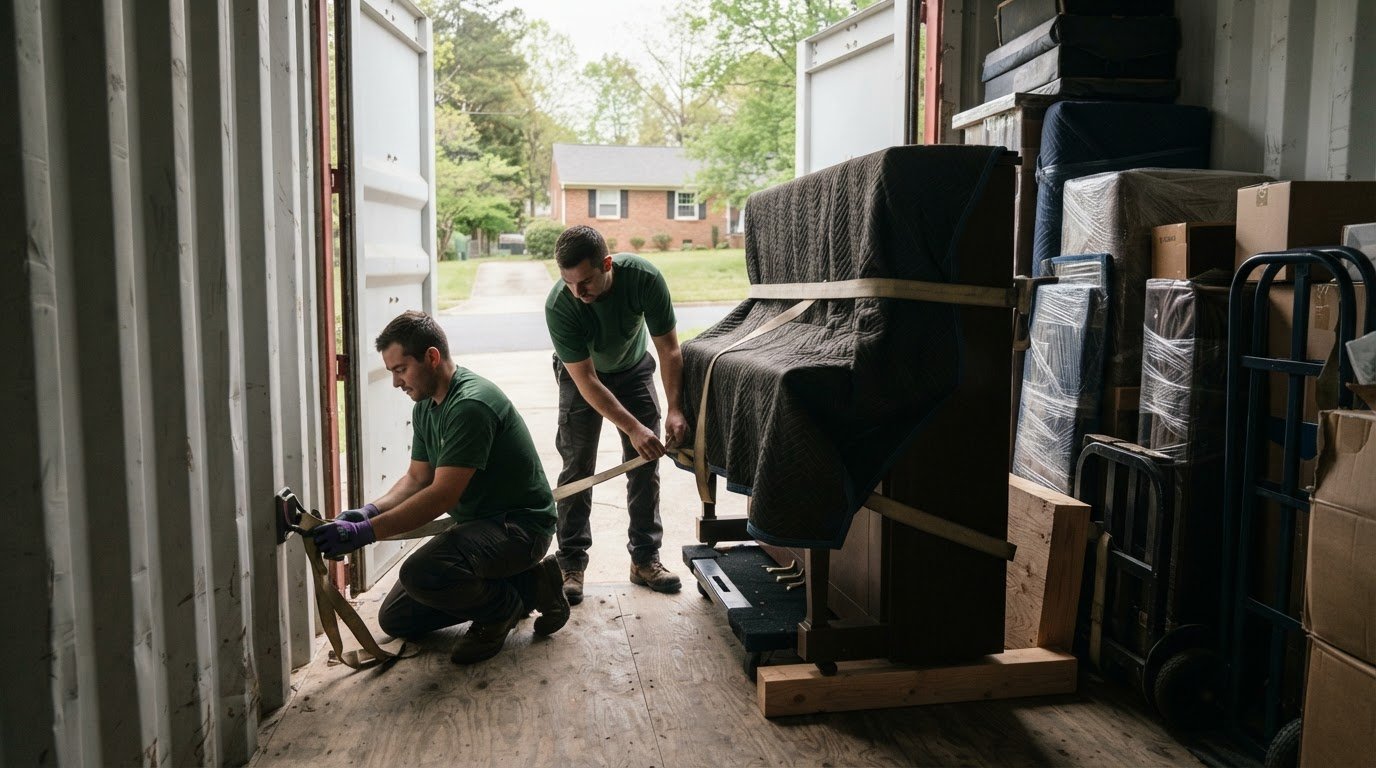
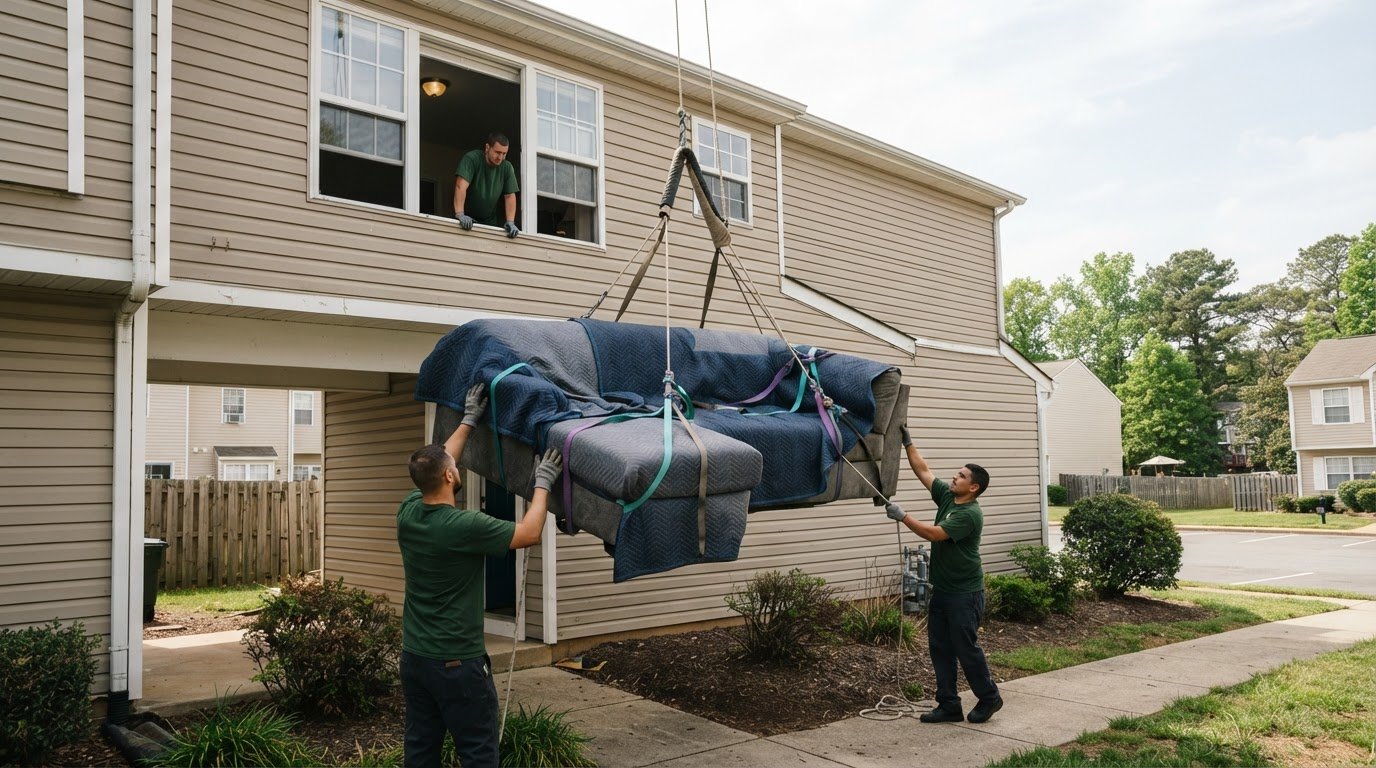
Heavy Furniture Moving can help with bulky furniture moves that need careful lifting and control. If your butcher block island is awkward to grip, sits on wheels, or must pass through tight turns, in-home furniture moving help can take on the physical handling. Share the island’s dimensions, route, and any stairs when describing the job. That gives the moving team a clear picture of the challenge and the equipment involved. Heavy Furniture Moving also offers Exercise Equipment Moving and Sofa Hoisting for other demanding household moves. For an island that feels too difficult to handle safely, contact Heavy Furniture Moving to discuss your move.
Set Up the Move Around Your Kitchen Routine
Before moving day, decide how the island should work in your kitchen, not just where it can fit. Think about how you’ll use the counters, reach nearby cabinets, and move through the room during everyday tasks. If the island rolls, consider whether you want to reposition it often or keep it in one place. That decision helps you plan its final spot and avoid moving it again after the kitchen is set up.
For moving a heavy butcher block kitchen island into a ranch home in Aldie, make the route and destination part of one clear plan. Share the island’s shape, the home’s access points, and any tricky turns when arranging help. Heavy Furniture Moving can discuss the handling involved and the support that fits your move. Contact Heavy Furniture Moving to talk through the next step, then get ready to settle your island into its new place.
Frequently Asked Questions
How much does it cost to move a heavy butcher block kitchen island in Aldie, VA?
For moving a heavy butcher block kitchen island into an Aldie ranch home, the cost depends on the island, access, and handling involved. A butcher-block top, attached shelves, wheeled base, narrow entry, or stair route can affect the work required. Describe the island’s construction and the path through your home. Clear details help make the quote specific to your move, rather than a general estimate.
How do professional movers transport a heavy kitchen island safely?
Professional movers plan how to handle the island before lifting and protect it during the move. Heavy Furniture Moving includes wrap, moving blankets, and straps on every job. The crew measures before lifting, so the plan accounts for the item and access points. A wheeled island and a fixed island may need different handling, especially if the route includes a tight entrance or stairs.
How can you measure doorways, hallways, and turns before moving a kitchen island?
Measure the narrowest usable opening at each doorway, then compare it with the island’s widest point. Include handles, shelves, and any overhang that cannot be removed. At a hallway turn, sketch the approach and note which direction the island must face. Planning the route for a heavy butcher block kitchen island entering an Aldie ranch home also means checking the turning space beyond each doorway. Record the measurements together.
Do moving companies in Aldie or Loudoun County handle oversized furniture and heavy islands?
Heavy Furniture Moving provides Movers Near Me and handles residential moves involving heavy, bulky items. For an island in Aldie, describe its size, base, and route so the moving help can be matched to the job. The company also offers Exercise Equipment Moving and Sofa Hoisting. Those services address other difficult household items, while an island move calls for details about the island itself.
How do you secure and position a kitchen island after moving it into a ranch home?
Place the island where it supports your kitchen routine without crowding cabinet doors or the main walking path. If it has locking casters, engage them once you’ve chosen its position. Open nearby drawers and cabinet doors to make sure the island doesn’t interfere. For a fixed model, keep it level and stable on the floor. Clean the butcher block before using it for food preparation.
Frequently Asked Questions
For moving a heavy butcher block kitchen island into an Aldie ranch home, the cost depends on the island, access, and handling involved. A butcher-block top, attached shelves, wheeled base, narrow entry, or stair route can affect the work required. Describe the island’s construction and the path through your home. Clear details help make the quote specific to your move, rather than a general estimate.
Professional movers plan how to handle the island before lifting and protect it during the move. Heavy Furniture Moving includes wrap, moving blankets, and straps on every job. The crew measures before lifting, so the plan accounts for the item and access points. A wheeled island and a fixed island may need different handling, especially if the route includes a tight entrance or stairs.
Measure the narrowest usable opening at each doorway, then compare it with the island’s widest point. Include handles, shelves, and any overhang that cannot be removed. At a hallway turn, sketch the approach and note which direction the island must face. Planning the route for a heavy butcher block kitchen island entering an Aldie ranch home also means checking the turning space beyond each doorway. Record the measurements together.
Heavy Furniture Moving provides Movers Near Me and handles residential moves involving heavy, bulky items. For an island in Aldie, describe its size, base, and route so the moving help can be matched to the job. The company also offers Exercise Equipment Moving and Sofa Hoisting. Those services address other difficult household items, while an island move calls for details about the island itself.
Place the island where it supports your kitchen routine without crowding cabinet doors or the main walking path. If it has locking casters, engage them once you’ve chosen its position. Open nearby drawers and cabinet doors to make sure the island doesn’t interfere. For a fixed model, keep it level and stable on the floor. Clean the butcher block before using it for food preparation.