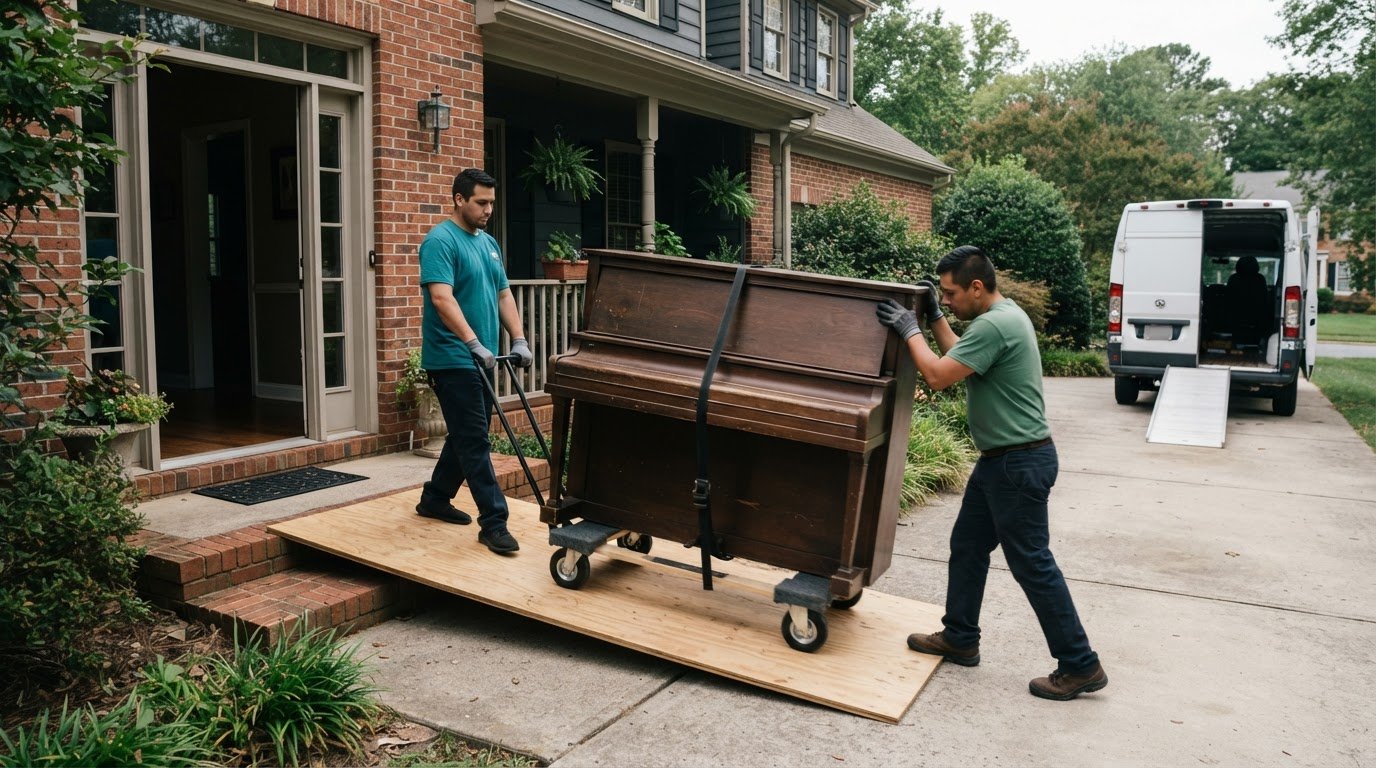
How to Hoist a Velvet Sofa Over a Vienna Balcony Safely
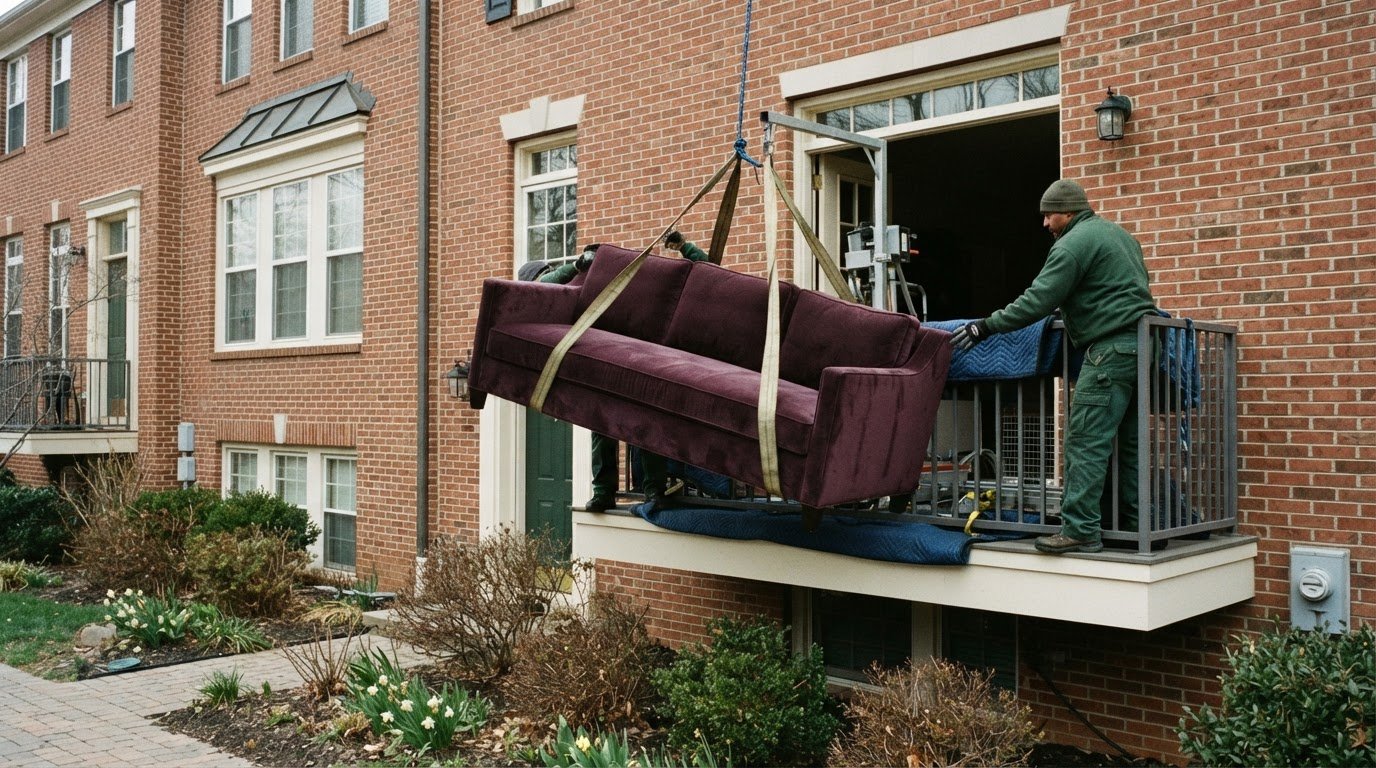
A balcony lift is no place to improvise. To hoist a massive velvet sofa over a townhouse balcony railing in Vienna, Virginia, get building approval first, use a properly positioned motorised hoist, and secure the sofa before lifting. Keep the area below clear, and don’t lift in strong wind, rain, snow, or icy conditions.
It’s understandable to hope a few strong helpers and careful handling will be enough. But a heavy sofa can swing or fall, damaging the building or injuring someone. Experts at Heavy Furniture Moving know that tackling this challenge safely requires proper planning. This guide explains what to measure, how to prepare and protect the velvet, and what to consider when positioning a hoist. It also explains when a do-it-yourself lift may be too risky and what safer next step to consider.
Key Takeaways
- Measure the sofa and balcony opening, including diagonal dimensions, to spot fit problems before moving day.
- Review building approval requirements before planning a lift, and prepare the sofa by removing loose items and detachable parts.
- Choose a hoist position with a clear path, and make sure everyone knows their role before lifting begins.
- Use protective padding, a secure wrap, and sturdy straps to help shield the velvet and keep the sofa stable.
- Weigh the risks of a DIY lift carefully; swinging furniture, falls, property damage, and injuries can make professional sofa hoisting the safer choice.
Building approval and moving rules
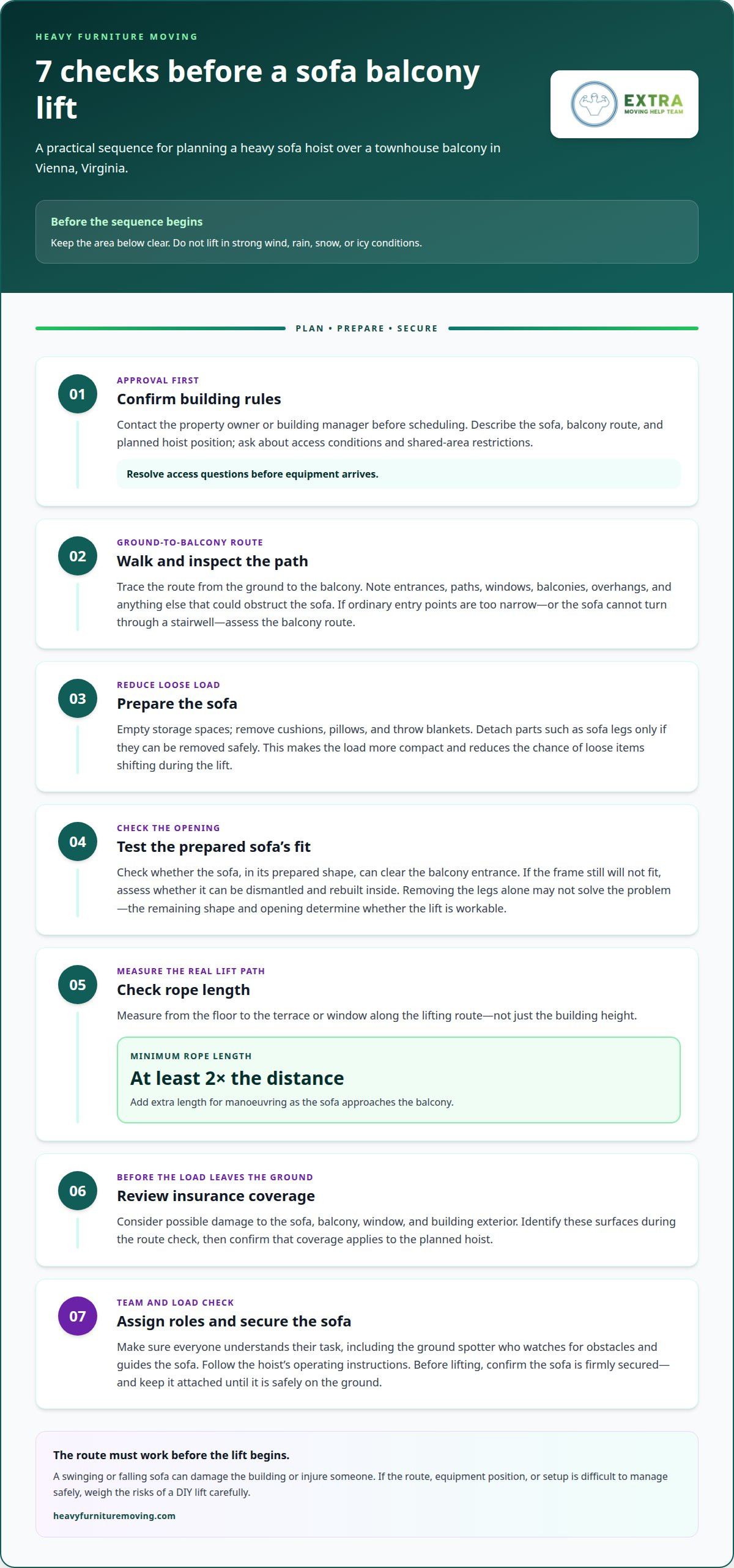
- Confirm building approval before scheduling a balcony lift. Contact the property owner or building manager and describe the sofa, the balcony route, and the planned hoist position. Ask about access conditions, including any restrictions on shared areas. Do this before equipment arrives so you can resolve access questions before the lifting team is ready.
- Walk the route from the ground to the townhouse balcony. Note entrances, paths, windows, balconies, and anything that could obstruct the sofa. If ordinary entry points are too narrow, a hoist may be needed. A large sofa that cannot turn through a stairwell is one reason to assess a balcony route instead.
- Prepare the sofa before attaching it to lifting equipment. Empty storage spaces and remove cushions, pillows, and throw blankets. Remove detachable parts, such as sofa legs, if they can be taken off safely. This makes the load more compact and reduces the chance of loose items shifting during the lift.
- Check whether the prepared sofa can pass through the opening. If its frame still cannot clear the balcony entrance, assess whether it can be dismantled and rebuilt inside. Don’t assume removing the legs will solve every fit problem. The sofa’s remaining shape and the opening determine whether a balcony lift is workable.
- Check the rope length against the lifting route. Each rope should be at least twice the distance from the floor to the terrace or window, with extra length for manoeuvring. Measure the actual lift path, not just the building height. Extra length gives the team room to guide the sofa as it approaches the balcony.
- Review insurance coverage for possible damage before lifting begins. Consider risks to the sofa, balcony, window, and building exterior. Identify these surfaces during the route check, then confirm the coverage applies to the planned hoist. This helps clarify what protection is in place before the load leaves the ground.
- Assign roles and agree on instructions before anyone lifts. Everyone should understand their task, including the ground spotter, who watches for obstacles and guides the sofa. Follow the hoist’s operating instructions carefully. Before lifting, confirm the sofa is firmly secured, and keep it attached until it is safely on the ground.
Choosing and positioning a motorised hoist
To get an accurate hoisting quote, share the sofa’s measurements and the balcony opening dimensions. Include the floor height, ground access, and clear photos of the route and possible obstacles.
- Choose a motorised hoist for the balcony lift. Planning how to hoist a massive velvet sofa over a townhouse balcony railing in Vienna starts with matching the equipment to the route. Vehicle-mounted and ground-mounted hoists are both options. The right setup depends on where the machine can stand and whether the sofa has a clear path to the balcony.
- Choose a position with as few obstacles as possible. Walk the intended path from the ground to the balcony, noting overhangs, nearby structures, and anything that could block the sofa. A balcony deck that projects from the house may provide a suitable place to secure a hoist. Keep the planned lift path clear.
- Share useful site details when arranging the lift. Along with sofa and opening measurements, describe the ground surface, access to the setup area, and the balcony’s position relative to the house. Photos from the ground and balcony can show nearby obstructions. These details help the team assess where the machine can sit and how to guide the load.
- Have the company that supplied a hired hoist set it up. The machine must be properly assembled and positioned before use. Don’t move the equipment to a new spot without reassessing the route and setup. The position affects how the sofa approaches the balcony and whether the machine arm can guide it along the track.
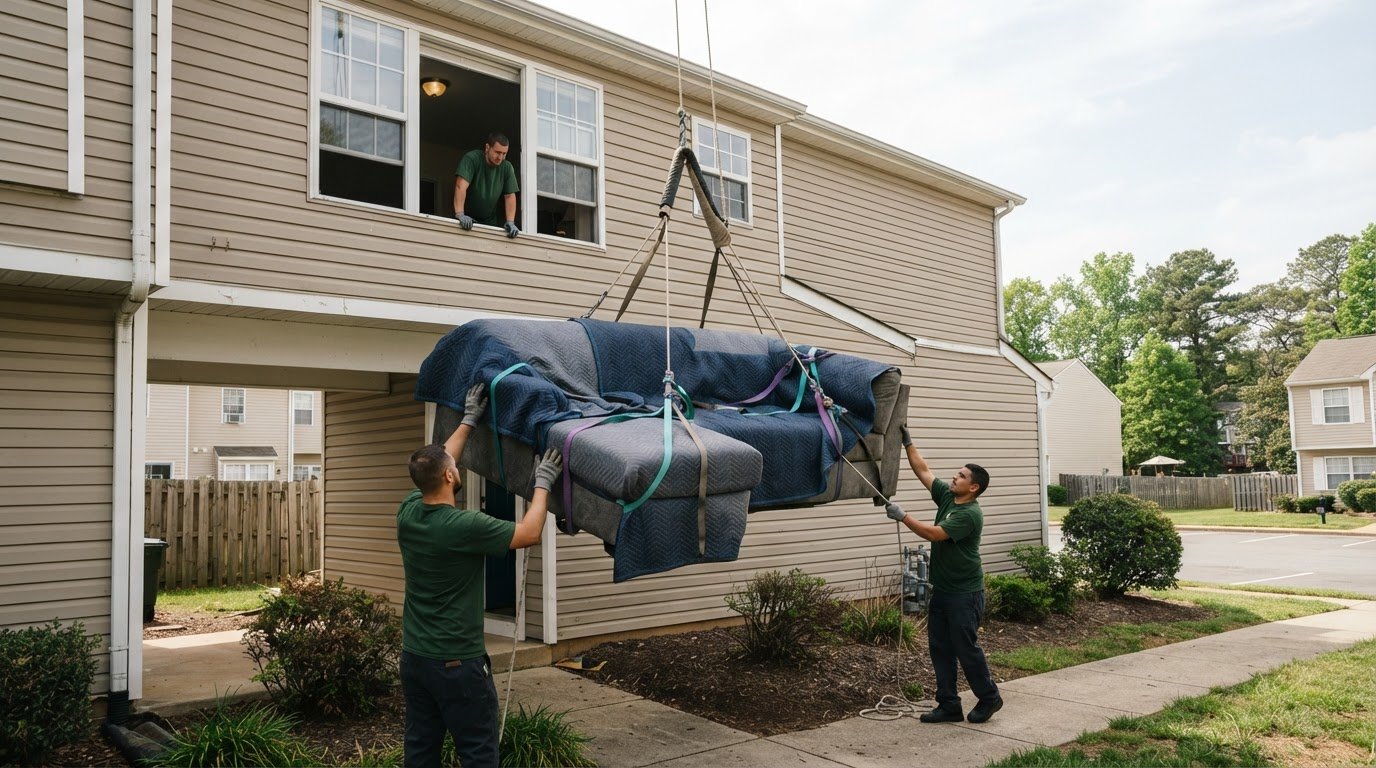
- Check the full path before lifting. The hoist’s machine arm guides the sofa as the winch raises it and moves it over the balcony. Look for points where the sofa could hit a railing, wall, or overhang. Clear or account for obstacles before the load starts moving, rather than trying to redirect it mid-lift.
- Position the hoist, then review the setup with everyone involved. Confirm the sofa can travel from the ground to the balcony without an obstructed turn. Agree on who guides the load and who watches its path. Start only when the equipment is properly assembled and the route is clear.
- Use professional sofa hoisting when the position, equipment, or balcony route is difficult to manage safely. A motorised hoist needs more than lifting power: its setup must suit the building and the sofa’s path. Clear site details make it easier to plan the right approach for a heavy velvet piece.
Protective coverings and straps
Use protective pads, blankets or sheets, shrink wrap, and sturdy straps before lifting. Secure the sofa to the hoist, then keep it attached until safely on the ground.
- Prepare the velvet surface for covering. Remove loose cushions and accessories before wrapping, so they don’t shift beneath the protective layers. Check the sofa’s exposed sides, corners, and feet. These contact points may meet the balcony edge or lifting gear as the sofa moves upward.
- Cover the sofa with protective pads. Pad the areas most exposed to contact, including corners and edges. Keep the velvet covered rather than exposed to nearby surfaces. A blanket or sheet can provide another protective layer before you secure the wrapping.
- Keep the protective pads in position. Tape them in place before applying shrink wrap so they don’t slide away during preparation. Apply tape to the padding, not directly to exposed velvet. Check every covered side, especially where the sofa’s shape makes padding harder to hold in place.
- Wrap the padded sofa with shrink wrap. Apply it around the protective layers to help hold them together during the lift. Keep the wrap snug enough to secure the pads, without leaving corners or edges uncovered. Inspect the full sofa before adding straps.
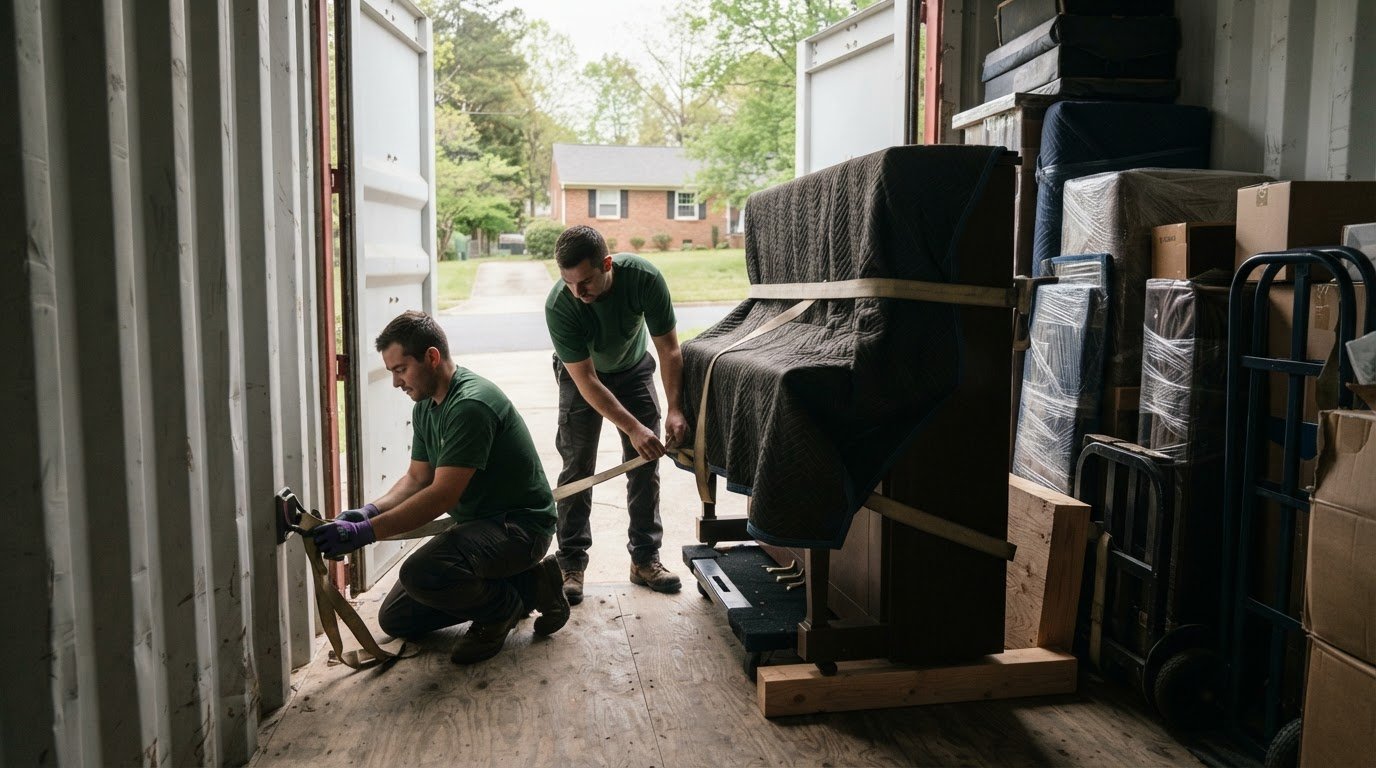
- Secure the wrapped sofa with sturdy straps before hoisting. Position the straps to hold the load steady against the protective covering, rather than letting them shift freely. Check that each strap is firmly in place. A loose strap can allow the sofa to move inside its wrapping as the hoist raises it.
- Confirm the sofa is firmly secured to the hoist before lifting. Check the connection and the covered load together. Make sure the straps remain in place and the padding still protects the sofa. Everyone should understand their role before the lift starts, including who watches the sofa’s movement.
- Watch the covering and straps throughout the lift. Keep the sofa attached to the hoist until it is safely on the ground. Don’t detach it while it is suspended or partly supported. If the padding or straps shift, stop and correct the setup before continuing.
- Inspect the sofa after it reaches the ground. Carefully remove the straps and wrapping, then check the velvet, seams, and corners for signs of contact or shifting. This final check shows whether the protective layers stayed in place during the balcony lift and whether any areas need attention.
Risks of hoisting without professional help
- Assess the lift honestly before gathering helpers. A massive sofa suspended above a balcony presents risks beyond ordinary carrying. It can fall, swing into the building, or injure someone below. Consider the height, available space, sofa size, and route together. If the plan depends on guessing or last-minute corrections, don’t start the lift.
- Stop if the weather makes the load hard to control. Don’t hoist furniture in strong wind, rain, snow, or icy conditions. Wind can push a suspended sofa off its intended path, while rain, snow, and ice can make the working area hazardous. Wait for safer conditions rather than trying to manage the lift in changing weather.
- Clear the area below the balcony before lifting begins. Keep people and obstacles out of the drop zone, including residents passing through. A sofa that slips or swings can strike someone or hit objects below. A ground spotter is not a substitute for clearing the area.
- Several strong helpers are needed for a lift without professional help. Strength alone doesn’t make the work safe. Helpers must coordinate their movements and understand their roles before lifting. If one person pulls while another tries to redirect the sofa, the load can swing or become difficult to control.
- Consider what a swinging sofa could hit along its route. A velvet sofa may rotate toward a balcony railing, window, wall, or building exterior. Contact can damage the furniture or property. Tight townhouse access may leave little room to correct the load once it starts moving, so assess the path before deciding to proceed.
- Don’t improvise with equipment or continue through a problem. If the sofa shifts, a strap loosens, or the route becomes obstructed, stop the lift and regain control before moving again. Continuing when people are uncertain about their roles can increase the chance of a fall, impact, or injury.
- Compare the DIY plan with the task’s full demands. A balcony hoist involves the sofa, lifting equipment, building surfaces, weather, and people below. A mistake can affect more than the upholstery. If your team lacks a clear setup and coordinated plan, professional movers are the safer choice for balcony furniture hoisting.
- Choose professional help when the lift feels difficult to control. A professional team can manage the hoisting instead of relying on improvised strength and coordination. For a heavy sofa above a townhouse balcony, consider the risks of falls, swinging furniture, property damage, and injuries before attempting the lift yourself.
How to measure a sofa and townhouse balcony opening before a hoist in Vienna?
- Measure the sofa before planning its route. Record its height, width, and length, then measure its diagonal dimensions. Include the full outer edges and any parts that cannot be removed. These measurements describe the shape that must pass through the opening, not just the space the sofa occupies inside the room.
- Measure the balcony opening at its narrowest clear points. Record the usable width and height between fixed edges, not just the overall balcony size. Include the railing and any frame that reduces the passage. A broad balcony can still have a tight opening for the sofa to pass through.
- Compare the sofa’s dimensions with the opening before arranging a lift. Check the height, width, length, and diagonal measurements together. A sofa that looks narrow from the front may need more clearance when turned. Don’t rely on a visual estimate; compare your recorded dimensions directly.
- Trace the path from the ground to the balcony. Note where the sofa will approach the townhouse, pass the railing, and enter the room. Check for protruding ledges, nearby walls, and other fixed obstacles. An opening that fits the sofa on paper may still be difficult to use if the approach angle is blocked.
- Measure again after removing detachable parts. Sofa legs, for example, can change the overall height or width. Record which pieces come off and how the sofa’s shape changes. Keep the original and reduced measurements together so the planned fit reflects the exact configuration being lifted.
- Write the measurements in a simple, labelled list. Record the sofa’s height, width, length, and diagonals, then note the opening’s clear width and height. Add route details, such as a railing or overhang. Clear labels help distinguish the sofa dimensions from the balcony measurements.
- Use the measurements to explain the job when discussing a lift. Share the sofa dimensions, the opening’s clear size, and the route details. If the figures show limited clearance, don’t assume the sofa will fit by forcing an angle. A professional sofa-hoisting assessment can help plan the lift around the measurements and townhouse access.
Heavy Furniture Moving: Movers Near Me
Heavy Furniture Moving offers Sofa Hoisting for bulky pieces that can’t pass through ordinary entryways. If the sofa’s measurements, balcony access, or lifting route make a do-it-yourself move difficult, professional hoisting can help manage the lift. Share the sofa dimensions and balcony opening details to describe the item and access involved. Heavy Furniture Moving also offers Movers Near Me for local moving needs. Choose help when the sofa is too heavy or awkward to move safely with your household’s equipment and experience. For a balcony sofa that needs a controlled lift, contact Heavy Furniture Moving to discuss the move.
Make the Next Move With Confidence
Make a clear decision before moving day. Consider who will manage the lift, how the home will be ready for the sofa, and whether you’re comfortable coordinating a heavy item above ground. Choose the next step that lets you focus on the move without taking on risks you can’t manage.
If you’re weighing how to hoist a massive velvet sofa over a townhouse balcony railing in Vienna, professional help can take the lifting task off your hands. Heavy Furniture Moving offers Movers Near Me, Exercise Equipment Moving, and Sofa Hoisting. Share the details that matter, including the sofa and the access challenge, so the conversation starts with your actual needs.
Choose a plan that fits your home and your comfort level. Contact Heavy Furniture Moving to discuss your sofa move and take the next step with confidence.
Frequently Asked Questions
Can you help with getting my sofa over my balcony?
Yes. Heavy Furniture Moving offers Sofa Hoisting for bulky sofas that need to enter through a balcony. This can help when a sofa cannot make a tight stairwell turn or pass through an interior doorway. Before planning the move, identify where the sofa will enter the home and whether furniture inside needs to be moved to clear its landing area.
Is it safe to hoist furniture by yourself?
No, a balcony hoist isn’t a safe one-person task. The lift involves controlling a suspended load while coordinating the hoist and watching its path. A sudden shift can leave one person unable to manage both the equipment and the sofa. If you can’t assemble a capable, coordinated team and controlled setup, choose professional help instead of attempting the lift alone.
When is hoisting furniture the best moving solution?
Hoisting is worth considering when a bulky item won’t fit through the available indoor route. For example, a sofa may clear a doorway but fail to turn on a narrow landing. Compare the route through the home with the balcony opening and exterior approach. A hoist makes sense only when the balcony route provides a workable path into the room.
What equipment is needed to lift a heavy sofa over a balcony railing safely?
A balcony lift calls for a motorised hoist, secure straps, and protective blankets or pads. Shrink wrap can help hold the padding in place. The setup also needs a clear travel path and a ground spotter to watch for obstacles. Follow the hoist’s operating instructions, and don’t improvise with equipment unsuited to the lift.
Which Vienna furniture movers specialize in balcony hoists?
Heavy Furniture Moving offers Sofa Hoisting for bulky household items in Vienna, Virginia. Its local service area includes Fairfax, Woodbridge, Manassas, Manassas Park, Aldie, Ashburn, McLean, Reston, Centreville, Chantilly, Clifton, Dumfries, South Riding, Fairfax Station, Haymarket, and Gainesville. For a townhouse balcony move in these communities, Sofa Hoisting is the relevant service to discuss for the furniture and access challenge.
Do Vienna townhouse balcony hoists require a crane permit or street-use permit?
Permit requirements depend on the hoist setup and where its equipment will stand. A setup on private property raises different access questions from equipment occupying a sidewalk or street. For a Vienna, Virginia townhouse, identify the exact setup area and whether public access could be affected, then check applicable local requirements before scheduling the lift.
How do I arrange building-owner or property-manager approval for a balcony hoist in Vienna?
Send the owner or property manager a written request describing the sofa lift and proposed access route. Include where the hoist would be positioned, which balcony or opening would be used, and when the work is planned. Ask them to reply with building-specific conditions, such as access coordination or protection for shared areas. Keep their response available for the moving team.
What are the risks of hoisting a sofa over a balcony, and how can damage be prevented?
A swinging or dropped sofa can injure someone or damage the upholstery, railing, window, or exterior wall. Before lifting, photograph the sofa and nearby surfaces to document existing marks. Keep people away from the area below, protect contact points, and stop if the load shifts or the route becomes obstructed. Resume only once the setup is controlled again.
Frequently Asked Questions
Yes. Heavy Furniture Moving offers Sofa Hoisting for bulky sofas that need to enter through a balcony. This can help when a sofa cannot make a tight stairwell turn or pass through an interior doorway. Before planning the move, identify where the sofa will enter the home and whether furniture inside needs to be moved to clear its landing area.
No, a balcony hoist isn’t a safe one-person task. The lift involves controlling a suspended load while coordinating the hoist and watching its path. A sudden shift can leave one person unable to manage both the equipment and the sofa. If you can’t assemble a capable, coordinated team and controlled setup, choose professional help instead of attempting the lift alone.
Hoisting is worth considering when a bulky item won’t fit through the available indoor route. For example, a sofa may clear a doorway but fail to turn on a narrow landing. Compare the route through the home with the balcony opening and exterior approach. A hoist makes sense only when the balcony route provides a workable path into the room.
A balcony lift calls for a motorised hoist, secure straps, and protective blankets or pads. Shrink wrap can help hold the padding in place. The setup also needs a clear travel path and a ground spotter to watch for obstacles. Follow the hoist’s operating instructions, and don’t improvise with equipment unsuited to the lift.
Heavy Furniture Moving offers Sofa Hoisting for bulky household items in Vienna, Virginia. Its local service area includes Fairfax, Woodbridge, Manassas, Manassas Park, Aldie, Ashburn, McLean, Reston, Centreville, Chantilly, Clifton, Dumfries, South Riding, Fairfax Station, Haymarket, and Gainesville. For a townhouse balcony move in these communities, Sofa Hoisting is the relevant service to discuss for the furniture and access challenge.
Permit requirements depend on the hoist setup and where its equipment will stand. A setup on private property raises different access questions from equipment occupying a sidewalk or street. For a Vienna, Virginia townhouse, identify the exact setup area and whether public access could be affected, then check applicable local requirements before scheduling the lift.
Send the owner or property manager a written request describing the sofa lift and proposed access route. Include where the hoist would be positioned, which balcony or opening would be used, and when the work is planned. Ask them to reply with building-specific conditions, such as access coordination or protection for shared areas. Keep their response available for the moving team.
A swinging or dropped sofa can injure someone or damage the upholstery, railing, window, or exterior wall. Before lifting, photograph the sofa and nearby surfaces to document existing marks. Keep people away from the area below, protect contact points, and stop if the load shifts or the route becomes obstructed. Resume only once the setup is controlled again.