How to Hoist a Sofa in Fairfax Station Without Wall Damage
A tight staircase doesn’t have to mean scraped wallpaper or battered railings. A sofa hoisting service can help prevent wallpaper damage on narrow stairs in Fairfax Station when the sofa cannot safely pass through the home. If it can go upstairs, careful measurements, protective blankets, and a controlled turn at the landing can help reduce the risk of damage.
It’s reasonable to worry about tight corners, narrow clearances, and a heavy sofa shifting against a wall. The right approach depends on the sofa’s size and the shape of the stairs, not simply how hard someone can push or lift. If the furniture stops moving smoothly, forcing it can make the problem worse.
This guide explains how movers protect walls and railings, assess stair turns, and decide when hoisting is a better option. You’ll also learn which details about the sofa and access route help determine a practical plan for your home.
Key Takeaways
- Learn which sofa and doorway measurements help reveal whether a couch can pass through a tight opening, including how removing a door may add usable clearance.
- See how movers use protective blankets and careful handling to reduce the risk of scuffs to walls, wallpaper, railings, floors, and furniture.
- Understand why a tight landing can call for a planned pivot rather than force, and what makes a staircase turn especially challenging.
- Find out how sofa size, weight, and stair access affect the crew and carrying approach needed for an upstairs move.
- Recognize when the stair route may not work and why professional sofa hoisting can be the practical alternative.
How do professional movers get a couch through a doorway that’s too small?
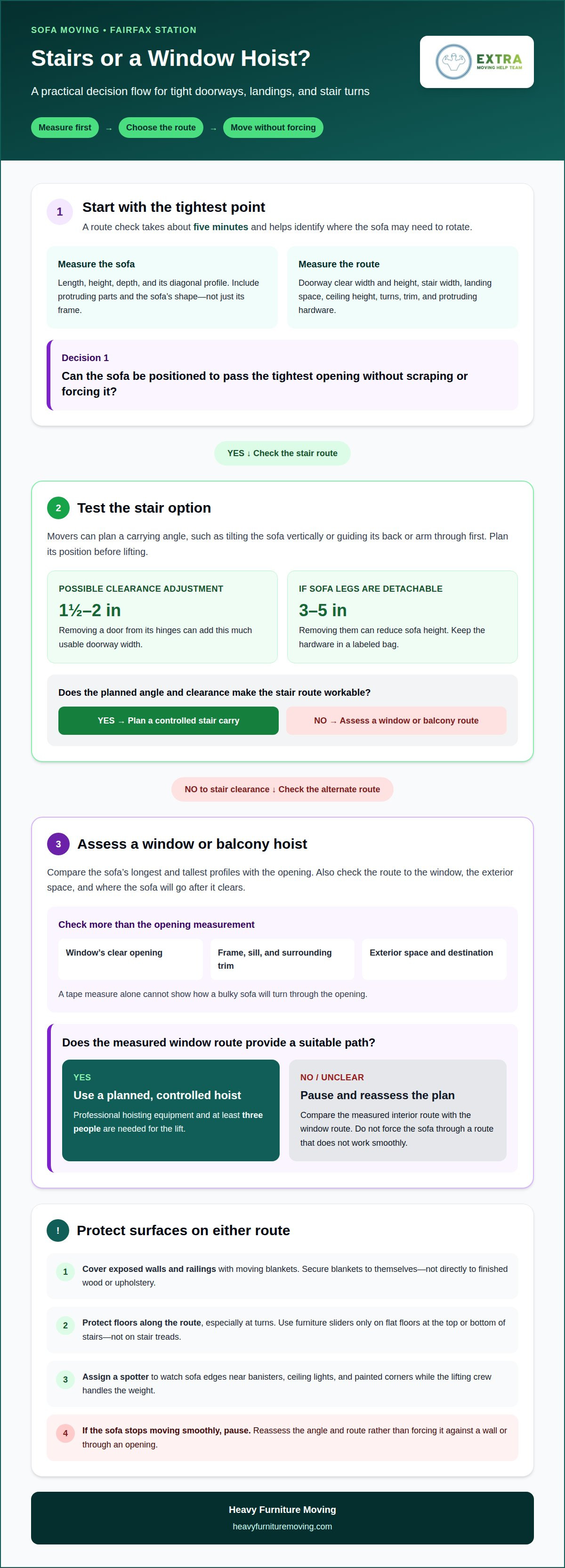
Professional movers measure the sofa and each part of the route before choosing a carrying angle or alternate exit. If a window or balcony is the safer route, trained movers use proper hoisting equipment and at least three people.
-
How Movers Measure the Sofa and Stairway
Movers measure the sofa’s length, height, and depth, then compare them with the doorway’s clear width and height. They also measure stair width, landing space, ceiling height, and turns between floors. A route check takes about five minutes and helps identify where the sofa may need to rotate. Measurements should account for protruding trim and the sofa’s shape, not just its frame.
- Have movers assess the tightest opening first. They can compare the sofa’s diagonal profile with the doorway and check whether tilting it vertically provides enough clearance. For example, a sofa that is too wide when carried flat may pass with its back or arm angled through first. Movers should plan its position before lifting rather than twisting it against wallpaper mid-carry.
-
How Movers Measure the Sofa and Window
For a possible window hoist, movers compare the sofa’s longest and tallest profiles with the window’s clear opening. They also assess the route to the window, the space outside, and where the sofa will go once it clears the opening. The frame, sill, and surrounding trim matter because the sofa must pass without catching or scraping. A tape measure alone cannot show how a bulky sofa will turn through the opening.
-
How Movers Hoist the Sofa Through a Window or Balcony
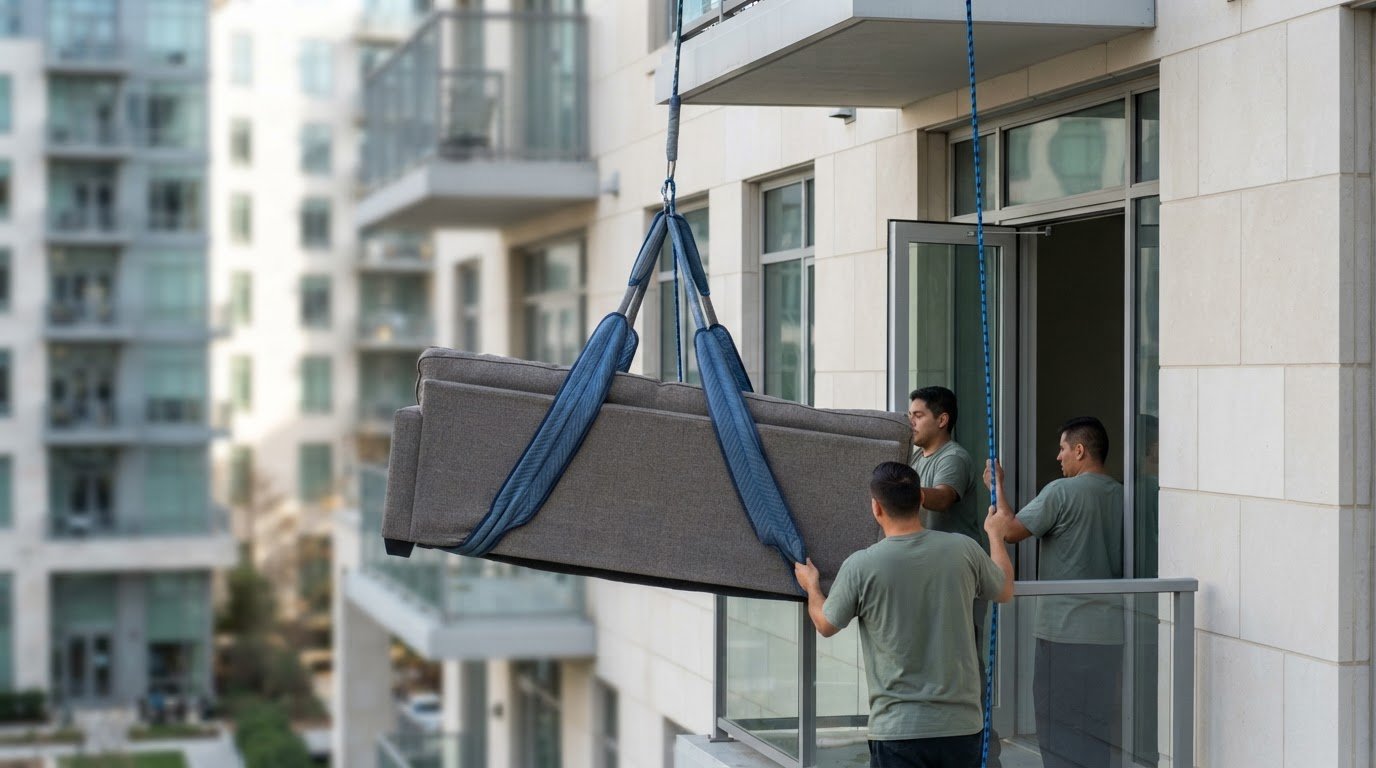
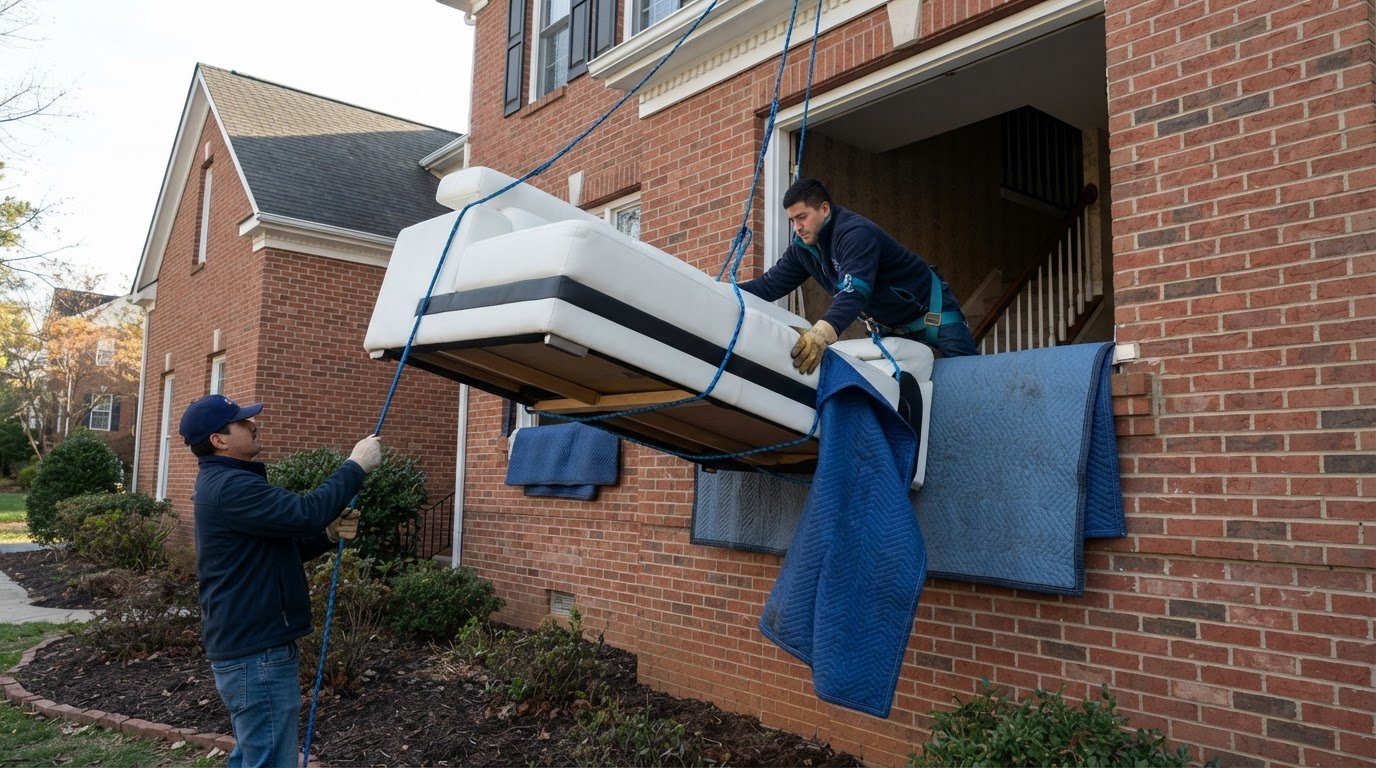
When the stair route won’t work, professional movers plan a controlled lift through a suitable window or balcony. They use professional equipment and at least three people. Lowering a sofa with ropes without trained, properly equipped movers risks injury and property damage. The crew coordinates the lift and guides the sofa past the opening, keeping it clear of the frame and exterior surfaces.
- Ask movers to compare the interior route with the measured window route before choosing a plan. On stairs, they may remove a door from its hinges if that helps, which can add an inch and a half to two inches of usable doorway width. They can then rotate the sofa diagonally and move it one flight at a time. If it stops moving smoothly, the crew should pause and reassess rather than force it through.
Can you move furniture upstairs without damaging walls or railings?
Movers reduce the risk of contact by measuring the route, protecting exposed surfaces, and controlling each lift. In Fairfax County, don’t assume furniture hoisting automatically requires a permit; requirements can depend on public-space use or building alterations. Responsibility for wallpaper or property damage depends on written service terms and applicable coverage, so identify vulnerable surfaces and the planned route before work begins.
-
How Movers Measure Furniture and Access Routes
Have movers measure the sofa and the full stair route before lifting. They compare its height and width with doorway clearance, stair width, landing space, ceiling height, and railings. A narrow point can determine the carrying angle for the entire flight. Measurements should include trim and protruding hardware, which can catch fabric or reduce usable space.
-
How Movers Protect Walls, Railings, Floors, and Furniture
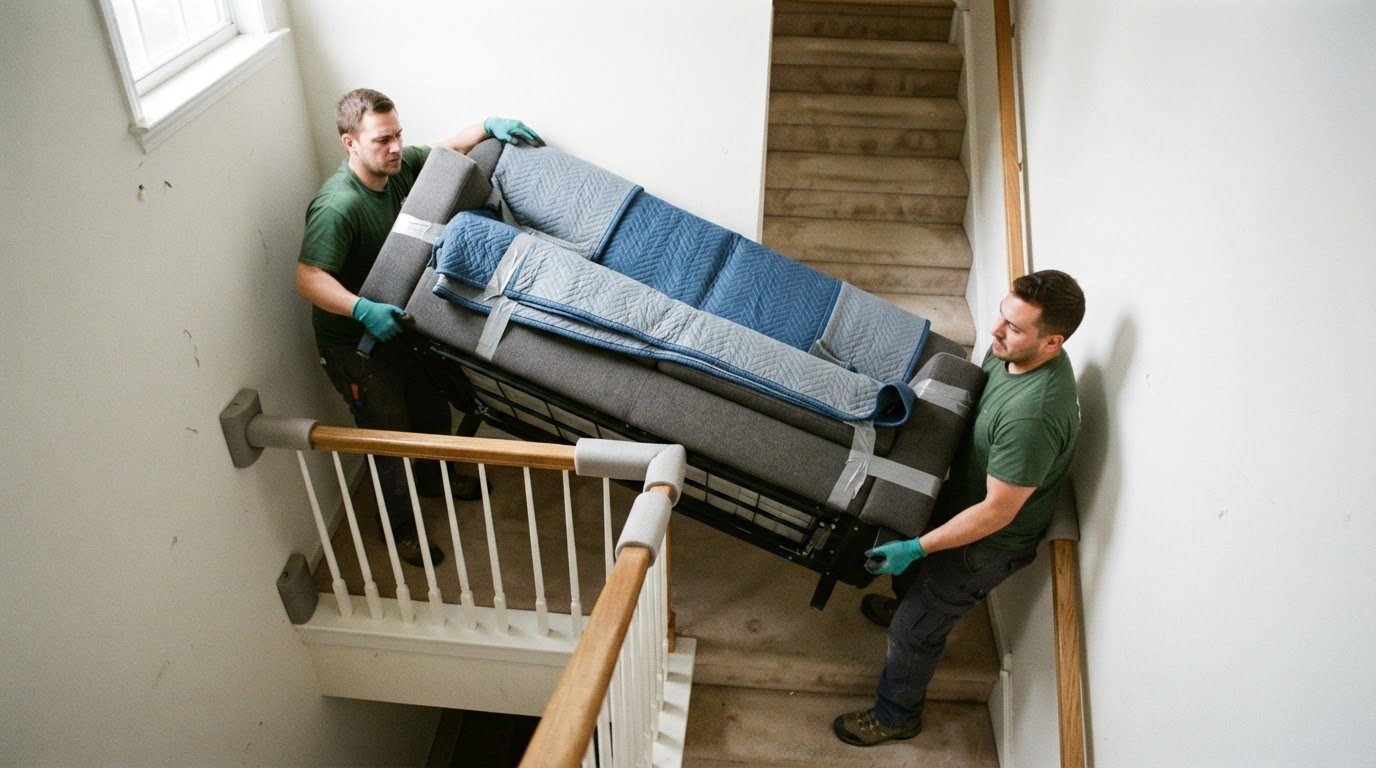
Ask the crew to cover exposed walls and railings with moving blankets before carrying furniture past them. Secure the blankets to themselves, not directly to finished wood or upholstery, using tape or stretch wrap. Protect floors along the route, especially at turns where movers reposition the load. Keep cushions and loose pieces secured so they don’t shift and brush against wallpaper.
- Have movers assign a spotter to watch the sofa’s edges while the lifting crew handles the weight. The spotter can call out risks near a banister, ceiling light, or painted corner before the furniture catches. Move slowly through each tight turn. If the sofa stops moving smoothly, pause and reassess its angle rather than forcing it against a wall.
- Ask the crew to assess detachable parts before carrying. Sofa legs can be removed when that improves clearance or maneuverability, and the hardware should go in a labeled bag. Removing legs can reduce sofa height by three to five inches. Movers can also check whether loose cushions or other removable pieces need separate handling, making the main frame easier to control.
- Use furniture sliders only on flat floors at the top or bottom of the stairs, not on stair treads. On the stairs, the crew needs to lift and guide the sofa rather than slide it across steps. A spotter can monitor the lower edge and railing as the sofa rises. This planned division of tasks helps limit sudden contact with walls and banisters.
- Before the move, point out delicate wallpaper, freshly painted areas, and any narrow clearance that concerns you. The crew can plan blanket placement and the carrying path around those surfaces. If a turn leaves little room to maneuver, they can stop and reassess whether the stairs are practical instead of risking damage by forcing the sofa through.
How professional movers navigate tight landings and staircase turns
Movers plan each landing pivot before carrying the sofa onto the stairs. A tight turn calls for controlled repositioning, not pushing the frame against a hallway wall.
- Map the turn before moving day. Movers assess the stair direction, landing shape, ceiling height, and space beyond the turn. A landing only four or five feet wide may leave little room to reposition a long sofa. The crew identifies where the front end must go, where the back end can travel, and which edges could come close to a wall or railing.
They also plan the approach from the hallway. A clear path lets the crew bring the sofa to the stair entrance in the position needed for the first turn. Removing loose obstacles prevents last-minute stops while the furniture is being carried.
- Choose the pivot angle before lifting. On a tight landing, movers may need to turn the sofa 90 degrees within the available space. They coordinate the movement so one end advances while the other swings through the open area. The turn depends on the sofa’s length and depth, landing shape, and the direction of the next flight.
For an L-shaped turn, the crew pauses at the landing, adjusts the sofa’s angle, and continues only when the frame clears the corner. This measured pivot helps prevent the sofa from scraping the inside wall or catching the railing.
- Plan the carry for a hook turn. Movers guide one end around the corner while positioning the other end to follow, rather than trying to swing the whole sofa at once. A spotter watches the sofa’s corners and calls out clearance near the banister, hallway wall, or ceiling. The team responds before continuing the turn.
Moving blankets can cushion contact points along the route, but they don’t create more landing space. The crew still needs a planned angle and enough room to reposition the load without forcing it.
- Break the stair carry into controlled stages. The crew brings the sofa to the landing, stops, checks its alignment, and then guides it onto the next flight. Short, coordinated adjustments give movers time to respond if an arm approaches the wall or the frame catches near a railing.
If the sofa won’t turn cleanly, movers stop and reassess its position and route. Forcing a pivot can damage the furniture or nearby surfaces. A revised angle, a different hallway approach, or another route may be more practical than repeating the same attempt.
How many movers are needed to move a couch upstairs?
Most standard couches need at least two capable adults, while oversized sofas may need three or four people. Movers choose a flat or tilted carry based on the sofa and stair clearance.
- Match the crew size to the sofa. Large sectionals, sleeper sofas, reclining sofas, and solid wood-framed pieces may need three or four people to move. Very heavy or oversized sofas strongly call for three movers on stairs. A sofa weighing 200 pounds can be challenging on a steep staircase, so the crew must account for both weight and the route.
More people help only when each person has a clear role. Movers coordinate who supports each end and who watches the path. A spotter can call out nearby walls, railings, or fixtures without adding another person to the lifting load.
- Choose a flat carry when the sofa’s shape and stair opening allow it. Movers keep the couch closer to level, then adjust its position at landings and turns. If the stairs or doorway are too narrow, they may tilt the sofa vertically to reduce its width at the tight point. The crew decides based on measured clearance, the sofa’s frame, and the next turn.
Vertical tilting changes how the sofa’s weight is distributed. Movers need to control the frame and prevent an arm or corner from swinging into a wall. This isn’t a shortcut for a narrow staircase; positioning and coordination still matter.
- Use a high-low carry when the stair angle requires one end to sit higher than the other. Movers coordinate their positions as the sofa travels along the flight, adjusting the tilt to keep the frame balanced and clear of nearby surfaces. The person carrying the lower end bears more of the load as a couch moves downstairs and has less visibility, so communication matters.
On an upstairs move, the crew still has to manage changing angles and sightlines. Movers should move together, stop if the couch catches, and reset their grip before continuing. Lifting straps may reduce strain for people who know how to use them, but they don’t solve a clearance problem.
- Before booking, ask what crew size the sofa and stair route require, which carrying position they expect to use, and how they’ll protect nearby surfaces. Also ask how they would consider a hoist if the stairs won’t work, and what the written terms say about property damage.
Any stair-carry or white-glove fee depends on the job and is provided after a quote request. Factors include the sofa’s dimensions, stair access, crew needs, and handling requirements.
Options when a couch will not fit through the stairs
If the sofa cannot clear the stairs, stop before forcing it around corners or against walls. Movers can compare another interior route with a professional window or balcony hoist.
- Reassess the tightest clearance with the sofa’s actual carrying position in mind. Compare the couch’s width and height with the narrowest doorway, stair section, and landing. If the remaining clearance is less than 1-2 inches, professional movers are recommended rather than repeated attempts. A small gap can disappear when cushions shift or the sofa changes angle.
Have the crew identify the limiting point, such as a stair corner or low ceiling. They can decide whether a different angle or route offers enough room. Don’t force a tight turn; the frame, wallpaper, railing, and nearby structural features could be damaged through contact.
- Ask whether another interior path can avoid the blocked stair turn. A wider doorway or alternate entrance may let movers carry the sofa without the same pivot. The crew should compare the sofa’s weight and shape with the full route, including corners and the space needed to reposition it.
Removing detachable sofa legs may improve clearance when the design allows it. Movers can keep the hardware together in a labeled bag and protect exposed parts. This helps only when the legs are the limiting point; it won’t solve a narrow landing or a frame that cannot turn.
- Consider a professional hoist when measurements show the stairs won’t work. Movers assess the window or balcony opening, the sofa’s path outside, and the destination inside. Hoisting requires professional equipment and at least three people. The crew plans how to control the load and guide its corners past the opening without relying on an improvised rope lift.
For a sofa hoisting service to prevent wallpaper damage on narrow stairs in Fairfax Station, the team can use an alternate route when carrying the sofa inside isn’t practical. Don’t attempt to lower a sofa over a balcony with ropes unless trained, properly equipped movers manage the job. A shifting load can strike the building or damage the furniture.
- Choose the option based on the limiting factor, not simply the shortest route. If the sofa can turn with enough clearance, a planned stair carry may work. If the stairs remain blocked, a sofa hoisting service can help prevent wallpaper damage in Fairfax Station by moving the sofa through a suitable window or balcony. Avoid altering structural openings or removing fixed building features as a quick workaround.
Share the sofa’s dimensions, approximate weight, and access details when arranging the move. Clear information about narrow landings, wallpaper, and window or balcony access helps movers plan the handling approach. For a couch that cannot clear the stairs, arrange professional sofa hoisting rather than risking a forced carry.
Heavy Furniture Moving: Sofa Hoisting
Heavy Furniture Moving offers Sofa Hoisting for couches that can’t pass safely through narrow stairs or tight landings. Hoisting provides an alternate route when careful measurements show the interior path won’t work, helping avoid forcing a sofa against wallpaper, walls, or railings. Share the sofa’s dimensions and details about window or balcony access so the plan can account for the furniture and route. If the stairs are workable, movers can also help with the interior carry. Contact Heavy Furniture Moving to discuss sofa hoisting when your sofa needs a different way in.
Plan the Sofa’s Next Move
Before arranging the move, note the sofa’s dimensions and describe the access points that shape its route. Clear details help the crew plan around your home’s layout and concerns about wallpaper or finished surfaces. If the stairs leave no practical way to carry the sofa, a sofa hoisting service to prevent damaging wallpaper on narrow stairs in Fairfax Station may be the next option.
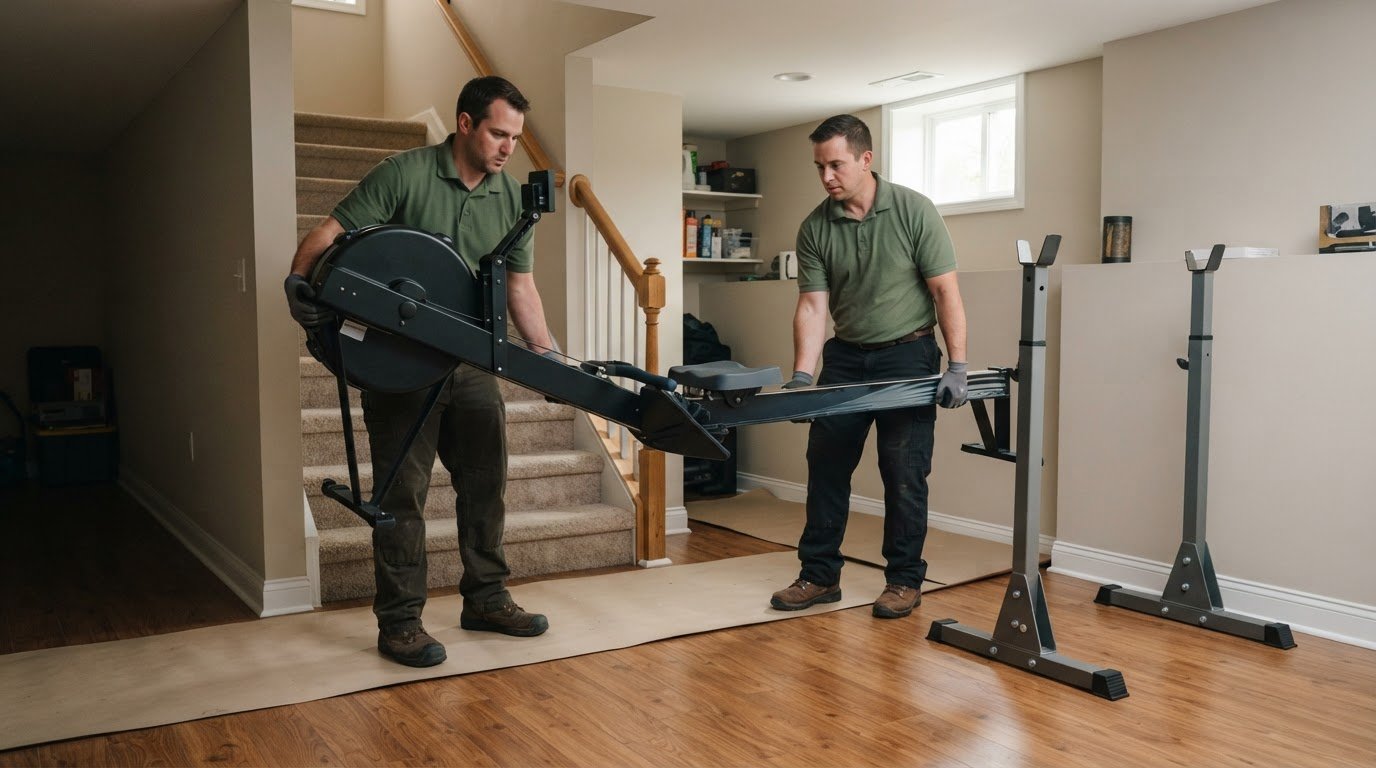
Heavy Furniture Moving offers Sofa Hoisting for this kind of access challenge. Other services include Movers Near Me and Exercise Equipment Moving. Choose the help that matches the item and route, then share the details that will guide the plan.
Contact Heavy Furniture Moving for sofa hoisting and take the next step toward getting your sofa where it belongs.
Frequently Asked Questions
Should I disassemble furniture before trying to move it through tight spaces?
Remove only parts designed to come off, and only when doing so improves the route or handling. Movers can assess whether sofa legs, detachable arms, or modular sectional pieces need removal; don’t dismantle a frame or force a connection. Keep each fastener with its matching part in a labeled bag. For example, legs removed to clear a doorway should stay with that sofa until reassembly.
When should you call professional movers for large furniture?
Call professional movers when the route has a tight turn, the furniture is heavy or oversized, or a test movement catches instead of progressing smoothly. A remaining clearance of less than 1-2 inches is a reason to choose professional help rather than keep attempting the carry. Movers can assess the full route and compare a stair carry with another way to bring the sofa inside.
How much does furniture hoisting cost for a sofa in Fairfax County, VA?
The cost depends on the sofa and access conditions, and is provided after a quote request. Factors include the sofa’s dimensions and weight, whether the route uses stairs or a window, and the crew and handling needs. Share details about the opening and access path so the quote reflects the actual job. No general price applies to every sofa hoist.
How can I find sofa-hoisting company reviews near Fairfax Station?
Heavy Furniture Moving has 500+ verified 5-star Google reviews and an overall 4.9/5 rating. When assessing whether feedback relates to your move, look for comments about bulky furniture, difficult access, and careful handling. Those details can help you understand how customers describe similar challenges. Reviews are context, while the sofa’s dimensions and the route still shape the moving plan.
What equipment and crew are needed for sofa hoisting?
A sofa hoist requires professional equipment and a crew that can coordinate and control the load through the opening. The equipment and crew plan must suit the sofa’s weight, shape, and access route. Movers also need a clear path at the destination to guide the sofa into the room once it clears the window or balcony.
How do professional movers protect wallpaper and walls during sofa delivery?
Movers plan the route to limit contact between the sofa and delicate surfaces. They can place protective coverings where the sofa’s corners pass closest to wallpaper, then guide the load carefully. Point out fragile or peeling wallpaper before the move, especially beside a doorway or landing. This helps the crew account for those surfaces while staging and moving the furniture.
Is sofa-hoisting service available in Fairfax Station?
Heavy Furniture Moving offers Sofa Hoisting in Fairfax Station. Its service area also includes Fairfax, Woodbridge, Manassas, Manassas Park, Aldie, Ashburn, Mclean, Vienna, Reston, Centreville, Chantilly, Clifton, Dumfries, South Riding, Haymarket, and Gainesville. Share the sofa and access details when arranging the move so the job can be planned around your home’s entry points.
sofa hoisting insurance liability for wallpaper and property damage
Responsibility for wallpaper or property damage depends on the written service terms and applicable coverage. Identify vulnerable surfaces and the planned route before work begins.
Frequently Asked Questions
Remove only parts designed to come off, and only when doing so improves the route or handling. Movers can assess whether sofa legs, detachable arms, or modular sectional pieces need removal; don’t dismantle a frame or force a connection. Keep each fastener with its matching part in a labeled bag. For example, legs removed to clear a doorway should stay with that sofa until reassembly.
Call professional movers when the route has a tight turn, the furniture is heavy or oversized, or a test movement catches instead of progressing smoothly. A remaining clearance of less than 1–2 inches is a reason to choose professional help rather than keep attempting the carry. Movers can assess the full route and compare a stair carry with another way to bring the sofa inside.
The cost depends on the sofa and access conditions, and is provided after a quote request. Factors include the sofa’s dimensions and weight, whether the route uses stairs or a window, and the crew and handling needs. Share details about the opening and access path so the quote reflects the actual job. No general price applies to every sofa hoist.
Heavy Furniture Moving has 500+ verified 5-star Google reviews and an overall 4.9/5 rating. When assessing whether feedback relates to your move, look for comments about bulky furniture, difficult access, and careful handling. Those details can help you understand how customers describe similar challenges. Reviews are context, while the sofa’s dimensions and the route still shape the moving plan.
A sofa hoist requires professional equipment and a crew that can coordinate and control the load through the opening. The equipment and crew plan must suit the sofa’s weight, shape, and access route. Movers also need a clear path at the destination to guide the sofa into the room once it clears the window or balcony.
Movers plan the route to limit contact between the sofa and delicate surfaces. They can place protective coverings where the sofa’s corners pass closest to wallpaper, then guide the load carefully. Point out fragile or peeling wallpaper before the move, especially beside a doorway or landing. This helps the crew account for those surfaces while staging and moving the furniture.
Heavy Furniture Moving offers Sofa Hoisting in Fairfax Station. Its service area also includes Fairfax, Woodbridge, Manassas, Manassas Park, Aldie, Ashburn, Mclean, Vienna, Reston, Centreville, Chantilly, Clifton, Dumfries, South Riding, Haymarket, and Gainesville. Share the sofa and access details when arranging the move so the job can be planned around your home’s entry points.