How to Dispose of an Old Piano in Fairfax: Compare Your Options
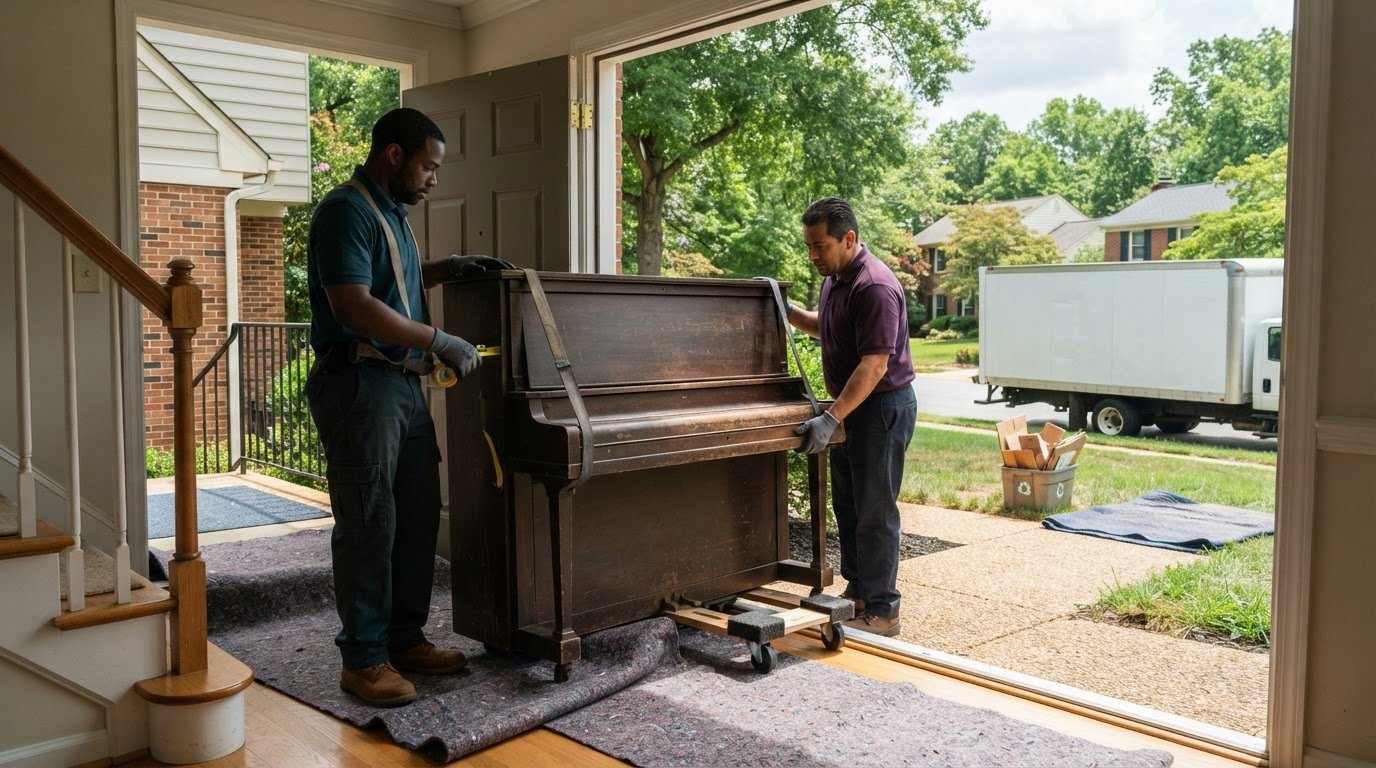
Decide where the piano should go before arranging the heavy lifting. If you’re searching “how to dispose of an old piano Fairfax,” start by considering whether it could be reused, donated, recycled, or removed as trash. The right choice depends on the piano’s condition, whether a recipient or facility will accept it, and how it can be safely moved out of your home.
It’s understandable to feel stuck. A piano is too heavy and delicate for an improvised move, and not every organization can accept one. Trying to shift it without the right help can put people and floors at risk.
This guide compares practical options, including donation, recycling, and removal, so you can choose a route that fits the piano. It also covers Fairfax-area disposal steps, such as checking current local guidance for large items. When the piano needs to leave your home, Heavy Furniture Moving provides specialized piano handling and junk removal to help with the physical removal. Start with the destination, then plan a safe route out.
Key Takeaways
- Assess the piano’s type, condition, and size to narrow down practical next steps.
- Compare reuse, donation, resale, recycling, and removal. Confirm acceptance before settling on a destination.
- For how to dispose of an old piano Fairfax, verify current bulky-item rules for your specific address before arranging disposal.
- Measure doorways, hallways, and stairs to help plan a safe removal route.
- Specialized piano handling and junk-removal help can make removal more manageable when the piano needs to leave your home.
How to Dispose of an Old Piano in Fairfax: Start with Its Next Destination
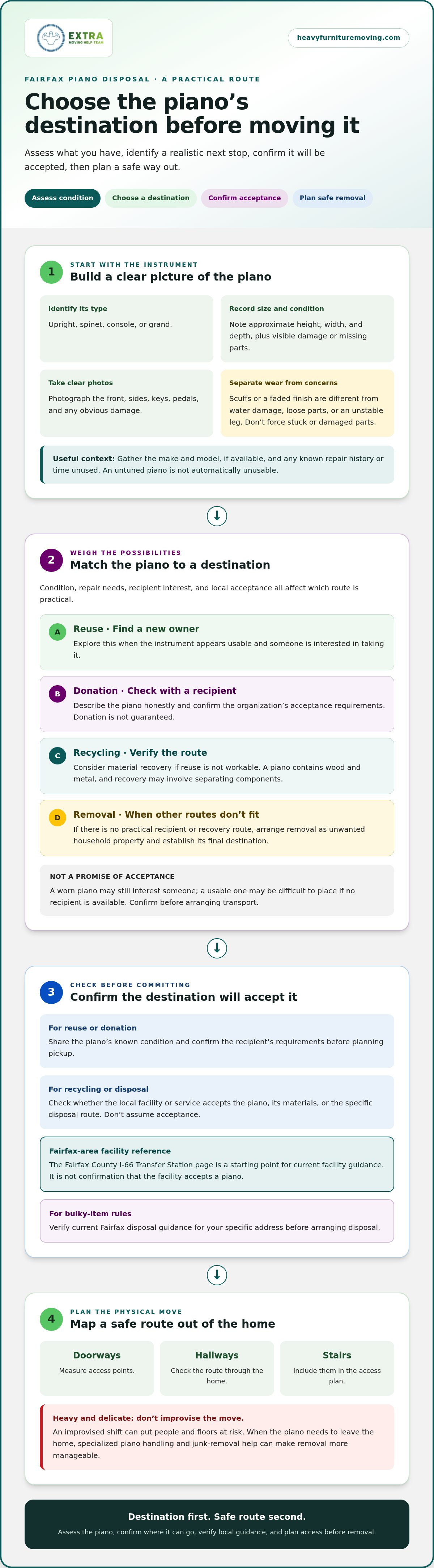
A piano can be too heavy to move casually, yet too valuable to send straight to the trash without a second thought. Before arranging removal, decide what you want to happen to it. The main routes are reuse by a new owner, donation, recycling, or removal as unwanted household property. Each starts with the same questions: Is the piano usable, is there a recipient, and will the destination accept it?
Piano disposal means choosing where the instrument should go, then arranging a safe way to remove it from your home. The destination might be another player, an organization, a recycling route, or a disposal facility. Make these decisions separately so you don’t move the piano before you know where it can go.
What counts as disposing of an old piano?
Getting a piano out of the house is only the removal step. Disposal also covers what happens next, whether the instrument goes to a new owner or its materials are recovered. An old or untuned piano isn’t automatically unusable. Age, appearance, and current tuning don’t tell the whole story. Piano types and construction vary, as outlined in Piano, so consider the instrument itself before choosing an endpoint.
Which piano-removal route fits your situation?
Reuse is worth exploring when the piano appears usable and someone wants it. Donation may also work, but organizations set their own acceptance conditions. If finding a recipient isn’t practical, recycling or junk removal may be a better fit. In every case, establish the likely destination before scheduling heavy-item removal. That lets you plan access and pickup around where the piano is going.
Use these four routes as a starting point, not a promise of acceptance:
- Reuse: Look for a new owner if the instrument can still serve a player and someone is interested in taking it.
- Donation: Contact a potential recipient with an honest description of the piano’s condition and be prepared for its acceptance requirements.
- Recycling: Consider material recovery when reuse isn’t workable. The available route depends on what local facilities or services accept.
- Removal: If the piano has no practical recipient or recovery route, arrange removal as unwanted household property and establish its final destination.
The best choice depends on the piano’s condition, local demand, the route out of your home, and whether a recipient or facility will accept it. A piano that seems worn may still interest someone, while a usable instrument can be difficult to place if no recipient is available. For how to dispose of an old piano Fairfax, decide on the destination first. Then plan removal around the piano’s size and the access points in your home.
Assess Your Old Piano Before Choosing a Fairfax Disposal Option
Before deciding whether to offer, donate, recycle, or remove a piano, build a clear picture of what you have. Identify its type, estimate its dimensions, note visible damage, and gather any history you know, such as past repairs or how long it has been unused. This information helps a potential recipient understand what they’d be taking on and helps plan safe handling.
Start with a simple inspection. Is it an upright, spinet, console, or grand piano? Record its approximate height, width, and depth, then photograph the front, sides, keys, pedals, and any obvious damage. Note cosmetic wear, such as scuffs or a faded finish, separately from issues that may affect playing or moving, such as missing parts, loose components, water damage, or a visibly unstable leg. Don’t force keys or parts that appear stuck or damaged.
Could the piano be reused, donated, or sold?
Working condition matters, but so do repair needs and recipient interest. A piano that hasn’t been tuned recently may still interest someone, while a more presentable instrument may be difficult to place if no one wants it. Before making inquiries, gather its make and model if available, describe its known condition honestly, and take clear photos. These details help others judge whether it suits their needs without implying that donation or resale is assured.
If you’re unsure whether repairs could restore musical use or whether the piano may have musical value, ask a qualified piano technician for an assessment. That opinion can help distinguish a fixable problem from damage that makes reuse less realistic. For a practical decision on how to dispose of an old piano Fairfax, don’t rely on appearance alone. Assess the instrument and recipient interest before choosing removal.
When is recycling or removal more realistic?
Severe damage, missing parts, or little interest from potential recipients can narrow reuse options. A piano contains a mix of materials, including wood and metal, so recycling may involve separating components rather than treating the whole instrument as one recyclable item. Don’t assume a facility accepts pianos or their parts. Verify local acceptance and handling instructions before arranging transport.
Fairfax County’s Fairfax County I-66 Transfer Station page provides information about the facility and its services. Use it as a starting point for checking whether a particular piano material or disposal route fits current facility guidance. The page shouldn’t be taken as confirmation that a piano itself is accepted. If reuse isn’t practical and a suitable recovery route isn’t available, removal as unwanted household property may be the clearer next step.
Decision rule: Assess condition and recipient interest first, then choose a destination. If the instrument needs to leave your home, Heavy Furniture Moving provides specialized piano handling to help manage the heavy lift.
Compare Piano Donation, Reuse, Recycling, and Removal in Fairfax
No single route suits every piano. A usable instrument may be worth offering to a new owner, while a piano with extensive damage may have fewer reuse options. Donation, resale, recycling, and junk removal each involve different acceptance and handling steps. Compare the likely destination and planning requirements before deciding how to move the piano.
| Route | Best-fit condition | Likely destination | Planning caveat |
|---|---|---|---|
| Direct reuse | Usable, with someone interested in taking it | A new owner or player | Arrange acceptance and moving logistics with the recipient. |
| Donation inquiry | Potentially usable and suited to an organization’s needs | A school, community group, or other organization, if accepted | Each organization sets its own criteria and may require information about condition. |
| Resale | Appears usable or repairable, with potential buyer interest | A private buyer or resale channel | Interest and value aren’t guaranteed; disclose known repairs and condition. |
| Recycling | Reuse isn’t practical, but some materials may be recoverable | A facility or service that accepts relevant materials | Verify whether it accepts pianos or separated components. |
| Junk removal | No suitable recipient or practical reuse route is available | A disposal or recovery destination determined by the removal plan | Removal labor and the piano’s final destination are separate decisions. |
When should you pursue reuse or donation?
Try reuse or donation first if the piano appears playable or repairable and a recipient is interested. Share its make and model, photos, known condition, and any repair history so the recipient can judge whether it fits. Then settle the acceptance and moving arrangements. A willing recipient still needs a workable way to take the piano, and an inquiry alone doesn’t guarantee acceptance.
When should you consider recycling or junk removal?
These routes may make more sense when damage is extensive, parts are missing, or no practical recipient emerges. Recycling depends on what a facility accepts. A piano’s mix of materials may require separate handling. Junk removal addresses the heavy item leaving the home, but it doesn’t by itself establish whether the piano will be reused, recycled, or disposed of. Keep those decisions distinct.
For how to dispose of an old piano Fairfax, weigh condition, recipient interest, access, and destination requirements together. Fairfax County and the City of Fairfax may have different guidance depending on your address, and facility rules can change. Verify current local acceptance before arranging a drop-off or pickup. The right route has a clear destination and a safe, practical removal plan.
Plan Safe Piano Removal and Verify Fairfax Disposal Requirements
Once you know where the piano is headed, line up acceptance, access, and removal in that order. A little preparation can prevent a missed pickup or a piano arriving at a facility that won’t take it. Check the rules for your address, since Fairfax County and the City of Fairfax may have different collection guidance.
- Choose the destination. Decide whether the piano is going to a recipient, a donation program, a recycling route, or a disposal destination. Keep the planned endpoint clear before arranging transportation.
- Check acceptance and instructions. Ask the relevant organization or disposal service whether it accepts the piano or its materials. Confirm the pickup or drop-off method, preparation steps, and any current requirements. Don’t assume bulky-item rules cover pianos.
- Measure the route. Note the piano’s type and approximate dimensions. Record stairs, narrow doorways, tight turns, elevators, and the distance from its current location to the exit. Photos of tricky access points can help explain the route.
- Prepare the home. Clear loose items and furniture from the planned path. Protect nearby belongings and keep children and pets away from the work area. Leave the piano in place. Don’t drag, dismantle, or attempt to lift it yourself.
- Schedule removal. Share the piano details, access notes, and intended destination when arranging the move. This gives the removal team useful information for planning the job and helps keep the destination and transport plan aligned.
What should you check with Fairfax-area disposal services?
First identify whether your address falls under Fairfax County or the City of Fairfax, then use that jurisdiction’s current guidance. Confirm whether a piano is accepted, how pickup or drop-off works, what preparation is required, and whether other requirements apply. Rules can change, so rely on current official instructions rather than an old listing or a neighbor’s past experience.
Remember: a piano’s weight and the conditions along the route make improvised removal risky. Stairs, landings, tight corners, and fragile flooring all affect how the instrument can be moved. Give the team a practical picture of the entire path, not just the doorway.
How can you prepare the home and piano for removal?
Before the scheduled removal, clear the route from the piano’s location to the exit and move fragile belongings out of the way. Share the piano’s type, approximate size, location in the home, stairs or turns, and destination plan in advance. Don’t try to make the piano lighter by taking it apart. Leave the heavy handling to people equipped for the task.
Heavy Furniture Moving provides specialized piano handling and junk removal for pianos that need careful handling through a challenging route. Arrange professional piano removal and share the access details so the physical removal and next step can be planned together.
Get Professional Help Disposing of an Old Piano in Fairfax
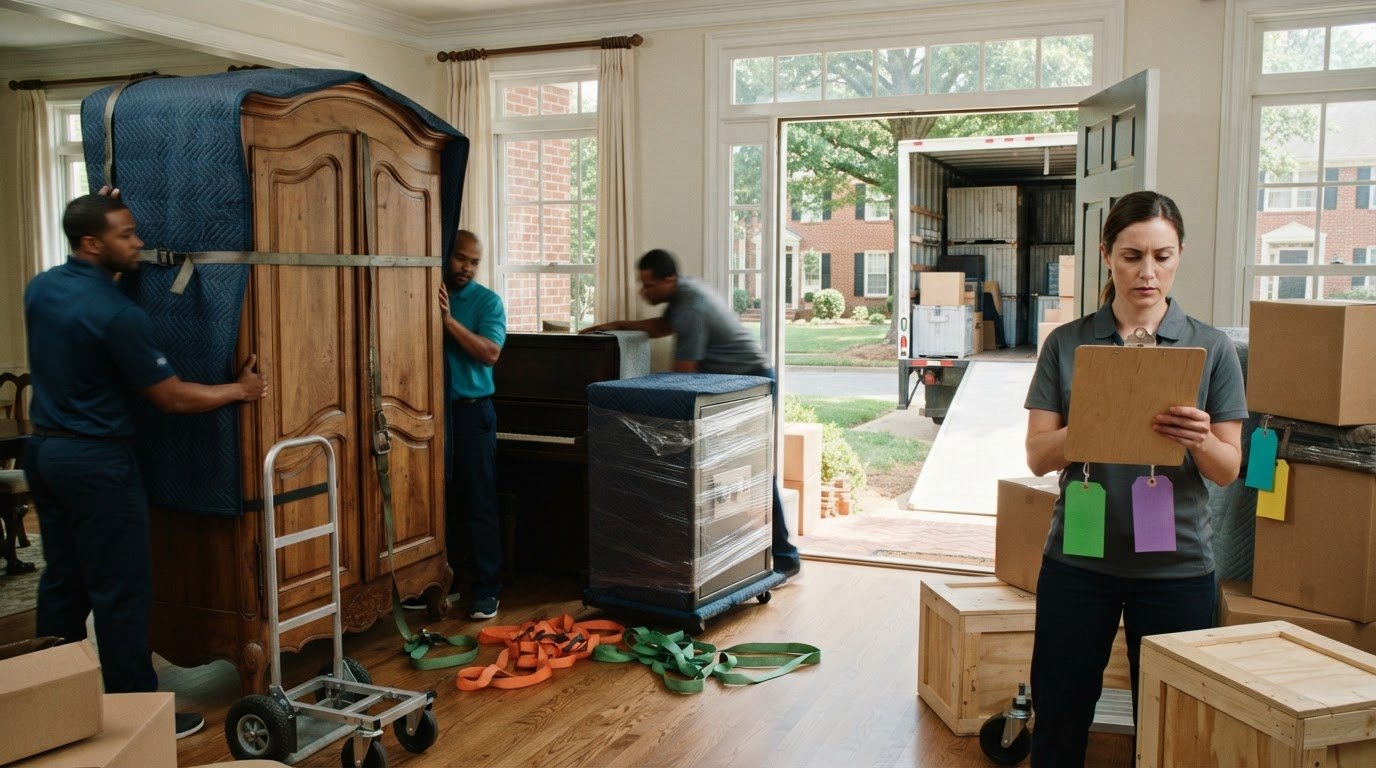
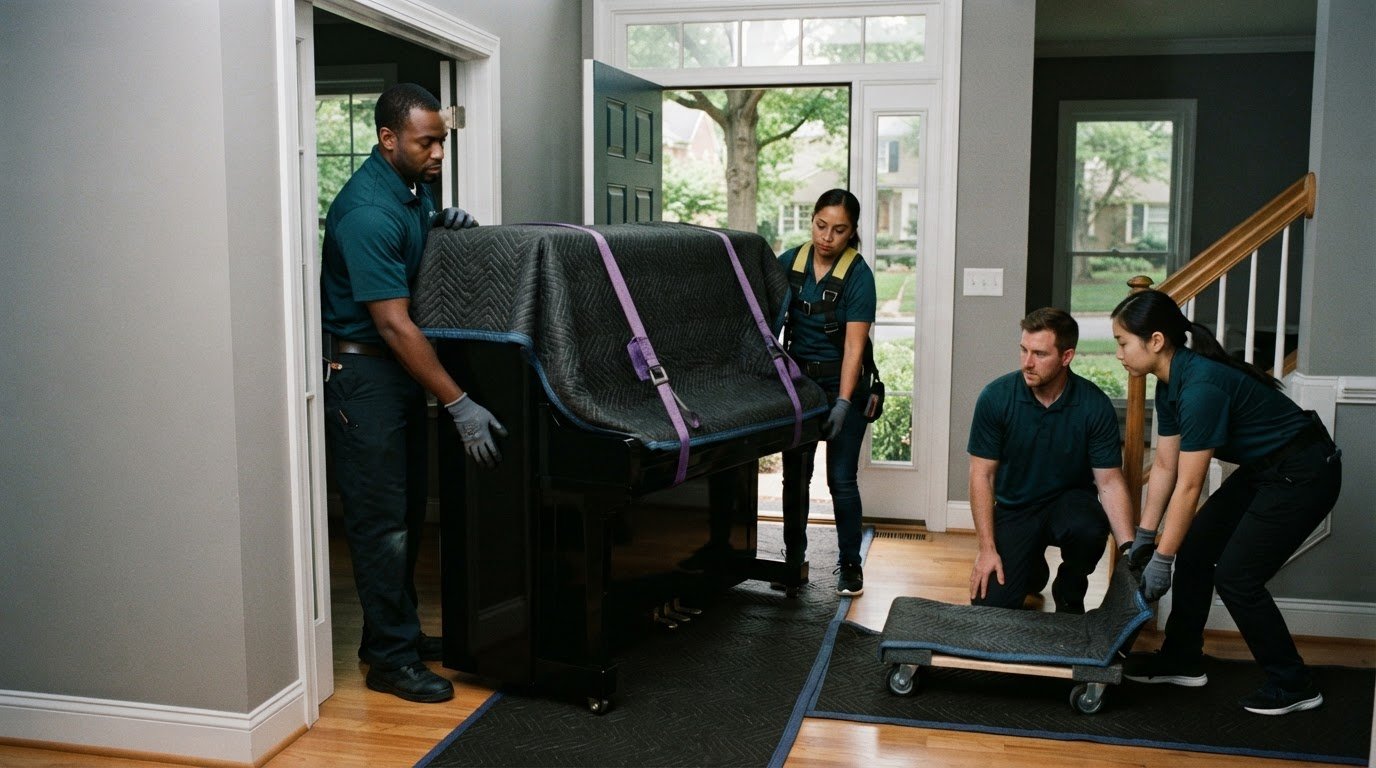
A piano can be difficult to move even a short distance. Stairs, narrow hallways, tight turns, and limited space near the exit add planning challenges. Professional heavy-item handling is useful when access is difficult, the piano needs to leave the home, or you’d rather not risk moving it yourself.
Heavy Furniture Moving provides specialized piano handling and transport, along with junk removal. These services help with the physical side of the job when a piano is unwanted. The piano’s destination still matters, so decide whether it’s going to a new owner, a recovery route, or another appropriate endpoint as you arrange removal.
What can specialized piano-removal help address?
A piano is a heavy, bulky household item, and its route through the home needs careful planning. Heavy Furniture Moving handles piano moves with attention to the piano’s type and location, along with obstacles such as stairs or narrow passages. Share what you know about the access route so the removal plan reflects the home, not just the instrument.
Removal and final disposal are related but separate steps. If the piano has no recipient, junk-removal help can take care of its departure from the home, while the destination and any local acceptance requirements still need to be established. Clear communication connects the physical move with the plan for what happens next.
What information helps arrange the next step?
Have the piano type, approximate size, current condition, and pickup address ready. Describe stairs, tight doorways, turns, elevators, and the piano’s location inside the home. Also explain its intended destination if you’ve chosen one. These details help the removal team understand the job and plan around the access points.
Photos can make tricky areas easier to describe, especially a narrow landing or a turn between rooms. You don’t need to move or dismantle the piano to prepare. Leave it where it is and share an accurate picture of the route.
If you’re searching for how to dispose of an old piano Fairfax, professional handling can take the strain out of the removal step. Heavy Furniture Moving provides specialized piano handling and junk-removal help for unwanted household items in Fairfax and nearby Northern Virginia communities.
Ready to plan the next step? Arrange professional piano removal in Fairfax and share the piano’s details, access route, and intended destination.
Make Room for What Comes Next
An old piano can take up more than floor space. It can leave you unsure where to begin. Turn that uncertainty into one clear next step: decide what outcome matters most, then make a removal plan that respects both the instrument and your home.
If the piano needs to leave, you don’t have to manage the heavy lift alone. Heavy Furniture Moving helps Fairfax households with piano removal through specialized handling and junk-removal support. For how to dispose of an old piano Fairfax, a clear plan for the destination and the route out of your home can make the decision feel manageable.
Plan your piano removal with Heavy Furniture Moving. Share the piano’s location, access details, and intended destination to take a practical next step and make room for what comes next.
Frequently Asked Questions
Is an old piano worth donating?
It can be, if its condition suits a recipient’s needs. Fairfax County Public Schools requires an inspection by an FCPS-certified piano tuner before accepting a piano. If accepted, the school system arranges and pays for the move. The Beethoven Foundation accepts piano donations in good to perfect condition nationwide. George Mason University’s Instruments in the Attic program isn’t currently accepting acoustic pianos due to limited space.
Can I put an old piano out with the trash in Fairfax?
Don’t assume a piano can go out with routine household trash. Rules depend on your address and the collection service’s current bulky-item instructions. Fairfax County residents can take trash to the I-66 Transfer Station or I-95 Landfill Complex, with proof of residency required. For how to dispose of an old piano Fairfax, check current guidance for your address before setting it outside or transporting it.
Does Fairfax County pick up old pianos?
Don’t count on a county pickup without checking your address and the current service rules. Fairfax County’s disposal information identifies facilities where residents can bring trash, but that doesn’t establish a piano curbside pickup option. Contact the Fairfax County Solid Waste Management Program for current guidance on large items. If you live within the City of Fairfax, check the city’s collection rules rather than assuming county services apply.
Can an old piano be dismantled for disposal?
Yes, a piano can be dismantled, but that doesn’t mean its parts can all go in the same disposal stream. Its wood, metal, and other materials may need different handling, and facilities can limit what they accept. Before dismantling, identify a destination for the separated materials. Avoid taking the piano apart yourself. Professional handling can help manage the heavy components and keep the removal plan organized.
How much does it cost to dispose of an old piano?
At Fairfax County facilities, the FY 2027 general trash rate is $98 per ton, with minimum charges of $39, $49, or $98 depending on the load category. These are not a specific piano fee, and you shouldn’t assume which minimum applies. Ask the county how it classifies a piano. Moving or removal service costs are separate and depend on the job.
Is piano removal different from piano moving?
Yes. Piano moving usually means transporting the instrument to another location, while removal focuses on taking it out of the home, whether it’s headed to a new owner or another destination. The physical handling can overlap, but the purpose differs. Heavy Furniture Moving handles pianos in Fairfax, Woodbridge, Manassas, Manassas Park, Aldie, Ashburn, McLean, Vienna, Reston, Centreville, Chantilly, Clifton, Dumfries, South Riding, Fairfax Station, Haymarket, and Gainesville.
Frequently Asked Questions
Getting a piano out of the house is only the removal step. Disposal also covers what happens next, whether the instrument goes to a new owner or its materials are recovered. An old or untuned piano isn’t automatically unusable. Age, appearance, and current tuning don’t tell the whole story. Piano types and construction vary, as outlined in Piano, so consider the instrument itself before choosing an endpoint.
Reuse is worth exploring when the piano appears usable and someone wants it. Donation may also work, but organizations set their own acceptance conditions. If finding a recipient isn’t practical, recycling or junk removal may be a better fit. In every case, establish the likely destination before scheduling heavy-item removal. That lets you plan access and pickup around where the piano is going. Use these four routes as a starting point, not a promise of acceptance: The best choice depends on the piano’s condition, local demand, the route out of your home, and whether a recipient or facility will accept it. A piano that seems worn may still interest someone, while a usable instrument can be difficult to place if no recipient is available. For how to dispose of an old piano Fairfax, decide on the destination first. Then plan removal around the piano’s size and the access points in your home. Before deciding whether to offer, donate, recycle, or remove a piano, build a clear picture of what you have. Identify its type, estimate its dimensions, note visible damage, and gather any history you know, such as past repairs or how long it has been unused. This information helps a potential recipient understand what they’d be taking on and helps plan safe handling. Start with a simple inspection. Is it an upright, spinet, console, or grand piano? Record its approximate height, width, and depth, then photograph the front, sides, keys, pedals, and any obvious damage. Note cosmetic wear, such as scuffs or a faded finish, separately from issues that may affect playing or moving, such as missing parts, loose components, water damage, or a visibly unstable leg. Don’t force keys or parts that appear stuck or damaged.
Working condition matters, but so do repair needs and recipient interest. A piano that hasn’t been tuned recently may still interest someone, while a more presentable instrument may be difficult to place if no one wants it. Before making inquiries, gather its make and model if available, describe its known condition honestly, and take clear photos. These details help others judge whether it suits their needs without implying that donation or resale is assured. If you’re unsure whether repairs could restore musical use or whether the piano may have musical value, ask a qualified piano technician for an assessment. That opinion can help distinguish a fixable problem from damage that makes reuse less realistic. For a practical decision on how to dispose of an old piano Fairfax, don’t rely on appearance alone. Assess the instrument and recipient interest before choosing removal.
Severe damage, missing parts, or little interest from potential recipients can narrow reuse options. A piano contains a mix of materials, including wood and metal, so recycling may involve separating components rather than treating the whole instrument as one recyclable item. Don’t assume a facility accepts pianos or their parts. Verify local acceptance and handling instructions before arranging transport. Fairfax County’s Fairfax County I-66 Transfer Station page provides information about the facility and its services. Use it as a starting point for checking whether a particular piano material or disposal route fits current facility guidance. The page shouldn’t be taken as confirmation that a piano itself is accepted. If reuse isn’t practical and a suitable recovery route isn’t available, removal as unwanted household property may be the clearer next step. Decision rule: Assess condition and recipient interest first, then choose a destination. If the instrument needs to leave your home, Heavy Furniture Moving provides specialized piano handling to help manage the heavy lift. No single route suits every piano. A usable instrument may be worth offering to a new owner, while a piano with extensive damage may have fewer reuse options. Donation, resale, recycling, and junk removal each involve different acceptance and handling steps. Compare the likely destination and planning requirements before deciding how to move the piano.
Try reuse or donation first if the piano appears playable or repairable and a recipient is interested. Share its make and model, photos, known condition, and any repair history so the recipient can judge whether it fits. Then settle the acceptance and moving arrangements. A willing recipient still needs a workable way to take the piano, and an inquiry alone doesn’t guarantee acceptance.
These routes may make more sense when damage is extensive, parts are missing, or no practical recipient emerges. Recycling depends on what a facility accepts. A piano’s mix of materials may require separate handling. Junk removal addresses the heavy item leaving the home, but it doesn’t by itself establish whether the piano will be reused, recycled, or disposed of. Keep those decisions distinct. For how to dispose of an old piano Fairfax, weigh condition, recipient interest, access, and destination requirements together. Fairfax County and the City of Fairfax may have different guidance depending on your address, and facility rules can change. Verify current local acceptance before arranging a drop-off or pickup. The right route has a clear destination and a safe, practical removal plan. Once you know where the piano is headed, line up acceptance, access, and removal in that order. A little preparation can prevent a missed pickup or a piano arriving at a facility that won’t take it. Check the rules for your address, since Fairfax County and the City of Fairfax may have different collection guidance.
First identify whether your address falls under Fairfax County or the City of Fairfax, then use that jurisdiction’s current guidance. Confirm whether a piano is accepted, how pickup or drop-off works, what preparation is required, and whether other requirements apply. Rules can change, so rely on current official instructions rather than an old listing or a neighbor’s past experience. Remember: a piano’s weight and the conditions along the route make improvised removal risky. Stairs, landings, tight corners, and fragile flooring all affect how the instrument can be moved. Give the team a practical picture of the entire path, not just the doorway.
Before the scheduled removal, clear the route from the piano’s location to the exit and move fragile belongings out of the way. Share the piano’s type, approximate size, location in the home, stairs or turns, and destination plan in advance. Don’t try to make the piano lighter by taking it apart. Leave the heavy handling to people equipped for the task. Heavy Furniture Moving provides specialized piano handling and junk removal for pianos that need careful handling through a challenging route. Arrange professional piano removal and share the access details so the physical removal and next step can be planned together. A piano can be difficult to move even a short distance. Stairs, narrow hallways, tight turns, and limited space near the exit add planning challenges. Professional heavy-item handling is useful when access is difficult, the piano needs to leave the home, or you’d rather not risk moving it yourself. Heavy Furniture Moving provides specialized piano handling and transport, along with junk removal. These services help with the physical side of the job when a piano is unwanted. The piano’s destination still matters, so decide whether it’s going to a new owner, a recovery route, or another appropriate endpoint as you arrange removal.
A piano is a heavy, bulky household item, and its route through the home needs careful planning. Heavy Furniture Moving handles piano moves with attention to the piano’s type and location, along with obstacles such as stairs or narrow passages. Share what you know about the access route so the removal plan reflects the home, not just the instrument. Removal and final disposal are related but separate steps. If the piano has no recipient, junk-removal help can take care of its departure from the home, while the destination and any local acceptance requirements still need to be established. Clear communication connects the physical move with the plan for what happens next.
Have the piano type, approximate size, current condition, and pickup address ready. Describe stairs, tight doorways, turns, elevators, and the piano’s location inside the home. Also explain its intended destination if you’ve chosen one. These details help the removal team understand the job and plan around the access points. Photos can make tricky areas easier to describe, especially a narrow landing or a turn between rooms. You don’t need to move or dismantle the piano to prepare. Leave it where it is and share an accurate picture of the route. If you’re searching for how to dispose of an old piano Fairfax, professional handling can take the strain out of the removal step. Heavy Furniture Moving provides specialized piano handling and junk-removal help for unwanted household items in Fairfax and nearby Northern Virginia communities. Ready to plan the next step? Arrange professional piano removal in Fairfax and share the piano’s details, access route, and intended destination. An old piano can take up more than floor space. It can leave you unsure where to begin. Turn that uncertainty into one clear next step: decide what outcome matters most, then make a removal plan that respects both the instrument and your home. If the piano needs to leave, you don’t have to manage the heavy lift alone. Heavy Furniture Moving helps Fairfax households with piano removal through specialized handling and junk-removal support. For how to dispose of an old piano Fairfax, a clear plan for the destination and the route out of your home can make the decision feel manageable. Plan your piano removal with Heavy Furniture Moving. Share the piano’s location, access details, and intended destination to take a practical next step and make room for what comes next.
It can be, if its condition suits a recipient’s needs. Fairfax County Public Schools requires an inspection by an FCPS-certified piano tuner before accepting a piano. If accepted, the school system arranges and pays for the move. The Beethoven Foundation accepts piano donations in good to perfect condition nationwide. George Mason University’s Instruments in the Attic program isn’t currently accepting acoustic pianos due to limited space.
Don’t assume a piano can go out with routine household trash. Rules depend on your address and the collection service’s current bulky-item instructions. Fairfax County residents can take trash to the I-66 Transfer Station or I-95 Landfill Complex, with proof of residency required. For how to dispose of an old piano Fairfax, check current guidance for your address before setting it outside or transporting it.
Don’t count on a county pickup without checking your address and the current service rules. Fairfax County’s disposal information identifies facilities where residents can bring trash, but that doesn’t establish a piano curbside pickup option. Contact the Fairfax County Solid Waste Management Program for current guidance on large items. If you live within the City of Fairfax, check the city’s collection rules rather than assuming county services apply.
Yes, a piano can be dismantled, but that doesn’t mean its parts can all go in the same disposal stream. Its wood, metal, and other materials may need different handling, and facilities can limit what they accept. Before dismantling, identify a destination for the separated materials. Avoid taking the piano apart yourself. Professional handling can help manage the heavy components and keep the removal plan organized.
At Fairfax County facilities, the FY 2027 general trash rate is $98 per ton, with minimum charges of $39, $49, or $98 depending on the load category. These are not a specific piano fee, and you shouldn’t assume which minimum applies. Ask the county how it classifies a piano. Moving or removal service costs are separate and depend on the job.
Yes. Piano moving usually means transporting the instrument to another location, while removal focuses on taking it out of the home, whether it’s headed to a new owner or another destination. The physical handling can overlap, but the purpose differs. Heavy Furniture Moving handles pianos in Fairfax, Woodbridge, Manassas, Manassas Park, Aldie, Ashburn, McLean, Vienna, Reston, Centreville, Chantilly, Clifton, Dumfries, South Riding, Fairfax Station, Haymarket, and Gainesville.