How to Compare Professional Container Loading and DIY Packing Costs
A container gives you more control over moving day, but you still need to load it safely. Choosing a professional container loading crew vs DIY SMARTBOX pack in South Riding comes down to how much lifting and packing you want to handle. DIY can suit you if you’re ready to do the work; loading help can be useful for bulky furniture or building a stable load. Full-service movers take on more, including packing, loading, transportation, and unpacking.
It’s reasonable to compare the container’s costs with the time, effort, and labor involved. For loading labor, the price depends on the job and is provided after a quote request; the items, access, and work required shape the cost.
This guide explains how to protect furniture, stack heavy items securely, and reduce shifting inside a container. You’ll also compare DIY container moving with full-service moving, understand which costs to consider, and see when loading help can ease the physical work.
Key Takeaways
- Protect furniture with moving pads, and place mattresses in bags to help limit friction damage during transit.
- Build stable rows with heavy items low and lighter boxes above them; secure each row before adding the next.
- Compare the hands-on work of a self-service container move with the packing, loading, transportation, and unpacking handled in a full-service move.
- Factor in more than labor when comparing options: container costs can include rental, transportation, storage, insurance, and packing materials.
- Get help with bulky or heavy items when loading them yourself feels physically demanding, and weigh the work involved alongside the service cost.
Professional packing and handling expertise
Protect belongings before loading, then arrange the container so furniture and cartons stay supported. A clear plan also helps South Riding residents coordinate loading help and keep arrival-day essentials accessible.
-
Book a SMARTBOX and Arrange Loading Help
Arrange the SMARTBOX delivery, then schedule loading assistance to fit its delivery and pickup plan. Heavy Furniture Moving can help load a container. Follow the container provider’s instructions for access, placement, and acceptable loading practices.
Before moving day, note the delivery location, loading window, and bulky pieces that need extra handling. Share those details when arranging help so the work can begin once the container is ready.
-
Pack Furniture, Cartons, and Essentials
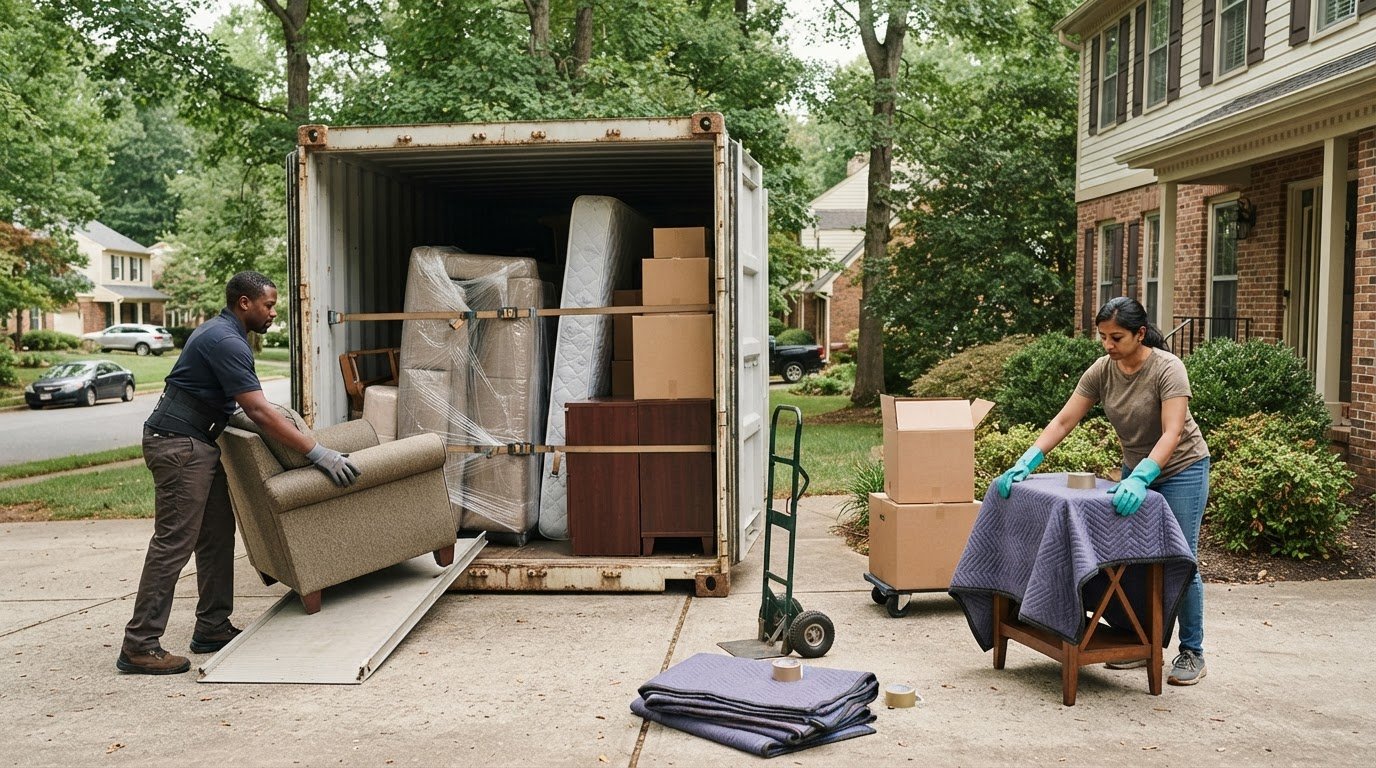
Wrap furniture in thick moving pads before loading to help prevent friction damage during transit. Pack belongings in newer cartons, since reused cartons are more likely to collapse during shipping, and keep each box’s contents secure.
Include packing materials and storage alongside container rental and transportation when comparing costs. Expenses may include insurance and loading help, too. Pack a separate box of arrival essentials and place it near the container doors so it can be unloaded first.
-
Clarify which coverage applies.
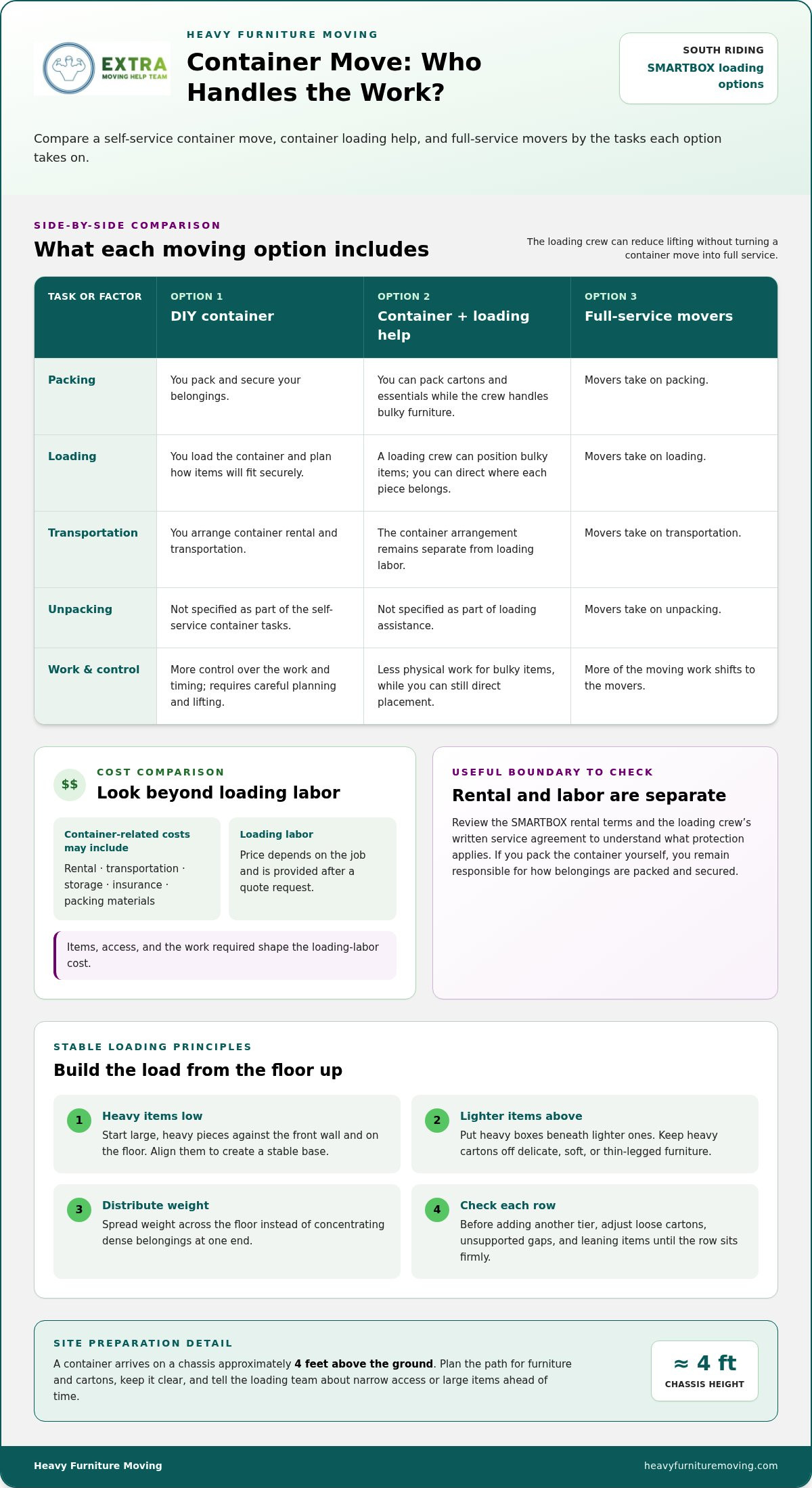
Container rental and loading labor are separate arrangements. Check the SMARTBOX rental terms and the loading crew’s written service agreement to understand what protection applies. If you pack the container yourself, you remain responsible for how your belongings are packed and secured.
Keep the rental terms and labor agreement together, and identify who handles each part of the move. This makes it easier to understand what coverage applies to the container, loading work, and packed belongings.
-
Prepare the loading site and container.
Choose a flat, firm surface for container placement and prepare a suitable spot before delivery. If there’s no driveway, find out whether parking in front of the home needs to be reserved. Inspect the container for holes before the driver leaves.
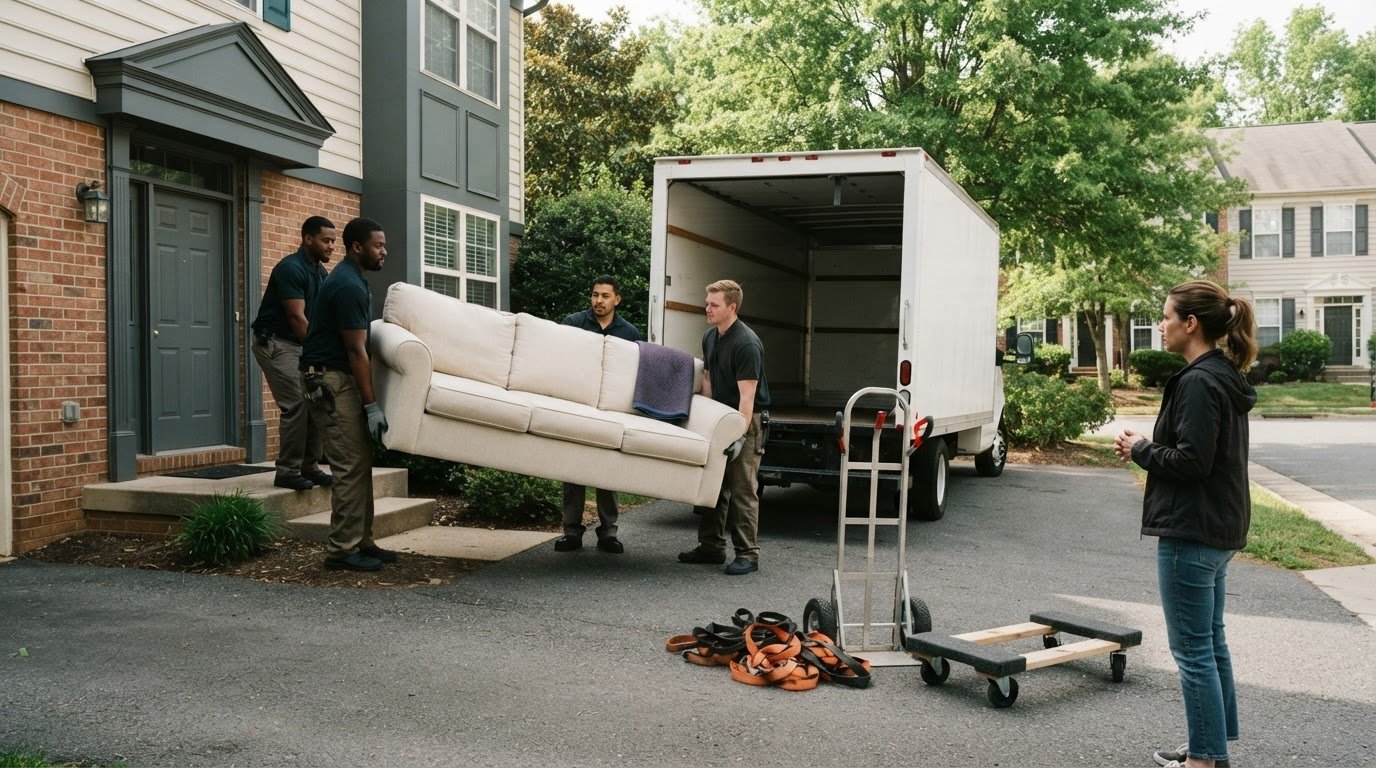
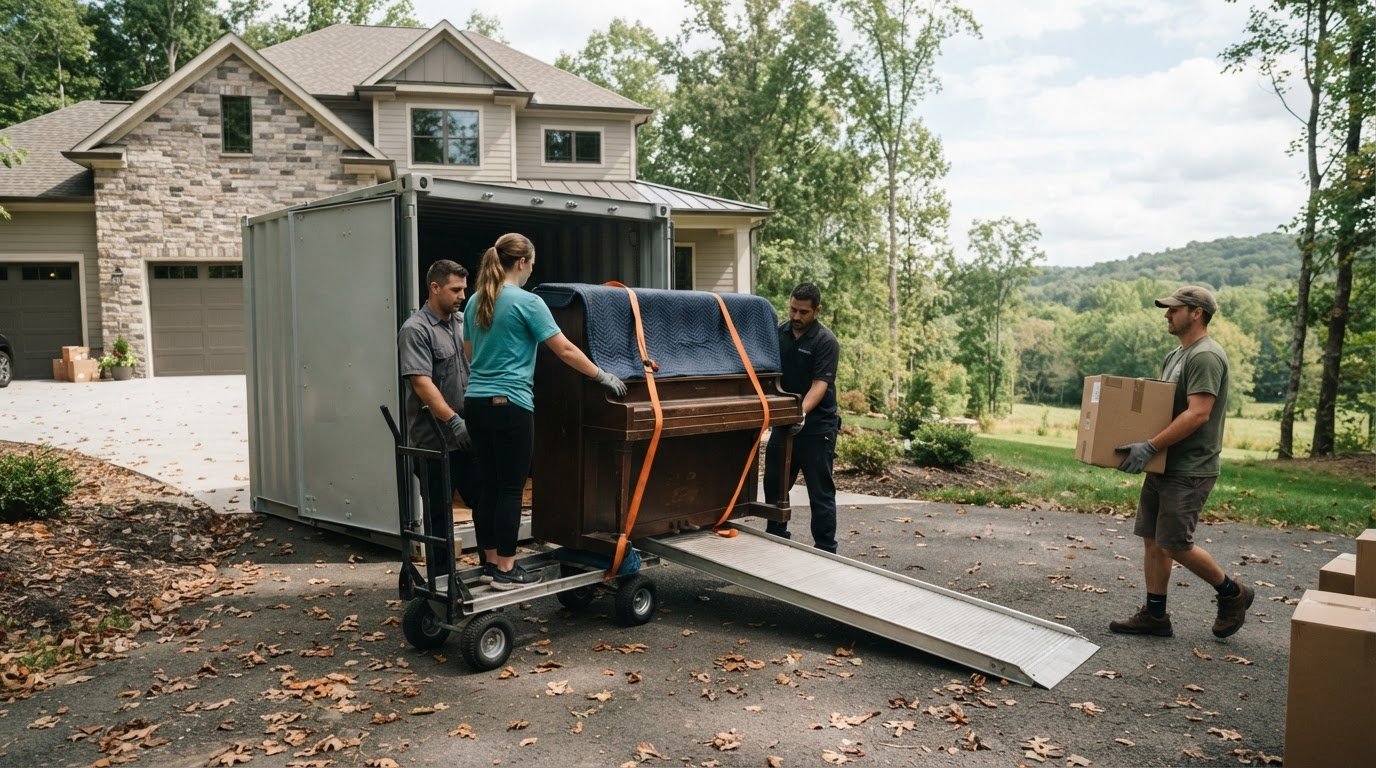
A container arrives on a chassis approximately 4 feet above the ground, so plan how the crew will move furniture and cartons into it. Keep the path clear, and tell the loading team about narrow access or large items before work begins.
-
Separate heavy handling from packing.
Decide which tasks you’ll do yourself and where loading help would be useful. You can pack cartons and prepare essentials while movers handle bulky furniture. A dresser or exercise machine, for example, may need extra hands and careful positioning.
Set aside fragile belongings for careful packing, and label their cartons clearly. Keeping the load light and cartons organized helps the crew use the space without crushing delicate contents.
Building stable tiers with heavy items at the bottom
Build each container row from the floor upward, with heavier pieces supporting lighter belongings. A balanced load helps items stay in place as the container is moved and transported.
- Start with large, heavy items against the container’s front wall. Place a washer, dryer, or heavy sleeper sofa on the floor, where the base can support its weight. Align the pieces instead of leaving a heavy object standing alone. A stable foundation gives the next items a firm surface and helps distribute weight across the container floor.
- Build each tier from items of similar height. Place sturdy furniture side by side, then fill spaces above with cartons that fit securely. Heavy boxes belong beneath lighter ones, not on top of delicate or soft items. For example, put a carton of books low and use a box of linens to fill a higher space.
- Spread weight across the floor instead of concentrating it in one spot. Compare the left and right sides as you load, and avoid stacking the densest belongings at one end. Keep heavy items low and lighter pieces above them for a steadier load.
- Fit each new piece to the tier already in place. A heavy sleeper sofa can serve as a solid base, while a lighter sofa belongs midway up a tier, without heavy cartons pressing down on it. Don’t place weight on thin-legged furniture. If a piece won’t sit securely, reposition it before adding the next row.
- Check each row before building the next. Look for loose cartons, unsupported gaps, or items leaning against neighboring pieces, and adjust them until the tier sits firmly. In a box truck, keep light belongings in the upper area, which is less structurally strong than the rest of the truck. A balanced arrangement helps protect the load during handling and transport.
- Use hands-on help for awkward, heavy pieces that are difficult to position safely. A heavy lifting moving service can help with the physical work of loading bulky items, while you direct where each piece belongs in the tier.
Self-service container moving compared with full-service movers
A loading crew can reduce the physical work and help position belongings. Packing a SMARTBOX yourself gives you more control over the work and timing, but requires careful planning and lifting. Full-service movers take on packing, loading, transportation, and unpacking.
- Choose the move format that suits the work you want to take on. With a self-service container, you pack and load your belongings, then arrange the container rental and transportation. Full-service movers take on those tasks, including unpacking. A container keeps you in charge of packing and loading; full service shifts more of the work to the movers.
- Compare a container rental with a moving truck rental. A container lets you load and unload at your own pace and may be rented for a week or a month. With a truck, you pack, load, drive, unload, and unpack. Choose a truck only if you’re prepared to manage the driving as well as the lifting and packing.
- List container expenses before choosing this option. Costs may include rental, transportation, insurance, loading help, storage, and packing materials. The total depends on which services you use and how long you need the container. Compare the services you need, not just the rental, when planning your move.
- Weigh the workload against your available time and physical effort. DIY packing can suit people who want to work at their own pace and can safely manage loading. A crew can take on demanding lifting and help position furniture and cartons. Either way, sort belongings and prepare cartons before loading begins to keep the process organized.
- Protect the container while it’s at your home. You’re responsible for keeping the container and belongings safe while it remains on your property. A container on the street is exposed to weather, theft, and vandalism. If the placement is vulnerable, factor that responsibility into your decision.
- Check weight distribution as you load. Keep heavier belongings at the bottom and build upward with lighter items. An unbalanced load can jam a moving pod’s roll-up door or make the pod sway when a transport truck lifts it. Review the arrangement before closing the door, and reposition uneven loads rather than forcing a tight fit.
Preventing damage from shifting loads
Secure each row before continuing, and fill gaps so items can’t slide in transit. A careful final inspection helps catch loose pieces before the container is collected.
- Pack each row tightly from floor to ceiling. Empty spaces let cartons and furniture shift as the container moves. Use spare furniture pads to fill small gaps beside items such as a dresser or table. Long, lightweight items can fit above a packed row if they sit securely below the ceiling.
- Keep items upright and aligned instead of leaning them against neighboring pieces. A leaning carton can press against a lamp or table in transit and shift the whole row. Place cartons squarely, adjusting them until they sit flush with nearby belongings. Narrow openings can hold TV, mirror, or artwork boxes snugly and reduce movement.
- Secure each completed row before starting another. Tie-down rope can hold a row in place, especially when it contains large, heavy furniture. Secure straps snugly around the load using suitable attachment points. If a row moves when you press it, reposition or secure it more firmly before continuing.
- Position cargo straps about 3-4 feet above the floor, and strap off the load about every four feet. These placements help contain furniture and cartons across the packed length. Keep each buckle away from finished furniture surfaces to avoid scratches. Don’t rely on thin rope or bungee cords for heavy pieces; they can stretch or snap if furniture shifts.
- Use padding at contact points, not just on visible surfaces. A table leg pressed against a hard edge can break during sudden tilting, while unprotected glass can shatter. Padding between a sofa and cabinet also reduces friction that can scuff upholstery. Check corners, legs, and glass surfaces before the next row hides them.
- Build a firm final section before closing the doors. A stable three- or four-foot tier of items set aside for this purpose can be secured with one strap. Fill small remaining gaps with spare pads, then test the row for movement. Leave no loose lamp or small appliance perched on soft furniture without securing it.
- Inspect the entire load, from the doors to the front wall, before collection. Look for leaning items, gaps, loose straps, and boxes that could fall when the doors open. Fix weak spots now, before movement in transit turns a small gap into damage.
Professional mover labor and service costs
Crew size and loading time depend on the inventory, access, and amount of heavy furniture. A live-load truck waits at the home for two hours while the container is loaded, but that window isn’t a standard estimate for every loading crew.
- Separate container costs from labor charges when comparing options. Container expenses may include rental, transportation, insurance, loading help, storage, and packing materials. List the services your move needs, then compare like with like. A rental that includes transportation differs from one where you arrange loading help separately.
- Ask how professional mover labor is priced for your job. Local professional moving labor is often charged by the hour, while long-distance moves are commonly priced by belongings’ weight or volume. The inventory matters: moving a packed home with bulky items requires different work from moving a small load of ready-to-carry cartons.
- Use the live-load window to plan the work. The trucker waits two hours while the container is loaded. Have cartons ready and clear the path before loading begins to avoid wasting time during that window.
- Compare live load with drop-and-pick service. A drop-and-pick container stays at the home for two full days, giving you more time to load. That option normally costs twice as much as a live load. The extra time may suit a gradual DIY move, while live loading concentrates the work into the trucker’s visit.
- Estimate labor from the real work, not just the container size. Count bulky furniture, heavy appliances, stairs, long carrying distances, and whether cartons are packed before the crew arrives. Those factors affect the pace and effort required. For loading labor, the price depends on the job and is given after a quote request; item volume, access, and work required shape the cost.
- Choose the work split that fits your inventory. You can pack and prepare cartons yourself, then arrange loading help for the lifting and placement. This keeps your comparison focused on the labor you need, rather than full-service packing, transportation, and unloading. Arrange help loading heavy furniture when bulky items make the work harder to manage.
With a self-service move, you handle packing and loading while renting a truck or moving container. Professional movers can complete a move in a day or over a weekend. They can stack items in rows, called tiers in the moving industry, to make efficient use of space and reduce damage. Straps and padding protect belongings; avoid leaning items in packed rows, since this can shift the load. At the destination, you can arrange customs entry and have the container placed at your home for live unloading, or end services at the port and arrange customs and unloading yourself.
Heavy Furniture Moving: Movers Near Me
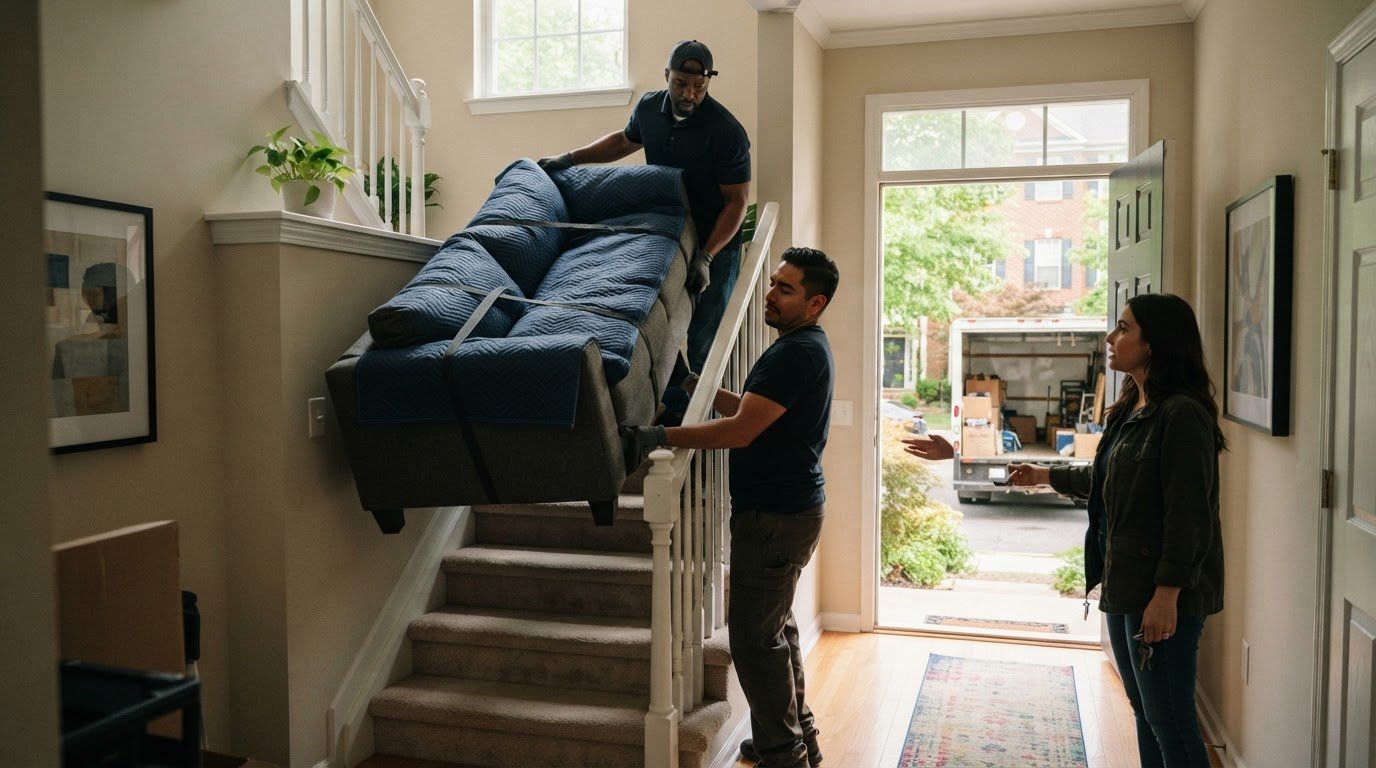
Heavy Furniture Moving helps South Riding residents with bulky furniture and demanding lifting as part of a move. Get help with difficult-to-position pieces, exercise equipment, in-home furniture moving, or sofa hoisting. These services can complement a self-packed container move by taking on challenging lifting while you stay in charge of packing and the overall plan. Wrap, blankets, and straps are included on every job.
For a SMARTBOX move, identify which items need hands-on help before loading day. A large sofa or exercise machine may need careful handling and a clear route from the room to the container. Match the help to the task instead of trying to move every heavy item yourself.
Contact Heavy Furniture Moving to discuss loading help for your move.
Set Your Moving Plan in Motion
Before choosing between a professional container loading crew and a DIY SMARTBOX pack in South Riding, decide which parts of the move you want to manage yourself. Mark the tasks that involve heavy lifting, then separate them from packing and planning. This gives you a practical way to compare the options without treating the move as all or nothing.
You can pack your own cartons and still get help with the most demanding items. Heavy Furniture Moving offers Movers Near Me, Exercise Equipment Moving, and Sofa Hoisting for specific moving needs. Choose the support that fits the work ahead, whether you need to move bulky equipment or handle a difficult sofa.
Take the next step with a clear list of items and the help you need. Contact Heavy Furniture Moving to discuss your moving needs. A solid plan can make the work ahead feel more manageable.
Frequently Asked Questions
Should You Use Moving Containers or Hire a Professional Moving Company?
Choose a moving container if you want to pack and load at your own pace; choose full-service movers for help with packing, loading, transportation, and unpacking. The professional container loading crew vs DIY SMARTBOX pack South Riding decision comes down to how much work you want to handle. A practical middle ground is to rent a container and arrange help specifically for loading. Compare included services with the tasks you’ll manage yourself.
What happens if a moving pod is loaded incorrectly?
An unbalanced load can make a moving pod sway when a transport truck lifts it or jam the roll-up door. A jammed door can trap belongings when it’s time to unload. Before closing the pod, look for uneven weight, shifting furniture, and cartons pressing against the door. If the load feels unstable or the door resists, reposition items instead of forcing it shut.
How should furniture and boxes be arranged inside a SMARTBOX to prevent damage?
Arrange furniture and boxes so the load is supported from the floor up, and don’t let fragile cartons carry weight. For example, place a boxed television upright in a snug opening instead of leaving it loose between furniture. Keep small parts with the furniture they belong to, such as bed-frame hardware in a labeled carton. This makes unloading and reassembly at your new home easier.
What are common risks and injuries when loading a moving container without professional help?
Loading a container yourself is physically demanding and can increase the risk of injury, especially when furniture is bulky, awkward to grip, or difficult to carry through a narrow doorway. When comparing a professional container loading crew vs DIY SMARTBOX pack in South Riding, consider what you can lift safely. Clear the route, get help with awkward loads, and stop if you can’t move an item safely.
How much do SMARTBOX packing and moving services cost near South Riding, VA?
Costs may include container rental, transportation, insurance, loading help, storage, and packing materials. Loading labor is quoted based on the items, access, and work required.
Frequently Asked Questions
Choose a moving container if you want to pack and load at your own pace; choose full-service movers for help with packing, loading, transportation, and unpacking. The professional container loading crew vs DIY SMARTBOX pack South Riding decision comes down to how much work you want to handle. A practical middle ground is to rent a container and arrange help specifically for loading. Compare included services with the tasks you’ll manage yourself.
An unbalanced load can make a moving pod sway when a transport truck lifts it or jam the roll-up door. A jammed door can trap belongings when it’s time to unload. Before closing the pod, look for uneven weight, shifting furniture, and cartons pressing against the door. If the load feels unstable or the door resists, reposition items instead of forcing it shut.
Arrange furniture and boxes so the load is supported from the floor up, and don’t let fragile cartons carry weight. For example, place a boxed television upright in a snug opening instead of leaving it loose between furniture. Keep small parts with the furniture they belong to, such as bed-frame hardware in a labeled carton. This makes unloading and reassembly at your new home easier.
Loading a container yourself is physically demanding and can increase the risk of injury, especially when furniture is bulky, awkward to grip, or difficult to carry through a narrow doorway. When comparing a professional container loading crew vs DIY SMARTBOX pack in South Riding, consider what you can lift safely. Clear the route, get help with awkward loads, and stop if you can’t move an item safely.
Costs may include container rental, transportation, insurance, loading help, storage, and packing materials. Loading labor is quoted based on the items, access, and work required.