Hiring Clifton Movers for Heavy Soapstone Wood Stoves
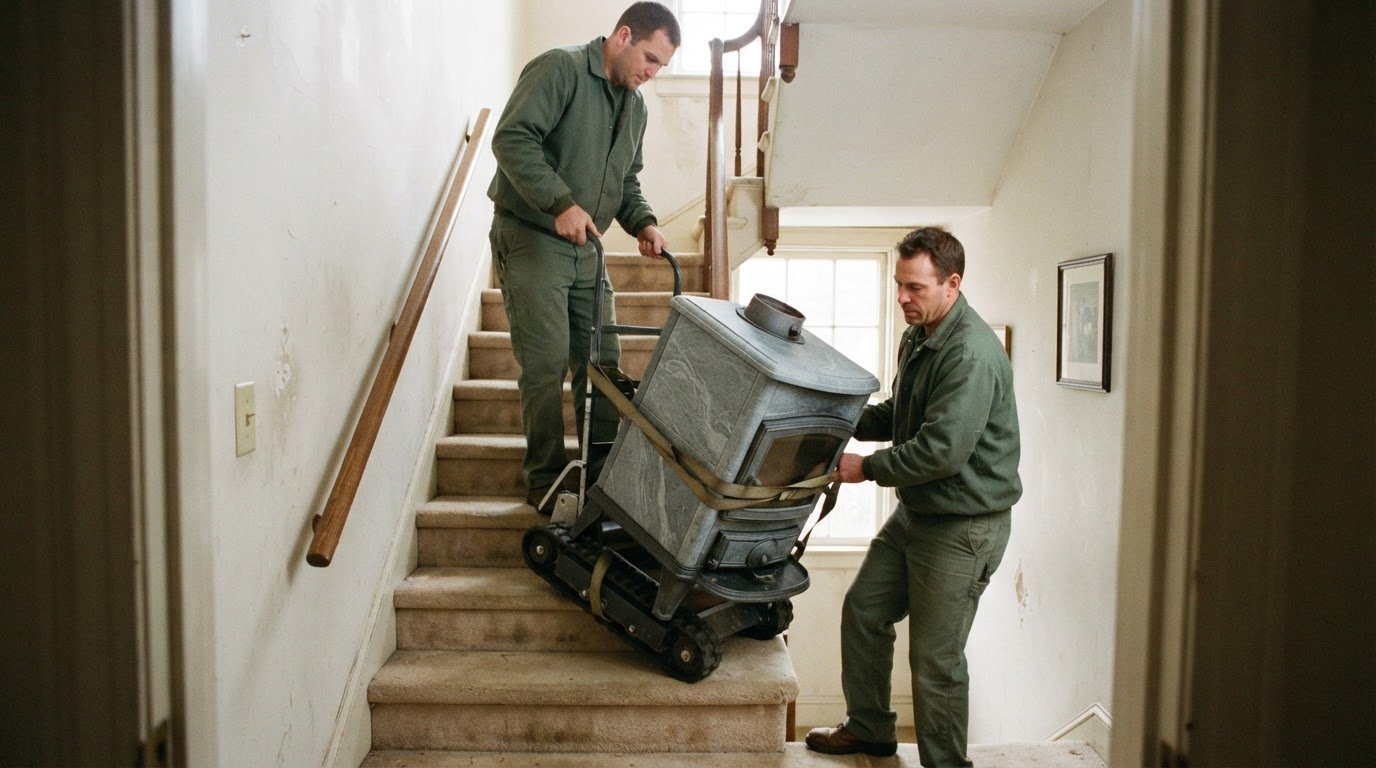
Stairs can add time and effort to a heavy stove move, affecting the quote. Hiring movers to transport a heavy soapstone wood stove in Clifton means accounting for the route, the stove’s size and weight, and the handling required. The billing method and booking minimum also shape the cost.
A bulky stove poses different challenges from an ordinary household item. Tight turns and multiple flights can make the move more demanding, so understand what affects the quote before choosing a date.
This guide explains how stairs, billing, booking minimums, and stove details affect planning and cost. You’ll also learn what information helps movers assess the job and prepare a practical plan for your stove move in Clifton.
Key Takeaways
- Stairs, narrow turns, and the distance from the stove to the moving vehicle can affect the work involved and the quote.
- Compare movers by their experience with heavy-item handling, how they explain the job, and the clarity of their reviews.
- Understand how hourly billing and minimum booking periods apply so you can plan for the full moving task.
- Share the stove’s weight, dimensions, access route, and pickup and delivery details to help build a more accurate quote.
- Measure the route and note any obstacles before moving day to help the crew plan the lift.
Choosing a mover by price, skills, and reviews
Compare written quotes by what the work includes, not just the total. Check whether the quote covers lifting, floor protection, stairs, and loading for transport. Give the same details to each mover so you can compare equivalent work, including any tight turns or steps at your Clifton home.
Ask how the crew plans to handle the stove’s weight and shape. Professional stove movers focus on the load, route, and protection needed for that item; general household movers may bring broader furniture-moving experience. For a reported 460-480-pound item, for example, the route and handling plan matter as much as the distance. Look for a clear explanation of how the crew will move it safely.
Use reviews to find specific evidence, not just praise. A comment saying “amazing” is more useful when it explains what worked, such as careful floor protection, clear communication, or handling a difficult stairwell. Read recent feedback for repeated details about heavy-item jobs. No review can prove a 100% perfect outcome, so compare patterns and practical examples rather than relying on one glowing rating.
- Compare scope: Identify stairs, carrying distance, loading, and protection included in each quote.
- Compare experience: Look for examples involving heavy, bulky items and difficult access.
- Compare feedback: Favor reviews that describe the crew’s actions and the result.
For insurance, review written coverage for damage to the stove during handling or transport, and damage to the home during the move. Check how the mover describes valuation, exclusions, and any deductible. The terms matter more than a broad assurance that belongings are covered. Keep the written quote and coverage details together for comparison.
Remove loose accessories and contents, clear the route, and document existing marks. Make sure the stove is fully cold before moving. Tell the crew about narrow doorways, stairs, and turns so the plan reflects the actual route.
Whether soapstone panels should stay attached depends on the stove model and its instructions. Leave secure panels in place when the manufacturer’s directions allow. Remove them only if instructed, then wrap and label each piece to help protect the stone and stove during the lift.
For context, listed U.S. averages are 494.95 per move for labor-only moving and 1,010.33 per move for local full-service moving; use them as benchmarks, not quotes.
Furniture and heavy-item lifting
A soapstone stove needs a different moving plan from a bedroom dresser. Its weight is concentrated in a compact frame, and stone surfaces can be vulnerable to impact. Map the route from its current position to the exit, including each doorway, turn, threshold, stair, and landing. A route that looks clear from the living room may narrow near a hallway or exterior door.
Movers choose equipment to suit the stove and route. A suitable appliance dolly, lifting straps, moving blankets, and floor protection can help manage the load and protect nearby surfaces. Stairs, uneven ground, or a tight doorway may require a different approach from a clear, level path. The crew should plan where to pause, turn, and set the stove down safely.
The right equipment depends on the stove’s shape, weight, and access route. A dolly may suit a level path, while stairs may call for a coordinated carry and added protection. The plan should account for both the stove and the people handling it.
Damage or injury risks often start with a missed detail, such as a loose part, blocked route, or awkward grip. A stove that shifts during a turn can strike a wall or chip a soapstone panel, while an unstable load can strain the people carrying it. Reduce these risks with practical steps:
- Clear rugs, boxes, and furniture from the full route.
- Secure or remove loose accessories according to the stove’s instructions.
- Protect doorframes, flooring, and nearby walls before the lift.
- Keep children and pets away from the moving path.
- Choose a stable staging spot at both ends, away from household storage.
Tell the crew about every change in floor level and tight turn, including basement stairs even if the stove is near the exit. Share photos of the entrance and landings when planning the job. Clear details help the crew prepare equipment and organize the lift before reaching a narrow passage.
Moving services should also distinguish lifting from transport. If the job involves moving the stove between rooms, describe the exact start and end points. If it leaves the home, explain where it will be loaded and unloaded. For a heavy-item move in Clifton, heavy-item moving services can be a practical next step when the route requires careful lifting and furniture protection.
Hourly mover rates and minimum booking requirements
Hourly billing ties the charge to the time assigned to the job. Depending on the quote, that may include preparation, carrying, loading, travel, and unloading. With a minimum booking, the minimum charge applies even if the work finishes sooner. Ask how the billing terms apply before comparing estimates.
Price depends on the case and is given after a quote request; the route, stairs, stove handling, crew size, and transport scope affect the estimate. An affordable hourly rate may not produce the lowest total if the minimum booking is longer or the route takes more time. Compare the expected work and billing terms, not just the advertised rate.
Clarify when hourly billing starts and stops. Ask whether travel, loading, or a stop between pickup and delivery counts as billable time. Moving a stove from a garage to another room differs from carrying it down stairs, loading a vehicle, and transporting it to a new address. These details help define the job.
Minimums can matter most for short jobs. A crew could finish a straightforward indoor move quickly, yet the minimum booking may still apply. A more involved move might use the same minimum and then add time for extra handling. Ask for the minimum duration, any billing increments after it, and how the quote changes if access takes longer than planned.
Preparation can make the move more efficient. Clear the route and move small furniture or packing materials out of the way before the crew arrives. A dolly may help on a suitable level surface, while stairs and tight turns call for slower, coordinated handling. Tell the team about obstacles in advance.
Distance matters differently for a room-to-room move and a move between homes. Share both addresses, the stove’s starting location, and the destination room. A longer drive can add time when travel is included in the hourly terms. For example, a basement pickup and an upstairs delivery involve more than road distance alone.
For a Clifton move, distinguish transporting the stove from reinstalling it. Permit requirements can depend on whether the work only moves the appliance or changes its installed position, venting, or surrounding construction. Describe the planned work and destination clearly so applicable local requirements can be considered.
Before booking, get the rate, minimum, included time, and likely extra-time terms in writing. Then compare quotes using the same route and task details. That gives you a clearer basis for planning, even when hourly billing makes the final total depend on how the move proceeds.
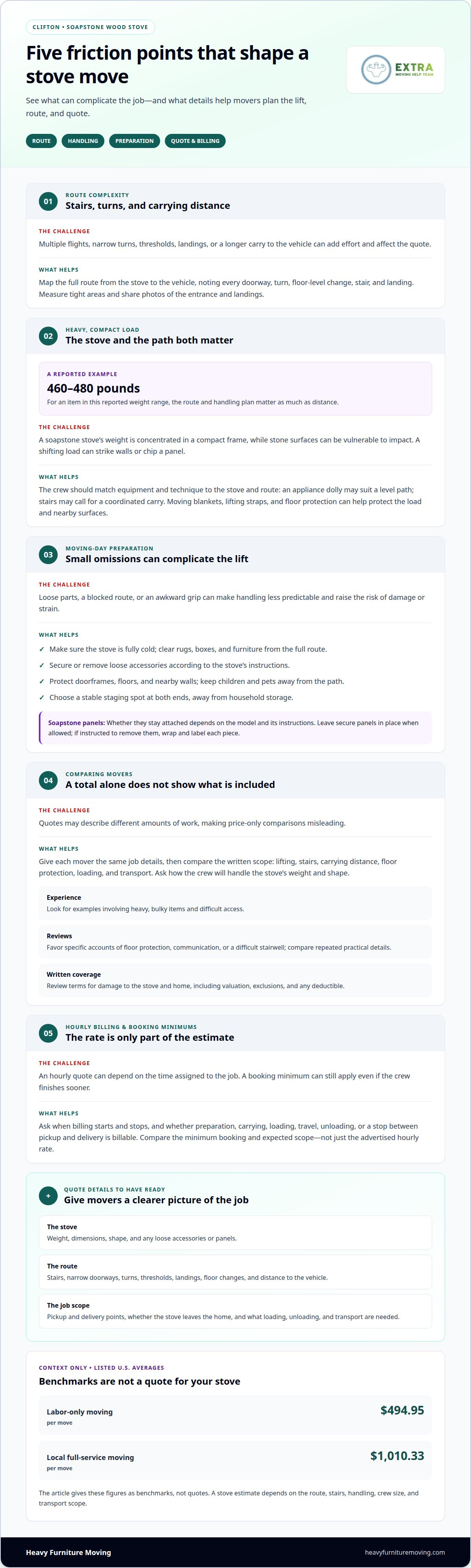
Information needed for a heavy-item quote
Start with the stove’s identifying details. Share its make and model, if available, and the weight and dimensions from its label or manual. If you can’t find the weight, send clear photos from several angles. Include the firebox, legs, handles, and any parts that change the stove’s shape. These details help the team plan the lift.
Describe the full route at both addresses: where the stove sits now and where it needs to go. Note every staircase, narrow doorway, sharp turn, threshold, and change in floor level. Mention parking access and how far the stove must be carried. A photo of a tight landing can be more useful than a general description.
Explain the full job scope, not just the addresses. Say whether you need indoor lifting, vehicle loading, transport, or unloading at the destination. Identify any other furniture or heavy items moving during the same visit so the crew can plan equipment and time around the complete task.
- Stove details: Make, model, approximate weight, dimensions, and photos.
- Access: Stairs, turns, doorway widths, floor changes, parking, and carry distance.
- Move scope: Pickup and destination rooms, loading, transport, and unloading.
- Timing: Preferred moving date and any access restrictions at either property.
Definitely mention conditions that could affect access. Examples include a shared entrance, a narrow driveway, a locked gate, or limited space to stage the stove. Explain whether the destination is ready for delivery or still has furniture blocking the route. Those facts help a skilled crew anticipate the work instead of revising the plan during loading.
The route, stove dimensions, carrying distance, stairs, and requested services all help determine the quote. Share the same information when comparing options, and ask for the scope and billing terms in writing. Include what the crew needs to know about access so the plan reflects the actual job.
Prepare one concise message with the addresses, stove details, route notes, photos, and services you need. This can make the quote process more efficient. If the stove is part of a larger move, distinguish the heavy-item task from general packing so the crew knows what to handle.
What is the typical weight and size of a soapstone wood stove?
Soapstone wood stoves have no single standard weight or footprint. Models differ in their firebox, frame, legs, and stone-panel construction, affecting both the total load and the space needed to turn through a doorway. Use the manufacturer’s model information for the actual measurements rather than estimating from appearance.
Find the make and model on the stove’s identification plate, owner’s manual, or purchase records. Use that information to locate the manufacturer’s dimensions and listed weight. If the label is hard to reach, photograph it without moving the stove. A clear model number gives the crew a useful starting point for planning the lift.
Measure the stove at its outermost points, including handles, feet, and parts that project beyond the body. Record its height, width, and depth. Measure removable accessories separately, such as a stovepipe section or tool rack. This helps avoid surprises at a narrow doorway.
Soapstone panels contribute to the stove’s shape and load. Don’t assume they can be removed to make the unit lighter. Check the manufacturer’s instructions for the specific model before detaching or securing any panel. If the manual describes removal, protect the pieces and note where each belongs.
Compare the stove’s measurements with the route. Measure the narrowest doorway, hallway, and stair landing along the planned path. Note projecting door trim, handrails, and sharp turns. A stove may clear a doorway upright but lack space to turn in a short hallway. The crew needs the route’s tightest measurements, not just the room dimensions.
Weight matters as much as size. A compact stove can still be difficult to lift if its weight is concentrated low or its shape makes a secure grip challenging. Share the manufacturer’s listed weight, or say that your figure is an estimate based on available product information. Don’t guess a precise weight from how difficult the stove feels to push.
Send the mover the model details, measurements, and route photos together. Include the pickup and destination locations, and identify any stairs or tight turns. This gives the crew practical information to plan equipment and handling. If you need help with the lifting portion, arrange heavy-item moving help for your stove move.
Heavy Furniture Moving: Movers Near Me
Heavy Furniture Moving helps with demanding lifting through its Movers Near Me and heavy-item moving options. Turn to the team when a soapstone stove’s weight, stairs, or tight access make the move difficult to manage alone. Share the stove’s model details, measurements, and route so the moving plan reflects the actual job.
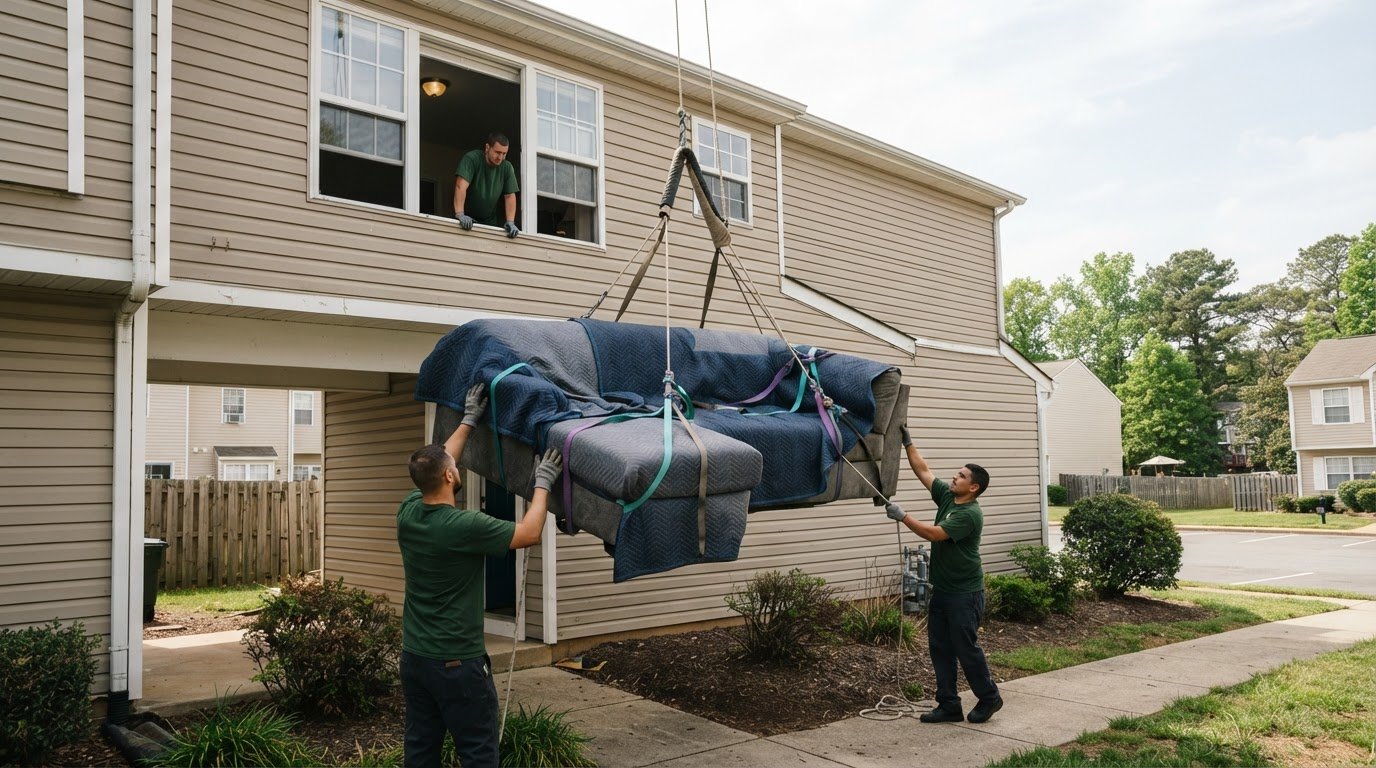
The team also handles other bulky household moves, including exercise equipment, in-home furniture moves, and sofa hoisting. For a stove move, keep transport and any installation work distinct so each task is planned clearly.
Contact Heavy Furniture Moving to discuss your heavy-item move.
Make the Next Move with Confidence
Hiring movers to transport a heavy soapstone wood stove in Clifton starts with a clear plan for the route and lift. Give the crew the stove’s model details, access conditions, and destination. This turns an uncertain task into a practical plan and helps you prepare your home before moving day.
Choose help that matches the job. Heavy Furniture Moving offers support for demanding household items, including exercise equipment moving and sofa hoisting. If your stove move involves other bulky pieces, describe the full task so the crew can plan the right support.
Ready to discuss your move? Contact Heavy Furniture Moving and share the details of your stove and route. A little preparation now can make the next step feel more manageable.
Frequently Asked Questions
Does moving cost more if you have stairs?
Yes. Stairs can increase handling time and affect the quote. A straight staircase presents a different challenge from a narrow landing or sharp turn. When hiring movers to transport a heavy soapstone wood stove in Clifton, describe each stair section and tight access point. Mention exterior steps at pickup or delivery, too.
Are there any extra fees I need to be aware of?
Ask for the work scope and billing terms in writing before scheduling. Heavy Furniture Moving includes wrap, blankets, and straps on every job, without a separate charge for those materials. Tell the team if you need loading or unloading as well as lifting. Clear details help ensure the quote describes the tasks you want handled, rather than a different moving arrangement.
How soon can labor help arrive?
Same-day and next-day heavy-item jobs are often available. Call before 2 PM to ask about same-afternoon service. Have your Clifton address, preferred date, and stove information ready to discuss. If your schedule has flexibility, mention that when arranging the move. Timing depends on open booking slots, so sharing your preferred window helps frame the scheduling conversation.
What moving companies in Clifton transport heavy soapstone wood stoves?
Heavy Furniture Moving provides residential moving support for heavy and bulky items in Clifton, Virginia. When hiring movers to transport a heavy soapstone wood stove in Clifton, prepare the stove’s make and model, access details, and destination. This describes the lift and route involved, whether the stove is moving within a home or between addresses.
How much does it cost to hire movers to transport a heavy wood stove in Clifton?
The amount depends on the move’s scope and the stove’s route. Heavy Furniture Moving uses hourly labor with a 2-hour minimum and flat rates for most single heavy items. The quote depends on details such as access, lifting, and whether loading or transport is part of the job. Share the task details to get a quote tailored to your move.
How do I get quotes from local stove movers and what details should I provide?
Request a quote by sharing photos of the stove and access route. Include the make and model if known, pickup and destination details, preferred date, and whether you need lifting, loading, transport, or unloading. Photograph narrow doorways or stair turns from more than one angle. For hiring movers to transport a heavy soapstone wood stove in Clifton, these details help define the job clearly.
What insurance should movers carry when transporting a heavy wood stove?
Review the written terms for coverage of damage to the stove or home during handling and transport. Check the valuation terms, exclusions, and any deductible.
Frequently Asked Questions
Yes. Stairs can increase handling time and affect the quote. A straight staircase presents a different challenge from a narrow landing or sharp turn. When hiring movers to transport a heavy soapstone wood stove in Clifton, describe each stair section and tight access point. Mention exterior steps at pickup or delivery, too.
Ask for the work scope and billing terms in writing before scheduling. Heavy Furniture Moving includes wrap, blankets, and straps on every job, without a separate charge for those materials. Tell the team if you need loading or unloading as well as lifting. Clear details help ensure the quote describes the tasks you want handled, rather than a different moving arrangement.
Same-day and next-day heavy-item jobs are often available. Call before 2 PM to ask about same-afternoon service. Have your Clifton address, preferred date, and stove information ready to discuss. If your schedule has flexibility, mention that when arranging the move. Timing depends on open booking slots, so sharing your preferred window helps frame the scheduling conversation.
Heavy Furniture Moving provides residential moving support for heavy and bulky items in Clifton, Virginia. When hiring movers to transport a heavy soapstone wood stove in Clifton, prepare the stove’s make and model, access details, and destination. This describes the lift and route involved, whether the stove is moving within a home or between addresses.
The amount depends on the move’s scope and the stove’s route. Heavy Furniture Moving uses hourly labor with a 2-hour minimum and flat rates for most single heavy items. The quote depends on details such as access, lifting, and whether loading or transport is part of the job. Share the task details to get a quote tailored to your move.
Request a quote by sharing photos of the stove and access route. Include the make and model if known, pickup and destination details, preferred date, and whether you need lifting, loading, transport, or unloading. Photograph narrow doorways or stair turns from more than one angle. For hiring movers to transport a heavy soapstone wood stove in Clifton, these details help define the job clearly.
Review the written terms for coverage of damage to the stove or home during handling and transport. Check the valuation terms, exclusions, and any deductible.