Heavy Furniture and Gym Equipment Moving in Northern Virginia
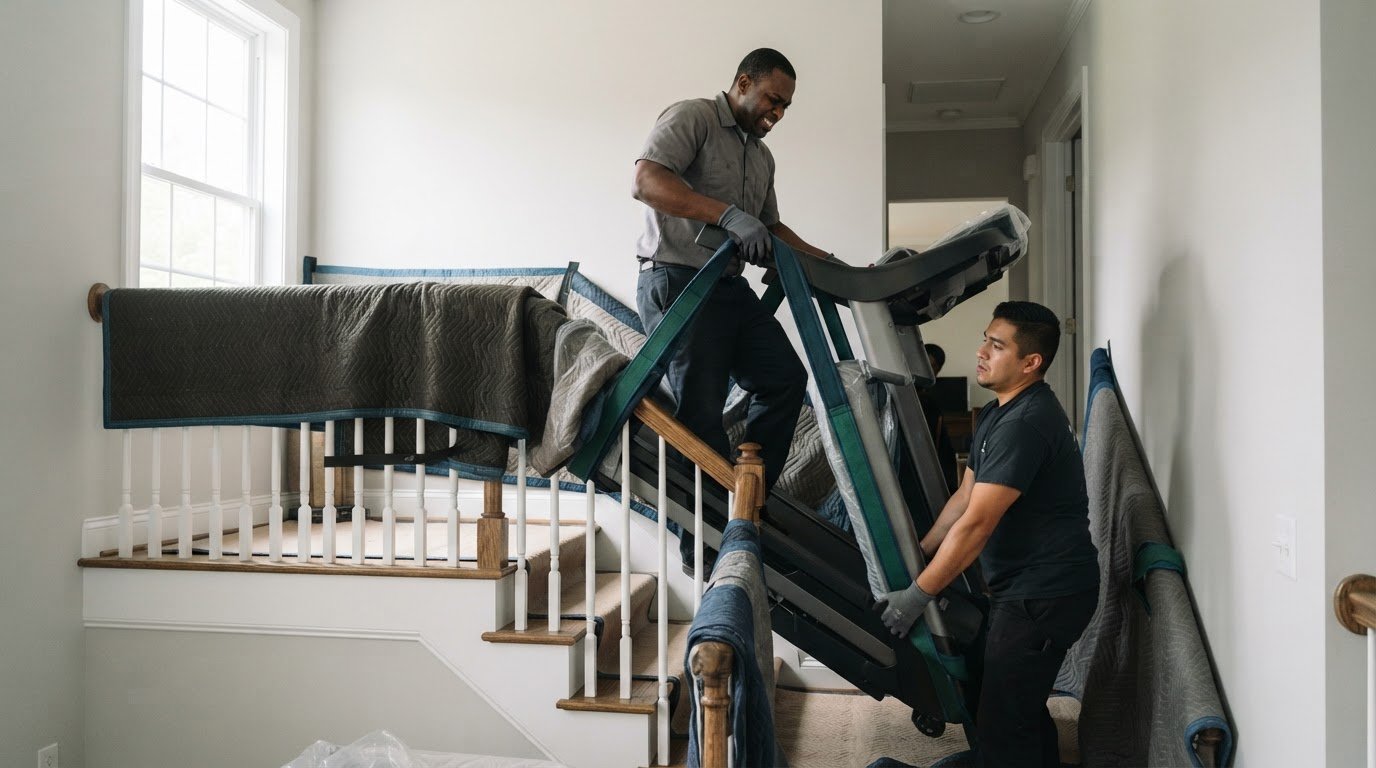
Moving gym equipment takes more than managing its weight. If you’re researching options for heavy furniture and gym equipment in Northern Virginia, look for a mover who plans around the item, the route through your home, and protection for floors and walls. A useful estimate should account for the equipment and access conditions.
Tight stairs, scuffed floors, and equipment that needs careful handling are reasonable concerns. A sound plan starts with what’s moving, where it’s going, and the obstacles along the way. This guide explains what affects an estimate, how heavy furniture and gym equipment can be handled, and what to consider when moving, rearranging, or removing workout gear.
Key Takeaways
- Plan the route before moving equipment, including stair turns, doorways, floor surfaces, and tight wall clearances.
- A treadmill can weigh hundreds of pounds, so account for its size and the path through the home when planning removal.
- Personalized estimates depend on the items, access conditions, handling needs, and whether equipment is being moved or removed.
- Leave six to eight inches of space behind a treadmill for safety when planning its placement.
- Specialty equipment calls for a plan tailored to its design, size, and moving route. The article explains what details to prepare.
Careful handling of walls, floors, and stairways
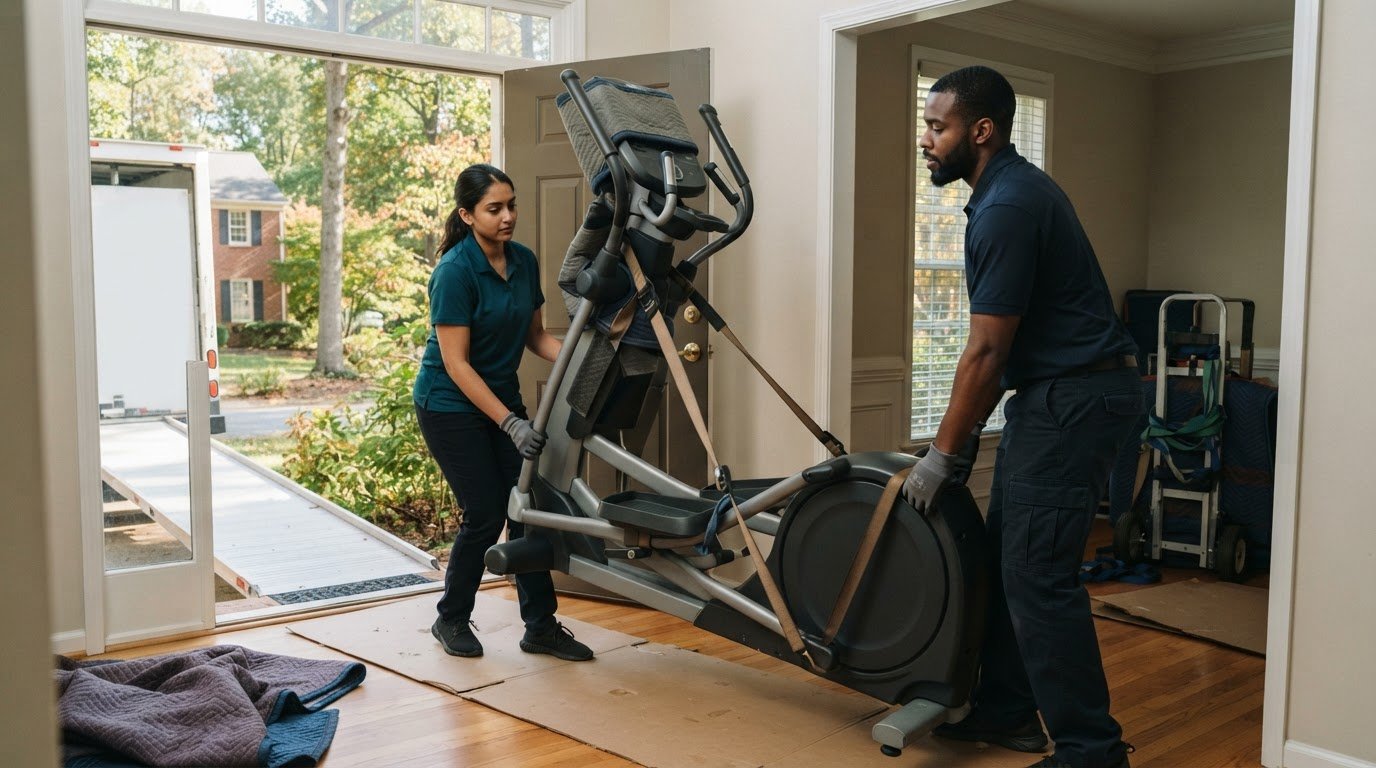
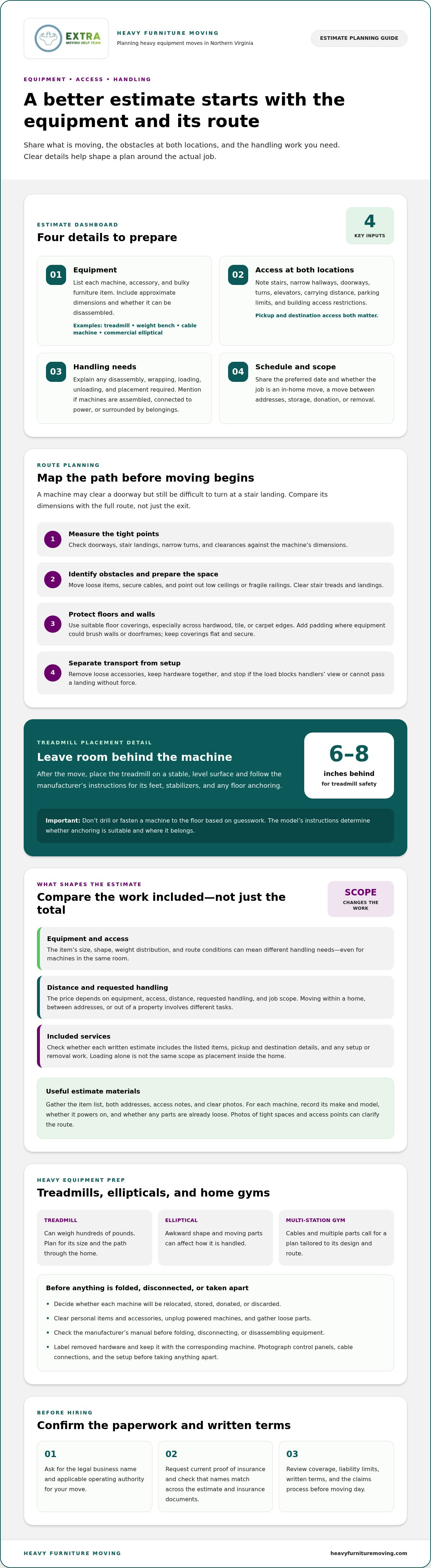
Before moving heavy equipment, map the route from its current spot to the exit or new room. Measure doorways, stair landings, and narrow turns, then compare them with the machine’s dimensions. A treadmill might clear a doorway but still be hard to turn on a tight landing. Move loose items, secure cables, and point out low ceilings or fragile railings before handling begins.
When comparing Suburban Solutions alternatives for heavy furniture and gym equipment in Northern Virginia, focus on local movers that handle bulky furniture and exercise machines. Compare each mover’s service area and experience with your specific item and route. Don’t assume every general moving crew handles specialty equipment the same way.
When reading reviews, focus on recent feedback about careful handling, communication, and how damage concerns were addressed. Service areas and availability can vary by date, address, and job size, so compare the details of your actual move. A mover may serve your pickup address but not the destination, or may not have an opening on your preferred day.
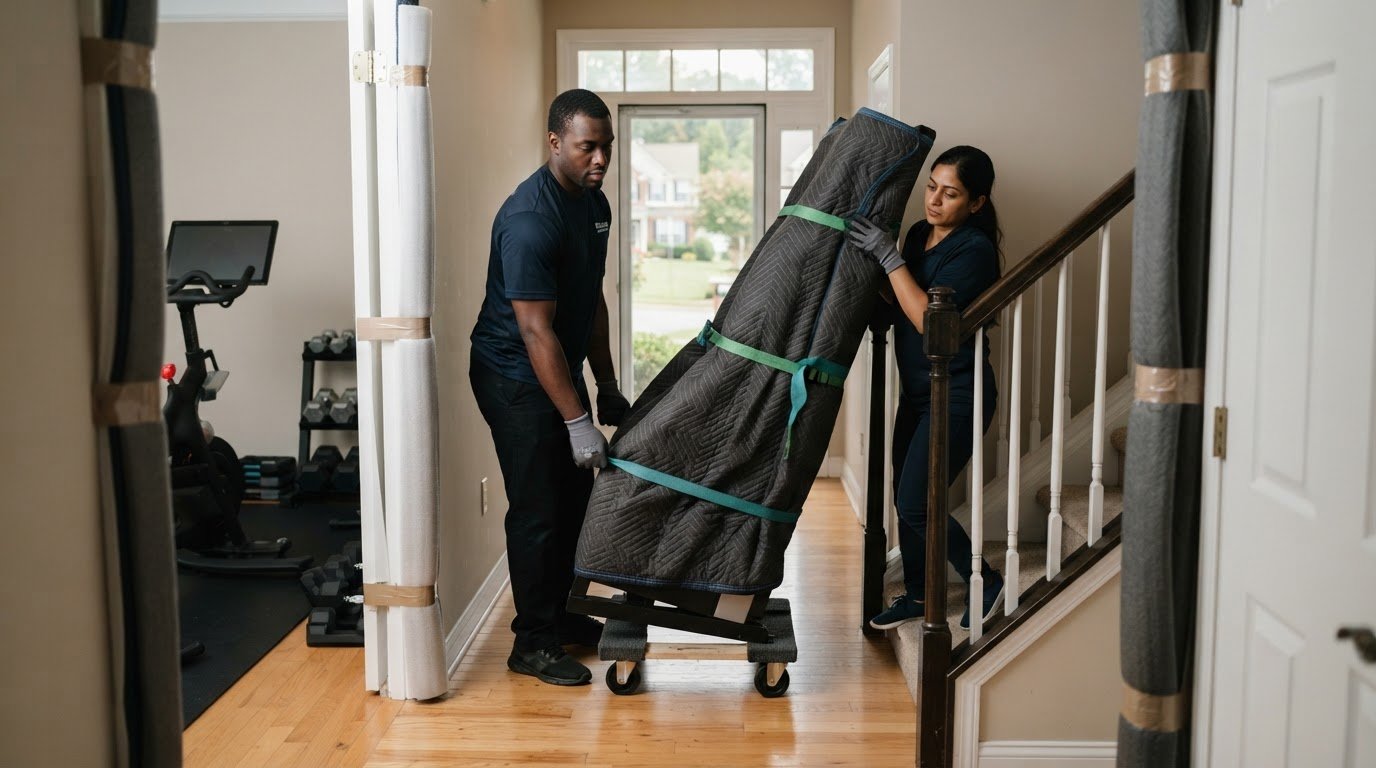
Protect the home before moving begins. Use suitable floor coverings along the route, especially across hardwood, tile, or carpet edges, and add padding where machines could brush walls or doorframes. Keep protective material flat and secure so it doesn’t bunch beneath a dolly or create a trip hazard. On stairs, clear each tread and landing; carry equipment steadily and avoid resting metal parts against painted walls or railings.
After the move, leave six to eight inches of space behind a treadmill for safety. Place it on a stable, level surface and follow the manufacturer’s instructions for its feet, stabilizers, and any floor anchoring. Don’t drill or fasten a machine to the floor based on guesswork. The model’s instructions determine whether anchoring is suitable and where it belongs.
Reduce risk by separating transport from setup. Remove accessories that could come loose, keep hardware together, and use a dolly on stairs only when the equipment and route support that approach. A heavy machine shifting mid-turn can strike a wall, damage a floor edge, or injure someone. Stop if the load blocks the handlers’ view or cannot pass a landing without force.
Before hiring a Northern Virginia mover, ask for its legal business name, applicable operating authority for your move, and current proof of insurance. Make sure the names match across the estimate and insurance documents. Coverage and liability limits for heavy items depend on the mover’s written terms and selected coverage. Review those terms in writing, including the claims process, before moving day.
Personalized estimates and pricing factors
A useful estimate starts with an equipment list, not a guess based on room size. Name each item, such as a treadmill, weight bench, cable machine, or commercial elliptical. Share approximate dimensions and whether it can be disassembled. Two machines in one room may need different handling because their shapes, weight distribution, and routes differ.
Describe both addresses and the route at each one. Note stairs, narrow hallways, elevators, long walks from the entrance, and parking limits. Moving a stationary bike from a ground-floor room differs from carrying a large home gym down a turning staircase. Destination access matters too, especially when equipment must pass through a tight doorway or reach an upper floor.
Explain the full scope before comparing estimates. Moving equipment within your home, between addresses, or out of a property involves different tasks. Say whether it needs partial disassembly, wrapping, loading, unloading, or placement in a particular room. Clear details help ensure the estimate reflects the work you need.
- Equipment: List each machine, accessory, and bulky furniture item.
- Access: Describe stairs, turns, doors, elevators, and carrying distance.
- Handling: Identify disassembly, protection, loading, and placement needs.
- Schedule: Share the preferred date and any building access limits.
Mention any special conditions that could affect the plan. A commercial fitness room may contain several machines with different handling needs. A home setup might include a bench, loose weight plates, and a treadmill that need to be moved separately. Note whether equipment is assembled, connected to power, or surrounded by other belongings. Photos can clarify tight spaces and access points.
The price depends on the equipment, access, distance, requested handling, and job scope. Compare written estimates by checking what each includes: the listed items, pickup and destination details, and any requested setup or removal work. An estimate for loading alone differs from one that includes placement inside the home.
Before requesting an estimate, gather the item list, both addresses, access notes, and a few clear photos. That gives the moving team practical details for a tailored plan. For help with the details involved in a heavy-item move, review this heavy furniture moving service information.
Treadmill, elliptical, and home gym removal
A treadmill can weigh hundreds of pounds, making it difficult to move through a home. Ellipticals and multi-station home gyms also have awkward shapes, moving parts, and cables. First decide whether each machine will be relocated, stored, donated, or discarded. That choice determines whether it should remain assembled and where it needs to go.
To prepare a treadmill, weight machine, or other gym equipment for a local move, clear personal items and accessories, unplug powered machines, and gather loose parts. Check the manufacturer’s manual before folding, disconnecting, or disassembling anything. Label removed hardware and keep it with the corresponding machine.
Start with a careful inventory. Record each machine’s make and model, whether it powers on, and whether any parts are already loose. Photograph control panels, cable connections, and the setup before taking anything apart. These details make reassembly easier and help identify missing pieces.
- Treadmills: Unplug the power cord and secure it against the frame.
- Ellipticals: Remove loose accessories and protect moving arms from shifting.
- Weight machines: Keep pins, handles, and detachable components together.
- Home gyms: Photograph cable paths and connections before disassembly.
Keep the route clear of weights, mats, and benches. Remove water bottles, phones, and other objects from nearby shelves. Put removable parts in a labeled container instead of leaving them on the floor. Label it with the machine’s name, such as “elliptical hardware,” to keep small pieces together during loading.
If you’re removing rather than relocating equipment, sort it by condition and completeness. Functional exercise equipment may be suitable for donation when a local option is available. Separate unusable items from working machines and keep loose accessories with the matching equipment. Confirm the destination before removal so the crew can plan loading and unloading.
Before moving day, share the item list and clear photos of each machine and its route. Include model details, loose parts, and whether equipment needs disassembly or removal from the home. A folding treadmill differs from a fixed-frame unit, while a cable machine with multiple attachments has its own preparation needs. Specific details help the moving plan fit the equipment.
Gym equipment relocation and reconfiguration
Moving a gym to another room or address takes more than lifting equipment. Plan the sequence: identify each machine, decide what needs disassembly, protect loose parts, and map its destination. A cable station, treadmill, and spin bike each have different shapes and setup needs. List them separately before planning the move.
In Northern Virginia, look for movers that handle exercise equipment and specialty fitness-equipment relocation. Packing, disassembly, and reassembly can vary by machine and requested scope. Describe each item and its destination so the estimate accounts for the work, not just transportation.
Start with the equipment manual. Follow its instructions for folding, separating parts, and securing moving components. Photograph cable paths on a weight machine before disconnecting them. Keep bolts, pins, and handles in labeled bags beside the matching machine. For a treadmill, record its model and folding-frame details; for a stationary bike, keep the seat and console parts together.
Commercial installation timelines can help with scheduling. Commercial treadmill installation typically takes one to two hours per unit. Commercial spin bike setup takes thirty minutes to one hour. Commercial elliptical assembly typically takes one to three hours. These figures describe installation or assembly, not the entire move, so allow time for packing, transport, and access at both locations.
- Before packing: Remove personal items and loose accessories from each machine.
- Before disassembly: Photograph connections and consult the equipment manual.
- During packing: Keep hardware grouped and label it by machine.
- At the destination: Place each machine where it can be assembled and used.
Reconfiguration also means planning a workable layout. Sketch the new room and mark doors, outlets, and each machine’s intended position. Keep the setup area clear for assembly. A weight bench beside a cable machine may need to move before the larger unit can be positioned. Share the layout and machine list with the moving team before the work.
Keep relocation separate from equipment servicing. Movers can handle packing, carrying, and requested assembly, but repairs or adjustments to powered components require appropriate technical work. Don’t reconnect damaged cords or force a stuck folding mechanism. Keep manuals accessible and follow the manufacturer’s setup instructions before using a machine again.
For a smoother handoff, prepare one inventory listing each machine’s make, model, loose parts, and destination. Note what needs disassembly and what should remain assembled. Clear instructions help the crew plan the work and reduce confusion when equipment reaches its new room.
Movers that handle exercise equipment and specialty fitness-equipment relocation can help with packing, disassembly, and reassembly in Northern Virginia. The work depends on the machine and the requested scope.
Handling specialty fitness equipment
Safes, pianos, treadmills, and weight machines each require different handling. Focus on equipment limits, access, and the crew’s experience with your specific item.
Equipment Limits and Restrictions
Northern Virginia movers may set different limits based on equipment weight, dimensions, and handling requirements. A compact treadmill and a multi-station weight machine create different loading demands, even in the same home. Check the written scope for item exclusions, disassembly needs, and access restrictions. Stair turns, narrow doors, and uneven paths can matter as much as weight.
Describe each item by type and model, then note unusual features. A safe has a concentrated load, while a rowing machine has a long frame. Include stairs, elevators, and tight landings at both addresses. These details help determine whether equipment can travel intact or needs partial disassembly. Keep manuals and photos handy to show how the parts connect.
Restrictions can also relate to condition and preparation. A machine with a damaged frame, loose weight plates, or exposed wiring needs a different handling plan than an intact unit. Separate removable accessories and identify parts that cannot be detached. For a commercial treadmill, include its model and frame design. Specific information helps the crew plan equipment, access, and loading steps.
Use the estimate and written terms to compare what the move covers. Look for the named items, disassembly or reassembly, and handling exclusions. A general furniture move may not clearly describe specialty equipment tasks. Match the documents to your inventory, including attachments and parts, before deciding.
Specialists for Heavy Items
Specialty heavy-item movers handle objects such as safes, pianos, treadmills, and weight machines. Northern Virginia residents can compare movers by their experience with the same equipment type and route conditions. A piano needs different handling from a treadmill, while a safe’s plan depends on its size and concentrated weight. Choose based on the specific item, not just a broad “heavy lifting” label.
Look for a clear process to protect the item, move it through the property, and place it at its destination. For a piano, note stairs and narrow turns. For a treadmill, include its folding design and console. For a safe, describe its location and route out of the room. Concrete details help the crew plan suitable handling rather than rely on assumptions.
A useful comparison covers experience with your item, packing and disassembly, and written coverage terms. Match those details against your inventory. If the job includes several categories, such as a piano and home gym, make sure each appears in the move plan. Clear documentation keeps specialty items from being lost in a general household description.
Prepare your item list and access notes, then plan your heavy-item move.
Heavy Furniture Moving: Movers Near Me
Heavy Furniture Moving helps with demanding residential moves involving bulky furniture and exercise equipment. Turn to the team when a treadmill, weight machine, or large sofa needs careful handling inside your home or during a move.
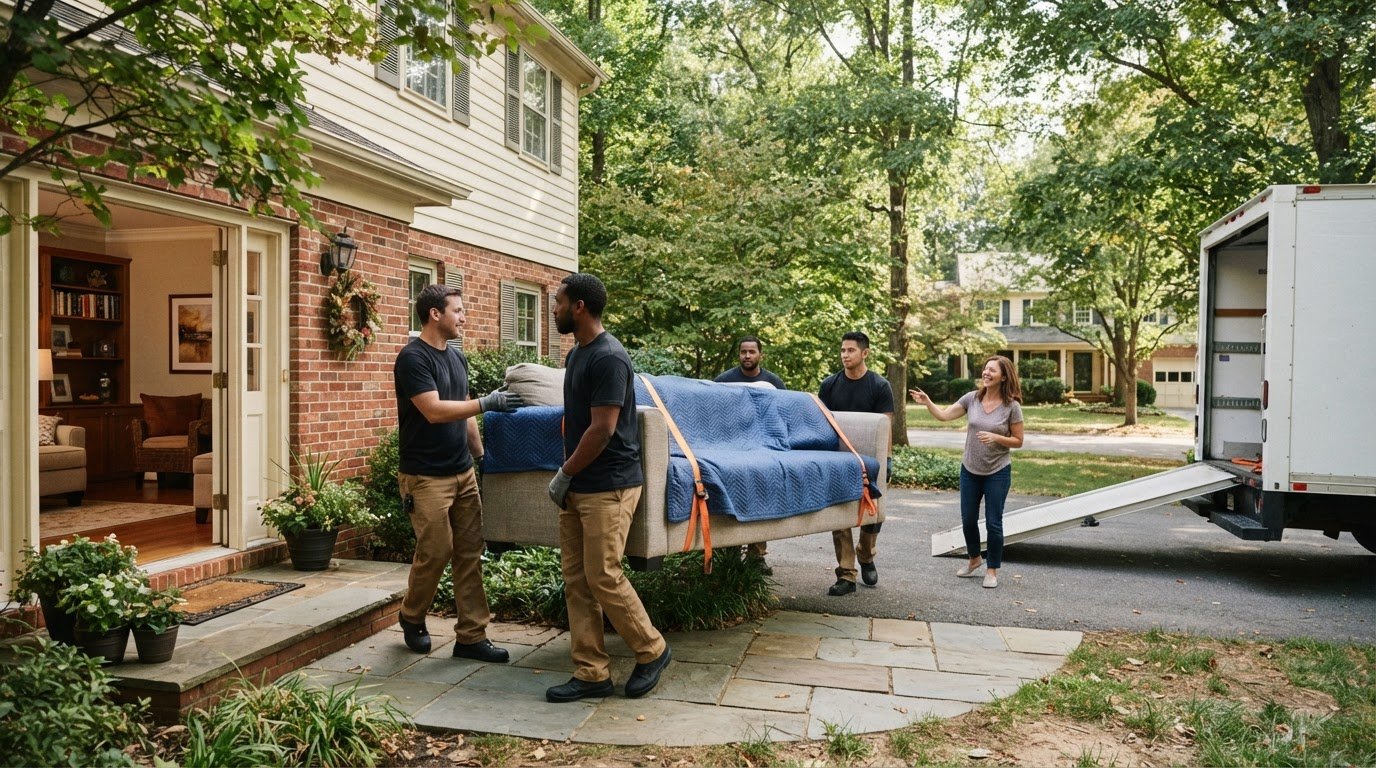
Heavy Furniture Moving offers Exercise Equipment Moving for gym machines and in-home furniture moving to shift heavy pieces between rooms. Sofa Hoisting can help when a large sofa won’t pass through a doorway or stairway by the usual route. Share the item, its location, and its destination to plan the work around your needs.
For help planning a heavy-item move, contact Heavy Furniture Moving.
Make Your Next Move Easier
Choose your next step based on the item that’s hardest to move, not the whole project. If you’re comparing alternatives to Suburban Solutions for heavy furniture and gym equipment in Northern Virginia, focus on the help you need: moving a machine, shifting furniture inside your home, or getting a large sofa through a difficult opening. A clear description of the task is a practical place to start.
Heavy Furniture Moving offers Movers Near Me for moving needs, Exercise Equipment Moving for gym machines, and Sofa Hoisting for challenging sofa access. These services can help when a heavy item needs more than an ordinary carry. Share what you’re moving and where it needs to go to start planning your project.
Take the next step at your pace. Contact Heavy Furniture Moving to discuss your move and find a practical way forward.
Frequently Asked Questions
For Your Gym Equipment Move?
For a gym-equipment move, choose movers experienced with bulky residential items and access at both addresses. Heavy Furniture Moving offers Exercise Equipment Moving and Movers Near Me for local jobs in Fairfax, Woodbridge, Manassas, Manassas Park, Aldie, Ashburn, McLean, Vienna, Reston, Centreville, Chantilly, Clifton, Dumfries, South Riding, Fairfax Station, Haymarket, and Gainesville. Share your equipment list and destination to shape the moving plan.
Why Hire Gym Equipment Movers?
Gym equipment movers can plan around each machine’s frame, controls, and moving parts. That matters when a treadmill must pass through a narrow doorway or attachments on a weight machine could shift during handling. A planned route can help reduce the need for improvised lifting, especially when heavy machines share a room with other furniture.
What do Northern Virginia movers charge to move heavy furniture or gym equipment?
There isn’t one charge for every heavy-item move. The quote depends on the items, distance, access at both addresses, and requested work, such as disassembly or in-home placement. For a clearer estimate, describe each machine or furniture piece and the full route. Heavy Furniture Moving provides pricing based on the details of your move.
Do local movers charge extra for stairs, long carries, disassembly, or unusually heavy items?
These details affect the quoted total because they change the labor and handling plan. Stairs, a long path from the entrance, difficult turns, disassembly, and unusual weight each create different demands. Describe these conditions when requesting an estimate. Ask for the written scope to show which tasks are included, so you can compare estimates on the same basis.
How do Suburban Solutions alternatives compare on reviews, availability, and service area?
When reading recent reviews, focus on careful handling, communication, and how damage concerns were addressed. Compare service area and availability for your pickup and destination addresses, job size, and preferred moving day.
Frequently Asked Questions
For a gym-equipment move, choose movers experienced with bulky residential items and access at both addresses. Heavy Furniture Moving offers Exercise Equipment Moving and Movers Near Me for local jobs in Fairfax, Woodbridge, Manassas, Manassas Park, Aldie, Ashburn, McLean, Vienna, Reston, Centreville, Chantilly, Clifton, Dumfries, South Riding, Fairfax Station, Haymarket, and Gainesville. Share your equipment list and destination to shape the moving plan.
Gym equipment movers can plan around each machine’s frame, controls, and moving parts. That matters when a treadmill must pass through a narrow doorway or attachments on a weight machine could shift during handling. A planned route can help reduce the need for improvised lifting, especially when heavy machines share a room with other furniture.
There isn’t one charge for every heavy-item move. The quote depends on the items, distance, access at both addresses, and requested work, such as disassembly or in-home placement. For a clearer estimate, describe each machine or furniture piece and the full route. Heavy Furniture Moving provides pricing based on the details of your move.
These details affect the quoted total because they change the labor and handling plan. Stairs, a long path from the entrance, difficult turns, disassembly, and unusual weight each create different demands. Describe these conditions when requesting an estimate. Ask for the written scope to show which tasks are included, so you can compare estimates on the same basis.
When reading recent reviews, focus on careful handling, communication, and how damage concerns were addressed. Compare service area and availability for your pickup and destination addresses, job size, and preferred moving day.