Haymarket Packing and Unpacking for Seniors: 2026 Guide
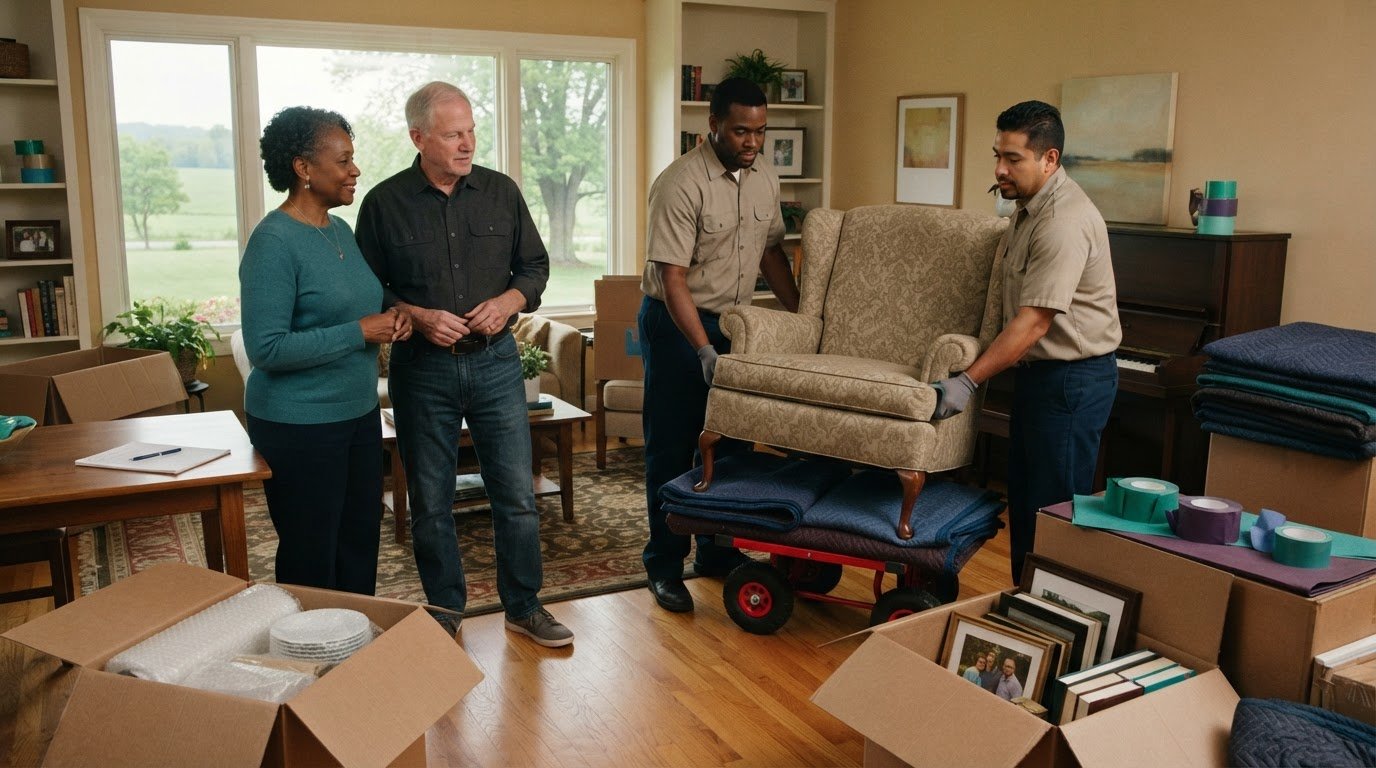
What if packing help could make a senior’s move easier without taking decisions out of their hands? Haymarket packing and unpacking for seniors works best when practical support follows the older adult’s priorities, pace, and instructions. Leaving a familiar home can feel emotional, while sorting and boxing a whole household can be physically draining.
Family members may want to help, but busy schedules can make it hard to manage every detail. A clear plan can reduce pressure and keep fragile, personal, and meaningful belongings organized. The senior stays involved in deciding what gets packed, what remains accessible, and where important items should go.
This 2026 guide compares family-led, shared, and professional packing support in Haymarket. It covers how to set priorities, give clear instructions, and prepare for an organized arrival. Heavy Furniture Moving provides residential packing and unpacking support in Haymarket and nearby Northern Virginia communities, helping lighten the physical workload while keeping the senior’s preferences at the center.
Key Takeaways
- Start by letting the senior set priorities and pace, especially for belongings with personal meaning.
- Use a simple plan from sorting and labeling through unpacking to make important items easier to find.
- Compare family-led, shared, and professional packing support to choose a workload that fits the household.
- Before packing begins, record room priorities, access details, fragile items, and where belongings should go.
- Haymarket packing and unpacking for seniors can include practical professional support shaped by clear instructions and the senior’s preferences.
Haymarket Packing and Unpacking for Seniors: Start With the Person, Not the Boxes
A move can ask a senior to lift, sort, make decisions, and revisit memories all at once. The boxes are only part of the work. A familiar kitchen, handwritten recipe, or well-worn chair may carry meaning that a label cannot capture. Before packing starts, ask what matters most to the person moving and let those priorities guide the plan.
Some older adults prefer to stay in their homes, a choice often discussed as aging in place. For those who are moving, the goal is still to protect independence and personal choice through the transition. Senior-focused packing means organizing help around the individual’s preferences, routines, and needs, rather than pushing to fill boxes quickly.
Choice gives a senior control; clear instructions help everyone protect what matters. Use that principle to decide what to pack, when to pause, and where essentials should go. For families arranging Haymarket packing and unpacking for seniors, it is also a practical way to coordinate support without treating the older adult as a bystander.
How to keep the senior involved without making every task exhausting
Keep decisions small and manageable. Bring out a limited group of belongings, such as the contents of one drawer, and take a break before moving on. Offer simple keep, donate, and discard options, but allow the senior to set something aside and decide later. A meaningful choice does not need an immediate deadline.
Invite the senior to identify sentimental belongings and essentials, such as glasses, medications, a phone charger, or a favorite book. Ask where these items should stay during the move and where they belong in the new home. Their guidance keeps familiar objects accessible and helps make arrival less disorienting.
What families should discuss before packing begins
Have one calm planning conversation before the first box is taped. Agree on who makes decisions, who shares packing and placement instructions, and who handles paperwork. If several relatives are involved, choose one point person for updates so instructions do not conflict or get lost.
Talk through everyday routines and access needs. Identify items that must stay available, such as mobility aids, daily-use toiletries, or clothing for the next few days. Review the move timeline and ask which tasks feel hardest, whether that is sorting keepsakes, packing the kitchen, or deciding what needs to be ready first.
Write down decisions in plain language. A short note can list room priorities, fragile or meaningful belongings, and anything that should not be packed yet. Share it with everyone helping. This keeps the senior’s preferences visible and gives family members and packing helpers a clear guide.
How Senior Packing and Unpacking Can Make a Haymarket Move More Manageable
A practical move plan turns a long task list into a clear sequence. It helps keep essentials out of boxes, sets expectations for what happens next, and leaves fewer decisions for moving day. The senior’s preferences should shape how much they handle, which tasks family members take on, and where packing or unpacking help fits. The division of work can vary from one home to another.
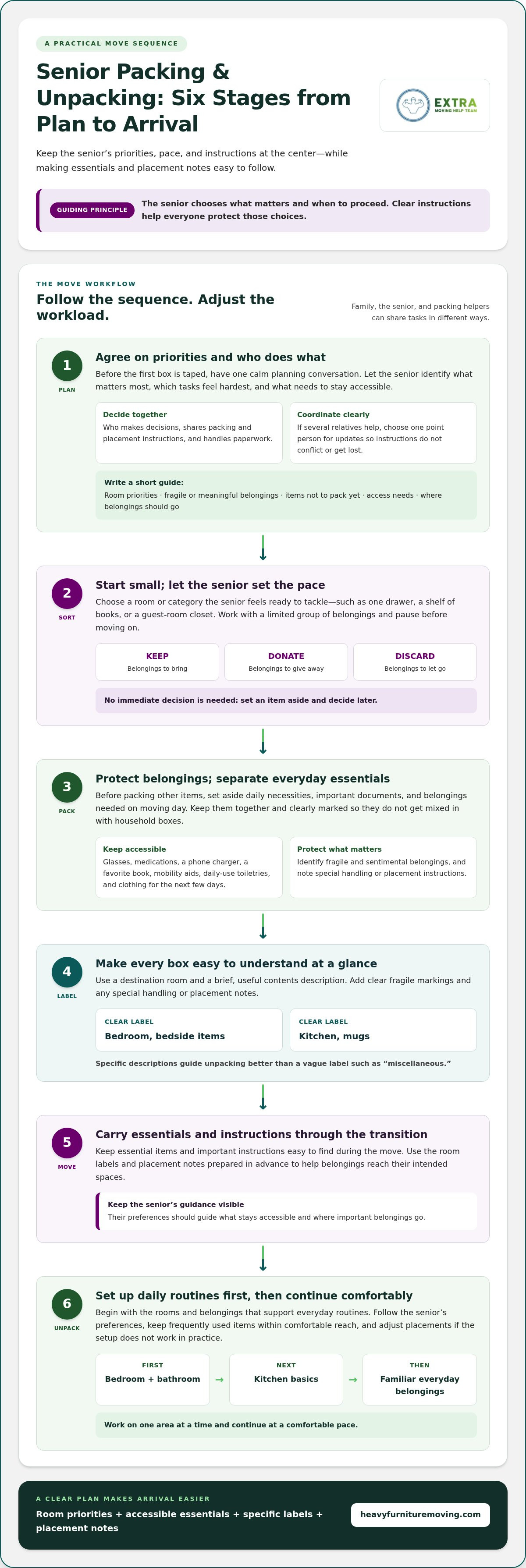
A useful senior-move packing plan is a clear sequence, shaped around the person, that carries essentials and instructions from the old home to the new one. Use this order as a starting point:
- Plan: Set priorities, assign tasks, and identify belongings that must stay accessible.
- Sort: Begin with a room or category the senior feels ready to tackle.
- Pack: Protect belongings and keep daily necessities separate from items going into boxes.
- Label: Mark each box with its destination room and a plain-language description.
- Move: Keep essentials and important instructions easy to find during the transition.
- Unpack: Set up priority areas first, then continue at a comfortable pace.
This order reduces repeated decisions. Instead of working out where everything belongs after arrival, the household can follow room labels and placement notes prepared in advance. Haymarket packing and unpacking for seniors can cover the full sequence or focus on the stages that feel most demanding.
A step-by-step packing plan for the current home
Start with an area the senior considers manageable, such as a shelf of books or a guest-room closet. Set aside daily necessities, important documents, and belongings needed on moving day before packing other items. Keep these essentials together and clearly marked so they do not get mixed in with boxes. Make each label easy to understand at a glance.
- Write the destination room and a useful contents description on each box.
- Mark fragile belongings clearly and note any special handling or placement instructions.
- Keep paperwork and daily-use items separate from packed household goods.
Labels such as “Bedroom, bedside items” or “Kitchen, mugs” are more useful than a vague mark like “miscellaneous.” Keep descriptions brief but specific enough to guide unpacking.
Unpacking in Haymarket: make the first days easier
Begin with the rooms and items that support daily routines. Set up the bedroom and bathroom, then unpack kitchen basics and familiar everyday belongings. Place frequently used items within comfortable reach, following the senior’s preferences. Work on one area at a time, and adjust placements if the setup does not work in practice.
- Make the bed and set out familiar nighttime items.
- Arrange bathroom essentials and kitchen basics where they are easy to reach.
- Place familiar belongings where the senior wants them, then check that the setup works in practice.
Professional residential packing and unpacking help can reduce the physical workload while the senior or family provides room priorities, labels, and handling instructions. Keep the plan flexible. The right sequence is the one that makes the new home easier to use and reflects the person who lives there.
Choosing Senior Packing Help: Balance Privacy, Control, and Practical Support
There is no single right way to pack a senior’s home. One person may want to make every decision and pack belongings personally. Another may welcome help with physical tasks while staying closely involved in what gets handled and where it goes. Consider the senior’s preferences, the family’s available time, and the effort the work requires before choosing a level of support.
Professional help does not have to mean giving up control: written instructions and clear personal boundaries can guide what helpers pack and how they handle belongings. Agree on those instructions before work begins, and keep private or especially meaningful items under the senior’s direction.
| Packing approach | Workload and control | May suit |
|---|---|---|
| Family-led | Family members handle the packing, with direct oversight of each item. | A household with enough time and energy for hands-on work. |
| Shared | Family members make decisions and take selected tasks, while moving help handles agreed packing work. | A senior who wants involvement but would benefit from practical support. |
| Professional packing | Helpers take on more of the packing workload, following the household’s priorities and instructions. | A move where physical tasks or limited family capacity make additional help useful. |
This is a starting point, not a ranking. The right balance can vary by room, task, and individual. A senior might prefer to pack personal papers themselves, sort keepsakes with family, and assign routine household items to packing help. For Haymarket packing and unpacking for seniors, match the support to the person’s comfort and the household’s capacity rather than following a fixed formula.
When family-led or shared packing may fit
Family-led packing gives relatives and the senior direct control over each item, but it also requires time and physical effort. Shared packing divides selected tasks: family members identify what stays accessible and explain priorities, while moving help handles agreed packing work. Before choosing, consider the available time, the senior’s stamina, and how much decision-making feels manageable. For households coordinating a move alongside specialized recovery or hands-on assistance, care providers like elitecaregiversunited.com illustrate how dedicated personal care can support healing and daily routines with dignity.
How to protect privacy and prevent misplaced essentials
Decide in advance how to handle private documents, medication, valuables, and sentimental items. Keep these belongings separate from general packing, with the senior or a designated family member responsible for them. Prepare a clearly marked essentials container that stays accessible during the move. It can hold daily-use items the senior needs close at hand rather than being packed with room-by-room boxes.
Make instructions specific enough to follow. “Handle carefully” may not explain what to do, but “wrap the framed photograph and place it on the bedroom dresser” gives a clear direction. Note which items helpers should leave alone, which box should travel with the family, and where priority belongings belong in the new home. Written guidance helps everyone follow the same plan while respecting privacy and personal boundaries.
A Senior Move Packing Checklist for Haymarket Before Moving Day
A short written checklist gives the senior and everyone helping one place to find the details that matter. Record instructions before packing starts, then keep the list easy to reference. The goal is not to add paperwork. It is to keep fragile belongings, daily essentials, and room preferences from getting lost in a rush of activity.
Review the list with the senior and update it as plans become clearer. Specific notes are more useful than general reminders: identify the item, explain what needs special attention, and state where it should go. For Haymarket packing and unpacking for seniors, include the home’s actual access and moving-day arrangements instead of assuming every address has the same setup.
What to prepare and communicate in advance
Walk through the home together and record belongings that need extra care or a particular destination. Where possible, keep the senior’s preferences in their own words. Mark anything that should travel with them instead of being packed with household goods.
- Create a room-by-room list of fragile, sentimental, or specially handled belongings, with clear instructions for each.
- Set aside daily essentials, important papers, medication, valuables, and personal items the senior will keep with them.
- Write destination-room labels and note furniture placement preferences, such as which side of the bed should remain clear.
- Identify boxes or belongings that should stay accessible rather than being buried among packed items.
Keep the notes brief and concrete. “Living room, framed family photos, handle carefully” tells helpers more than “be careful with pictures.” Share any changes with the person coordinating the packing so old and new directions do not conflict.
How to plan for the home and moving-day routine
Check the details at both addresses. Note stairs, narrow passages, parking arrangements, and building access that could affect the day. These are planning prompts, not assumptions about Haymarket homes: the route and entry conditions depend on each address. Also agree on a comfortable routine, including breaks, meals, medication times, and a quiet place to pause.
- Record access notes for the current home and destination, including any entry instructions relevant to the move.
- Choose a calm place where the senior can sit away from active packing and moving tasks.
- List the day’s priorities, planned breaks, and items that need to remain within easy reach.
- Share the same task list and room instructions with family members and moving helpers.
Before moving day, read the list aloud with the senior and invite corrections. Confirm that everyone understands who is handling personal items and where priority belongings should go. Shared notes keep instructions consistent without asking the senior to repeat them throughout the day.
Heavy Furniture Moving provides residential packing and unpacking support in Haymarket and nearby Northern Virginia communities. Residential packing and unpacking support can follow the senior’s room priorities and written handling instructions.
Arrange Senior Packing and Unpacking Help in Haymarket With Heavy Furniture Moving
Professional packing and unpacking can take physical work off a senior’s plate while leaving personal decisions with the senior and family. Heavy Furniture Moving provides residential packing and unpacking support in Haymarket and nearby Northern Virginia communities. Start with a clear picture of the move: what needs packing, where help is most useful, and how the senior wants belongings handled.
Share preferences early, not just a list of boxes. For example, unpacking the bedroom and bathroom first may matter more than opening every carton. Specific room labels and handling notes help keep the work aligned with those priorities. Focus on the tasks that will reduce strain and make the new home easier to use.
What to share when arranging packing and unpacking support
Describe the move’s basic scope and home layout, then identify the rooms that need the most support. Mention access features that affect the work, such as stairs or narrow passages. Be clear about how the senior prefers to communicate: they may want to give instructions themselves or prefer a family member to coordinate details while keeping them involved in decisions.
- List fragile, sentimental, private, and frequently used belongings, with specific handling instructions.
- Identify anything the senior will keep with them rather than include with packed household items.
- Share room labels and desired placement for key belongings, such as a bedside lamp or favorite chair.
- Explain which areas should be unpacked first and what can wait.
Clear details prevent guesswork. “Keep the small framed photos together and place them in the living room” is more useful than a general request to be careful. If preferences change, update the written notes and let the person coordinating the move know.
Make the next step simple for the senior and family
Choose one family contact to gather the task list, share agreed instructions, and pass along updates. This keeps communication organized without shutting the senior out. Include them in decisions about what gets packed and where belongings should go. If they prefer, the family contact can handle logistics while checking with them on meaningful or personal choices.
Before work begins, review the priorities together. Make sure the list distinguishes between items that need special handling, belongings that must stay accessible, and rooms to set up first. This handoff gives the packing and unpacking effort a shared reference point and helps keep the senior’s preferences visible throughout the move.
See moving and packing support for your Haymarket move for practical help guided by the senior’s room priorities and handling notes.
Make the New Place Feel Like Home, One Choice at a Time
A move does not need to feel completely settled on the first day. Choose one familiar routine the senior wants to restore first, such as morning coffee in a favorite chair or having a bedside table ready at night. Make that a clear first-day priority. A small personal touch can help the new space feel more like theirs while the rest of the home takes shape.
For Haymarket packing and unpacking for seniors, let the older adult define what a comfortable arrival looks like, then include that vision in the moving plan. Heavy Furniture Moving’s parent company is veteran-family owned and operated, bringing a family-minded perspective to residential moving support.
With a thoughtful plan and practical help, a new home can begin to feel familiar at the senior’s own pace. As routines settle, providers like Bloomfield Care demonstrate how person-centered home support can continue to promote independence and comfort in an individual's own living space.
Frequently Asked Questions
How can seniors make packing less overwhelming?
Give each packing session one small finish line, such as clearing a single shelf or preparing one drawer. Choose a time when the senior usually has energy, and stop before fatigue makes decisions feel pressured. Keep a note of questions to revisit rather than forcing an answer on the spot. A steady rhythm helps preserve energy for appointments and everyday routines during the move.
Can professional movers pack personal belongings for a senior?
Yes. Professional movers can pack personal belongings as part of residential packing support, guided by the senior’s instructions. Decide which items the senior wants to pack personally, which family members will handle, and which helpers can pack. For example, the senior might keep private papers close while helpers pack linens or books. Identify especially meaningful pieces and share handling and destination notes in advance.
What should seniors pack separately for moving day?
Prepare a small bag that stays with the senior, not in the moving load. Include identification, keys, a phone and charger, medications needed that day, glasses, a change of clothes, and a drink or snack if useful. Add the new address and a written list of important contacts. Keeping these items together avoids searching through cartons for something needed during the trip or the first hours at home.
How do you keep important items from getting lost during a move?
Use a simple tracking method for priority boxes. Give each one a short code, then keep a note on a phone or clipboard with the code, contents, and destination room. A quick photo of the open box before sealing it can help identify what is inside later. Track only the belongings that need close attention so the record stays quick to scan and easy to update.
Is unpacking help useful for seniors after moving to a new home?
Yes. Unpacking help can reduce the physical work of opening cartons and arranging everyday belongings, leaving the senior more energy to settle in. It can also help turn a crowded arrival area into usable space. As boxes are opened, set aside empty cartons and keep walkways clear. The senior can try the setup and request changes as new routines take shape.
How far in advance should a senior start packing for a move?
Start once the move date and the household’s basic plan are taking shape. The right lead time depends on the home, the amount to pack, and how much the senior wants to do personally, so a fixed number of days will not fit every move. Begin with belongings that are not needed daily, then leave routine-use items for closer to moving day. This keeps the home functional while packing progresses.
Does Heavy Furniture Moving provide packing and unpacking help in Haymarket?
Yes. Heavy Furniture Moving provides residential packing and unpacking support in Haymarket and nearby Northern Virginia communities. Its local service area also includes Fairfax, Woodbridge, Manassas, Manassas Park, Aldie, Ashburn, McLean, Vienna, Reston, Centreville, Chantilly, Clifton, Dumfries, South Riding, Fairfax Station, and Gainesville. Arrange packing and unpacking support for your Haymarket move with the senior’s priorities and household details ready.
Frequently Asked Questions
Give each packing session one small finish line, such as clearing a single shelf or preparing one drawer. Choose a time when the senior usually has energy, and stop before fatigue makes decisions feel pressured. Keep a note of questions to revisit rather than forcing an answer on the spot. A steady rhythm helps preserve energy for appointments and everyday routines during the move.
Yes. Professional movers can pack personal belongings as part of residential packing support, guided by the senior’s instructions. Decide which items the senior wants to pack personally, which family members will handle, and which helpers can pack. For example, the senior might keep private papers close while helpers pack linens or books. Identify especially meaningful pieces and share handling and destination notes in advance.
Prepare a small bag that stays with the senior, not in the moving load. Include identification, keys, a phone and charger, medications needed that day, glasses, a change of clothes, and a drink or snack if useful. Add the new address and a written list of important contacts. Keeping these items together avoids searching through cartons for something needed during the trip or the first hours at home.
Use a simple tracking method for priority boxes. Give each one a short code, then keep a note on a phone or clipboard with the code, contents, and destination room. A quick photo of the open box before sealing it can help identify what is inside later. Track only the belongings that need close attention so the record stays quick to scan and easy to update.
Yes. Unpacking help can reduce the physical work of opening cartons and arranging everyday belongings, leaving the senior more energy to settle in. It can also help turn a crowded arrival area into usable space. As boxes are opened, set aside empty cartons and keep walkways clear. The senior can try the setup and request changes as new routines take shape.
Start once the move date and the household’s basic plan are taking shape. The right lead time depends on the home, the amount to pack, and how much the senior wants to do personally, so a fixed number of days will not fit every move. Begin with belongings that are not needed daily, then leave routine-use items for closer to moving day. This keeps the home functional while packing progresses.
Yes. Heavy Furniture Moving provides residential packing and unpacking support in Haymarket and nearby Northern Virginia communities. Its local service area also includes Fairfax, Woodbridge, Manassas, Manassas Park, Aldie, Ashburn, McLean, Vienna, Reston, Centreville, Chantilly, Clifton, Dumfries, South Riding, Fairfax Station, and Gainesville. Arrange packing and unpacking support for your Haymarket move with the senior’s priorities and household details ready.