Gym Moving Services for Centreville Homes and Businesses
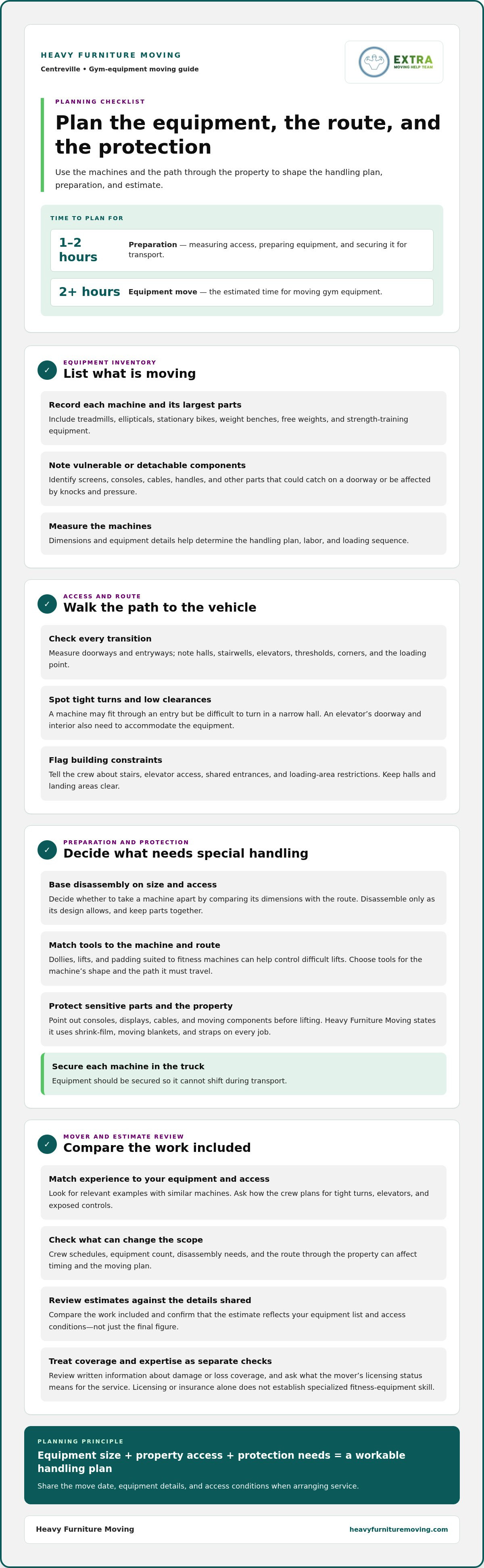
The choice between specialized gym equipment movers and general local moving companies in Centreville depends on the equipment, the route through the property, and the protection needed. Plan for a gym-equipment move to take 2+ hours, with 1-2 hours for preparation. Measuring doorways, preparing equipment, and securing it for transport all shape the job.
It’s reasonable to compare specialized gym equipment movers with a broader moving service before deciding. The right fit depends on the machines you’re moving and the access challenges at your Centreville home or business. Compare equipment handling, disassembly, padding, route planning, and the estimate. A treadmill in a home workout room can call for different planning than several large machines in a business space. Start with your equipment and the path it must travel, then weigh the service details that matter most.
Key Takeaways
- Match the mover’s experience and equipment-handling approach to the machines and lifting demands involved.
- Map the route from the gym to the vehicle, including tight turns, stairs, and building entry points.
- Decide what to disassemble based on equipment size and available access, then protect and secure each piece for transport.
- Compare estimates by looking at the work included and the factors that can change the scope, not just the final figure.
- Use reviews to assess how clearly movers communicate and handle bulky or delicate items.
Specialized moving services for home and commercial gym equipment
Centreville moves can use specialized fitness-equipment movers or general movers equipped for bulky machines. Book once your date and access details are clear; timing depends on crew schedules, equipment count, disassembly needs, and the route through the property.
Equipment Moving Challenges
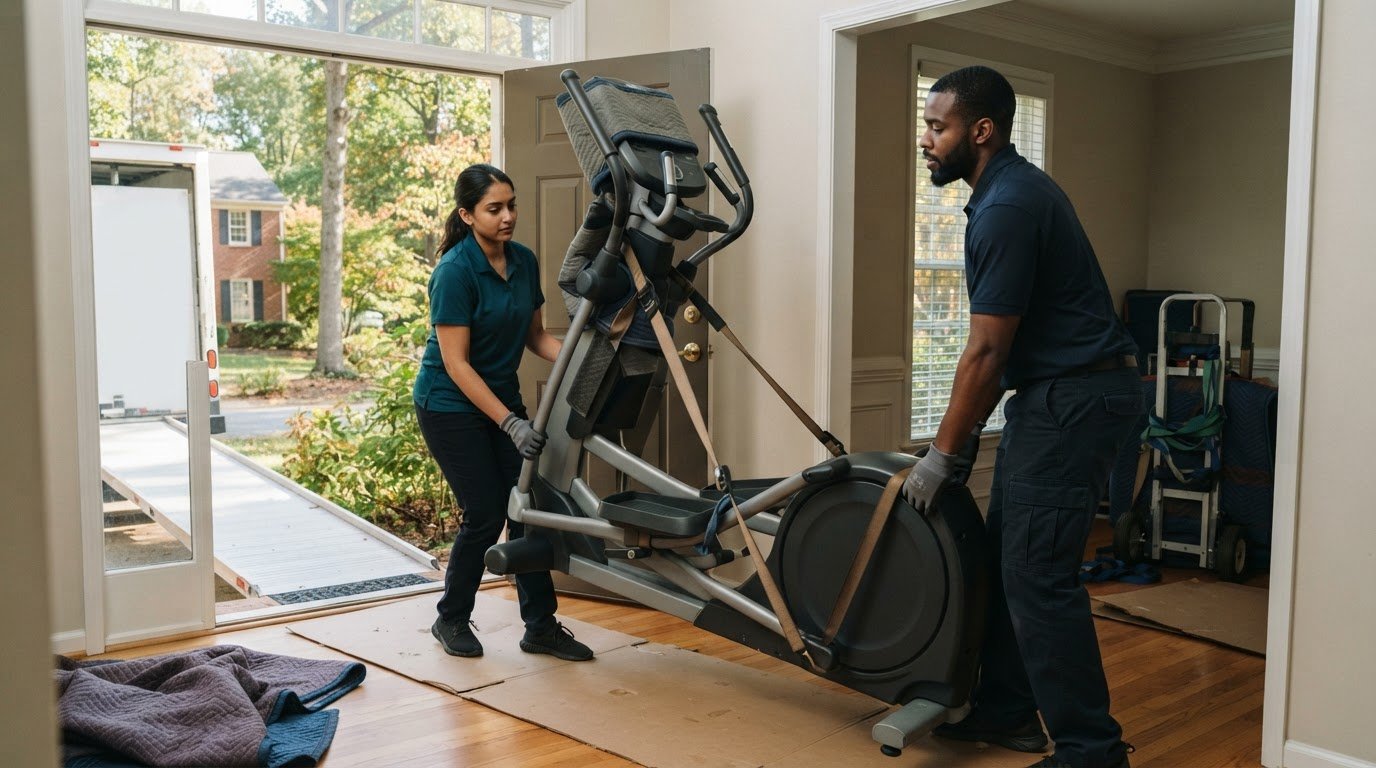
Moving fitness machines means managing weight, awkward shapes, and sensitive parts at once. A treadmill’s frame and console, for example, need different handling than a compact stationary bike. Commercial gyms may have several machines moving through shared corridors, while home setups can involve narrow doorways or tight turns. The equipment’s size and route determine the handling plan.
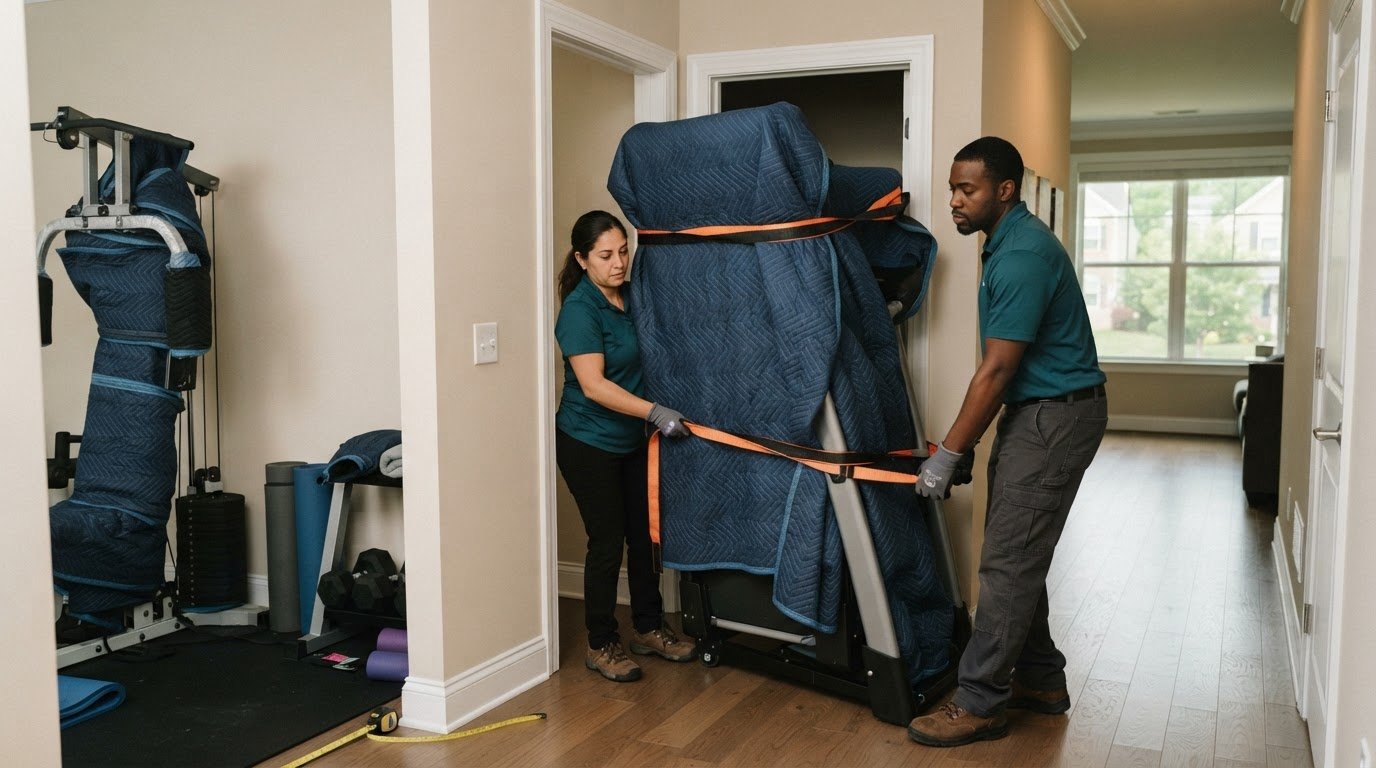
Look for a crew prepared to protect both the machine and the property during lifting and movement. Measure doorways and entryways before moving day, and note stairs, corners, and low clearances. These details help identify where a machine might need disassembly or a different route. Moving gym equipment is estimated to take 2+ hours, while preparation takes 1-2 hours.
Equipment Assessments and Moving Plans
An assessment turns your equipment list and property layout into a workable sequence. Record each machine’s dimensions, detachable parts, and fragile screens or cables. Then map its path from the room to the vehicle, including doorways, halls, and stairs. Heavy Furniture Moving measures items and access before lifting, helping plan the labor, handling, and loading.
For a home move, assess each machine individually rather than treating the workout room as one load. A business move may involve coordinating several pieces and keeping the loading order clear. Share your move date, equipment details, and access conditions when arranging service. Those details help shape the plan and reveal where preparation will take the most work.
Specialized tools can make difficult lifts more controlled. Dollies, lifts, and padding suited to fitness machines can help reduce the risk of damage during transport. Choose tools based on the machine’s shape and the route, not simply its apparent size. A compact machine can still be awkward to steer around a sharp corner.
Preparation also means deciding which equipment can be disassembled. Whether disassembly is needed depends on machine dimensions and access at each property. Take apart equipment only as its design allows, and keep the parts together for easier handling. Heavy Furniture Moving includes disassembly and reassembly for items such as treadmill consoles, as well as shrink-film, moving blankets, and straps on every job. Secure each machine in the truck so it cannot shift during transport.
Building access and handling challenges
In Centreville, the route from a workout room to the moving vehicle can shape the handling plan. Note each doorway, stairwell, elevator, corridor, and loading point before moving day.
Equipment Types Handled
List each machine and its largest parts, such as a treadmill, elliptical, stationary bike, or weight bench. Include free weights and strength-training equipment, since their shapes and carrying methods differ. For each item, note detachable components, screens, cables, and handles that could catch on a doorway. This inventory helps match the equipment to the access route and handling approach.
Access can change the plan. A treadmill may fit through a wide entry but turn poorly in a narrow hall. An elliptical can have projecting arms that need protection, while weight equipment may separate into smaller pieces. Walk the route from the room to the vehicle, and identify tight corners, steps, thresholds, and low ceilings. Heavy Furniture Moving measures doorways and access points before the crew lifts.
Specialty-Item Handling
Specialty handling means planning around an item’s shape, sensitive parts, and path through the property. A treadmill console, exercise-bike display, or cable machine’s moving components may need protection from knocks and pressure. Point out these parts before lifting begins. For a commercial gym, identify equipment that must move through shared entrances or past other machines.
Use the route assessment to decide where careful maneuvering matters most. An elevator can simplify vertical movement, but its doorway and interior still need to accommodate the equipment. A stairwell may require a different carrying approach than a ground-floor exit. Keep halls and landing areas clear, and tell the crew about access restrictions that affect entry or loading.
Compare movers by their experience with the actual equipment and building conditions, not by broad claims about handling heavy loads. Ask how the crew plans for a tight turn, an elevator, or a machine with exposed controls. Check whether the estimate reflects the equipment and access details you provided. A careful plan should account for the route, protection, and loading sequence.
Insurance and licensing are separate considerations from hands-on equipment experience. Review written information about coverage, and understand how it addresses damage or loss during the move. Ask what the mover’s licensing status means for the service being provided, rather than treating “licensed” or “insured” as proof of specialized fitness-equipment skills. A mover’s background should include relevant examples, such as handling machines similar to yours.
For Centreville moves that require equipment-specific lifting and access planning, Exercise Equipment Moving is a relevant service option. Share the machine list and building route when arranging the work, including any stairwell, elevator, or loading-area constraints.
Disassembly, padding, and secure equipment transport
Decide what to take apart by comparing each machine’s dimensions with the available route. A treadmill that fits through a bedroom doorway may still be difficult to turn through a narrow hall. Disassembly depends on equipment size and property access. Equipment designed to come apart should be disassembled before moving when its parts can be managed safely.
Start with the manufacturer’s instructions for each exercise machine. Keep the manual nearby, and photograph the assembled equipment before removing parts. For a treadmill, that record can show how console supports and handrails were positioned. Place removed hardware in a labeled bag, then keep the bag with its machine. This makes matching parts easier during setup.
Separate removable pieces from the main frame only as the design allows. Don’t force a stuck bolt or pull a cable to make a machine smaller. Record the order of removed parts, and group screws or pins by component. A stationary bike, for example, may have detachable pedals or a seat, while another model may require a different approach. Clear identification helps prevent confusion at the destination.
- Prepare the machine: remove loose accessories, towels, bottles, and exercise mats before handling.
- Protect contact points: pad corners, rails, consoles, and other exposed surfaces that could scrape walls or nearby items.
- Keep parts together: label bags and place them with the matching machine rather than mixing hardware.
- Load with a plan: position each machine so it can be secured inside the moving truck and won’t shift during transport.
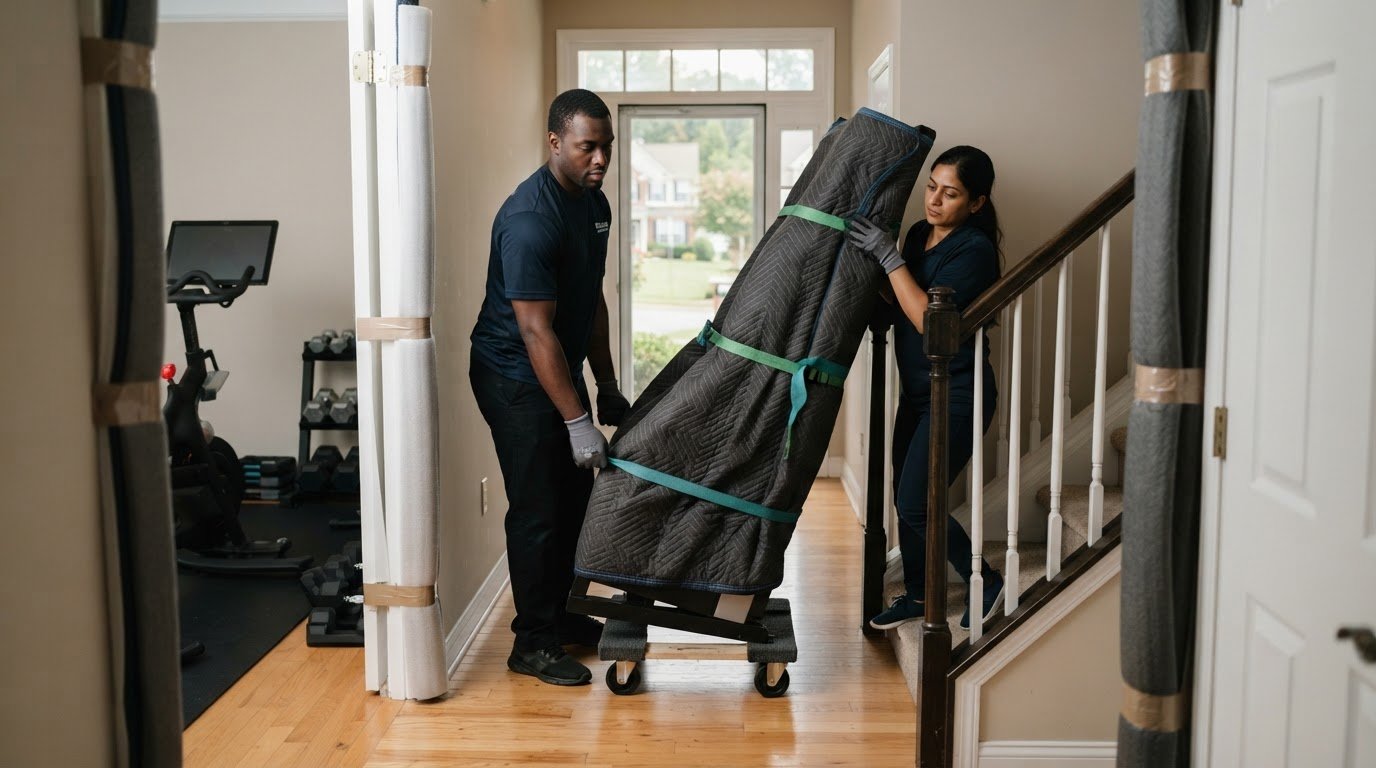
Padding should protect delicate surfaces without hiding controls or creating loose material that can slip. A console screen needs a different level of care than a solid metal frame. Use padding suited to the machine’s shape, and keep removable parts from rubbing against the frame. Custom dollies, lifts, or padding made for fitness machines can reduce the risk of transport damage.
Plan reassembly before loading, not after reaching the new home or gym. Keep photographs, manuals, and labeled hardware accessible instead of burying them beneath household boxes. At the destination, place each machine near its intended workout area before rebuilding it. This avoids moving an assembled treadmill through a bedroom or tight doorway again. Secure every machine in the truck before travel.
Before leaving, make securing part of the loading plan: the gym-equipment moving instructions recommend securing exercise equipment in the moving truck.
Mover qualifications and damage protection
Experience with fitness machines matters because a treadmill and a cable station present different handling demands. Compare relevant examples of similar equipment moves, the crew’s lifting approach, and the written terms covering damage or loss. General moving experience alone doesn’t explain how a team protects a console, secures loose components, or manages a heavy frame through a doorway.
Review the mover’s license and insurance documents alongside the service agreement. Look for the coverage type, limits, exclusions, and steps for documenting a claim. These terms clarify what protection applies if a machine is scratched or damaged during handling. Keep a copy of the agreement and equipment inventory with your move records.
Before lifting, record each machine’s visible condition. Photograph the treadmill frame, screen, controls, and any existing marks from several angles. For an elliptical or stationary bike, capture exposed cables and movable arms. A dated inventory helps distinguish pre-existing wear from damage noticed after delivery. Keep those images accessible during loading and at the destination.
Proper lifting starts with a clear grip plan and a stable route. Crews should avoid using screens, adjustment levers, or cables as handholds. Protective materials should cover vulnerable surfaces without blocking a secure grip. Use padding on frame edges and contact points, then position the machine so straps hold its frame rather than pressing against delicate controls.
Electronics need deliberate protection. Turn off a treadmill or exercise bike before moving it, and detach accessories that can swing or snag. Cover a display with cushioning that won’t press hard against the screen. Keep power cords separate from moving parts, and secure them so they cannot drag along the floor or become trapped under the frame.
- Compare documents: Review coverage terms, exclusions, inventory details, and damage-reporting steps.
- Record condition: Photograph screens, frames, cables, and existing marks before loading.
- Watch contact points: Keep straps and padding away from delicate controls and screens.
- Check the load: Confirm each machine is held firmly in place and cannot shift in transit.
At delivery, inspect each machine before reassembly or use. Compare its frame, screen, and accessories with the earlier photographs. Note any new damage in writing and keep the relevant images with your move paperwork. This record connects the equipment’s condition at pickup with its condition after transport, making the next steps easier to follow.
Comparing mover prices and reviews
Compare written estimates by the equipment, access, protection, and labor each includes. For reviews, weigh item-specific examples from specialized gym movers against Centreville feedback about the full moving experience.
Price Comparison
Start with the scope, not the bottom line. Compare whether each estimate covers the same machines, pickup and delivery locations, access conditions, preparation, and loading work. A quote for moving one treadmill isn’t directly comparable with one covering several machines and difficult stairs.
Estimates can vary when fragile or oversized items need special equipment or additional movers. For fitness equipment, machine size, disassembly needs, route, and handling requirements affect the work involved. Ask how those details appear in the estimate, and check what each service includes.
The price depends on the case and is given after a quote request; relevant factors include equipment type, access, preparation, and the labor required. Keep belongings and other household items separate in your comparison if they’re also being loaded. That makes it easier to see which estimate covers gym equipment alone and which covers a broader relocation.
Use the same information when comparing estimates: provide the equipment list, destination details, and access conditions to each mover. Then review the written scope for omissions, such as a machine that needs disassembly or another handling step. A clear comparison helps explain why estimates differ without relying on an unsupported average.
Customer Review Comparison
Customer reviews don’t establish a winner by company name alone. For specialized gym movers, look for detailed accounts involving exercise machines, careful handling, and communication about equipment needs. For Two Men and a Truck Centreville, compare local reviews that describe the specific service and moving circumstances relevant to your job.
Read several reviews for repeated, concrete details rather than relying on one broad rating. A useful review might describe how a crew handled a heavy machine, protected a home’s interior, or managed a change in access. Note whether the account explains the item and outcome, or simply offers a general opinion.
Compare how reviewers describe scheduling, estimate clarity, communication, and the condition of belongings after delivery. Separate comments about a whole-house move from feedback about fitness equipment, since those experiences may involve different tasks. Reviews are most useful when their examples resemble your equipment and property.
For a gym relocation that includes challenging lifts, request heavy lifting moving help suited to the equipment and access involved.
Heavy Furniture Moving: Movers Near Me
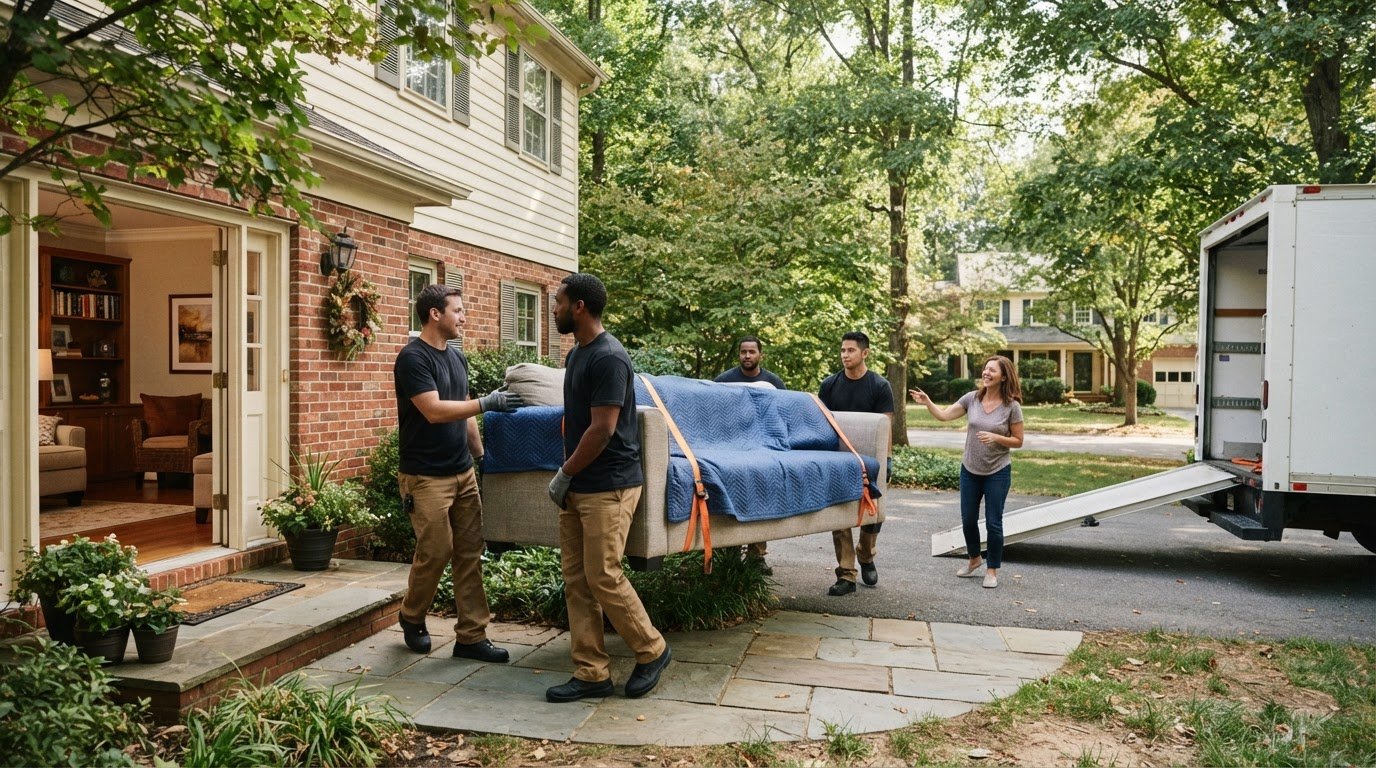
Heavy Furniture Moving is a practical option when gym equipment needs careful lifting and transport. Its Exercise Equipment Moving service handles home workout machines and fitness equipment that require a planned move. The service includes shrink-film, moving blankets, and straps on every job. For a bulky sofa blocking access, Sofa Hoisting addresses that separate lifting challenge.
Choose the service that matches the job: moving equipment from one room, relocating a home gym, or handling furniture alongside workout gear. Share the machine types, pickup and delivery details, and access challenges so the move can be planned clearly. For local moving help with heavy items, Heavy Furniture Moving offers Movers Near Me.
Contact Heavy Furniture Moving to discuss your Centreville move, or visit heavyfurnituremoving.com.
Make Your Next Move With Confidence
As you weigh specialized gym equipment movers against Two Men and a Truck Centreville, focus on the option that fits your equipment and the help you need. The next step is turning your decision into a clear plan for the space you’re leaving and the one you’re setting up. Decide whether you need support for gym equipment alone or other bulky items as well.
Heavy Furniture Moving offers Exercise Equipment Moving for fitness machines, Movers Near Me for local moving needs, and Sofa Hoisting for a bulky sofa that complicates access. Wrap, blankets, and straps are included on every job. Choose the service that matches your job, then share your move details to get started.
Contact Heavy Furniture Moving to discuss your move. A well-planned next step can help you reclaim your workout space and settle in with confidence.
Frequently Asked Questions
How much do specialized gym equipment movers charge in Centreville, VA?
Gym-moving costs depend on the machines, access, preparation, and labor involved. Heavy Furniture Moving uses hourly labor with a 2-hour minimum, or flat-rate pricing for many single heavy items. Its Exercise Equipment Moving service is priced after the job details are provided. A treadmill move with straightforward access differs from a multi-machine relocation involving stairs or extra handling.
Are gym equipment movers in Centreville insured and licensed for specialty moves?
Insurance and licensing are separate, and neither follows automatically from a mover’s specialty claims. Review the company’s written coverage details and licensing information for the specific move. Heavy Furniture Moving has a uniformed, background-checked crew, but that fact alone does not establish insurance or licensing. Compare the documents with your equipment list and the written terms describing responsibility for damage or loss.
What equipment disassembly, packing, and reassembly services are included?
Included work varies by mover and job scope. Heavy Furniture Moving includes disassembly and reassembly for items such as treadmill consoles, along with shrink-film, moving blankets, and straps on every job. Before the move, identify removable consoles, arms, or other components and note which items need handling. Keep manuals and loose hardware together so setup at your new Centreville home is more organized.
What are the risks of moving heavy gym equipment with a general moving company?
A general moving crew may have less experience with machine-specific parts and handling needs. A treadmill’s console or an elliptical’s moving arms can be vulnerable if used as lifting points or pressed against other belongings. Poorly planned handling can also damage floors, door frames, or the equipment itself. Compare the crew’s relevant experience and the written plan for your particular machines.
How should I prepare gym equipment for a local move in Centreville, Virginia?
Clear the area around each machine and remove loose items such as water bottles, towels, and workout accessories. Photograph the machine’s condition and keep its manual, power cord, and detachable parts together. Share equipment details and access constraints as part of the move plan. For a treadmill or exercise bike, identify the console and any removable pieces before the crew begins handling it.
Are there extra fees for stairs, long carries, or oversized gym equipment in Centreville?
Charges depend on the mover’s written terms and the work required. For Heavy Furniture Moving, stairs and landings are priced before the crew arrives, while wrap, blankets, and straps are included on every job. An oversized or fragile machine may affect the estimate if it needs special equipment or additional movers. Review the quoted scope so access and handling are accounted for upfront.
How far in advance should I book gym equipment movers near Centreville?
Book once your move date and access details are clear. Timing depends on crew schedules, equipment count, disassembly needs, and the route through the property.
Frequently Asked Questions
Gym-moving costs depend on the machines, access, preparation, and labor involved. Heavy Furniture Moving uses hourly labor with a 2-hour minimum, or flat-rate pricing for many single heavy items. Its Exercise Equipment Moving service is priced after the job details are provided. A treadmill move with straightforward access differs from a multi-machine relocation involving stairs or extra handling.
Insurance and licensing are separate, and neither follows automatically from a mover’s specialty claims. Review the company’s written coverage details and licensing information for the specific move. Heavy Furniture Moving has a uniformed, background-checked crew, but that fact alone does not establish insurance or licensing. Compare the documents with your equipment list and the written terms describing responsibility for damage or loss.
Included work varies by mover and job scope. Heavy Furniture Moving includes disassembly and reassembly for items such as treadmill consoles, along with shrink-film, moving blankets, and straps on every job. Before the move, identify removable consoles, arms, or other components and note which items need handling. Keep manuals and loose hardware together so setup at your new Centreville home is more organized.
A general moving crew may have less experience with machine-specific parts and handling needs. A treadmill’s console or an elliptical’s moving arms can be vulnerable if used as lifting points or pressed against other belongings. Poorly planned handling can also damage floors, door frames, or the equipment itself. Compare the crew’s relevant experience and the written plan for your particular machines.
Clear the area around each machine and remove loose items such as water bottles, towels, and workout accessories. Photograph the machine’s condition and keep its manual, power cord, and detachable parts together. Share equipment details and access constraints as part of the move plan. For a treadmill or exercise bike, identify the console and any removable pieces before the crew begins handling it.
Charges depend on the mover’s written terms and the work required. For Heavy Furniture Moving, stairs and landings are priced before the crew arrives, while wrap, blankets, and straps are included on every job. An oversized or fragile machine may affect the estimate if it needs special equipment or additional movers. Review the quoted scope so access and handling are accounted for upfront.
Book once your move date and access details are clear. Timing depends on crew schedules, equipment count, disassembly needs, and the route through the property.