Furniture Moving for Interior Designers in Fairfax Station, VA
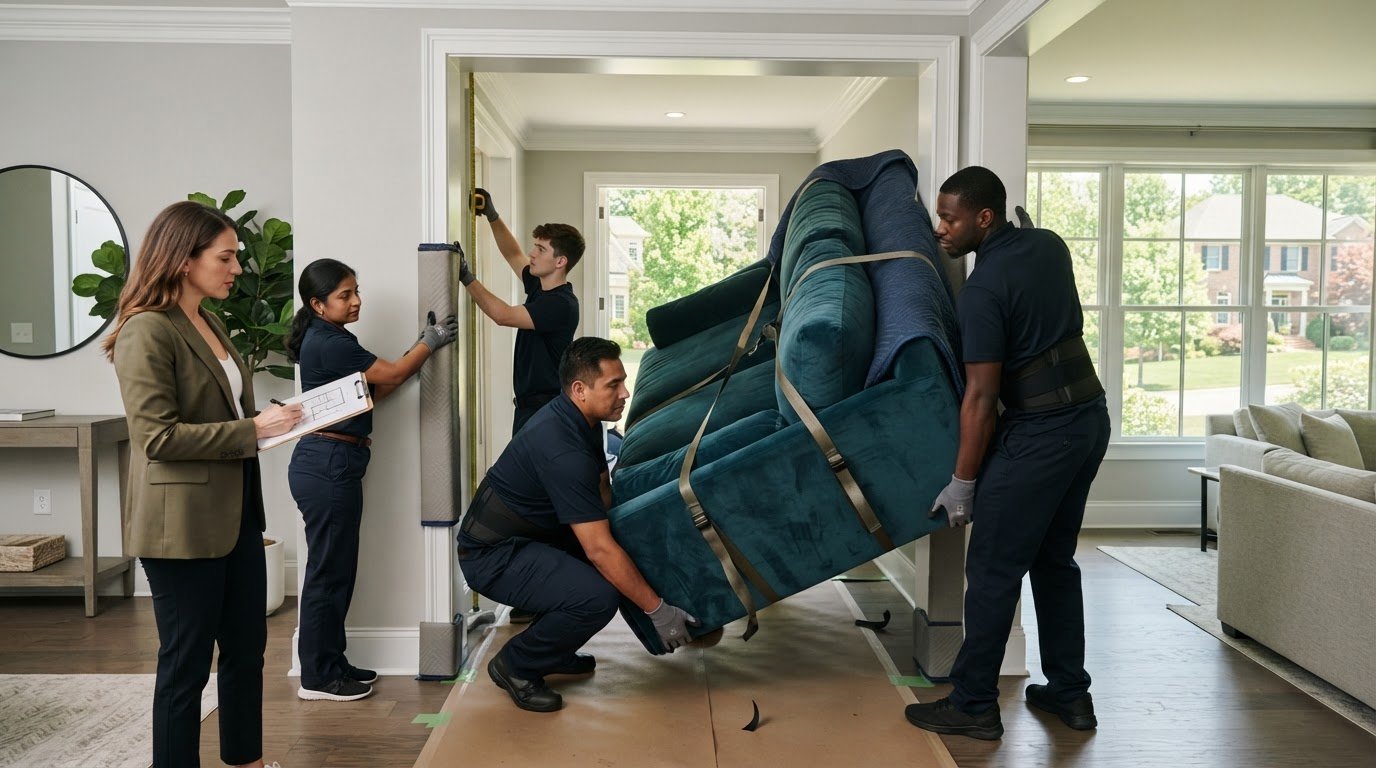
A statement sofa arrives for installation, but the doorway is narrower than the piece. Now the room plan, delivery window, and project schedule are all under pressure. With furniture moving for interior designers Fairfax Station, planning access and handling alongside the labor can help prevent that kind of snag.
Design projects don’t always need a full-house move. A single-item move or labor-only help can match the job more closely, whether furniture needs to shift between rooms, move to another residence, or be loaded into a customer-provided truck or pod. To plan efficiently, pin down the item, its route, who is providing transportation, and the project date.
Heavy Furniture Moving serves Fairfax Station with residential furniture moving, heavy-item handling, labor-only loading and unloading, packing and unpacking, junk removal, and sofa hoisting. Before lifting, the crew measures the furniture and access points. If an item genuinely won’t fit, you’re not charged for a wasted trip. Wrap, moving blankets, straps, and floor and corner protection are included on every job. This guide explains how to assess access, choose the right labor and transport option, coordinate a changing project timeline, and prepare for a clear quote.
Key Takeaways
- Match the moving plan to the job, whether you’re repositioning one piece, shifting furniture inside a home, or arranging labor for a customer-provided truck or pod.
- For furniture moving for interior designers Fairfax Station, gather item photos and access details early to help define the scope.
- Compare single-item, in-home, labor-only, and broader moving help by the work each stage of your design project requires.
- Coordinate entry access, room readiness, and timing with the homeowner and renovation team before moving day.
- Use a simple booking sequence: identify the furniture, share photos, describe the route, and request a quote from Heavy Furniture Moving.
Furniture Moving for Interior Designers in Fairfax Station: Match Help to the Project
A furniture move can be one small task inside a much larger residential design project. A sofa may need to move upstairs before flooring work starts, while a newly selected cabinet needs careful placement once the room is ready. The useful first step is to define that task on its own, rather than treating every project like a whole-home relocation.
For furniture moving for interior designers Fairfax Station projects, decide early what needs to happen: move one piece to another room, carry several items between floors, transport furniture to another residence, or load or unload a customer-provided truck or pod. These are different scopes of work. Defining the job helps you coordinate labor with delivery and renovation plans.
Start with three practical decisions: access, item handling, and labor and transportation. Trace the route from the furniture’s current location to its destination, note the piece’s size and shape, and decide whether the job stays inside the home or includes loading and transport. Moving companies handle different combinations of labor and logistics; the general overview of Moving Company Services offers broader context. This article focuses on residential design projects in Fairfax Station, not commercial office relocation.
- Access: Identify doorways, hallways, stairs, landings, and turns along the route. Note tight clearances or areas that will be affected by renovation work.
- Handling: Describe the item and features that affect its shape or handling, such as removable sofa legs, glass panels, or separate sectional pieces.
- Labor and transportation: Decide whether you need an in-home move, transport between residences, or help loading or unloading a truck, pod, or container you provide.
Which design-project moves need specialized furniture help?
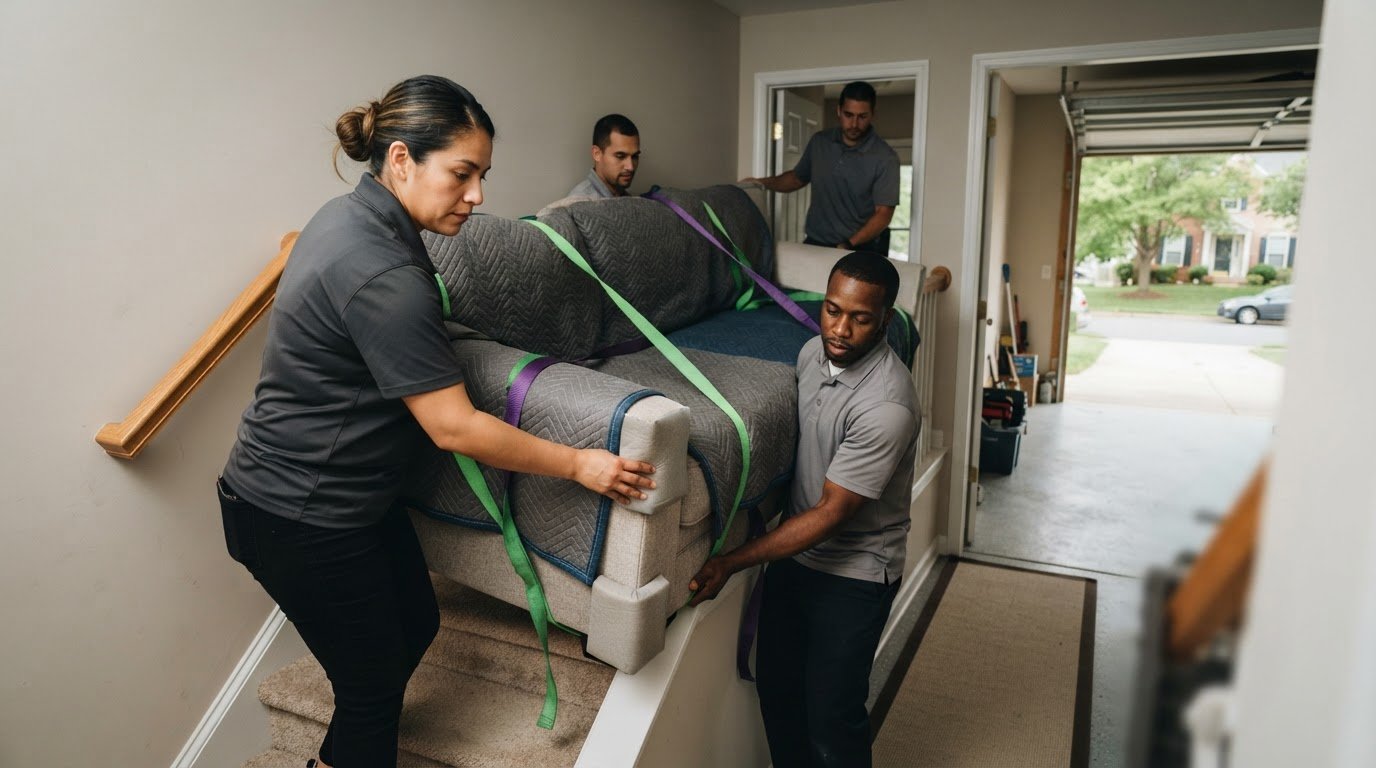
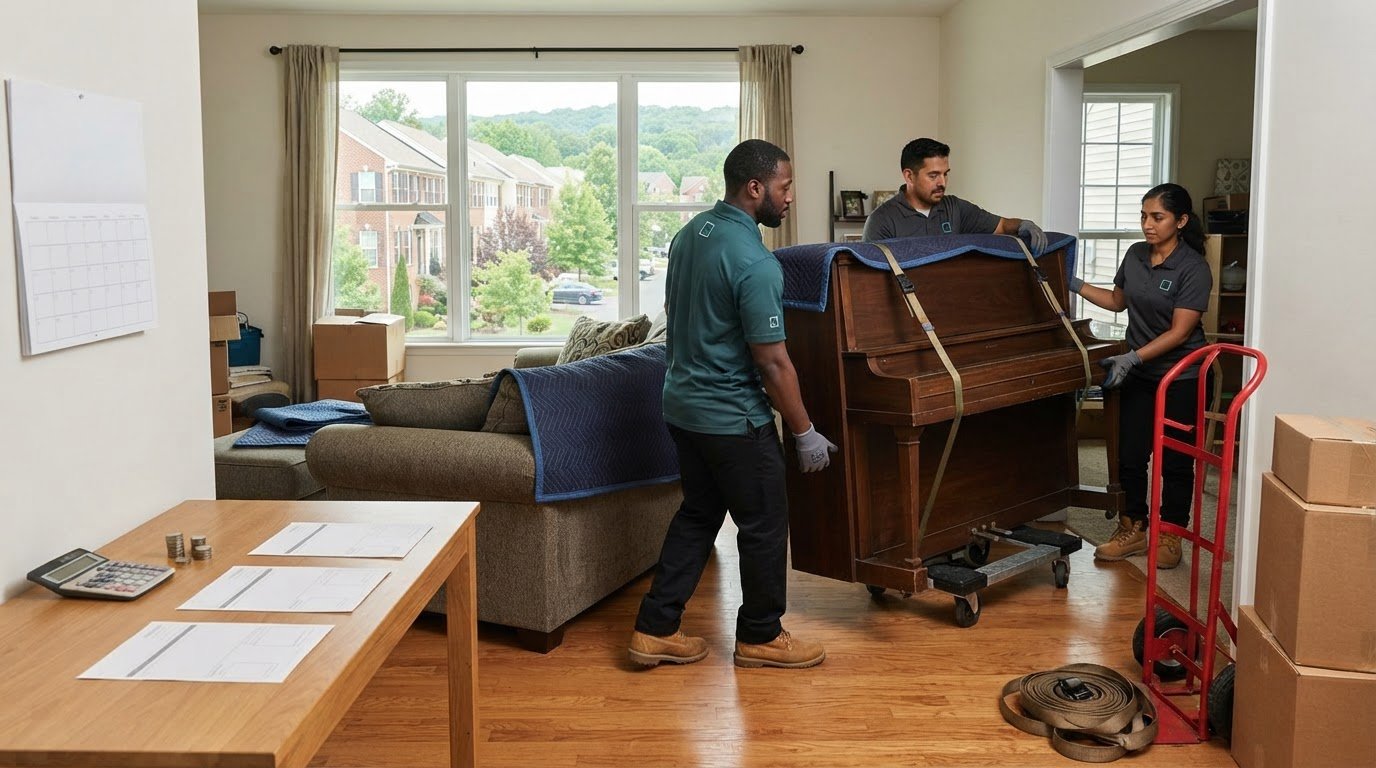
A sofa, sectional, armoire, china cabinet, or heavy table can call for professional lifting even when it’s the only item on the project list. Bulk, weight, and an awkward shape can make a tight turn or stairway challenging. In-home furniture moving means repositioning pieces within a residence. Labor-only loading or unloading is different: the customer provides the truck, pod, or container, and the crew handles the lifting. Heavy Furniture Moving also handles specialized items such as pianos, safes, and exercise equipment, as well as sofa hoisting for furniture that cannot fit through a standard entryway or elevator.
When is a single-item move enough?
A focused move can cover one piece going between rooms, floors, or residential locations. You don’t need to plan a full-house move just to get a single heavy item into position. Heavy Furniture Moving handles residential and single-item furniture moves, and measures the item and access points before lifting. For broader local service context, see reliable movers near me in Fairfax and Northern VA.
Set the scope around the piece, its pickup point, and its destination. If the item is going to another residence, include the transportation leg; if it is staying in the home, describe the rooms and floors involved. That gives you a clearer starting point for coordinating the move with the rest of the design schedule.
Plan a Fairfax Station Furniture Move Around Item Size and Access
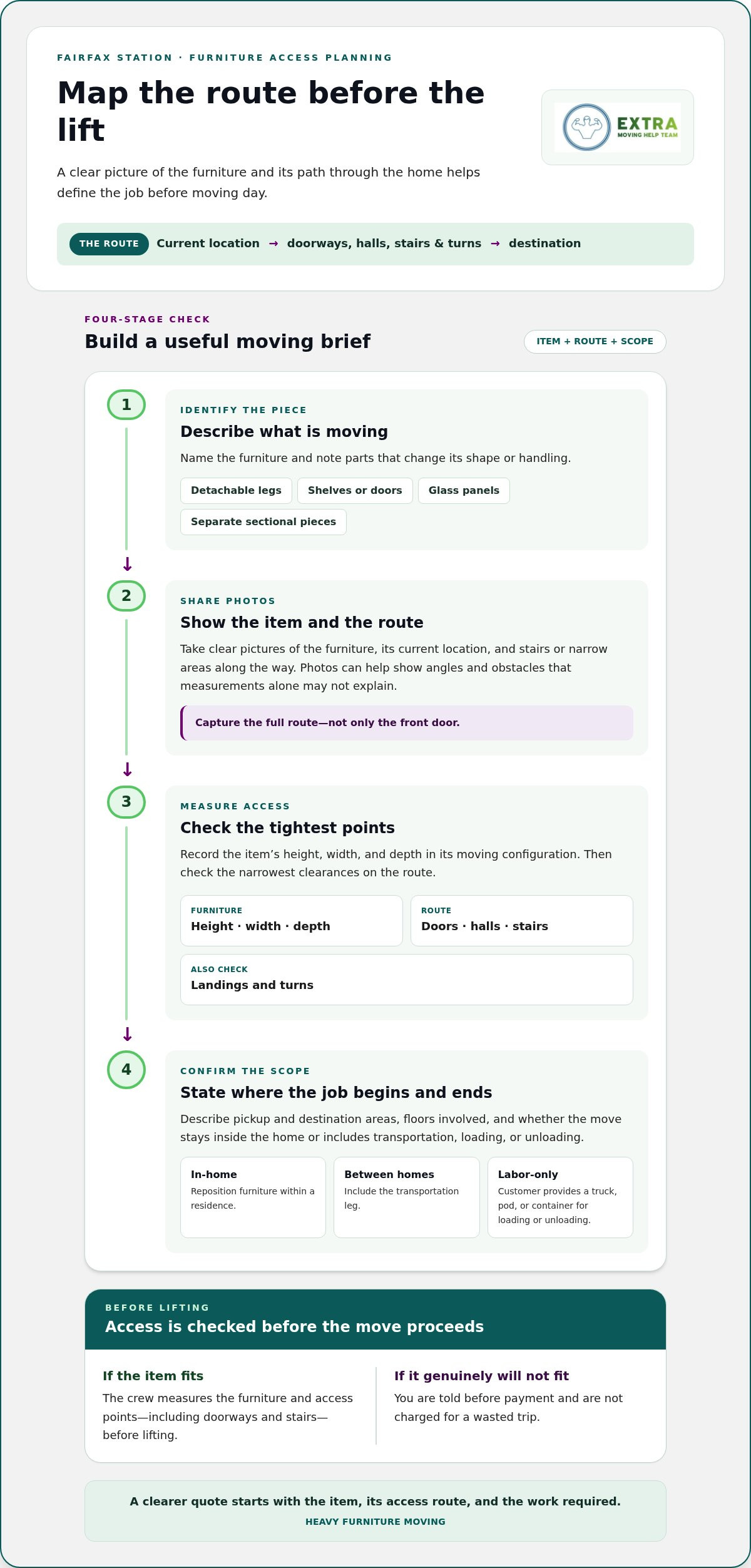
A smooth furniture move starts with the details that determine how the piece can travel. For a design project, a clear route matters as much as the item itself. A useful moving quote starts with the item and its route through the home. Share what’s moving, where it’s going, and what the crew will encounter along the way.
Use this sequence to organize the job before requesting a quote:
- Identify the piece. Note what it is and whether it has detachable legs, shelves, doors, or other parts that affect its shape.
- Share photos. Take clear pictures of the furniture, its current location, and the stairs or narrow areas along the route. Text photos of the item and stairs to support the quote conversation.
- Measure access. Record the item’s height, width, and depth, then check the tightest doorway, hallway, stairway, landing, and turn.
- Confirm the scope. Describe the pickup and destination areas, floors involved, and whether the move stays inside the home or includes transport, loading, or unloading.
Measure the piece in its moving configuration. If legs or other parts can be removed, note that too. For a sectional, identify each section and how it will be carried; for a tall cabinet, include its height and the clearance at stair landings. Photos help show angles and obstacles that a single measurement can’t explain. Capture the full route, not just the front door.
Heavy Furniture Moving measures the item and access points, including doorways and stairs, before lifting. The crew tells you before payment if the item genuinely won’t fit through the route. Accurate details help the team assess the job instead of making assumptions about a tight turn or narrow landing. If the item cannot pass through the access route, you’re not charged for a wasted trip.
How should designers account for changing project schedules?
Set the intended move date alongside renovation and installation milestones. For example, note whether furniture must be out before floor work begins or placed after the room is ready. Share the target date and any important dependencies so the move fits the project plan. Free date changes are available up to 45 days, which can help when a renovation shifts. Same-day slots may be available when open; confirm the timing when arranging the move rather than building the project schedule around an assumed opening.
Keep the item details, route notes, and current target date together. If the plan changes, update the move date and scope so everyone is working from the same information. For a project-specific quote, send the furniture and access details to Heavy Furniture Moving.
Compare Furniture-Moving Options for a Fairfax Station Design Project
The right service depends on what needs to move, who supplies transportation, and how much lifting the project requires. A full-home relocation may suit a client moving an entire household. A design installation may need only one piece carried upstairs, furniture shifted within a room, or a crew to load a customer-provided pod. Match the scope to the project instead of adding steps you don’t need.
Option | Who supplies transportation? | Number of items | Labor needed
Full-service relocation | Moving crew handles transportation | Household furnishings | Packing, lifting, loading, transport, and unloading as needed for the move
Single-item move | Depends on whether the piece stays in the home or travels to another residence | One heavy item | Focused lifting and movement for a specific piece
In-home shifting | No transportation between locations | One or more pieces | Move furniture between rooms or floors within the residence
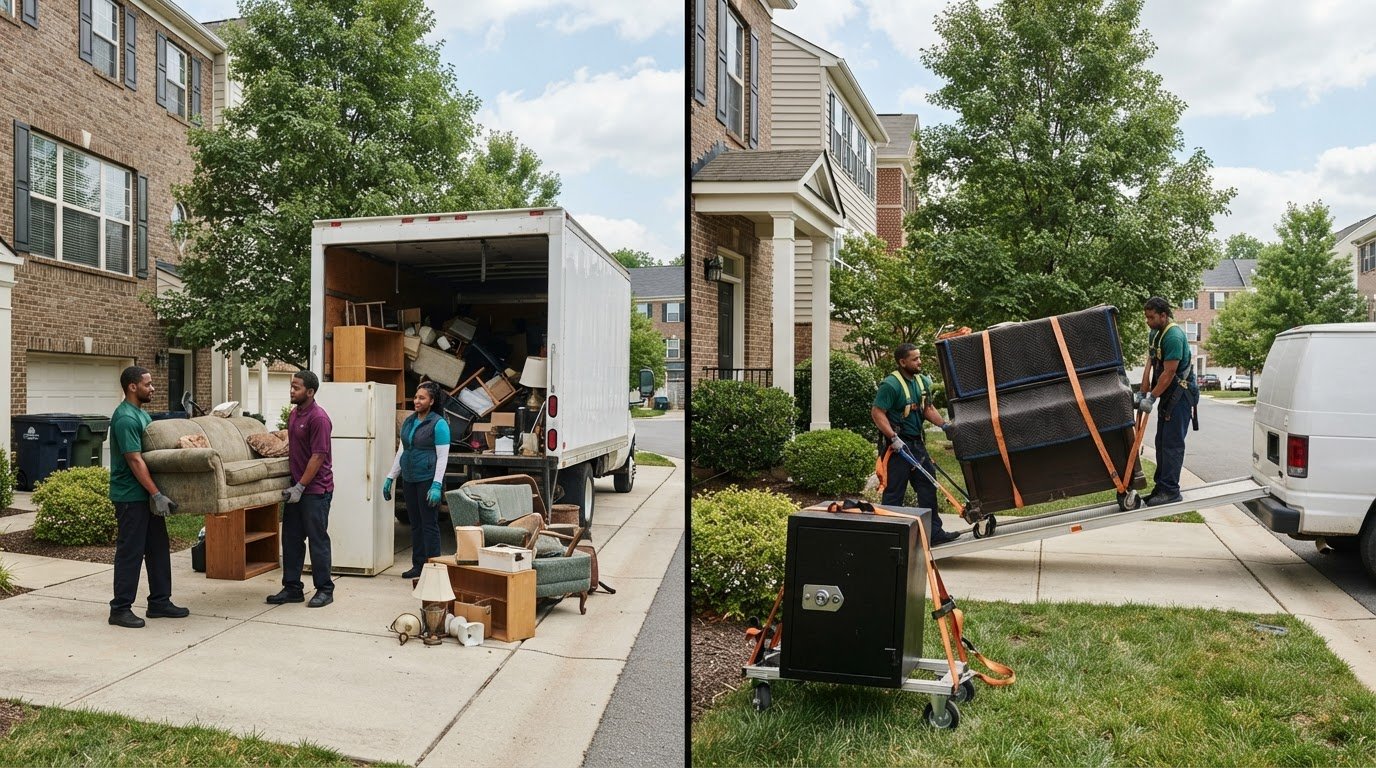
Labor-only loading or unloading | Customer provides the truck, pod, or container | A selected load | Crew provides lifting and loading or unloading; packing or unpacking can also fit the project
For furniture moving for interior designers Fairfax Station projects, use this comparison to describe the work clearly. For example, if a client has rented a pod for a renovation, labor-only help can handle the heavy lifting without the crew supplying transportation. If a piece needs to travel between residences, describe the pickup and delivery locations so the job can be scoped around transport as well as handling.
When does labor-only moving fit an interior project?
Choose labor-only help when the customer has arranged a truck, pod, or container and needs a crew to load or unload it. It can also support packing or unpacking around a residential project. If the moving crew needs to transport furniture between locations, that’s a different scope. Labor-only work is billed hourly with a two-hour minimum, so factor that minimum into the plan even when the task is limited.
What should designers know about the quote structure?
Labor billed by the hour has a two-hour minimum. Most single heavy items receive flat-rate quotes, with the rate provided up front on the phone. The pricing model depends on the job: share whether you need labor only or a single-item move, along with the item and access details, to get a quote that reflects the actual scope.
Include stairs and landings in the conversation. They’re priced before the crew arrives, based on the details shared on the call, so describe the route and any difficult turns. Wrap, moving blankets, and straps are included on every job, with no separate line item. Floor and corner protection is included as well. That keeps the comparison focused on the work itself: transportation, item count, and the labor your design project needs.
Prepare the Furniture, Home, and Project Team Before Moving Day
A little coordination helps protect the home and keeps a furniture move from colliding with installation or renovation work. For furniture moving for interior designers Fairfax Station clients, make sure the designer, homeowner, and project team agree on the piece, its destination, and a clear path before the crew arrives.
Use this short checklist to get everyone aligned:
- Designer: Confirm the exact item, where it’s going, and whether parts such as sofa legs or a bed frame need to be taken apart and reassembled. Disassembly and reassembly are included for relevant items.
- Homeowner: Arrange access to the pickup area, destination room, stairs, and landings. Empty dressers and safes before the move; most other items can usually remain loaded.
- Renovation team: Coordinate room access and work areas so the route is clear and the move doesn’t conflict with active tasks or newly finished surfaces.
Before lifting begins, the crew measures the furniture and access points. Measuring the route before lifting helps reveal access constraints early. That means checking the piece against doorways, stairs, and other parts of its route, not just looking at the room where it will go.
Plan for protection, too. Floor and corner protection helps guard the home along the carrying path. Wrap, moving blankets, and straps are included on every job to help protect and secure furniture during handling. Clear the route of small tables, decor, rugs, and other obstacles so the crew can focus on the planned pieces. Packaging is removed at no extra charge on most jobs, which helps keep the work area clear after the move.
What should be ready before the crew arrives?
Confirm the furniture piece and destination, then make sure the agreed route is accessible, including any stairs and landings. Tell the homeowner and other trades when those areas need to be clear. Empty dressers and safes, and leave most other items loaded unless the move plan calls for something different. A shared plan helps prevent last-minute room-access surprises.
How does pre-move measurement reduce avoidable disruption?
Measurements help establish whether the item can fit through the planned route before anyone lifts it. Heavy Furniture Moving measures the furniture, doorways, and stairs first, then tells the customer before payment if the piece genuinely won’t fit. If it cannot pass through the access route, you’re not charged for a wasted trip. The crew won’t attempt to move an item that cannot fit.
Share access details early and give the homeowner a simple prep list. Share your furniture and access details for a moving quote so the job can be planned around the home and project needs.
Book Heavy Furniture Moving for Your Fairfax Station Project
Booking is easier when the quote conversation starts with the actual piece and the work it needs. For furniture moving for interior designers Fairfax Station projects, share enough detail to distinguish a room-to-room shift from a move that involves stairs, loading, or transport. Heavy Furniture Moving serves Fairfax Station and nearby Northern Virginia communities, including Fairfax, Woodbridge, Manassas, Manassas Park, Aldie, Ashburn, McLean, Vienna, Reston, Centreville, Chantilly, Clifton, Dumfries, South Riding, Fairfax Station, Haymarket, and Gainesville.
Use this simple sequence to get the request ready:
- Identify the furniture. Name the piece and note its approximate height, width, and depth.
- Send photos. Take a clear photo of the item and useful views of the stairs, doorway, or route.
- Describe access. Share the pickup and destination, floors, stairs, and landings, plus whether the item is moving within the home or to another location.
- Request a quote. Include the planned date and the type of help needed so the job can be scoped around the project.
What information should you share when requesting a quote?
Think through the move from start to finish. A sofa going from a lower floor to an upstairs room has a different route from a cabinet leaving the home for another residence. Include the furniture type, approximate dimensions, pickup and destination areas, and any stairs or landings. Photos of the item and access route help explain the job. Text them to support the quote conversation; Heavy Furniture Moving provides the price based on the job details.
Clear information helps designers and homeowners plan around delivery and installation milestones without guessing about the work involved. If the route or scope changes, share the updated details before the move so the plan reflects the current project.
How can designers take the next step?
Call 703-747-9224 or text photos of the item and stairs to request a quote. Same-day slots may be available when open; call before 2 PM for same-afternoon service when a slot is open. The crew is uniformed and background-checked, and you’ll receive text updates when the crew is en route.
Heavy Furniture Moving has 500+ verified 5-star reviews and a 4.9 Google rating. Those trust signals can offer added confidence as you coordinate a focused residential furniture move. Have the item and access details ready, then take the next step for your Fairfax Station project.
Get help with your Fairfax Station furniture move
Keep Your Design Project Moving Forward
A furniture move doesn’t have to become a separate project inside your project. Choose the next step based on what the client needs most: a room ready for installation, a heavy piece moved to another floor, or loading help that fits the delivery plan. With furniture moving for interior designers Fairfax Station, a clear scope gives the homeowner, designer, and moving crew a shared plan to work from.
Before you reach out, gather the item details and a photo of the furniture and stairs. That gives the quote conversation a practical starting point and helps connect the move to the room’s next milestone. Start with the piece, its route, and where it needs to go.
Text a photo of your furniture and stairs for a quote, then take the next step toward a smoother installation.
Frequently Asked Questions
Can interior designers hire movers for just one piece of furniture in Fairfax Station?
Yes. Heavy Furniture Moving handles focused residential furniture moves, so a designer can arrange help for one piece without booking a full-house relocation. That can suit a client receiving a replacement bed while the rest of the home stays put. Service areas include Fairfax Station, Fairfax, Woodbridge, Manassas, Manassas Park, Aldie, Ashburn, McLean, Vienna, Reston, Centreville, Chantilly, Clifton, Dumfries, South Riding, Haymarket, and Gainesville. Furniture moving for interior designers Fairfax Station projects can be scoped around one item.
How do movers determine whether furniture will fit through a doorway or staircase?
They compare the furniture’s dimensions with the clearances along its route, including doorways, stairs, and landings. A tall cabinet may clear a doorway but still meet a tight turn at the top of a staircase, so the full path matters. Heavy Furniture Moving measures items and access before lifting and tells the customer before payment if the piece genuinely won’t fit. In that case, there’s no charge for a wasted trip.
What should I send to get a furniture-moving quote?
Send a clear photo of the furniture and the stairs or other tight access areas. Include the item type, approximate height, width, and depth, plus its pickup and destination locations. Mention floors, landings, and whether the job involves moving within the home or between residences. These details explain the scope and help Heavy Furniture Moving provide a quote for the specific job.
Is there a minimum booking time for furniture-moving labor?
Yes. Labor billed by the hour has a two-hour minimum. Keep that in mind when planning a brief task, such as moving a few pieces into a customer-provided pod. Most single heavy items have flat-rate quotes instead. Share whether you need labor only or furniture transport, along with the item and access details, so the quote reflects the type of job rather than assuming every move uses the same pricing model.
Are moving blankets, wrap, and straps included?
Yes. Wrap, moving blankets, and straps are included on every job and aren’t listed as a separate line item. Floor and corner protection is included as well. This matters when the route passes through finished rooms or close to walls and door frames. Describe any especially delicate surfaces or recently completed work while discussing the move, so the home and furniture are part of the handling plan from the start.
Can furniture movers help with a design project when renovation dates change?
Yes. Free date changes are available up to 45 days, which can help when renovation or installation milestones shift. Share the updated target date and any changes to the item or route so the moving plan matches the project’s current needs. Same-day slots may be available when open, but they aren’t guaranteed. For a tight installation sequence, coordinate the furniture move with the homeowner and renovation team as dates evolve.
Do I need to empty furniture before it is moved?
Dressers and safes must be emptied before moving. Most other items usually can remain loaded, so a designer doesn’t necessarily need to arrange a full room clear-out before the crew arrives. Check the piece being moved and make sure the destination is accessible. If a design plan includes moving several different furniture types, identify which pieces are dressers or safes so the homeowner can prepare those items appropriately.
Frequently Asked Questions
A sofa, sectional, armoire, china cabinet, or heavy table can call for professional lifting even when it’s the only item on the project list. Bulk, weight, and an awkward shape can make a tight turn or stairway challenging. In-home furniture moving means repositioning pieces within a residence. Labor-only loading or unloading is different: the customer provides the truck, pod, or container, and the crew handles the lifting. Heavy Furniture Moving also handles specialized items such as pianos, safes, and exercise equipment, as well as sofa hoisting for furniture that cannot fit through a standard entryway or elevator.
A focused move can cover one piece going between rooms, floors, or residential locations. You don’t need to plan a full-house move just to get a single heavy item into position. Heavy Furniture Moving handles residential and single-item furniture moves, and measures the item and access points before lifting. For broader local service context, see reliable movers near me in Fairfax and Northern VA. Set the scope around the piece, its pickup point, and its destination. If the item is going to another residence, include the transportation leg; if it is staying in the home, describe the rooms and floors involved. That gives you a clearer starting point for coordinating the move with the rest of the design schedule. A smooth furniture move starts with the details that determine how the piece can travel. For a design project, a clear route matters as much as the item itself. A useful moving quote starts with the item and its route through the home. Share what’s moving, where it’s going, and what the crew will encounter along the way. Use this sequence to organize the job before requesting a quote: Measure the piece in its moving configuration. If legs or other parts can be removed, note that too. For a sectional, identify each section and how it will be carried; for a tall cabinet, include its height and the clearance at stair landings. Photos help show angles and obstacles that a single measurement can’t explain. Capture the full route, not just the front door. Heavy Furniture Moving measures the item and access points, including doorways and stairs, before lifting. The crew tells you before payment if the item genuinely won’t fit through the route. Accurate details help the team assess the job instead of making assumptions about a tight turn or narrow landing. If the item cannot pass through the access route, you’re not charged for a wasted trip.
Set the intended move date alongside renovation and installation milestones. For example, note whether furniture must be out before floor work begins or placed after the room is ready. Share the target date and any important dependencies so the move fits the project plan. Free date changes are available up to 45 days, which can help when a renovation shifts. Same-day slots may be available when open; confirm the timing when arranging the move rather than building the project schedule around an assumed opening. Keep the item details, route notes, and current target date together. If the plan changes, update the move date and scope so everyone is working from the same information. For a project-specific quote, send the furniture and access details to Heavy Furniture Moving. The right service depends on what needs to move, who supplies transportation, and how much lifting the project requires. A full-home relocation may suit a client moving an entire household. A design installation may need only one piece carried upstairs, furniture shifted within a room, or a crew to load a customer-provided pod. Match the scope to the project instead of adding steps you don’t need. Option | Who supplies transportation? | Number of items | Labor needed Full-service relocation | Moving crew handles transportation | Household furnishings | Packing, lifting, loading, transport, and unloading as needed for the move Single-item move | Depends on whether the piece stays in the home or travels to another residence | One heavy item | Focused lifting and movement for a specific piece In-home shifting | No transportation between locations | One or more pieces | Move furniture between rooms or floors within the residence Labor-only loading or unloading | Customer provides the truck, pod, or container | A selected load | Crew provides lifting and loading or unloading; packing or unpacking can also fit the project For furniture moving for interior designers Fairfax Station projects, use this comparison to describe the work clearly. For example, if a client has rented a pod for a renovation, labor-only help can handle the heavy lifting without the crew supplying transportation. If a piece needs to travel between residences, describe the pickup and delivery locations so the job can be scoped around transport as well as handling.
Choose labor-only help when the customer has arranged a truck, pod, or container and needs a crew to load or unload it. It can also support packing or unpacking around a residential project. If the moving crew needs to transport furniture between locations, that’s a different scope. Labor-only work is billed hourly with a two-hour minimum, so factor that minimum into the plan even when the task is limited.
Labor billed by the hour has a two-hour minimum. Most single heavy items receive flat-rate quotes, with the rate provided up front on the phone. The pricing model depends on the job: share whether you need labor only or a single-item move, along with the item and access details, to get a quote that reflects the actual scope. Include stairs and landings in the conversation. They’re priced before the crew arrives, based on the details shared on the call, so describe the route and any difficult turns. Wrap, moving blankets, and straps are included on every job, with no separate line item. Floor and corner protection is included as well. That keeps the comparison focused on the work itself: transportation, item count, and the labor your design project needs. A little coordination helps protect the home and keeps a furniture move from colliding with installation or renovation work. For furniture moving for interior designers Fairfax Station clients, make sure the designer, homeowner, and project team agree on the piece, its destination, and a clear path before the crew arrives. Use this short checklist to get everyone aligned: Before lifting begins, the crew measures the furniture and access points. Measuring the route before lifting helps reveal access constraints early. That means checking the piece against doorways, stairs, and other parts of its route, not just looking at the room where it will go. Plan for protection, too. Floor and corner protection helps guard the home along the carrying path. Wrap, moving blankets, and straps are included on every job to help protect and secure furniture during handling. Clear the route of small tables, decor, rugs, and other obstacles so the crew can focus on the planned pieces. Packaging is removed at no extra charge on most jobs, which helps keep the work area clear after the move.
Confirm the furniture piece and destination, then make sure the agreed route is accessible, including any stairs and landings. Tell the homeowner and other trades when those areas need to be clear. Empty dressers and safes, and leave most other items loaded unless the move plan calls for something different. A shared plan helps prevent last-minute room-access surprises.
Measurements help establish whether the item can fit through the planned route before anyone lifts it. Heavy Furniture Moving measures the furniture, doorways, and stairs first, then tells the customer before payment if the piece genuinely won’t fit. If it cannot pass through the access route, you’re not charged for a wasted trip. The crew won’t attempt to move an item that cannot fit. Share access details early and give the homeowner a simple prep list. Share your furniture and access details for a moving quote so the job can be planned around the home and project needs. Booking is easier when the quote conversation starts with the actual piece and the work it needs. For furniture moving for interior designers Fairfax Station projects, share enough detail to distinguish a room-to-room shift from a move that involves stairs, loading, or transport. Heavy Furniture Moving serves Fairfax Station and nearby Northern Virginia communities, including Fairfax, Woodbridge, Manassas, Manassas Park, Aldie, Ashburn, McLean, Vienna, Reston, Centreville, Chantilly, Clifton, Dumfries, South Riding, Fairfax Station, Haymarket, and Gainesville. Use this simple sequence to get the request ready:
Think through the move from start to finish. A sofa going from a lower floor to an upstairs room has a different route from a cabinet leaving the home for another residence. Include the furniture type, approximate dimensions, pickup and destination areas, and any stairs or landings. Photos of the item and access route help explain the job. Text them to support the quote conversation; Heavy Furniture Moving provides the price based on the job details. Clear information helps designers and homeowners plan around delivery and installation milestones without guessing about the work involved. If the route or scope changes, share the updated details before the move so the plan reflects the current project.
Call 703-747-9224 or text photos of the item and stairs to request a quote. Same-day slots may be available when open; call before 2 PM for same-afternoon service when a slot is open. The crew is uniformed and background-checked, and you’ll receive text updates when the crew is en route. Heavy Furniture Moving has 500+ verified 5-star reviews and a 4.9 Google rating. Those trust signals can offer added confidence as you coordinate a focused residential furniture move. Have the item and access details ready, then take the next step for your Fairfax Station project. Get help with your Fairfax Station furniture move A furniture move doesn’t have to become a separate project inside your project. Choose the next step based on what the client needs most: a room ready for installation, a heavy piece moved to another floor, or loading help that fits the delivery plan. With furniture moving for interior designers Fairfax Station, a clear scope gives the homeowner, designer, and moving crew a shared plan to work from. Before you reach out, gather the item details and a photo of the furniture and stairs. That gives the quote conversation a practical starting point and helps connect the move to the room’s next milestone. Start with the piece, its route, and where it needs to go. Text a photo of your furniture and stairs for a quote, then take the next step toward a smoother installation.
Yes. Heavy Furniture Moving handles focused residential furniture moves, so a designer can arrange help for one piece without booking a full-house relocation. That can suit a client receiving a replacement bed while the rest of the home stays put. Service areas include Fairfax Station, Fairfax, Woodbridge, Manassas, Manassas Park, Aldie, Ashburn, McLean, Vienna, Reston, Centreville, Chantilly, Clifton, Dumfries, South Riding, Haymarket, and Gainesville. Furniture moving for interior designers Fairfax Station projects can be scoped around one item.
They compare the furniture’s dimensions with the clearances along its route, including doorways, stairs, and landings. A tall cabinet may clear a doorway but still meet a tight turn at the top of a staircase, so the full path matters. Heavy Furniture Moving measures items and access before lifting and tells the customer before payment if the piece genuinely won’t fit. In that case, there’s no charge for a wasted trip.
Send a clear photo of the furniture and the stairs or other tight access areas. Include the item type, approximate height, width, and depth, plus its pickup and destination locations. Mention floors, landings, and whether the job involves moving within the home or between residences. These details explain the scope and help Heavy Furniture Moving provide a quote for the specific job.
Yes. Labor billed by the hour has a two-hour minimum. Keep that in mind when planning a brief task, such as moving a few pieces into a customer-provided pod. Most single heavy items have flat-rate quotes instead. Share whether you need labor only or furniture transport, along with the item and access details, so the quote reflects the type of job rather than assuming every move uses the same pricing model.
Yes. Wrap, moving blankets, and straps are included on every job and aren’t listed as a separate line item. Floor and corner protection is included as well. This matters when the route passes through finished rooms or close to walls and door frames. Describe any especially delicate surfaces or recently completed work while discussing the move, so the home and furniture are part of the handling plan from the start.
Yes. Free date changes are available up to 45 days, which can help when renovation or installation milestones shift. Share the updated target date and any changes to the item or route so the moving plan matches the project’s current needs. Same-day slots may be available when open, but they aren’t guaranteed. For a tight installation sequence, coordinate the furniture move with the homeowner and renovation team as dates evolve.
Dressers and safes must be emptied before moving. Most other items usually can remain loaded, so a designer doesn’t necessarily need to arrange a full room clear-out before the crew arrives. Check the piece being moved and make sure the destination is accessible. If a design plan includes moving several different furniture types, identify which pieces are dressers or safes so the homeowner can prepare those items appropriately.