Furniture Hoisting in Fairfax Station for Windows, Roofs, and Balconies
A crane isn’t automatically the safer or smarter choice. When trained movers can control furniture with tether straps, they may be able to hand-hoist it through a window or onto a balcony. A crane may be necessary when the item is too heavy for a hand hoist. When comparing professional furniture hoisting specialists vs crane rental companies in Fairfax Station, start with the item’s weight, the height, and access around the building.
It’s understandable to worry about bulky furniture getting stuck, damaged, or difficult to maneuver. The right approach depends on the item and its route, not just how heavy it looks.
This guide explains how hand hoisting works, when crane assistance may make sense, and what affects the setup. It also covers what to consider when reviewing licensing, insurance, and service scope, so you can make an informed decision before moving day.
Key Takeaways
- Compare the furniture’s dimensions and weight with the window, balcony, or roof access before choosing a lifting method.
- Hand hoisting uses tether straps and coordinated lifting; tight clearances and nearby obstacles affect how the work is set up.
- Crane assistance may be appropriate when furniture is too heavy to hoist by hand, but the site and access still shape the plan.
- Understand what the quote covers, including setup and rigging, and review licensing and insurance as part of your decision.
- For bulky furniture or exercise equipment, Heavy Furniture Moving offers sofa hoisting and moving help to handle the difficult lift.
What Is Hoisting and When Is It Necessary in Moving?
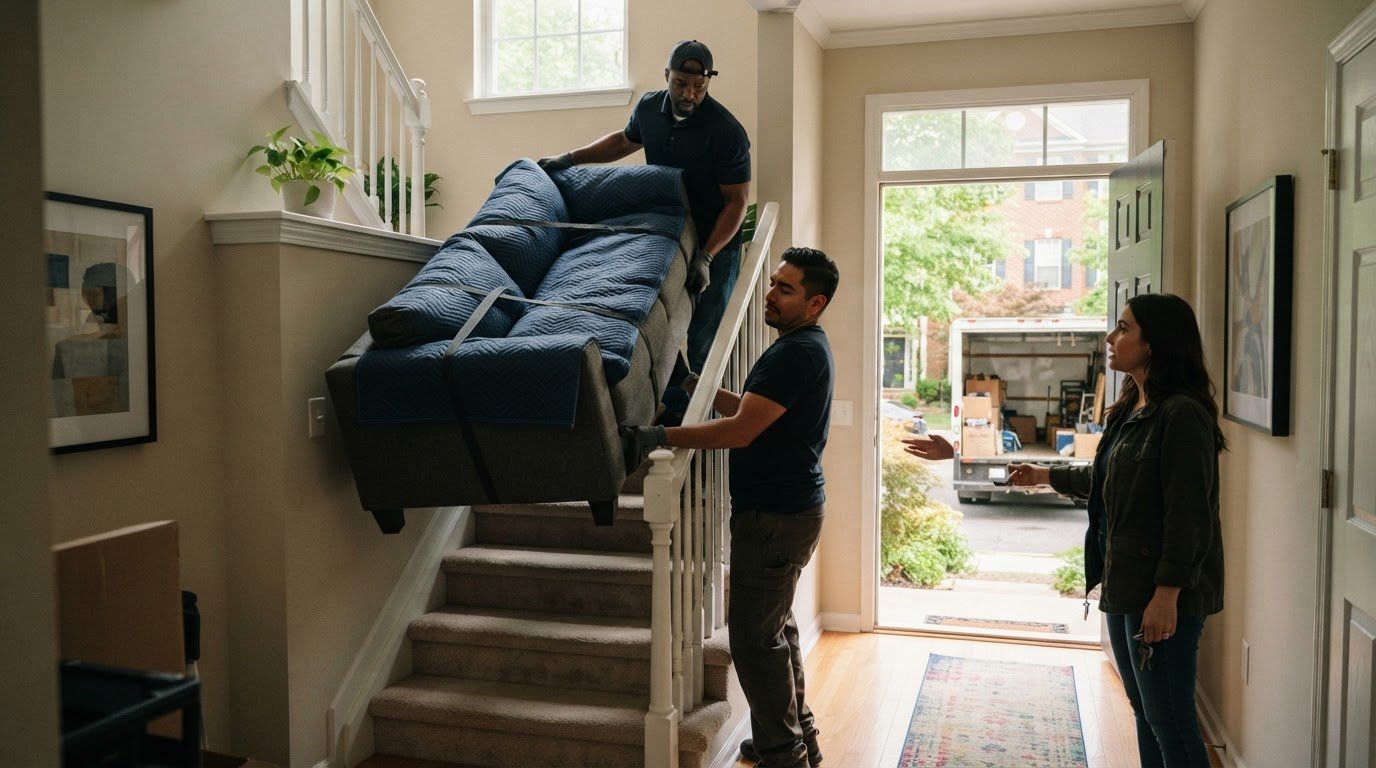
Hoisting uses tether straps to lift or lower furniture when stairs, hallways, or doorways cannot accommodate it. A sofa that cannot turn on a stair landing may fit through a wide window if the outside route is clear. The goal is controlled transport, not simply lifting an item over a balcony.
To determine whether hoisting is needed, compare the furniture’s dimensions with the entire route. Measure the item, doorways, stair turns, window opening, and balcony access. Include protruding legs, handles, and delicate surfaces. A dresser might clear a doorway but not a narrow stair turn, making an exterior lift worth considering.
Quotes depend on the furniture’s size and weight, floor level, building access, and lift complexity. A third-floor window with a clear approach presents different demands from a balcony beside trees or a roof edge. Share measurements and photos of the item, opening, landing area, and exterior obstacles to help define the work.
Crane rental charges, operator time, setup, and transport depend on the crane type, lift duration, and site access. The price is determined for the specific job after a quote request. There is no single cost or minimum-hour figure for every Fairfax Station lift.
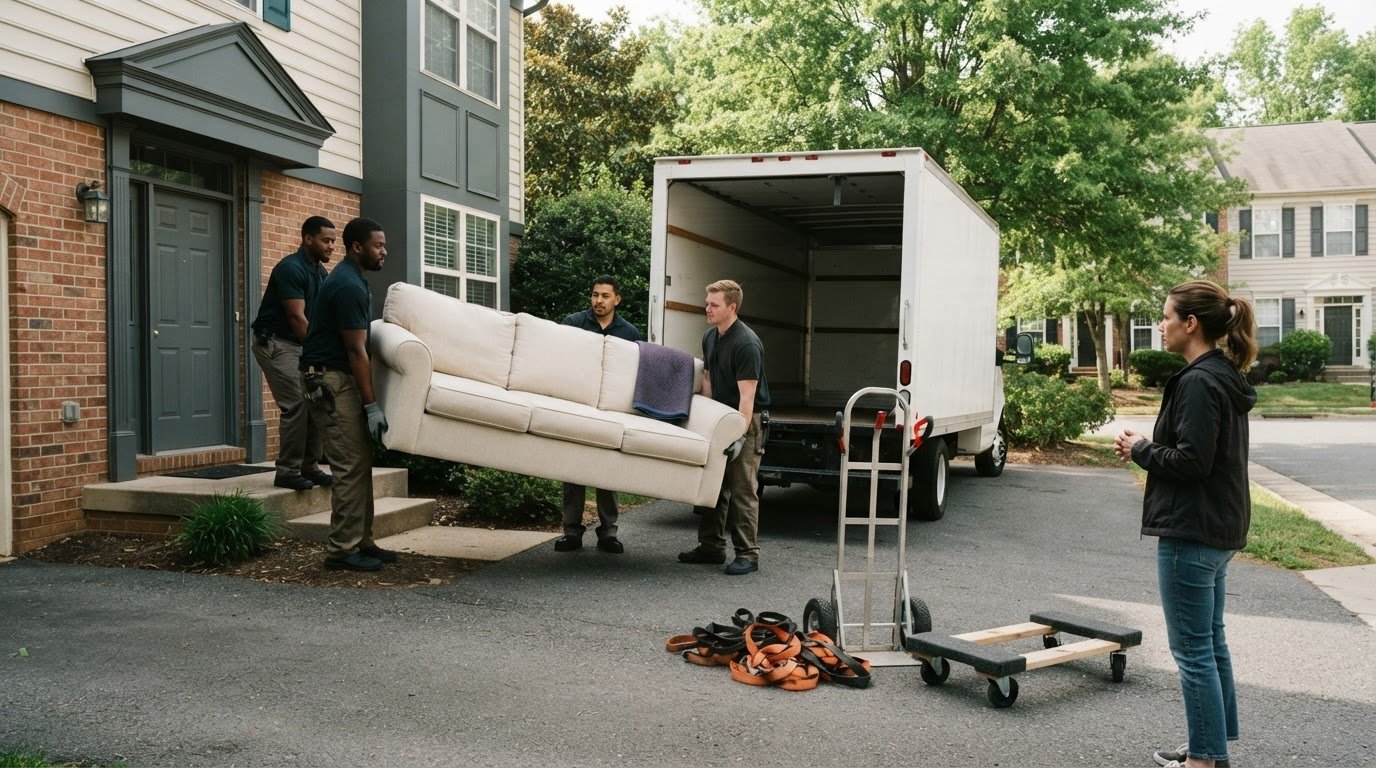
Professional furniture hoisting specialists can assess the route, secure the item with tether straps, guide its movement, and coordinate access with property management. Depending on the building and lift plan, some movers also handle permits, building rules, and property coordination.
Quotes may include setup and rigging, but the scope should clearly describe the crew, permits, and insurance. Hoisting services include setup and rigging, but don’t assume every other item is bundled. A written scope helps distinguish the lifting work from crane rental and related site arrangements.
Plan access before moving day. Record the floor level, stair width, window dimensions, balcony layout, overhead lines, landscaping, and space available for equipment. A crane may need a clear setup area, while hand hoisting needs room for the crew to guide furniture around walls and other obstacles.
Arrange the lift once you know the item’s dimensions, floor, access conditions, and preferred date. Crane work also requires coordination around equipment placement and building access, so include those details when booking.
Mover directories and review totals may offer context, but they do not establish which firms handle furniture hoisting or crane lifts. Those totals don’t identify which firms handle furniture hoisting or crane lifts; reviews should be considered alongside the specific service scope.
When weighing professional furniture hoisting specialists against crane rental companies in Fairfax Station, match the method to the item and site. Choose a planned hand hoist when the crew can control the load and route. Consider crane assistance when the furniture is too heavy to hoist by hand.
Hand hoisting large furniture through windows, onto roofs, or over balconies
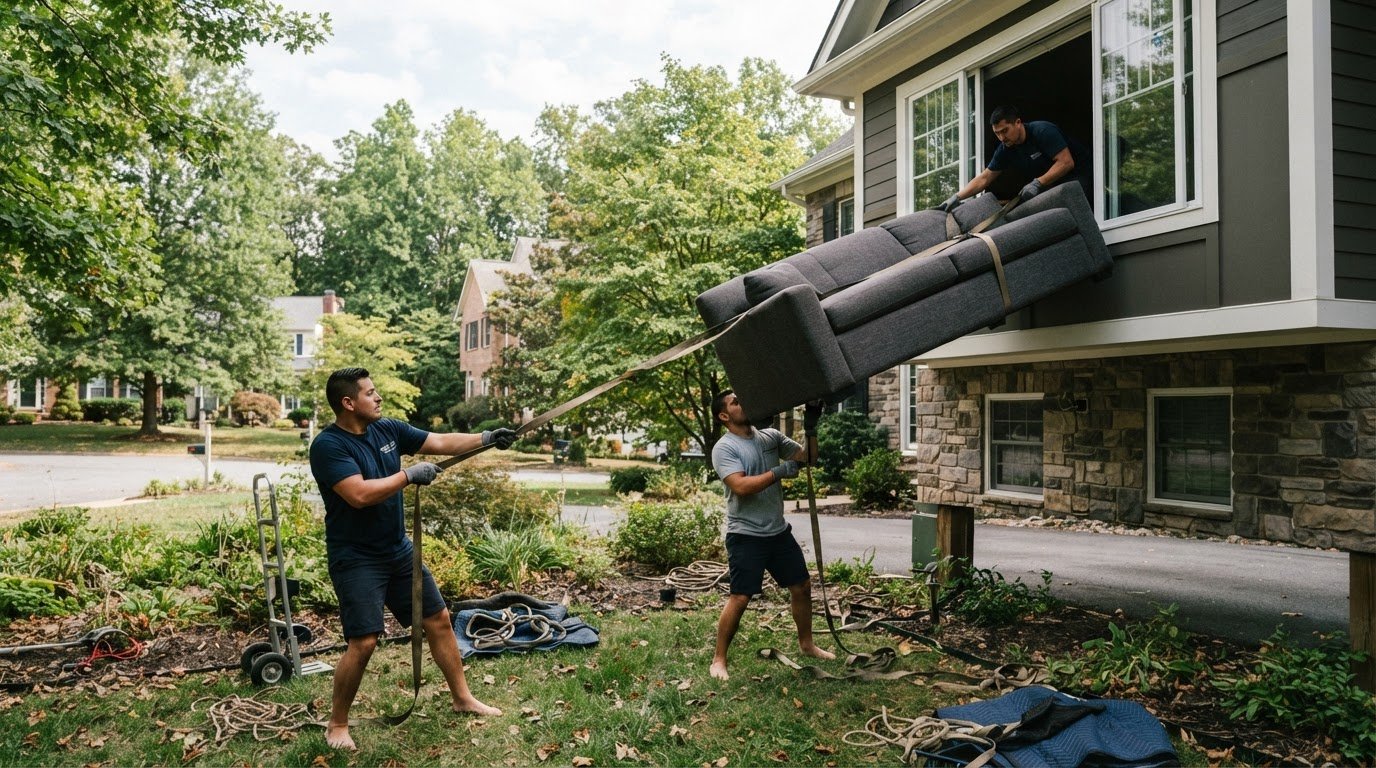
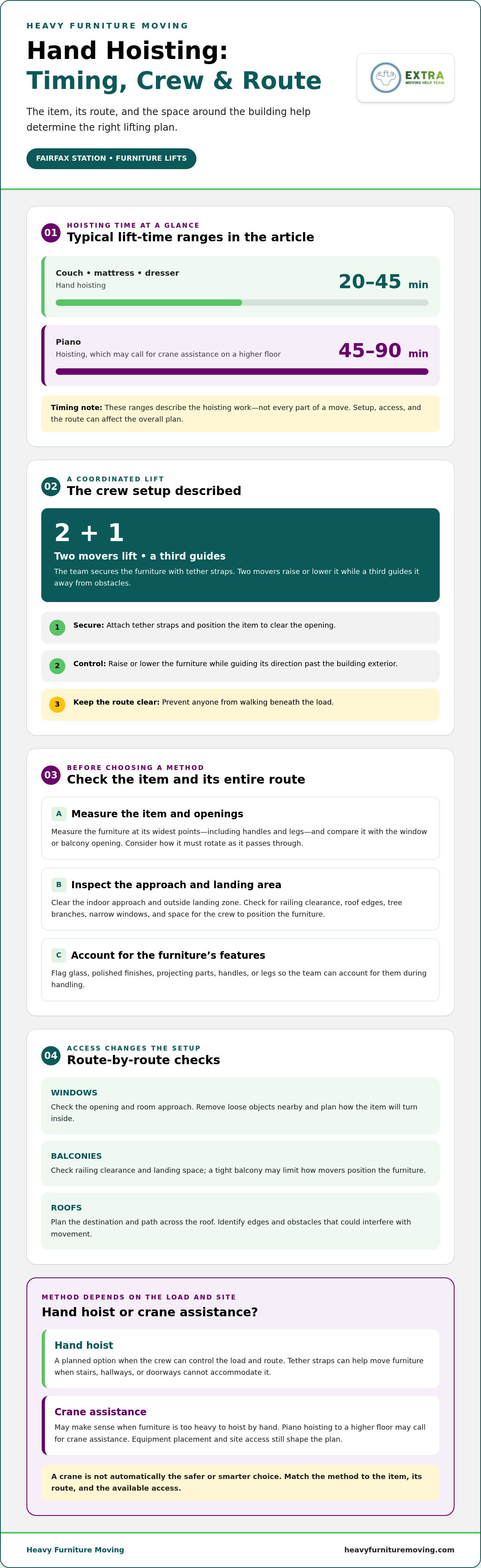
A hand hoist can move a sofa, mattress, or dresser when stairs and interior turns block the route. Movers attach tether straps, raise or lower the item, and guide it past the building exterior. For example, a couch or mattress going through a second- or third-floor window may be moved with standard rope-and-pulley hoisting, while piano hoisting to a higher floor may call for crane assistance. The right method depends on the item and its path.
Preparation starts with the opening and landing area. Measure the furniture at its widest points, including handles and legs. Compare those dimensions with the window or balcony opening, then consider how the item must rotate as it passes through. Clear the indoor approach and outside landing zone. A balcony railing, roof edge, tree branch, or narrow window can change the lifting angle and crew positions.
During hand hoisting, coordination matters as much as strength. In the described setup, two movers raise or lower the furniture while a third guides it away from obstacles. Before lifting, the team secures the item with tether straps and positions it to clear the opening. One mover can guide its direction while the others control the lift. Keep the route clear and prevent anyone from walking beneath the load.
- Windows: Check the opening and the room’s approach. Remove loose objects near the window, and plan how the item will turn inside.
- Balconies: Look at railing clearance and the landing space. A tight balcony may limit how movers position the furniture.
- Roofs: Plan the destination and the path across the roof. Identify edges and obstacles that could interfere with movement.
- Delicate furniture: Note glass, polished finishes, or projecting parts. The team needs to account for those features during handling.
A couch, mattress, or dresser typically takes 20-45 minutes to hoist. Piano hoisting typically takes 45-90 minutes. Those times describe the hoisting work, not every part of a moving experience. Setup, access, and the route can affect the overall plan. Share the item type, floor, opening, and obstacles before arranging the lift.
Hand hoisting may be an affordable alternative when the furniture and route suit the method. It is not a shortcut for an item the crew cannot control safely. For a sofa that needs an exterior route, sofa hoisting service can address the lift. Describe the window, roof, or balcony access so the work can be planned around the actual layout.
Benefits of professional hoisting
Professional movers bring a planned process to a lift that might otherwise involve awkward angles, limited space, and heavy furniture. The service includes setup and rigging, organizing the lift around the item and route. For example, a tall cabinet may need its doors secured and its center of weight considered before it leaves a window. Careful preparation helps the crew handle it with control.
Rigging also helps the team manage the load during movement. Before lifting, movers can inspect the furniture for loose parts, fragile surfaces, or existing damage that could worsen during handling. A glass-front cabinet calls for different care than a sturdy mattress. Point out scratches, loose trim, or delicate finishes before work begins, and photograph existing damage for your records.
A professional crew can coordinate the lift rather than leaving one person to manage several tasks. In the described hand-hoisting setup, two movers raise or lower the furniture while a third guides it away from obstacles. That division gives everyone a clear role and can reduce confusion near a window, where each mover may have a different view.
Planning can protect the building as well as the furniture. Before the lift, identify the opening, nearby walls, balcony railings, and landing area. Cover or clear vulnerable surfaces along the indoor path. A sofa coming through a window, for instance, needs room to turn without scraping the frame or striking a nearby light fixture.
Professional help also takes physical coordination off the homeowner’s shoulders. A Fairfax customer reported that a two-person team moved furniture from a one-bedroom apartment in two hours. That describes one move, not a standard duration, but it shows how a crew can handle several connected tasks in one visit.
- Before the crew arrives: Clear the route and identify furniture parts that detach, such as table legs or shelves.
- During setup: Confirm the item’s destination and keep children, pets, and bystanders away from the work area.
- After delivery: Inspect the furniture and the path for any new marks before the crew leaves.
For an item that cannot navigate stairs or a tight hallway, professional hoisting can make the move more manageable. The benefit is a combination of rigging, coordinated handling, and a clear plan for delivering the furniture by an alternate route.
Company licensing and insurance
Licensing and insurance describe different aspects of a furniture lift. A license relates to permission or qualifications for particular work; insurance describes coverage for specified risks. Neither term alone explains who handles the item, rigging, or building during the move. Review the scope and supporting documents together, especially when a sofa or piano must pass outside an apartment.
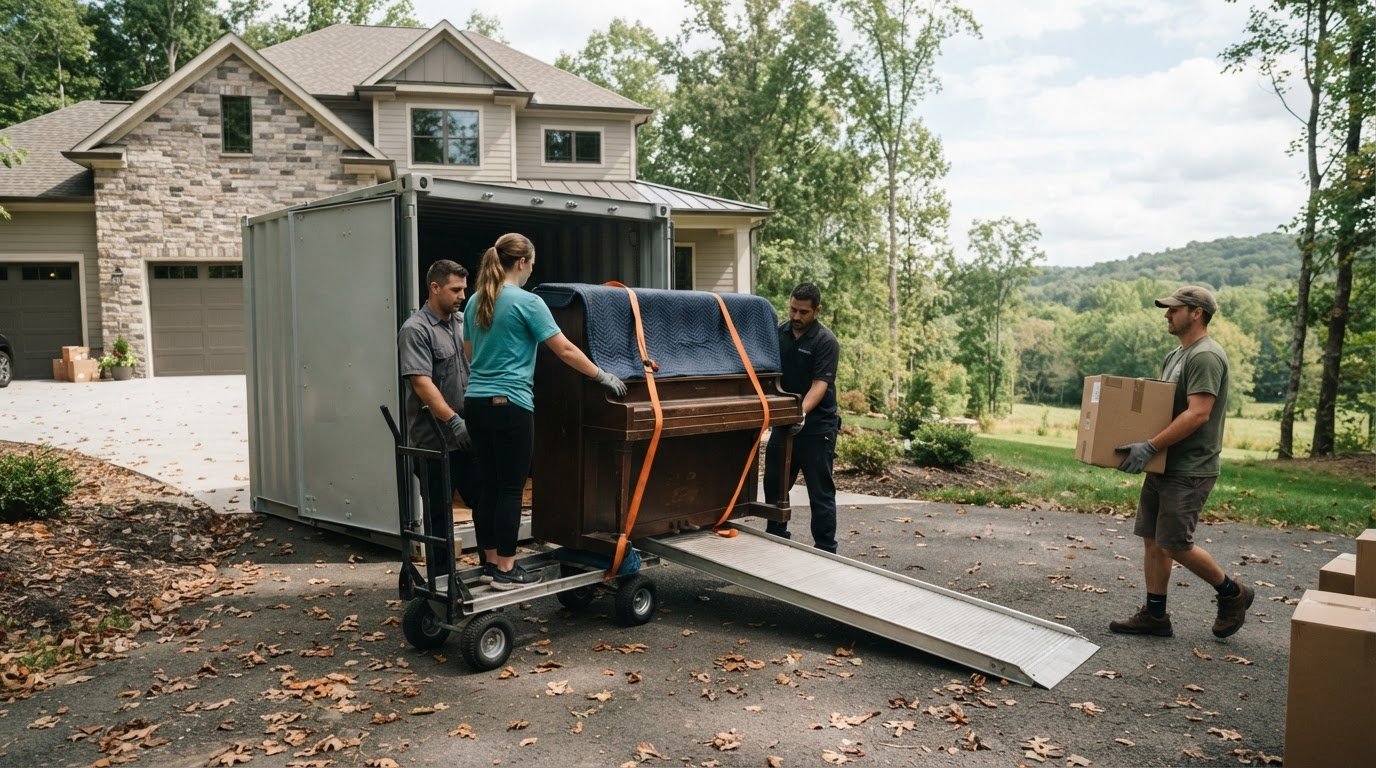
Start by defining the exact work. A furniture crew may handle preparation and lifting, while a crane rental arrangement may separate the equipment, operator, and furniture handling. The quote should identify who is responsible for each task. If a crane moves a piano to an upper floor, for example, clarify in writing who prepares and secures the piano, guides it, and completes delivery.
Read insurance language carefully, too. A certificate can identify policies and coverage periods, but it does not automatically explain how a specific item or property is treated. Review the named parties, dates, and coverage descriptions against the planned work. A valuable piano, polished cabinet, and balcony railing each present different property concerns. Don’t treat a general statement of coverage as a substitute for understanding the written terms.
Use this document review before the moving date:
- Match the scope: The written quote should describe the item, lifting route, crew responsibilities, and equipment arrangement.
- Read the insurance details: Compare the named business, policy dates, and described coverage with the scheduled work.
- Separate each party’s role: For crane-assisted relocation, identify who supplies the crane, operates it, rigs the furniture, and guides the load.
- Keep records together: Save the quote, insurance documents, building instructions, and any written lift plan in one place.
Building coordination matters, too. An apartment may have rules for window access, balcony use, loading areas, or work hours. Put those instructions alongside the quote so the crew’s plan matches the building’s access arrangements. If a property manager requires documentation before a lift, include that step in the schedule rather than waiting until the equipment or movers arrive.
Licensing and insurance cannot tell you whether a crew has planned the route well. The lifting plan should also account for furniture dimensions, floor level, obstacles, and landing area. A clear scope connects paperwork to the actual job, distinguishes furniture handling from crane equipment rental, and makes responsibilities easier to follow if the plan changes.
Crane use for furniture too heavy to hoist by hand
A crane becomes an option when furniture is too heavy to hoist by hand. It can lift or lower a bulky item through an exterior route that stairs and windows cannot accommodate. In Fairfax Station, consider the furniture, building access, crane setup area, and distance from the equipment to the opening.
Crane rental companies arrange crane equipment for lifting work. The scope may include equipment and an operator, while furniture preparation, rigging, guidance, and final placement require clear coordination. Separate these tasks in the plan. A heavy armoire, for example, needs a secure attachment, a clear path past the exterior wall, and people ready to guide it toward its destination.
The crane’s reach and setup position shape the lift. Trees, roof edges, balconies, overhead obstacles, and limited space near the building can affect where equipment can stand. A longer distance between the crane and window also changes the plan. Share photos of the property and describe the intended opening, floor, landing area, and obstacles.
Crane lifting carries risks for people and belongings. A swinging load can strike a wall, window, balcony, or nearby property; poor attachment can shift or damage furniture. Keep residents and bystanders away from the lifting zone. The crew needs a clear route, agreed signals, and a planned place to receive the item. Protect the opening and nearby surfaces before lifting begins.
- Identify the item: Describe its dimensions, weight, shape, and delicate parts, such as glass doors or projecting handles.
- Map the route: Note the pickup point, building height, opening, landing area, and crane position.
- Define responsibilities: Clarify who prepares and secures the furniture, operates equipment, guides the load, and handles delivery.
- Clear the work zone: Move vehicles and belongings away from the setup and landing areas.
Crane assistance is not automatically the best choice for every heavy item. A hand hoist may work if trained movers can control the furniture and route. A crane may suit an item beyond that method’s capacity, provided the site allows practical setup and reach. Compare the complete plan, not just the equipment.
For a sofa that needs an exterior route, consider professional sofa hoisting. For furniture too heavy to lift by hand, make the crane plan specific to the item and property before moving day.
Heavy Furniture Moving: Movers Near Me
Heavy Furniture Moving can help when a bulky item needs careful handling or an alternate route through your home. Use its Sofa Hoisting service for a couch that cannot fit through the usual entrance, or Exercise Equipment Moving for heavy fitness gear.
For a larger in-home move, movers can help handle furniture along the planned route. Share the item type, dimensions, floor, and any tight turns or narrow openings to give a clear picture of the job.
For help planning a furniture move, contact Heavy Furniture Moving.
Plan the Lift With Confidence
Make the job easy to describe. Gather the furniture’s approximate dimensions, note where it needs to go, and take clear photos of the access route. These details help turn a difficult lift into a practical plan, whether you’re moving a sofa or exercise equipment.
As you compare professional furniture hoisting specialists and crane rental companies in Fairfax Station, focus on who will coordinate the full job, from preparing the item to guiding it into place. Heavy Furniture Moving offers Movers Near Me, Exercise Equipment Moving, and Sofa Hoisting for people who need help with bulky furniture or heavy items.
Bring your item details and access photos to the next conversation. A clear starting point makes it easier to discuss the right kind of moving help for your home and belongings. Contact Heavy Furniture Moving to talk through your move and take the next step with confidence.
Frequently Asked Questions
When Do You Need Hoisting Services?
Hoisting may be needed when a large item cannot safely pass through the home’s normal route. A sectional that cannot turn at a stair landing, or a treadmill that will not clear an upstairs hallway, may need an exterior lift. Measure the item and the tightest points along the route first. If the exterior opening offers a workable path, hoisting can avoid forcing the item through stairs or doorways.
How do furniture hoisting specialists and crane rental companies compare for residential moves?
The choice between professional furniture hoisting specialists and crane rental companies in Fairfax Station depends on who handles the complete lift. Furniture movers focus on preparing, rigging, guiding, and placing household items; crane rental centers on equipment and its operation. For a residential move, clarify who is responsible for each task. Heavy Furniture Moving offers sofa hoisting and furniture moving for items that need a specialized route.
How much does furniture hoisting cost in Fairfax Station, Virginia?
Furniture hoisting prices depend on the item and conditions at the home. A quote is needed to determine the job’s price. Key factors include furniture dimensions and weight, floor height, access, obstacles, and whether the lift needs specialized equipment. A sofa going through a clear window presents a different scope from a bulky item near a tight roofline. Compare the work described, not just a headline estimate.
What access, height, weight, and site conditions determine whether a crane or hoisting service is suitable?
The item’s weight and shape, opening, building height, and outside setup space all affect the method. A tall armoire may be manageable by hand if the route allows controlled movement; a heavier item may call for crane assistance. Check for trees, overhead obstructions, narrow driveways, and a suitable landing area. Also consider the distance from equipment placement to the opening, which affects the crane’s reach.
What insurance and liability coverage should homeowners verify before an exterior furniture lift?
Review the written scope and insurance documents together before scheduling. Note the insured business, policy dates, and coverage described for property damage and the work being performed. Clarify how responsibility is divided among furniture handlers, a crane operator, and any equipment provider. Document existing marks on the item and nearby surfaces, such as window trim or balcony railings, before the crew begins.
How far in advance should homeowners book furniture hoisting or crane rental in Fairfax Station?
Book once you know the item’s dimensions, floor, access conditions, and preferred date. Crane work also requires coordination around equipment placement and building access.
Which local companies provide furniture hoisting or crane rental near Fairfax Station, and what do reviews say?
Heavy Furniture Moving offers sofa hoisting and moving help. Diamond Certified evaluated 8 mover companies serving Fairfax County, and local listings report 6069 review ratings, but those totals do not identify which companies provide hoisting or crane lifts.
Frequently Asked Questions
Hoisting may be needed when a large item cannot safely pass through the home’s normal route. A sectional that cannot turn at a stair landing, or a treadmill that will not clear an upstairs hallway, may need an exterior lift. Measure the item and the tightest points along the route first. If the exterior opening offers a workable path, hoisting can avoid forcing the item through stairs or doorways.
The choice between professional furniture hoisting specialists and crane rental companies in Fairfax Station depends on who handles the complete lift. Furniture movers focus on preparing, rigging, guiding, and placing household items; crane rental centers on equipment and its operation. For a residential move, clarify who is responsible for each task. Heavy Furniture Moving offers sofa hoisting and furniture moving for items that need a specialized route.
Furniture hoisting prices depend on the item and conditions at the home. A quote is needed to determine the job’s price. Key factors include furniture dimensions and weight, floor height, access, obstacles, and whether the lift needs specialized equipment. A sofa going through a clear window presents a different scope from a bulky item near a tight roofline. Compare the work described, not just a headline estimate.
The item’s weight and shape, opening, building height, and outside setup space all affect the method. A tall armoire may be manageable by hand if the route allows controlled movement; a heavier item may call for crane assistance. Check for trees, overhead obstructions, narrow driveways, and a suitable landing area. Also consider the distance from equipment placement to the opening, which affects the crane’s reach.
Review the written scope and insurance documents together before scheduling. Note the insured business, policy dates, and coverage described for property damage and the work being performed. Clarify how responsibility is divided among furniture handlers, a crane operator, and any equipment provider. Document existing marks on the item and nearby surfaces, such as window trim or balcony railings, before the crew begins.
Book once you know the item’s dimensions, floor, access conditions, and preferred date. Crane work also requires coordination around equipment placement and building access.
Heavy Furniture Moving offers sofa hoisting and moving help. Diamond Certified evaluated 8 mover companies serving Fairfax County, and local listings report 6069 review ratings, but those totals do not identify which companies provide hoisting or crane lifts.