Furniture Disassembly for Moving Service in Centreville, VA
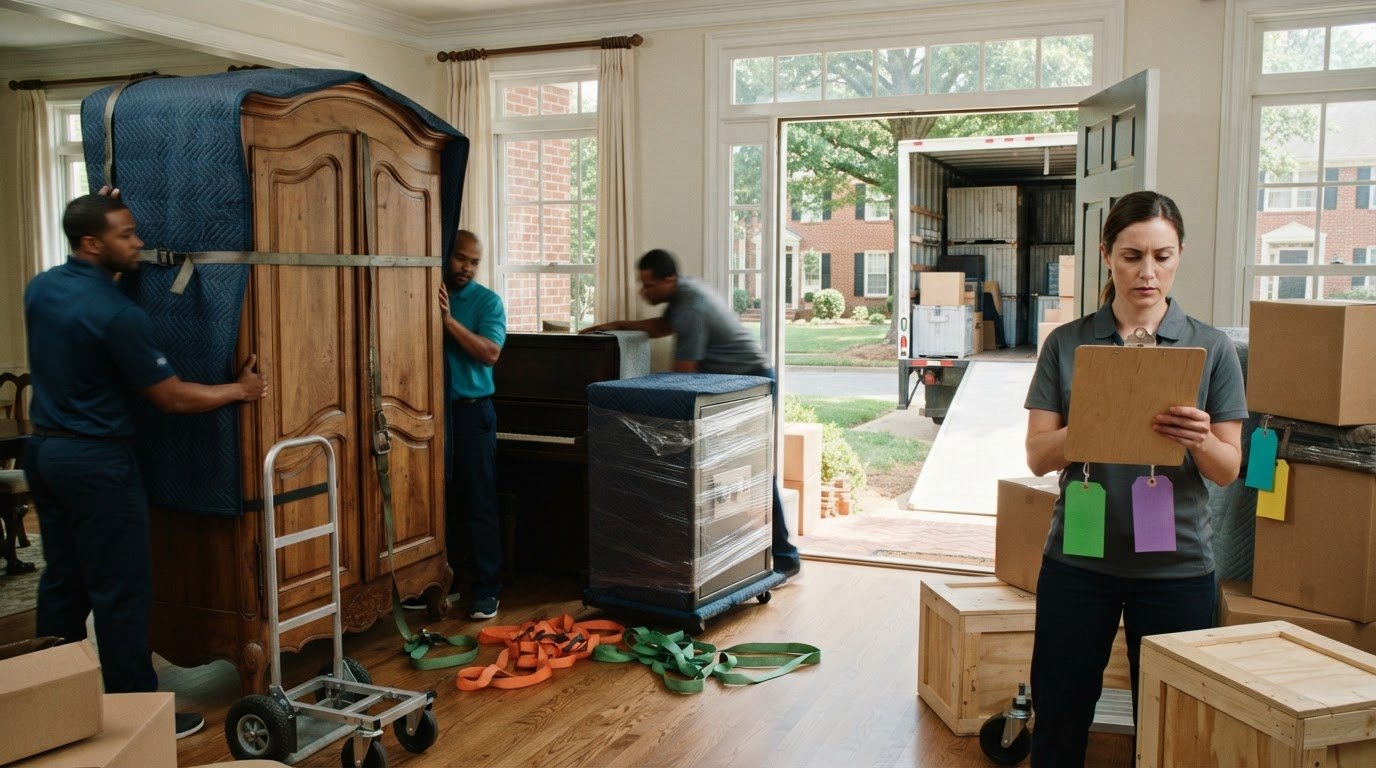
Could one overlooked bolt or narrow hallway turn moving day into a struggle? A solid furniture plan helps protect your pieces and keeps the move on track. If you’re looking into furniture disassembly for moving service Centreville, start by identifying which items may need to come apart and where bulky pieces could get stuck. Heavy Furniture Moving provides residential moving support in Centreville, with specialized handling for heavy household items and sofa hoisting for pieces that can’t pass through standard entryways or elevators.
It’s understandable to worry about scratched surfaces, misplaced hardware, or a bed frame that won’t fit down the stairs. A little preparation can ease those concerns. This guide explains how to decide whether furniture needs disassembly, keep parts and fasteners organized, and share useful details about item dimensions and access routes. You’ll also learn how local moving support can help coordinate heavy items with the rest of your move, so you can make a clear plan before moving day.
Key Takeaways
- Furniture disassembly for moving service Centreville starts with identifying which pieces need preparation and how that fits into the overall move.
- Record each item’s dimensions, current room, destination, and access challenges to help plan its route through the home.
- Keep labeled hardware and instructions with the furniture they belong to, and clear nearby work areas before moving day.
- Compare DIY preparation with including moving help in your plan, considering your time, familiarity with each piece, and coordination needs.
- Share your furniture list and access details when arranging residential moving support, especially for heavy or bulky items that may need a different route.
Furniture Disassembly for a Centreville Move: What the Service Involves
Furniture disassembly means separating components when the move plan calls for it. That might involve removing a table’s legs or separating sections of modular furniture so they’re easier to handle and carry. It’s a planning choice, not a step every piece needs.
Furniture preparation is one part of coordinating a residential move. It doesn’t replace transporting the furniture, and it isn’t the same as packing household belongings. A moving company may coordinate different parts of a move, but each item still needs a plan based on its construction, size, and route out of the home.
Disassembly separates furniture components; moving transports the item, packing protects it, and reassembly puts separated parts back together. Keeping those tasks distinct helps you describe what your move involves. It also avoids assuming that every piece should be taken apart or that preparation alone solves transport challenges.
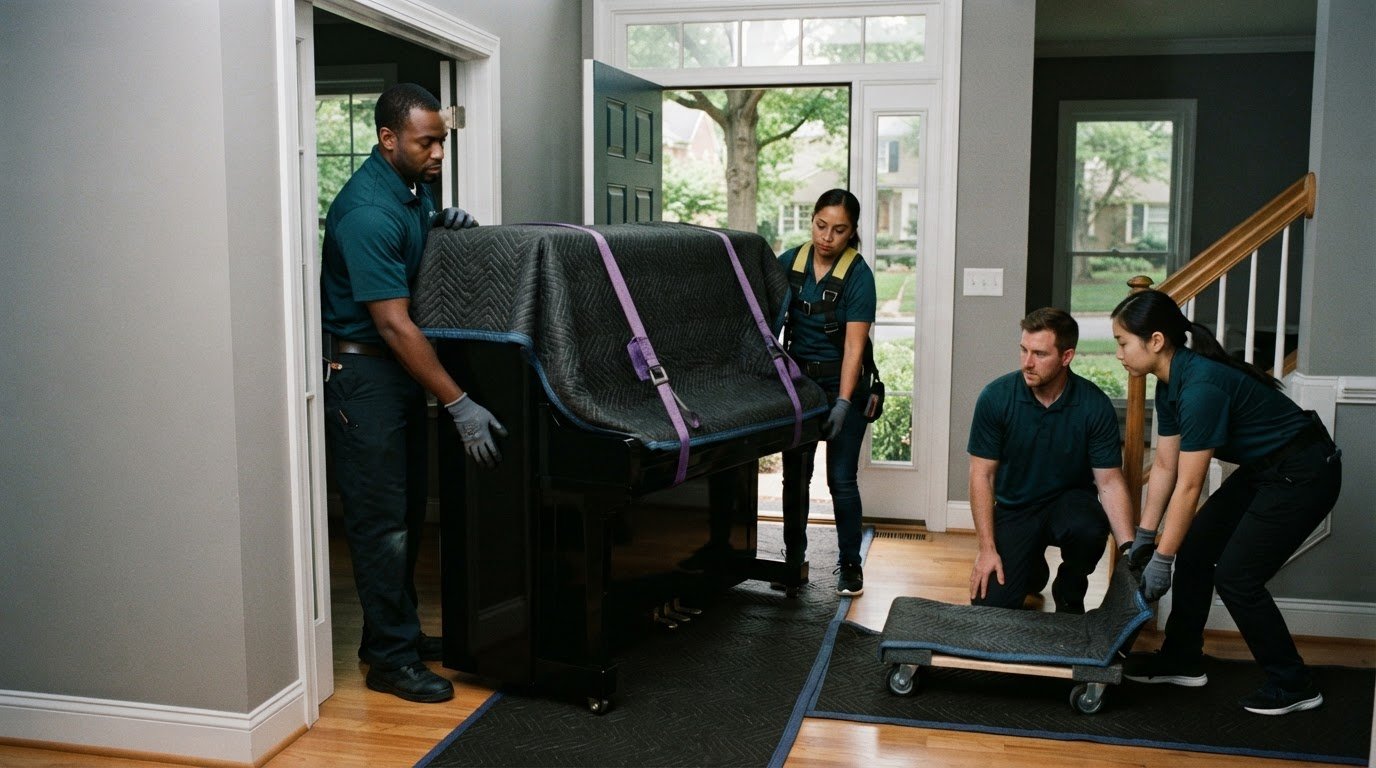
Oversized, multi-part, or access-sensitive furniture deserves early attention. A large item may be difficult to carry in one piece, while a narrow doorway or sharp turn can affect how it needs to be handled. Share measurements and access details as part of the move plan. Heavy Furniture Moving provides residential support in Centreville and specializes in heavy and bulky household items, connecting furniture planning to the larger job of moving it through the home.
Which furniture may need a disassembly plan?
Start with pieces that have detachable sections or take up substantial space, such as bed frames, dining tables, desks, and modular furniture. Construction matters: some components are designed to come apart, while others are fixed or delicate. Dimensions, the way a piece is built, and the manufacturer’s guidance can help you decide what preparation makes sense.
Keep any instructions with the item and avoid forcing joints or removing unfamiliar fasteners. If a piece has special handling needs, note them in your move plan.
When Centreville home access changes the move plan
Map the route each bulky piece must take. Check doorways, hallway turns, stairs, elevators, and parking access at both the current home and destination. Measure the furniture and tight access points, accounting for the item’s shape as well as its width and height. This can reveal obstacles before moving day and help guide decisions about preparation and handling.
If a sofa can’t pass through standard openings or elevators, sofa hoisting is an option. Include the access challenge in your plan so it can be considered alongside the item’s dimensions and destination.
How to Plan Furniture Disassembly Before Moving in Centreville
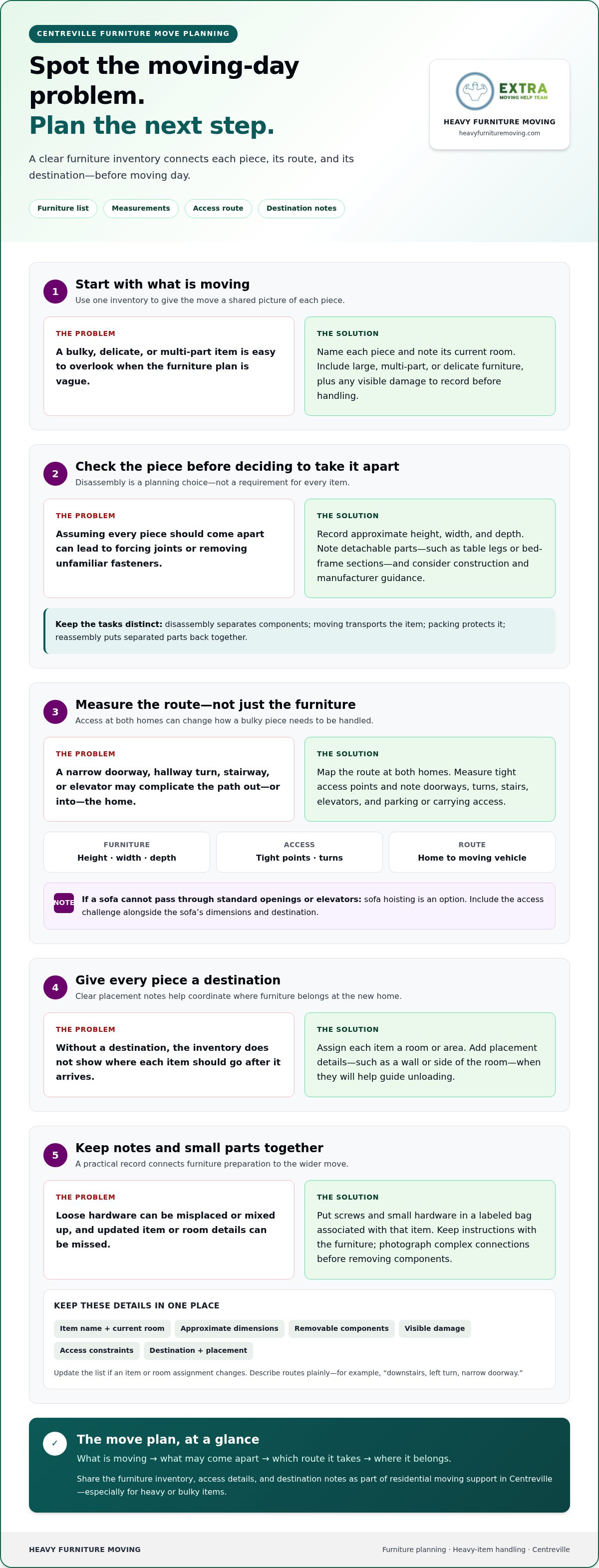
A useful furniture plan gives everyone a shared picture of what’s moving, what may need to be separated, and where each piece belongs. Make one inventory and update it as decisions are made. If you’re planning furniture disassembly for moving service Centreville, clear notes help connect furniture preparation with the rest of your residential move.
- List the furniture. Name each piece and note its current room. Include large, multi-part, or delicate items, along with any visible damage to record before handling.
- Measure each item. Write down approximate height, width, and depth. Note removable components, such as table legs or bed-frame sections, without assuming every piece needs to come apart.
- Map the access route. Record tight doorways, turns, stairs, and elevators at both homes. Add parking or carrying-access details that could affect the path from the residence to the moving vehicle.
- Set a destination for each item. Name the room or area where the furniture should go at the new home. Include placement details, such as which wall or side of a room, if they’ll help guide unloading.
- Prepare move-day notes. Gather the inventory, access details, and destination instructions in one place. Share them as part of the move plan and update the list if an item or room assignment changes.
An item list and clear destination notes help coordinate the move by showing what needs to travel, which routes may be challenging, and where each piece belongs. This is especially useful when a bulky item has a less direct route or when several rooms need to be cleared in sequence.
Create an item and access checklist
Keep the checklist practical: item name, approximate dimensions, current room, destination, removable components, visible damage, and access constraints. Describe the route in plain terms, such as “downstairs, left turn, narrow doorway.” Share these details together so the furniture and the path it must take are considered as part of one move plan.
Keep furniture parts and instructions organized
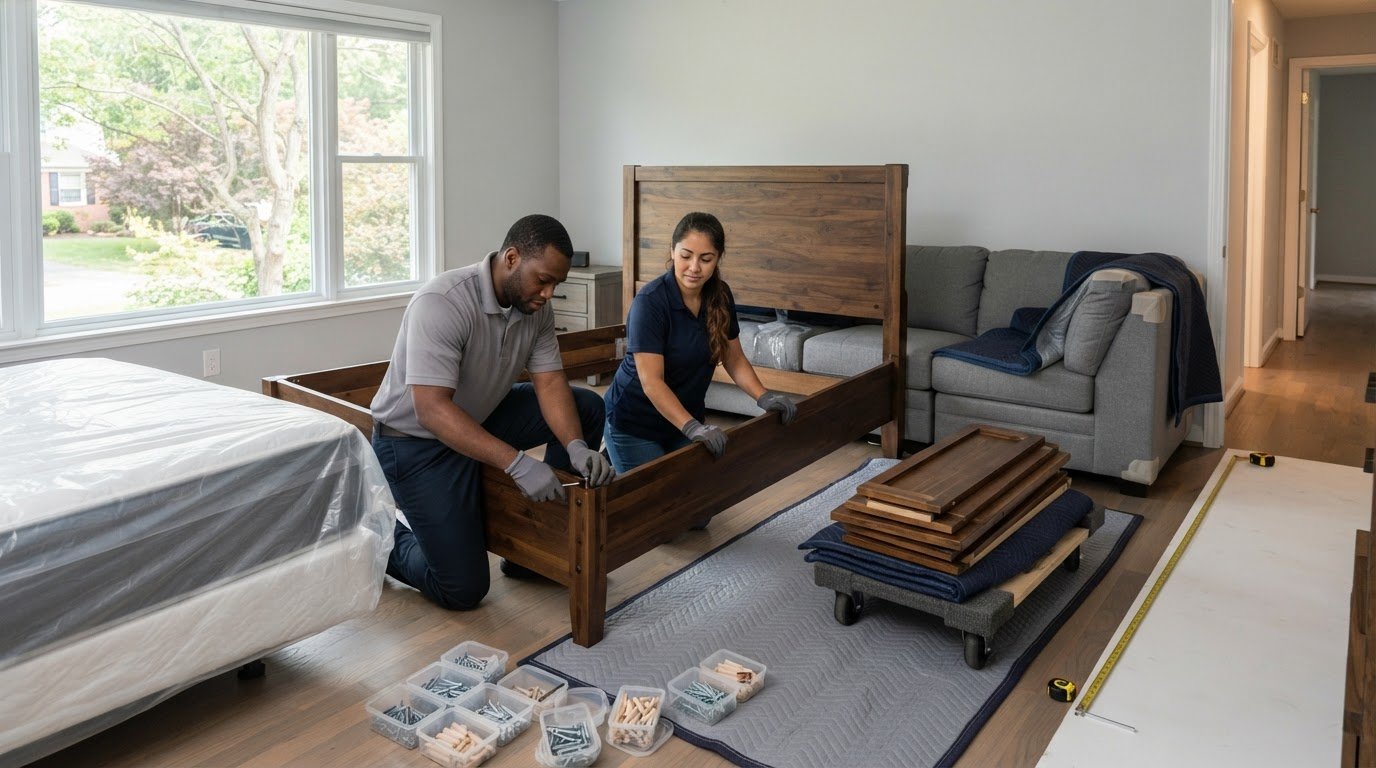
If you take a piece apart yourself, place its screws and small hardware in a labeled bag associated with that item. Don’t leave loose parts in a general box or drawer. For complex connections, take photos before removing components, and keep manufacturer instructions with the corresponding furniture. That gives you a clearer reference later and helps prevent parts from being mixed up.
Planning a Centreville move with heavy or bulky furniture? Share your inventory and destination notes when arranging residential moving support from Heavy Furniture Moving. These details connect furniture preparation with the wider move.
DIY Preparation vs. Professional Moving Help for Furniture Disassembly
There’s no single right way to prepare every piece. The choice depends on how complex the furniture is, how it fits through the home, how much time you have, and how comfortable you feel handling its parts. Use this comparison to decide whether to prepare items yourself or include moving help in your Centreville move plan.
| Consideration | Self-preparation | Including moving help |
|---|---|---|
| Control | You choose when and how to prepare each item. | You coordinate furniture needs as part of the broader move plan. |
| Time required | You set aside time to follow instructions, separate parts, and organize hardware. | Moving support can help coordinate bulky items with the move’s other steps. |
| Familiarity | You may know the item’s history and have its instructions or tools. | Experience moving heavy items can inform planning for large household goods. |
| Coordination | You manage preparation, parts, access details, and placement notes. | You share item and access information as part of arranging residential moving support. |
The table is a guide, not a rule. You can prepare straightforward pieces yourself and arrange moving support for parts of the move involving heavier furniture, challenging access, or tighter sequencing. The goal is to match your approach to the actual work, not to take apart every item by default.
When self-preparation may suit the move
Self-preparation may work for a straightforward item if you have its instructions, the appropriate tools, and enough time to keep components organized. Label parts and hardware, and keep them together with the related furniture. If the instructions are unclear, the item is already damaged, or its handling needs are uncertain, pause rather than force a connection or fastener.
When moving support can make coordination easier
Moving help may be useful when several bulky items need to pass through tight access points or when the move has to follow a specific sequence. Heavy Furniture Moving provides residential moving support in Centreville and specializes in heavy and bulky household items. Include furniture dimensions, access challenges, and placement plans when arranging support, so the larger handling and transport needs are part of the conversation.
If you’re weighing furniture disassembly for moving service Centreville, consider the full job: preparation, route through the home, and transport. Heavy-item moving support can help coordinate bulky furniture as part of a residential move. Choose the level of help that fits your items, timing, and comfort with the preparation involved.
Prepare Your Centreville Home and Furniture for Moving Day
A clear route and organized work area make furniture easier to handle on moving day. Before the crew arrives, walk through the home as if you were carrying each large item out. Remove everyday obstacles, note access details, and decide where furniture belongs at the destination. These preparations keep instructions clear and work areas ready.
Make pathways and work areas ready
Focus on the route, not just the room where a piece sits. Clear loose rugs, boxes, shoes, and other items from hallways and doorways. Check narrow openings and turns against bulky furniture measurements, and keep children, pets, and nonessential foot traffic away from active work areas. If a route includes stairs or an elevator, include it in the plan.
- Clear the path from each furniture item to the home’s exit.
- Measure tight openings and turns that may affect how bulky items can pass.
- Set aside a work area where preparation can happen without household clutter.
- Keep pets and children away from furniture being handled, and limit traffic through the route.
- Make a note of parking arrangements and any building access details that affect loading.
In Centreville, account for the specific access at both the current home and the destination. A stairway, elevator, parking area, or building entrance can shape the route and timing of furniture handling. Include those details when coordinating furniture disassembly for moving service Centreville, especially if a bulky piece has a tight path.
Share move-day instructions clearly
Make placement instructions easy to follow. Label destination rooms, then give each furniture item a matching room name or note. Instead of “upstairs,” write the intended room and, if useful, which wall or area the piece should go near. Flag any item with special handling or placement needs so the instructions don’t get lost in general move-day details.
- Keep labeled hardware bags and instructions with the furniture they belong to; don’t mix parts from different items.
- Mark the destination room for each piece and note any specific placement preference.
- Share stairs, elevator access, parking arrangements, and entry details with the moving team in advance.
- Point out access changes between the old home and the destination, such as a different entrance or floor.
For more local moving guidance, explore this guide to reliable movers near me in Fairfax and Northern VA. If heavy or bulky furniture is part of your Centreville move, arrange residential moving support with Heavy Furniture Moving and share your access and placement notes as part of the plan.
Arrange Furniture Moving Help in Centreville with Heavy Furniture Moving
A clear move plan starts with useful details. Share which furniture is moving, where it sits now, where it needs to go, and what the route looks like at both homes. This gives the moving team a practical picture of the job, especially if large or heavy pieces have limited access or need careful placement.
Heavy Furniture Moving provides residential moving support in Centreville and nearby Northern Virginia communities, with specialized handling for heavy and bulky household items. If a sofa cannot fit through a standard entryway or elevator, sofa hoisting is an option. Furniture preparation belongs within the wider moving plan, alongside handling, transport, and any packing or unpacking needs. Service areas include Fairfax, Woodbridge, Manassas, Manassas Park, Aldie, Ashburn, McLean, Vienna, Reston, Centreville, Chantilly, Clifton, Dumfries, South Riding, Fairfax Station, Haymarket, and Gainesville.
What to share when arranging a Centreville move
Gather the information that helps describe each item and the route it must take. Approximate measurements are useful, even if you can’t provide exact dimensions. Photos can clarify an unusual shape or construction detail, while manufacturer instructions may explain how a piece is designed to come apart. Share what you know without guessing about preparation requirements.
- Furniture list: Name each piece and note its approximate dimensions.
- Room details: Identify the item’s current room and its intended destination room.
- Access barriers: Describe narrow doorways, stairs, turns, elevators, or parking and building access arrangements.
- Item references: Include photos or manufacturer instructions when they help explain the furniture’s construction.
- Other moving needs: Mention whether the move also involves packing, unpacking, or other household moving support.
Keep the destination plan specific. “Second bedroom” is more useful than “upstairs,” and a note about where a large piece should sit can help guide placement. If the furniture list changes, update the information so the plan reflects what’s actually moving.
Get local moving help for heavy or bulky furniture
For a Centreville household move, sharing the furniture list, access details, and destination notes helps connect preparation with the actual work of moving each item. Heavy Furniture Moving is veteran-family owned and operated, and its residential moving support includes handling for heavy and bulky household goods. This hands-on focus can be useful when the move includes items that need extra planning because of their size or route.
If you’re researching furniture disassembly for moving service Centreville, consider the full move: what furniture is involved, how it will leave the home, and where it belongs next. These details help shape a coordinated plan without assuming every item needs to be taken apart.
For more context on local moving support, read about reliable movers near me in Fairfax and Northern VA. Ready to organize your move? Plan your Centreville move with Heavy Furniture Moving.
Make Your Next Move Easier to Plan
Take one practical step before moving day: walk the route your largest pieces will travel, from their current rooms to the exit and into their planned spaces at the new home. Note any point that could change the plan, such as a tight turn or a room that needs to be cleared first. Those observations can help you decide which preparation to handle yourself and what details to include when arranging moving help.
A good plan doesn’t have to account for every possibility. It needs to give your moving team a clear starting point and leave room to adjust if a piece or pathway presents an unexpected challenge. If you’re considering furniture disassembly for moving service Centreville, connect that preparation to the full move rather than treating it as a separate task.
Start planning with Heavy Furniture Moving and take the next step toward a more coordinated move. Plan your Centreville move with Heavy Furniture Moving. With a clear plan in hand, you can approach moving day with greater confidence.
Frequently Asked Questions
Does furniture disassembly for moving include putting furniture back together?
Not automatically. Disassembly and reassembly are separate tasks, so clarify which tasks are part of your move plan. Identify which pieces have been taken apart, keep each item’s instructions and labeled parts together, and note where it should go at the destination. Clear expectations about the furniture and its parts help everyone understand the plan without assuming that separating components also includes putting them back together.
What furniture should be disassembled before a move?
There’s no universal list; the need depends on the item’s construction, dimensions, manufacturer instructions, and route through the home. A bed frame, dining table, desk, or modular piece might need preparation, but don’t take one apart just because it’s on this list. Consider whether it can pass through the planned route intact. Include pieces with tight access or unusual construction in your move plan so their handling can be considered early.
How do I keep screws and hardware from getting lost during a move?
Put each set of screws and small parts in its own labeled bag, then attach or keep that bag with the matching furniture piece. Add a brief label such as “desk, left side” if the parts look similar. Keep the manufacturer instructions and item-specific notes together, too. Before independent disassembly, photograph complex connections from more than one angle; the images can serve as a reference when you need to identify how the parts fit.
Can large furniture be moved through a narrow doorway without disassembly?
It depends on the item’s dimensions and shape, the doorway, nearby turns, and the full route. Measure the furniture and the narrowest points before moving day; a piece’s height or depth may matter as much as its width. A different route or handling approach may be needed. For items that can’t pass through standard entryways or elevators, sofa hoisting is an option to consider as part of the move plan.
How much does furniture disassembly for moving cost in Centreville?
The cost of moving help depends on the scope of the move, the furniture involved, access conditions, and related services. Prepare an item list with approximate dimensions and notes about stairs, tight turns, or other access barriers to describe the project clearly. Include any packing or unpacking needs when arranging moving help.
What information should I give movers about furniture that needs preparation?
Share each item’s name, approximate dimensions, current room, and destination room. Include manufacturer instructions, photos that clarify unusual construction or existing condition, and access challenges such as stairs, elevators, or tight turns. These details help the team understand how each piece fits into the move. Also mention whether you need packing or unpacking support, so related household moving needs are part of the plan.
Frequently Asked Questions
Start with pieces that have detachable sections or take up substantial space, such as bed frames, dining tables, desks, and modular furniture. Construction matters: some components are designed to come apart, while others are fixed or delicate. Dimensions, the way a piece is built, and the manufacturer’s guidance can help you decide what preparation makes sense. Keep any instructions with the item and avoid forcing joints or removing unfamiliar fasteners. If a piece has special handling needs, note them in your move plan.
Not automatically. Disassembly and reassembly are separate tasks, so clarify which tasks are part of your move plan. Identify which pieces have been taken apart, keep each item’s instructions and labeled parts together, and note where it should go at the destination. Clear expectations about the furniture and its parts help everyone understand the plan without assuming that separating components also includes putting them back together.
There’s no universal list; the need depends on the item’s construction, dimensions, manufacturer instructions, and route through the home. A bed frame, dining table, desk, or modular piece might need preparation, but don’t take one apart just because it’s on this list. Consider whether it can pass through the planned route intact. Include pieces with tight access or unusual construction in your move plan so their handling can be considered early.
Put each set of screws and small parts in its own labeled bag, then attach or keep that bag with the matching furniture piece. Add a brief label such as “desk, left side” if the parts look similar. Keep the manufacturer instructions and item-specific notes together, too. Before independent disassembly, photograph complex connections from more than one angle; the images can serve as a reference when you need to identify how the parts fit.
It depends on the item’s dimensions and shape, the doorway, nearby turns, and the full route. Measure the furniture and the narrowest points before moving day; a piece’s height or depth may matter as much as its width. A different route or handling approach may be needed. For items that can’t pass through standard entryways or elevators, sofa hoisting is an option to consider as part of the move plan.
The cost of moving help depends on the scope of the move, the furniture involved, access conditions, and related services. Prepare an item list with approximate dimensions and notes about stairs, tight turns, or other access barriers to describe the project clearly. Include any packing or unpacking needs when arranging moving help.
Share each item’s name, approximate dimensions, current room, and destination room. Include manufacturer instructions, photos that clarify unusual construction or existing condition, and access challenges such as stairs, elevators, or tight turns. These details help the team understand how each piece fits into the move. Also mention whether you need packing or unpacking support, so related household moving needs are part of the plan.