Fitness Equipment Moving in Woodbridge: Labor and Pricing
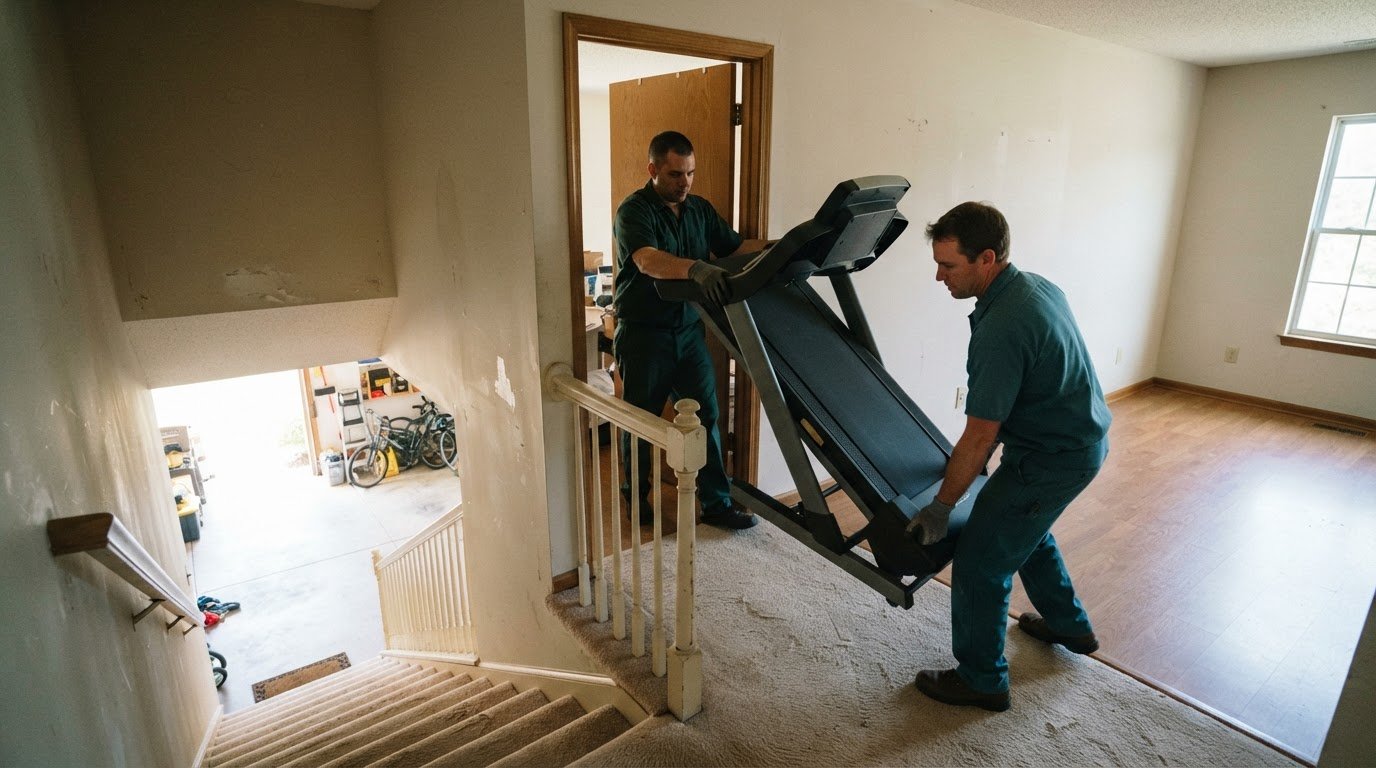
You don’t necessarily need to take your treadmill apart before the move. Heavy Furniture Moving handles disassembly and reassembly when needed, including treadmill consoles. The labor to carry heavy fitness equipment from a garage to an upper-level bonus room in Woodbridge depends on the machine, stairway, and route through the home. Tight turns and loading needs also affect the work.
It makes sense to worry about a heavy machine getting stuck on the stairs or damaged during the move. The price depends on the case and is given after a quote request; labor, equipment size, access, and transport needs all affect it.
Here, you’ll learn how movers plan a route through stairs and narrow spaces, what affects the labor estimate, and how loading and unloading fit into the job. You’ll also see what determines whether a treadmill needs disassembly, so you can plan the move with less guesswork.
Key Takeaways
- Measure the stairway, landings, and tight turns so the moving route can be planned around the equipment.
- Labor and transport costs depend on the machine, access, handling needs, and distance involved.
- A treadmill may not need full disassembly; its design and the available path help determine what must come apart.
- Protect removable parts and sensitive components during loading, transport, and placement.
- Heavy Furniture Moving’s Exercise Equipment Moving service can help with challenging gym-equipment moves in the home.
Moving heavy gym equipment through stairs and tight spaces
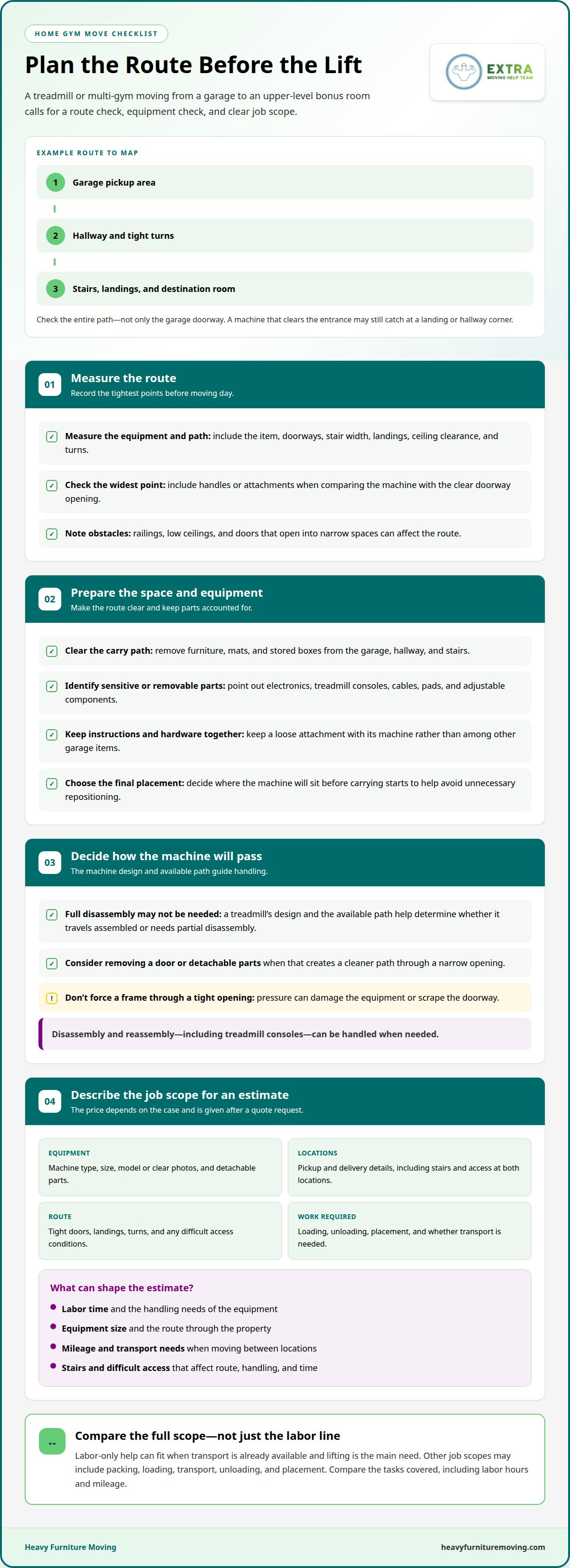
Moving a treadmill or multi-gym from a garage to an upper-level bonus room starts with mapping the route. Heavy Furniture Moving measures the item, doorways, and stairs before lifting, including landing depth, ceiling clearance, and turns. For labor to carry heavy fitness equipment from a garage to an upper-level bonus room in Woodbridge, each turn can affect whether the equipment travels assembled or needs partial disassembly.
Measure the tightest point along the entire path, not just the garage doorway. A treadmill might fit through the entrance but catch at a stair landing or hallway corner. Clear furniture, mats, and stored boxes before the move. Note railings, low ceilings, and doors that open into narrow spaces. These details give the crew useful route information before handling begins.
Weight machines and multi-gyms can have separate frames, cables, pads, and adjustable parts. Heavy Furniture Moving handles disassembly and reassembly when needed, with care for electronics, removable parts, and adjustable components. Identify detachable parts, and keep instructions and hardware together. For example, keep a loose cable attachment with its machine rather than setting it aside among garage items.
Use this preparation list before moving day:
- Measure doorways, stair width, and landings along the full route.
- Clear furniture and stored items from the garage, hallway, and stairs.
- Point out removable parts, electronics, and adjustable components.
- Choose where the machine will sit in the bonus room before carrying starts.
Narrow doors call for a deliberate approach. Compare the machine’s widest point, including handles or attachments, with the clear doorway opening. The crew can remove a door or detachable machine parts when that creates a cleaner path. Don’t force a frame through a tight opening, since pressure can damage the equipment or scrape the doorway.
For a local Woodbridge move, route planning matters whether equipment stays inside one home or travels between addresses. A treadmill going upstairs differs from a weight rack moving alongside heavy furniture: each item has its own shape, grip points, and balance. Keep the path clear between rooms or stops, and choose the final placement before carrying begins. Clear directions help avoid unnecessary repositioning at the destination.
For home gym moves, Heavy Furniture Moving measures the equipment, doorways, and stairs before lifting. That lets the crew consider access conditions and plan the route in advance.
Base fares, mileage, and labor pricing
For a Woodbridge move, the estimate depends on the work, route, and transport involved. Share the equipment, pickup and delivery details, and access conditions when requesting a quote.
The price depends on the case and is given after a quote request; labor time, equipment size, mileage, stairs, and transport needs shape the estimate.
Labor-Only and Full-Service Costs
Is a handyman or labor-only mover cheaper than a full-service mover? There’s no universal lower-cost option: compare the work each price covers. Labor-only help fits a move where you already have transport and need lifting. Heavy Furniture Moving offers labor-only services, as well as packing, unloading, and transport support, so compare the full scope rather than just the labor line.
For example, moving workout equipment from a basement to another room differs from carrying it between addresses. A commercial machine may also need different handling than home exercise equipment. List each task, including loading, unloading, and placement, so the estimate reflects the actual job.
Stairs and Difficult-Access Charges
Do stairs, bulky equipment, or difficult access bring extra charges? They can affect the labor estimate because they change the route, handling, and time required. A basement stairway, narrow landing, or heavy machine may add work beyond a clear, ground-level carry.
Describe the garage, stairs, doors, and destination accurately. Clarifying access before booking can prevent a mismatch between the described job and the work at home. Include whether equipment must travel inside one property or between locations.
For an upfront quote, prepare a clear job description. Include the machine type, pickup and destination locations, whether transport is needed, and any stairs or tight access. Send a photo of the equipment and stairs so the crew can assess the machine and route.
A careful route assessment can reveal details a short description misses, such as a sharp turn between the garage and hallway. Heavy Furniture Moving measures before lifting and provides the rate up front. Share the equipment and route details so the quote reflects the actual work.
Keep the comparison practical. Match labor hours, mileage, transport, loading, and unloading across estimates. If you need hands for lifting but have a vehicle, labor-only moving help may fit that scope. For a garage-to-bonus-room move, clearly describe the stairs and destination so the labor estimate accounts for the real carry.
Transporting fitness equipment between locations
Moving equipment between Woodbridge addresses takes more planning than carrying it across one room. The job may involve pickup, loading, transport, unloading, and placement at the destination. A treadmill, elliptical, weight rack, or cable machine each brings different dimensions and handling needs. Describe every piece before booking, including detachable parts and the stairs at both locations.
Heavy Furniture Moving moves home workout machines such as treadmills, ellipticals, and weight racks. The item’s shape matters as much as its weight. A long treadmill deck needs a different carrying position than a compact stationary bike, while a cable machine may have protruding arms or loose attachments. Share the model or clear photos to help plan the move.
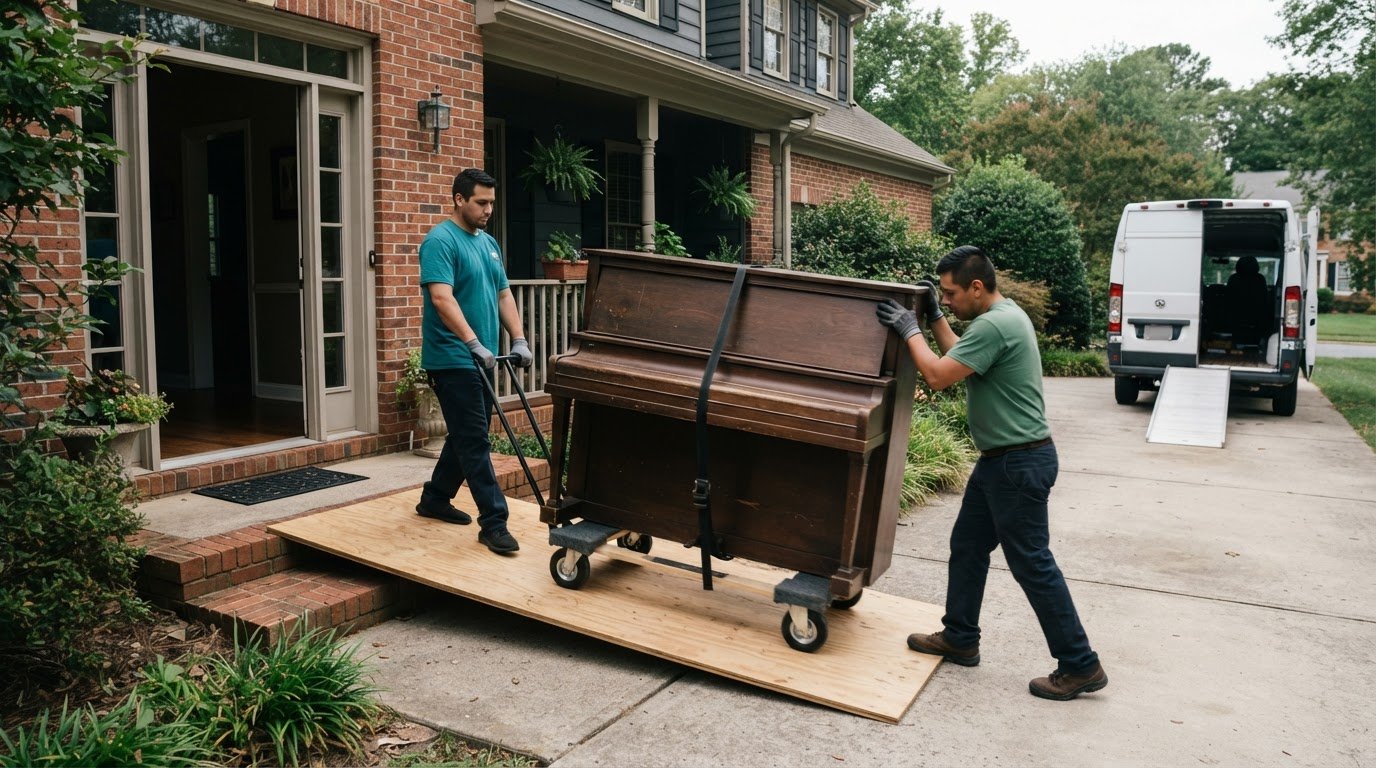
For transport, the crew can use suitable dollies to roll equipment across appropriate surfaces, then secure it in the truck. A dolly supports the load during movement, but it does not remove the need for controlled handling at thresholds, ramps, or stairs. Keep the pickup route clear, and identify uneven ground or narrow access before loading begins.
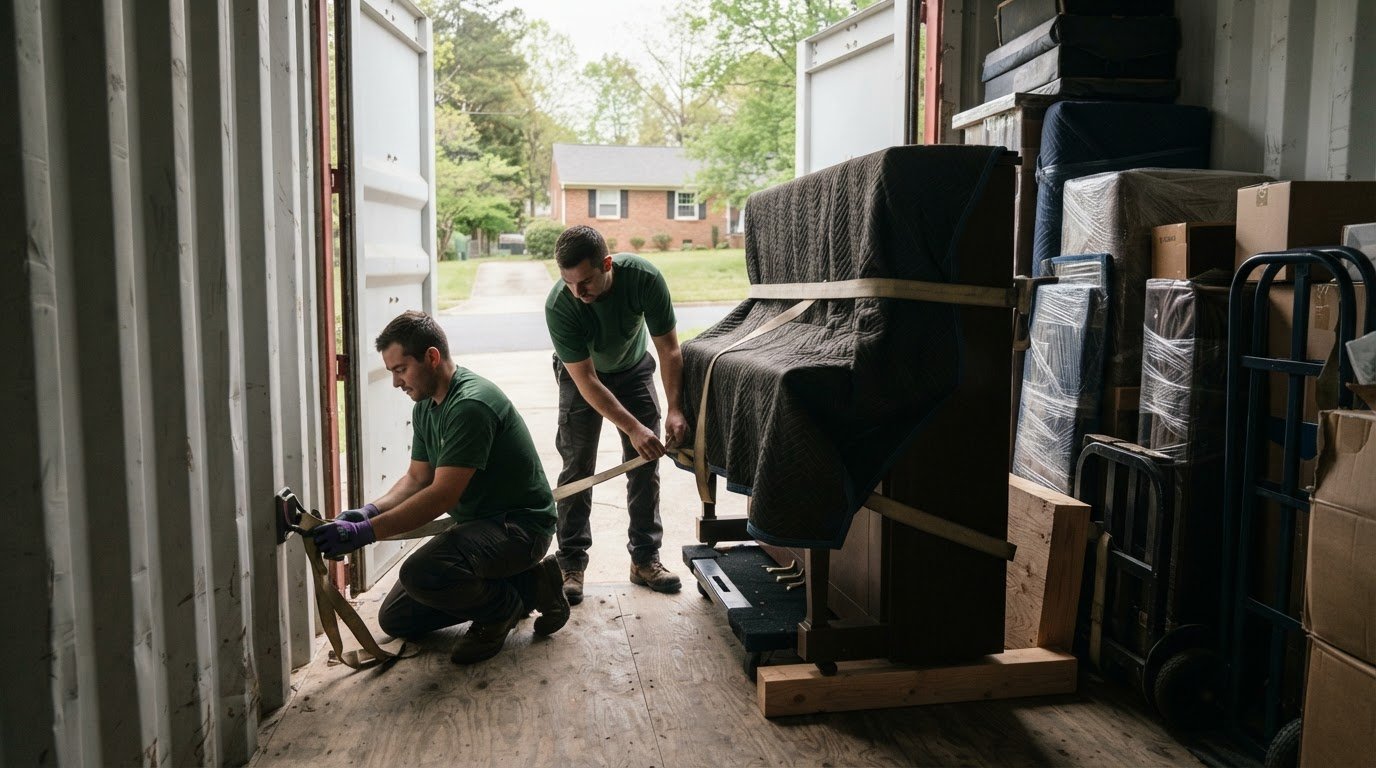
Secure truck transport also depends on stable placement. The machine should be protected from shifting during the trip, and removable parts should travel safely with it. Before loading, separate loose accessories, secure adjustable components, and point out screens or electronics that need careful handling. At delivery, direct the crew to the planned room to avoid repeated repositioning.
- List each machine and its destination room.
- Describe stairs, doorways, and loading access at pickup and delivery.
- Separate loose accessories and identify sensitive components.
- Plan the final placement before unloading starts.
What insurance or liability coverage applies when movers carry fitness equipment inside a home? Coverage follows the mover’s applicable written terms and policy. Those terms define covered damage and any limits or exclusions, so don’t assume household insurance automatically covers the move.
A local example makes the route easier to picture: a treadmill picked up from one Woodbridge home may need a truck for the address-to-address trip, followed by careful placement inside the next home. If stairs appear at both locations, report them when planning the pickup. A move with stairs at each end involves separate access points, not one continuous carry.
Good transport planning connects the pickup details to the final setup. Provide the equipment list, locations, access conditions, and intended placement together. That gives the crew a clear picture of the truck, dollies, and handling steps the job requires, whether the destination is a garage, basement, or upstairs workout room.
Treadmills, ellipticals, racks, and cable machines
Choose Woodbridge movers whose work includes exercise equipment and heavy machines. Heavy Furniture Moving handles treadmills, ellipticals, and weight racks with attention to their shape, weight distribution, and sensitive components. Share the equipment type and route so the crew can plan around the actual machine.
Some treadmills weigh hundreds of pounds, which makes stairs and tight turns harder to manage. Their belts, motors, LCD screens, and alignment systems can be damaged by rough handling. An elliptical may have moving arms and pedals, while a rack can have projecting supports. Identify these parts before the crew begins moving.
Weight distribution matters during a carry. A machine’s heaviest section may not sit at its center, so the crew needs to control its balance as it moves. Keep adjustable components stable and removable parts together. For a cable machine, point out attachments that could swing or catch on a doorway.
For moving across a level floor, flatbed dollies can help roll heavy equipment. Machine skates may also support movement across suitable surfaces, but their use depends on the machine and route. Stairs require a different approach than a smooth floor. Don’t assume a dolly can safely travel over steps or tight landings.
A clear plan helps you prepare the workout area and access route:
- Identify each machine, including its attachments and removable parts.
- Clear the path from the garage to the destination room.
- Point out electronics, belts, cables, and adjustable sections.
- Choose the final placement before moving the equipment into the room.
Heavy Furniture Moving handles disassembly and reassembly when needed. That can help when a treadmill or multi-gym won’t pass through a doorway intact. Keep the machine’s instructions available if you have them, and keep removed hardware together. The crew can then handle the parts as a coordinated set, rather than treating each piece as separate workout gear.
Storage plans can also affect the move. If a treadmill or rack is going into a garage or storage area, clear enough space for its intended position before delivery. Avoid placing equipment where its moving parts block the route or where the crew must shift furniture repeatedly. A defined destination reduces extra handling after unloading.
Before booking, give Heavy Furniture Moving the machine types, stair route, and destination. A treadmill going upstairs needs a different plan from a rack rolling across a clear floor. These details help the crew prepare for weight distribution, suitable dollies, and any disassembly needed for the route.
Loading and unloading heavy fitness equipment
Loading starts before a treadmill leaves the garage. Clear the route to the truck, remove loose accessories, and identify parts that shift. Heavy Furniture Moving includes wrap, blankets, and straps on every job, and the crew can stabilize the machine for transport. Those steps help protect the equipment during loading and on the way to its destination.
For a Woodbridge residential move, share where the machine sits and how it reaches the exit. A treadmill near the garage door presents a different carry from a weight machine in a basement. Point out steps, uneven surfaces, and tight turns. Keep pets, boxes, and furniture away from the route while the crew works.
Stairs need controlled movement, not rushed lifting. Before the carry, confirm the landing is clear and the machine’s path is open. The crew can plan where to pause and reposition, especially when an upper-level turn changes the machine’s angle. Don’t try to guide the load while standing in its path; leave the handling to the moving crew.
Padding and stabilization matter after the equipment reaches the truck. Heavy Furniture Moving includes wrap, blankets, and straps on every job. Keep detached pieces together, and tell the crew which accessories belong with each machine. An elliptical’s removable pieces should not be mixed with a treadmill’s parts. Stable placement helps limit shifting during the trip, while clear labeling makes unloading more organized.
At delivery, guide the crew to the exact room before unloading begins. Clear the final space and decide which way the machine should face. For an upstairs bonus room, make sure the landing and doorway remain open. If the equipment needs to pass through a narrow hall, direct the crew before it leaves the truck, not after it reaches the stairs.
- Clear the pickup and delivery routes, including stairs and landings.
- Keep detached accessories grouped with their machine.
- Choose the final placement before unloading starts.
- Allow room for the crew to maneuver and finish positioning the equipment.
Loading and unloading are separate parts of the job. A short carry from the truck to a garage differs from a longer trip through a home and up stairs. Tell the crew about both ends of the route, including the distance from parking to the entrance. That helps them plan wrapping, padding, stabilization, and careful placement through the final turn.
Need help moving gym equipment through a Woodbridge home? Arrange exercise equipment moving help for the loading, carry, and placement.
Heavy Furniture Moving: Movers Near Me
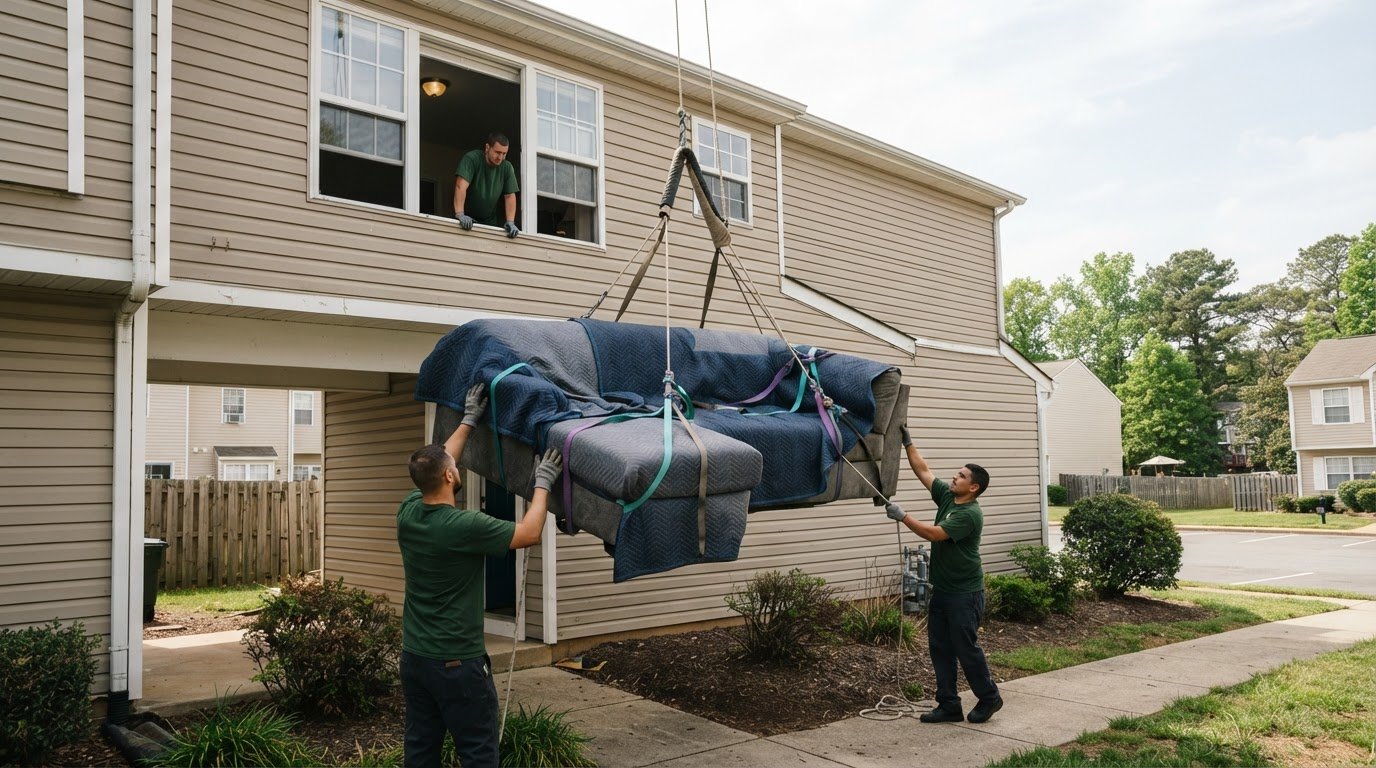
Heavy Furniture Moving is a practical next step when a treadmill, elliptical, or weight machine needs careful handling through a Woodbridge home. Its Exercise Equipment Moving service fits moves involving heavy workout equipment, stairs, and tight access. For related household moves, the team also offers Movers Near Me, in-home furniture moving, and Sofa Hoisting.
Share the equipment type, pickup location, stairs, and intended room when describing your move. That clarifies the lifting and placement involved, whether you’re moving one machine or coordinating it with furniture.
Contact Heavy Furniture Moving to discuss your equipment move, or visit heavyfurnituremoving.com.
Set Up Your Next Move with Confidence
Make the next step a clear plan for the room you want to use. Think about where each machine will sit, how you want the space arranged, and whether other bulky items need moving too. For labor to carry heavy fitness equipment from your garage to an upper-level bonus room in Woodbridge, describing the route and destination helps shape the move around your home.
Heavy Furniture Moving offers Exercise Equipment Moving for gym machines, along with Movers Near Me and Sofa Hoisting for other demanding residential moves. Share what needs moving and where it needs to go to discuss the right help for the job.
Contact Heavy Furniture Moving to talk through your move. A well-planned handoff can help you focus on setting up your workout space and getting back to your routine.
Frequently Asked Questions
Do I need to take my treadmill apart before you arrive?
No, leave the treadmill assembled unless you’ve already been instructed otherwise. Heavy Furniture Moving handles disassembly and reassembly, including treadmill consoles. Share the treadmill’s make or a clear photo when describing the move, especially if its controls or attachments look unusual. Keep the owner’s manual nearby if available, since it can help identify the model and its parts without requiring you to take the machine apart.
Do you disassemble and reassemble equipment?
Yes, disassembly and reassembly are included when needed. For example, a treadmill console can be removed to help with a tight route, then reassembled after the move. Heavy Furniture Moving also includes wrap, blankets, and straps on every job. Keep components together and point out anything that already feels loose or was previously removed, so the crew understands the machine’s condition before handling it.
Does dismantling gym equipment change the price?
Disassembly and reassembly are included when needed, not a separate add-on. The estimate depends on the job’s scope and the equipment being moved. Heavy Furniture Moving uses hourly labor with a two-hour minimum, while most single heavy items have an upfront flat rate quoted by phone. Share the model, access details, and requested work so the quote reflects the job.
What is the average labor cost to move heavy fitness equipment upstairs in Woodbridge?
There isn’t one average that fits every Woodbridge move; the estimate depends on the machine, access, and work requested. Heavy Furniture Moving serves Woodbridge, Fairfax, Manassas, Manassas Park, Aldie, Ashburn, McLean, Vienna, Reston, Centreville, Chantilly, Clifton, Dumfries, South Riding, Fairfax Station, Haymarket, and Gainesville. Hourly labor has a two-hour minimum; most single heavy items receive an upfront flat-rate quote.
How should a treadmill or weight machine be prepared for an upstairs move?
Send a photo of the equipment and stairs, and keep the model information or manual handy. You don’t need to dismantle the machine yourself; the crew handles disassembly when needed. Most equipment can stay assembled until the move, while loose accessories should stay with their machine. Point out any prior damage or missing parts before the crew begins, so the equipment’s condition is clear.
What stair width, landing space, and doorway measurements are needed to move gym equipment safely?
There’s no single stair or doorway measurement that works for every machine. Heavy Furniture Moving measures the equipment, doorways, and stairs before lifting, including the narrowest point and any landing where the machine must turn. Share photos of the full route, not just the room entrance. Those details help determine whether the item can pass as-is or needs disassembly before it goes upstairs.
What are the risks of carrying heavy fitness equipment up stairs, and when should professionals handle it?
A heavy machine can shift unexpectedly, block a person’s view, or catch on a stair edge, creating risks to people, walls, and equipment components. Get professional help when a treadmill, elliptical, or weight machine is bulky, hard to grip, or difficult to turn on the stairs. Avoid attempting a carry without a clear route, stable handling, and enough control to stop safely if the machine shifts.
Frequently Asked Questions
No, leave the treadmill assembled unless you’ve already been instructed otherwise. Heavy Furniture Moving handles disassembly and reassembly, including treadmill consoles. Share the treadmill’s make or a clear photo when describing the move, especially if its controls or attachments look unusual. Keep the owner’s manual nearby if available, since it can help identify the model and its parts without requiring you to take the machine apart.
Yes, disassembly and reassembly are included when needed. For example, a treadmill console can be removed to help with a tight route, then reassembled after the move. Heavy Furniture Moving also includes wrap, blankets, and straps on every job. Keep components together and point out anything that already feels loose or was previously removed, so the crew understands the machine’s condition before handling it.
Disassembly and reassembly are included when needed, not a separate add-on. The estimate depends on the job’s scope and the equipment being moved. Heavy Furniture Moving uses hourly labor with a two-hour minimum, while most single heavy items have an upfront flat rate quoted by phone. Share the model, access details, and requested work so the quote reflects the job.
There isn’t one average that fits every Woodbridge move; the estimate depends on the machine, access, and work requested. Heavy Furniture Moving serves Woodbridge, Fairfax, Manassas, Manassas Park, Aldie, Ashburn, McLean, Vienna, Reston, Centreville, Chantilly, Clifton, Dumfries, South Riding, Fairfax Station, Haymarket, and Gainesville. Hourly labor has a two-hour minimum; most single heavy items receive an upfront flat-rate quote.
Send a photo of the equipment and stairs, and keep the model information or manual handy. You don’t need to dismantle the machine yourself; the crew handles disassembly when needed. Most equipment can stay assembled until the move, while loose accessories should stay with their machine. Point out any prior damage or missing parts before the crew begins, so the equipment’s condition is clear.
There’s no single stair or doorway measurement that works for every machine. Heavy Furniture Moving measures the equipment, doorways, and stairs before lifting, including the narrowest point and any landing where the machine must turn. Share photos of the full route, not just the room entrance. Those details help determine whether the item can pass as-is or needs disassembly before it goes upstairs.
A heavy machine can shift unexpectedly, block a person’s view, or catch on a stair edge, creating risks to people, walls, and equipment components. Get professional help when a treadmill, elliptical, or weight machine is bulky, hard to grip, or difficult to turn on the stairs. Avoid attempting a carry without a clear route, stable handling, and enough control to stop safely if the machine shifts.