Commercial Power Cage Moving Service in Clifton
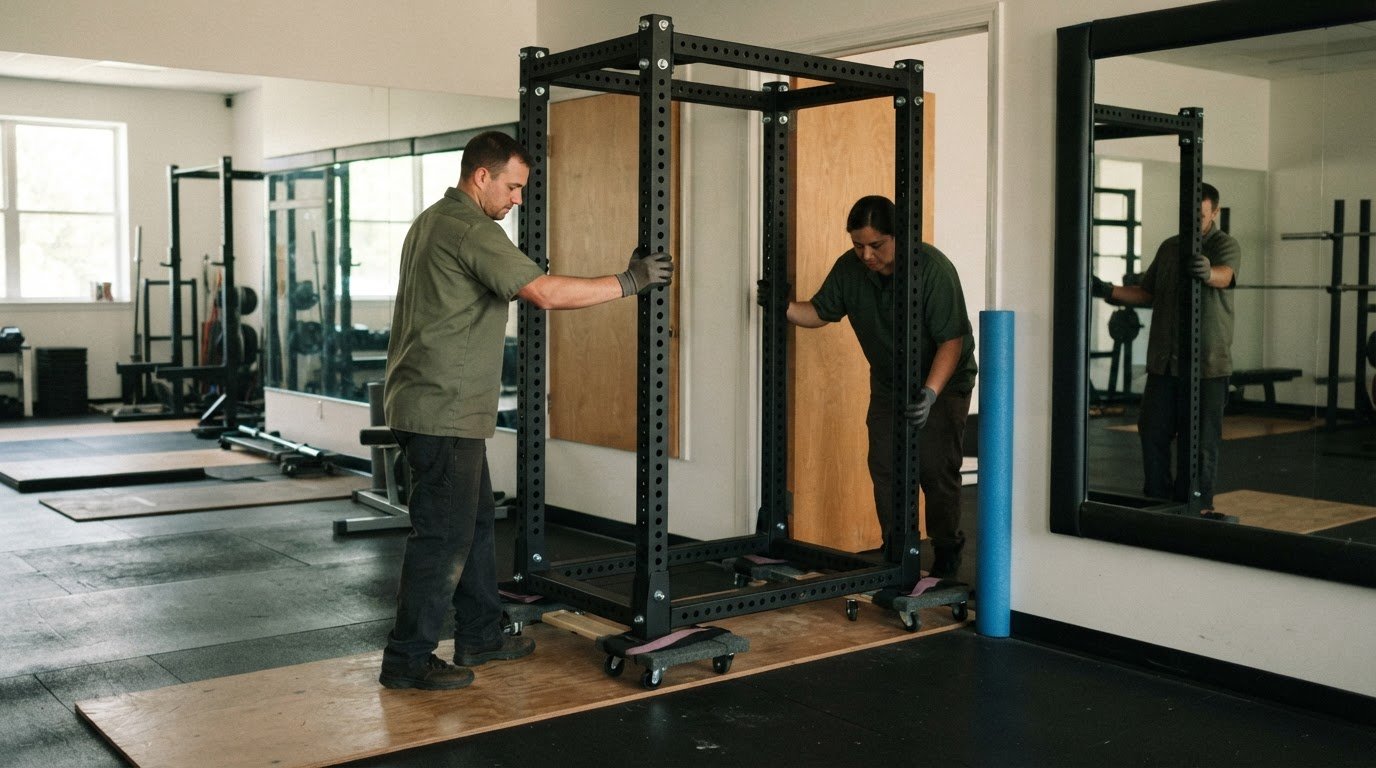
A commercial power cage is not the only thing at risk during a move. Floors and mirrors need a plan, too. Moving a heavy commercial strength-training power cage in Clifton safely starts with a clear route and a check for changes in floor height. Careful handling, controlled leverage, and floor protection help limit bumps, scrapes, and sudden shifts.
The equipment’s weight matters, but fragile flooring and nearby mirrors need attention as well. A professional move accounts for both: movers plan the route, protect vulnerable surfaces, and coordinate each lift to keep the load steady. Tight corners, thresholds, and narrow access points all affect the approach.
This guide explains what shapes a safe power cage move, how movers use lifting and leverage, and how to protect gym floors and mirrors. You’ll also learn what information helps plan the job, so the equipment can be handled carefully from pickup through placement.
Key Takeaways
- A safe gym move starts with a planned route, including attention to thresholds, floor-height changes, and fragile surfaces.
- Professional movers choose lifting and moving equipment to control the cage’s weight and reduce strain on floors and mirrors.
- Low, balanced handling helps keep heavy equipment steady as it moves through tight or uneven spaces.
- Power cage weight depends on its construction and shipment packaging; some heavy equipment shipments can reach 500 pounds.
- Clear details about access, flooring, and the equipment help shape a moving plan that fits the space.
Commercial gym and fitness equipment relocation
Moving a heavy commercial strength training power cage in Clifton starts with a plan for the equipment and the space. The crew records the cage’s configuration, attached parts, and pickup and placement points. A 3x3 rack, for example, needs turning clearance for its frame, not just room for its footprint. Movers map doors, corners, and the route between rooms before handling begins.
Floor and wall protection belong in the route plan. Movers clear the path and check for floor-height changes, such as a threshold between a training room and hallway. They protect vulnerable flooring and account for mirrors near the cage’s turning arc. Mapping the route helps avoid abrupt turns beside glass, polished floors, or fixed gym fixtures.
Before lifting, professionals identify detachable parts, loose accessories, and stable points for handling the frame. They coordinate each movement, keep lifted sections close, and avoid twisting while lowering. If a controlled tilt is needed, movers shift their hand position after the load passes the 45-degree mark. The aim is steady control through each transition, not speed or force.
Do you need permits or building access arrangements to move a power cage in Clifton? Permit requirements depend on the work and applicable local rules. Building access arrangements depend on the property, so include entry routes, loading access, and any scheduled access windows in the move plan.
Do Clifton movers have weight limits or special handling fees for gym equipment? Limits and fees vary by company and job details, including equipment weight, dimensions, access, and handling needs. The cage’s configuration and route help determine the crew and equipment required.
What insurance coverage protects commercial gym equipment during a move? Review the moving agreement for applicable transit coverage or valuation terms, including limits, exclusions, and how to report damage. Check the terms for the cage and its detached parts rather than assuming general business property coverage applies during transport.
For a heavy commercial strength training power cage move in Clifton, timing also depends on preparation and access. Plan the removal so the cage won’t block other stations or narrow the route. For example, map its path through a corridor before staging smaller items there. At the destination, place it where the frame can be assembled without obstructing other equipment.
A sound sequence connects inventory, route assessment, surface protection, controlled lifting, and placement. Each step helps movers handle commercial gym equipment while limiting unnecessary contact with floors, mirrors, doors, and nearby fixtures.
Before moving a large, heavy object, clear the path and check for floor-height changes. Assess the route before handling begins, not while the object is already in motion.
How professional movers use pry bars, furniture dollies, and lifting straps
Professional movers match each tool to the cage’s shape, weight, and route. A pry bar can create controlled clearance beneath a frame, making room to position moving equipment. Movers apply leverage gradually to keep the rack stable rather than forcing one corner upward. This matters near flooring, door frames, and other equipment.
Furniture dollies carry weight across suitable, clear paths. Movers position them to support the load and coordinate movement so the cage doesn’t rock or slide. The plan accounts for corners and thresholds, where a dolly may need repositioning.
For some heavy platforms, movers may use rollers made from four-foot lengths of PVC pipe with a 2-inch diameter. The pipes let a supported load roll across a suitable surface. They must be controlled as the load advances, with the crew managing the equipment’s balance and direction. This is a professional handling method, not a reason to move a loaded rack without trained help.
Lifting straps help distribute a load and provide secure handling points. The crew positions them to support the frame, then lifts in coordination. Straps don’t eliminate the need to control the load: poor placement can let equipment shift. Movers keep the load close while lifting and avoid twisting as they lower it.
What equipment and crew size are needed to move a heavy power cage? Movers may use pry bars, furniture dollies, and lifting straps, with rollers considered for suitable heavy platforms. Crew size depends on the cage’s weight and dimensions, whether it can be separated, and the route’s access and turning space.
Before moving the cage, professionals assess whether it can travel assembled or needs partial disassembly. They identify stable frame points and determine how to support the equipment through each transition. At a doorway, for example, the crew may need to adjust the load’s position before proceeding. The decision depends on clearance and stability, not force alone.
Once the cage is on dollies or rollers, movers coordinate direction and pace. One person can guide the route while others control the load, with roles adjusted to the equipment and space. At the destination, they lower the frame under control and remove supports only when it rests securely.
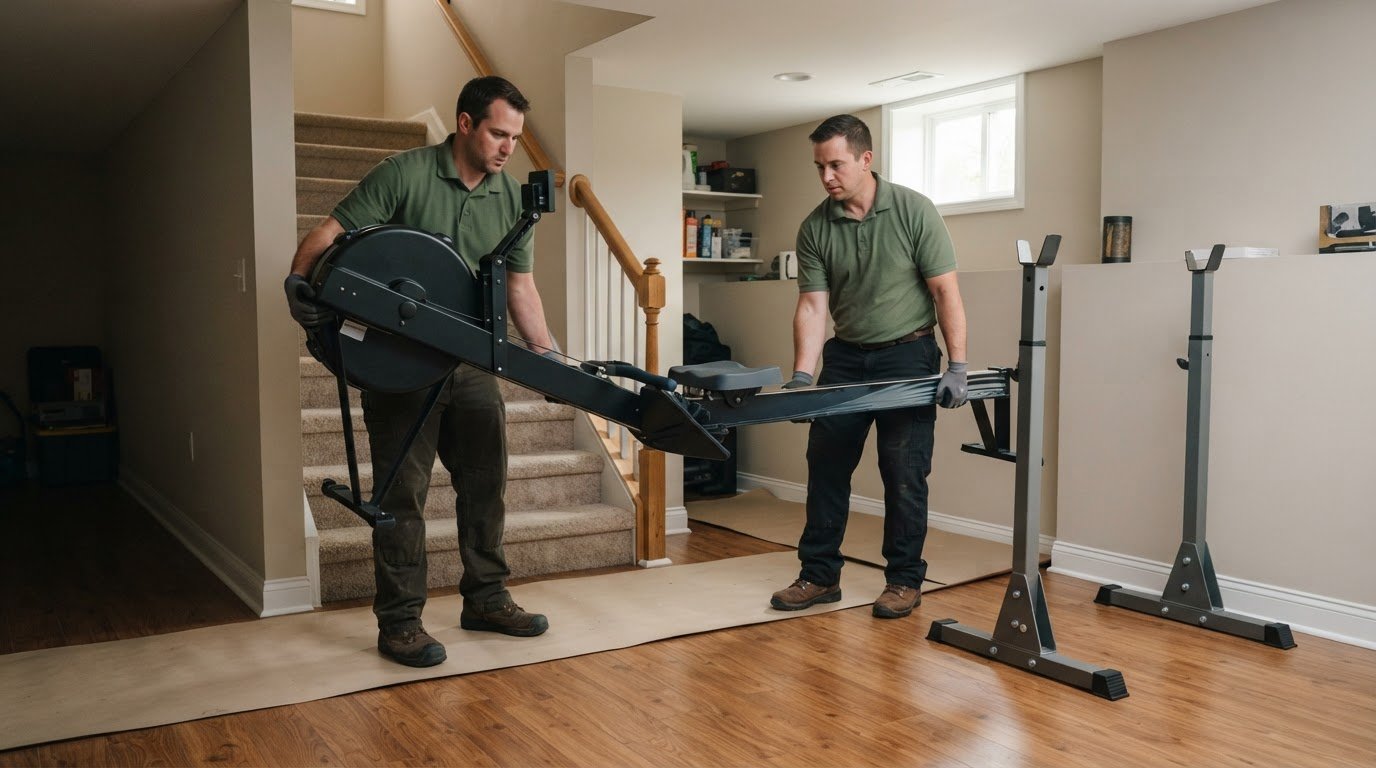
For a cage that needs coordinated lifting and careful movement through a gym, professional exercise equipment moving can take the strain out of handling specialized fitness gear.
How professional movers maintain a low center of gravity and reduce friction
A low center of gravity helps keep a power cage stable during a move. Movers assess the frame’s balance before lifting or rolling it. They remove loose attachments and separate components when the equipment design allows, reducing the chance of shifting above the supports. The crew positions the load so its weight stays centered over the lifting or rolling points.
Balance matters during turns as much as on straight paths. A tall rack can sway if its upper frame moves faster than its base. Movers coordinate each turn, keep the cage level, and make small, controlled adjustments. At a doorway, they account for the frame’s height and width before changing its angle. A steady pace gives the crew time to correct a shift.
Reducing friction can make a heavy platform easier to move under control. For suitable equipment, professionals can place three or four PVC pipes beneath the platform as rollers. The pipes roll under the load as the team advances it, reducing direct sliding against the floor. Movers guide each pipe and keep the platform supported as it moves. This method requires a stable load and a clear travel surface.
Two-inch-diameter PVC pipes can serve as rollers for heavy objects. Placement matters: the crew spaces them to support the platform and prevent tipping between contact points. As the platform advances, a mover retrieves a pipe from behind and repositions it at the front. The team moves the load in measured increments instead of pushing it across the floor in one uncontrolled motion.
Surface conditions also affect friction and control. A loose mat, floor seam, or threshold can interrupt a roller’s movement. Movers identify these changes along the route and adjust the handling method before the cage reaches them. They avoid sudden pulls that could make the load lurch. If rolling isn’t suitable for a section, the crew can use a controlled lift instead.
During a lift, movers keep the equipment close and lower it without twisting. They coordinate so each person supports the load through the same transition. If one side needs to descend first, the team controls the change instead of letting the frame drop. This keeps the load’s center stable as its supports shift from the floor to moving equipment.
The right approach depends on the power cage’s construction, the platform beneath it, and the route’s surface. Rollers may suit a clear, appropriate stretch, while dollies or a coordinated lift may work better elsewhere. Professionals choose the method that keeps the frame balanced and limits unnecessary drag at each stage.

What moving companies in Clifton, Virginia move heavy commercial power cages?
For a heavy commercial power cage in Clifton, Virginia, look for movers who handle exercise equipment and bulky loads. A household move can involve different handling needs from a rack with long uprights, crossbars, and detachable accessories. Planning starts by identifying the equipment, its configuration, and the route between the gym and destination.
A professional crew assesses the move as a sequence of handling tasks. They determine whether the cage can travel assembled or needs partial disassembly, then map the route through doorways, hallways, and loading areas. A narrow gym entrance, for example, may require a different plan from a direct path to a wide loading door.
Plan for the whole gym, not just the cage. Weight benches, plate storage, and other exercise equipment can affect the removal order and available floor space. Movers identify which pieces need to move first, where they can be staged, and how the cage can pass without blocking other items. This keeps the equipment and work area organized.
In Clifton, Virginia, building access can shape the job as much as the cage itself. A basement gym, stairway, elevator, or shared corridor creates different handling demands. The crew plans around access points and changes in floor level, then selects a suitable route and method. A nearby loading area may shorten the carrying route, while an indirect path requires more coordination.
To help plan the move, share the cage’s make or model, whether it’s assembled, and the pickup and delivery locations. Photos of tight corners, stair landings, or loading doors can clarify the route. These details help movers anticipate equipment and access needs before work begins.
Careful handling also protects nearby property. Movers plan how to guide the cage around mirrors, door frames, flooring, and other gym fixtures. They coordinate lifts and turns, maintain control during transitions, and place the equipment in its designated position. Keep detached parts organized with the frame.
For a gym move in Clifton, Virginia, choose a team prepared to handle exercise equipment and heavy lifting. The plan should fit the cage’s configuration, building access, and destination setup. Connecting the equipment to its route makes it easier to plan the handling work required.
How much does a commercial strength training power cage weigh?
Commercial power cages don’t have one standard weight. The total depends on the frame, materials, attachments, and whether the cage is assembled or packed for shipping. A rack with storage arms and accessories presents a different load from a bare frame. That difference shapes how movers plan handling, transport, and placement.
Examples help put the question in context. A power rack shipment has been described in a crate weighing 500 pounds. That figure includes the crate, so it isn’t the rack’s weight alone. Heavy-duty strength equipment has also been described as weighing 400 pounds. Neither figure represents every commercial cage or establishes the weight of a particular model.
When moving a heavy commercial strength training power cage in Clifton, distinguish the equipment’s weight from its packaged shipping weight. A crate adds packaging, while detachable parts change what the crew handles during each lift. Product documentation can provide the rack’s listed weight. A shipping label may instead show the weight of the packed shipment.
Weight is only one part of the handling plan. Movers also consider the cage’s dimensions, balance, and whether it separates into sections. A tall assembled rack may be harder to turn through a hallway than a heavier, compact item. Doorways, stairs, and floor transitions can all shape the route and handling method.
Weight distribution matters during disassembly, too. The base, upright posts, and crossbars may each balance differently once separated. Movers identify stable handling points and plan how to support every component. If the cage stays assembled, the crew must account for its full shape and balance as it moves through the building.
When planning a heavy commercial strength training power cage move in Clifton, share the model, assembly status, attached accessories, and any product or shipping documentation. For a crated shipment, distinguish the crate’s stated weight from the equipment’s listed weight. These details help movers plan for the actual load without mistaking packaging weight for the bare cage’s weight.
The 500-pound crated rack shipment and 400-pound heavy-duty equipment example offer context, not a universal specification. The weight of a particular cage depends on its model and configuration. Product documentation and packing details provide a clearer basis for planning its move and handling each part appropriately.
Get help moving heavy gym equipment with a plan based on the cage’s weight, configuration, and route.
Heavy Furniture Moving
Heavy Furniture Moving can help when a commercial power cage needs careful handling. Its Exercise Equipment Moving service handles heavy gym equipment, with planning tailored to the cage’s configuration, access route, and placement needs. Turn to professional help when the frame is awkward to maneuver, the route has tight turns, or nearby surfaces need protection. Share the equipment details and move locations so the job can be planned around the actual load and access. Heavy Furniture Moving also offers help moving other bulky items. To discuss your power cage move, contact Heavy Furniture Moving.
Plan the move around your space
Moving a heavy commercial strength-training power cage in Clifton starts with a clear plan built around the equipment and both locations. Share the cage’s model or available specifications, its current setup, and any access details that could affect handling. This gives the moving team a practical starting point and keeps decisions focused on your facility’s needs.
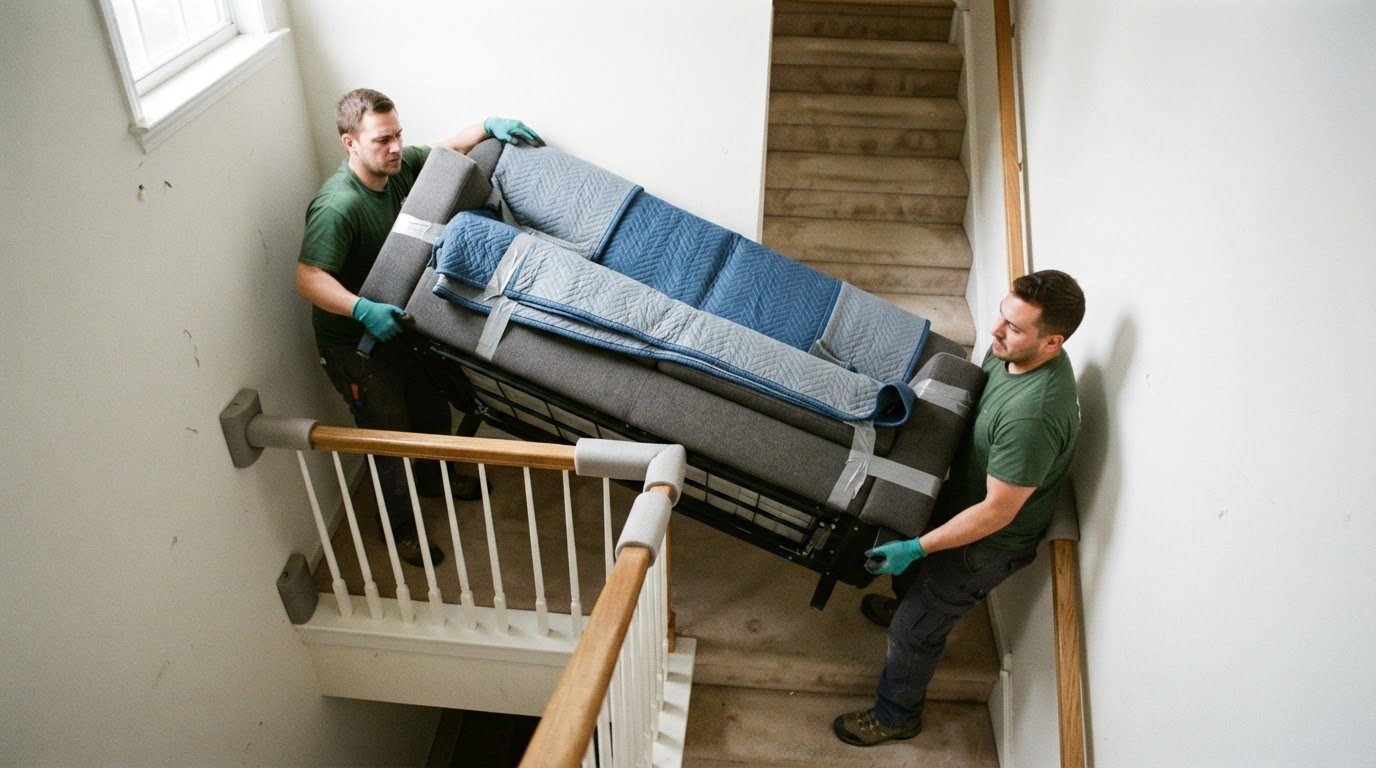
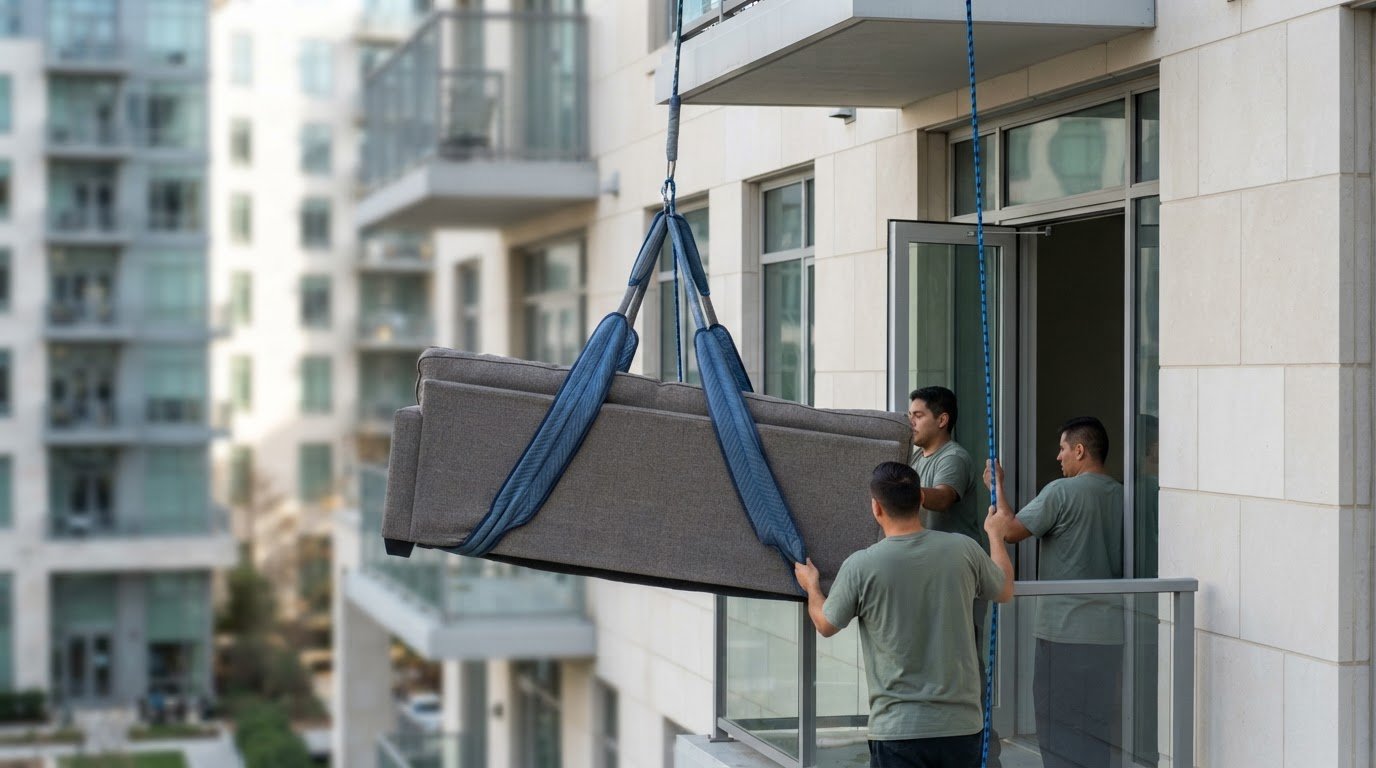
Heavy Furniture Moving offers Movers Near Me, Exercise Equipment Moving, and Sofa Hoisting for different heavy or bulky moving needs. Whether you need to move a gym cage or another challenging item, describe what needs to be moved and where it’s going.
Contact Heavy Furniture Moving to discuss your move and take the next step with a plan that fits your space.
Frequently Asked Questions
What measures are taken to prevent heavy cast-iron weights or rubber dumbbells from shifting in transit?
Movers separate loose weights from the rack and secure them as individual loads. Cast-iron plates can be grouped in sturdy containers, while dumbbells need support to prevent rolling or striking one another. The crew fills open space inside each container and secures it for transport. A final check confirms the weights are stable before loading, and movers inspect the load again after unloading.
Will your movers handle the breakdown and setup of heavy commercial lifting cages and power racks?
Heavy Furniture Moving’s Exercise Equipment Moving service handles gym equipment. Whether a power cage travels assembled or in sections depends on its model and current setup. If the cage can be disassembled, follow the manufacturer’s instructions. Movers keep fasteners and small parts organized with the matching frame sections, making setup at the destination more orderly.
What are the dimensions and disassembly requirements for commercial power cages?
Commercial power cages don’t share one standard size or disassembly method. Dimensions depend on the model and attachments, while disassembly depends on how the frame connects. The model specifications and assembly instructions identify the overall height, width, depth, and removable components. Include accessories such as storage arms in those measurements, since they affect the space the assembled cage occupies.
Can local movers handle gym equipment disassembly and reassembly?
Local movers who handle exercise equipment can move gym machines and heavy fitness gear. Disassembly and reassembly depend on the equipment’s construction and instructions. A rack with bolted crossbars, for example, differs from a one-piece frame. Keeping hardware sorted by component helps prevent mix-ups during setup. Heavy Furniture Moving’s Exercise Equipment Moving service handles gym equipment transport.
How do professional movers prepare and secure a power cage for transport?
Movers prepare a power cage by removing loose accessories, securing components, and protecting exposed frame surfaces. If the rack is disassembled, they keep bolts and pins grouped with the correct sections. Before loading, the crew checks that doors, drawers, or attachments can’t swing free during handling. Straps hold the equipment steady during transport; at delivery, movers inspect the frame and parts before placement.
Frequently Asked Questions
Movers separate loose weights from the rack and secure them as individual loads. Cast-iron plates can be grouped in sturdy containers, while dumbbells need support to prevent rolling or striking one another. The crew fills open space inside each container and secures it for transport. A final check confirms the weights are stable before loading, and movers inspect the load again after unloading.
Heavy Furniture Moving’s Exercise Equipment Moving service handles gym equipment. Whether a power cage travels assembled or in sections depends on its model and current setup. If the cage can be disassembled, follow the manufacturer’s instructions. Movers keep fasteners and small parts organized with the matching frame sections, making setup at the destination more orderly.
Commercial power cages don’t share one standard size or disassembly method. Dimensions depend on the model and attachments, while disassembly depends on how the frame connects. The model specifications and assembly instructions identify the overall height, width, depth, and removable components. Include accessories such as storage arms in those measurements, since they affect the space the assembled cage occupies.
Local movers who handle exercise equipment can move gym machines and heavy fitness gear. Disassembly and reassembly depend on the equipment’s construction and instructions. A rack with bolted crossbars, for example, differs from a one-piece frame. Keeping hardware sorted by component helps prevent mix-ups during setup. Heavy Furniture Moving’s Exercise Equipment Moving service handles gym equipment transport.
Movers prepare a power cage by removing loose accessories, securing components, and protecting exposed frame surfaces. If the rack is disassembled, they keep bolts and pins grouped with the correct sections. Before loading, the crew checks that doors, drawers, or attachments can’t swing free during handling. Straps hold the equipment steady during transport; at delivery, movers inspect the frame and parts before placement.