5 things to check before choosing furniture hoisting in Aldie
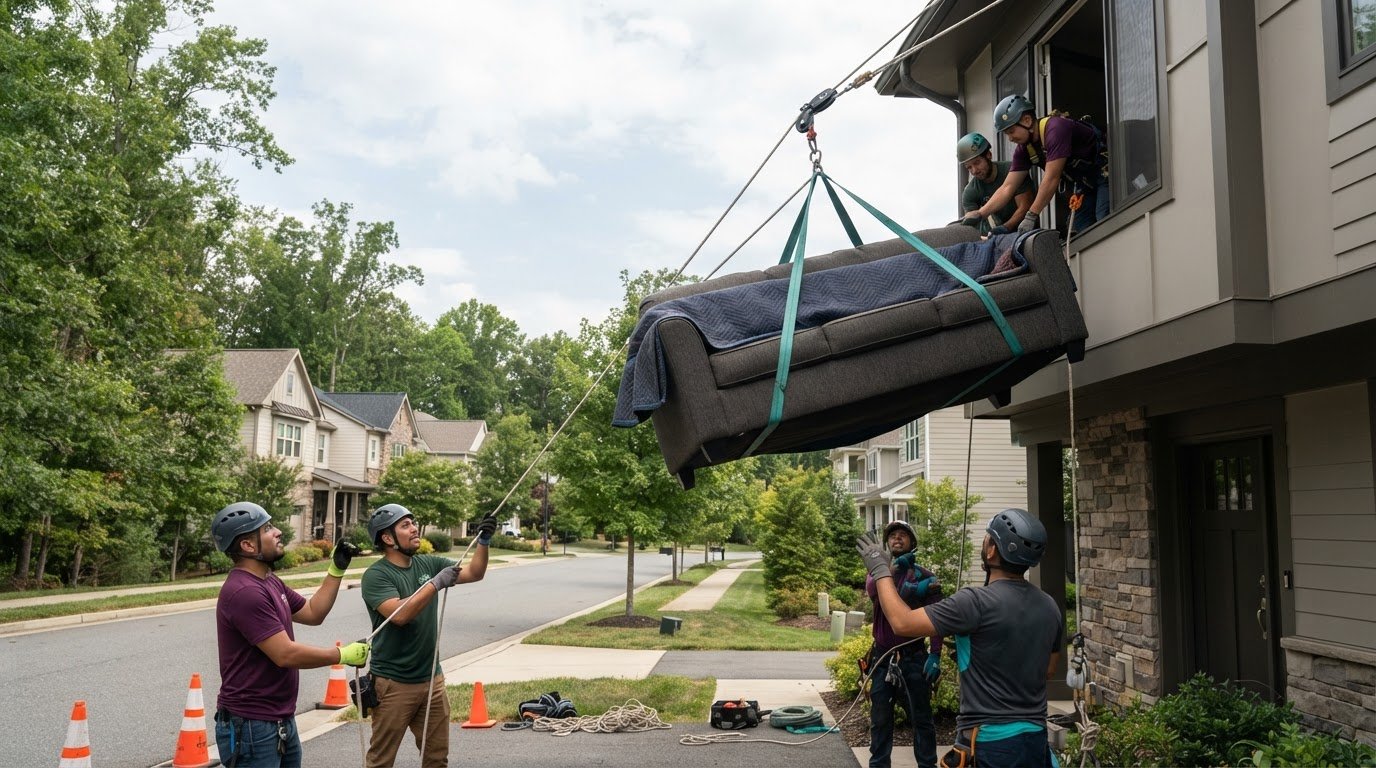
In Aldie, the choice between local furniture hoisting pros and standard moving company rigging depends on access, equipment, and the scope of the move. Crane use that occupies a street or closes a lane may require permits and sidewalk coordination, so where the equipment will sit can matter as much as the furniture itself.
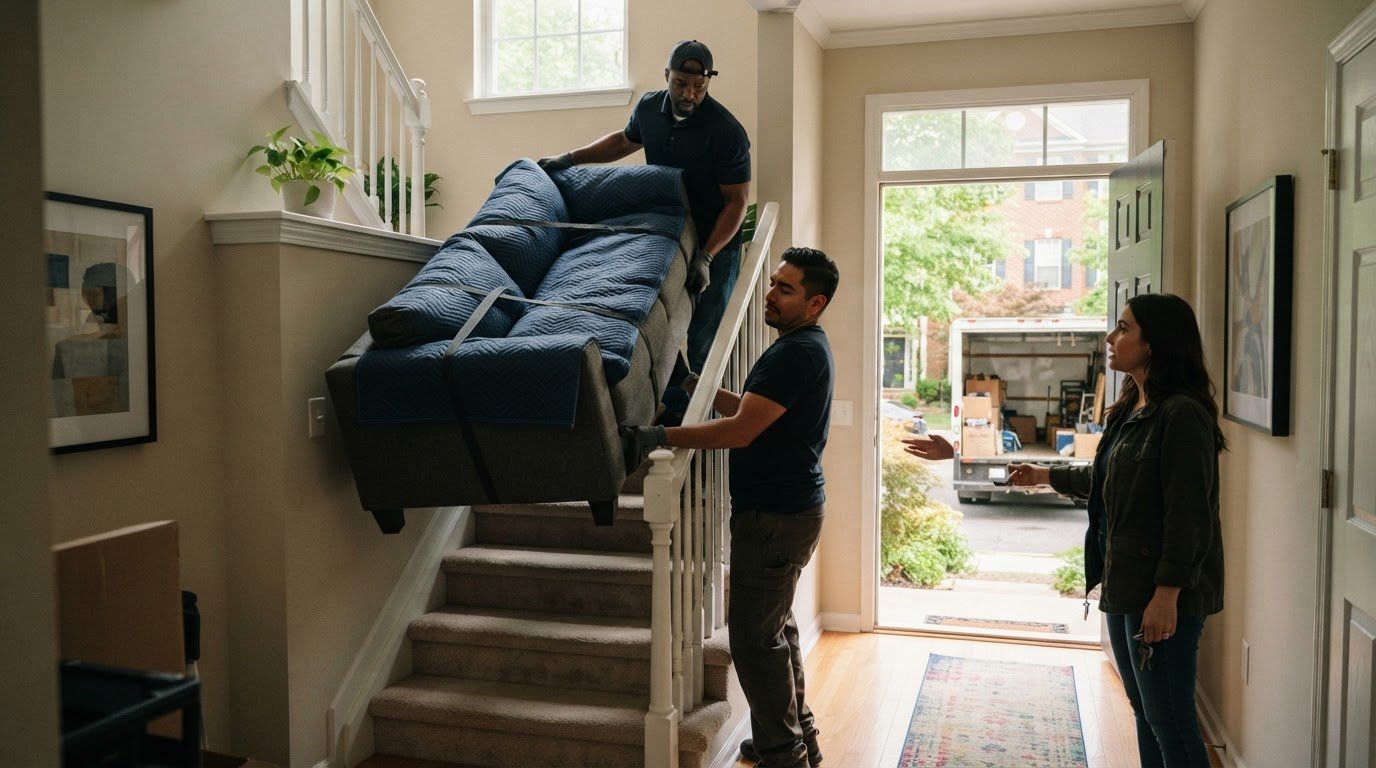
A tight stairway, blocked entrance, or risk of damaging a prized piece can make moving stressful. Hoisting can provide another route when furniture will not fit through the usual entry, but the access conditions and lift setup still matter.
This guide explains what to consider before choosing: when permits and property coordination may come into play, how safety and access shape the work and its cost, and what to compare when reviewing hoisting and moving quotes. You’ll have a clearer way to decide which approach fits your home and the item that needs moving.
Key Takeaways
- Find out whether the lift setup affects a street, lane, sidewalk, or building rules so permit and access needs are part of the plan.
- Compare the item’s size and weight, floor height, window access, and exterior clearance when weighing hoisting options.
- Look for a clear safety plan that accounts for the lift, equipment, building protection, and communication between crews.
- Compare quotes by what each includes, such as equipment, labor, permits, parking coordination, and insurance-related costs.
- Choose the approach that fits the item and access route; sofa hoisting can help when a sofa won’t pass through the usual entry.
1. Is hoisting safe for my furniture?
Furniture hoisting has risks: an uncontrolled lift can damage the item, siding, windows, or nearby property. Responsibility for damage depends on what caused it and the written agreement and coverage terms. Review the terms and lift plan before work begins.
Safety starts with matching the method to the item and access route. A sofa hoisted past a balcony needs secure attachment, a clear path, and coordination between the ground and interior crews. The team should assess the load, use suitable lifting equipment, wrap the furniture, and protect building surfaces. Wind, limited exterior clearance, and weak attachment points can make a planned lift unsuitable.
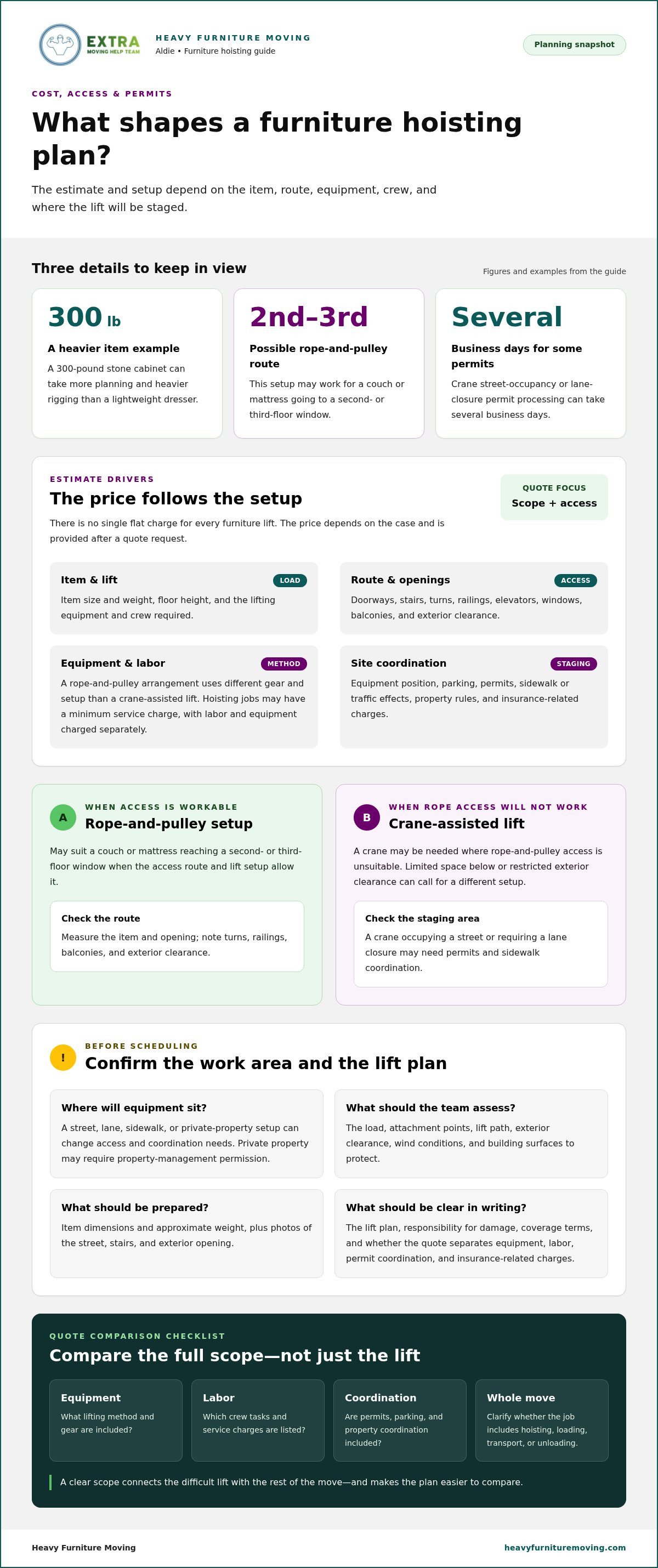
Costs depend on the setup, not just the furniture. Hoisting jobs may carry a minimum service charge, with separate charges for labor and equipment. The price depends on the case and is given after a quote request; item weight, floor height, access, equipment, and crew needs shape it. A crane may be needed where rope-and-pulley access won’t work. Compare whether the quote separates equipment, labor, permit coordination, and insurance-related charges.
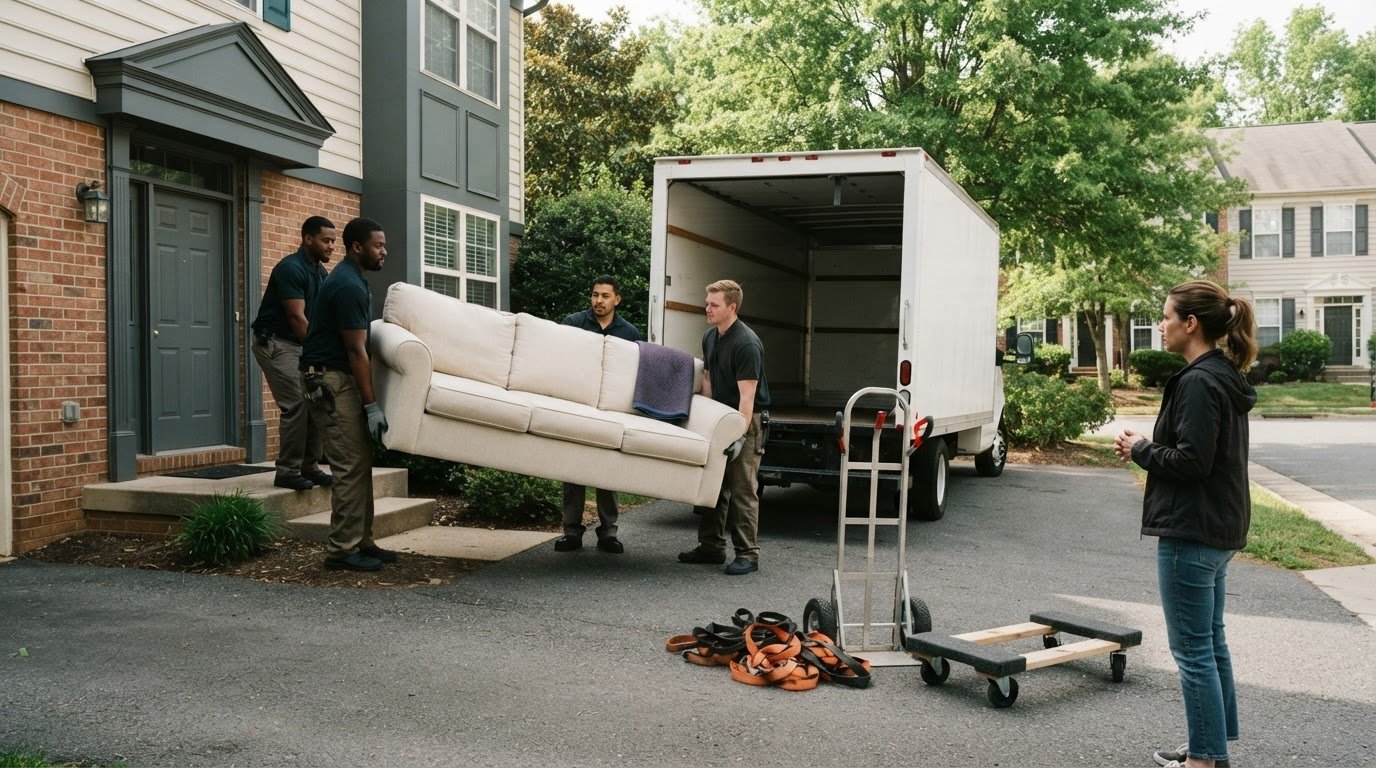
Moving help can cover more than the difficult lift. Heavy Furniture Moving offers packing, unpacking, junk removal, loading, and unloading, as well as labor-only help when you provide a truck, pod, or container. Clarify whether you need hoisting, loading, transport, or unloading so the work is planned around the whole move.
Distance also affects which movers fit the job. Local movers typically handle moves of less than 100 miles within a specific city or state. An Aldie move to a nearby address may follow a local route, while crossing state lines brings a different regulatory framework. According to the Federal Motor Carrier Safety Administration, FMCSA and 49 CFR form the federal regulatory framework for interstate moves where the origin and destination are in different states.
For an Aldie home, share the item’s dimensions and photos, along with details about stairs, elevators, windows, and exterior access. Heavy Furniture Moving serves Aldie and nearby communities, including Fairfax, Woodbridge, Manassas, Manassas Park, Ashburn, McLean, Vienna, Reston, Centreville, Chantilly, Clifton, Dumfries, South Riding, Fairfax Station, Haymarket, and Gainesville. Clear information helps plan the right moving and lifting support.
2. Do I need a permit for hoisting?
A furniture hoist does not automatically require a street permit. The key question is where the equipment and work area will be. A crane occupying a street or requiring a lane closure may need permits and sidewalk coordination. A setup on private property has different access considerations, including property-management permission.
For some locations, processing permits for crane street occupancy or lane closures can take several business days. Build that time into the plan before scheduling the lift. Identify the equipment’s position, the area needed for loading, and any effect on sidewalks or traffic. Professional movers may coordinate permits, building rules, and property management, helping align the lift plan with the site.
Parking matters because a truck or lift needs a safe staging space close enough to the pickup window or balcony. If equipment has to sit farther away, the setup or labor may need to change. Share the building entrance, street access, stairs, and window dimensions when describing the job. These details help determine whether a compact lift or larger equipment is appropriate.
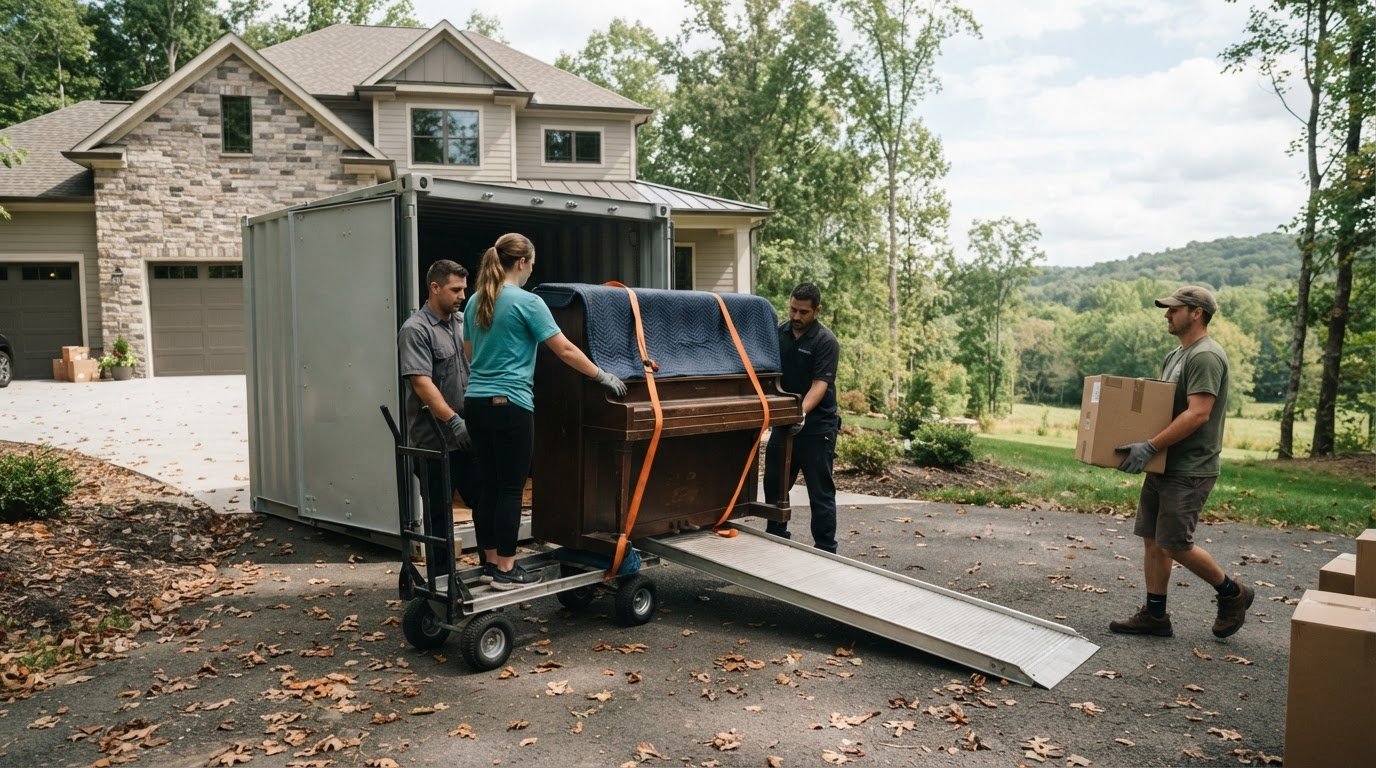
Equipment and labor costs depend on the lift method, access, and crew required. A rope-and-pulley arrangement uses different gear and setup than a crane-assisted lift. Professional rigging may use cranes, slings, shackles, spreader bars, jacks, gantries, or hoists. Each piece serves a different lifting task, from securing a load to raising or supporting it. Insurance-related costs also depend on coverage and the work involved. The overall price depends on the case and is given after a quote request.
Furniture hoisting is different from machinery installation. A large machine may need to be transported, positioned, leveled, anchored, and aligned, which goes beyond lifting it through a window. Specialty equipment moving may involve separate planning for the lift, transport, and final placement. Hoisting a sofa to an upper floor has a different scope from moving exercise equipment into a room.
Before the crew arrives, prepare the item’s dimensions and approximate weight, plus photos of the street, stairs, and exterior opening. That gives the team practical information for selecting equipment and planning labor. For a sofa that cannot pass through the usual route, sofa hoisting support offers a way to address the access problem as part of the move.
3. How much does hoisting cost during a move?
There isn’t one flat charge for every furniture lift. The estimate depends on the item’s size and weight, floor height, access, equipment, and crew needs. A 300-pound stone cabinet can take more planning and heavier rigging than a lightweight dresser. Ask for the scope in writing so you can see how the lift connects with the rest of your household move.
Start with the route. Hoisting may make sense when an item won’t fit through a doorway or stairway, or when an elevator is missing or too small. A narrow, steep, or winding staircase can also make carrying furniture difficult. Measure the item and the opening, then note turns, railings, balconies, and exterior clearance. These details help determine whether ropes or a crane are needed.
Access affects the labor and equipment needed. A rope-and-pulley lift may work for a couch or mattress reaching a second- or third-floor window. A higher floor, limited space below, or restricted exterior clearance may call for a different setup. A crane-assisted lift also needs suitable equipment and staging space. The plan should account for setup, lifting, and safe placement.
Safety planning also affects the work. A qualified rigger should plan and control the lift, while rigging components must suit the load and the required safety factor. The crew assesses the item, attachment points, load path, and nearby surfaces before lifting. Load-rated ropes and hardware, protective wrapping, and building-surface protection help manage the task. Clear communication between the ground crew and the interior crew keeps the lift coordinated.
For an estimate, prepare a short inventory with each item’s approximate weight and dimensions. Include photos of the stairs, window, balcony, and potential equipment staging area. Point out fragile finishes and obstacles that could affect the route. Heavy Furniture Moving uses item photos and access details to plan the job and provide an up-front quote.
Compare the hoist with the full relocation plan. Hoisting addresses the difficult lift, but the item may also need packing, loading, transport, and placement. Identify which of these services you need so the plan covers the handoff between lifting and moving. For example, a sofa raised through a window still needs a clear route into the home.
4. Customized quotes based on access and move complexity
The price of hoisting furniture into a home depends on the item’s size and weight, floor height, window or balcony access, exterior clearance, equipment, labor, and permits. The price depends on the case and is given after a quote request. A custom estimate should reflect the actual route and lift plan, not just the furniture category.
Start with measurements. Check the item, doorway, hallway turns, stairwell, and intended window opening. Note balcony rails, overhead obstructions, and the distance between the staging area and the home. For example, a sofa may fit through a wide window but still need careful maneuvering past a railing. Photos and measurements help map the route before equipment arrives.
Share details that could change the setup: item dimensions, approximate weight, floor, exterior access, and nearby obstacles. Photos help the crew plan equipment, labor, and staging. A narrow window may call for a different approach from an open balcony. If street or sidewalk access affects equipment placement, permit coordination may also be needed.
For complex hoisting, plan around the actual access and equipment needs rather than assuming the work will fit a fixed schedule. Multiple items, tight clearances, or crane staging can add coordination steps. Allow time to share photos and measurements and to plan packing, lifting, and the rest of the move.
Ask how local labor time is calculated. The standard floor for local moving labor charges is a 2-hour minimum, even when the work takes less time. Beyond that minimum, local-move time may be billed in 15-minute increments rather than rounded to a full hour. Hoisting equipment and labor may appear as separate estimate lines, so compare the stated work rather than treating every charge as one total.
Make sure the written agreement clearly describes the tasks included and how responsibility for damage is handled. Note whether packing, lifting, transport, and placement fall within the same scope or are separate services. This distinction matters when one crew hoists an item through a window and another handles transport.
Before accepting an estimate, match each line to a real task: assessment, equipment, labor, permit coordination, packing, and any move beyond the lift. If the scope changes, such as a blocked staging area or a different window, the crew may need to revise its plan. A clear custom scope helps you compare options and schedule the work around your household move.
5. Comparing local hoisting and moving quotes
A furniture-hoisting company focuses on lifting an item through a difficult opening, while a standard moving company may include rigging as part of a broader move. The better fit depends on whether you need a lift alone or coordinated moving support. When comparing local furniture-hoisting pros with standard moving company rigging in Aldie, compare the full scope, not just the equipment.
Hoisting can be one part of a moving estimate, so compare quotes against the same job details: item, access route, equipment, labor, and any packing or moving help required. Heavy Furniture Moving offers flat rates for most single heavy items and hourly labor with a two-hour minimum. The scope depends on the item, floor height, exterior clearance, equipment, and crew needs.
Read each estimate for the work the crew will actually do. One may cover only lifting and setup, while another may include loading, transport, and delivery. A lower total may reflect a narrower scope, not a better match. Check whether carrying the furniture inside and placing it at the destination are included.
Hourly billing deserves a close look, too. Some hoisting companies bill crane or lift time by the hour, with a two- or three-hour minimum, plus separate crew labor. Local moving labor commonly has a 2-hour minimum; time beyond that may be billed in 15-minute increments. Separate equipment time from labor time so the estimates can be compared on equal terms.
Distance changes the type of move being priced. Local movers typically handle moves of less than 100 miles within a specific city or state. Longer distance moves may include different transport planning and delivery arrangements. Keep hoisting charges distinct from the route and household moving work, especially when a lift happens at pickup but delivery takes place elsewhere.
Use the same checklist for each estimate: equipment and setup, crew labor, permit or street coordination, loading, transport, delivery, and item placement. Mark each task as included, separate, or outside the scope. This makes it easier to compare an hourly labor estimate with a complete moving plan.
For a sofa that needs a window lift, arrange sofa-hoisting help as part of a clear moving plan. Compare the lift scope with any loading and transport needs before choosing how the full move will be handled.
Heavy Furniture Moving: Movers Near Me
Heavy Furniture Moving helps with bulky household moves that need careful handling or a difficult route. Choose Movers Near Me for moving support, Sofa Hoisting when a couch will not pass through a doorway or stairway, or Exercise Equipment Moving for heavy fitness items. Wrap, blankets, and straps are included on every job.
When furniture fits through the home’s usual access points, in-home furniture moving help can focus on carrying and placement. If an item needs an exterior lift, share its dimensions and access details so the plan accounts for the route and equipment.
Ready to discuss your furniture move? Contact Heavy Furniture Moving to talk through the next step.
Make your next move easier to plan
Choosing between local furniture hoisting pros and standard moving company rigging in Aldie starts with the item’s route and the work you need. Before scheduling, gather clear photos and note where the furniture needs to go. That gives you a practical basis for discussing whether you need a lift, moving help, or both.
Heavy Furniture Moving offers Movers Near Me, Exercise Equipment Moving, and Sofa Hoisting for different heavy-item needs. Choose the service that fits the job, whether a sofa needs an exterior lift or exercise equipment needs moving. A clear plan can make the next step feel more manageable.
Contact Heavy Furniture Moving to discuss your move and find a suitable way forward.
Frequently Asked Questions
Do I need a permit for hoisting?
A permit may be needed if a crane will occupy a street or require a lane closure. Sidewalk coordination and property-management rules can also affect the plan. In some locations, permit processing for street occupancy or lane closures can take several business days. A lift staged entirely on private property has different considerations from equipment placed in a public right-of-way.
How much does hoisting cost during a move?
The cost depends on the item’s weight and size, floor height, access, equipment, and labor. A crane setup and a rope lift have different equipment and staging needs. The price depends on the case and is given after a quote request. For a useful estimate, describe the item, its route, and whether you also need packing, loading, transport, or delivery.
Is hoisting safe for my furniture?
Hoisting can damage furniture or nearby property if the load shifts, attachment points fail, or the path is obstructed. Before a lift, protect delicate surfaces and clear people and obstacles from the work area. Empty dressers and safes before moving them. For an item that needs wrapping, plan protective materials around its shape and finish, and make sure the crew can communicate throughout the lift.
What furniture hoisting services are available near Aldie, Virginia?
Heavy Furniture Moving offers Sofa Hoisting for furniture that cannot use a standard entry route, along with Movers Near Me and Exercise Equipment Moving. Service areas include Aldie and nearby communities such as Fairfax, Woodbridge, Manassas, Manassas Park, Ashburn, McLean, Vienna, Reston, Centreville, Chantilly, Clifton, Dumfries, South Riding, Fairfax Station, Haymarket, and Gainesville. Wrap, blankets, and straps are included on every job.
What equipment and insurance should a furniture hoisting company have?
Equipment should match the load and lift plan. Common rigging gear includes load-rated ropes, slings, shackles, spreader bars, jacks, gantries, and hoists. A qualified rigger should plan and control the lift, and components should meet the appropriate safety factor. Review the written coverage terms for furniture and property, including exclusions and the process for reporting damage.
Do Aldie or Loudoun County permits or rules apply to furniture hoisting?
Permit needs depend on the lift location and setup, not simply on the furniture. A crane occupying a street or requiring a lane closure may need permits and sidewalk coordination. Building and property-management rules can also shape access. The plan should distinguish equipment staged on private property from equipment using public space, as those situations may involve different requirements.
How do movers assess whether furniture can fit through stairs, doors, or windows?
Compare the item’s dimensions with the narrowest points along its route. Measure doorway width and height, stairwell turns, landing space, and window openings. Include handles, legs, and railings in your measurements. Photos can reveal obstacles that measurements alone miss. If the item can be safely disassembled, account for the dimensions of its separate pieces.
How far in advance should I book furniture hoisting in Aldie?
Start comparing moving plans two to three months before the move. That gives you time to organize item details, access measurements, and the rest of the move. If a crane needs street occupancy or a lane closure, permit processing can take several business days in some locations. For Aldie moves, plan the lift alongside loading and delivery so each step fits the schedule.
Frequently Asked Questions
A permit may be needed if a crane will occupy a street or require a lane closure. Sidewalk coordination and property-management rules can also affect the plan. In some locations, permit processing for street occupancy or lane closures can take several business days. A lift staged entirely on private property has different considerations from equipment placed in a public right-of-way.
The cost depends on the item’s weight and size, floor height, access, equipment, and labor. A crane setup and a rope lift have different equipment and staging needs. The price depends on the case and is given after a quote request. For a useful estimate, describe the item, its route, and whether you also need packing, loading, transport, or delivery.
Hoisting can damage furniture or nearby property if the load shifts, attachment points fail, or the path is obstructed. Before a lift, protect delicate surfaces and clear people and obstacles from the work area. Empty dressers and safes before moving them. For an item that needs wrapping, plan protective materials around its shape and finish, and make sure the crew can communicate throughout the lift.
Heavy Furniture Moving offers Sofa Hoisting for furniture that cannot use a standard entry route, along with Movers Near Me and Exercise Equipment Moving. Service areas include Aldie and nearby communities such as Fairfax, Woodbridge, Manassas, Manassas Park, Ashburn, McLean, Vienna, Reston, Centreville, Chantilly, Clifton, Dumfries, South Riding, Fairfax Station, Haymarket, and Gainesville. Wrap, blankets, and straps are included on every job.
Equipment should match the load and lift plan. Common rigging gear includes load-rated ropes, slings, shackles, spreader bars, jacks, gantries, and hoists. A qualified rigger should plan and control the lift, and components should meet the appropriate safety factor. Review the written coverage terms for furniture and property, including exclusions and the process for reporting damage.
Permit needs depend on the lift location and setup, not simply on the furniture. A crane occupying a street or requiring a lane closure may need permits and sidewalk coordination. Building and property-management rules can also shape access. The plan should distinguish equipment staged on private property from equipment using public space, as those situations may involve different requirements.
Compare the item’s dimensions with the narrowest points along its route. Measure doorway width and height, stairwell turns, landing space, and window openings. Include handles, legs, and railings in your measurements. Photos can reveal obstacles that measurements alone miss. If the item can be safely disassembled, account for the dimensions of its separate pieces.
Start comparing moving plans two to three months before the move. That gives you time to organize item details, access measurements, and the rest of the move. If a crane needs street occupancy or a lane closure, permit processing can take several business days in some locations. For Aldie moves, plan the lift alongside loading and delivery so each step fits the schedule.