Ways to Move a Heavy Hutch Across Uneven Stone With Less Strain
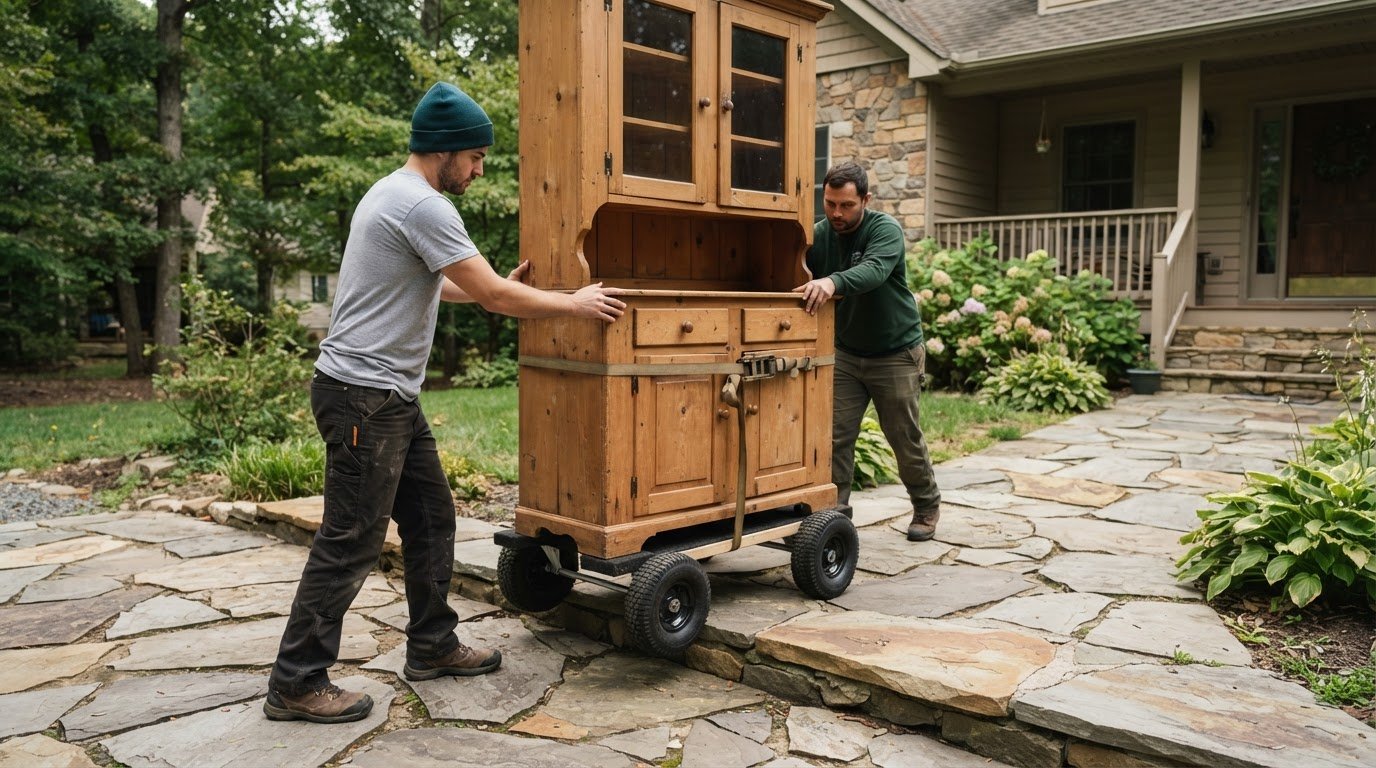
Don’t muscle a loaded hutch over uneven stone. When moving a heavy rustic pine hutch across uneven stone patio flooring in Haymarket, empty it first, clear the route, and use a suitable dolly with large pneumatic tires if the surface allows. If lifting by hand, bend your knees and keep your back as straight as possible.
Careful handling matters: rough joints and changes in height can make a bulky piece harder to control. Rushing can strain the movers and expose the hutch to bumps. A steady plan makes the task more manageable.
Prepare the hutch, assess the patio, coordinate the lift, and choose equipment that suits the stones. The route and the hutch’s weight will help you decide whether professional heavy-lifting help is the safer, more practical option.
Key Takeaways
- Empty and secure the hutch before moving it, then map a clear route across the patio.
- Use steady, coordinated lifting and keep the load close to your body to limit strain.
- Match moving equipment to the uneven stone; large pneumatic tires can help handle rough outdoor surfaces.
- Know when the ground or the hutch makes a do-it-yourself move too difficult to control safely.
- Heavy Furniture Moving offers help with heavy furniture moves when you’d rather leave the lifting and handling to a moving team.
1. Lifting and carrying heavy objects safely
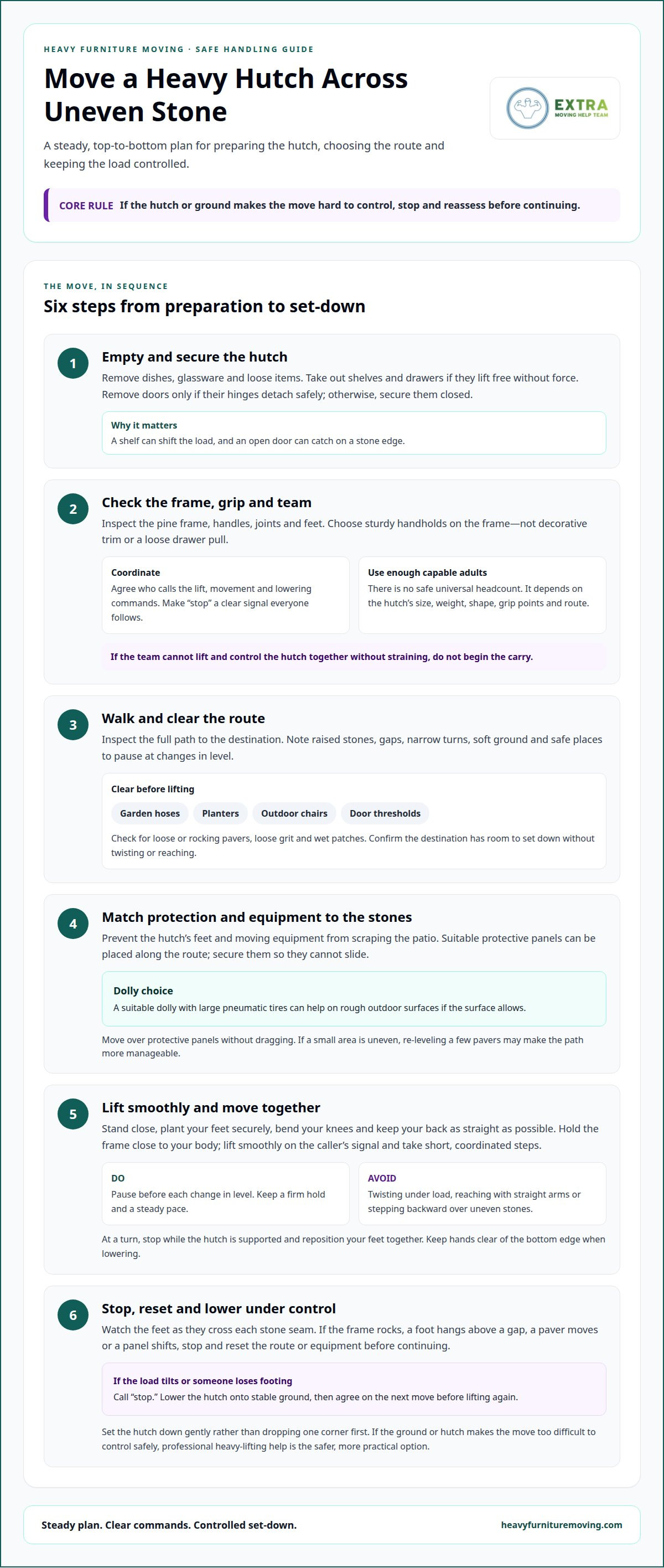
Start with the hutch empty. Remove dishes, glassware, and loose items. Take out removable shelves and drawers if they lift free without force. Remove doors only if their hinges detach safely; otherwise, secure them closed. A shelf can shift the load during a lift, and an open door can catch on a stone edge.
Before lifting, inspect the pine frame, handles, joints, and feet. Use sturdy handholds on the frame, not decorative trim or a loose drawer pull. Agree on who calls the lift, movement, and lowering commands. A clear “stop” signal lets everyone pause if a foot catches or the hutch tilts.
There’s no safe universal headcount for every hutch. The number of people needed depends on its size, weight, shape, grip points, and route. Use enough capable adults to keep it steady without anyone straining. If the team can’t lift and control it together, don’t begin the carry. Get professional heavy-lifting help.
For each lift, stand close to the hutch, plant your feet securely, bend your knees, and keep your back as straight as possible. Hold the frame close instead of reaching out with straight arms. Lift smoothly on the caller’s signal and take short, coordinated steps. On uneven Haymarket patio stones, pause before each change in level.
Don’t twist while carrying. At a turn, stop, keep the hutch supported, and reposition your feet together before changing direction. Avoid stepping backward over uneven stones, where a heel can catch outside your view. Keep hands clear of the bottom edge when lowering, and set the hutch down gently rather than dropping one corner first.
Uneven ground can make one side dip, shifting the hutch’s weight and increasing the chance of a tip. A hard impact may crack glass, loosen joints, chip pine edges, or scratch the patio. Watch the feet as they cross each stone seam. If the frame rocks or a foot hangs above a gap, stop and reset the route or equipment.
For example, if one carrier meets a raised stone while another keeps moving, the hutch can twist between them. Call “stop,” lower it onto stable ground, and agree on the next move before lifting again. Gloves can improve grip, but they don’t replace a controlled load, clear commands, or a stable path.
The same caution applies when moving a heavy stone water feature. Take your time instead of rushing. Use a controlled method when moving heavy stone, and keep clear of its path as it moves. Flipping a very large stone slab by hand is slow and best suited to short distances. Don’t treat hand-flipping a slab as a quick solution for a longer move. Consider whether everyone involved can control the stone along the route, and stop if they can’t.
2. Planning a safe move to protect your back
Plan the route before anyone touches the hutch. Walk from the starting point to the destination and note raised stones, gaps, narrow turns, and soft ground. At each change in level, identify a safe place to pause without blocking the next step. A clear route reduces sudden stops that can strain a back or pull someone off balance.
Check the patio underfoot, not just from a distance. A loose or rocking paver can shift beneath a person or moving equipment. If only a small area is uneven, re-leveling a few pavers may make the path more manageable. Widespread shifting, spreading edges, or recurring unevenness can point to a broader base or drainage problem.
Protect the stone by preventing the hutch’s feet and moving equipment from scraping across it. Place suitable protective panels along the route, secure them so they cannot slide, and move the hutch over them without dragging. Avoid dropping a corner onto a stone edge, which can chip the stone or damage the hutch.
Set a steady pace instead of trying to save 30 seconds by rushing. Assign one person to call each pause, start, turn, and lower. Before the move, agree on short commands such as “stop” and “lower,” so everyone responds together. If a carrier needs a break, stop on stable ground and set the load down under control.
Protect your back by planning the carry around your footing. Keep steps short and avoid turning your torso while holding the load. At a corner, pause, keep the hutch supported, and reposition your feet before changing direction. On Haymarket stone patios, check each landing area for loose grit or wet patches that could affect your footing.
Clear garden hoses, planters, outdoor chairs, and door thresholds from the route. Move obstacles before lifting instead of stepping around them with a heavy load. Check that the destination has enough clear space to set down the hutch without twisting or reaching. If the route includes a tight turn, plan the approach before the hutch reaches it.
Use this quick route check before the lift:
- Mark uneven stones and choose stable pause points.
- Clear hoses, planters, chairs, and other trip hazards.
- Lay and secure protective panels where feet or equipment could scrape stone.
- Agree on commands and decide where to stop if footing changes.
If a paver moves underfoot or a protective panel shifts, stop. Reset the surface and route before continuing. A steady, planned carry protects both the patio and the people handling the hutch.
3. Reducing strain and using safer body mechanics
Choose control over speed. Saving 30 seconds isn’t worth rushing a heavy lift across stone. For a pine hutch, strain can build when carriers reach too far, twist under load, or try to correct a sudden tilt. Set a pace that lets everyone keep a firm hold and respond to the same commands.
Before lifting, bring the hutch close to your body and find a balanced grip on its frame. Keep your elbows comfortably near your sides rather than holding the weight at arm’s length. A staggered stance can help you stay steady as the load rises. Avoid gripping delicate trim, glass edges, or projecting hardware.
Use your legs to start the lift, then rise smoothly without jerking. Keep your back as straight as possible, and don’t turn your shoulders while your feet stay planted. If the route bends, pause with the hutch supported. Move your feet to face the new direction before continuing.
Coordinate every movement with the rest of the team. One person calls “lift,” “move,” “stop,” and “lower,” while the others follow that pace. On uneven patio stones, shorter steps make it easier to keep the load level. If a carrier has to stretch or hurry to keep up, stop and reset your positions.
Don’t lean sideways to compensate if one end feels heavier. A pine hutch may have uneven weight if its frame, doors, or remaining contents aren’t balanced. Stop on stable footing, lower the piece under control, and adjust the grip or load distribution before lifting again. A brief reset is better than holding an awkward position.
Breathe steadily during the carry. Holding your breath can make it harder to coordinate controlled movement. If your grip starts slipping or your arms begin to tire, call for a pause before control deteriorates. Set the hutch down carefully, rest, and resume only when everyone can lift in sync.
- Before lifting: Set feet securely, check the grip, and agree on commands.
- While moving: Keep the hutch close, take short steps, and turn with your feet.
- At a pause: Lower together, reset posture, and restart on a clear signal.
For a tight turn across stone, don’t twist the hutch around your body. Pause, reposition each carrier, and guide the turn in small, coordinated movements. If the team can’t maintain a balanced hold through the turn, use suitable moving equipment or stop. Safe body mechanics depend on keeping the load controlled from the first lift to the final set-down.
4. How to move a heavy hutch safely over uneven stone patio flooring?
Choose the moving method based on the stones, not just the hutch’s weight. Uneven joints can stop small wheels abruptly, while a raised edge may catch a hutch foot. For rough outdoor ground, a dolly with large pneumatic tires is a suitable option. Check that its wheels can cross changes in level without striking the frame.
Before loading, position the dolly beside the hutch on stable ground. Keep the hutch balanced as it transfers onto the platform, and secure it so it cannot slide or tip. Move at a controlled pace. One person guides the dolly while another watches the wheels and calls a stop if a stone seam catches.
Pause before rolling over each uneven section. Approach raised stones squarely rather than at an angle, which can pull the dolly sideways. Keep hands away from pinch points between the wheel, hutch, and stone. If the wheels can’t cross a step smoothly, stop and choose another route or a controlled lifting method.
Pipe rollers are another option only under the right conditions. Three pieces of 4-inch-diameter Schedule 40 PVC pipe can roll heavy, awkward objects on relatively flat ground. Place one pipe near the front of the object, another about midway underneath, and the third a foot or two ahead. As the object advances, move the rear pipe to the front again.
The pipe method is a poor fit for steep slopes or uneven patios, where rollers can escape or shift. Don’t improvise with loose pipes across irregular stone. A hutch is taller and more vulnerable to tipping than a low, stable load, so maintain control and stop if it begins to lean.
For the move across Haymarket patio stones, use this sequence:
- Choose a route with the fewest height changes and a firm surface.
- Select a suitable dolly with large pneumatic tires for rough ground.
- Keep the hutch stable on the platform and guide each wheel across seams.
- Stop immediately if the dolly catches, shifts, or starts to tilt.
Have a helper watch the far side of the hutch, where the dolly operator may have limited visibility. Call out cracks, loose stones, or tight clearances before the wheels reach them. Keep the route clear, and never pull the dolly suddenly to free a stuck wheel. A controlled reset is safer than forcing the hutch forward.
If you can’t keep the hutch upright and the wheels under control, pause instead of forcing the crossing. Heavy Furniture Moving provides professional help with difficult bulky-item moves when the patio makes a do-it-yourself approach hard to manage.
5. What furniture dollies or moving equipment work on uneven stone pavers?
For outdoor moves over rough ground, choose a dolly with large pneumatic tires. Their larger, air-filled wheels suit uneven surfaces better than small, hard wheels, which can catch on stone joints. For a hutch, the wheel choice matters because a sudden stop can shift the load or tip its tall frame.
Match the dolly to the hutch before loading. Check that the platform supports the hutch’s footprint and that the load sits securely without overhanging. Check the equipment’s stated capacity and use a dolly rated for the combined load. Keep the weight centered, and secure the hutch so it can’t slide as the wheels cross seams.
Inspect each wheel and the patio route before moving. A damaged tire, loose wheel, or stone that rocks under pressure can make the dolly harder to control. Roll the empty dolly over the intended path first. If a wheel catches on a raised edge or dips into a gap, choose a smoother route instead of forcing it through.
Pipe rollers can help move heavy, awkward objects across relatively flat ground. The method uses three pieces of 4-inch-diameter Schedule 40 PVC pipe, spaced beneath the object as it rolls forward. It’s not suitable for steeper slopes, and uneven pavers can let pipes shift or escape. That makes it a poor choice for a hutch crossing broken or irregular stone.
A furniture dolly and pipe rollers solve different problems. A dolly supports the load on a platform and lets its wheels carry it along the route. Rollers move an object directly over pipes, which need to be repositioned as the object advances. For a tall pine hutch, stable support and control matter more than simply reducing friction.
Use this equipment check before moving:
- Choose large pneumatic tires for rough outdoor ground.
- Confirm the dolly platform supports the hutch’s base securely.
- Center and secure the load before rolling.
- Reject rollers if stones are uneven or the route slopes.
- Stop if a tire catches or the hutch starts to lean.
Don’t use a small indoor furniture dolly just because it fits beneath the hutch. Small wheels can snag on stone joints, leaving carriers to catch a sudden shift. PVC pipes aren’t a safe shortcut across uneven pavers either. Choose equipment for the actual ground and keep the hutch controlled throughout the move.
If the hutch feels unstable on the patio, get help moving heavy furniture instead of forcing the dolly across rough stones.
If pavers shift or sink, lift the affected pavers, repair and compact the base, and reset them level. Water flowing beneath pavers can erode the base and create voids that cause sinking. Correct the grading and drainage so water flows away from the patio.
Heavy Furniture Moving
Heavy Furniture Moving helps with heavy furniture moves when a hutch’s weight, awkward shape, or uneven patio makes handling difficult. The team can take on the lifting and coordination, so you don’t have to manage a bulky piece across stone alone. Wrap, blankets, and straps are included on every job.
Consider professional help if the hutch feels unstable, the dolly can’t cross the pavers smoothly, or the route leaves little room to maneuver. Share the hutch’s size and the patio conditions when you request a quote. These details help the team understand the move and its challenges.
For a heavy hutch move in Haymarket, contact Heavy Furniture Moving to discuss your needs.
Make the Next Move With Confidence
Deciding whether to handle the move yourself comes down to control, not determination. If the hutch is awkward to grip or the patio leaves little room to maneuver, experienced help can take pressure off your back and protect a valued piece of furniture. When moving a heavy rustic pine hutch across uneven stone patio flooring in Haymarket, choose a plan that lets you stay steady instead of forcing the lift.
Heavy Furniture Moving helps with heavy and bulky furniture moves. Share tight spots along the route and details about the patio surface when arranging support. A calm plan gives you a clear next step, whether you’re preparing to move the hutch yourself or getting help with the lifting.
Plan your hutch move with Heavy Furniture Moving, and take the next step with confidence.
Frequently Asked Questions
What do local furniture movers charge in Haymarket, Virginia?
The quote depends on the hutch, the move, and access at both locations. Heavy Furniture Moving prices the job before the crew arrives, with item dimensions and stairs or landings informing the quote. Share the hutch’s size and patio access when requesting pricing so the specific demands of the move can be considered.
Which Haymarket-area movers handle heavy furniture and outdoor steps or uneven patios?
Heavy Furniture Moving serves Haymarket and nearby communities, including Gainesville, Manassas, Fairfax, and Ashburn, and handles heavy, bulky household items. When arranging a move for a heavy rustic pine hutch across uneven stone patio flooring in Haymarket, share details about the surface and access. The crew measures before lifting, and wrap, blankets, and straps are included on every job.
When should professional movers be used instead of moving a hutch yourself?
Use professional movers when the hutch is too heavy to control, the route includes difficult steps, or the patio prevents safe equipment movement. If you’re moving a heavy rustic pine hutch across uneven stone patio flooring in Haymarket and can’t keep the load steady through a turn, Heavy Furniture Moving can help with the lifting and handling. A cabinet that shifts during a test lift is a poor do-it-yourself carry.
How to measure a hutch and patio route before moving it?
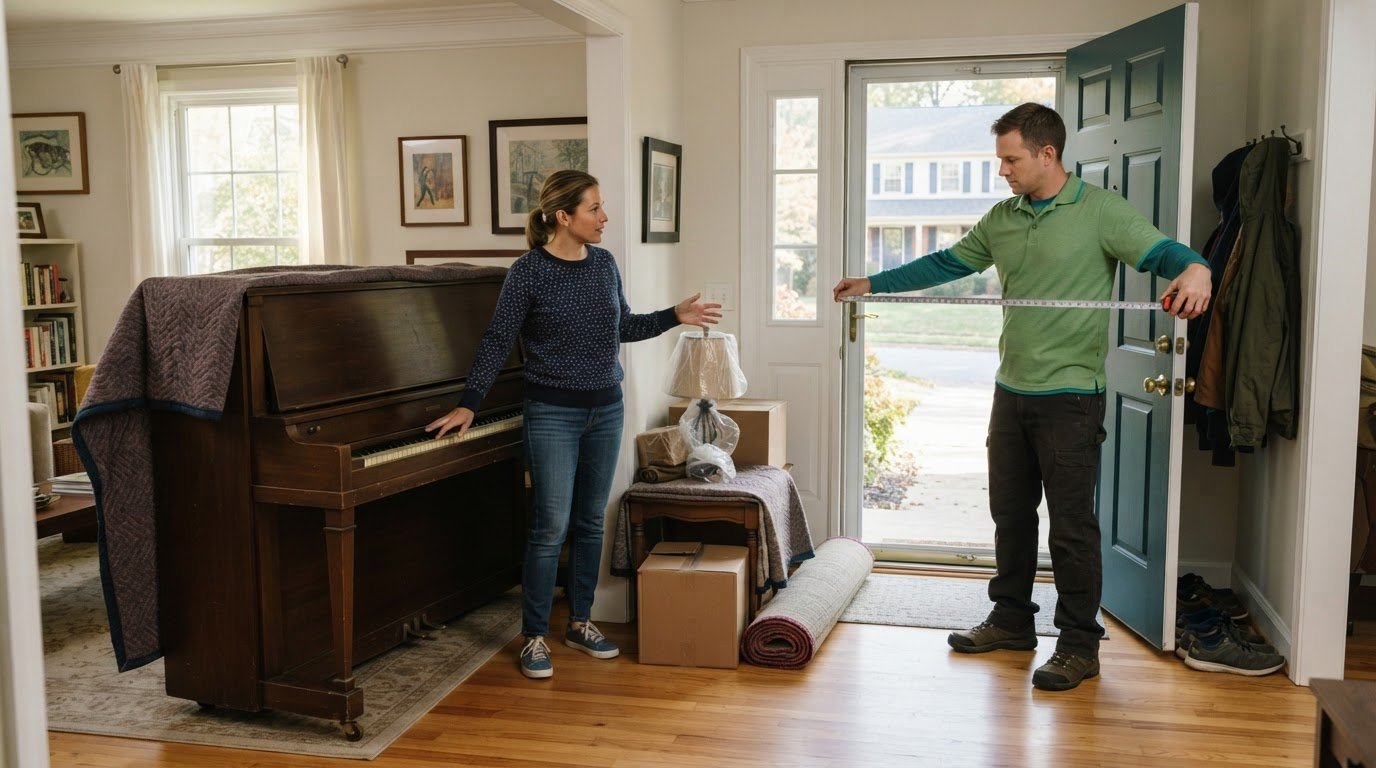
Walk the route from the hutch’s starting point to its destination, noting raised stones, gaps, narrow turns, soft ground, and safe places to pause. Clear obstacles and make sure the destination has enough room to set down the hutch without twisting or reaching.