Understanding Your Heavy Item Moving Contract: What to Check Before You Sign

A vague estimate can turn a heavy-item move into a costly question mark. Understanding your heavy item moving contract means checking that the written plan matches the item, the access route, and the work you expect the crew to do. A piano, safe, or piece of exercise equipment may need different handling, so broad wording can leave important details open to interpretation.
Look beyond the quoted total. The estimate may depend on what’s being moved, which services are included, and details such as stairs, narrow doorways, or a long carry from the truck. Before signing, confirm those details in writing and ask how a change to the plan could affect the final bill.
This guide walks through the service scope, estimate and payment terms, heavy-item handling, and responsibility for damage. You’ll find questions to ask, access details to confirm, and records to keep. A clear contract turns the plan into specific written terms, helping you spot gaps before moving day and prepare for the work ahead.
Key Takeaways
- Understanding your heavy item moving contract starts with identifying which document lists the agreed services and terms.
- Check that the estimate spells out the work included and what could change the final bill.
- Confirm the item, access route, and requested handling tasks are described clearly in writing.
- Review responsibility and damage-reporting terms, including any stated limits, exclusions, and deadlines.
- Before signing, compare the paperwork with the latest inventory and ask for unclear terms or changes in writing.
Understanding Your Heavy Item Moving Contract Starts with the Service Scope
Understanding your heavy item moving contract starts with a practical question: does the paperwork describe the job you actually need done? A moving contract records the agreed services, responsibilities, and applicable terms. It should make clear what the mover will handle and what falls outside the work. A general overview of a moving company can explain common tasks, but your documents should spell out the services for your move.
Document names can be confusing. A quote or estimate may describe expected costs and the assumptions behind them. An order for service may record the requested work, while a bill of lading may document the shipment and terms. Their roles and required use can vary by move type and jurisdiction. Ask what each document means for your move, and check current rules that apply to your situation.
General wording such as “move furniture” may not be enough for a piano, safe, or exercise machine. It doesn’t identify which item is included, whether the crew will prepare it, or where it should go. Name the item and list relevant handling tasks so you can compare the written scope with the estimate and final paperwork.
What should a heavy item moving agreement identify?
Check that the item description distinguishes it from other belongings. Name the type of item and, when useful, include identifying details such as its location or model. Confirm pickup and delivery addresses, the destination room, and any requested packing, preparation, or other work. The agreement should also identify the customer and mover, scheduled dates, contact details, and signatures where applicable. If the route involves stairs, narrow doorways, or tight turns, make sure those details have been shared and addressed in the written plan.
How do estimates and signed paperwork differ?
Ask whether a document is an estimate, a binding agreement, or another service record. Don’t assume its title alone explains how the price or work can change. Check what the estimate assumes about the item inventory, access at both locations, and requested services. If a piano needs a particular route or an exercise machine requires preparation, confirm that those tasks are included rather than relying on a broad description.
Keep the paperwork consistent. A verbal promise may not appear in the documents you later review, so request written clarification before signing. Compare the updated estimate with the service record, and make sure any change to the item or requested work is reflected. Clear wording gives both sides a practical reference when it’s time to move.
Check the Estimate, Included Work, and Possible Extra Charges
An estimate is useful only when you can see what work it covers. Read beyond the total. Check whether loading, transport, unloading, room placement, packing, or disassembly is included, and note what you’re expected to handle. For a heavy item, the word “moving” alone may not clarify whether the crew will carry it upstairs or place it in a specific room.
| Listed service | Labor to confirm | Customer responsibility | Question to ask |
|---|---|---|---|
| Loading and transport | Who loads the item and moves it to the destination? | Prepare the item or clear the route? | Is transport included in this estimate? |
| Unloading and placement | Will movers bring it inside and place it in the requested room? | Identify the destination room? | Does placement include stairs or a long carry? |
| Packing or disassembly | Will the crew pack, prepare, or take apart the item? | Remove parts or secure loose pieces? | Which preparation tasks are included? |
Use the table as a prompt, not as an assumption that every task is included. Ask how stairs, elevator use, long carries, parking limits, or changed access could affect the estimate. The written estimate and confirmed scope should guide that conversation. Don’t rely on a typical price for a piano or exercise machine to predict your bill. The agreed details for your move matter.
Which estimate details should you verify?
Find out what the estimate is based on: an item inventory, details you provided, or an on-site assessment. Check the payment schedule, accepted payment methods, and any cancellation or rescheduling terms stated in the paperwork. Ask the mover to explain unclear fees. If you agree to a change, request updated paperwork that records it. For information about federal moving protections and documents, consult the FMCSA’s Your Rights and Responsibilities When You Move resource and confirm which guidance applies to your move.
When might the planned scope need to change?
Tell the mover about added items, unusual dimensions, fragile finishes, and disassembly needs before moving day. Share access details early, including narrow hallways, tight turns, steep stairs, and parking or elevator restrictions. Ask what happens if conditions differ from the information used for the estimate. Before proceeding, get any change to the work or price explained in writing.
Clear details make it easier to compare the estimate with the work you’re requesting. If you need heavy-item moving help in Fairfax, Woodbridge, Manassas, or another nearby community, you can discuss your item and access needs with a local provider before booking.
Compare Heavy-Item Handling, Valuation, and Damage Terms
A handling plan and a damage-responsibility clause answer different questions. The handling plan describes how the mover expects to manage the item. The other clause explains what liability or valuation option applies if it’s lost or damaged. When understanding your heavy item moving contract, don’t treat valuation as a promise of full insurance. Read the actual terms and ask what protection, limits, exclusions, and claim steps apply to your move.
Rules can differ by move type and jurisdiction. For interstate moves, federal materials describe Released Value Protection and Full Value Protection as separate valuation options. Check the current requirements and the exact option shown in your paperwork. Confirm any limits, deductible, exclusions, and deadline for reporting damage or loss. Your signed documents, not an informal assurance, should explain the terms that apply.
What should you ask about damage responsibility?
Ask which written valuation or liability option applies and where its terms appear in the contract. Find the process and deadline for reporting a problem, and ask what records you’ll need. If the item is especially valuable, clarify how to identify and document it before the move. Take dated photos of existing marks and the item’s condition from several angles, then keep those images with your signed paperwork.
Do heavy items need additional handling details?
Yes. A piano, safe, or exercise machine may have features that affect its preparation and route. Record known dimensions, approximate weight if available, removable parts, and fragile components. Ask whether the mover has reviewed the path at pickup and delivery, including stairs and tight turns, and whether hoisting may be needed. Make sure the agreed handling plan is written down.
Specific service terms matter. For example, the federal procurement clause Accessorial Services-Moving Contracts addresses added services in government moving contracts. It isn’t a household-move template, but it illustrates why tasks such as packing or other extra handling should be described clearly rather than left implied.
Before signing, compare any protection options by what the agreement actually says. Ask for unclear wording to be explained in writing, and keep a copy of the final terms. If a damage concern comes up later, follow the stated reporting process and preserve your photos and related documents.
Use This Pre-Signing Checklist for Your Heavy Item Move
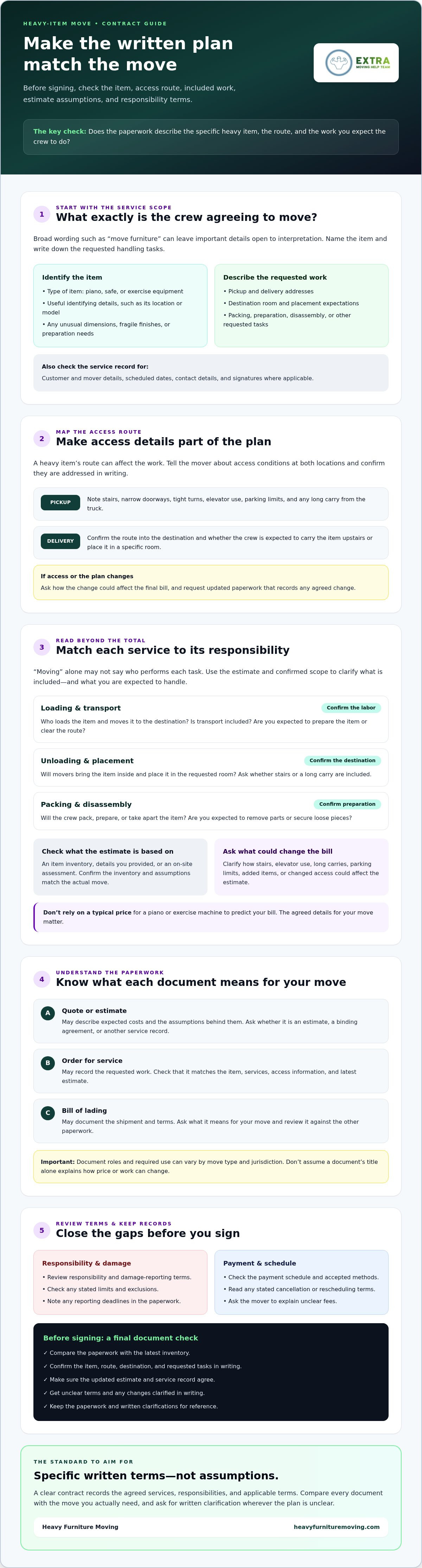
Use this sequence to catch gaps before you sign. Understanding your heavy item moving contract means checking that the latest paperwork matches the item, route, and work you’ve discussed, not just the original estimate.
- Identify the item. Confirm the description and any relevant dimensions, removable parts, or fragile components.
- Trace the route. Check pickup and delivery access, including stairs, elevators, doorways, turns, and parking.
- Confirm the services. Make sure the paperwork describes the requested loading, transport, unloading, placement, preparation, or other tasks.
- Review the estimate. Check its assumptions, payment terms, and how changes to the item or access may affect the scope or cost.
- Read responsibility terms. Locate the written terms for damage reporting and any applicable valuation or liability option.
- Record changes. Ask for agreed updates in writing, then compare the signed documents with the latest inventory and confirmed scope.
For a move between Fairfax, Woodbridge, or Manassas addresses, clarify what the local service agreement covers. A move crossing state lines may be subject to different requirements than a move within Virginia. Identify your move type and check current Virginia or federal guidance from official sources before relying on a rule. Don’t assume interstate requirements automatically apply to a local move.
Questions to ask before accepting the agreement
Ask who will perform the work and which exact tasks are included for your item. Has the crew reviewed the full route, including stairs, elevators, doorways, and parking? Ask where the agreement explains changes, payment, cancellation, and damage reporting. Get unclear answers in writing before signing.
What records should you keep?
Save the estimate, signed agreement, current inventory, written clarifications, and relevant messages together. Take photos of the item and access route, framing them to avoid sharing private household details. For exercise equipment, record identifying details and preparation needs so you can compare them with the written service scope.
Still sorting out the item, route, or requested labor? Discuss your heavy-item moving needs with a local provider before you book.
Get Heavy-Item Moving Terms Clarified Before You Book
Clear answers before signing can prevent confusion about what the crew will handle and what you’ll need to arrange. This article offers general information, not legal advice. If a clause is unclear, ask the mover to explain how it applies to your specific job and put any agreed changes in updated paperwork.
Heavy Furniture Moving provides residential help with bulky items such as pianos, safes, and exercise equipment, as well as sofa hoisting for items that can’t pass through standard access points. The right scope depends on the item and route, so share those details before booking. For local context, see movers in Fairfax and Northern Virginia.
How to make a useful moving enquiry
Prepare a clear description so the provider can assess the request and confirm the written scope. Include:
- The item type, known dimensions, and any preparation needs, such as removable parts.
- Pickup and delivery locations, plus access details such as stairs, narrow doorways, tight turns, or elevator use.
- The tasks you want done, such as moving the item to a particular room or hoisting a sofa through an access point.
- Your preferred timing, so the provider can discuss whether it fits the requested service.
Then ask which services are included and what remains your responsibility. A brief discussion about the item and route can surface missing details before they become a moving-day surprise.
What to do if a contract term remains unclear
Pause before signing. Ask the mover to explain the exact clause in plain language, including what it means for the work, payment, or damage reporting. Don’t rely on a verbal explanation alone. Request that any agreed change appear in updated written paperwork, then compare it with the inventory and confirmed service scope.
Before finalizing the agreement, keep the estimate, signed documents, inventory, and written clarifications together. Check that the description still matches the item and that the planned access route reflects what the mover has been told. This final review gives you a clear record of the arrangement.
Ready to clarify the item, access route, or requested labor? Contact Heavy Furniture Moving to discuss your heavy-item move.
Sign With a Clear Plan for Your Heavy Item Move
Understanding your heavy item moving contract comes down to making sure the written plan matches the job. Confirm the item and access route, check exactly which services and charges are included, and read the written terms for damage reporting and responsibility. If anything is unclear, pause and ask for an explanation or updated paperwork before signing.
Heavy Furniture Moving is veteran-family owned and operated, with specialized handling for pianos, safes, and exercise equipment. Sofa hoisting is available for items that can’t pass through standard entryways. Share the item, access details, and labor you need so the requested work can be discussed clearly.
Discuss your heavy-item move with Heavy Furniture Moving and start with the details that matter. A little preparation can make the plan easier to understand and help you move forward with greater confidence.
Frequently Asked Questions
What should a heavy item moving contract include?
A heavy item moving contract should identify the item, locations, requested services, estimate assumptions, responsibilities, and applicable damage-reporting terms. Understanding your heavy item moving contract also means checking that details such as stairs, tight access, room placement, and preparation needs are recorded. For example, “exercise equipment” may be too broad if you need a specific machine moved. Ask for unclear or missing details to be added in writing before you sign.
Is a moving estimate the same as a signed moving contract?
No. An estimate describes expected charges based on stated assumptions, while signed paperwork may record the agreed services and other terms. Document names and roles can vary by move type, so ask what each document means for your booking. Compare the estimate with the latest inventory and written service scope. If the item, access route, or requested tasks have changed, ask whether updated paperwork is needed before signing.
Can a mover charge extra if stairs or access details change?
Possibly, depending on the agreement, estimate assumptions, and changed conditions. If the estimate was based on a clear entrance but the delivery route has steep stairs or a long carry, the work may differ from what was planned. Disclose access details early and ask how changes could affect the estimate. Get any revised scope or charges explained in updated written paperwork before the work proceeds.
What happens if a heavy item is damaged during a move?
Follow the reporting process and deadline stated in your signed documents, and contact the mover promptly if you discover damage. Take clear photos of the item and keep the estimate, inventory, agreement, and relevant messages together. The contract should identify the applicable valuation or liability terms, which aren’t automatically the same as full insurance. Ask what information is needed to report a claim, and verify which rules apply to your move.
Does a moving contract explain what happens to a piano or safe?
It should describe the item and any agreed handling or preparation tasks clearly enough to match the planned service. Heavy Furniture Moving provides specialized handling for pianos, safes, and exercise equipment, but confirm the exact work for your item in writing. Share its dimensions, known access challenges, and requested placement. If the route may require sofa hoisting or another special approach, ask how that plan will be documented.
Do Virginia moving rules apply to every heavy-item move?
No. Requirements can depend on whether a move stays within Virginia or crosses state lines, as well as the services involved. Identify your move type and verify current guidance through the appropriate official sources rather than assuming one set of rules covers every job. This matters for customers arranging local moves in Fairfax, Woodbridge, Manassas, Manassas Park, Aldie, Ashburn, McLean, Vienna, Reston, Centreville, Chantilly, Clifton, Dumfries, South Riding, Fairfax Station, Haymarket, or Gainesville.
Should I sign a moving contract if some terms are unclear?
Pause and ask for an explanation before signing. Have the mover point to the exact clause and describe what it means for your item, the included work, payment, or damage reporting. If you agree on a change, request updated written paperwork and compare it with the estimate and inventory. An educational article can help you prepare questions, but it isn’t legal advice. Don’t rely on a verbal assurance to resolve unclear written terms.
Frequently Asked Questions
Check that the item description distinguishes it from other belongings. Name the type of item and, when useful, include identifying details such as its location or model. Confirm pickup and delivery addresses, the destination room, and any requested packing, preparation, or other work. The agreement should also identify the customer and mover, scheduled dates, contact details, and signatures where applicable. If the route involves stairs, narrow doorways, or tight turns, make sure those details have been shared and addressed in the written plan.
Ask whether a document is an estimate, a binding agreement, or another service record. Don’t assume its title alone explains how the price or work can change. Check what the estimate assumes about the item inventory, access at both locations, and requested services. If a piano needs a particular route or an exercise machine requires preparation, confirm that those tasks are included rather than relying on a broad description. Keep the paperwork consistent. A verbal promise may not appear in the documents you later review, so request written clarification before signing. Compare the updated estimate with the service record, and make sure any change to the item or requested work is reflected. Clear wording gives both sides a practical reference when it’s time to move. An estimate is useful only when you can see what work it covers. Read beyond the total. Check whether loading, transport, unloading, room placement, packing, or disassembly is included, and note what you’re expected to handle. For a heavy item, the word “moving” alone may not clarify whether the crew will carry it upstairs or place it in a specific room. Use the table as a prompt, not as an assumption that every task is included. Ask how stairs, elevator use, long carries, parking limits, or changed access could affect the estimate. The written estimate and confirmed scope should guide that conversation. Don’t rely on a typical price for a piano or exercise machine to predict your bill. The agreed details for your move matter.
Find out what the estimate is based on: an item inventory, details you provided, or an on-site assessment. Check the payment schedule, accepted payment methods, and any cancellation or rescheduling terms stated in the paperwork. Ask the mover to explain unclear fees. If you agree to a change, request updated paperwork that records it. For information about federal moving protections and documents, consult the FMCSA’s Your Rights and Responsibilities When You Move resource and confirm which guidance applies to your move.
Tell the mover about added items, unusual dimensions, fragile finishes, and disassembly needs before moving day. Share access details early, including narrow hallways, tight turns, steep stairs, and parking or elevator restrictions. Ask what happens if conditions differ from the information used for the estimate. Before proceeding, get any change to the work or price explained in writing. Clear details make it easier to compare the estimate with the work you’re requesting. If you need heavy-item moving help in Fairfax, Woodbridge, Manassas, or another nearby community, you can discuss your item and access needs with a local provider before booking. A handling plan and a damage-responsibility clause answer different questions. The handling plan describes how the mover expects to manage the item. The other clause explains what liability or valuation option applies if it’s lost or damaged. When understanding your heavy item moving contract, don’t treat valuation as a promise of full insurance. Read the actual terms and ask what protection, limits, exclusions, and claim steps apply to your move. Rules can differ by move type and jurisdiction. For interstate moves, federal materials describe Released Value Protection and Full Value Protection as separate valuation options. Check the current requirements and the exact option shown in your paperwork. Confirm any limits, deductible, exclusions, and deadline for reporting damage or loss. Your signed documents, not an informal assurance, should explain the terms that apply.
Ask which written valuation or liability option applies and where its terms appear in the contract. Find the process and deadline for reporting a problem, and ask what records you’ll need. If the item is especially valuable, clarify how to identify and document it before the move. Take dated photos of existing marks and the item’s condition from several angles, then keep those images with your signed paperwork.
Yes. A piano, safe, or exercise machine may have features that affect its preparation and route. Record known dimensions, approximate weight if available, removable parts, and fragile components. Ask whether the mover has reviewed the path at pickup and delivery, including stairs and tight turns, and whether hoisting may be needed. Make sure the agreed handling plan is written down. Specific service terms matter. For example, the federal procurement clause Accessorial Services-Moving Contracts addresses added services in government moving contracts. It isn’t a household-move template, but it illustrates why tasks such as packing or other extra handling should be described clearly rather than left implied. Before signing, compare any protection options by what the agreement actually says. Ask for unclear wording to be explained in writing, and keep a copy of the final terms. If a damage concern comes up later, follow the stated reporting process and preserve your photos and related documents. Use this sequence to catch gaps before you sign. Understanding your heavy item moving contract means checking that the latest paperwork matches the item, route, and work you’ve discussed, not just the original estimate. For a move between Fairfax, Woodbridge, or Manassas addresses, clarify what the local service agreement covers. A move crossing state lines may be subject to different requirements than a move within Virginia. Identify your move type and check current Virginia or federal guidance from official sources before relying on a rule. Don’t assume interstate requirements automatically apply to a local move.
Save the estimate, signed agreement, current inventory, written clarifications, and relevant messages together. Take photos of the item and access route, framing them to avoid sharing private household details. For exercise equipment, record identifying details and preparation needs so you can compare them with the written service scope. Still sorting out the item, route, or requested labor? Discuss your heavy-item moving needs with a local provider before you book. Clear answers before signing can prevent confusion about what the crew will handle and what you’ll need to arrange. This article offers general information, not legal advice. If a clause is unclear, ask the mover to explain how it applies to your specific job and put any agreed changes in updated paperwork. Heavy Furniture Moving provides residential help with bulky items such as pianos, safes, and exercise equipment, as well as sofa hoisting for items that can’t pass through standard access points. The right scope depends on the item and route, so share those details before booking. For local context, see movers in Fairfax and Northern Virginia.
A heavy item moving contract should identify the item, locations, requested services, estimate assumptions, responsibilities, and applicable damage-reporting terms. Understanding your heavy item moving contract also means checking that details such as stairs, tight access, room placement, and preparation needs are recorded. For example, “exercise equipment” may be too broad if you need a specific machine moved. Ask for unclear or missing details to be added in writing before you sign.
No. An estimate describes expected charges based on stated assumptions, while signed paperwork may record the agreed services and other terms. Document names and roles can vary by move type, so ask what each document means for your booking. Compare the estimate with the latest inventory and written service scope. If the item, access route, or requested tasks have changed, ask whether updated paperwork is needed before signing.
Possibly, depending on the agreement, estimate assumptions, and changed conditions. If the estimate was based on a clear entrance but the delivery route has steep stairs or a long carry, the work may differ from what was planned. Disclose access details early and ask how changes could affect the estimate. Get any revised scope or charges explained in updated written paperwork before the work proceeds.
Follow the reporting process and deadline stated in your signed documents, and contact the mover promptly if you discover damage. Take clear photos of the item and keep the estimate, inventory, agreement, and relevant messages together. The contract should identify the applicable valuation or liability terms, which aren’t automatically the same as full insurance. Ask what information is needed to report a claim, and verify which rules apply to your move.
It should describe the item and any agreed handling or preparation tasks clearly enough to match the planned service. Heavy Furniture Moving provides specialized handling for pianos, safes, and exercise equipment, but confirm the exact work for your item in writing. Share its dimensions, known access challenges, and requested placement. If the route may require sofa hoisting or another special approach, ask how that plan will be documented.
No. Requirements can depend on whether a move stays within Virginia or crosses state lines, as well as the services involved. Identify your move type and verify current guidance through the appropriate official sources rather than assuming one set of rules covers every job. This matters for customers arranging local moves in Fairfax, Woodbridge, Manassas, Manassas Park, Aldie, Ashburn, McLean, Vienna, Reston, Centreville, Chantilly, Clifton, Dumfries, South Riding, Fairfax Station, Haymarket, or Gainesville.
Pause and ask for an explanation before signing. Have the mover point to the exact clause and describe what it means for your item, the included work, payment, or damage reporting. If you agree on a change, request updated written paperwork and compare it with the estimate and inventory. An educational article can help you prepare questions, but it isn’t legal advice. Don’t rely on a verbal assurance to resolve unclear written terms.