Residential Safe Movers in Fairfax for Walkout Delivery
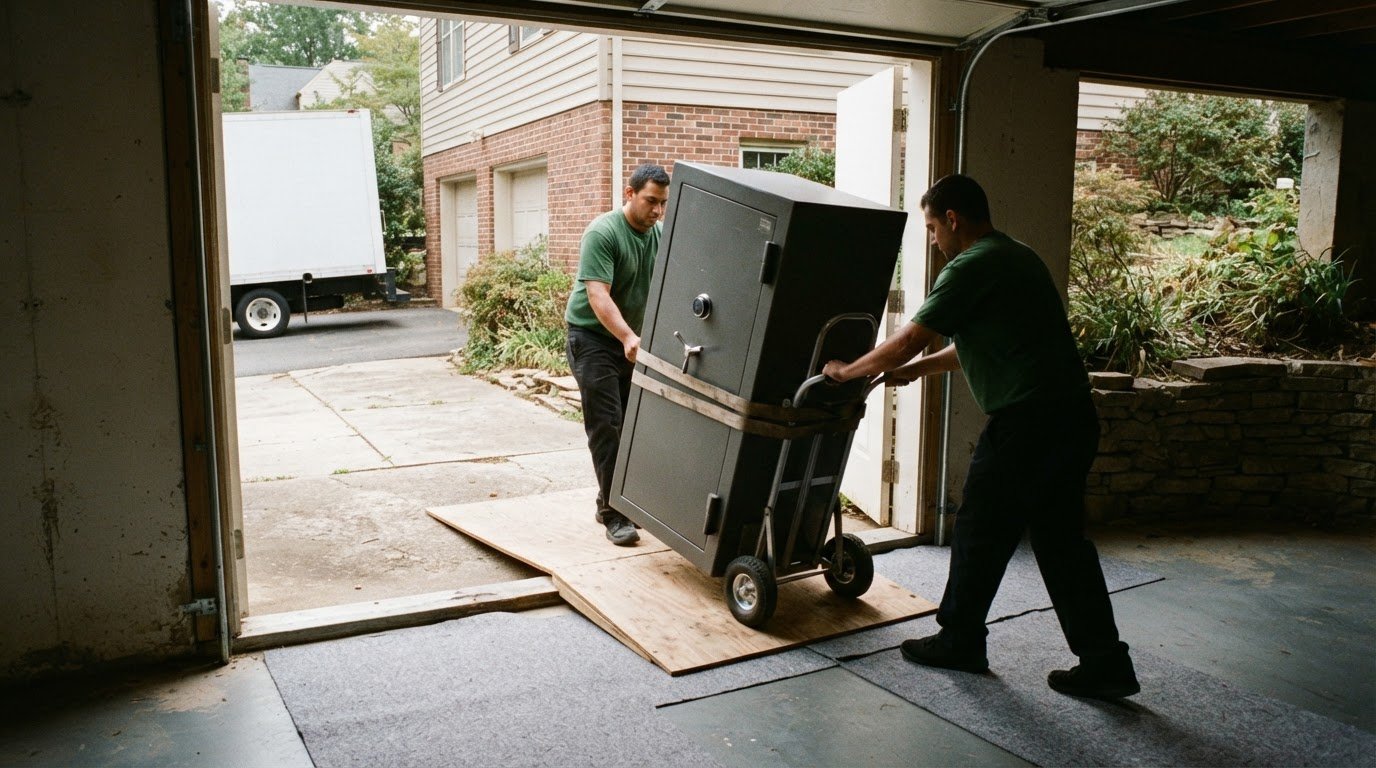
A basement walkout can simplify the final stretch, but truck access and the route to the door still shape the delivery. For residential safe movers handling basement walkout delivery in Fairfax, the key details are the approach to your home, the safe’s size and weight, and any stairs, tight turns, or narrow passages along the way.
It’s reasonable to want a clear idea of the cost before moving a heavy safe. The price depends on the case and is given after a quote request; key factors include the safe’s dimensions and weight, the distance from the truck to the walkout, and the difficulty of the route.
This guide explains how access affects a safe delivery, what details to share when planning, and how to prepare the route and placement area. You’ll also see how a basement walkout differs from a stairway entrance, so you can plan for your home’s layout and reduce the chance of delays on moving day.
Key Takeaways
- Understand which details shape a Fairfax safe-moving quote, including the item, route, and delivery access.
- See how protective wrapping and careful placement help safeguard the safe and the home.
- Learn which driveway, walkout, and stairway conditions can affect the delivery plan.
- Know what information about the safe and basement route helps movers prepare for heavy-item handling.
- Prepare the walkout area and indoor path to make delivery more orderly.
How much do movers cost in Fairfax?
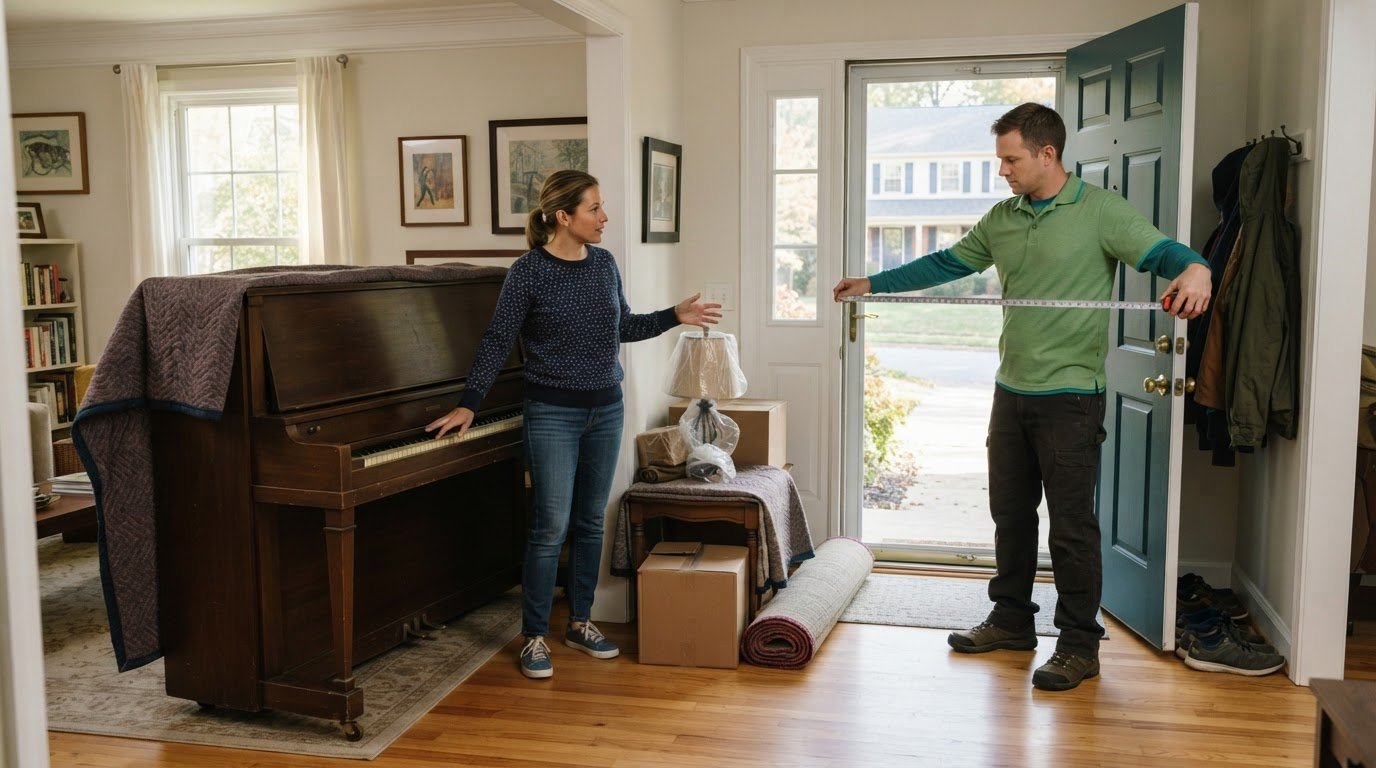
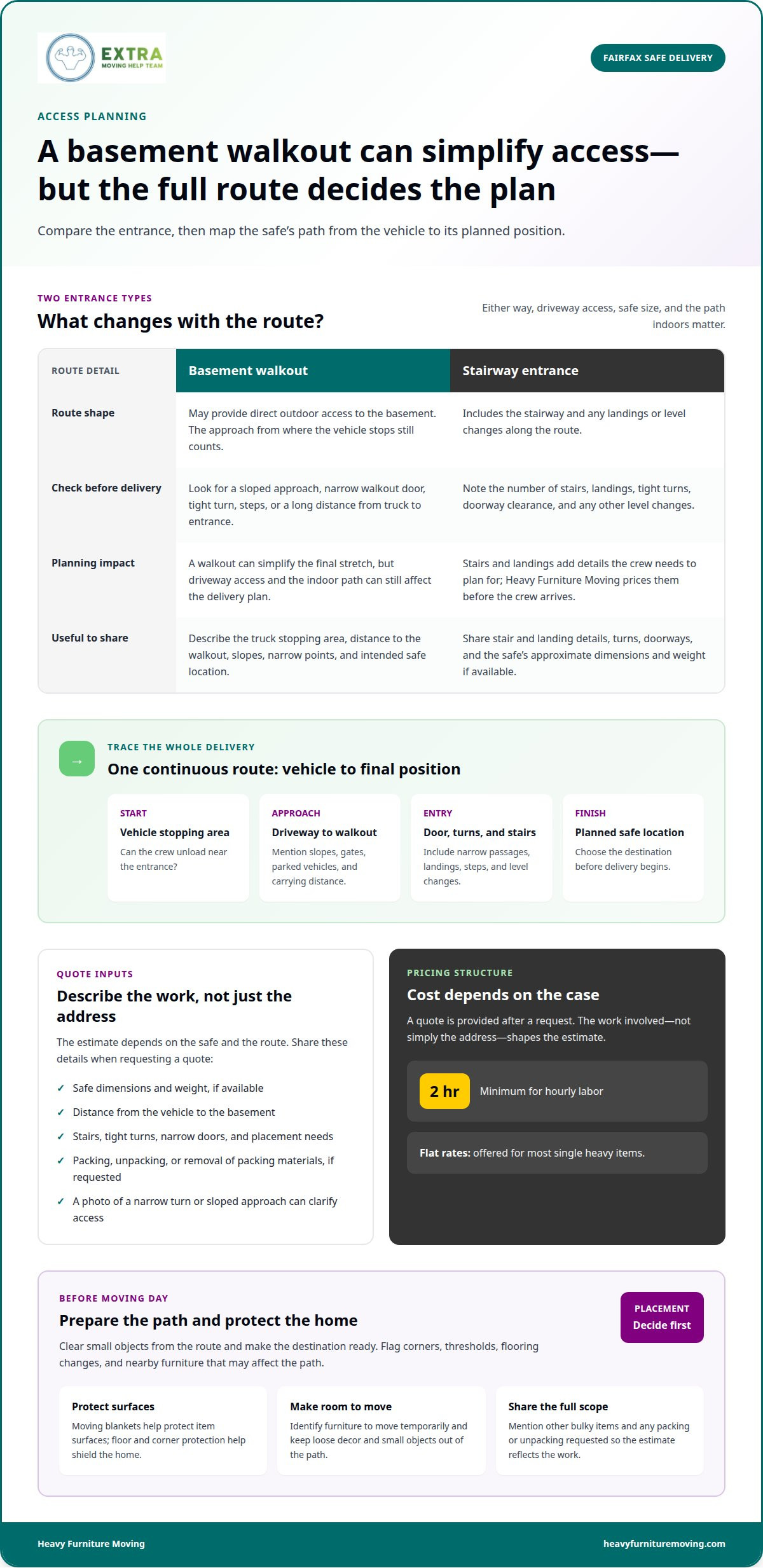
A safe-moving estimate depends on the work involved, not simply the address. The safe’s weight and dimensions, the distance from the vehicle to the basement, stairs, tight turns, and placement needs all affect the plan. Heavy Furniture Moving measures the safe, doorways, and stairs before lifting, and prices stairs and landings before the crew arrives. Share the route and any requested packing or unpacking when asking for a quote.
Think about the work involved rather than a single average. A straightforward route may need only the safe moved from the vehicle to its planned spot. A sloped driveway, narrow walkout door, or indoor stairs calls for more planning. If you also need packing, unpacking, or other bulky items moved, describe the full scope so the estimate reflects the work. Heavy Furniture Moving has a two-hour minimum for hourly labor and offers flat rates for most single heavy items.
For a useful estimate, describe the safe and the full route. Include its approximate dimensions and weight if available, the number of stairs, the walkout entrance, and the intended final position. A photo of a narrow turn or sloped approach can clarify the access challenge. Also identify whether packing is needed and whether unpacking or removal of packing materials is part of the requested finish.
Fairfax geography can affect travel and access planning. The U.S. Census Bureau counted 24,146 residents in the independent City of Fairfax, Virginia, in the 2020 Census. The independent city has approximately 6.24 square miles of land, according to the U.S. Census Bureau. That compact footprint does not make every delivery alike: a driveway, street approach, and basement entrance can differ from one property to another.
Service coverage questions often involve Fairfax and the wider DMV, but distance alone does not describe a job. An address outside Fairfax can add travel, while local parking and the route from vehicle to walkout can add handling work. Oakton illustrates how nearby communities have their own setting: its 2020 population density was 3,762 residents per square mile, according to the U.S. Census Bureau. Share the exact delivery address for a location-specific estimate.
Packing and unpacking change the scope of a move. If you need either service, specify what should be packed or unpacked and where the work should happen. A safe delivered alone to an open basement requires a different plan from a move that also includes packed household items. Listing each task helps Heavy Furniture Moving give you an estimate based on the work requested.
Furniture protection and placement
Protecting the home starts before a heavy item crosses the doorway. Plan the path from the entrance to the destination, noting corners, thresholds, changes in flooring, and nearby furniture. A basement walkout may provide direct outdoor access, but the route can still have a narrow door or awkward turn. Clear small objects from the path, and Heavy Furniture Moving will use floor and corner protection to help protect the home.
Protective materials serve different purposes. Moving blankets help protect item surfaces, while floor protection helps shield finished flooring along the route. Edges and corners need particular attention where a hallway narrows or the path passes a doorframe. A dresser moving past a basement door, for example, needs enough clearance for its shape, not just its width. Planning the angle before the turn helps avoid scraping nearby surfaces.
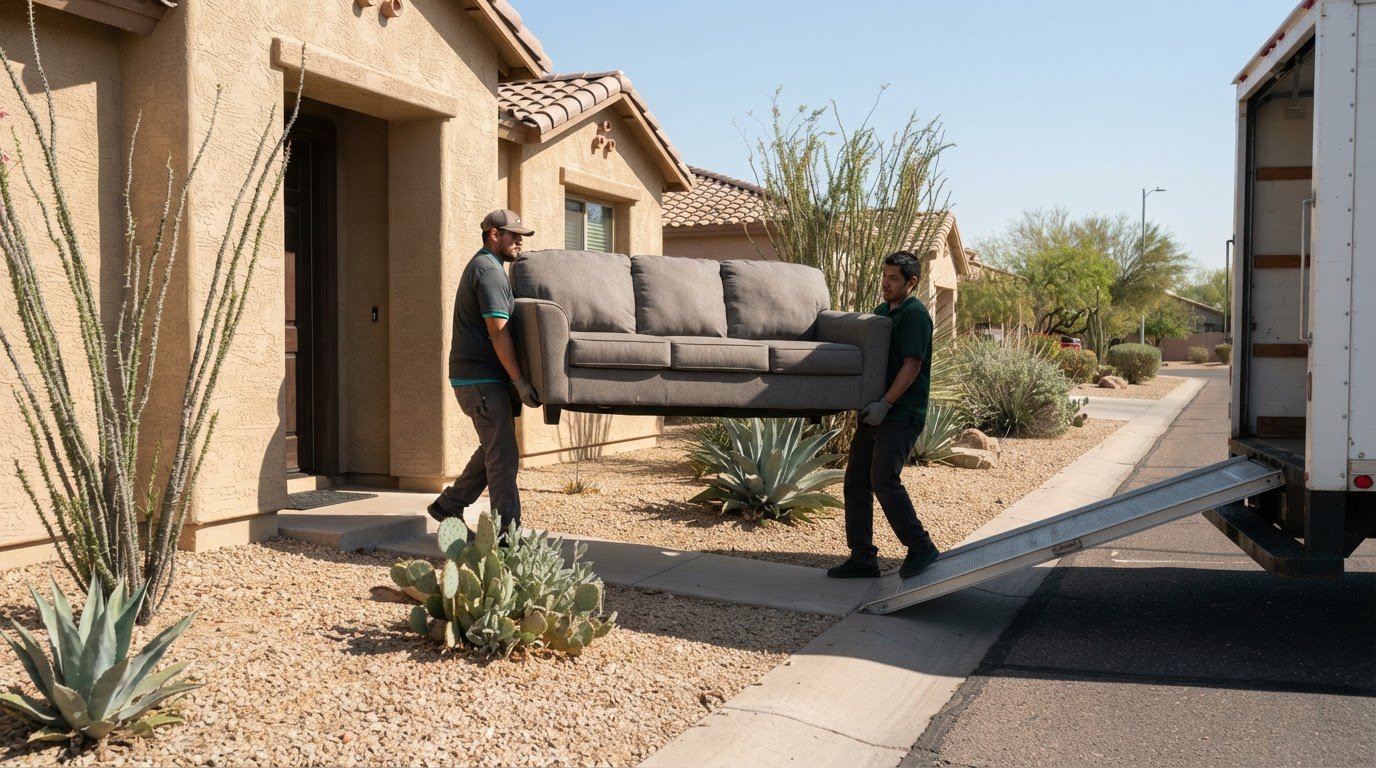
Furniture placement also needs a clear destination. Decide whether a sofa belongs against a wall, whether a bed frame should sit in a bedroom, or whether a cabinet needs to remain accessible from both sides. A safe or other heavy piece should have a designated spot before delivery begins. That prevents repeated repositioning, which can add handling and increase the chance of damage to nearby walls, floors, or furnishings.
Furniture rearranging calls for a separate route plan. If a sectional must move across a basement so a safe can reach its final position, the team needs to account for both pieces and the space between them. Identify what stays, what moves temporarily, and where displaced items can rest. Keep small tables, lamps, and loose decor out of the path. A clear sequence helps avoid carrying one item around another.
Common household items that may need moving include sofas, armchairs, dining tables, dressers, bed frames, mattresses, and bookcases. Each shape presents a different challenge: a long table needs room to turn, while a tall bookcase needs overhead clearance. Tell the movers where each item should go and mention any fragile finish or existing damage before handling begins.
Careful handling matters, but the word “guarantee” should never replace a clear description of protection and placement. Discuss the route, the furniture types, and the requested final locations as part of the moving plan. For in-home furniture moves that involve heavy pieces or tight rooms, in-home furniture moving help can support the same careful approach to access and placement.
Stair, driveway, and delivery access planning
A safe’s route begins where the moving vehicle can stop and ends at its planned position. Review the driveway, walkout, and any indoor stairs as one continuous path.
Access Route Planning
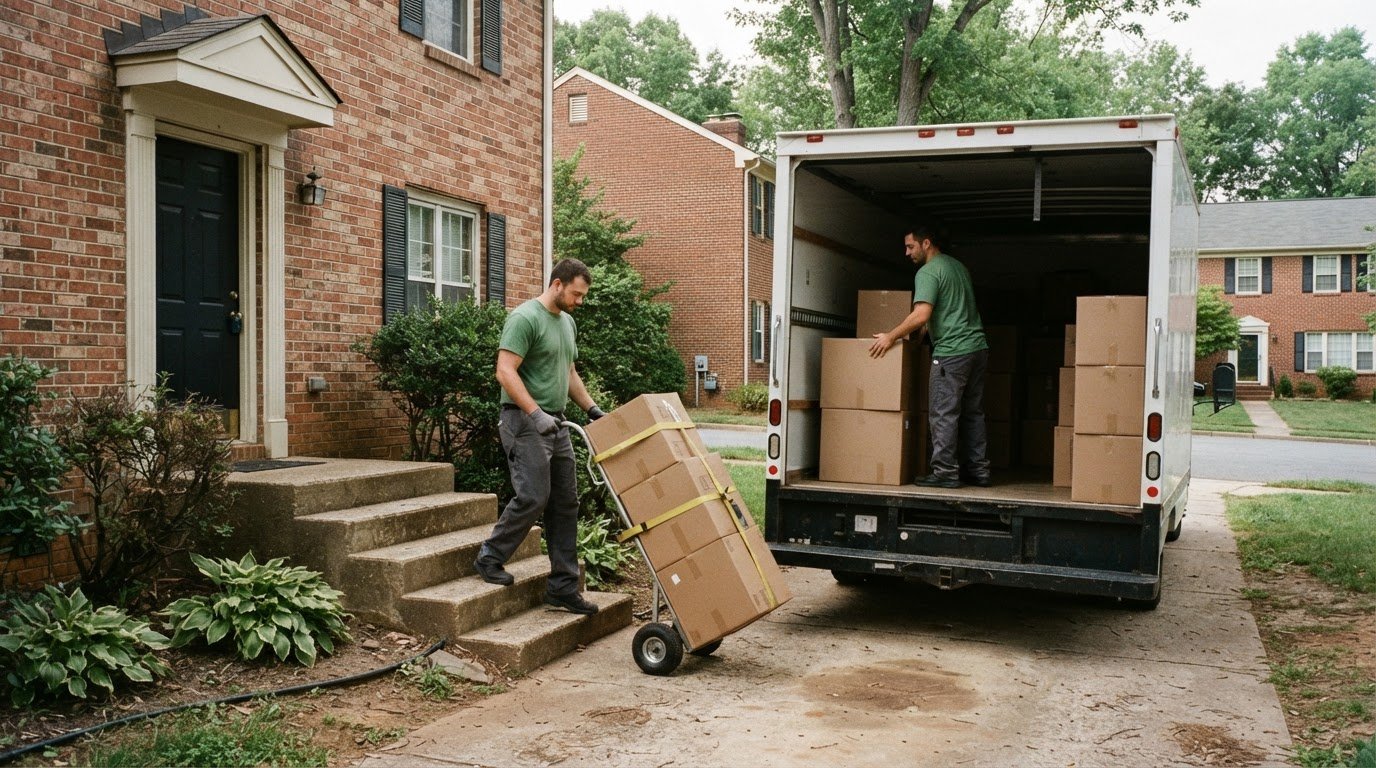
Map the route from the street or driveway to the basement, noting slopes, steps, doorways, and turns. A steep driveway, parked vehicle, or narrow landing can affect how the crew reaches the entrance. Include every stairway and level change, even if the walkout itself has no steps. These details help the team plan the delivery and identify belongings that may need to be moved temporarily.
Driveway access determines where the crew can unload and how far the safe must travel. Identify gates, low branches, tight vehicle turns, and shared parking along the approach. The vehicle may need to stop at the entrance rather than beside the walkout, adding carrying distance. Describe the actual stopping area instead of simply saying the driveway is accessible.
Stairs need a closer look than a step count alone. Their width, turns, landings, handrails, and overhead clearance all shape the route. A straight stairway and a stairwell with a sharp turn present different challenges. Explain whether the safe enters directly through the walkout or travels through the home, and include any short outdoor steps.
Preparing the Basement Walkout
Prepare the entrance by clearing anything that could block a large item. Move shoes, planters, bins, and loose belongings away from the walkout and landing. Check that doors open fully and the threshold is clear. If furniture near the entrance must be moved first, point it out so the crew has room to work.
Inside, clear a continuous path to the safe’s planned position. Remove rugs that slide, cords across the floor, and small tables near corners. Keep pets and household members outside the working route during the move. If the basement has more than one entrance, identify the walkout intended for delivery and leave the alternate route unobstructed.
Walk the route before moving day and note any changes to the plan. A vehicle, stored belongings, or a door that won’t stay open can block the path. Make sure the placement area is empty and reachable without first moving other heavy items. A clear route supports careful handling, while an open driveway alone doesn’t guarantee an easy basement delivery.
Share practical details such as a sloped approach, narrow landing, or stairs between floors. A description or clear photo can explain an awkward turn. The goal is to show the full route, from where the vehicle can stop through the walkout to the final placement spot.
Heavy and specialty-item handling
In Fairfax, VA, local safe movers typically handle the item as part of a household move, while specialty heavy-item movers focus on the safe’s weight, shape, and route. For a basement delivery, compare how each plans the handling, protects the home, and positions the safe at its destination.
A safe needs a move plan built around the item, not just the room. Start with its dimensions, approximate weight, and any features that affect handling. Then map the route from the vehicle to the final spot. A walkout can avoid interior stairs, but tight turns or uneven transitions may still shape the approach.
Specialized handling matters when a safe must pass through a narrow doorway, turn in a basement hall, or move beside stored belongings. Each obstacle affects the space available for maneuvering. Clear the route before the crew arrives so they can focus on controlled movement instead of shifting boxes or furniture mid-move. This also helps keep the rest of the home accessible.
Consider the safe’s surroundings, too. A basement may have finished flooring, exposed edges, low ceilings, or nearby furniture. Mention these features and the intended placement area when describing the job. A safe destined for a corner behind a workbench, for example, needs a different final approach from one going in an open room. Deciding on the spot ahead of time can prevent repeated repositioning.
An apartment pickup can present different constraints. Shared entrances, hallways, elevators, and building access rules may affect the route. A move from an apartment to a Fairfax basement requires planning for both the pickup and delivery locations. Describe both clearly, including stairs and tight passages, so the team can plan for the full journey.
Organize the key details in one place: the safe’s dimensions and approximate weight, pickup and delivery addresses, entry points, stairs, and final placement. Note obstacles such as a narrow landing or sharp hallway turn. This helps Heavy Furniture Moving plan the route and bring suitable equipment. Don’t assume a doorway that looks simple has enough clearance for the safe and moving equipment.
On delivery day, keep the route clear and let the crew coordinate movement around the safe. Avoid trying to guide or lift it yourself; extra people in a confined area can complicate coordination. Choose a team that plans for the safe, both properties, and the full route rather than treating it as ordinary household cargo.
How to prepare a basement walkout and home for safe movers
Good preparation starts with the route and destination. Before moving day, share the safe’s dimensions and approximate weight, the delivery address, and the planned basement location. Describe the walkout, connecting stairs, and obstacles between the entrance and placement spot. These details help the team plan around your home before the move.
Walk through the property to capture details that are easy to overlook. Note whether the walkout door opens fully, whether a landing narrows the path, and whether the basement has low ceilings or sharp turns. Mention floor transitions, a sloped approach, or a narrow hallway. Include photos of any difficult turn or doorway.
Decide where the safe should go before delivery. Identify the room, wall or corner, and nearby furniture that could affect its final position. A spot behind shelving, for example, may require a different approach from an open basement area. Tell the movers whether furniture must move first and which pieces should stay in place.
Plan household access during the move. Keep children, pets, and other household members away from the active work area. Let everyone know which entrance and rooms will be used, so the delivery path stays clear. If the basement is shared with a tenant or another household member, coordinate access to the walkout and destination room beforehand.
Share practical arrival information, too. Describe where the vehicle can stop, how to reach the walkout from there, and whether gates or shared access affect entry. Mention any changes since you first described the route, such as belongings stored near the basement door. Clear communication helps the crew organize the approach and avoid unexpected obstructions.
- Item details: Provide the safe’s dimensions, approximate weight, and any handling notes you know.
- Route details: Describe the driveway, walkout entrance, stairs, turns, and narrow passages.
- Placement decision: Identify the basement room and the exact area for delivery.
- Household coordination: Explain who needs access and which areas should stay clear during the move.
Keep those details together in one message, then update the plan if the route or placement changes. For help planning a heavy move through a basement walkout, plan your heavy-item move with the route and destination in mind.
Heavy Furniture Moving
Heavy Furniture Moving can help when a safe’s weight, basement route, or placement makes delivery difficult to manage alone. The team moves heavy and bulky residential items, including safes, and plans around the home’s access and intended destination.
Turn to Heavy Furniture Moving when a walkout entrance, tight interior turn, or nearby furniture makes the route challenging. The team also handles other household needs, including exercise equipment moving, sofa hoisting, and in-home furniture moves. Share the safe’s details, route, and preferred placement so the move can be planned around your home.
Set Up the Move With Confidence
Choosing residential safe movers for basement walkout delivery in Fairfax starts with turning your household’s needs into a clear plan. Decide who will approve the safe’s final position and be available to answer questions about the route. A designated contact helps keep decisions focused if the crew encounters an obstacle.
Before moving day, keep the placement area ready and your preferred location clear. If your plans change, share the update before the safe is in motion. A confirmed destination helps avoid unnecessary repositioning, while a clear path lets the crew focus on the delivery.
Heavy Furniture Moving can help with demanding residential moves, including bulky items and challenging access. Contact the team to discuss your safe delivery and the layout of your home. Contact Heavy Furniture Moving to take the next step toward a well-planned move.
Frequently Asked Questions
Can your truck access my Fairfax neighborhood?
Heavy Furniture Moving serves Fairfax and nearby Northern Virginia communities, but truck access depends on the specific property approach. A narrow lane, limited stopping space, low branches, or a shared driveway can affect where the vehicle can unload. Include your street address and describe the final approach from the road to the home. For example, mention if the safe must travel from a curbside stop to a rear walkout.
What access details matter for my Fairfax move?
Useful details include the vehicle stopping area, outdoor steps, door clearances, interior turns, and the safe’s destination. Also note gates, shared entrances, low ceilings, or a route through a finished room. A walkout door onto a narrow landing may affect the move even without basement stairs. Mention furniture or stored items that need shifting before the safe can pass.
Which safe movers in Fairfax, VA, handle residential basement walkout delivery?
For residential safe movers handling basement walkout delivery in Fairfax, choose a team that specializes in heavy household items and plans the route through the home. Heavy Furniture Moving handles safes as part of its specialized heavy-item moving service. Share the safe’s dimensions and approximate weight, along with entrance and placement details, to give the team a practical picture of the job beyond the delivery address.
Which Fairfax safe moving companies handle heavy gun safes and basement stairs?
Basement stairs, landings, and turns affect how the crew approaches delivery, so describe the full path from vehicle to destination. Include whether the safe enters through a walkout or must travel through the home. This helps distinguish a direct basement entrance from a stairway delivery.
What does it cost to move a safe into a basement in Fairfax, VA?
The cost depends on the safe, travel, access, and requested work; it’s provided after a quote request. Key details include the item’s weight and dimensions, stairways or tight turns, driveway access, and the distance from the stopping point to the basement. Packing or additional moving work can also affect the scope. Describe the job clearly so the estimate reflects the actual route and handling required.
What measurements and photos do safe movers need for a basement delivery quote?
Provide the safe’s height, width, and depth, along with its approximate weight and the narrowest doorway or passage on the route. Photos can show the safe, entrance, stairs or walkout, landings, and intended placement area. Include views of difficult turns and the vehicle approach if parking or driveway access is unusual. These details help explain the job before the moving plan is set.
What are the safe delivery requirements for basement walkout access and stairways?
Provide a clear route, an open walkout entrance, and details about each stairway, landing, and turn. Heavy Furniture Moving measures item dimensions, doorways, and stairs before lifting. Wrap, moving blankets, and straps are included on every job, along with floor and corner protection. Keep household traffic and loose belongings out of the work area so the crew can handle the delivery without obstructions.
risks of moving a heavy safe down basement stairs
Basement stairs can create handling challenges because their width, turns, landings, handrails, and overhead clearance affect the route. Tight or obstructed access also raises the risk of damage to the safe, walls, floors, and nearby furnishings.
Frequently Asked Questions
Heavy Furniture Moving serves Fairfax and nearby Northern Virginia communities, but truck access depends on the specific property approach. A narrow lane, limited stopping space, low branches, or a shared driveway can affect where the vehicle can unload. Include your street address and describe the final approach from the road to the home. For example, mention if the safe must travel from a curbside stop to a rear walkout.
Useful details include the vehicle stopping area, outdoor steps, door clearances, interior turns, and the safe’s destination. Also note gates, shared entrances, low ceilings, or a route through a finished room. A walkout door onto a narrow landing may affect the move even without basement stairs. Mention furniture or stored items that need shifting before the safe can pass.
For residential safe movers handling basement walkout delivery in Fairfax, choose a team that specializes in heavy household items and plans the route through the home. Heavy Furniture Moving handles safes as part of its specialized heavy-item moving service. Share the safe’s dimensions and approximate weight, along with entrance and placement details, to give the team a practical picture of the job beyond the delivery address.
Basement stairs, landings, and turns affect how the crew approaches delivery, so describe the full path from vehicle to destination. Include whether the safe enters through a walkout or must travel through the home. This helps distinguish a direct basement entrance from a stairway delivery.
The cost depends on the safe, travel, access, and requested work; it’s provided after a quote request. Key details include the item’s weight and dimensions, stairways or tight turns, driveway access, and the distance from the stopping point to the basement. Packing or additional moving work can also affect the scope. Describe the job clearly so the estimate reflects the actual route and handling required.
Provide the safe’s height, width, and depth, along with its approximate weight and the narrowest doorway or passage on the route. Photos can show the safe, entrance, stairs or walkout, landings, and intended placement area. Include views of difficult turns and the vehicle approach if parking or driveway access is unusual. These details help explain the job before the moving plan is set.
Provide a clear route, an open walkout entrance, and details about each stairway, landing, and turn. Heavy Furniture Moving measures item dimensions, doorways, and stairs before lifting. Wrap, moving blankets, and straps are included on every job, along with floor and corner protection. Keep household traffic and loose belongings out of the work area so the crew can handle the delivery without obstructions.