Residential Hoist Service for Leather Sectionals in Clifton
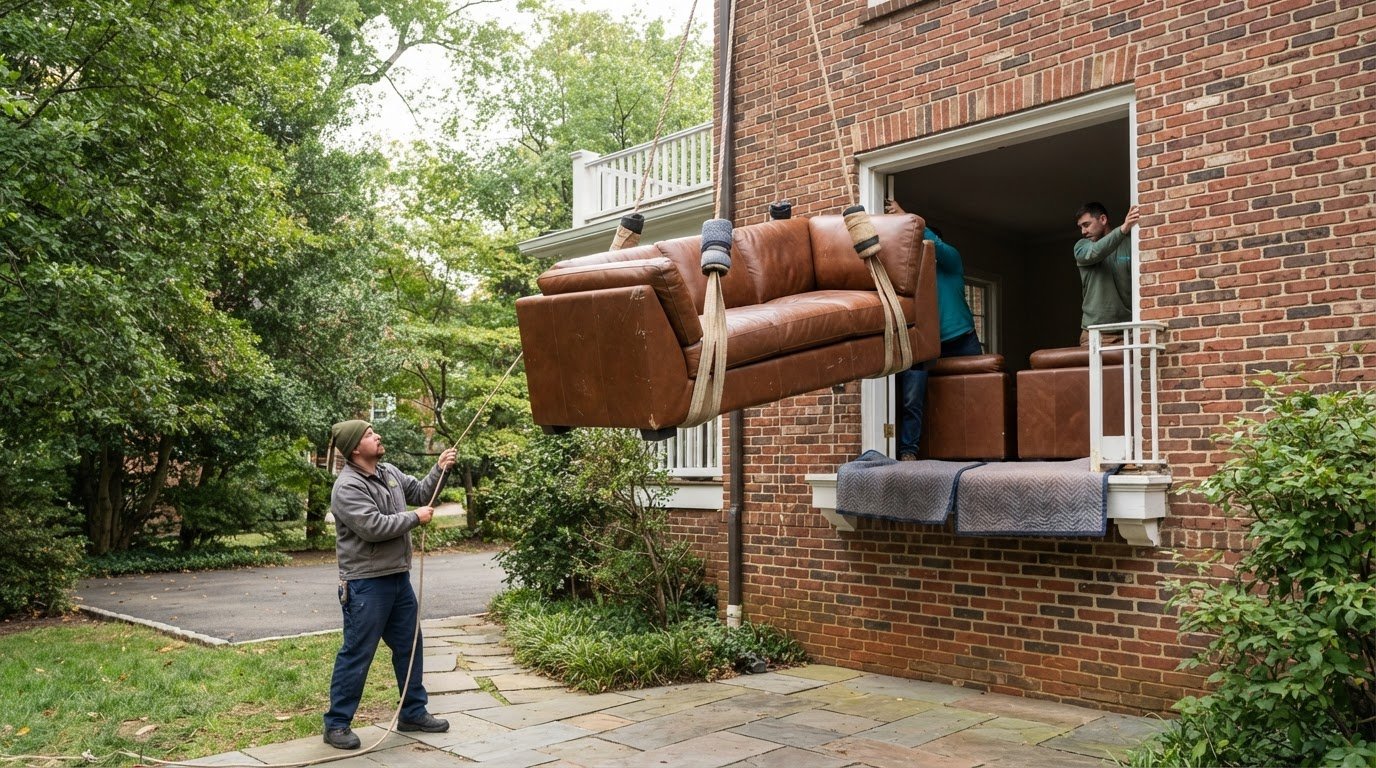
A second-floor sectional hoist doesn’t automatically require closing the street. A residential hoist service for a three-piece leather modular sectional in Clifton may use a balcony or window when the site allows a safe setup and controlled lift. The crew secures the furniture, pads the railing and nearby surfaces, and guides the load with ropes.
It’s reasonable to worry about a tight entry, a heavy sectional, and delicate leather near walls or floors. A safe plan starts by assessing the access route, the sectional’s construction, and the space available for the lift. This guide explains how the crew evaluates those details, when hoisting can avoid a street setup, and how the furniture and home are protected during the move.
Key Takeaways
- Measure the sectional and review the window, balcony, doorway, and stairwell route to identify access challenges early.
- A controlled hoist relies on securing the furniture, padding nearby surfaces, and guiding the lift along a clear path.
- Whether a modular sectional can be partially disassembled depends on its design and construction.
- Share details about the sectional and the access route to help shape a useful quote for the move.
- Careful handling and protective padding help safeguard leather, frames, walls, and floors throughout the move.
Hoisting oversized furniture through windows or balconies
A window or balcony hoist can move oversized furniture when interior routes are too narrow. The crew measures the opening, lift path, and landing area before choosing this approach.
Narrow-Space Moving and Rigging
A sectional may not clear a stairwell turn, hallway, or doorway, even when its separate pieces fit inside the room. The crew compares the furniture’s dimensions with each tight point, then considers whether a window or balcony offers a more direct route.
For a balcony hoist, the crew secures the furniture, pads the railing and nearby surfaces, and uses ropes to guide the lift along a controlled path. The opening and landing area both need enough room to maneuver the sectional without forcing it against the frame.
Before lifting, the crew identifies obstacles such as balcony furniture, nearby branches, or an awkwardly positioned window. Clearing the intended path helps keep the sectional steady and reduces contact with surrounding surfaces.
Furniture Types and Hoisting Uses
Hoisting is useful when an oversized piece cannot pass through the home’s narrow interior route. A three-piece modular sectional, for example, may still be difficult to carry around a tight stair turn if its sections are bulky or the landing space is limited.
Other furniture that may need an exterior route includes sofas, large chairs, mattresses, and substantial tables. Shape matters as well as size: a long sofa needs room to turn, while a broad table needs a clear opening and stable handling.
For a leather sectional, the crew considers how its sections connect and where the frame can be supported. Those details help determine how to secure the furniture for lifting without putting pressure on delicate areas.
Booking a Clifton Hoist Service
For a Clifton, Virginia move, plan the hoist after assessing the furniture and access route. The right timing depends on the opening, setup location, lift path, and any building coordination involved.
Share the sectional’s configuration, destination floor, and whether you’re considering a balcony or window. Photos of the furniture and access points can show the layout, tight turns, railings, or obstacles that affect planning.
Early planning gives the crew time to prepare the hoist setup and protect the route. If building staff manage access to a balcony or window, include those arrangements in the moving schedule so the planned path is ready.
How do hoisting services work?
In Clifton, Virginia, Heavy Furniture Moving plans furniture hoisting around the item, access route, and destination. The crew prepares the setup area and guides the furniture through the lift, rather than treating the job as a simple equipment drop-off.
A useful quote starts with a clear description of the furniture and home. For a three-piece leather modular sectional, provide the number of sections, approximate dimensions, and any known details about detachable legs or connectors. Include the pickup and destination floors, and whether the planned exit is a window or balcony.
Access details help shape the estimate. Describe the opening, the space outside it, and the distance from the setup point to the sectional’s final room. A narrow balcony, deep window frame, nearby trees, or limited positioning space can affect the lift plan. Photos of the sectional and route can make these details easier to assess.
- Furniture: type, dimensions, number of pieces, and estimated weight.
- Access: floor, opening type, opening measurements, and exterior obstacles.
- Destination: delivery floor, interior route, and any tight turns.
- Setup: available space for positioning equipment and guiding the load.
These details support a more specific quote than a starting figure alone. Two sofas of similar dimensions may need different plans if one has detachable sections and the other has a rigid frame. A balcony with open space also presents a different setup from a window facing a close wall.
The price depends on the case and is given after a quote request; it reflects the item's weight, lift height, and site accessibility. The crew uses those factors to assess the work involved, including setup and the route to the destination. A flat-rate quote should account for the described job, so changes to the furniture or access details can affect the estimate.
Before the move, the crew measures the sectional and access route, then confirms the planned approach. This helps align the quote with the actual lift, including whether sections can be handled separately. For leather furniture, clear information about the frame and connectors also helps the crew plan secure support without straining vulnerable areas.
For a Clifton, Virginia sectional move, share the furniture details and access information together. Heavy Furniture Moving measures before lifting and gives you a quote based on the planned work.
Site assessment and access planning
A useful site assessment maps the sectional’s route from its current room to the destination. The crew considers interior access, exterior setup, and the surfaces that need protection.
Property and Building Access Assessment
The crew reviews the sectional’s starting room, hallway, stairwell, elevator, and destination. Each doorway, turn, and landing can affect how the furniture moves. For example, an elevator may fit the sectional’s separate modules but not the assembled sofa.
The assessment also covers the exterior route. A window’s opening, balcony railing, nearby obstacles, and positioning space all affect the lift plan. The crew identifies where the sectional will enter and how it can reach the final room without scraping walls or damaging the finish.
Building access matters, too. The crew accounts for shared hallways, elevator access, and the timing needed to move through common areas. A clear route helps keep the sectional from blocking building traffic during the move.
Permits and Street Access
The setup location determines whether the hoist can operate from private property or needs space near a street or sidewalk. The crew identifies the proposed setup point and the area needed to guide the furniture. Public access may involve separate permissions or coordination.
For Clifton, Virginia, the plan should reflect the actual property and setup location, not assumptions based on another city. If the route involves street access, identify that early so the lift plan accounts for vehicle access, pedestrian paths, and the space around the building.
Building rules can also affect setup. The crew considers any designated loading area, access instructions, and limits on using shared spaces. These details help prevent a planned lift from conflicting with building operations.
On-Site Disassembly for Access
Many leather sofas can be partially disassembled, but the process depends on their design and construction. The crew examines how the sectional’s modules connect and whether parts such as legs or backs can be removed. That inspection helps determine whether disassembly creates a workable route.
For a three-piece sectional, the crew assesses each module separately. Smaller sections may pass through a doorway or elevator that cannot accommodate the assembled sofa. Disassembly does not solve every access problem: each piece still needs enough clearance and a safe handling path.
At the destination, the crew considers how to move the components into position and reassemble them. The furniture’s connectors and frame guide the plan.
Hoisting or Professional Sofa Disassembly
Hoisting suits furniture that remains too large for the interior route, even after removable parts are taken off. Professional disassembly is useful when separating the sectional into manageable pieces creates enough clearance for doors, stairs, or an elevator.
In Clifton, the choice depends on the sectional’s construction and the property’s access points. The crew compares each piece’s dimensions with the available route, then plans for a hoist, disassembly, or both. This assessment helps protect the furniture and home while keeping the move practical.
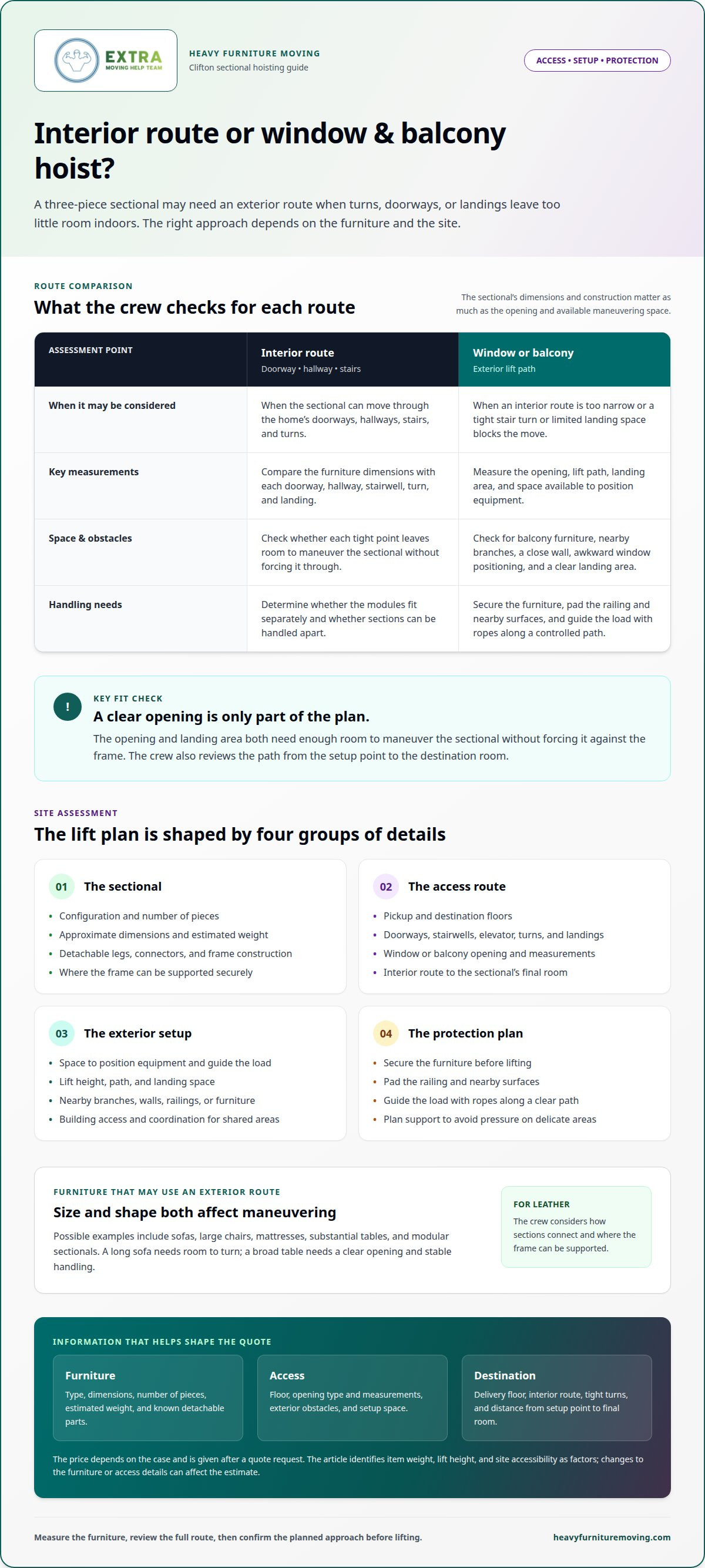
Moving sectionals that cannot fit through stairwells or doorways
Start by identifying exactly where the sectional stops moving. A doorway may be wide enough, but a nearby wall can prevent a three-piece sofa from turning. On stairs, a tight landing or limited ceiling clearance can block a section that fits on the straight run. The crew compares these constraints before choosing a route.
For a modular sectional, the crew assesses its three pieces separately and together. The crew compares each module’s width, depth, height, and shape with the doorway and stairwell. A piece that clears a doorway straight on may not have enough room to pivot through it. The turn, not just the opening, can determine whether the interior route works.
Disassembly can help when the sectional’s design allows it. Many leather sofas can be partially disassembled, depending on their construction. The crew examines the connectors and removable components, then considers whether separating them creates enough clearance. If the pieces still cannot pass through the stairs or doorway, an exterior hoist may provide a more direct path.
The route decision follows a practical sequence:
- Trace the interior path. Note the narrow doorway, stair turn, landing, or ceiling that stops movement.
- Assess each section. Compare the individual modules with the tightest point, including room to turn.
- Consider disassembly. Determine whether the sectional’s connectors and construction allow useful separation.
- Review an exterior route. Assess whether a window or balcony allows a suitable lift and landing path.
- Plan the destination entry. Confirm how each section will travel from the exterior opening to its room.
For example, if the center module clears the stairs but an end piece cannot make the landing turn, the crew can assess that piece on its own. Depending on the home’s layout, the other modules may still use the interior route. This avoids treating the sectional as one oversized object when its parts have different access needs.
Leather surfaces and frames also affect how a sectional is handled through a tight route. The crew plans support around each module’s structure rather than forcing it through a narrow opening. If a hoist is selected, the exterior route must allow the furniture to be secured and guided without striking the building or nearby surfaces. The access plan considers both the obstacle and the sectional’s path beyond it.
For a Clifton home, the decision is not simply “stairs or hoist.” Consider whether each piece can travel safely through the interior, whether disassembly changes the answer, and whether an exterior route provides a workable alternative.
Protecting leather, frames, walls, and floors during a move
A leather sectional needs careful handling at every contact point. The crew plans how to support the frame, protect the upholstery, and keep the route clear. Each of a three-piece sofa’s modules gets individual attention, especially around exposed edges, connectors, and legs.
Before moving, the crew identifies places where leather could rub against a doorway, hallway wall, or stair rail. Moving blankets and protective padding help separate the upholstery from hard surfaces. The crew also considers where straps or lifting points contact the frame, avoiding pressure on delicate leather panels or unsupported sections.
The frame needs support at points that can bear the load. Lifting by a loose cushion, arm, or detachable component can strain the sofa or its connections. The crew supports each section’s structure and keeps the pieces controlled through turns and narrow hallways. Smooth movement matters more than forcing a tight fit.
- Leather: Keep padding between the upholstery and nearby walls, railings, or equipment.
- Frame: Support sturdy structural areas rather than cushions or removable parts.
- Walls and trim: Clear the path and protect vulnerable corners along tight turns.
- Floors: Keep the route free of obstacles that could interrupt controlled handling.
- Balcony access: Pad the railing and surrounding surfaces before guiding a hoisted piece.
For an exterior lift, the crew secures the furniture and uses ropes to guide its path. Padding protects the balcony railing and nearby surfaces from contact. A clear landing area matters, too: the furniture needs room to enter without colliding with the window frame, balcony edge, or stored items.
Inside, the crew manages the path through doorways, hallways, and stairs. A tight turn calls for deliberate positioning, not a shove that could scrape a wall or twist a sectional connection. Clearing small obstacles and keeping the route open helps the crew move each piece with controlled steps.
At the destination, the crew places each module without dragging it across the floor. This helps avoid scuffs and unnecessary strain on the sectional’s frame and connectors. The crew can then position the pieces together and align them as intended.
For a leather sectional with a difficult access route, arrange sectional hoisting with a plan for protecting the furniture and home.
Heavy Furniture Moving: Sofa Hoisting
Heavy Furniture Moving provides Sofa Hoisting for sectionals that can’t pass through a home’s interior route. It’s a practical option when a narrow stairwell, tight doorway, or difficult landing makes carrying the furniture inside unsuitable.
The crew plans the lift around the sectional’s configuration and the home’s access points. For a three-piece leather sectional, that means considering how each module can be secured, guided, and brought through the selected opening. If partial disassembly makes the interior route workable, that may be the better approach. The access plan determines which option suits the move.
For a sectional that needs an exterior route, contact Heavy Furniture Moving to arrange Sofa Hoisting.
Set Up the Move with Confidence
Before moving day, decide where each sectional piece should sit in the room. A clear placement plan helps the crew finish without unnecessary rearranging. Keep the intended layout simple and leave space to bring the pieces together once they’re inside.
If you’re arranging a residential hoist service for a three-piece leather modular sectional in Clifton, share your preferred placement along with the access details. The destination matters as much as the route in. That way, the plan covers not just getting the sectional through an opening, but placing it where you want to use it.
Heavy Furniture Moving can help with the hoist when an exterior lift is the right fit. Contact Heavy Furniture Moving to discuss your sectional move and its planned placement. A clear next step can make a challenging move feel more manageable.
Frequently Asked Questions
Can you hoist to the second floor without closing the street?
Often, yes, if the crew can set up on private property and guide the furniture along a clear route. A second-floor balcony or window may provide access without using the street. The setup space, lift path, and exterior obstacles shape the plan. If the crew needs street or sidewalk space, that changes the setup and may require permissions or coordination.
Does my building need to approve the hoist in advance?
Building requirements vary, so include your property’s access procedures when planning the move. A building may have rules for using a balcony, window, elevator, or shared hallway. Share any loading-area instructions, access limits, or required notice as part of the move details. That helps the crew plan around the building’s process and use an available route.
Is hoisting safe for my balcony or railing?
A suitable setup depends on the balcony, railing, lift path, and furniture support. The crew secures the sectional, pads the railing and nearby surfaces, and uses ropes to guide the lift. The railing should not be the load’s sole support. The crew plans the setup to control contact and keep the furniture’s path clear.
What determines the cost of hoisting in Clifton, Virginia?
The quote depends on the sectional and the work involved in the planned lift. Factors include the furniture’s weight, lift height, and site accessibility. A clear description of the setup and access route helps Heavy Furniture Moving quote the work for your Clifton home. Share the destination floor and proposed window or balcony route when requesting pricing.
Can I arrange residential hoisting for a three-piece leather sectional in Clifton?
Yes. Heavy Furniture Moving provides Sofa Hoisting for sectionals that need an exterior route in Clifton, Virginia. A residential hoist service for a three-piece leather modular sectional in Clifton starts with a plan based on the furniture and home access. Wrap, moving blankets, and straps are included on every job, with no separate line item.
What does it cost to hoist a sectional sofa into a home in Clifton?
The price depends on the individual job and is provided after a quote request. For a residential hoist service for a three-piece leather modular sectional in Clifton, the quote reflects the sectional, lift height, and access conditions. Share the destination floor and details about the proposed setup so the estimate can address the move you need, not a different property or route.
Can a three-piece modular sectional be disassembled for delivery through stairs or doorways?
The sectional may be partially disassembled, depending on its design and construction. The crew assesses whether separating the modules or removing detachable parts creates enough clearance. Each piece still needs room to pass through doorways, stairs, and landings. For example, a module may clear a doorway but still need more space to turn at a stair landing.
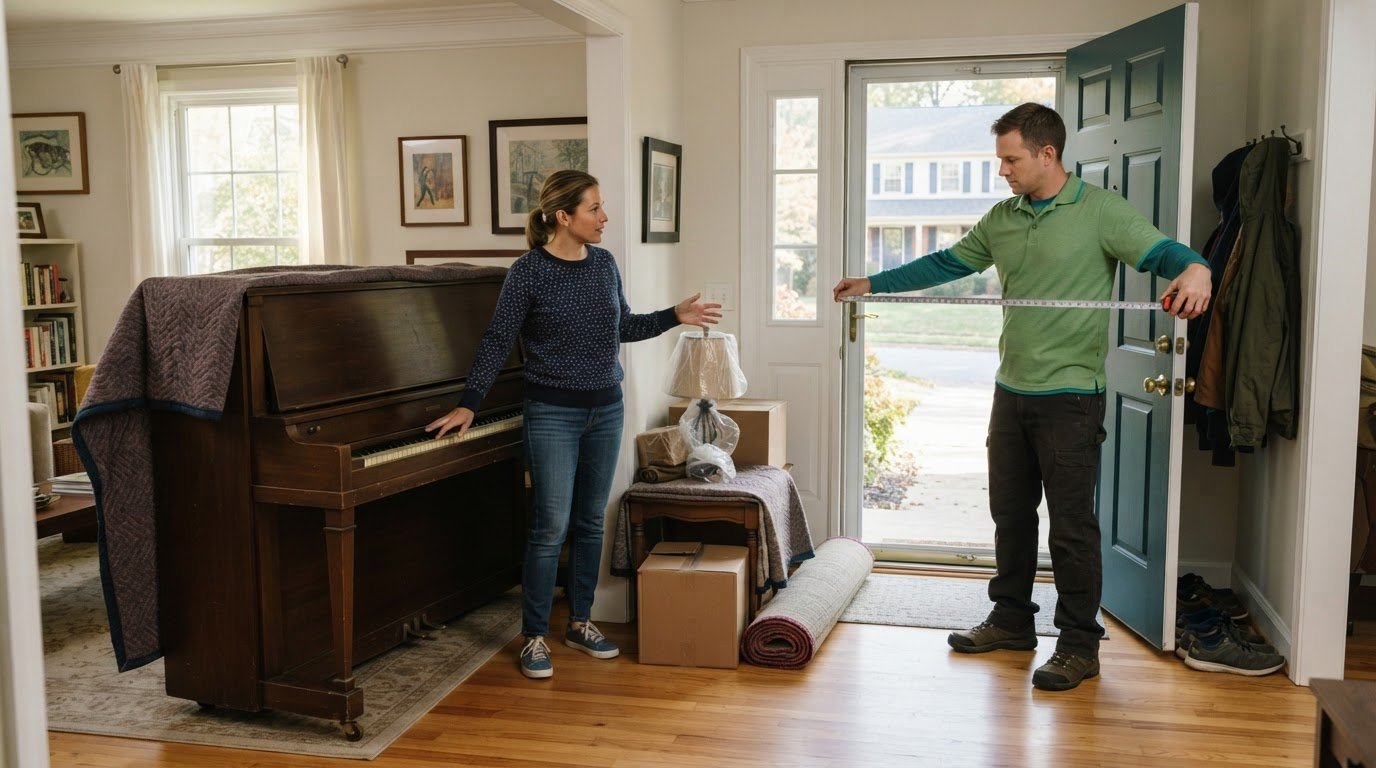
How should I measure a sectional and home access points before scheduling a hoist?
Record the assembled sectional’s width, depth, and height, then note each module’s dimensions if available. Measure the clear opening for the proposed window or balcony access, along with doorways and tight interior turns. Include the destination floor and any exterior obstacles. Photos of the sectional and route can show turns, railings, or obstructions that measurements may not capture.