Professional Rigging Team for Curved Sofa Window Delivery in McLean
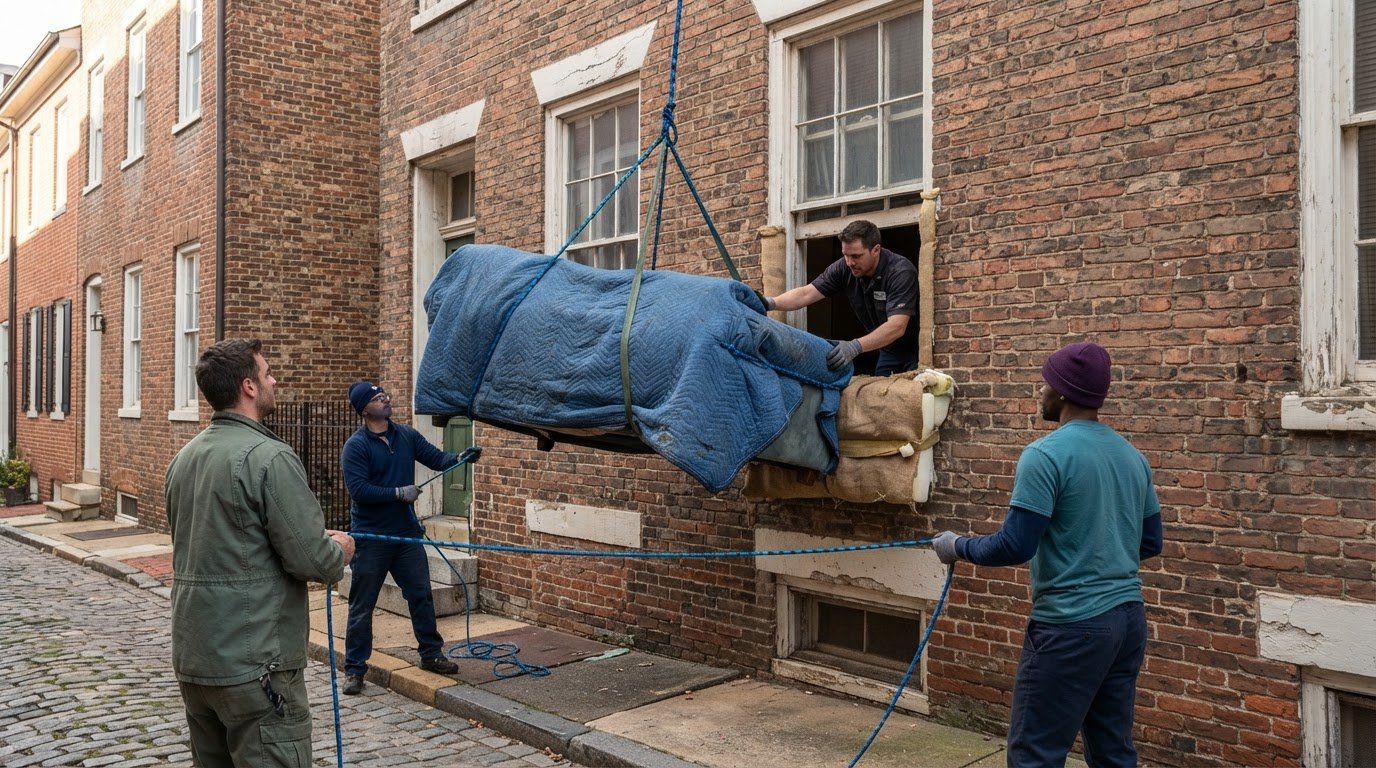
Not every window can take a sofa. A professional rigging team to lift a curved Italian sofa through a second-story window in McLean needs a usable opening, either an operable window or a removable sash or panel, plus at least 6 feet of clear indoor space beyond it for landing. Rope-and-pulley hoisting is used for furniture delivery on floors 2-6.
A curved sofa can be a tight fit even when a window looks wide enough from inside. Before lifting, measure the clear opening and the sofa, then consider its shape and the route to the landing area.
Learn how to assess window access, understand the role of rigging equipment and protective materials, and prepare the room for a controlled delivery. We’ll also cover how to evaluate a hoisting company and what details to include when requesting a useful quote, so you can plan the move with fewer surprises.
Key Takeaways
- Learn which access details help determine whether a curved sofa can be brought in through a window.
- See what to look for in a hoisting plan, including equipment choices and protection for the sofa and home.
- Understand how building coordination, insurance, and weather can affect a safe lift.
- Gather the sofa, window, and property details that help make a quote request more useful.
- Find out when Heavy Furniture Moving’s Sofa Hoisting service can help with an oversized delivery.
Choosing and verifying a hoisting company
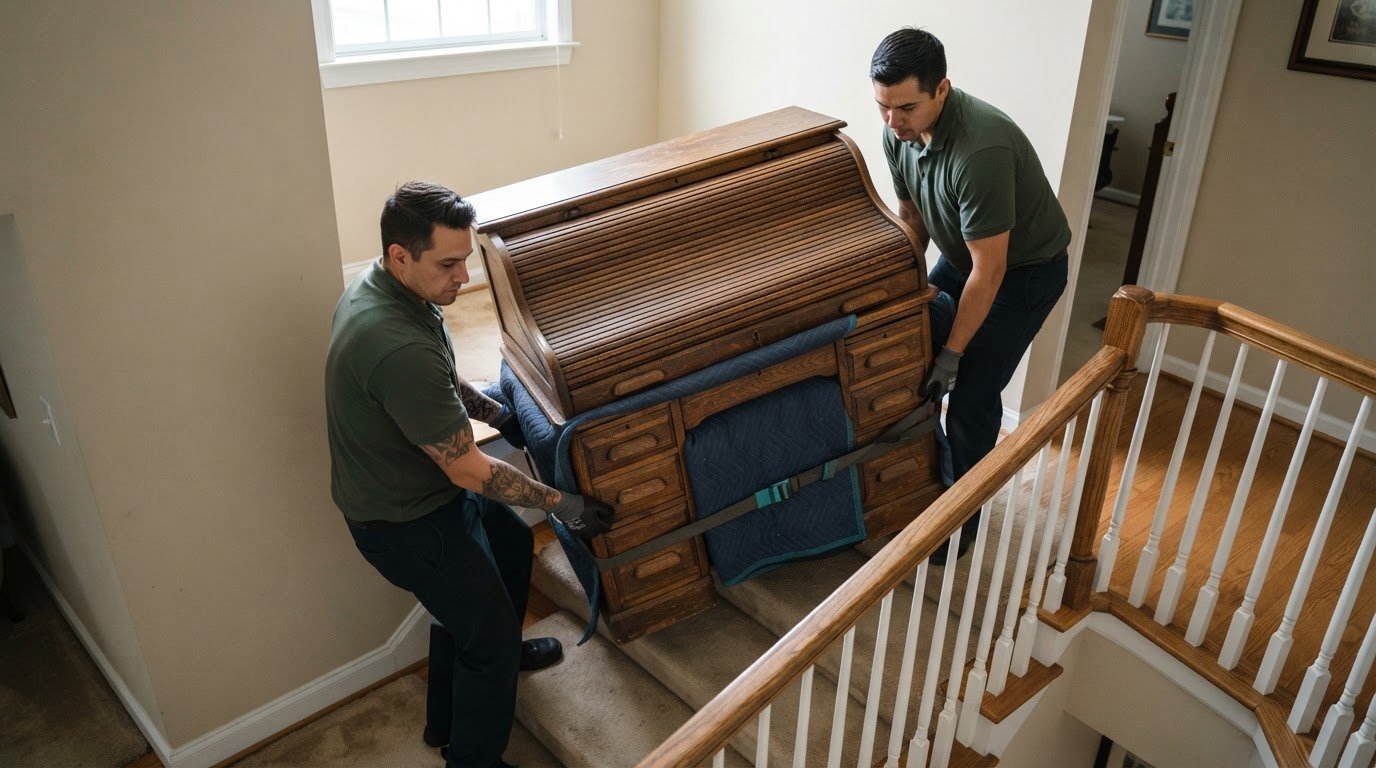
For a second-story sofa, assess a furniture hoist as the exterior option; a crane uses a larger lifting setup, while a stair carry stays indoors and depends on the turns and clearances. In McLean and the DMV, compare the proposed method with the sofa, window, and building access before setting a delivery plan.
Exterior Lift and Swing-Arm Options
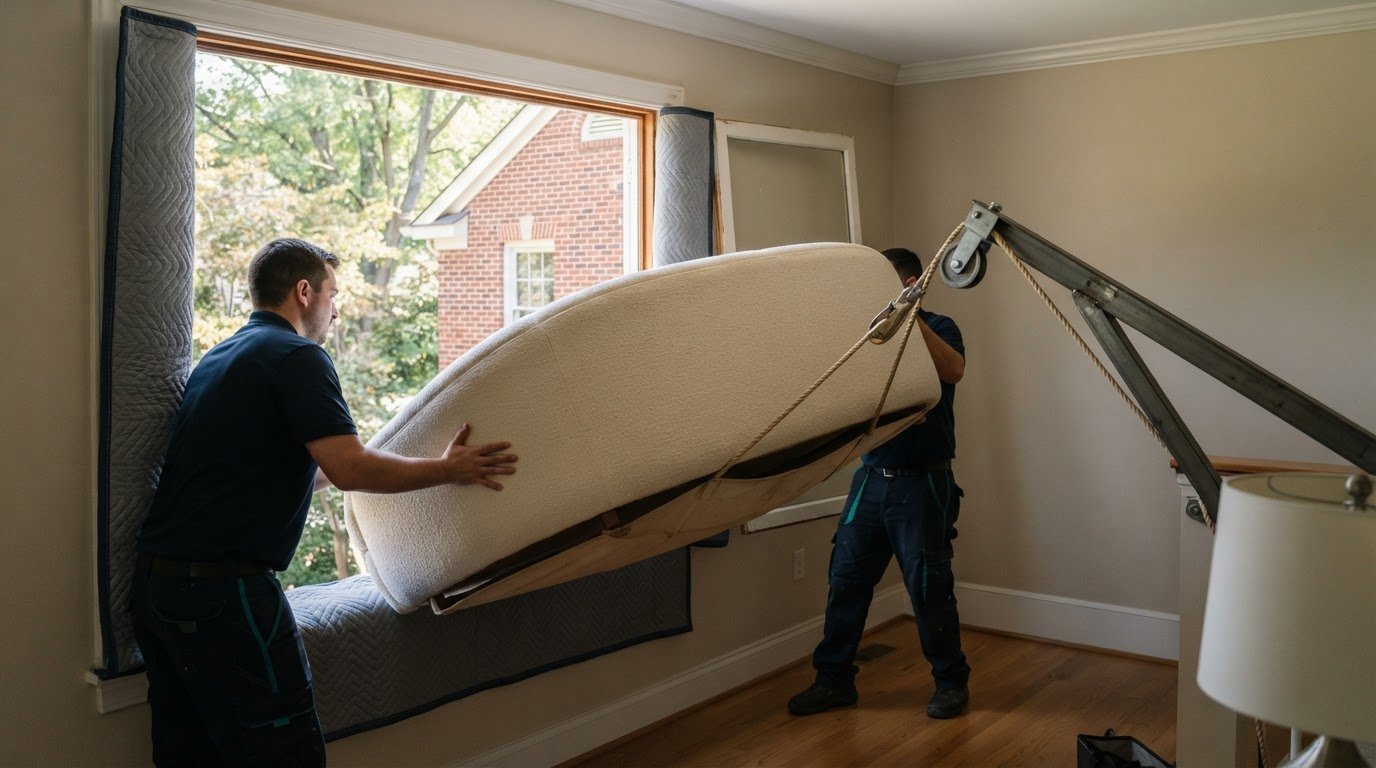
Exterior lifts and swing-arm hoists raise furniture outside the building, then guide it through an opening. These methods are presented for deliveries on floors 6-20+, while rope-and-pulley hoisting is used on floors 2-6. For a second-story delivery, make sure the plan identifies the proposed equipment and explains how it will serve the actual window and landing location.
A curved Italian sofa needs a lift plan that accounts for its shape, not just its weight. The team should explain how it will keep the sofa steady during the exterior move and orient it at the opening. High winds cancel exterior hoisting, so scheduling must account for weather.
Site Assessment and Hoisting Steps
A useful site assessment connects the sofa’s measurements to the full route. Consider the exterior approach, clear window opening, indoor landing space, and obstacles between the entrance and room. Stairs matter if the crew must move equipment or other pieces through the home. Each turn, doorway, and change in floor level can affect the sequence.
Ask for a clear work sequence: position the equipment, secure and raise the sofa, guide it through the opening, then move it to the room. The plan should identify who directs the lift and how the crew communicates at each step. In a McLean home, a driveway, landscaping, or narrow approach can also affect equipment placement.
Pricing and Scheduling
The price depends on the case and is given after a quote request; key factors include the lift method, access, sofa dimensions, crew needs, and scheduling. A useful estimate should describe the planned method and the work it covers. That makes it easier to compare a proposed exterior lift with a stair carry or another rigging setup.
Hoisting may be restricted to hours such as 8 AM-4 PM on weekdays. Coordinate the planned window with building access and delivery timing, and account for wind-related cancellations. A team’s schedule should leave room to adjust the lift timing if weather prevents safe exterior work.
To assess a hoisting plan, look for specifics rather than broad assurances. The method, site conditions, equipment, lift sequence, weather response, and scheduling should fit together. A plan for a second-story curved sofa should explain how it reaches the window and turns into the room, not simply label the job “a lift.”
Focus the comparison on the job in McLean: sofa dimensions, the building approach, the window route, and whether stairs offer a workable alternative. A detailed plan makes the trade-offs visible before delivery day, including which method suits the access and how the team will carry out each stage.
Can any window be used for furniture delivery?
No. A window needs a usable clear opening and a workable route for the furniture. Check the sash, exterior approach, and indoor landing area as one connected path.
Window and Balcony Suitability
A furniture window must open, or have a removable sash or panel. The opening must allow the sofa to pass without forcing it against the frame. Measure the clear opening, not just the glass, and account for the sofa’s curved ends as it turns. For a window delivery, keep at least 6 feet of clear indoor space beyond the opening.
A balcony can offer another access point, but its layout still matters. The team needs a safe way to guide furniture from the exterior lift to the balcony opening. Railings, overhangs, nearby walls, and the route into the room can affect the approach. A balcony is not automatically a usable loading platform.
Hoisting Oversized Furniture
Hoisting can help with a sofa that cannot turn through a doorway or navigate stairs. Rope-and-pulley furniture hoisting is described for floors 2-6, and a safe operation needs 4-6 people. The crew must coordinate the exterior lift with the person guiding the piece at the window.
Large sofas and sectionals are common candidates for hoisting. Length alone doesn’t determine suitability; depth, curved profile, and orientation during the lift matter too. A curved Italian sofa may need careful angling at the opening before it enters the room.
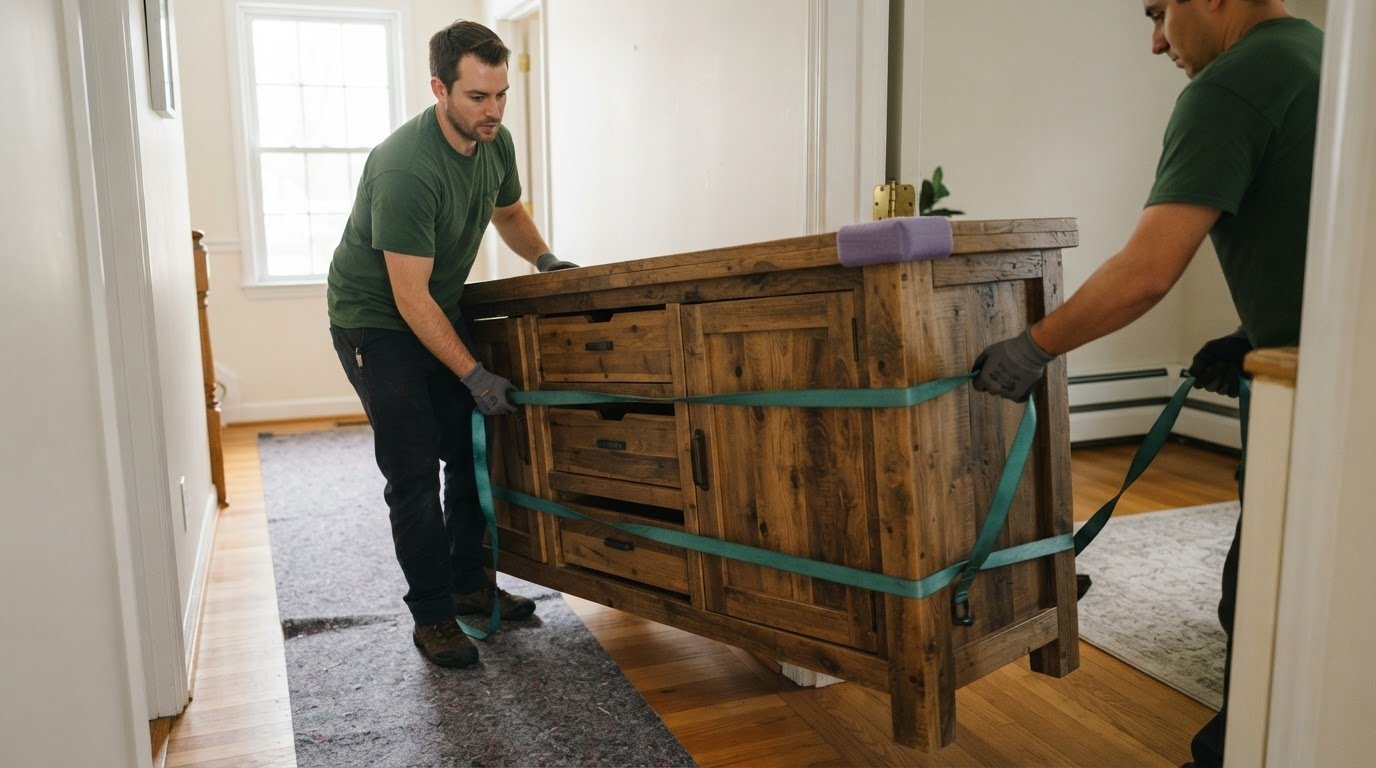
Prepare the furniture and home before lifting begins. Clear the landing area, protect nearby flooring, and cover vulnerable sofa surfaces with suitable moving materials. Keep household members and pets away from the work zone. This gives the crew room to guide the piece without navigating around furniture or loose items.
During the lift, controlled movement matters more than speed. The crew should keep the sofa steady, guide it through the opening, and avoid scraping its corners against the frame or nearby walls. Clear the route from the window to the final room position, removing small tables, lamps, and other obstructions.
Share the sofa’s shape and measurements alongside clear photos of the window and balcony approach. Those details help the team assess how the piece must be turned and where it can land. For a delivery that needs an exterior route, explore professional sofa hoisting as a practical alternative to forcing the sofa through stairs or narrow interior passages.
Safety, insurance, and building requirements
A safe sofa lift needs a coordinated plan for the crew, building, and exterior work area. For McLean properties, coordinate building approval, insurance requirements, access arrangements, and any permit needs for a street-side setup.
Building Management Coordination
Start by identifying who manages the property and how furniture moves are handled. Send the planned date, window location, and lift method to the building contact. Ask about loading areas, elevator reservations, service entrances, and permitted work hours. For a condominium, clarify who communicates with residents near the lift area. One clear contact can help align building access with crew arrival.
Approvals, Permits, and Insurance
Building approval is required for window hoisting in virtually all high-rise buildings. Approval processes vary, so provide the building with the proposed lift location and work details early. Buildings require a hoisting company’s general liability insurance of $1M-$5M. Share the building’s stated insurance requirements with the moving team so the paperwork can address the property’s conditions.
A crane operation on a public street may require city permits. That possibility makes the equipment choice and setup location important planning details. A second-story window lift from private property differs from a crane positioned in a street. Identify where the crew and equipment would stand before treating those plans as interchangeable.
Building Access Requirements
Map the route from the property entrance to the work area. Note gates, narrow drives, locked doors, stairs, and any elevator the crew may use. A reserved loading space or service entrance can affect when equipment and furniture reach the building. Give management a clear description of the expected path, especially if the exterior approach crosses shared areas.
In a multi-unit building, define the work zone before moving day. Keep residents away from the active window and the area below it. Coordinate access to the room and exterior setup point, then keep the route clear of people and loose items. These steps reduce interruptions while the team positions equipment and guides the sofa.
Never attempt DIY hoisting at height; it is extremely dangerous. Leave the rigging and lift to a trained crew with an agreed work plan. Before the move, align building approval, insurance requirements, and access arrangements. If any detail changes, such as a blocked loading area, equipment placement or scheduling may need adjustment.
Keep written building instructions with the delivery details. Include the approved date and hours, access points, insurance requirements, and any permit coordination for a public-street crane setup. This shared record gives management and the moving crew the same plan and helps avoid a last-minute conflict between building rules and the lift setup.
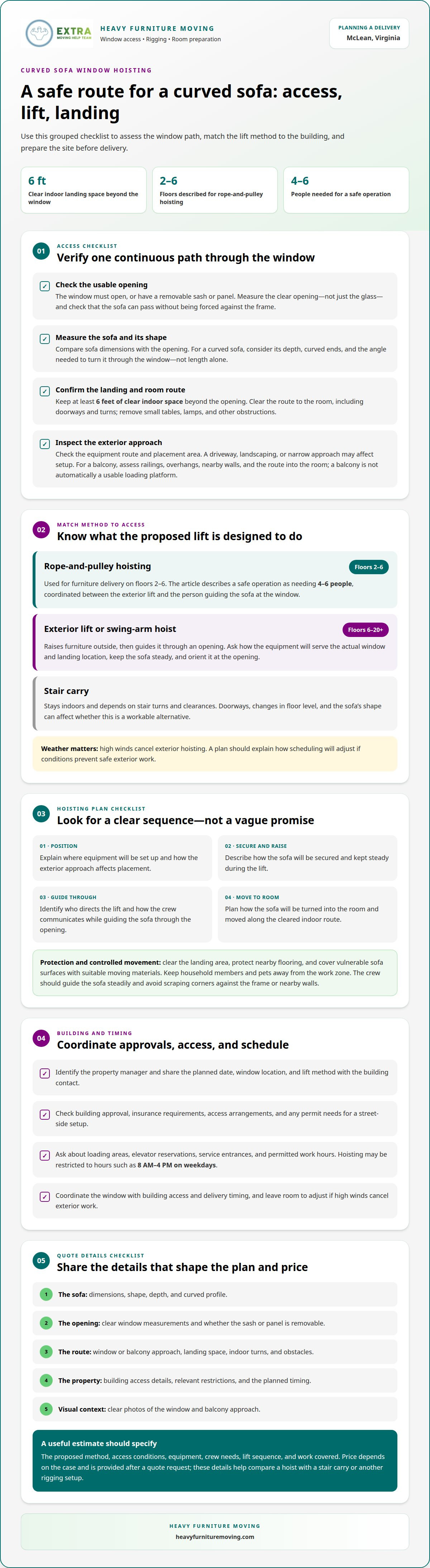
Information needed for a quote
A useful quote starts with details that show the sofa, opening, and route. For an oversized curved piece, measurements and clear photos help describe the lifting challenge, not just the delivery address.
Start with the sofa. Send its overall length, depth, and height, plus the dimensions of its widest curved section. Include the maker or model name if available, and note whether the feet or other parts come off. Front and side photos can show details that measurements alone may miss.
Next, describe the window route. Provide the clear opening width and height, and say whether the sash or panel can be removed. Add photos from inside and outside. Show the approach below the window, nearby balconies or overhangs, and the intended landing area. These details help the team assess how the sofa must turn as it passes through.
Include the building and floor information. State whether the delivery is to a house, condominium, or apartment, and identify the floor and room. Describe the stairs, elevator, and entrance route, even if the sofa is expected to arrive by hoist. Interior access may still matter for the crew, equipment, or final positioning.
For example, a 12th-floor apartment may have a passenger elevator cab measuring 51 × 68 inches and switchback stairs with 14 flights, each 30 inches wide. Those specifics help distinguish a route that looks possible from one that can actually accommodate furniture or equipment. Share the measurements as written, rather than rounding them.
Give the McLean address and explain the exterior setup area. Mention gates, a narrow driveway, landscaping, parked vehicles, or a public street near the lifting side. Note any building access instructions or approved work hours already provided to you. Include your preferred delivery date or timing window so scheduling can be considered with the access plan.
- Sofa details: dimensions, shape, model, and removable parts.
- Access details: window opening, landing area, stairs, and elevator.
- Site details: exterior approach, obstacles, and building instructions.
- Timing: preferred delivery date and any scheduling limits.
The price depends on the case and is given after a quote request. The main factors include sofa size, access conditions, lifting method, and site setup. Send complete details together, then describe any uncertainty plainly, such as a window measurement you cannot take safely. A consistent set of information gives the team a clearer basis for planning the work and preparing a useful estimate.
Rigging equipment and protective materials
The equipment plan should match the sofa’s weight, shape, floors, and access route. For a curved piece, rigging and protection work together: one supports controlled movement, while the other helps shield the furniture and home.
Before a lift, the crew should identify the equipment needed for the planned route. A rope-and-pulley setup differs from an exterior lift, and the choice affects how the sofa is supported and guided. The plan should explain where lifting lines attach, how the sofa stays balanced, and how the crew will guide it past the window frame.
Weight matters, but it isn’t the only factor. A curved sofa can shift as its orientation changes, and uneven support may put pressure on its frame or upholstery. The team should account for the sofa’s dimensions and shape when choosing support points. Share the manufacturer’s handling instructions if you have them.
Ask how the crew protects the sofa at contact points. Padding or moving blankets can help limit rubbing against rigging and building surfaces. Keep protective layers secured so they don’t slip or bunch during movement. Mention leather or delicate fabric before work begins.
Protect the window and interior route too. Cover the floor near the landing area and clear nearby furniture. The crew should plan how the sofa will pass the frame without scraping its corners. Keep lamps, tables, and loose objects away from the path.
A useful equipment explanation connects each choice to a part of the move. The team can describe how the sofa will be supported outside, guided through the opening, and transferred to the indoor landing area. If the plan uses a pulley, ask how the crew will control movement while someone guides the sofa inside.
Insurance paperwork is separate from rigging equipment, but it also belongs in the preparation. A certificate can document the company’s general liability insurance for building management. Keep the paperwork with the access instructions so the building and crew can coordinate the same delivery plan.
Before scheduling, share the sofa’s weight if known, its dimensions, fabric type, and photos of the window route. Those details help shape a suitable plan without guessing about the load or contact points. If you need help moving a heavy item through a difficult access route, get help planning a heavy-item move.
Heavy Furniture Moving: Sofa Hoisting
Heavy Furniture Moving provides Sofa Hoisting for oversized sofas that cannot make the usual route through a home. If your curved sofa needs second-story window access, share its dimensions, the window opening, and the property’s access details. Photos and measurements help the team plan around the specific delivery.
Consider sofa hoisting when stairs, tight turns, or doorways make an indoor carry unsuitable. Heavy Furniture Moving can help plan the lift around the sofa and access route. Clear details about the item and property give the conversation a useful starting point.
Contact Heavy Furniture Moving to discuss sofa hoisting for your McLean home.
Plan the final placement before delivery day
Before arranging the lift, decide where the sofa should sit and which direction its curve should face. That choice can shape how the piece is guided into the room and positioned after arrival. Deciding in advance keeps the delivery focused on the result you want, not just getting the sofa inside.
If you need a professional rigging team to lift a curved Italian sofa through a second-story window in McLean, share the sofa’s dimensions, access photos, and preferred placement with Heavy Furniture Moving. These details are a practical starting point for discussing the move and next steps.
Contact Heavy Furniture Moving to talk through your sofa delivery. You’re closer to enjoying the room you planned.
Frequently Asked Questions
Is window hoisting safe?
Professional window hoisting uses a planned lift, suitable equipment, and coordinated crew roles, but it still carries risk. High winds cancel exterior hoisting, and DIY lifting at height is extremely dangerous and should never be attempted. Before the move, point out fragile trim, nearby fixtures, and anything else around the landing area that could be struck or obstruct the team.
What should I look for in a professional rigging team to lift a curved Italian sofa through a second-story window in McLean?
Heavy Furniture Moving offers Sofa Hoisting for furniture that cannot pass through standard entryways or elevators. For a McLean home, share the sofa’s dimensions and photos of the window route. Describe the destination room and indoor obstacles. These details help the team plan for the particular sofa and access path, rather than treating it as a standard doorway delivery.
Are crane and hoisting services available for residential furniture moves in McLean, VA?
Heavy Furniture Moving provides Sofa Hoisting for residential furniture moves involving difficult access. A crane is a distinct lifting method, and the appropriate setup depends on the property and exterior approach. To help plan a lift for a curved Italian sofa through a second-story window in McLean, describe the window location, potential equipment position, and nearby street access. Include building instructions too.
What does it cost to hoist a curved Italian sofa through a second-story window in McLean, VA?
The price depends on the sofa and access conditions, and a quote request provides the amount for the job. Heavy Furniture Moving gives upfront phone pricing for most single heavy items. Share sofa dimensions, photos of the opening, the floor, and the exterior setup area. Mention stairs and landings, since those conditions are priced before the crew arrives.
How should I measure a curved sofa and window opening before an exterior lift?
Measure the sofa’s length, depth, height, and widest curved point, then record the window’s clear opening width and height. Measure the usable opening, not the full frame. Note which direction the sofa could face as it passes through. Send photos of the sofa and window with the measurements so the team can consider the curve and turning space.
What equipment is needed to lift a heavy sofa through an upper-story window?
The setup depends on the access route and may use a furniture hoist or rope-and-pulley system. A crew also needs ways to protect and secure the item. Heavy Furniture Moving includes shrink-film, moving blankets, and ratchet straps on every job. Floor and corner protection, such as runners and door-jamb covers, helps protect the interior route during the move.
How do professional riggers protect a leather or designer sofa during an exterior lift?
Protective layers help limit contact between upholstery, rigging, and building surfaces. Heavy Furniture Moving includes shrink-film, moving blankets, and ratchet straps on every job. Share the sofa’s material and delicate details, such as exposed wood or decorative trim, before the move. The crew can account for those features when planning how to secure and guide the piece.
What are the risks and insurance coverage for hoisting furniture through a window?
Risks include damage to the sofa, window area, or nearby property if the lift shifts or strikes an obstruction. Buildings require a hoisting company’s general liability insurance of $1M-$5M. A certificate documents the company’s general liability insurance; it doesn’t by itself explain every coverage detail. Heavy Furniture Moving measures before lifting and includes protective materials on every job.
Frequently Asked Questions
Professional window hoisting uses a planned lift, suitable equipment, and coordinated crew roles, but it still carries risk. High winds cancel exterior hoisting, and DIY lifting at height is extremely dangerous and should never be attempted. Before the move, point out fragile trim, nearby fixtures, and anything else around the landing area that could be struck or obstruct the team.
Heavy Furniture Moving offers Sofa Hoisting for furniture that cannot pass through standard entryways or elevators. For a McLean home, share the sofa’s dimensions and photos of the window route. Describe the destination room and indoor obstacles. These details help the team plan for the particular sofa and access path, rather than treating it as a standard doorway delivery.
Heavy Furniture Moving provides Sofa Hoisting for residential furniture moves involving difficult access. A crane is a distinct lifting method, and the appropriate setup depends on the property and exterior approach. To help plan a lift for a curved Italian sofa through a second-story window in McLean, describe the window location, potential equipment position, and nearby street access. Include building instructions too.
The price depends on the sofa and access conditions, and a quote request provides the amount for the job. Heavy Furniture Moving gives upfront phone pricing for most single heavy items. Share sofa dimensions, photos of the opening, the floor, and the exterior setup area. Mention stairs and landings, since those conditions are priced before the crew arrives.
Measure the sofa’s length, depth, height, and widest curved point, then record the window’s clear opening width and height. Measure the usable opening, not the full frame. Note which direction the sofa could face as it passes through. Send photos of the sofa and window with the measurements so the team can consider the curve and turning space.
The setup depends on the access route and may use a furniture hoist or rope-and-pulley system. A crew also needs ways to protect and secure the item. Heavy Furniture Moving includes shrink-film, moving blankets, and ratchet straps on every job. Floor and corner protection, such as runners and door-jamb covers, helps protect the interior route during the move.
Protective layers help limit contact between upholstery, rigging, and building surfaces. Heavy Furniture Moving includes shrink-film, moving blankets, and ratchet straps on every job. Share the sofa’s material and delicate details, such as exposed wood or decorative trim, before the move. The crew can account for those features when planning how to secure and guide the piece.
Risks include damage to the sofa, window area, or nearby property if the lift shifts or strikes an obstruction. Buildings require a hoisting company’s general liability insurance of $1M–$5M. A certificate documents the company’s general liability insurance; it doesn’t by itself explain every coverage detail. Heavy Furniture Moving measures before lifting and includes protective materials on every job.