Northern VA Moving Cost Estimator: Local Rates
Moving costs in Northern Virginia depend first on the type of move: local jobs are generally priced by the hour, while long-distance moves are typically priced by shipment weight and mileage. Use a moving company cost estimator for Northern VA as a starting point, then account for the size of your load, access to the home, and time on the road. The estimate becomes more useful when it reflects the real work involved.
It’s easy to focus on the number of rooms and overlook details that can add time. Stairs, elevator access, long carries, traffic, and bulky furniture can all affect how a move unfolds. A clear estimate should make those factors easier to understand, not leave you guessing.
This guide explains what shapes moving costs, how stairs and elevators can affect a move, what to look for in a written estimate, and where there may be room to negotiate. You’ll also see how timing can influence availability and rates, so you can plan with fewer surprises and make a more informed decision.
Key Takeaways
- Local moves are generally priced by the hour, while long-distance estimates tend to reflect shipment weight and mileage. The size of your load and the services involved also shape the total.
- Stairs, elevators, long carries, parking limits, and truck access can add time to a move. Share these details early so they’re reflected in the estimate.
- A useful written estimate spells out the inventory, services, materials, and how the price may change if the scope changes.
- For local moves, hourly pricing means the crew size, time, and any travel fee can affect the total. Clear details about the job help make rate discussions more productive.
- Flexible dates can help you avoid the busiest moving windows. Weekdays and mid-month dates in the off-season may bring more availability and lower rates.
Factors that affect moving costs
In Northern Virginia, a local move is generally priced by the hour, while long-distance pricing usually reflects shipment weight and distance. Home size, packing, access, and timing all affect the work included in quotes.
Distance and Home Size
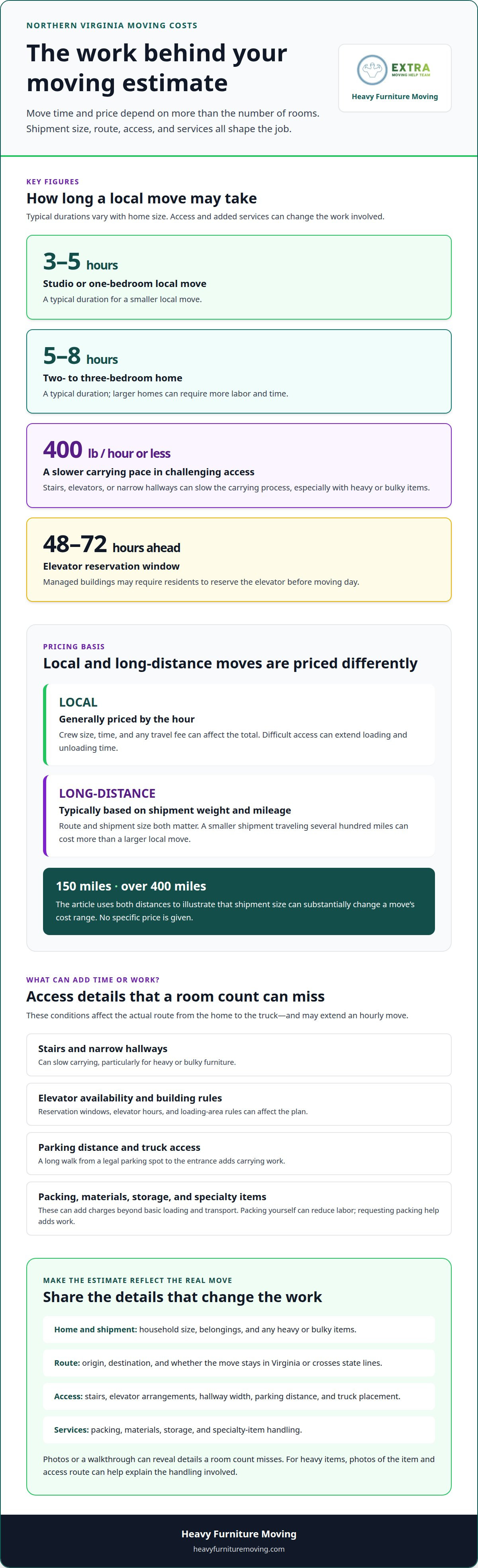
Distance measures how far belongings travel, while home size helps indicate the shipment’s volume and handling time. Both matter because local jobs commonly use hourly pricing, and long-distance jobs typically use weight and mileage. For a local studio or one-bedroom move, a typical duration is 3 to 5 hours. A two- to three-bedroom home commonly takes 5 to 8 hours, while larger homes can require more labor and time.
For a move of 150 miles, shipment size changes the cost range substantially; the same is true for moves over 400 miles. A one-bedroom apartment and a four- to five-bedroom house require different amounts of loading and transport. Summer demand and added packing can also affect the estimate. A moving company cost estimator for Northern Virginia is most useful when its inputs reflect the actual home, belongings, and route.
Local, Interstate, and Intrastate Costs
A local move stays within the nearby area, an intrastate move stays within Virginia, and an interstate move crosses state lines. These distinctions matter because pricing methods can change with distance and shipment details. In Northern Virginia, a local move is generally priced by the hour; a longer trip is typically based on shipment weight and mileage.
For interstate moves, the Federal Motor Carrier Safety Administration requires movers transporting goods across state lines to hold a USDOT number. For a practical estimate, note whether the destination is in Virginia or another state, then provide the route and household size. For example, a smaller shipment traveling several hundred miles can cost more than a larger local move because distance affects transport.
Packing, Storage, and Specialty Fees
Packing, materials, storage, and specialty-item handling can add charges beyond basic loading and transport. Boxes, tape, shrink wrap, and mattress bags may appear as separate estimate items. Packing yourself can reduce labor, while a request for packing help adds work. Storage and specialty items also change the scope, so list them clearly when gathering quotes.
To get a useful estimate, provide the item or shipment details, the origin and destination, and the work you need. For heavy items, send a photo of the item and the stairs or access route. Heavy Furniture Moving measures doorways, stairs, and item dimensions before the move and gives you a price up front for most single heavy items. If an item genuinely will not fit, you are not charged for a wasted trip.
Do you charge more for stairs or elevators?
Stairs, elevators, parking distance, and truck access can increase the time required for a Northern Virginia move. Since local moving is generally billed by the hour, difficult access can raise the total by extending loading and unloading.
Stairs slow the carrying process, especially when movers handle heavy or bulky items. In a challenging setup with stairs, elevators, or narrow hallways, a mover’s carrying rate can drop to 400 pounds per hour or less. That is a slower pace than a clear, direct route between the home and truck. A bedroom apartment on an upper floor may therefore take longer to clear than a similar apartment with ground-level access.
An elevator can help avoid repeated stair trips, but it doesn’t always make access simple. Residents in managed Northern Virginia buildings may need to reserve the elevator 48 to 72 hours before moving day. If the elevator isn’t available during the scheduled window, movers may need to wait or use another route. Those delays can add labor time to an hourly move.
Building rules also shape the plan. A homeowners association or property manager may set elevator hours, loading-area rules, or limits on where a truck can park. Share those requirements when arranging the move. A reserved service elevator and nearby loading bay create a different workflow from a shared elevator and distant parking.
Truck access matters beyond apartment buildings. Parking limits or a long walk from the truck to the entrance can complicate loading and add carrying work. For example, a home in Fairfax with a distant legal parking spot has a different access route from one with a clear loading area near the entrance.
These conditions affect time estimates, not simply the home’s bedroom count or the weight of its belongings. A clear description of stairs, elevator reservations, hallway width, parking distance, and truck access helps account for the actual route. Photos or a walkthrough can show details that a basic room count misses, such as a narrow entry or a long path from curb to door.
Before moving day, coordinate building access and parking arrangements with the property manager. Set the elevator window, identify the loading area, and note restrictions that affect truck placement. For a move in Reston with limited loading access, the distance from the available parking spot to the entrance is important to the carrying plan.
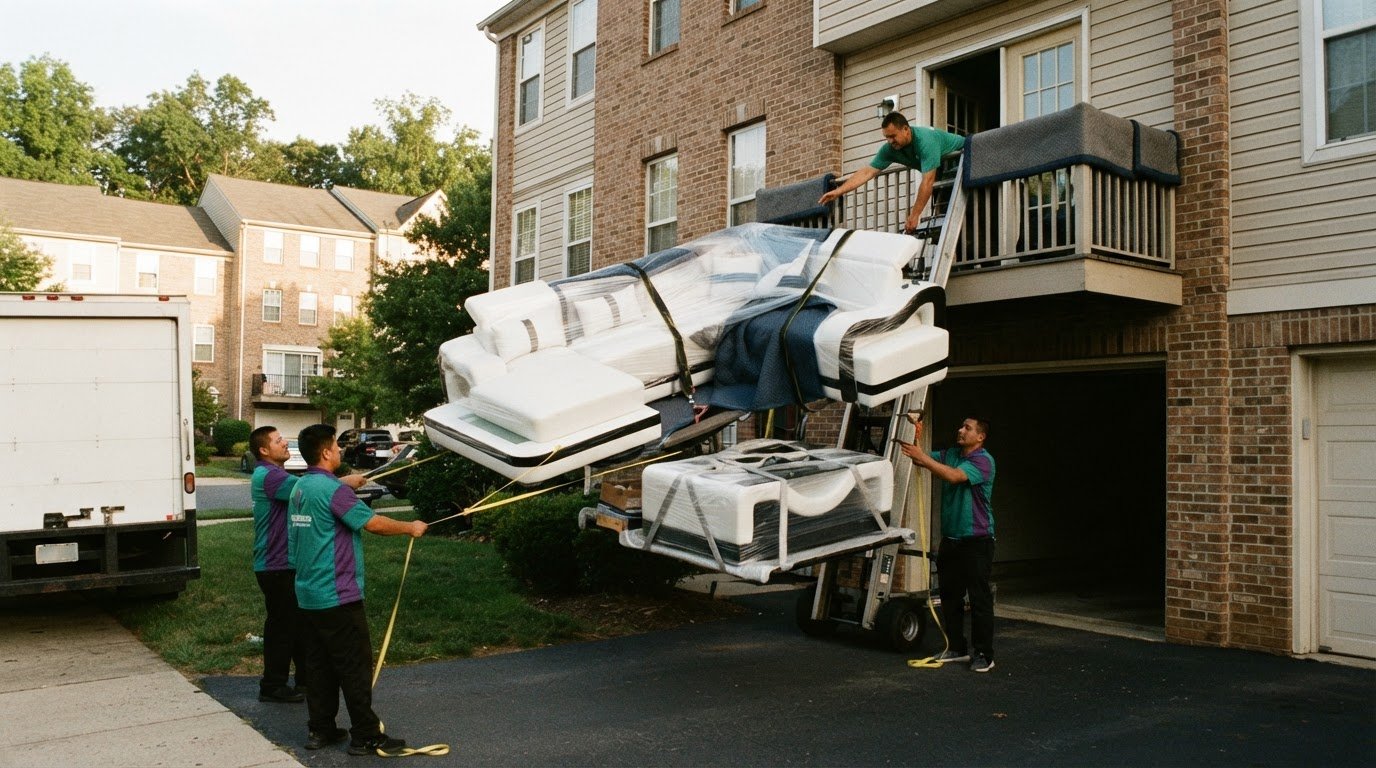
When bulky furniture must pass through stairs, tight hallways, or an upper-floor opening, plan that route as part of the move. Help moving bulky furniture through tight access can be a useful next step for items that need careful handling.
What a written moving estimate should include
A written estimate should make the shipment, requested services, and pricing basis clear. For a Northern Virginia move, review what the price covers and which details could change the work or total.
Details in a Written Estimate
A written estimate describes the items and services included in the move, helping connect the quoted price to the actual job. Review the inventory for each bedroom, large furniture, and specialty items. Look for packing services, moving materials, and any storage or handling charges listed separately. Boxes, tape, shrink wrap, and mattress bags may appear as separate line items.
For interstate moves, review the liability coverage and paperwork carefully. Standard liability coverage may reimburse only a fraction of an item’s value if it is lost or damaged. The Federal Motor Carrier Safety Administration requires movers to provide a written estimate and a copy of “Your Rights and Responsibilities When You Move” for interstate moves. Identify the services and estimate type in the documents before accepting.
Comparing Written Estimates
Compare estimates by matching the inventory and services, not just the bottom-line amount. A two-bedroom move that includes packing and furniture disassembly isn’t the same scope as one covering transport only. Check whether each estimate lists materials, specialty-item handling, storage, and the same pickup and delivery locations. Missing work can make one quote look lower without representing the same job.
Also compare how each estimate handles weight and price changes. A weight-based estimate uses the shipment’s actual weight on moving day, so the price can change if the load differs from expectations. A binding estimate sets the price based on the agreed inventory and services. A price-lock estimate also relies on a detailed inventory agreed in advance, with the price staying the same unless the scope changes.
For moves entirely within Virginia, movers need a state license through the Virginia Department of Motor Vehicles. For interstate moves, the Federal Motor Carrier Safety Administration requires movers transporting goods across state lines to hold a USDOT number. Review the mover’s licensing and insurance details alongside the estimate, and read the coverage terms rather than treating “insured” as a complete explanation.
Deposits, Cancellations, and Binding Estimates
Read deposit and cancellation terms in the written agreement before accepting. Note the deposit amount, cancellation deadline, and any stated refund or charge. These terms are separate from whether an estimate is binding, so a fixed estimate does not by itself explain cancellation conditions.
A binding estimate sets the price for the agreed inventory and services. A non-binding estimate can change after the truck is weighed at the destination, while a weight-based estimate reflects the shipment’s actual weight. If the inventory or requested work changes, the agreed scope may change too. Keep the written estimate and final service terms together.
Are Moving Rates Negotiable?
Negotiating a moving rate starts with understanding what the quote covers. In Virginia, local pricing is generally hourly, while long-distance relocation usually depends on shipment weight and mileage.
Hourly Rates for Local Crews
An hourly rate charges for crew time, so the crew size and the hours worked shape the total. For local Virginia moves under 30 miles, billing commonly includes loading, transit, and unloading. Many movers also charge a travel or trip fee, often billed as an extra hour. Check how each part of the job appears in the written estimate.
Local companies commonly set a two- to three-hour minimum. That minimum matters most for short jobs: even if loading and unloading take less time, the billed hours may still reach the minimum. To discuss the estimate, clarify the inventory, access conditions, and services required. An accurate description helps align the planned crew and work with the move.
Local and Long-Distance Pricing
Pricing depends on the type of job. Heavy Furniture Moving provides hourly labor for moving help and flat-rate pricing for most single heavy items. For a labor-only job, you provide the truck, pod, or container; the estimate should reflect the work you need, such as loading or unloading.
Negotiation is most practical when it addresses the scope or schedule. For example, removing items before the move can reduce the load and carrying work; choosing a less busy date may improve scheduling flexibility. Ask for the estimate to show the same inventory, requested services, and travel terms you plan to use. That makes the quoted total easier to understand without treating a different service package as an equal comparison.
Hourly rates also make time assumptions important. A clear estimate should explain the crew size, minimum hours, and whether travel time or a trip fee applies. If the shipment changes, the work may change too. For a weight-based shipment, actual weight can affect the final cost; for an hourly local job, added loading or unloading time can affect the total.
Choose services based on the work you need. Heavy Furniture Moving offers labor-only help when you provide your own truck, pod, or container, along with packing, unpacking, junk removal, and specialized heavy-item moving. Wrap, blankets, and straps are included on every job. If you only need help loading or unloading, labor-only service may fit better than a full relocation.
When requesting a quote, describe the items, route, access, services, and schedule. For heavy or bulky items, send a photo of the item and stairs or access route. Heavy Furniture Moving measures before lifting and provides the price for most single heavy items up front, helping you understand the planned work and cost.
Seasonal and weekday pricing
Moving dates affect demand and the rates quoted for Northern Virginia relocations. Summer, weekends, and month-end dates are busier, while flexible timing can open up less costly options.
Summer is peak moving season across Northern Virginia, and the last week of each month is especially busy as leases turn over. A Saturday move at month-end may cost more than a Tuesday move in the middle of the month. If your lease allows flexibility, shifting the date can change both demand and the options available.
Fall and winter often offer a quieter window. A mid-week, mid-month move during the off-season is usually the cheapest timing in Northern Virginia. Moves from October through April, Monday through Friday, often have lower rates and more flexible scheduling. For example, an apartment move on a Tuesday in November may face less demand than one scheduled for a Saturday in July.
Hourly pricing also depends on crew size. In 2026, local Northern Virginia moves typically use either a two-mover or three-mover crew, with different hourly rates for each. Compare the estimated hours alongside the crew’s hourly rate. A larger crew changes the hourly charge and the number of people handling belongings, so the total estimate matters more than the rate alone.
Timing affects long-distance moves, too, particularly during summer. For a summer long-distance move from Northern Virginia, booking six to eight weeks ahead is a reasonable minimum. For spring or fall, four to six weeks is generally enough, though four weeks during a shoulder season may be cutting it close. Booking 90 days ahead when possible gives more time to plan the move and its shipment details.
Match the date to the actual job, not just the calendar. A larger home, a fragile-item inventory, or a tight apartment loading window can require more coordination than a smaller, straightforward move. If your date is fixed, share the move size and access details early so the estimate reflects the work and schedule. If the date can move, ask for options across weekdays and the middle of the month.
Use this quick timing guide:
- Busy window: Summer, weekends, and the beginning or end of the month.
- More flexible window: Weekdays and mid-month dates during the off-season.
- Long-distance planning: Allow six to eight weeks for summer, or four to six weeks for spring and fall.
Need help with the furniture side of a date-flexible move? Arrange local moving help for bulky belongings that need careful handling.
Heavy Furniture Moving
Heavy Furniture Moving helps Northern Virginia residents plan moves involving bulky furniture, exercise equipment, and difficult access. Mentioning these items when requesting a quote helps account for the actual load and route, including stairs or narrow entryways.
Use Exercise Equipment Moving for heavy fitness machines and Sofa Hoisting when a sofa needs a different path into or out of the home. For furniture placed or moved within a residence, in-home furniture moving help can fit the job. Pricing depends on the move’s scope and access details, and is provided after a quote request.
Contact Heavy Furniture Moving to discuss the items and access involved in your move.
Make Your Moving Plan Work for You
Turn your estimate into a practical plan by matching the moving help to the items and access involved. A moving company cost estimator for Northern Virginia can guide your budget, but a photo and clear description of the job help Heavy Furniture Moving prepare an accurate quote.
Heavy Furniture Moving offers Movers Near Me, Exercise Equipment Moving, and Sofa Hoisting for bulky or demanding items. If your move includes a treadmill, large couch, or furniture that needs careful handling, share a photo and describe where it needs to go. Wrap, blankets, and straps are included on every job.
Ready to talk through your move and the items that need extra care? Contact Heavy Furniture Moving to discuss the job. You can take the next step with a clearer plan and a capable team ready to help.
Frequently Asked Questions
How Much do Movers Cost?
On the market, a local residential move in Northern Virginia typically ranges from $997 to $1,700, with a median around $1,500. That’s a market range, not a quote for a particular move. The total depends on the inventory, distance, access, and requested services. For a useful estimate, describe what’s moving and include bulky items, packing needs, and any storage requirements.
Are local moves in Virginia charged by the hour or a flat rate?
Local moves under 30 miles are generally charged by the hour, including loading, transit, and unloading. A short job can still have a two- to three-hour minimum. Long-distance moves usually use shipment weight and mileage instead. When reviewing an estimate, identify which pricing method applies and whether a travel charge is included. This helps you understand how the final bill relates to the work performed.
Are there extra fees I should be aware of (like for stairs or shuttle services)?
Stairs, long carries, packing materials, and specialty-item handling can add work or appear as separate estimate items. A travel or trip fee may also be billed as an extra hour. Shuttle service depends on the move’s logistics, so look for it as a clearly described service in the written estimate rather than assuming it is included. The route between the home and truck can affect the work involved.
How do Northern Virginia moving companies calculate hourly rates and minimum charges?
Hourly rates vary with crew size. Many movers set a two- to three-hour minimum. The calculation reflects billable time and any stated travel charge, so review how the estimate defines the work period and the crew assigned.
What factors affect moving costs in Northern Virginia, such as home size, distance, and inventory?
Costs depend on the shipment and route, not bedroom count alone. A home with a few large, heavy pieces can require different handling than one with more small boxes. Packing, materials, disassembly, specialty items, building access, and distance can all change the scope. List bulky belongings separately so the estimate accounts for them instead of treating every room as identical.
How do moving costs compare across Fairfax, Woodbridge, Manassas, Ashburn, and Reston?
The community name alone does not determine the cost. The item, route, stairs, parking, and building access all matter. A move from an upper-floor apartment in Reston, for example, has different carrying conditions from a ground-level home in Woodbridge. Heavy Furniture Moving serves both areas, as well as Fairfax, Manassas, and nearby Northern Virginia communities.
What extra fees do Northern Virginia movers charge for stairs, elevators, long carries, or parking permits?
Stairs, elevators, and a long path between the home and truck can add time to an hourly move. Building elevator reservations can affect the schedule, and limited parking may require additional arrangements. The estimate should describe access-related charges or services clearly. If a shuttle is needed, include that detail in the move plan and review how it appears in writing rather than assuming it is part of standard transport.
When is the cheapest time or day to move in Northern Virginia?
A mid-week, mid-month date during fall or winter is generally a lower-demand window. If your move involves an apartment, coordinate building access around the reserved elevator period as well as the moving date. Flexible dates can offer more scheduling options. If you must move during summer or at month-end, planning ahead helps organize the timing, inventory, and access details for communities such as Fairfax or Manassas.