Moving Labor Cost in Fairfax for Heavy Stone Planters
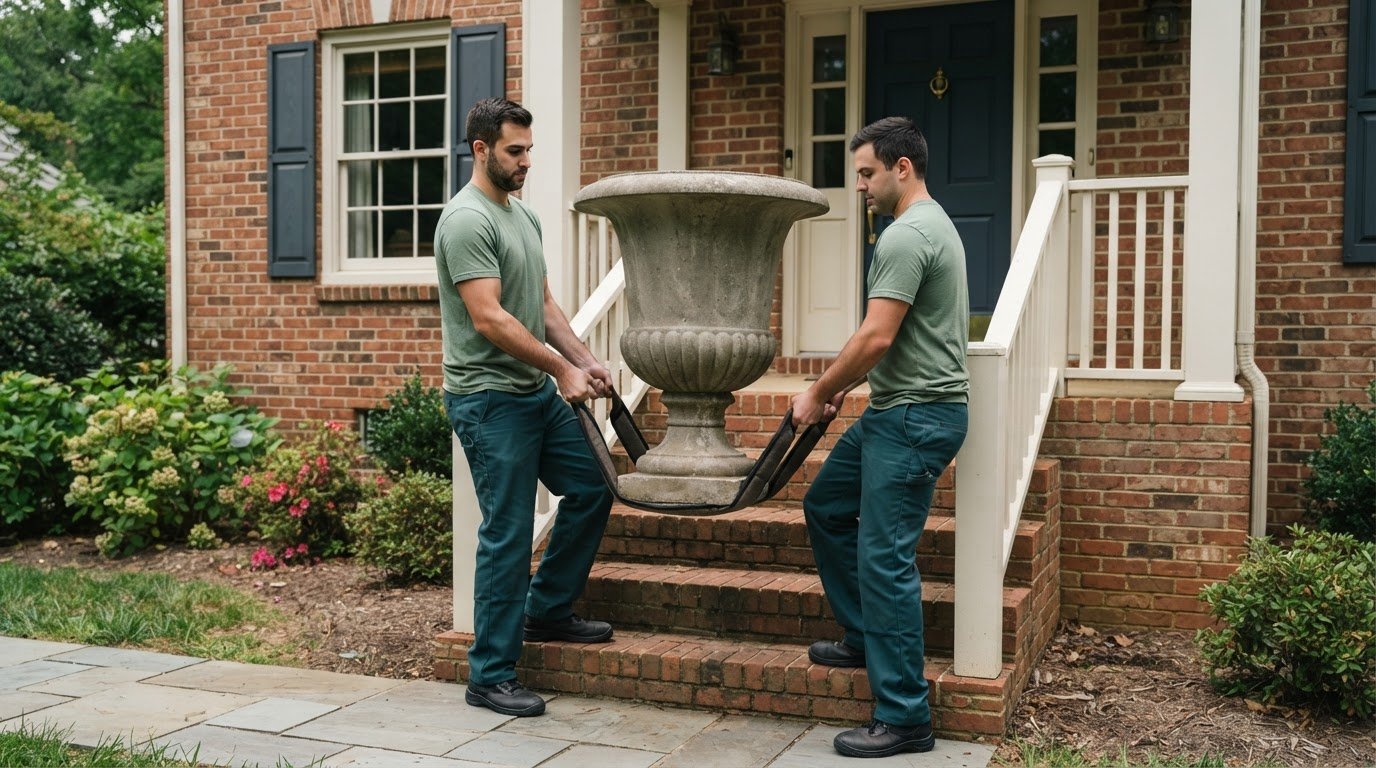
A heavy stone urn can turn a short porch move into a demanding lift. In Fairfax, the price depends on the job and is provided after a quote request; key factors include the urn’s weight, the route to the porch, and how many items need moving. The labor to carry heavy cast stone planter urns to a front porch in Fairfax can also involve a two-person crew, as hourly labor bookings in the area include two local labor professionals.
It makes sense to want a clear idea of the work before moving a fragile, bulky planter. This article explains what shapes labor costs, what to expect when movers relocate an item within one property, and how a two-person crew can handle the lift and placement. You’ll also learn what details help define the job, from steps and narrow paths to the final position on your porch, so you can plan the move with less stress.
Key Takeaways
- Understand which job details shape moving labor costs in Fairfax, including the item, the route, and the work involved.
- See why heavy, fragile pieces like cast stone urns call for a planned lift and careful placement.
- Learn what changes when movers reposition an item within the same property rather than transport it elsewhere.
- Find out how a two-person crew coordinates a bulky lift and what information helps describe the task clearly.
- Discover which planter and access details can affect the moving quote, even when the destination is just the front porch.
How much does moving labor cost in Fairfax, VA?
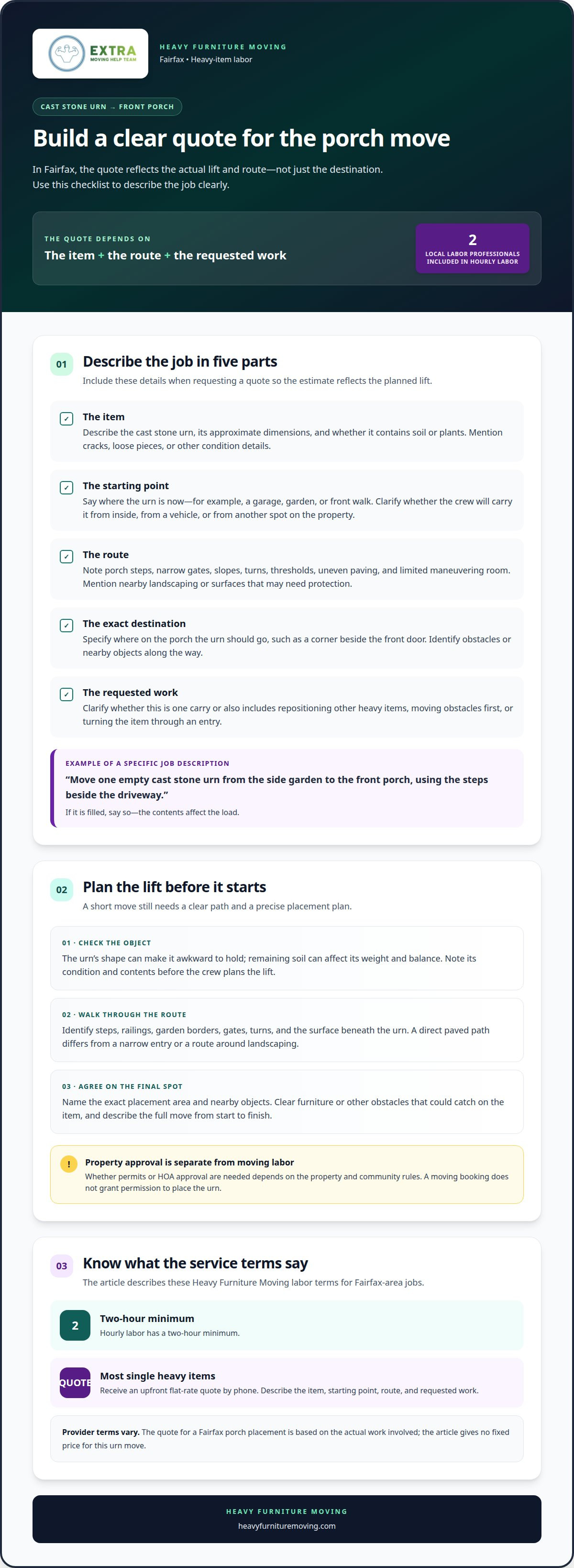
The quote for a Fairfax porch placement depends on the actual work, not just the destination. A short carry across a clear path differs from a route with steps, tight turns, or limited room to maneuver. Describe the urn, its contents, starting point, access, and desired placement so the estimate reflects the lift rather than a vague request to move a planter.
Heavy Furniture Moving’s hourly labor service includes two local labor professionals. For a stone urn, the task may involve approaching the item, lifting it together, carrying it along the planned route, and setting it in place. The layout affects the work: a direct path from a driveway differs from a narrow entry or a route around landscaping. Mention any surfaces or nearby features that need protection when you request a quote.
Are permits or HOA approval needed to place a large planter on a Fairfax front porch? Approval depends on the property and its community rules, not on the moving labor. A moving booking doesn’t grant permission to place an urn, so account for applicable property requirements before scheduling the lift.
Do Fairfax-area moving companies have minimum charges, travel fees, or heavy-item surcharges? Terms vary by provider. Heavy Furniture Moving uses hourly labor with a two-hour minimum, and most single heavy items receive an upfront flat-rate quote by phone. Describe whether the crew will carry the urn from inside the home, from a vehicle, or from another spot on the property so the quote can reflect the requested work.
To help establish an accurate quote, provide these job details:
- The item: Describe the cast stone urn, including its approximate dimensions and whether it contains soil or plants.
- The starting point: Identify where the urn sits now, such as a garage, garden, or front walk.
- The route: Mention porch steps, narrow gates, slopes, turns, and other access details.
- The destination: Explain where on the porch the urn should be placed and whether the route has obstacles.
- The requested work: Clarify whether the job is one carry or includes repositioning other heavy items.
A useful job description might be: “Move one empty cast stone urn from the side garden to the front porch, using the steps beside the driveway.” If it’s filled, say so, since the contents affect the load. For labor to carry heavy cast stone planter urns to a front porch in Fairfax, describing the item, route, and final position helps make the quote specific to the task.
Labor for heavy-item lifting and furniture moving
A cast stone urn needs more than a strong grip. Its shape can make it awkward to hold, and remaining soil can affect its weight and balance. Furniture presents similar challenges: a sofa can be bulky, while a cabinet may be difficult to turn through a doorway. Plan the route and destination before lifting. For a porch move, account for steps, railings, garden borders, and the surface beneath the urn.
Can local landscapers, handymen, or specialty movers handle delivery and placement of stone urns? Landscapers may include urn placement with a planting project, and handymen may take on moves within their scope. Specialty movers handle heavy or awkward items. The right fit depends on whether you need delivery, lifting, or placement on the property.
For a heavy lift, start with the object and its path. Identify how the urn can be held, note obstacles, and agree on the final position. A straight paved walk requires different coordination from a turn through a gate or a climb up porch steps. The same planning applies to furniture: a sofa needs room to turn, and a heavy table may need its contents removed. Give the crew a precise destination, such as the porch corner beside the front door, rather than simply saying “outside.”
What are the risks of carrying heavy stone planters, and who is liable for damage to steps, porch, or urn? A dropped or scraped urn can damage stone, trim, or paving, while an uneven route can create a trip or handling hazard. Responsibility for damage depends on the service agreement, the circumstances, and who caused it. Clearly describe the requested work and destination before lifting starts.
Useful job details include:
- Item condition: Note cracks, loose pieces, or a planter filled with soil.
- Route: Describe steps, narrow gates, turns, and uneven paving.
- Placement: Point out the exact porch area and nearby objects.
- Other items: Mention furniture or obstacles that need moving first.
For a stone urn, a heavy-item moving service can handle the lifting as a defined labor task. Heavy lifting moving service can also suit furniture that needs repositioning inside the home. Describe the object, route, and final spot so the work can be matched to the task.
Moving items within a single location
A move can stay entirely on one property. A cast stone urn might travel from a side garden to the front porch, while a cabinet moves from a garage into a house. Even without long-distance transport, the labor depends on the item and route. Describe whether the work includes lifting, carrying, turning through an entry, and setting the piece in its new position. Define the start and destination so the task covers the full move.
Moving within a home has its own planning needs. A heavy table going from a dining room to a living room may pass through a doorway, around a corner, and across flooring. Clear the route of furniture and objects that could catch on the item. For an urn, mention whether the crew must pass through a gate or over a threshold. These details help organize the work, even when the distance is short.
The requested scope matters. “Move the planter to the porch” might mean carrying it from the garden and placing it beside the door. It might also involve shifting a bench first. State which items need moving and where each belongs. If the job includes several pieces, list them in the order that will make the destination usable. A clear sequence helps the crew plan instead of stopping to resolve placements mid-task.
Before the lift, review the route and final position. Identify tight turns, decide whether a door needs to stay open, and clear loose objects from the path. A planter placed near porch furniture may need enough room to keep the furniture accessible. For indoor moves, specify whether a sofa should sit against a wall or face a window. Give the crew a destination precise enough to guide placement.
For a single-location move, describe these parts of the job:
- Starting point: Name the room, garage, garden, or walk where the item sits.
- Destination: Identify the room or exact porch area where it should finish.
- Route: Mention doorways, gates, corners, thresholds, and steps along the path.
- Sequence: Explain whether another item must move before the planter or furniture.
- Placement: Describe how the item should face or sit near nearby objects.
Keep the scope specific. Moving one urn from a garden bed to a porch differs from rearranging several heavy items around a property. Describe the starting point, route, and final position, including any repositioning needed. For example, say the urn starts beside the driveway, follows the paved side path, and ends beside the porch entrance. This gives the crew a practical picture without assuming a same-property move is effortless.
Two-person labor crews
Two workers coordinate a lift by sharing the load and moving together. That matters with a cast stone urn, whose rounded sides can make a steady grip difficult. The crew also needs a clear route before lifting begins. Porch steps, a narrow landing, or a sharp turn can affect how the team carries and places the planter. Even a short path needs planning when the item is bulky or fragile.
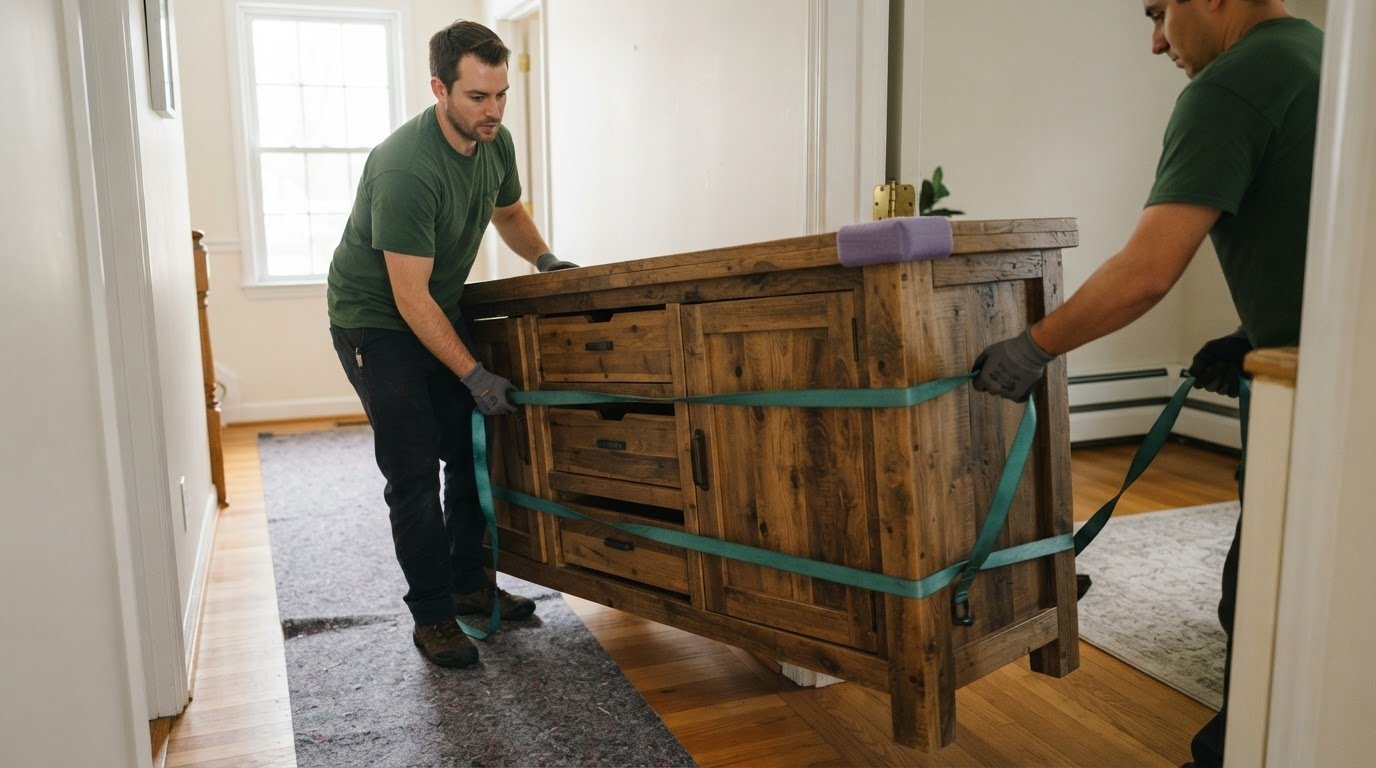
Heavy Furniture Moving’s hourly labor service includes two local labor professionals. For porch steps, the crew plans how to handle the planter based on its shape, weight, and route. Wrap, blankets, and straps are included on every job. Any equipment used must suit the item and the path, including the steps and landing.
Coordination starts before the urn leaves its current spot. The workers plan where to hold it, which direction it should face, and where they can pause without blocking the route. One person can call each movement so both workers lift, step, and lower together. A shared pace helps avoid sudden shifts and makes placement clearer when the destination is a specific porch corner beside a door or railing.
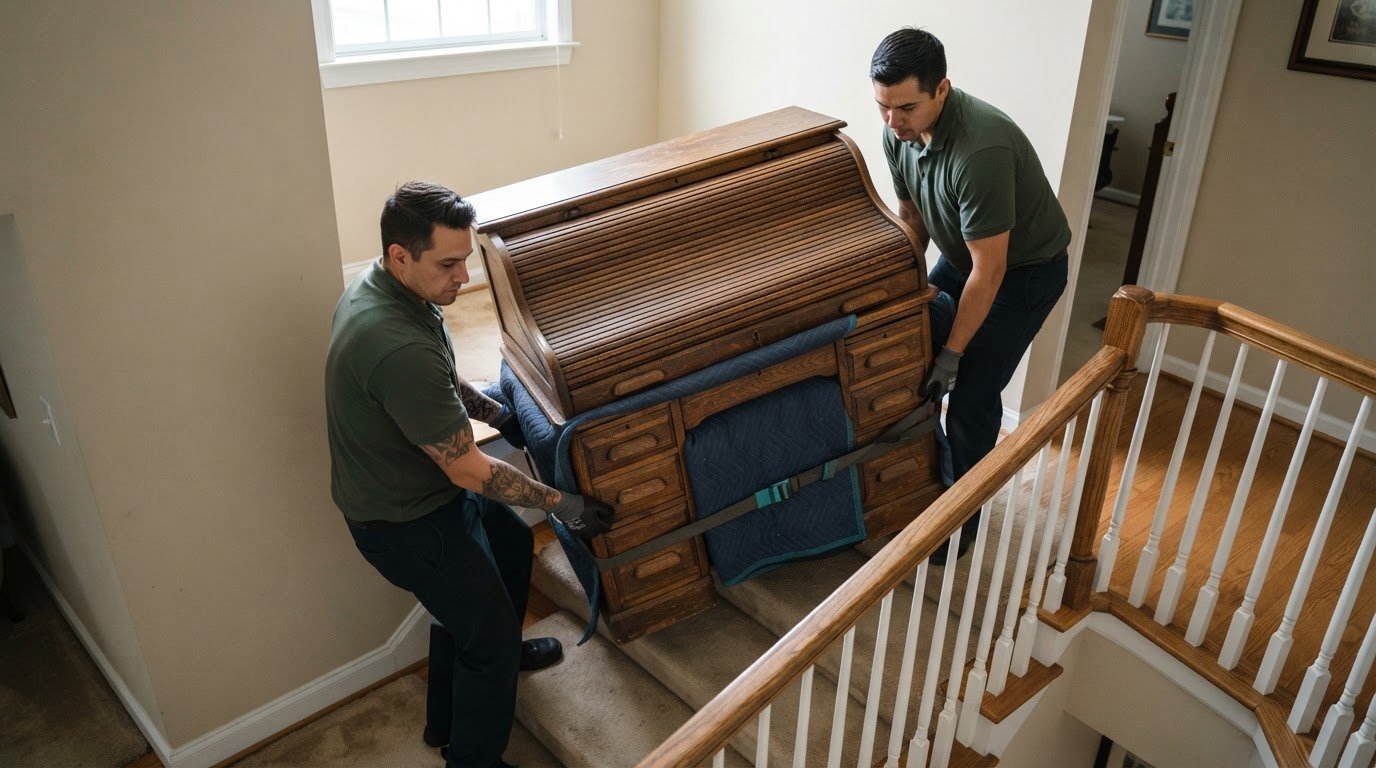
For a stair carry, consider the stair width, landing space, surface, and handholds. A tight turn may require a different approach from straight steps. Clear loose pots, hoses, furniture, and other obstacles from the route. If a dolly suits part of the path but not the stairs, plan the transition before moving the urn.
Equipment should support the task, not force a risky route. Padding can protect contact points, and straps can provide a more controlled grip when they fit the item. A dolly is useful only if its wheels and the route suit the surface and steps. Account for the urn’s shape and stability rather than treating it like a square furniture box.
Before the move, communicate these details:
- Planter condition: Identify cracks, loose parts, soil, or plants.
- Starting position: Name the garden, driveway, or room where it sits.
- Access: Describe steps, narrow turns, gates, and porch landings.
- Final placement: Point out the exact spot and nearby objects.
A two-person crew works from a shared plan, not separate guesses. Clear directions help both workers follow the same route and place the urn where intended. Describe the entire path, including stair transitions, so the crew can prepare for the actual task.
How much does a cast stone planter urn typically weigh, and what details affect the moving quote?
Cast stone planter urns don’t have one standard weight. A small, hollow urn and a broad, thick-walled planter are different loads. Material, size, shape, and construction all affect weight. Soil, water, and a mature plant add to the load, so a filled urn differs from an empty one. If you don’t know the weight, describe the planter and its contents rather than guessing.
Start by identifying the object. Share its approximate height and width, whether it has a pedestal, and whether it’s filled. A tall urn may be awkward to grip, while a wide bowl can be hard to carry close to the body. A pedestal can affect balance and how the item sits during the move. A photo can clarify the shape and condition, especially if the rim or base is visibly damaged.
The route matters as much as the planter. A move from a paved driveway to a level porch differs from a garden path with steps, a gate, or a sharp turn. Describe the walking surface and porch landing. Mention railings, low branches, outdoor furniture, and tight spaces that could restrict movement. These details help define the labor without relying on an uncertain weight estimate.
The quote should cover the complete task, not just the urn. Include its starting location, destination, and any additional handling, such as moving a bench out of the way. Explain whether the crew must carry it up steps or reposition it on the porch. If several planters need moving, describe each one separately. A small urn and a large planted vessel may need different handling, even along the same route.
Before requesting the quote, gather these useful details:
- Dimensions: Give approximate height and width.
- Contents: Say whether soil, water, or a plant remains inside.
- Construction: Describe the shape, pedestal, and visible condition.
- Access: Note steps, gates, turns, slopes, and landing space.
- Scope: State the starting point, final placement, and related items.
Clear details turn “move a heavy planter” into a defined job: one filled urn, a garden starting point, porch steps, and a specific landing spot. Request help moving a heavy planter with those details ready, so the labor can be matched to the item and route.
Treat that as a starting point for discussing the labor, not as a weight-based estimate for the urn. When requesting a quote, describe the planter’s condition and contents along with the route so the scope is clear.
If the urn is filled or access is restricted, mention it when arranging the move. Those details help define what the crew will handle. Be specific about the final position, since carrying the urn to the porch and placing it where you want it are both parts of the task.
Heavy Furniture Moving: Exercise Equipment Moving
Heavy Furniture Moving helps with heavy and awkward items around the home and property. Its in-home furniture moving service can reposition heavy pieces without arranging a full household move. The team also moves exercise equipment, and Sofa Hoisting can help when a sofa cannot pass through a doorway.
A stone planter move calls for clear details about the urn, its starting point, route, and final position. Share those specifics when arranging labor so the task is understood before the lift begins. If the move also includes exercise equipment or furniture, describe each item and its destination.
Contact Heavy Furniture Moving to arrange labor for the items you need moved.
Plan the Move With Confidence
Before the lift, make the plan clear: identify the urn, describe its route, and point out the exact destination. This gives the crew a practical picture of the task, from the starting spot to the porch placement. For labor to carry heavy cast stone planter urns to a front porch in Fairfax, clear instructions help keep the work focused on safely handling the item and placing it where you want it.
Heavy Furniture Moving also offers Movers Near Me, Exercise Equipment Moving, and Sofa Hoisting for other bulky-item needs. Share the details of your planter move and the help you’re looking for. Contact Heavy Furniture Moving today to discuss your next step. A well-described job is a strong start, and you can move forward with a straightforward plan.
Frequently Asked Questions
How soon can labor help arrive?
Same-day and next-day heavy-item appointments are often available in Fairfax. For a same-afternoon opening, call before 2 PM. A photo of the planter and its stairs or access route helps the team assess the job and provide a time estimate in minutes. Include the starting point and porch destination, especially if a gate, narrow landing, or tight turn affects the path.
What do local Fairfax movers or handyman services charge per hour or per job for moving heavy planters?
Heavy Furniture Moving uses hourly labor with a two-hour minimum, while most single heavy items receive an upfront flat-rate quote by phone. The quote reflects the planter, route, stairs, and handling required. Text a photo of the item and its route to help describe the job. Wrap, blankets, and straps are included on every job, never as a separate line item.
Frequently Asked Questions
Same-day and next-day heavy-item appointments are often available in Fairfax. For a same-afternoon opening, call before 2 PM. A photo of the planter and its stairs or access route helps the team assess the job and provide a time estimate in minutes. Include the starting point and porch destination, especially if a gate, narrow landing, or tight turn affects the path.
Heavy Furniture Moving uses hourly labor with a two-hour minimum, while most single heavy items receive an upfront flat-rate quote by phone. The quote reflects the planter, route, stairs, and handling required. Text a photo of the item and its route to help describe the job. Wrap, blankets, and straps are included on every job, never as a separate line item.